
Reviewed · COLOSSEUM & ANCIENT ROME TOURS
Small-Group Tour of Roman Forum & Palatine Hill
One and a half hours in Rome can feel like a whole day. This small-group Roman Forum and Palatine Hill tour hits the big sights with a live guide and sterilised headsets so you don’t miss the details. You’ll check off major landmarks quickly, while the guide ties scenes together so the ruins make sense.
Two things I really like: the group stays small (max 24), so you’re not shouting over other tourists, and the tour includes the key entry fees for the Roman Forum and Palatine Hill. One thing to think about: the experience includes viewing Circus Maximus from the Palatine Hill area, not entry—so if you’re chasing tickets for the Circus, this isn’t that.
In This Review
- Key reasons this tour works well
- Roman Forum and Palatine Hill in 90 minutes: the real value
- Meeting at Piazza del Colosseo: where you start matters
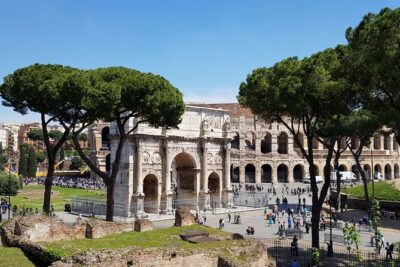
- Stop 1: Arch of Constantine and a quick way to read Rome’s propaganda
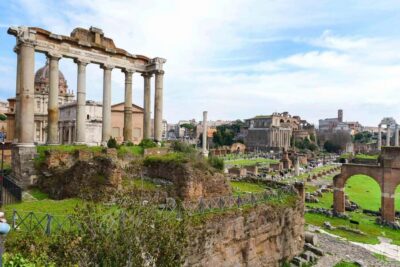
- Roman Forum: where politics, religion, and punishment collide
- Stop 3: Basilica Julia (and why it’s more than ruins)
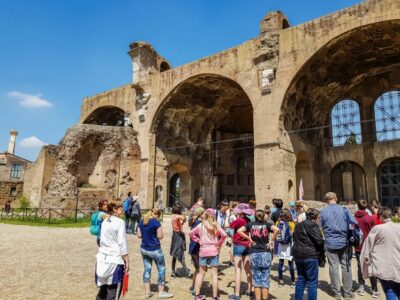
- Stop 4: Basilica of Maxentius and the scale lesson
- Stop 5: Arco di Tito and a detail-driven stop
- Stop 6: Temple of Venus and Roma, plus the Colosseum view
- Palatine Hill: walking the emperors’ path for 35 minutes
- The Circus Maximus view: myth, spectacle, and what you don’t get
- Pace, group size, and why headsets change everything
- What to do after the tour ends inside the Forum
- Who this tour is best for
- Should you book the Small-Group Roman Forum & Palatine Hill tour?
- FAQ
- How long is the Roman Forum and Palatine Hill tour?
- Where do I meet for the tour?
- Where does the tour end?
- Is the tour in English?
- What’s included in the price?
- Are Colosseum and Circus Maximus entrances included?
- How big is the group?
- Will I need to pass security checks?
- What do I need to bring for entry?
Key reasons this tour works well
- Small-group size (max 24) keeps the pace human and the guide easier to hear
- Headsets help a lot in noisy, crowded Forum spaces
- Included Roman Forum + Palatine Hill entry saves time and extra ticket hassle
- Stop-by-stop storytelling helps you connect arches, temples, and politics
- Multiple departure times make it easier to fit into a tight Rome schedule
- Extra time after the tour lets you linger in the archaeological area at your own pace
Roman Forum and Palatine Hill in 90 minutes: the real value
Rome has a way of making ruins feel like a pile of stones—until someone gives you a map for what you’re seeing. That’s where this tour earns its keep. In about 1 hour 30 minutes, you move from the dramatic triumphal Arch of Constantine through the Roman Forum power centers and up to Palatine Hill viewpoints.
The price—$83.13 per person—is easier to justify when you look at what’s included. You get a live professional guide, sterilised headsets, and entrance fees for the Roman Forum and Palatine Hill. You do not get Colosseum admission, so plan on that being a separate ticket if it’s on your must-do list.
Also, this is an English tour with a mobile ticket, and it’s often booked ahead (on average, around 40 days). That’s a clue: if your dates are fixed, don’t wait until the last minute.
Still on ancient Rome? A few more we rated
- Rome: Colosseum, Palatine Hill and Roman Forum Guided Tour
★ 4.8 · 32,814 reviews - Rome: Guided Tour of Colosseum, Roman Forum & Palatine Hill
★ 4.7 · 27,897 reviews - Rome: Colosseum & Forum with Audio Guide App -Optional Arena
★ 4.2 · 24,770 reviews - Rome: Colosseum, Roman Forum and Palatine Hill Guided Tour
★ 4.5 · 23,903 reviews
Meeting at Piazza del Colosseo: where you start matters
The tour starts at Piazza del Colosseo, 21 and ends inside the Roman Forum. Plan to arrive 10 minutes early—not just for the meetup, but because you must complete sign-up and pass strict security checks.
Here’s the part that can make or break your day: security can take 5 to 30 minutes depending on season. If you show up at the exact start time, you’ll feel rushed and lose the calm headspace you want for photo-taking.
Practical tips:
- Wear comfortable shoes. This is moderate walking, but you’ll still cover distance across uneven paths.
- Bring a valid passport or ID matching the name used at booking. Names have to match for entry.
- Trolleys and large backpacks aren’t allowed inside, and animals aren’t permitted.
Good news: the tour is near public transportation, so you’re not forced into a complicated transit plan.
Stop 1: Arch of Constantine and a quick way to read Rome’s propaganda
You begin at the Arch of Constantine, one of Rome’s largest triumphal arches. Even if you’re not a hardcore art buff, arches like this teach you something important: Roman power didn’t just live in laws and armies—it also lived in public symbols.
This first segment is short (about 5 minutes), so the goal is orientation. You’re setting your brain to “Roman message mode” before you step into the Roman Forum’s political heart.
What you’ll likely appreciate here is the contrast: you start with a monument meant to project authority, then you walk into spaces where decisions were made—and consequences played out.
Roman Forum: where politics, religion, and punishment collide
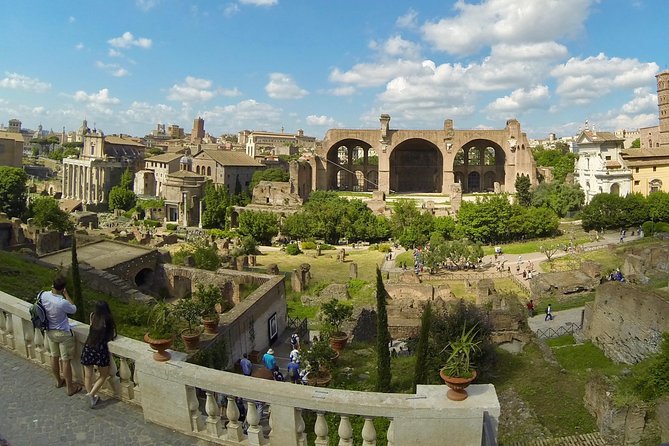
The main action is the Roman Forum stop (about 30 minutes). This is where a guide earns their fee, because the Forum is huge and the details can be overwhelming if you don’t know what to look for.
You’ll cover major themes and structures, including:
- The Vestal Virgins, plus their gardens and the pagan temple of Goddess Vesta they served
- The Basilica Julia, and Roman legal/punishment practices and how they later intersected with Christianity
- The temple of Castor and Pollux
- The Arch of Titus, tied to the sacking of Jerusalem
- The Senate House, where senators shaped the Roman Republic—and where Julius Caesar’s fate is a turning point
The best part is how these are connected. Instead of seeing each monument as a random photo stop, you see a chain of meaning: religion up front, governance in the middle, and violence and propaganda woven through.
A short drawback of a tight schedule: with only about half an hour for the Forum stop, you won’t have time to linger at every detail like you might on a self-guided day. The trade-off is that you’ll leave with a mental framework that helps you understand what you linger on later.
Stop 3: Basilica Julia (and why it’s more than ruins)
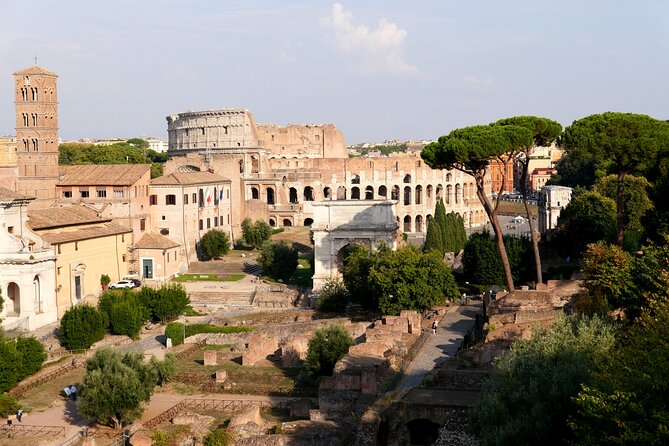
After the main Forum walk, you hit Basilica Julia (about 5 minutes). This is one of those structures where a little explanation goes a long way. The key idea: it connects architecture to power decisions, especially in the late Republican moment when the Republic’s stability is slipping.
Even in a brief stop, a good guide can point out what the basilica was for and why it mattered in daily political life. If you’re the type who likes to understand what buildings were used for, this quick stop is still worth it.
Stop 4: Basilica of Maxentius and the scale lesson
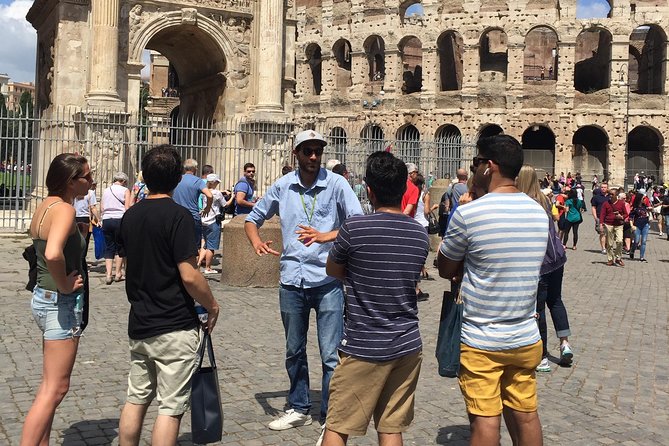
Next is the Basilica of Maxentius (about 5 minutes). This is the “scale” stop: the ruins here represent the largest building in the Roman Forum.
You’ll also hear how it influenced later construction, including the inspiration behind New York City’s former Penn Station. That’s a fun bridge between Rome and home, and it helps the Forum feel less like an isolated museum and more like a source code for later architecture.
Because the timing is short, focus on what the guide emphasizes—if you try to examine everything yourself, you’ll miss the point.
Stop 5: Arco di Tito and a detail-driven stop
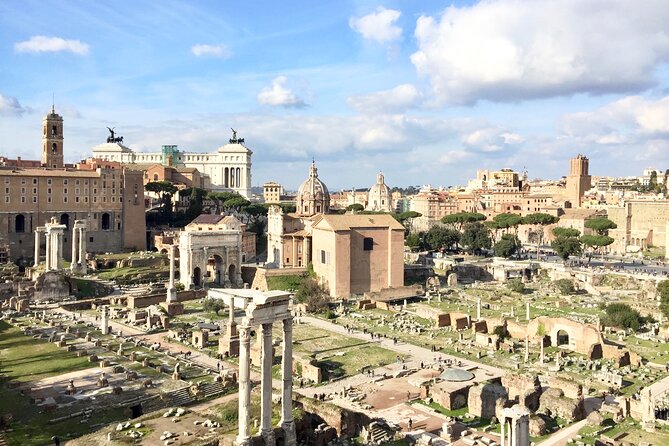
You’ll see the Arch of Titus (about 5 minutes). The big theme is how Rome commemorated conquest and used art to sell the story. The arch links back to the broader narrative of Jerusalem in the wider Roman sweep you hear throughout the Forum portion.
In just a few minutes, the guide’s job is to point you to specific reliefs or key sections so you understand what you’re looking at. If you like reading sculpture and symbolic scenes, this quick stop can still feel satisfying.
Stop 6: Temple of Venus and Roma, plus the Colosseum view
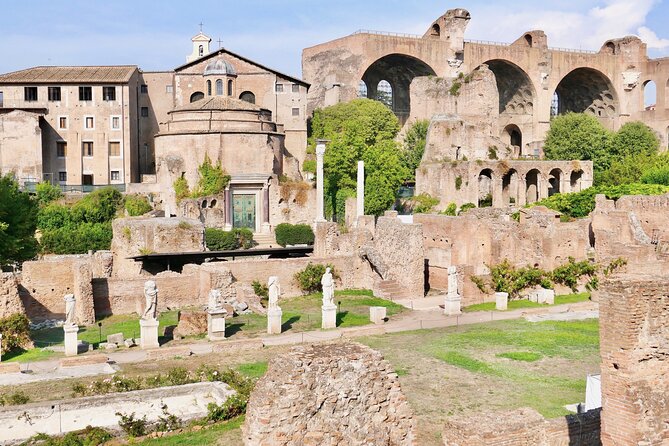
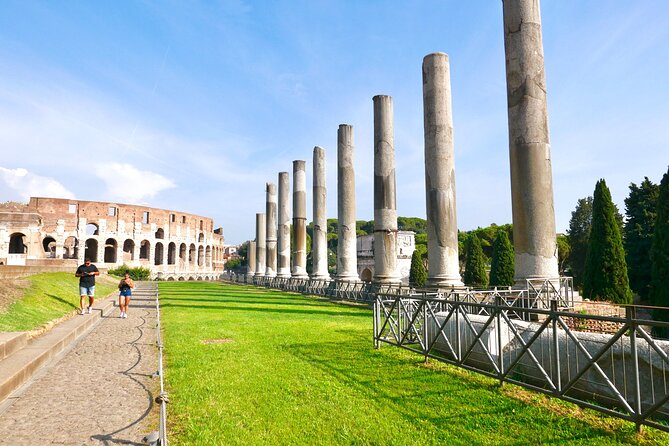
The Temple of Venus and Roma is one of the most viewpoint-friendly segments (about 5 minutes), and this is where you get one of the best views of the Colosseum.
This matters because sometimes you can’t fully appreciate a monument until you’ve seen it in context with the surrounding spaces. A guide can help you frame what you’re seeing from that angle—Colosseum location, Forum orientation, and why Palatine viewpoints matter.
If you’re taking photos, arrive ready. The stop is brief, so you’ll get one real window to frame the view rather than a relaxed stroll.
Palatine Hill: walking the emperors’ path for 35 minutes
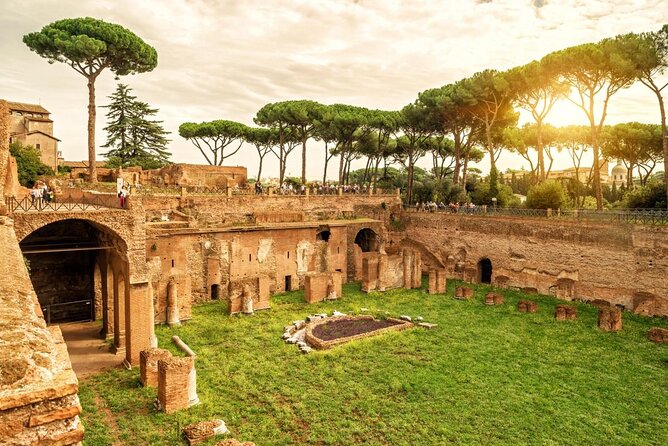
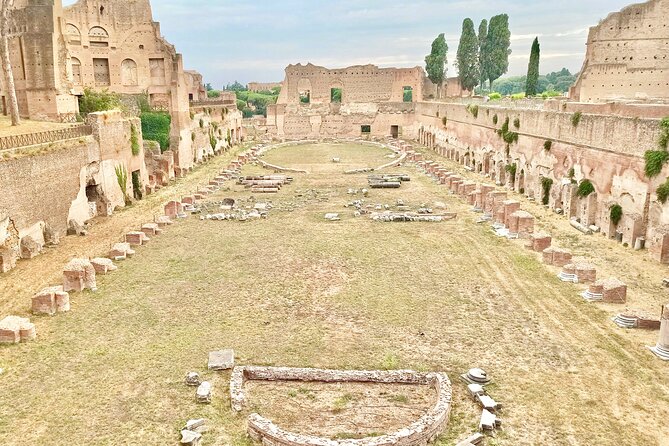
Then you climb into the star experience: Palatine Hill (about 35 minutes). This is where the tour slows down enough to feel like you’re actually walking through Rome’s layers.
You’ll walk where Roman emperors once moved through daily power spaces, and you’ll also hear about the legend of Romulus and Remus, tied to the hill’s founding myth. Later on, Palatine becomes known as one of Rome’s most exclusive areas—so you’re seeing the shift from story-and-origin to status-and-empires.
The views are a major payoff. From here you can look over the Colosseum and the Roman Forum, and the guide helps you “place” what you just saw below. That’s the moment when the ruins start behaving like a city again, not random fragments.
Also, one review highlighted that the guide handled mobility concerns by giving direction. That’s exactly the kind of thoughtful leadership you hope for on uneven, crowded ancient sites. If you have mobility issues, tell your group or guide early about your needs so you can plan safe, manageable routes.
The Circus Maximus view: myth, spectacle, and what you don’t get
After Palatine Hill, you get a bird’s-eye look toward Circus Maximus. The tour experience here is designed as a “picture in your head” moment: your guide drives your imagination through chariot races and gladiator-like spectacle, then connects it to early myths and gods.
One important clarity point: the tour does not include entry to the Circus Maximus area. It’s a viewpoint experience, plus storytelling, and then you’re free to keep exploring the archaeological zone on your own after the official tour ends.
If your top priority is physically touring Circus Maximus inside, you may feel shortchanged. If your goal is understanding how Rome staged public drama, this segment can be a standout.
Pace, group size, and why headsets change everything
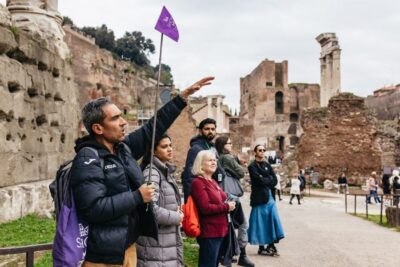
This is a small group with a maximum of 24 travelers. That number matters. With too-large groups, the guide becomes a traffic controller and the storytelling becomes background noise. Here, the setup is more personal, and the guide can steer you through key points.
Headsets are another big deal. Roman Forum and Palatine areas are loud in peak season, with constant movement. Sterilised headsets mean you can keep listening even when you’re standing near other people or dealing with crowds around statues and arches.
One more scheduling note: guides may end up adjusting pace because of the time spent waiting for security. If you hit a longer security line, you still want a guide who keeps the experience moving. Several experiences noted guides kept people engaged even when conditions were hot or entry took longer.
What to do after the tour ends inside the Forum
Your tour ends inside the Roman Forum, and you can stay in the archaeological area as long as you wish after the official portion. This is where the guided framework pays off.
Use your leftover time strategically:
- Go back to one or two stops the guide made memorable (temples, arches, Senate House areas).
- Slow down for photos only where you understand what’s in them.
- If the Forum felt like a blur earlier, this extra time lets you turn blur into “I get it now.”
If you’re also planning the Colosseum that day, remember: Colosseum entry is not included in this tour.
Who this tour is best for
This tour is a strong fit if you:
- Want to see top Roman Forum and Palatine landmarks without spending an entire day alone
- Like explanations that connect politics, religion, and public spectacle
- Appreciate small-group comfort and headsets for hearing the guide clearly
- Are short on time but still want meaningful context, not just photos
It may be less ideal if you:
- Specifically want to enter Circus Maximus (this is viewpoint + storytelling, not admission)
- Expect a long, slow walk through every corner like a self-guided day
Should you book the Small-Group Roman Forum & Palatine Hill tour?
If you want a fast, guided “Rome makes sense” experience, I’d say yes, especially with included Forum + Palatine entry and the headset setup. At $83.13, the price starts looking fair when you factor in the guide time and ticket value—plus you’re capped at a group size that keeps things manageable.
Just go in with the right expectations:
- You’ll see Circus Maximus from Palatine viewpoints, but you won’t be touring it as an entry stop.
- You’ll need to plan for security time and arrive early with names matching your ID.
Book this if you want the Forum and Palatine to feel readable. Skip it or pair it with separate planning if Circus Maximus entry is your main goal.
FAQ
How long is the Roman Forum and Palatine Hill tour?
It runs for about 1 hour 30 minutes (approximately).
Where do I meet for the tour?
The meeting point is Piazza del Colosseo, 21, 00184 Roma RM, Italy.
Where does the tour end?
The tour ends inside the Roman Forum.
Is the tour in English?
Yes, the tour is offered in English.
What’s included in the price?
Entrance fees for the Roman Forum and Palatine Hill are included, along with a live professional guide and sterilised headsets.
Are Colosseum and Circus Maximus entrances included?
No. Colosseum entrance is not included, and there is no Circus Maximus entrance included either.
How big is the group?
The tour has a maximum size of 24 travelers.
Will I need to pass security checks?
Yes. You must pass strict and mandatory security checks to enter the Roman Forum, and you should expect to wait 5 to 30 minutes depending on season.
What do I need to bring for entry?
You need a valid passport or ID document that matches the full name you provided at booking. Also, you should arrive 10 minutes early to complete sign-up and security checks.
More Tours in Rome
- Vatican Museums, Sistine Chapel & St. Peter’s Basilica Tour
★ 4.3 · 73,970 reviews - Vatican Museums, Sistine Chapel & St Peter’s Basilica Guided Tour
★ 4.5 · 39,149 reviews - Rome: Colosseum, Palatine Hill and Roman Forum Guided Tour
★ 4.8 · 32,814 reviews - Rome: Guided Tour of Colosseum, Roman Forum & Palatine Hill
★ 4.7 · 27,897 reviews - Rome: Colosseum, Roman Forum and Palatine Hill Guided Tour
★ 4.5 · 23,903 reviews - Rome: Colosseum Arena Floor, Palatine & Forum Guided Tour
★ 4.5 · 20,180 reviews
More Tour Reviews in Rome
- Vatican Museums, Sistine Chapel & St. Peter’s Basilica Tour
★ 4.3 · 73,970 reviews - Vatican Museums, Sistine Chapel & St Peter’s Basilica Guided Tour
★ 4.5 · 39,149 reviews - Rome: Colosseum, Palatine Hill and Roman Forum Guided Tour
★ 4.8 · 32,814 reviews - Rome: Guided Tour of Colosseum, Roman Forum & Palatine Hill
★ 4.7 · 27,897 reviews - Rome: Colosseum & Forum with Audio Guide App -Optional Arena
★ 4.2 · 24,770 reviews - Rome: Colosseum, Roman Forum and Palatine Hill Guided Tour
★ 4.5 · 23,903 reviews
Ancient Rome, Kept Going
- Rome: Colosseum, Palatine Hill and Roman Forum Guided Tour
★ 4.8 · 32,814 reviews - Rome: Guided Tour of Colosseum, Roman Forum & Palatine Hill
★ 4.7 · 27,897 reviews - Rome: Colosseum & Forum with Audio Guide App -Optional Arena
★ 4.2 · 24,770 reviews - Rome: Colosseum, Roman Forum and Palatine Hill Guided Tour
★ 4.5 · 23,903 reviews - Rome: Colosseum Arena Floor, Palatine & Forum Guided Tour
★ 4.5 · 20,180 reviews - Rome: Colosseum Arena, Palatine Hill & Forum Guided Tour
★ 4.7 · 14,510 reviews
Just added to our Rome reviews





Colosseum & Ancient Rome Tours, compared.
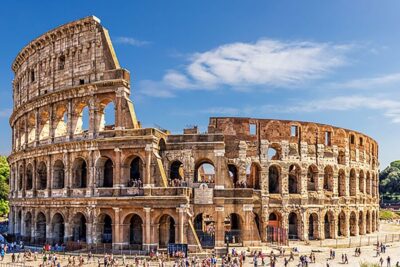
 ★ 4.8Colosseum, Palatine Hill and Roman Forum Guided TourFrom $5232,814 reviews
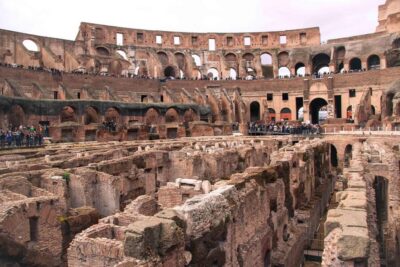
 ★ 4.7Guided Tour of Colosseum, Roman Forum & Palatine HillFrom $5527,897 reviews
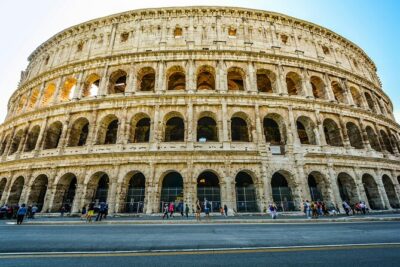
 ★ 4.2Colosseum & Forum with Audio Guide App -Optional ArenaFrom $4124,770 reviews
 ★ 4.5Colosseum, Roman Forum and Palatine Hill Guided TourFrom $5923,903 reviews
 ★ 4.5Colosseum Arena Floor, Palatine & Forum Guided TourFrom $4120,180 reviews
 ★ 4.7Colosseum Arena, Palatine Hill & Forum Guided TourFrom $8414,510 reviews
 ★ 4.6Colosseum,Forum & Palatine Tour + Optional Arena FloorFrom $4513,169 reviews
 ★ 4.7Colosseum: Underground and Ancient Rome TourFrom $16012,691 reviews