
Reviewed · HISTORICAL TOURS
Secrets of Rome: Historical True Crime Small Group Tour
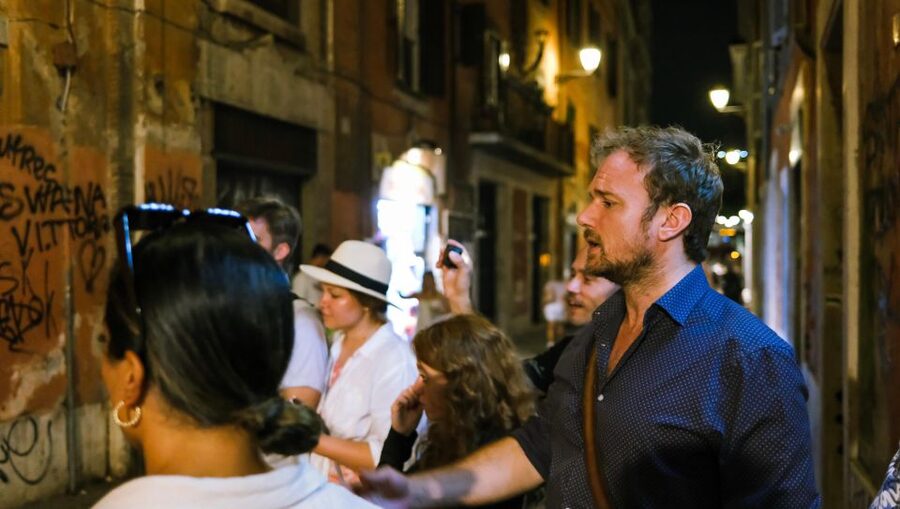
Rome’s dark side shows up in daylight too. This historical true crime walking tour in Rome pairs expert storytelling with real street-level scenes, from Campo de’ Fiori to Castel Sant’Angelo. I especially liked the guide-performer energy, whether it was Ben or Ivana setting the tone, and the tight small group size (max 15), which makes it easy to hear every detail.
Two hours is a sweet spot: you cover the places tied to notorious figures like Giordano Bruno and Cagliostro, then you walk through the city’s political and personal scandals at a pace you can actually enjoy. The route also gives you practical Rome value, since you’re shown backstreets you might skip on a classic highlights day, plus a quick restroom/drinks break at a local bar.
One consideration: this tour is built around historical crime and scandal, not recent true crime or modern ghosts. If you’re hoping for today’s cases or a heavy supernatural angle, you might feel the mix is more history-leaning than horror-forward, even when the stories get gruesome.
In This Review
- Key Things I’d Put On Your Radar
- Entering Rome’s Underworld at Campo de’ Fiori
- Why the Guides’ Storytelling Style Makes It Work
- Giordano Bruno and the Meaning of Public Punishment
- Piazza Farnese: Where Politics and Status Leave Footprints
- Ponte Sisto: A Short Walk That Sets the Mood
- Via Giulia and the Court-Side Drama You Don’t Learn in Postcards
- A 10-Minute Local Bar Stop for Restrooms and Breathers
- The Maidalchini Era: When Influence Works Through People
- Giulia Tofana: Poison, Rumor, and the Fear That Spreads Faster Than Evidence
- The Borgias and Beatrice Cenci: Treachery That Feels Close to Home
- Castel Sant’Angelo: Finishing Where Stories Feel Like They’re Meant to End
- Price and Value: What $29 Buys You in Real Walking Time
- Logistics That Matter: Outdoor Walking, Pace, and Rain Gear
- Who Should Book This Tour (And Who Might Skip It)
- Should You Book Secrets of Rome: Historical True Crime Small Group Tour?
- FAQ
- How long is the Secrets of Rome historical true crime tour?
- Where do I meet the guide?
- What language is the tour offered in?
- What is the group size limit?
- Is the tour wheelchair accessible?
- Does the tour run in bad weather?
- What’s included, and what about payments and refunds?
Key Things I’d Put On Your Radar
- Campo de’ Fiori start with Giordano Bruno and Rome’s public idea of justice
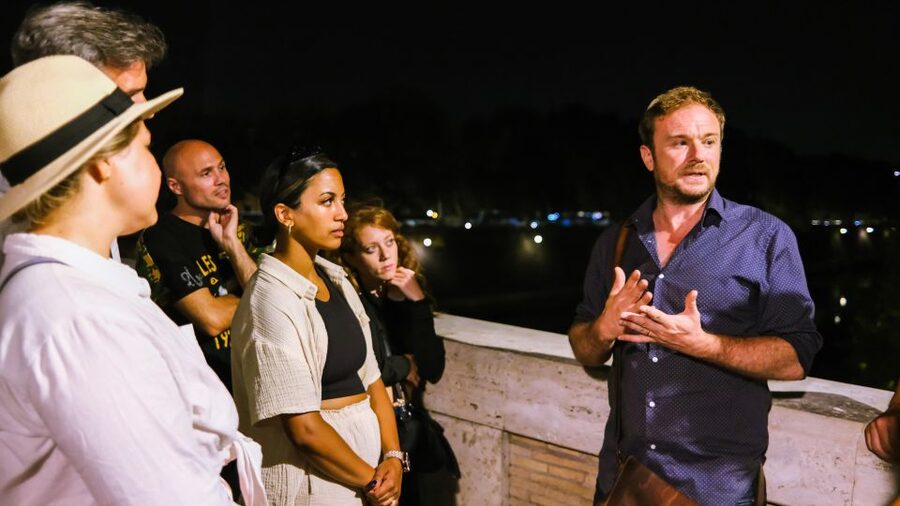
- A small-group format (max 15) that keeps the story clear and the pace comfortable
- Piazza Farnese, Ponte Sisto, and Via Giulia as story backdrops, not just photo stops
- The Maidalchini and Tofana scandals framed as power games, not just lurid names
- An end at Castel Sant’Angelo that makes the walk feel like a complete arc
Entering Rome’s Underworld at Campo de’ Fiori
Your tour starts in the middle of Campo de’ Fiori, where your guide waits in front of the statue and holds a sign that reads Rome’s Dark Side. This matters because Campo de’ Fiori is one of those places where history is still visible in the layout. You’re not just hearing stories in a vacuum; you’re hearing them in the exact setting that shaped them.
This is also a smart way to start your first evening (or first day) in Rome. You get an immediate sense of how the city operated: crowds, authority, rumor, and punishment all played out in plain sight. When the tour begins, the tone is clear—crime, scandal, and consequences, delivered like a story you can follow.
Worth a look next to this Rome booking:
- Rome in a Day Tour with Vatican, Colosseum and Historic Center
★ 4.5 · 1,042 reviews - Rome Food Tour in the Historic Centre with 8+ Food Tastings
★ 5.0 · 1,000 reviews - Rome: Forbidden History Walking Tour & Pub Crawl with Drinks
★ 4.9 · 688 reviews - Rome: Guided Bar Crawl with Drinks & Dark History
★ 4.9 · 444 reviews
Why the Guides’ Storytelling Style Makes It Work
The biggest strength here isn’t the subject matter alone. It’s the way the guide teaches it: live, in English, and with a performance mindset. I’ve seen guides in Rome who recite dates; on this kind of tour, the guide turns historical figures into people with motives, leverage, fear, and ambition.
That’s why names like Ben and Ivana keep coming up in visitors’ feedback. Their delivery tends to stay engaging from start to finish, even when the details get darker. Ariel is another name you’ll hear, and the common thread is clear: the guide doesn’t treat the tour like a lecture.
A practical upside: the small group size helps you stay connected. When you’re not packed shoulder-to-shoulder, you catch the key points without strain, and it’s easier to ask something related if it comes up naturally during the walk.
Giordano Bruno and the Meaning of Public Punishment
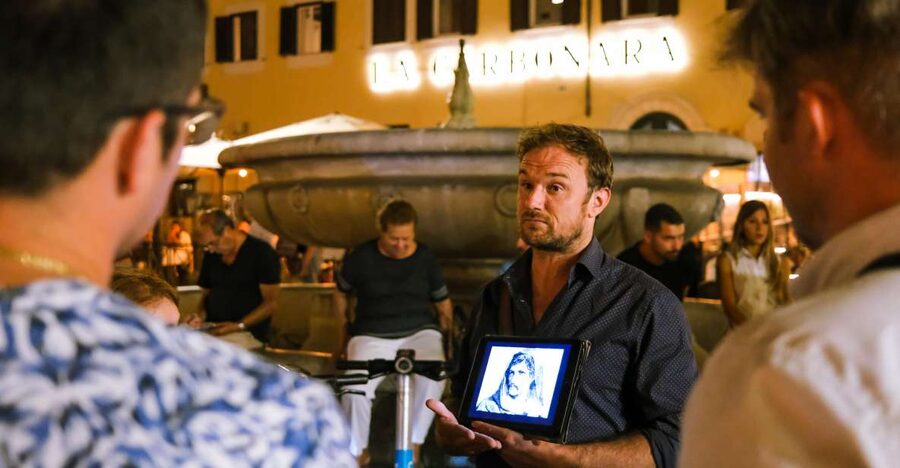
The tour’s first major story point is Giordano Bruno’s fiery demise at Campo de’ Fiori. Even if you only know the headline version of Bruno’s story, what the tour adds is context: why his fate played so well for the authorities, and how Rome used public spectacle as a warning.
This part of the tour is more than gore-and-grief. It’s about the social mechanics of power. Standing in the square, you can understand how public punishment functioned as communication—less about one person, more about what Rome wanted everyone else to believe.
If you like true crime because you enjoy motive and method, this opening fits that mindset. The guide doesn’t only say what happened; it frames who benefited and what message was sent.
Piazza Farnese: Where Politics and Status Leave Footprints
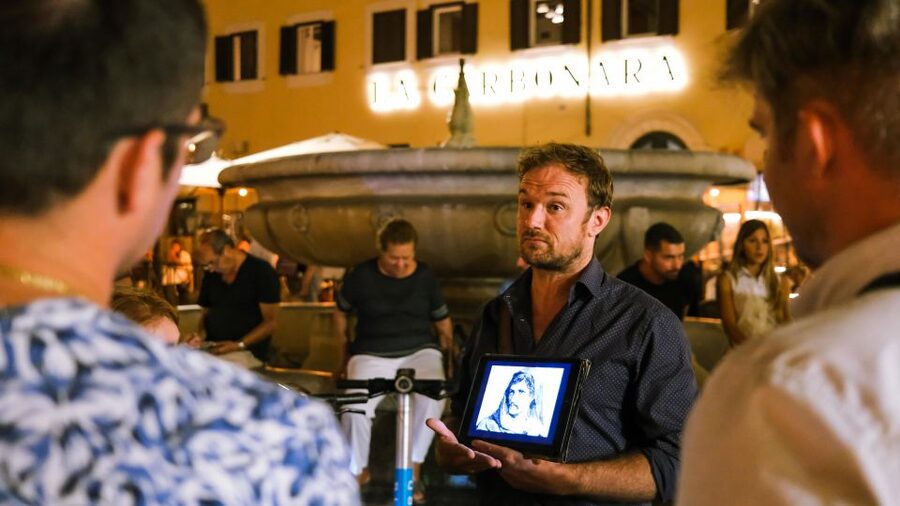
From Campo de’ Fiori, you continue toward Piazza Farnese. This stop helps shift the story from one tragic case to the bigger environment that produced cases like Bruno’s. In places like Piazza Farnese, you feel how elite circles shaped Rome’s power structure, even when the common people were the ones who paid the price.
This is where the tour becomes valuable even if you’re not a crime buff. You start to see Rome as a place where influence moves through buildings, families, and networks. The guide’s storytelling connects those dots without turning the walk into a history textbook.
One drawback to keep in mind: some stops feel more “story-heavy” than “view-heavy.” If you’re traveling mainly for grand monuments, you’ll still get important places, but the emphasis stays on the human intrigue.




Ponte Sisto: A Short Walk That Sets the Mood
Next up is Ponte Sisto. Bridges are underrated for storytelling tours because they naturally create a sense of transition. You’re moving between neighborhoods, between eras, and between the way Rome looked and how it functioned.
At Ponte Sisto, the tour often turns from public spectacle to the quieter side of power—alliances, secrecy, and maneuvering. It’s not that the crime stops; it’s that the guide shows how crimes and scandals often grew from relationships rather than random acts.
The practical win here is that Ponte Sisto is a good pacing marker. It breaks up the walk so you don’t feel like you’re grinding through a long stretch before the story gives you something new to hold onto.
Via Giulia and the Court-Side Drama You Don’t Learn in Postcards
Then comes Via Giulia, one of Rome’s most important streets for understanding how the city organized itself. For this tour, Via Giulia acts like a corridor into court-side drama. You’re walking through a space linked to the kind of social life where reputation was currency, and where “who you knew” could be as dangerous as “what you did.”
This stop is especially strong if you like scandal. That’s where the tour brings up figures tied to the messy reality of 17th-century influence—people who could steer outcomes and ruin lives through persuasion, favoritism, and fear.
If you tend to remember stories better when you can imagine the setting, Via Giulia helps a lot. It puts you in a street framework where intrigue feels logical.
A 10-Minute Local Bar Stop for Restrooms and Breathers
You’ll get a short break at a local bar, about 10 minutes, built in for restroom and drinks. This is genuinely useful on an outdoor walking tour, because it keeps the energy up and prevents the group from stalling out in awkward silence.
It’s also a reminder of what the tour does and doesn’t include. Food and drinks aren’t part of the ticket, so you should plan to buy water (or something stronger) if you need it. The break gives you the chance, but you’ll still want to budget for snacks if you’re out all day.
The Maidalchini Era: When Influence Works Through People
The tour’s scandal track brings in Donna Olimpia Maidalchini, a major power player in 17th-century Rome. The key is how the guide frames her: not as a cartoon villain, but as someone who understood the system well enough to operate within it.
When this story lands, you start to realize a pattern. Historical crime in Rome often ties to status struggles and political leverage. People weren’t only punished because of what they did; they were targeted because of what they threatened.
That angle makes the tour feel more like “why this happened” than “look how awful.” It’s a small shift, but it keeps the stories from feeling purely sensational.
Giulia Tofana: Poison, Rumor, and the Fear That Spreads Faster Than Evidence
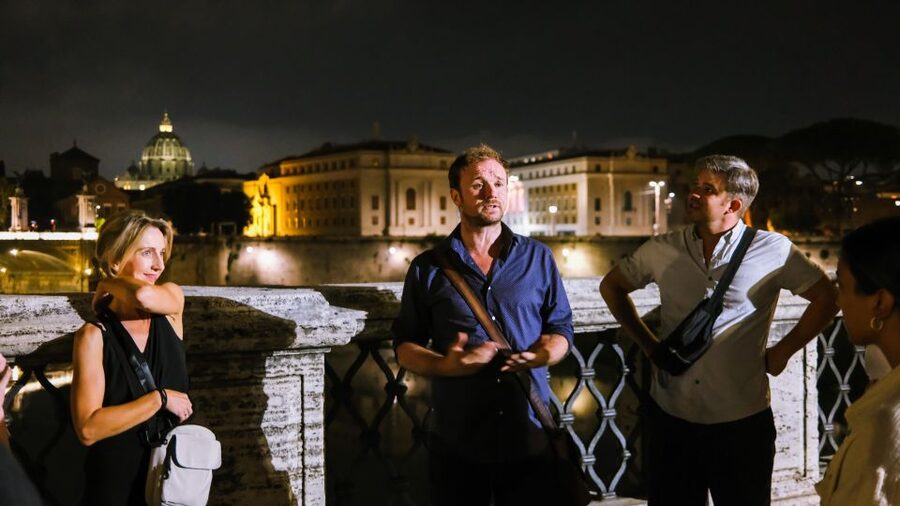
Next, you hear about Giulia Tofana, the notorious poisoner. Even without getting into lurid detail, this kind of story works well on foot because you’re not separated from the environment that shaped rumor and fear.
Poison stories hit differently because they’re about ambiguity. When something looks like illness rather than violence, it changes how people react. The guide’s storytelling approach tends to highlight that tension—uncertainty, suspicion, and the way authorities and communities try to restore control.
If you’ve ever watched a true crime case where the hardest part is proving intent, this stop gives you a historical version of that problem.
The Borgias and Beatrice Cenci: Treachery That Feels Close to Home
No true crime-style Rome walk feels complete without the Borgias, and this one includes them as part of the treachery-and-cunning storyline. Whether you know them from pop culture or just the basic idea of ruthless politics, the guide’s approach turns the family name into a mechanism: power, alliances, and how scandal becomes strategy.
Then the tour adds Beatrice Cenci, a tragic figure tied to betrayal and lasting heartbreak. This is where the tour shows it can handle the emotional side too, not only the weapon-and-motive stuff.
Beatrice’s story is especially effective in a walking tour setting because you can imagine how betrayal and social consequences unfolded in daily life. You’re not just hearing a grim tale; you’re learning how ordinary streets can become stages for extraordinary harm.
Castel Sant’Angelo: Finishing Where Stories Feel Like They’re Meant to End
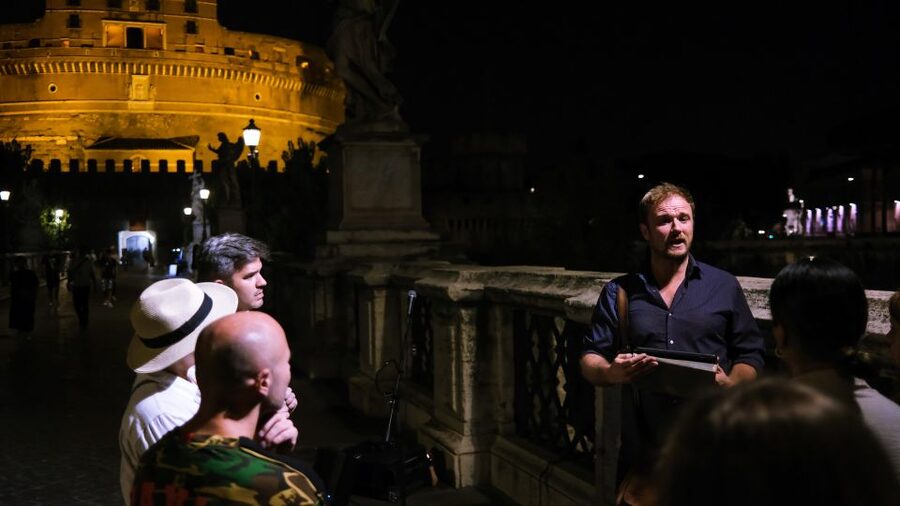
The tour finishes at Castel Sant’Angelo. This ending is satisfying because the building carries a certain weight, and it also helps the walk feel like an arc rather than a set of random stops. You start with public spectacle, move through court influence and street-level intrigue, then land in a location that feels tied to power and control.
Even if you’re not an architect or a fortress-history fan, the finish gives you something to do right after the tour. You can pause, take a breath, and keep exploring the surrounding area with your new “what’s really going on here” lens.
Price and Value: What $29 Buys You in Real Walking Time
At $29 per person for 2 hours, this tour is priced like a high-value evening activity. The math is simple: you’re paying for expert storytelling plus a guided walk through multiple major (and story-relevant) areas, without the extra cost of a big attraction ticket.
What makes the price feel fair is the structure. You get a compact route, a maximum group size of 15, and live English guidance focused on human stories. For many visitors, that’s more memorable than spending the same time rushing through monuments with less context.
The only cost add-on is what you bring for breaks. Since food and drinks aren’t included, you’ll probably want to buy water or a quick drink during the bar stop if the weather is warm or you’re prone to getting thirsty.
Logistics That Matter: Outdoor Walking, Pace, and Rain Gear
This tour runs rain or shine and is all outdoors, so bring an umbrella or rain coat. That’s not a small detail. Rome sidewalks can get slick, and you’ll want traction and comfort so you can keep listening without rushing your body.
Pace-wise, the tour is long enough to feel complete but not so long that you’ll be worn out. And the scheduled restroom/drinks stop helps a lot. If you’re someone who hates being stuck in a group that doesn’t stop, you’ll appreciate that the break is planned in.
Also, wear shoes you trust. This is Rome, and even the “nice” streets can include uneven pavement and short changes in slope.
Who Should Book This Tour (And Who Might Skip It)
Book this if you like:
- True crime vibes with a history backbone
- Learning the backstory behind Rome’s famous squares and streets
- Guides who act like storytellers, not reciters
You might consider skipping if:
- You’re expecting modern-case true crime or a supernatural ghost hunt
- You want a strictly sightseeing, photo-first itinerary
This works best as an early or mid-trip activity. It helps you interpret Rome while you’re still building your mental map, which makes the rest of your days more interesting.
Should You Book Secrets of Rome: Historical True Crime Small Group Tour?
Yes, if you want a small-group, story-led Rome experience that’s easy to fit into two hours and unlikely to bore you. At $29, the value comes from the combination: live English guide performance, multiple meaningful stops, and a format that keeps you engaged without dragging.
I’d book it if you’re curious about the darker side of Rome’s past and you like stories with motives and consequences. Bring rain gear, plan for a drinks purchase at the bar break, and treat it like an evening narrative walk through how power and fear shaped the city.
If that sounds like your kind of Rome, this tour is a strong pick.
FAQ
How long is the Secrets of Rome historical true crime tour?
It lasts 2 hours.
Where do I meet the guide?
Meet in the middle of Campo de’ Fiori, in front of the statue, and look for your guide holding a sign that says Rome’s Dark Side.
What language is the tour offered in?
The live tour guide speaks English.
What is the group size limit?
The group is small, with a maximum of 15 people.
Is the tour wheelchair accessible?
Yes, it is wheelchair accessible.
Does the tour run in bad weather?
Yes, it runs rain or shine and is entirely outdoors, so bring an umbrella or rain coat.
What’s included, and what about payments and refunds?
The tour includes an expert storytelling guide. Food and drinks are not included. You can cancel up to 24 hours in advance for a full refund, and you can reserve now and pay later.
More Historical Tours in Rome
- Rome in a Day Tour with Vatican, Colosseum and Historic Center
★ 4.5 · 1,042 reviews - Rome Food Tour in the Historic Centre with 8+ Food Tastings
★ 5.0 · 1,000 reviews - Rome: Forbidden History Walking Tour & Pub Crawl with Drinks
★ 4.9 · 688 reviews - Rome: Guided Bar Crawl with Drinks & Dark History
★ 4.9 · 444 reviews - Rome: Vespa Photo Tour with Historic City Highlights
★ 5.0 · 395 reviews - Twilight Treasures: An Evening Tour Through Rome’s Rich History
★ 4.5 · 263 reviews
More Tours in Rome
- Vatican Museums, Sistine Chapel & St. Peter’s Basilica Tour
★ 4.3 · 73,970 reviews - Vatican Museums, Sistine Chapel & St Peter’s Basilica Guided Tour
★ 4.5 · 39,149 reviews - Rome: Colosseum, Palatine Hill and Roman Forum Guided Tour
★ 4.8 · 32,814 reviews - Rome: Guided Tour of Colosseum, Roman Forum & Palatine Hill
★ 4.7 · 27,897 reviews - Rome: Colosseum, Roman Forum and Palatine Hill Guided Tour
★ 4.5 · 23,903 reviews - Rome: Colosseum Arena Floor, Palatine & Forum Guided Tour
★ 4.5 · 20,180 reviews
More Tour Reviews in Rome
- Vatican Museums, Sistine Chapel & St. Peter’s Basilica Tour
★ 4.3 · 73,970 reviews - Vatican Museums, Sistine Chapel & St Peter’s Basilica Guided Tour
★ 4.5 · 39,149 reviews - Rome: Colosseum, Palatine Hill and Roman Forum Guided Tour
★ 4.8 · 32,814 reviews - Rome: Guided Tour of Colosseum, Roman Forum & Palatine Hill
★ 4.7 · 27,897 reviews - Rome: Colosseum & Forum with Audio Guide App -Optional Arena
★ 4.2 · 24,770 reviews - Rome: Colosseum, Roman Forum and Palatine Hill Guided Tour
★ 4.5 · 23,903 reviews
Just added to our Rome reviews





Historical Tours, compared.
 ★ 4.5Rome in a Day Tour with Vatican, Colosseum and Historic CenterFrom $1921,042 reviews
 ★ 5.0Rome Food Tour in the Historic Centre with 8+ Food TastingsFrom $1181,000 reviews
 ★ 4.9Forbidden History Walking Tour & Pub Crawl with DrinksFrom $61688 reviews
 ★ 4.9Guided Bar Crawl with Drinks & Dark HistoryFrom $77444 reviews
 ★ 5.0Vespa Photo Tour with Historic City HighlightsFrom $33395 reviews
 ★ 4.5Twilight Treasures: An Evening Tour Through Rome’s Rich HistoryFrom $4263 reviews
 ★ 5.0Small-Group Rome to Pompeii & Amalfi: Day of History & SeaFrom $144239 reviews
 ★ 4.7Colosseum, Vatican Museums & Historic Center in a Day228 reviews
Browse the lists this tour appears in