
Rome hits differently after dark. This ghostly walking tour threads you through grim sites and famous bridges, mixing execution stories with paranormal style moments. I especially like how it starts at Castel Sant’Angelo and keeps going to spots most daytime tours skip. You’ll get spine-chilling storytelling that stays human, not just spooky for spooky’s sake.
Two things I really appreciate: the route links major landmarks with lesser-known corners, and the guide-driven narration makes the history feel personal. One thing to consider: you’ll be outside at night with a moderate walking pace, and it’s not a good fit if you have heart or mobility concerns.
In This Review
- Key highlights to look for
- Why This Night Walk Feels Different Than a Usual Rome Tour
- Starting at Castel Sant’Angelo: Tomb, Fortress, and a Quick Reality Check
- Ponte Sant’Angelo Connections You’ll Notice After Your Guide Points Them Out
- Giulia Street and the Brotherhood of Mercy Church: When Stories Get Real
- The John Paul Getty III Kidnapping Spot: A Shock of Modern Darkness
- Campo de’Fiori and the Execution-Site Atmosphere
- How Long Is Two Hours, Really? Pace, Weather, and Comfort
- Price and Value: What You Really Get for $36
- Guides and Storytelling Style: The Human Part That Makes It Work
- Who Should Book This Tour (and Who Should Skip It)
- Booking Notes That Matter for Real Life
- Should You Book Rome’s Ghostly Tour?
- FAQ
- Where does the Rome ghost tour start?
- How long is the tour?
- How much does it cost?
- What languages are offered?
- What should I bring?
- Is the tour available in bad weather?
- Is it wheelchair accessible?
Key highlights to look for
- Castel Sant’Angelo as your kickoff point: tomb-to-fortress vibes right from the start
- Ponte Sant’Angelo views and nearby dark legends tied to prisons and poisoners
- Giulia Street + Brotherhood of Mercy stop, connected to public punishment in Rome
- Campo de’Fiori and the execution-site atmosphere, with dowsing-rod “hot spots”
- Small, guide-led feel: the best versions depend on the storytelling (and some guides stand out fast)
Why This Night Walk Feels Different Than a Usual Rome Tour
If you’ve only seen Rome in daylight, you’re missing half the mood. This tour leans into the city’s darker reputation on purpose. It’s a 2-hour nighttime route that keeps moving, so you’re always going from one eerie story to the next.
The style is simple: you walk, your guide tells the tale, and certain places trigger the next beat. The “paranormal” part isn’t a theme park show. It’s more like a guided night walk where you’re invited to pay attention—shadows, corners, and the way a place can feel heavier after someone tells you what happened there.
And yes, the tour is heavy on the grim side: brutal executions, haunted legends, and notorious episodes from Rome’s past. If you want gentle sightseeing, this isn’t that.
After dark: other Rome walks
- Winner 2025 Rome Twilight Trastevere Food Tour by Eating Europe
★ 5.0 · 5,157 reviews - Rome: City Highlights Open-Top Bus Night Tour
★ 4.1 · 2,038 reviews - Rome: Paranormal Night Walking Tour & Secret Backstreets
★ 4.9 · 1,921 reviews - Vespa Sidecar Tour By Night with Pickup
★ 5.0 · 1,803 reviews
Starting at Castel Sant’Angelo: Tomb, Fortress, and a Quick Reality Check
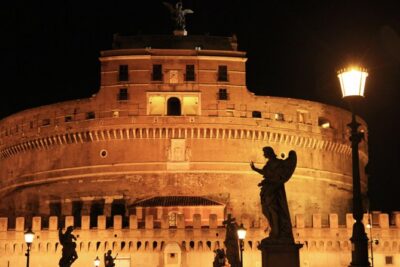
Your meeting point is at the end of Ponte Sant’Angelo, right in front of Castel Sant’Angelo, with the guide holding a company-branded flag. That matters because this is one of those tours where you don’t want to guess. Find the flag, get your footing, and settle in.
Castel Sant’Angelo is already a story in stone: it started as a tomb and later became a fortress connected to papal power. On a ghost tour, that timeline is useful. Your guide can frame it as a place that shifted roles—resting place to stronghold—so the “dark past” isn’t random. It feels earned.
Practical note: even if you know the building from photos, seeing it at night gives it a different silhouette. It’s a solid way to set expectations early: this isn’t a soft romance of Rome. It’s the grim, old machine.
Ponte Sant’Angelo Connections You’ll Notice After Your Guide Points Them Out
Crossing Ponte Sant’Angelo is one of the easiest parts to enjoy, because the bridge itself is a landmark. The real value comes from what you’re taught to look for while you’re there.
The tour places you near a cluster of darker associations: an area connected with an ancient prison for women and the home of a notorious poisoner. Even if you don’t remember every detail, you’ll remember the feeling of walking a famous bridge while hearing names and stories linked to punishment and secrecy.
This is also where the tour starts shaping your mental map. Once you understand that you’re walking through layers—beauty on the surface, dread underneath—it changes how you interpret nearby streets.
Giulia Street and the Brotherhood of Mercy Church: When Stories Get Real
From the bridge, the route moves toward Giulia Street and a church tied to the Brotherhood of Mercy. This is a key stop because it connects to the way public executions played out in Rome.
Your guide brings you to the head church connected with the Brotherhood of Mercy, described as a place where public executions were carried out. That’s the kind of detail that turns “scary stories” into something more grounded. You’re not just hearing ghosts. You’re hearing about systems—public spectacle, power, and fear.
The value here is contrast. You’re walking through a normal-looking urban corridor, but the narration makes it clear that these streets once served a different purpose. That’s what makes a night tour stick with you: the city doesn’t change, but your understanding of it does.




The John Paul Getty III Kidnapping Spot: A Shock of Modern Darkness
One of the route surprises is that the tour doesn’t stay only in ancient time. You visit the spot where John Paul Getty III was kidnapped in the 1970s. That stops the “everything is medieval” vibe.
For you, this adds variety without breaking the mood. It also gives your guide a chance to show how certain kinds of violence and secrecy repeat across centuries in different forms. The tone can feel like the same shadow wearing a newer mask.
If you like tours that connect eras, this is a smart pivot. It reminds you the “ghost” isn’t only supernatural. Sometimes it’s the unresolved human chaos that history leaves behind.
Campo de’Fiori and the Execution-Site Atmosphere
Then you move toward Campo de’Fiori, noted as a site associated with thousands of brutal executions. On a daytime walk, it can feel like a regular city square. At night—after hearing what happened there—it turns into something else.
This stop is where the tour leans hardest into the “haunted presence” idea. You explore paranormal “hot spots” using dowsing rods, guided by your leader. That’s part of the entertainment, but it’s also part of the point: you’re meant to slow down, watch your own reactions, and treat the stories as a shared experience.
A quick reality check: dowsing rods are still a theatrical, attention-based activity rather than scientific proof. But if you enjoy interactive storytelling, it can be genuinely fun. It turns you from listener into participant for a short window.
How Long Is Two Hours, Really? Pace, Weather, and Comfort
Two hours goes quickly on this kind of route—because you’re not just standing at viewpoints. You’re walking between places while your guide talks. The tour describes a moderate amount of walking, and the meeting-to-ending rhythm keeps you engaged.
The tour operates in all weather conditions, so dress for Rome at night rather than Rome at noon. Comfortable shoes are a must; this is not a “cute sandals only” night. If you’re visiting in rain, bring what you need to stay stable and warm.
Also, the tour isn’t recommended for heart conditions or mobility impairments. That’s a straight-up fit issue: it’s outside, at night, with continuous movement. And it’s not suitable for wheelchair users, based on the walking nature of the route.
Price and Value: What You Really Get for $36
At $36 per person for a 2-hour guided nighttime walk, the value is mostly about concentration. You’re not paying for transit time. You’re paying for a guide-led circuit that hits multiple emotionally heavy stops without you needing to plan anything.
The included pieces are straightforward: a guided walking tour and a professional live guide. You’re also getting something harder to price: a narrative thread that ties places together. That’s why the guide matters. When the guide delivers well, the tour feels like it has a spine.
If you’re already in central Rome and want an experience that feels different from the usual photo stops, this price point makes sense. It’s also a good option for adults who like stories but don’t want to commit to an all-night event.
Guides and Storytelling Style: The Human Part That Makes It Work
The tour’s success often comes down to the guide. In the best versions, the narration is engaging and structured, so you don’t get lost in names and dates. You’ll see that across different guides attached to the experience.
Examples from past guides include Giuseppe, described as highly involved and able to fully engage the group. Fabiana gets praise for telling stories in an engaging way, and one account specifically highlights that the stories were appropriate for kids of certain ages—so the guide can tune the tone when needed. Josué is described as animated and deeply informed, with strong attention to individuals in a smaller group setting. Mauricio and Andrea also come up for preparation and for keeping people involved through the route.
So what does that mean for you? Pick your expectations based on the kind of night you want:
- If you enjoy storytelling, this tour will likely feel like a shared campfire—just with darker subject matter.
- If you’re sensitive to grim content, you should know that the route includes execution sites and graphic-era themes. Keep that in mind before you commit.
Who Should Book This Tour (and Who Should Skip It)
I think this works best for you if:
- You want a night ghost tour in Rome that focuses on place-based stories rather than vague spooky wandering.
- You like adult-oriented history (with a strong dark edge), and you enjoy being guided to specific spots like Castel Sant’Angelo and Campo de’Fiori.
- You prefer small, guide-driven experiences over big bus-style tours.
I’d skip it if:
- You need wheelchair-friendly access; it isn’t suitable for that.
- You’re dealing with heart conditions or mobility issues that make night walking and uneven city streets hard.
- You want a light, cheerful Rome evening. This one leans grim.
Booking Notes That Matter for Real Life
A couple practical points you’ll care about:
- The tour is scheduled as 2 hours, and starting times depend on availability.
- You can cancel up to 24 hours in advance for a full refund.
- Hotel pickup and drop-off aren’t included, so plan to meet the guide at Castel Sant’Angelo (flag in hand).
If you’re traveling with friends, this is also a nice option to compare energy levels. Some nights you want history. Some nights you want theatre. This one sits closer to theatre, with history as the script.
Should You Book Rome’s Ghostly Tour?
Book it if you want Rome at night with a strong story thread: Castel Sant’Angelo to Ponte Sant’Angelo, Giulia Street to the Brotherhood of Mercy, then out to Campo de’Fiori and the dowsing-rod “hot spots.” The route is compact, the timing is sane, and the guide-led storytelling is the main attraction.
Skip it if you’re looking for something family-friendly in a mild way or you’re uncomfortable with execution-site themes. Also skip if mobility or heart concerns make nighttime walking risky.
If you’re on the fence, here’s the deciding question: Do you want your Rome evening to feel like a mystery with real locations attached? If yes, this tour is a strong, good-value bet for your calendar.
FAQ
Where does the Rome ghost tour start?
The meeting point is at the end of Ponte Sant’Angelo, in front of Castel Sant’Angelo. The guide will be holding a company-branded flag.
How long is the tour?
The duration is 2 hours.
How much does it cost?
The price is $36 per person.
What languages are offered?
The live tour guide speaks Spanish, English, and Italian.
What should I bring?
Wear comfortable shoes since there is a moderate amount of walking.
Is the tour available in bad weather?
Yes. The tour operates in all weather conditions, so dress appropriately for the night and conditions.
Is it wheelchair accessible?
No. It is not suitable for wheelchair users.
More Tours in Rome
- Vatican Museums, Sistine Chapel & St. Peter’s Basilica Tour
★ 4.3 · 73,970 reviews - Vatican Museums, Sistine Chapel & St Peter’s Basilica Guided Tour
★ 4.5 · 39,149 reviews - Rome: Colosseum, Palatine Hill and Roman Forum Guided Tour
★ 4.8 · 32,814 reviews - Rome: Guided Tour of Colosseum, Roman Forum & Palatine Hill
★ 4.7 · 27,897 reviews - Rome: Colosseum, Roman Forum and Palatine Hill Guided Tour
★ 4.5 · 23,903 reviews - Rome: Colosseum Arena Floor, Palatine & Forum Guided Tour
★ 4.5 · 20,180 reviews
More Tour Reviews in Rome
- Vatican Museums, Sistine Chapel & St. Peter’s Basilica Tour
★ 4.3 · 73,970 reviews - Vatican Museums, Sistine Chapel & St Peter’s Basilica Guided Tour
★ 4.5 · 39,149 reviews - Rome: Colosseum, Palatine Hill and Roman Forum Guided Tour
★ 4.8 · 32,814 reviews - Rome: Guided Tour of Colosseum, Roman Forum & Palatine Hill
★ 4.7 · 27,897 reviews - Rome: Colosseum & Forum with Audio Guide App -Optional Arena
★ 4.2 · 24,770 reviews - Rome: Colosseum, Roman Forum and Palatine Hill Guided Tour
★ 4.5 · 23,903 reviews
When the Lights Come On in Rome
- Winner 2025 Rome Twilight Trastevere Food Tour by Eating Europe
★ 5.0 · 5,157 reviews - Rome: City Highlights Open-Top Bus Night Tour
★ 4.1 · 2,038 reviews - Rome: Paranormal Night Walking Tour & Secret Backstreets
★ 4.9 · 1,921 reviews - Vespa Sidecar Tour By Night with Pickup
★ 5.0 · 1,803 reviews - Rome by Night – Ebike Small Group Tour – Food and Wine (Option)
★ 5.0 · 1,275 reviews - Rome by Night: E-bike Small Group Tour -Food & Wine (Option)
★ 4.9 · 1,233 reviews
Just added to our Rome reviews





Rome Night Tours, compared.
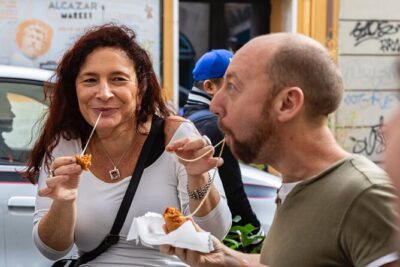 ★ 5.0Winner 2025 Rome Twilight Trastevere Food Tour by Eating EuropeFrom $1255,157 reviews
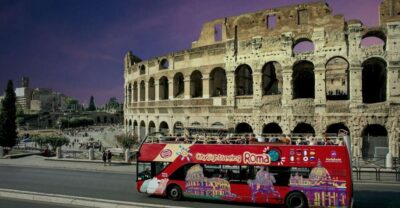 ★ 4.1City Highlights Open-Top Bus Night TourFrom $222,038 reviews
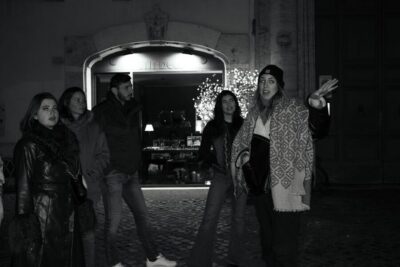 ★ 4.9Paranormal Night Walking Tour & Secret BackstreetsFrom $341,921 reviews
 ★ 5.0Vespa Sidecar Tour By Night with PickupFrom $1461,803 reviews
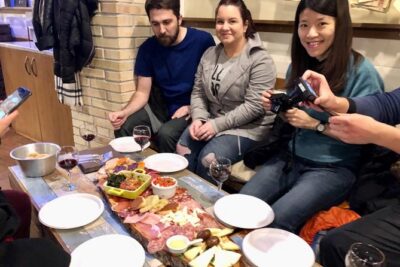 ★ 5.0Rome by Night – Ebike Small Group Tour – Food and Wine (Option)From $711,275 reviews
 ★ 4.9Rome by Night: E-bike Small Group Tour -Food & Wine (Option)From $691,233 reviews
 ★ 4.8Small-Group Guided Day or Night Walking TourFrom $231,009 reviews
 ★ 4.5Rome by Night Walking Tour – Legends & Criminal StoriesFrom $141,003 reviews
Browse the lists this tour appears in