
Reviewed · WALKING TOURS
Rome walking tour: Churches, Squares and Fountains
Trajan to Trevi in one easy walk. This Rome route strings together major ancient and baroque highlights so you get your bearings fast.
I especially like how it stays personal with a cap of 15 people, and I also like the way it uses radio headsets so you don’t miss the details at busy corners.
One heads-up: most stops are outside only, and a couple of major sites list admission tickets as not included.
In This Review
- Key Highlights You’ll Feel on This Walk
- Why This Walking Route Works: Trajan to Trevi
- Price and Pace: 2.5 Hours, Small Group, Radio Headsets
- Trajan’s Column and Trajan’s Market: Ancient Rome’s Victory Feel
- Piazza Venezia and the Jewish Ghetto: Rome’s Layers in Real Life
- Campo de’ Fiori to Piazza Navona: Markets, Stadium Bones, and Bernini
- Pantheon and Piazza di Pietra: What You See Without Going Inside
- Trevi Fountain Finish Line: The World’s Most Famous Baroque Moment
- Guide Quality Is the Real Deal Here
- Who This Tour Fits (and Who Might Want Something Else)
- A Few Practical Tips for Enjoying Every Stop
- Should You Book This Rome Churches, Squares and Fountains Walk?
- FAQ
- What’s the duration of the Rome walking tour?
- How much does the tour cost?
- How many people are in the group?
- Is the tour in English?
- Where do I meet the guide?
- Where does the tour end?
- Are tickets to monuments included?
- What time does the tour start?
- Is transportation provided?
- What if I need to cancel?
Key Highlights You’ll Feel on This Walk
- Max 15 people keeps the pace sane and questions easy to fit in.
- Radio headsets help you hear the guide clearly across plazas and traffic noise.
- Churches, squares, fountains, and Roman monuments are packed into about 2 hours 30 minutes.
- Ancient-to-modern contrasts show up fast, from Trajan’s Column to Trevi Fountain.
- Shade planning on hot days is part of how the tour is run, which matters in Rome summer heat.
Why This Walking Route Works: Trajan to Trevi
Rome can feel like a puzzle. This tour turns it into a straight line you can follow. You start around the forums area and end at Trevi, and in between you hit a mix of power, faith, and everyday life—ancient emperors, a historic Jewish neighborhood, and the city’s most photogenic fountains.
I like that the route doesn’t just throw famous names at you. It gives you a reason to look closely. For example, Trajan’s Column isn’t treated like a postcard. You’re taught how its spiral relief was built to celebrate Roman victory—specifically the wars between the Romans and Dacians—so you understand why it became a model for later “victory columns.”
And because you’re walking, you pick up Rome’s texture: the geometry of squares, how buildings frame views, and how people actually move through the center. You’re not stuck staring at a bus window.
Worth a look next to this Rome booking:
- Rome: Guided Food Walking Tour with Wine in Trastevere
★ 4.9 · 3,105 reviews - Rome: Trastevere & Campo de Fiori Street Food Walking Tour
★ 4.9 · 2,768 reviews - Rome: Paranormal Night Walking Tour & Secret Backstreets
★ 4.9 · 1,921 reviews - Rome: Trastevere Street Food Walking Tour with Local Expert
★ 4.8 · 1,784 reviews
Price and Pace: 2.5 Hours, Small Group, Radio Headsets
At $42.17 per person for about 2 hours 30 minutes, this tour is priced like a “high-value overview” option. The reason it feels worth it isn’t the number of stops. It’s the guided pacing. With radio headsets and a group size capped at 15, you can hear the explanation without constantly asking for repeats.
The pace is set for a moderate physical fitness level—meaning you should be comfortable walking several blocks at a time and handling uneven pavement. The tour is in English, starts at 10:00 am, and it’s offered near public transportation, which helps if you’re coming from elsewhere in Rome.
Also, the tour tells you to show up about 20 minutes early at the meeting point. That’s not just bureaucracy. It helps the group get moving smoothly instead of losing time when everyone trickles in at once.
Trajan’s Column and Trajan’s Market: Ancient Rome’s Victory Feel
Stop one is Colonna Traiana (Trajan’s Column). It was completed in AD 113, and it’s famous for that spiral bas-relief that winds upward. The key detail here is what it depicts: Rome’s campaigns, especially against the Dacians. Once you know that, you start “reading” the column instead of just looking at it.
A few blocks later you reach Mercati di Traiano – Museo dei Fori Imperiali. This area is associated with Trajan’s Market, a huge complex of ruins. You’ll hear the idea that it was thought of as the world’s oldest shopping mall—though opinions today lean more toward administrative offices connected to Emperor Trajan. Either way, it’s a great reminder that Roman buildings often served multiple roles.
Why this portion matters: it gives context for the rest of the walk. When you’re on later squares and church fronts, you’re not seeing things in isolation. You’re seeing layers of the same city story—where old power shapes what comes next.
Piazza Venezia and the Jewish Ghetto: Rome’s Layers in Real Life
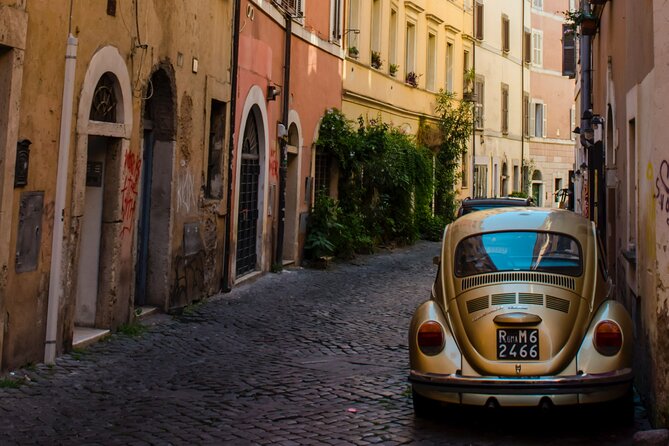
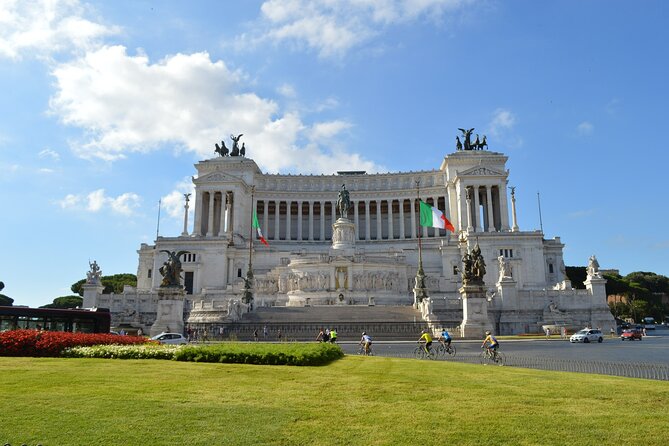
Next is Piazza Venezia, one of Rome’s best-known squares. It’s a big open stage with major landmarks around it, including the Victor Emmanuel II Monument and Palazzo Venezia. The guide’s job here is to help you orient. From this kind of square, you start understanding how Rome’s “big views” work and why later neighborhoods and churches ended up where they did.
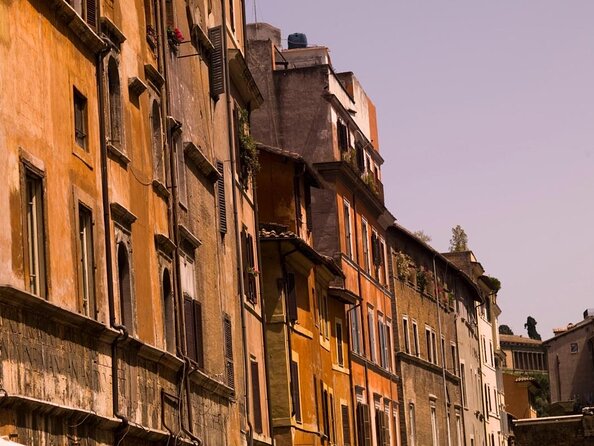
Then comes the Antico Quartiere Ebraico, the Jewish Ghetto. It’s described as being between the Tiber and Piazza Venezia, and it’s one of Rome’s less-visited historical stops compared with the top mega-sites. This is also where the walk becomes more human.
You learn that the Jewish community in Rome is considered the oldest in Europe, and over time the area grew into a neighborhood with restaurants, churches, and synagogues. The mix is the point: you’re seeing Jewish culture and Roman architecture side by side, not in separate museum rooms but in a living city block.
Tip for this part: slow down your pace on the edges of the streets. That’s where you’ll catch the way facades and entrances relate to the street line. On a walk tour, those small visual clues are often where the “aha” moments happen.




Campo de’ Fiori to Piazza Navona: Markets, Stadium Bones, and Bernini
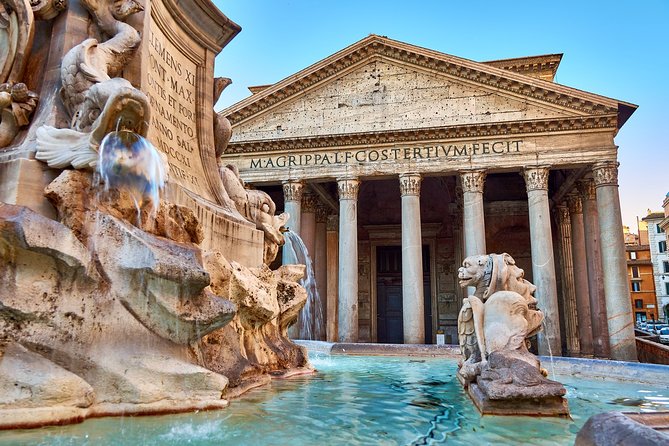
Campo de’ Fiori is next, and it’s famous for its street market. It’s the kind of square where you can pause, watch people, and get a feel for daily Rome life. Even if you’re not shopping, it’s a useful break between heavier monuments—partly because it gives you a change in pace.
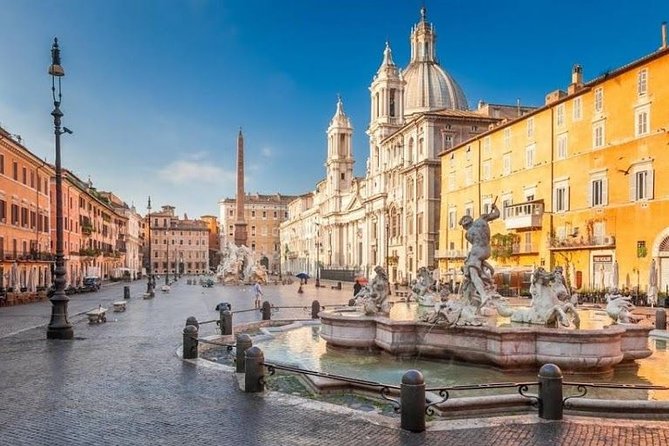
Then you move to Piazza Navona, which is a baroque showpiece with origins tied to ancient Rome. The area once hosted a stadium, and you can still sense that old “sports venue” geometry in how the square holds its shape.
Two landmarks anchor the vibe:
- Fontana dei Quattro Fiumi (Fountain of the Four Rivers) by Bernini
- Church of Santa Agnese in Agone
If you’re the type who likes to connect art and architecture to the era that made them, this stop delivers. It’s not just a pretty fountain. It’s a baroque statement placed on older ground.
A practical note: Piazza Navona can be busy. The radio headsets and small group size really help here because you can keep your eyes on the guide while still enjoying the square.
Pantheon and Piazza di Pietra: What You See Without Going Inside
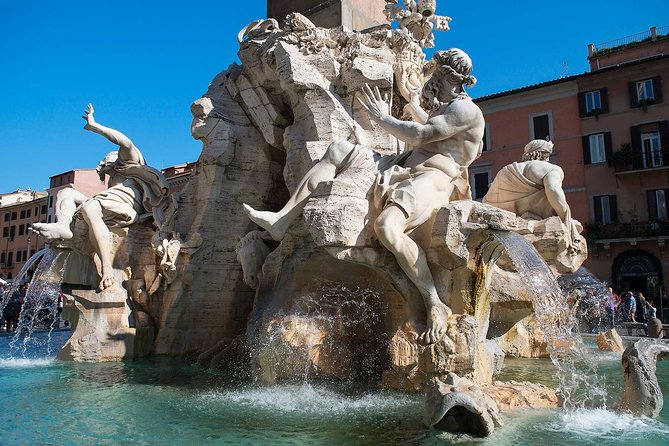
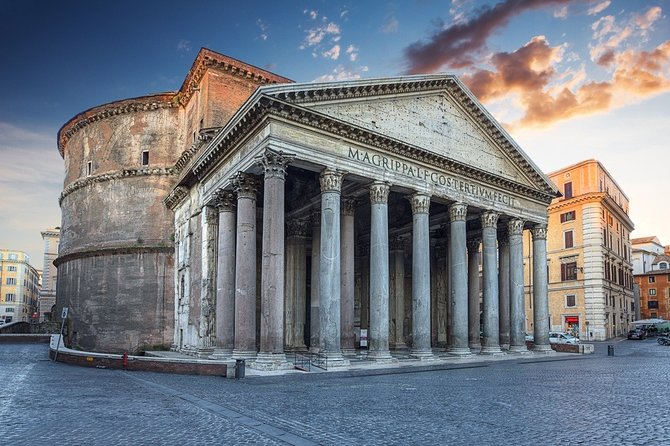
The tour includes Pantheon, one of the best-preserved ancient Rome monuments. The big story you’ll hear is its transformation: originally built as a temple dedicated to all the gods, then converted into a church in the 7th century. That’s why its exterior and overall look still feel close to the original form.
Here’s the key limitation: the tour is set up so sights are explained from the outside, and there’s no entry into any buildings. The Pantheon stop also lists admission tickets as not included, which matches the outside-only approach. In other words, you get the visual and historical framework, but not the interior experience.
Then you’re at Piazza di Pietra, where you’ll find the Temple of Hadrian. You’re not going inside (again, outside explanations), but you can still appreciate the temple’s role as an ancient Roman structure dedicated to Emperor Hadrian.
Why I think this pair works: together they show two ways Rome “keeps” its monuments. One is preserved through continued use (Pantheon shifting from temple to church). The other remains in recognizable architectural form, still readable as Roman engineering even after centuries of change.
Trevi Fountain Finish Line: The World’s Most Famous Baroque Moment
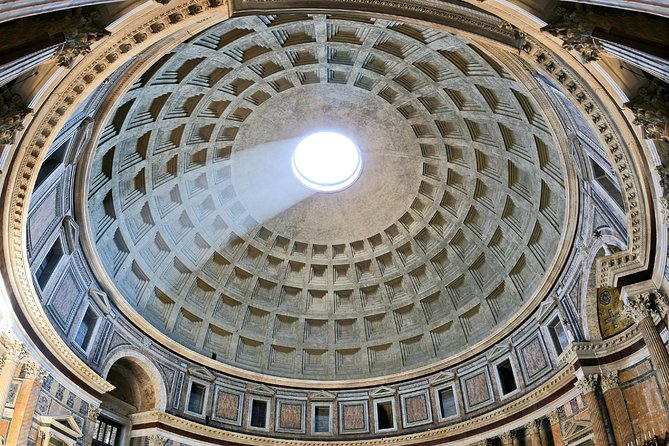
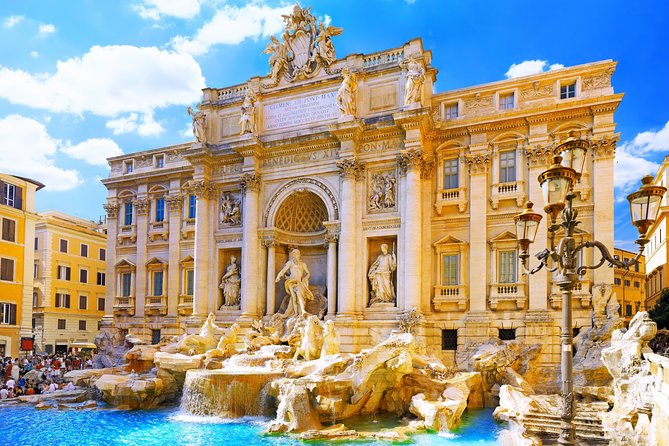
You end at Trevi Fountain at Piazza di Trevi. It’s described as the largest Baroque fountain in Rome—and arguably one of the most famous in the world.
This is an excellent place to finish because it’s visual right away. Even if the walk up to it feels like you’re absorbing history, Trevi resets your brain with scale and drama. You get to close the tour with an iconic scene instead of another monument that asks you to think before you can enjoy.
For best results, plan your photos and walking rhythm. Trevi is popular, so you’ll want a moment to step slightly away from the crowd edges if you can, then return for close shots. Finishing here also helps because you’re dropped in a place where it’s easy to keep exploring afterward on your own.
Guide Quality Is the Real Deal Here
The tour’s strongest asset is the guide. In the feedback, guides like Brian, Alessandra, and Suzanna get consistent praise for making the route fun and for keeping it structured enough that you don’t lose the thread.
One detail that comes up more than once is shade planning on a hot day. That matters in Rome. Even when the route is “just walking,” the difference between sun exposure and shaded pauses can be huge for your enjoyment.
Guides also do well at balancing big-name sites with context. You’re not just told what something is—you’re given the why: what it represented, what changed over time, and how each stop fits into Rome’s larger story.
Who This Tour Fits (and Who Might Want Something Else)
This is a smart choice if you want a high-impact overview in one go:
- You’re seeing Rome for the first time and want major sites in a logical line
- You like walking tours but also want structure and commentary
- You’re traveling with people who want history explained without getting lost in a research rabbit hole
It may not be the best fit if your priority is interiors and ticketed access. Since the tour explains monuments from the outside and lists some admission as not included, you’ll likely want separate plans if you want to go inside certain buildings.
If you hate walking in heat, go into it with eyes open. The route covers enough ground that comfort matters. That said, the shade-conscious approach from guides helps.
A Few Practical Tips for Enjoying Every Stop
- Arrive early at the meeting point so you start on time (the tour asks for 20 minutes early).
- Bring a plan for water if you’re going in hot season; even with shade stops, Rome sun adds up.
- Keep your expectations aligned: you’ll get the big story outside, not a museum-style inside visit.
Should You Book This Rome Churches, Squares and Fountains Walk?
I’d book it if you want an efficient, guided way to see core Roman highlights without spending the day figuring out where everything is or how it connects. The combination of small group size (15 max), radio headsets, and a route that runs from ancient monuments to Trevi makes it a strong value for a first pass through the center.
Skip it—or pair it with other plans—if you specifically want interior access at major sites. This tour is set up for orientation and exterior appreciation, not full ticketed building time.
If you’re flexible and want a guided overview that actually helps you understand what you’re looking at, this is the kind of walk that makes Rome feel navigable.
FAQ
What’s the duration of the Rome walking tour?
It runs for about 2 hours 30 minutes.
How much does the tour cost?
The price is listed as $42.17 per person.
How many people are in the group?
The tour is capped at 15 travelers.
Is the tour in English?
Yes, it’s offered in English.
Where do I meet the guide?
The meeting point is Foro Traiano, 84, 00187 Roma RM, Italy.
Where does the tour end?
It ends at Trevi Fountain, Piazza di Trevi, 00187 Roma RM, Italy.
Are tickets to monuments included?
The tour states that monuments are explained from the outside with no entry into any buildings. Some stops list admission ticket details as not included (for example Trajan’s Market and the Pantheon), while others are listed as free for viewing.
What time does the tour start?
The start time is 10:00 am.
Is transportation provided?
No private transportation is included; it’s a walking tour and the meeting point is near public transit.
What if I need to cancel?
You can cancel for a full refund if you cancel at least 24 hours before the experience starts.
More Walking Tours in Rome
- Rome: Guided Food Walking Tour with Wine in Trastevere
★ 4.9 · 3,105 reviews - Rome: Trastevere & Campo de Fiori Street Food Walking Tour
★ 4.9 · 2,768 reviews - Rome: Paranormal Night Walking Tour & Secret Backstreets
★ 4.9 · 1,921 reviews - Rome: Trastevere Street Food Walking Tour with Local Expert
★ 4.8 · 1,784 reviews - Rome: Small-Group Guided Day or Night Walking Tour
★ 4.8 · 1,009 reviews - Rome by Night Walking Tour – Legends & Criminal Stories
★ 4.5 · 1,003 reviews
More Tours in Rome
- Vatican Museums, Sistine Chapel & St. Peter’s Basilica Tour
★ 4.3 · 73,970 reviews - Vatican Museums, Sistine Chapel & St Peter’s Basilica Guided Tour
★ 4.5 · 39,149 reviews - Rome: Colosseum, Palatine Hill and Roman Forum Guided Tour
★ 4.8 · 32,814 reviews - Rome: Guided Tour of Colosseum, Roman Forum & Palatine Hill
★ 4.7 · 27,897 reviews - Rome: Colosseum, Roman Forum and Palatine Hill Guided Tour
★ 4.5 · 23,903 reviews - Rome: Colosseum Arena Floor, Palatine & Forum Guided Tour
★ 4.5 · 20,180 reviews
More Tour Reviews in Rome
- Vatican Museums, Sistine Chapel & St. Peter’s Basilica Tour
★ 4.3 · 73,970 reviews - Vatican Museums, Sistine Chapel & St Peter’s Basilica Guided Tour
★ 4.5 · 39,149 reviews - Rome: Colosseum, Palatine Hill and Roman Forum Guided Tour
★ 4.8 · 32,814 reviews - Rome: Guided Tour of Colosseum, Roman Forum & Palatine Hill
★ 4.7 · 27,897 reviews - Rome: Colosseum & Forum with Audio Guide App -Optional Arena
★ 4.2 · 24,770 reviews - Rome: Colosseum, Roman Forum and Palatine Hill Guided Tour
★ 4.5 · 23,903 reviews
Just added to our Rome reviews





Walking Tours, compared.
 ★ 4.9Guided Food Walking Tour with Wine in TrastevereFrom $1003,105 reviews
 ★ 4.9Trastevere & Campo de Fiori Street Food Walking TourFrom $512,768 reviews
 ★ 4.9Paranormal Night Walking Tour & Secret BackstreetsFrom $341,921 reviews
 ★ 4.8Trastevere Street Food Walking Tour with Local ExpertFrom $571,784 reviews
 ★ 4.8Small-Group Guided Day or Night Walking TourFrom $231,009 reviews
 ★ 4.5Rome by Night Walking Tour – Legends & Criminal StoriesFrom $141,003 reviews
 ★ 4.4Guided City Center Evening Sightseeing Walking TourFrom $46953 reviews
 ★ 4.9Small-Group City Highlights Moonlight Walking TourFrom $29949 reviews
Browse the lists this tour appears in