
Reviewed · COLOSSEUM & ANCIENT ROME TOURS
Rome: Vatican Museums and Colosseum Private Tour with Transfers
Rome can feel like a blur—this day plan is built to slow you down. You’ll pair the Colosseum and Roman Forum with the Vatican Museums and St. Peter’s Basilica in one carefully timed, private experience with hotel pickup and a guide who keeps the story—and the logistics—moving.
I love two things most: the comfort of all-in-one private transfers between sites and the way the day is structured around major timed entry moments, including fast-track access at the Vatican. One thing to consider: it’s still a full sightseeing day with moderate walking, lots of steps, and strict dress code rules for places of worship.
In This Review
- Key Highlights That Make This Tour Feel Worth It
- Hotel Pickup at 8:45 and How the Day Actually Works
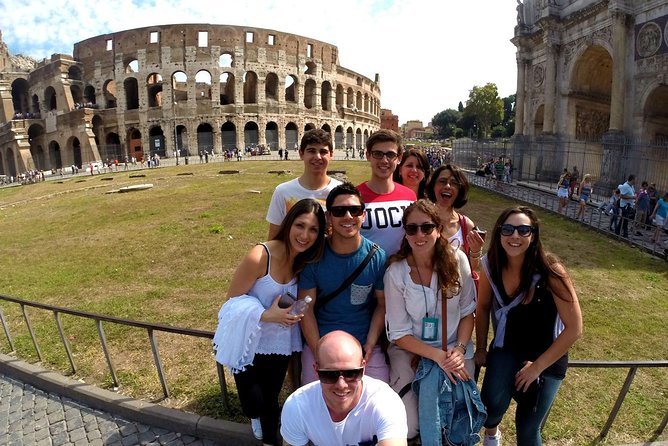
- Walking Into the Colosseum: Piazza Approach and First Impressions
- Entering the Colosseum: Design, Politics, and Gladiator Reality
- Roman Forum Up Close: Saturnalia, Lapis Niger, and the Vestal Virgins
- Constantine’s Triumphal Arch View: A Turning-Point Moment
- Vatican Museums with Fast-Track Entry: Private Access, Smarter Time Use
- Court of the Pine Cone and the Galleries That Make Art Feel Tangible
- Sistine Chapel Ceiling and St. Peter’s Basilica in One Continuous Story
- Don’t Rush These Basilica Landmarks: Baldachin and Pietà
- St. Peter’s Square: Bernini’s Layout and the Church’s Public Face
- Price and Value: What You’re Paying For (and What You Still Need to Plan)
- Should You Book This Private Rome Day?
- FAQ
- What time does the tour start, and where will I be picked up?
- How long is the tour?
- Is this a private tour?
- What’s included in the price?
- What’s not included?
- What dress code do I need for the Vatican and churches?
- Can the tour be affected by closures or restorations?
Key Highlights That Make This Tour Feel Worth It
- Hotel pickup in central Rome: saves you from figuring out transit while juggling big ticket sights.
- Fast-track entry in the Vatican: less waiting, more art on your schedule.
- Blue Badge guide for both halves of the day: same guide quality story-telling across ancient and Renaissance Rome.
- Colosseum + Roman Forum tickets included: you don’t have to guess which reservation details matter.
- Short stops in major Vatican galleries: you see signature rooms like Maps and Candelabras without getting lost for hours.
- Built-in pacing: the best versions of this day include breaks in shaded spots and real photo time.
Hotel Pickup at 8:45 and How the Day Actually Works
The tour starts at 8:45 am with pickup from your hotel in central Rome, within the Aurelian Walls. That early start matters more than you’d think. The Colosseum is popular for a reason, and waiting outdoors drains energy fast—especially later when you switch gears and head to the Vatican.
You’ll use private transportation between sites, which is a huge deal for two reasons. First, it keeps the day smoother when you hit Rome’s traffic and pedestrian zones. Second, it protects your time budget. You’re not spending your morning trying to match bus routes to tour deadlines.
The day runs about 8 hours. That’s enough time to see the headline sights, but not enough time to wander off-course. Your guide keeps the pace practical, including breaks when you need them. Shoes help here: closed-toe, non-slip footwear is required for safety around uneven steps.
Other ways through the Vatican Museums
- Vatican Museums, Sistine Chapel & St. Peter’s Basilica Tour
★ 4.3 · 73,970 reviews - Vatican Museums, Sistine Chapel & St Peter’s Basilica Guided Tour
★ 4.5 · 39,149 reviews - Rome: Vatican Museums, Sistine Chapel and Basilica Tour
★ 4.3 · 16,039 reviews - Vatican Museums & Sistine Chapel Skip-the-Line Entry Ticket
★ 4.4 · 13,838 reviews
Walking Into the Colosseum: Piazza Approach and First Impressions
Before you even reach the Colosseum interior, you’ll walk along a nearby Piazza area to access the site and the Roman Forum. It’s one of those Rome moments where the geography helps you understand the scale. You’re moving through the same broad relationship between monuments that made this district the center of ancient city life.
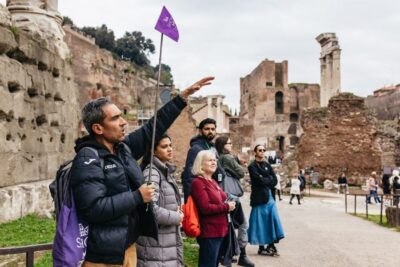
This is also where a private format shines. Instead of being pushed forward in a crowd, you can stop for the right view lines and actually register what you’re looking at. Your guide points out what you’re seeing today compared with what the Romans would’ve recognized—an archaeological site that still reads like a lived-in place, not just ruins.
It’s early in the day and you’ll likely have better light and less crowd crush. So even if the Colosseum is the obvious headline, the walk-up is how the day starts feeling like a story rather than a checklist.
Entering the Colosseum: Design, Politics, and Gladiator Reality
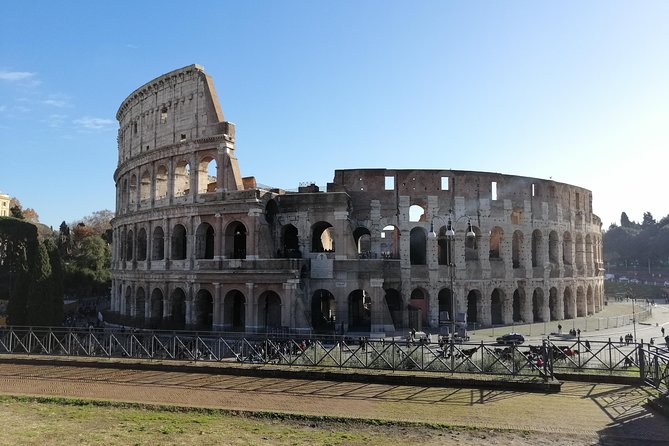
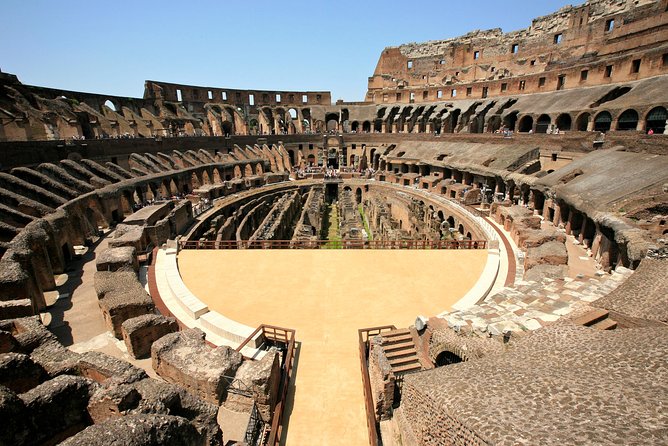
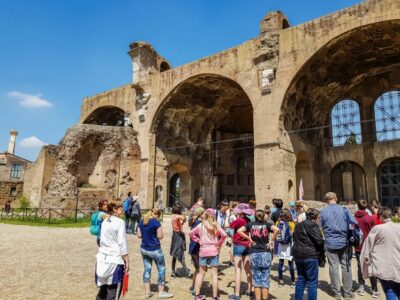
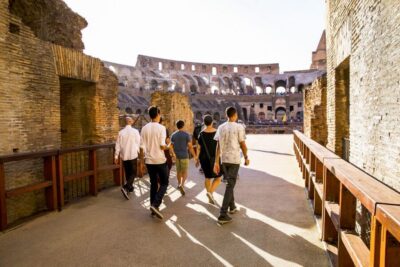
Your Colosseum visit is about 1 hour 30 minutes, and you’ll go in with your guide focusing on what makes this amphitheater more than a photo stop. The Colosseum is described as one of the largest structures of the ancient world, with an estimated capacity around 60,000 spectators—and the construction timeline is part of the mind-bending factor. The claim here is it was built in only 8 years.
What I like about a strong guide approach is that the Colosseum becomes a window into the political machine of ancient Rome. Your guide explains the design and construction and connects it to why the Colosseum mattered. You’ll hear about gladiator games, battles with wild beasts, and even a legend about sea battles. (That last detail is more myth than verified fact, but it helps show how big the spectacle imagination was.)
Practical note: the Colosseum visit can involve uneven steps and a fair amount of walking. Closed-toe shoes are not optional, and even if you feel “tour-ready,” you’ll still appreciate traction and comfort—especially if you’re visiting in summer heat.
Roman Forum Up Close: Saturnalia, Lapis Niger, and the Vestal Virgins
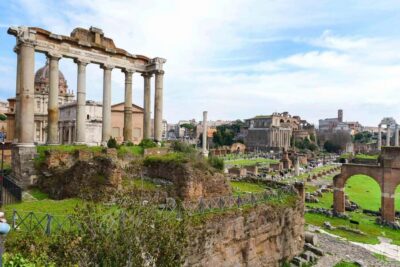
Next you shift to the Roman Forum, also about 1 hour 30 minutes. This is where Rome stops being “old stones” and starts feeling like a place where ceremonies, gods, and daily politics collided.
Your guide brings mythology and popular celebrations to life, including the way Roman beliefs show up in modern astrology. One of the most interesting connections offered here is Saturnalia, the pagan festival that influenced the Christmas date we now associate with December 25. That’s not just trivia—hearing it while standing among the Forum’s remains makes it click.
You’ll also hear the story of the Lapis Niger, meaning black stone. It’s described as the most ancient Latin text ever discovered and is housed in the foundation of a column in the Forum. If you’re the kind of person who likes origins—the earliest words, the earliest artifacts—this stop will reward you.
Then comes the Temple of the Vestal Virgins. You’ll learn that the Vestal Virgins worked there for 30 years under different emperors and were treated with near-goddess status. The big idea: their sacred duty was maintaining the sacred fire of Vesta, described as representing the heart of Rome. The legend given here is simple and powerful: as long as that flame burned, Rome would endure and be victorious.
Still on ancient Rome? A few more we rated
Constantine’s Triumphal Arch View: A Turning-Point Moment
You’ll pause to admire the view of Constantine’s Triumphal Arch. This isn’t just a “look at the cool arch” moment. Your guide frames it as a turning point in Roman history and art—described as a dividing line between the rise of Christianity and the decline of the Roman Empire.
That context matters because Rome’s monuments often feel timeless unless someone gives you a timeline to hold them against. With this viewpoint, you get that “wait, things changed right here” feeling without needing to read a textbook.
Vatican Museums with Fast-Track Entry: Private Access, Smarter Time Use
After the Roman sites, you’ll head to the Vatican Museums. There’s pickup and private transportation included, and you’ll meet your guide and go in with fast-track entry to the Vatican museum complex.
This is where you feel the value of the private setup. The museum ticket line can be brutal, and even when it moves, it eats your limited day time. Fast-track entry helps you avoid spending your peak energy in a queue.
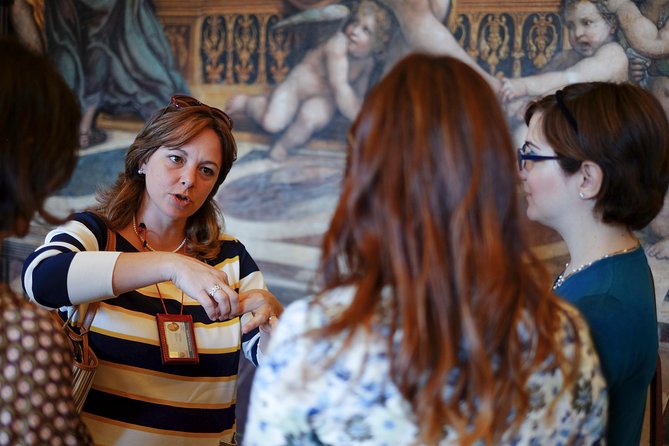
Your visit is designed as a customized private tour, with mentions of seeing hidden gems and even areas that are not open to the general public at all times. That’s a big difference from the typical group shuffle, where everyone gets the same route no matter what they care about.
You’ll spend about 1 hour 40 minutes through the museum highlights, with your guide steering you toward sculpture, carvings, frescoes, and paintings across periods. You’ll also hit the Belvedere Courtyard, a key space that gives you scale and light before you move deeper into gallery rooms.
A couple of names you might hear around these kinds of tours (based on past guides with this company) include Benjamin, Marina, Ellie, and Gianluca—each mentioned for navigating crowds and keeping the storytelling engaging, including for families.
Court of the Pine Cone and the Galleries That Make Art Feel Tangible
From the museum interior, you’ll pass through a set of signature stops that are short but purposeful.
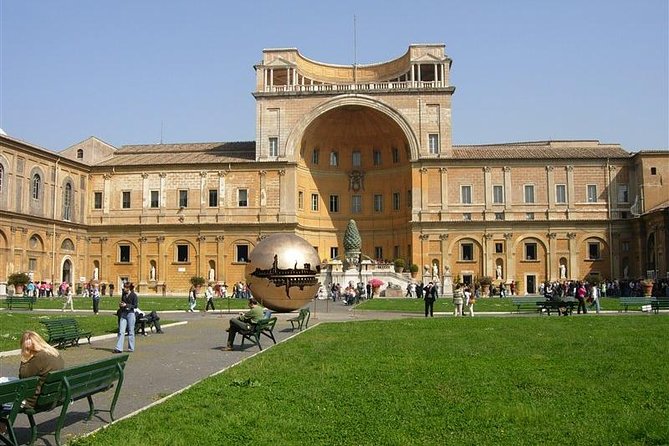
A standout is the Cortile della Pigna (Court of the Pine Cone). It’s described as tranquil, with a colossal bronze pine cone dating back to ancient Rome. The pine cone is described as once being a fountain and as the centerpiece of the courtyard, connected to ideas like enlightenment and eternal life. If you need a mental reset from dense gallery rooms, this courtyard can do that.
Next you’ll spend time in major galleries:
- Gallery of Tapestries (about 20 minutes): 15th and 16th-century tapestries with biblical and historical narratives, inspired by Raphael’s school.
- Gallery of the Candelabras (about 15 minutes): named for grand marble candelabras that split the gallery into thematic sections, mixing ancient art with architectural details.
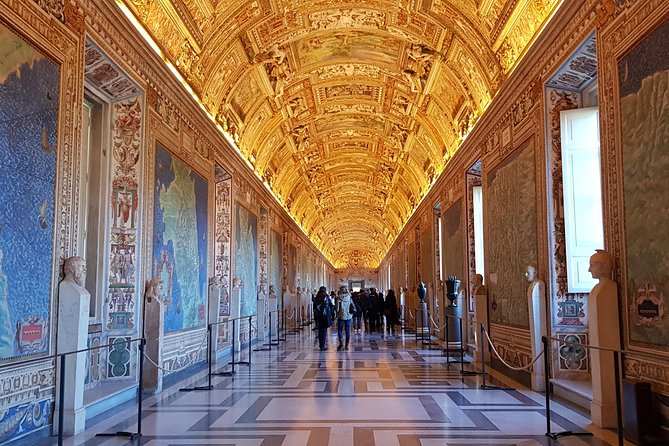
- Gallery of Maps (about 20 minutes): a sweeping 120-meter collection of topographical maps of Italy, created in the 16th century under Pope Gregory XIII.
Here’s why I like these choices for a one-day experience. They aren’t just famous on paper. Tapestry shows storytelling with texture. Maps give you a geographic snapshot of how Italy looked in the past. And candelabra statuary spaces help you “see” how design and display work in museum thinking across centuries.
Sistine Chapel Ceiling and St. Peter’s Basilica in One Continuous Story
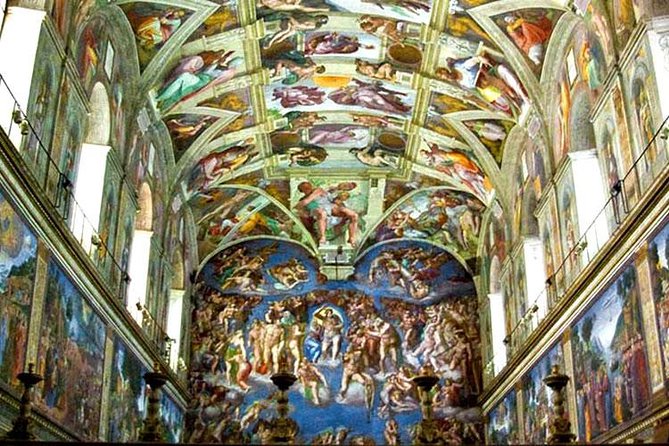
Your Sistine Chapel visit is about 30 minutes. The tour frames its importance in two ways: it’s historically tied to conclaves and official ceremonies, and it’s decorated with Michelangelo’s famed frescoes.
The name comes from Pope Sixtus IV della Rovere, who restored the old Cappella Magna between 1477 and 1480. Even if you’ve seen photos of the ceiling, being there with timing control helps. You can look closely without rushing so hard you miss the details that make the work feel alive.
Then you move to St. Peter’s Basilica for about 20 minutes, including iconic highlights. Your guide connects the architecture to the legend and labor behind it—built over what is traditionally considered the tomb of Saint Peter, with major figures named in its story: Bramante, Michelangelo, and Bernini. You’ll focus on the dome and ornate interior areas.
Don’t Rush These Basilica Landmarks: Baldachin and Pietà
Inside St. Peter’s Basilica, your route includes two of the strongest “wow” points.
First: the Baldachin over the high altar, designed by Gian Lorenzo Bernini. It’s described as a bronze canopy over the altar, towering over 90 feet tall, with intricate details that make it feel both theatrical and architectural. It’s one of those objects where scale hits you only when you’re standing under it.
Second: Michelangelo’s Pietà (dated 1498–1499), a Renaissance sculpture housed in the basilica. This is a quieter emotional stop compared with the Baldachin. It’s also the kind of moment where a guide’s pacing matters—if you move too fast, you miss why people stop and breathe for a second.
Even with short time blocks, these landmarks do the heavy lifting for a first visit.
St. Peter’s Square: Bernini’s Layout and the Church’s Public Face
Your final Vatican-area highlight is St. Peter’s Square (Piazza San Pietro). The square is designed by Gian Lorenzo Bernini from 1656 to 1667 and is described as embodying Baroque grandeur with a double colonnade and a central obelisk. Two large fountains flank the space.
Your guide frames it as a gathering point for major Catholic moments, including when thousands gather during papal addresses. So even if you’re not there for an event day, you still understand the purpose of the layout.
This is a good place to stand back for a moment after being inside so many artworks and religious spaces. It lets you connect the basilica’s interior drama to the outside’s public scale.
Price and Value: What You’re Paying For (and What You Still Need to Plan)
The price here is $1,078.44 per person for a day that combines two major UNESCO-level priorities: the Colosseum + Roman Forum and the Vatican Museums + St. Peter’s Basilica.
So what’s included matters. You get:
- A Blue Badge guide
- Hotel pickup and drop-off plus private transport between sites
- Colosseum and Roman Forum entrance fees
- The Colosseum reservation fee
- Vatican Museums tickets
Food and drinks are not included. In practice, that means you’ll either grab something on your own outside the tour window or handle lunch independently. The best “value” version of this day is the one where your guide keeps you on schedule so you can still eat without stress.
Is it expensive? Yes. But you’re buying time saved, crowd friction reduced, and a guide narrative that links monuments to meaning. If you have limited time in Rome, hate queue pressure, or want a guided day that feels organized rather than chaotic, the private format makes sense.
This tour also fits families. One review detail worth translating into your planning: guides have managed both adults and kids (including a 12-year-old) while keeping the day engaging. For families, the private vehicle and pacing breaks are especially helpful.
Still, it’s not a light day. Plan on walking, uneven steps, and strict dress code rules. For churches and selected museum areas, no shorts or sleeveless tops are allowed, and knees and shoulders must be covered for both men and women. Bring comfy shoes; you’ll thank yourself later.
Should You Book This Private Rome Day?
Book it if you want a high-efficiency day that still feels human—private transport, fast-track access in the Vatican, and guided context across the Colosseum and the Vatican. This is ideal for first-timers, history lovers who don’t want to get lost in logistics, and anyone traveling with limited time.
Skip it (or think twice) if you’re hoping for a slow, meandering Rome day, or if you don’t do well with rules like dress code and a full schedule. It’s also a hard match if you can’t handle walking and uneven steps for hours.
If your goal is: see the big two Rome experiences in one go, with fewer hassles and more story time—this is a strong booking.
FAQ
What time does the tour start, and where will I be picked up?
It starts at 8:45 am. Pickup is from your hotel or accommodation in Rome city center within the Aurelian Walls.
How long is the tour?
The duration is about 8 hours.
Is this a private tour?
Yes. It is a private tour/activity, and only your group participates.
What’s included in the price?
You get a Blue Badge guide, hotel pickup/drop-off and private transportation between sites, Colosseum and Roman Forum entrance fees (including the Colosseum reservation fee), and Vatican Museums tickets.
What’s not included?
Food, drinks, and lunch are not included.
What dress code do I need for the Vatican and churches?
You must cover knees and shoulders. No shorts or sleeveless tops. You may be refused entry if you don’t follow these rules.
Can the tour be affected by closures or restorations?
Some monuments may be under restoration or closed due to extraordinary celebrations. You should watch for any messages sent about possible changes.
More Tour Reviews in Rome
- Vatican Museums, Sistine Chapel & St. Peter’s Basilica Tour
★ 4.3 · 73,970 reviews - Vatican Museums, Sistine Chapel & St Peter’s Basilica Guided Tour
★ 4.5 · 39,149 reviews - Rome: Colosseum, Palatine Hill and Roman Forum Guided Tour
★ 4.8 · 32,814 reviews - Rome: Guided Tour of Colosseum, Roman Forum & Palatine Hill
★ 4.7 · 27,897 reviews - Rome: Colosseum & Forum with Audio Guide App -Optional Arena
★ 4.2 · 24,770 reviews - Rome: Colosseum, Roman Forum and Palatine Hill Guided Tour
★ 4.5 · 23,903 reviews
Ancient Rome, Kept Going
- Rome: Colosseum, Palatine Hill and Roman Forum Guided Tour
★ 4.8 · 32,814 reviews - Rome: Guided Tour of Colosseum, Roman Forum & Palatine Hill
★ 4.7 · 27,897 reviews - Rome: Colosseum & Forum with Audio Guide App -Optional Arena
★ 4.2 · 24,770 reviews - Rome: Colosseum, Roman Forum and Palatine Hill Guided Tour
★ 4.5 · 23,903 reviews - Rome: Colosseum Arena Floor, Palatine & Forum Guided Tour
★ 4.5 · 20,180 reviews - Rome: Colosseum Arena, Palatine Hill & Forum Guided Tour
★ 4.7 · 14,510 reviews
The Vatican, A Few More Ways In
- Vatican Museums, Sistine Chapel & St. Peter’s Basilica Tour
★ 4.3 · 73,970 reviews - Vatican Museums, Sistine Chapel & St Peter’s Basilica Guided Tour
★ 4.5 · 39,149 reviews - Rome: Vatican Museums, Sistine Chapel and Basilica Tour
★ 4.3 · 16,039 reviews - Vatican Museums & Sistine Chapel Skip-the-Line Entry Ticket
★ 4.4 · 13,838 reviews - Rome: Vatican Museums, Sistine Chapel & Basilica Tour
★ 4.7 · 13,217 reviews - Skip-the-Line Group Tour of the Vatican, Sistine Chapel & St. Peter’s Basilica
★ 4.5 · 12,779 reviews
Just added to our Rome reviews





Colosseum & Ancient Rome Tours, compared.
 ★ 4.8Colosseum, Palatine Hill and Roman Forum Guided TourFrom $5232,814 reviews
 ★ 4.7Guided Tour of Colosseum, Roman Forum & Palatine HillFrom $5527,897 reviews
 ★ 4.2Colosseum & Forum with Audio Guide App -Optional ArenaFrom $4124,770 reviews
 ★ 4.5Colosseum, Roman Forum and Palatine Hill Guided TourFrom $5923,903 reviews
 ★ 4.5Colosseum Arena Floor, Palatine & Forum Guided TourFrom $4120,180 reviews
 ★ 4.7Colosseum Arena, Palatine Hill & Forum Guided TourFrom $8414,510 reviews
 ★ 4.6Colosseum,Forum & Palatine Tour + Optional Arena FloorFrom $4513,169 reviews
 ★ 4.7Colosseum: Underground and Ancient Rome TourFrom $16012,691 reviews