
Reviewed · VATICAN MUSEUMS TOURS
Rome: Vatican at Night Small Group Tour with Sistine Chapel
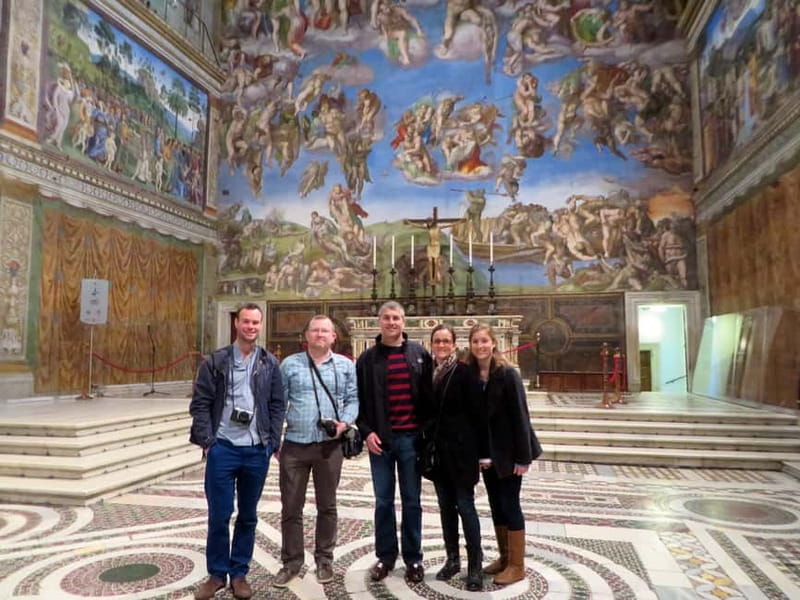
Evenings make the Vatican feel unreal. This skip-the-ticket-line small-group tour gets you into the Vatican Museums when the big day crowds thin out, and I love the chance to ask questions at small-group size (around 6 people) instead of shouting at your phone like the rest of the tour herd. One thing to plan for: the rules are real—covered shoulders and knees, no backpacks, government ID, and silence once you reach the Sistine Chapel.
I also like how the evening format changes the vibe. The art lands differently when the light softens, and your guide keeps the stories moving—from rival artists and papal politics to exactly what to look for in each room. In past groups, guides like Bruno and Leonardo have set the tone with fast, friendly explanations that make the building feel less like a checklist and more like a living machine.
You’ll cover major stops in about 2.5 hours, then you’re left inside the museums to keep wandering. That’s great for momentum, but if you’re the type who needs a slow, hour-by-hour museum day, treat this as a high-impact highlight tour, not the whole Vatican in one sweep.
In This Review
- Key things to know before you go
- Why Vatican at Night Feels Different (and Better)
- The Small-Group Advantage: Real Answers, Not Herd Questions
- Skip the Ticket Lines: What It Really Buys You
- Gallery of Maps: Italy as a Political Statement
- Gallery of Tapestries: Giant Weaving and Optical Tricks
- Sistine Chapel: How to Handle the Silence and Actually See
- Raphael Rooms: Art, Artists, and the Vatican’s Competitive Edge
- Courtyard of the Pigna and Torso del Belvedere: Quick Hits with Big Impact
- Timing and Pacing: 2.5 Hours That Feel Full (Not Exhausting)
- Price and Value: Is $214.11 Worth It?
- What to Wear and Bring (So the Rules Don’t Stress You Out)
- Who This Tour Suits Best
- Should You Book This Vatican Night Tour?
- FAQ
- What’s the duration of the Vatican at Night small group tour?
- Is the tour price $214.11 per person?
- Where do we meet for the tour?
- What’s the group size for this tour?
- Does the tour include skip-the-ticket-line access?
- Which stops are included during the tour?
- Are photos allowed in the Sistine Chapel?
- What should I wear?
- Do I need to bring ID?
- Is food included?
Key things to know before you go
After-hours calm in the Vatican Museums makes the spaces feel bigger and easier to read.
Small-group Q&A (typically just a handful of people) lets you ask follow-ups instead of waiting.
Gallery of Maps and Gallery of Tapestries are explained as more than decoration.
Sistine Chapel timing works well when you’ve got a guide setting you up for the rules and what to notice.
You finish inside the museums, so you can continue at your own pace.
Your tour may run a bit long on some departures, especially with smaller groups.
Why Vatican at Night Feels Different (and Better)
Daytime Vatican Museums can be a bit like trying to read a book on a moving subway. The evening tour solves the main problem: fewer people. Even with other visitors around, the rooms you’ll walk through feel calmer, and that changes how you experience the art.
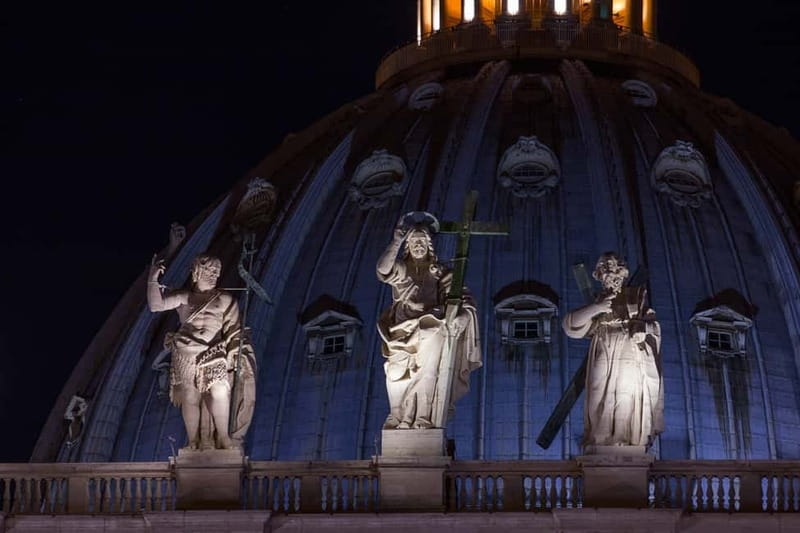
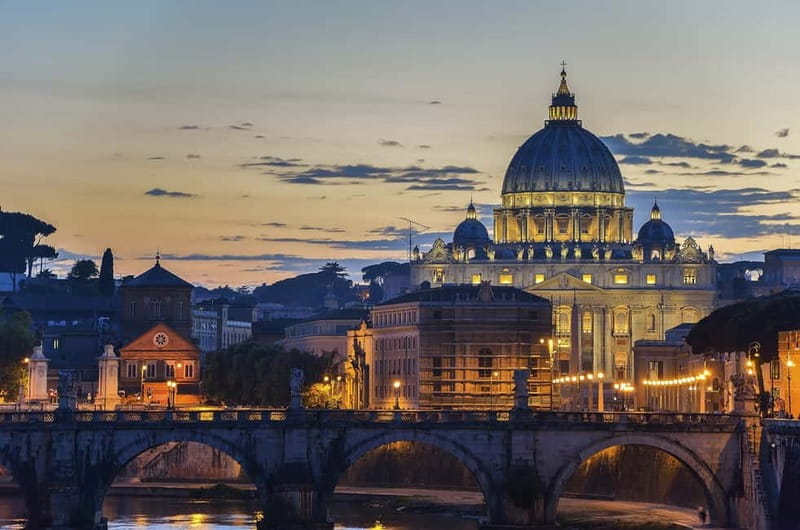
I like that the museum glow in the evening makes surfaces look more dimensional. Marble, paint, and gold don’t all hit the same at noon. At night, the Vatican starts to feel less like a museum warehouse and more like a stage set.
You also get a practical advantage: a strong route through the museum highlights without spending half the time searching for what comes next. Your guide helps you keep your bearings fast, so your brain isn’t doing the work of planning while you’re trying to enjoy.
Other ways through the Vatican Museums
- Vatican Museums, Sistine Chapel & St. Peter’s Basilica Tour
★ 4.3 · 73,970 reviews - Vatican Museums, Sistine Chapel & St Peter’s Basilica Guided Tour
★ 4.5 · 39,149 reviews - Rome: Vatican Museums, Sistine Chapel and Basilica Tour
★ 4.3 · 16,039 reviews - Vatican Museums & Sistine Chapel Skip-the-Line Entry Ticket
★ 4.4 · 13,838 reviews
The Small-Group Advantage: Real Answers, Not Herd Questions
This is the part I’d protect if you care about learning as you go. With a group capped around six, you can actually ask questions and get real answers. If you’ve ever been in a big group where your question gets swallowed by the noise, you already know why that matters.
In groups that are even smaller, the guide energy often gets better too. People have shared experiences of tours extending a bit past the stated 2.5 hours when the group stayed engaged and the timing allowed it. That’s not something you should count on, but it’s a good sign that your guide can flex when the group is small.
Your guide also has multiple languages available—English, Spanish, French, Portuguese, and Italian—so you can match your comfort level without losing the flow.
Skip the Ticket Lines: What It Really Buys You
Skip-the-ticket-line access sounds simple, but here’s what it really means for your day: you lose less time to queues and more time to seeing. Vatican lines can eat your whole morning, and the evening tour keeps you from wasting that energy right at the start.
The catch is that “skip the ticket line” doesn’t remove all museum rules. You still need to come prepared. Think ID, clothing, and packing limits.
If you’re planning this as part of a Rome itinerary, that time saved is the difference between a smooth evening and a rushed one where you’re eating dinner standing up near your hostel. With this tour, you’re more likely to end on a calmer note.
Gallery of Maps: Italy as a Political Statement
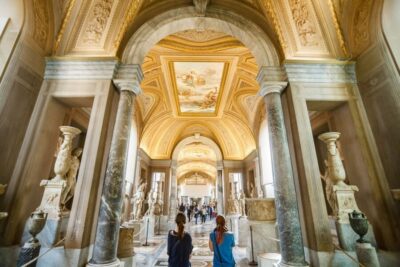
One of the most distinctive stops is the Gallery of Maps. Instead of treating it like a quick corridor, your guide will explain what you’re looking at and why the details mattered. The wall-to-wall topographical depictions of Italy aren’t just geography. They’re a snapshot of power, ambition, and how people understood the peninsula.
As you walk through, pay attention to how the guide connects the map world with the Vatican’s world. You’ll start noticing that this isn’t only about landforms. It’s about influence and control, shown through art.
A small drawback: it’s easy to spend too long staring at the maps instead of moving on. If you tend to get stuck with your nose inches from the details, remind yourself that you’ll revisit some of the ideas when you hit the other rooms.
Worth a look next to this Rome booking:

Gallery of Tapestries: Giant Weaving and Optical Tricks
Then you step into the Gallery of Tapestries, and it’s instantly different. These are not small decorative textiles. You’re looking at giant hand-woven works with optical effects and unexpected visual play.
Your guide’s job here is key. Without explanations, you can still enjoy the craftsmanship, but you might miss the point of why certain effects were built in. With guidance, the room becomes easier to read—and more fun—because you’re learning how the visual trick works.
If you love things that feel like engineering rather than only “pretty,” you’ll probably enjoy this stop a lot. It’s one of those spaces where you understand why people were wowed long before cameras existed.
Sistine Chapel: How to Handle the Silence and Actually See
No photography is allowed in the Sistine Chapel, and silence is mandatory. Your guide will explain this beforehand, and that matters because the moment you walk in, you’ll want to follow the rules without stress.
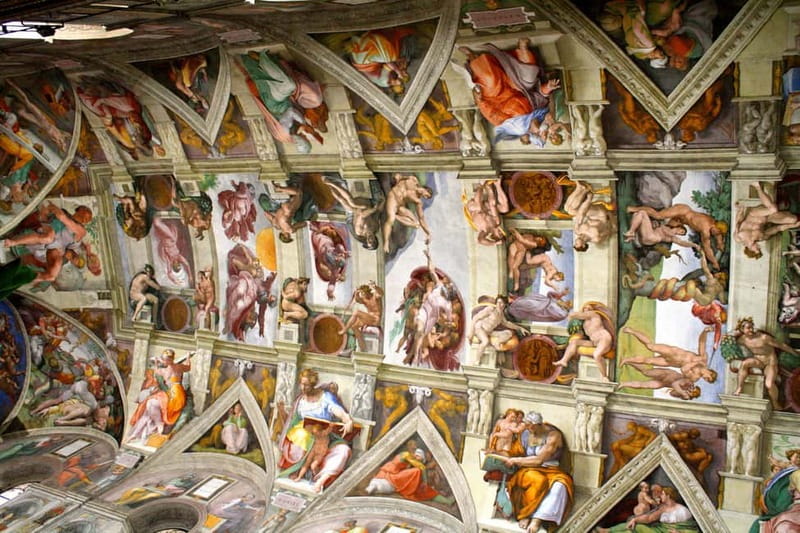
What to do while you’re there: look up, then scan slowly. I find it helps to break the ceiling into sections and let your eyes travel in a calm rhythm. If you get stuck on one area, you’ll keep missing the rest of what makes the ceiling special.
Words and photos don’t do it justice here. The scale is the headline. Sitting in the soft evening light, you can feel how the art was designed to be seen from a distance.
One practical consideration: because you must be quiet, you’ll want to be comfortable with stillness. If you’re traveling with kids who can’t handle long quiet time, you’ll need to manage that carefully before the chapel.
Raphael Rooms: Art, Artists, and the Vatican’s Competitive Edge
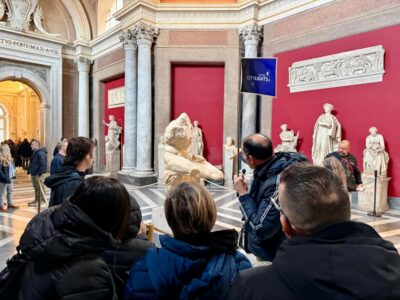
Next up are the Raphael Rooms. These are the kind of spaces where you can easily get lost in admiration and forget to look for context. Your guide will help by tying together stories about the artists, including intense rivalries and the way creative power worked inside the Vatican world.
This is one of those stops where you’ll get more out of the tour if you ask questions. The small-group format makes it possible. If you want to understand a symbol, a scene, or the political subtext behind certain choices, this is a solid time to stop and ask.
You’ll also get a sense of how art and authority moved together. It’s not just painting on walls—it’s communication.
Courtyard of the Pigna and Torso del Belvedere: Quick Hits with Big Impact
The tour also includes a couple of classic Vatican highlights that work as a breather between the heavy hitters.
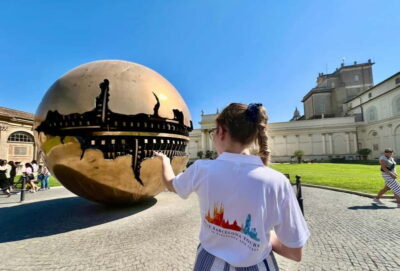
The Courtyard of the Pigna is striking for its open feel and ancient character. It’s a good moment to reset your eyes and your feet. Instead of cramming your attention into nonstop ceiling detail, you get to look at the space itself.
Then there’s the Torso del belvedere. If you’ve ever wondered why ancient sculpture still drives artists crazy, this is the kind of stop that helps explain it. Even without an extended lecture, the shape and form give you a fast lesson in proportion and power.
These final stops are useful because they keep the tour from feeling like only lectures and long wall viewing. You’ll leave with a mix of big stories and memorable objects.
Timing and Pacing: 2.5 Hours That Feel Full (Not Exhausting)
The tour runs about 2.5 hours. That’s short enough to fit into an evening schedule, and long enough to hit multiple major museum zones without feeling like a sprint.
The pacing generally feels intentional: you move through major spaces in a logical order, then finish with the chance to keep exploring. Because you’re not spending the full day there, you can pair it with a real Rome dinner plan afterward instead of eating wherever your feet happen to land.
Still, it’s not a slow museum stroll. You’ll be walking, and you’ll be paying attention. Plan on comfortable shoes and expect a steady flow.
Also note: food and drink aren’t included. I’d treat dinner as your reward after, not something you plan during the tour.
Price and Value: Is $214.11 Worth It?
At $214.11 per person, this isn’t the cheapest way into the Vatican. The value comes from three things you actually feel during the experience.
First, the skip-the-ticket-line benefit saves time you can’t easily buy back. Second, you’re paying for a professional local guide who connects what you’re seeing with stories that make the rooms easier to understand. Third, the small-group size means you’re not just consuming art—you’re getting context and the chance to ask questions.
If you’re the kind of visitor who would otherwise spend your time reading only basic labels, the guide helps you get more out of the same building. If you’re already planning to go hard on Vatican highlights but hate crowds, the evening timing is the other big piece of value.
Where the price can feel less worth it is if you want maximum freedom to wander without stopping, or if you don’t care about understanding what you’re looking at. For those styles, a simpler entry ticket might fit better.
What to Wear and Bring (So the Rules Don’t Stress You Out)
This tour has clear requirements, and it’s worth respecting them before you arrive.
Dress code: places of worship require covered shoulders and knees. That means no tank tops or short dresses. I’d pick something you can move in easily, because you’ll be walking and standing more than you think.
Inside the Sistine Chapel: silence is mandatory, and there’s no photography.
Packing: backpacks aren’t permitted in the museums. If you typically carry a full bag setup, travel light for this one.
You also need to bring government-issued ID for all guests, no exceptions based on age.
Meeting point: you meet in front of Caffé Vaticano on Viale Vaticano 100, across the street from the museum entrance. The tour ends back at that same meeting point, but you’ll also be left inside the museums afterward so you can keep going.
Who This Tour Suits Best
This is a strong fit if you want a high-quality Vatican highlights route without the daytime crowd chaos. It’s also a good match if you love art with context—why it was made, what was at stake, and how rivalries shaped what you see on the walls.
It’s especially good for couples, friends, and solo travelers who like learning from a guide but don’t want to be boxed into a huge group.
If you travel with mobility needs, there is a private version described as barrier-free access. Availability is limited, so you’ll want to plan that ahead.
Should You Book This Vatican Night Tour?
I’d book it if you care about three things: less crowd pressure, strong guiding, and seeing the Vatican’s biggest visual hits in a tight evening window. The small-group size (around six) is the difference between watching art and understanding it.
I’d think twice if you need a totally flexible, slow wandering day. This is structured, and the Sistine Chapel rules mean you’ll be in “follow instructions” mode for a while.
If you want the best of the Vatican Museums with a calmer feel and a guide who can explain the why behind the what, this tour is a solid bet.
FAQ
What’s the duration of the Vatican at Night small group tour?
The tour lasts about 2.5 hours.
Is the tour price $214.11 per person?
Yes, the listed price is $214.11 per person.
Where do we meet for the tour?
You meet in front of Caffé Vaticano at Viale Vaticano 100, across the street from the museum’s entrance.
What’s the group size for this tour?
It’s a small-group tour, described as only 6 people.
Does the tour include skip-the-ticket-line access?
Yes, it includes skip-the-ticket-line access to the Vatican Museums.
Which stops are included during the tour?
Key stops include the Gallery of Maps, Gallery of Tapestries, the Sistine Chapel, Raphael Rooms, Courtyard of the Pigna, and Torso del belvedere.
Are photos allowed in the Sistine Chapel?
No, photography is not allowed in the Sistine Chapel.
What should I wear?
You need covered shoulders and knees. Tank tops and short dresses aren’t allowed.
Do I need to bring ID?
Yes. All guests must bring government-issued ID.
Is food included?
No. Food and drink are not included.
More Tours in Rome
- Vatican Museums, Sistine Chapel & St. Peter’s Basilica Tour
★ 4.3 · 73,970 reviews - Vatican Museums, Sistine Chapel & St Peter’s Basilica Guided Tour
★ 4.5 · 39,149 reviews - Rome: Colosseum, Palatine Hill and Roman Forum Guided Tour
★ 4.8 · 32,814 reviews - Rome: Guided Tour of Colosseum, Roman Forum & Palatine Hill
★ 4.7 · 27,897 reviews - Rome: Colosseum, Roman Forum and Palatine Hill Guided Tour
★ 4.5 · 23,903 reviews - Rome: Colosseum Arena Floor, Palatine & Forum Guided Tour
★ 4.5 · 20,180 reviews
More Tour Reviews in Rome
- Vatican Museums, Sistine Chapel & St. Peter’s Basilica Tour
★ 4.3 · 73,970 reviews - Vatican Museums, Sistine Chapel & St Peter’s Basilica Guided Tour
★ 4.5 · 39,149 reviews - Rome: Colosseum, Palatine Hill and Roman Forum Guided Tour
★ 4.8 · 32,814 reviews - Rome: Guided Tour of Colosseum, Roman Forum & Palatine Hill
★ 4.7 · 27,897 reviews - Rome: Colosseum & Forum with Audio Guide App -Optional Arena
★ 4.2 · 24,770 reviews - Rome: Colosseum, Roman Forum and Palatine Hill Guided Tour
★ 4.5 · 23,903 reviews
The Vatican, A Few More Ways In
- Vatican Museums, Sistine Chapel & St. Peter’s Basilica Tour
★ 4.3 · 73,970 reviews - Vatican Museums, Sistine Chapel & St Peter’s Basilica Guided Tour
★ 4.5 · 39,149 reviews - Rome: Vatican Museums, Sistine Chapel and Basilica Tour
★ 4.3 · 16,039 reviews - Vatican Museums & Sistine Chapel Skip-the-Line Entry Ticket
★ 4.4 · 13,838 reviews - Rome: Vatican Museums, Sistine Chapel & Basilica Tour
★ 4.7 · 13,217 reviews - Skip-the-Line Group Tour of the Vatican, Sistine Chapel & St. Peter’s Basilica
★ 4.5 · 12,779 reviews
Just added to our Rome reviews





Vatican Museums Tours, compared.
 ★ 4.5Vatican: Museums & Sistine Chapel Entrance TicketFrom $38144,003 reviews
 ★ 4.3Vatican Museums, Sistine Chapel & St. Peter’s Basilica TourFrom $7273,970 reviews
 ★ 4.5Vatican Museums, Sistine Chapel & St Peter’s Basilica Guided TourFrom $2239,149 reviews
 ★ 4.3Vatican Museums, Sistine Chapel and Basilica TourFrom $7316,039 reviews
 ★ 4.4Vatican Museums & Sistine Chapel Skip-the-Line Entry TicketFrom $4313,838 reviews
 ★ 4.7Vatican Museums, Sistine Chapel & Basilica TourFrom $7213,217 reviews
 ★ 4.5Skip-the-Line Group Tour of the Vatican, Sistine Chapel & St. Peter’s BasilicaFrom $3012,779 reviews
 ★ 4.3Vatican Museums & Sistine Chapel Guided TourFrom $11812,117 reviews
Browse the lists this tour appears in