
Reviewed · PANTHEON TOURS
Rome: Treasure Hunt for Kids and Families Trevi and Pantheon
Rome turns into a family game fast. You’ll wander Rome’s historic core with an expert English guide while following clues tied to major sights like the Pantheon, Trevi Fountain, and the Spanish Steps. Guides such as Tomas and Maria have a knack for keeping both kids and adults focused, even when energy levels dip.
I love the way the treasure hunt transforms famous landmarks into hands-on moments. One clue can send kids hunting for small details on columns or facades, the kind of thing you would normally walk right past. I also love that the Pantheon is built in as the big payoff, with guides arranging an easy entry plan that saves time so you can spend more minutes inside.
The main consideration: this is a walk-heavy, kid-centered route, and it is not suitable for people with mobility impairments or wheelchair users. It’s also only about 2 hours, so if you want a slow, museum-style visit, you’ll need a different plan for after.
In This Review
- Quick highlights for families
- Rome as a playground: how the treasure hunt feels in real life
- Meeting at Piazza Mignanelli: the start point that sets the tone
- Spanish Steps and the historic center: the warm-up phase
- Trevi Fountain clues: myths, architecture, and the joy of looking closely
- Piazza Navona: where the hunt adds contrast
- The Pantheon finale: time inside and why it lands
- Your guide is the secret ingredient (and you can feel it)
- Prize time and how to pace the last stretch
- Price and value: what $105 buys you in 2 hours
- Who should book this Rome treasure hunt
- Possible drawbacks to weigh before you go
- Should you book this Pantheon and Trevi treasure hunt?
- FAQ
- How long is the Rome treasure hunt tour?
- Where is the meeting point?
- What sites are included?
- Is the tour available in English?
- What is included in the price?
- What is the format like for families?
- Is the tour suitable for wheelchair users or mobility impairments?
- What is the price per person?
- Can I cancel and get a refund?
- Can I reserve now and pay later?
Quick highlights for families
- Clues at Rome’s big-ticket spots: Trevi Fountain, Piazza Navona, the Spanish Steps area, and the Pantheon
- Quizzes and trivia that move: questions are part of the walking rhythm, not a sit-down lecture
- Prize for the winner: a simple finish line that adds motivation for children
- Guides who read the room: names like Bruno, Francesco, and Alessandra show up for a reason—engagement
- A Pantheon moment you can feel: time inside is part of the experience, not just a quick glance
Rome as a playground: how the treasure hunt feels in real life
This isn’t a history lecture with worksheets. It’s Rome as a scavenger hunt, where your family earns points by noticing details and answering guide-led questions. The format matters because kids don’t need more talk—they need a job.
As you move through central Rome, you’ll get hints and trivia tied to specific monuments. That turns the walk into a series of mini missions: look up, search carefully, listen closely, and then answer. Adults benefit too. When you’re trying to spot a clue, your brain stops treating the street scene as background.
Most of all, the guide keeps the energy balanced. In one booking, the group stayed engaged even with a sick child and tired kids, which tells you the pacing and attention control are part of the design. You’re not stuck waiting for the slowest person in the group to catch up.
The Pantheon, a couple more takes
- Rome: Pantheon Priority Entry Ticket & Interactive App
★ 4.1 · 5,114 reviews - Rome: Pantheon Priority Entry Tickets with Interactive App
★ 4.6 · 4,108 reviews - Rome: Pantheon Timeless Marvel Guided Tour with Entry Ticket
★ 4.9 · 4,002 reviews - Castel Sant’Angelo: Ticket with optional Vatican or Pantheon
★ 4.4 · 3,088 reviews
Meeting at Piazza Mignanelli: the start point that sets the tone
You meet your guide by the Column of the Immaculate Conception in Piazza Mignanelli. That matters because it places you right near some of Rome’s best-known viewpoints, so the tour can start fast instead of spending the first half-hour just getting oriented.
Right at the start, you’ll likely receive the basic “how to play” approach so everyone knows what counts as progress. The guide’s job isn’t just to point; it’s to get families cooperating—kids with adults, adults with kids. If your group has different ages, this kind of setup helps because the treasure hunt style naturally gives everyone something to do.
If you’re arriving early, use that time to let kids settle and do a quick bathroom stop. The tour moves through crowded central streets, so having everyone ready at the starting point makes the whole experience smoother.
Spanish Steps and the historic center: the warm-up phase
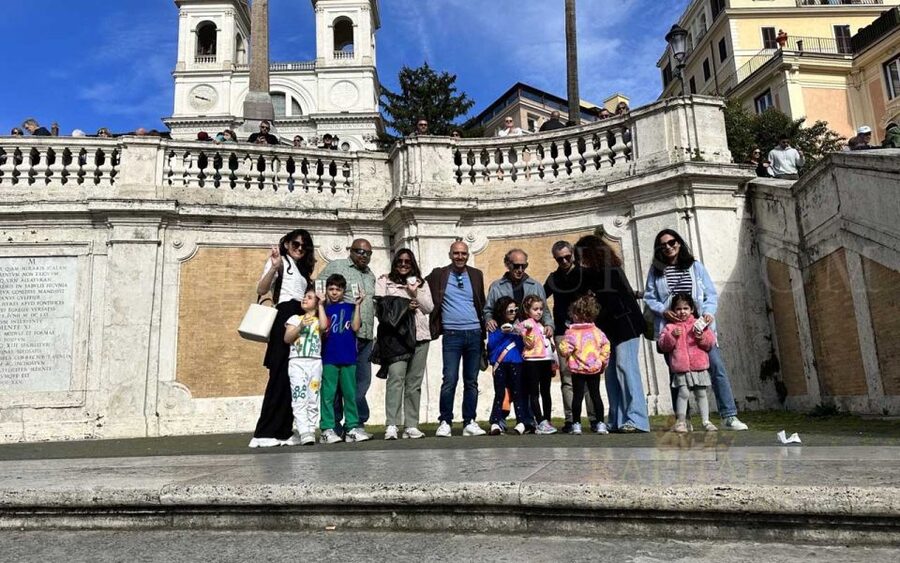
The tour focuses on the historic center of Rome, and it includes the Spanish Steps in the mix. Think of this stage as the warm-up: you’re getting your bearings, learning how your guide turns big monuments into clue-worthy locations.
This is where the treasure hunt pacing earns its keep. The early clues teach your family what to listen for—patterns, carvings, architectural details, and the stories attached to them. It’s less about mastering dates and more about developing a habit of noticing.
For kids, this phase often feels like freedom. For adults, it’s a way to get past the usual Rome pattern of seeing something, taking a photo, and then forgetting it two minutes later. When you’re searching for a specific clue, you remember what you saw.
One practical note: central Rome streets can be busy. You’ll be walking with other people around the same landmarks, so keep a close eye on kids when crossing or stopping for photos.
Trevi Fountain clues: myths, architecture, and the joy of looking closely
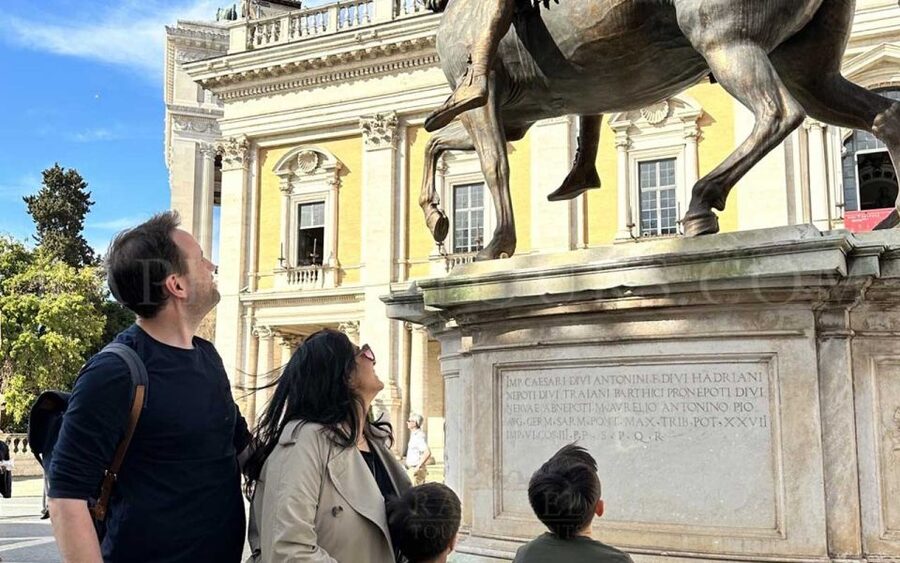
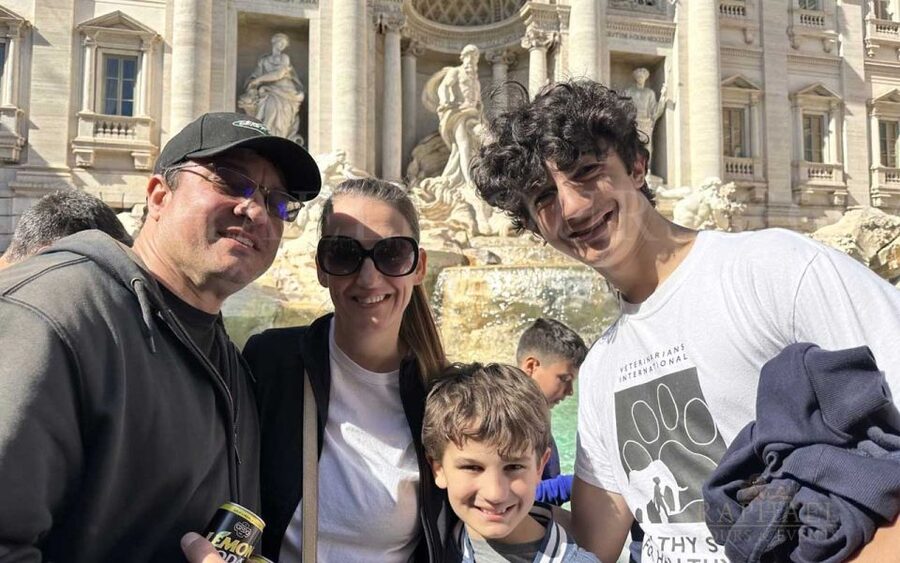
Trevi Fountain is the kind of sight that can feel overwhelming if you rush it. Your treasure hunt approach slows the pace down in a smart way. You’re not just standing there hoping for a good photo; you’re working through hints connected to what you’re seeing.
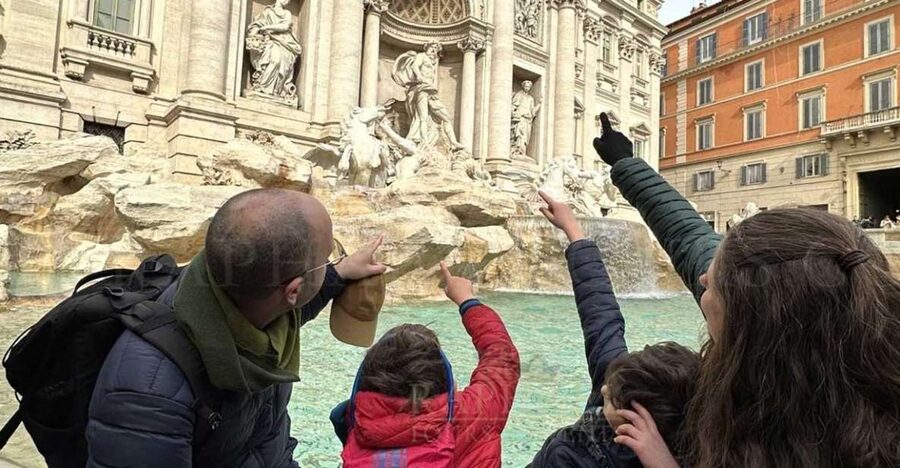
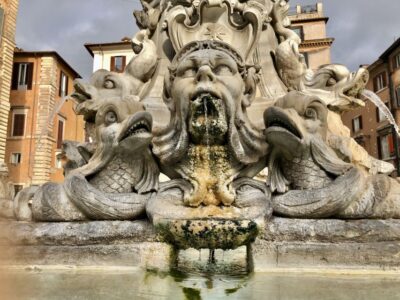
Trevi also gives the guide a perfect stage for mixing wonder with details. The fountain isn’t one flat picture—it’s sculpture, perspective, and storytelling layered together. By turning it into clue stations, the guide helps you notice the parts that make Trevi famous, not just the overall shape.
And because it’s a family activity, kids often end up doing the most useful work: they spot features faster when they know there’s an answer to find. That’s how the tour becomes more than sightseeing—it becomes a memory-making game.
If your group has strong picture needs, this is where you’ll want to be honest about priorities. You’ll have time for photos, but it’s still a 2-hour experience, so quick shots plus one careful “everyone pose” moment is the best strategy.
Toss a coin, then look at these
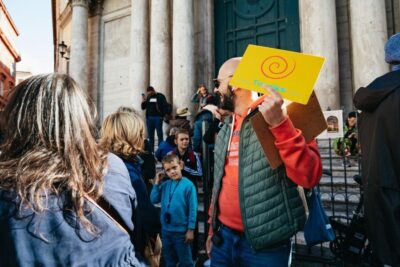

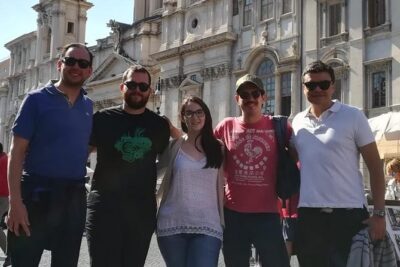

Piazza Navona: where the hunt adds contrast
The tour also includes Piazza Navona. This stop is valuable because it gives your family contrast after the fountain scene of Trevi. Piazza Navona feels like a living stage—open space, dramatic surroundings, and constant visual stimulation.
Your guide uses that energy to keep the treasure hunt moving. Even if kids don’t fully grasp every architectural term, they understand the goal: find the clue, answer the question, and move on. That keeps attention from fraying, especially for younger children who might otherwise lose patience in crowded squares.
For adults, Piazza Navona is a reminder that Rome’s center isn’t just one monumental “attraction.” It’s a network of places that look different depending on where you stand and what you notice. The guide’s job is to point out the “why” behind the look.
If you’re with a stroller, consider whether you want to keep it. The tour is not marketed for wheelchair use, so you should assume some tight spots and constant movement. If you bring a stroller, plan to fold and navigate carefully when crowds bunch up.
The Pantheon finale: time inside and why it lands
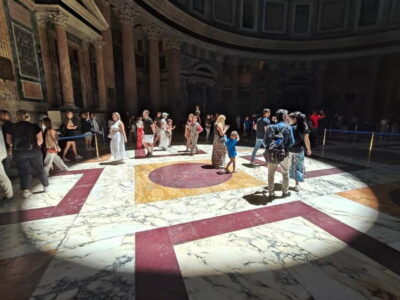
The Pantheon is the headline, and it’s also the moment where the whole treasure hunt makes sense. The guide ties clues and commentary to what you’re seeing, and you get the chance to experience the interior rather than treating it as a fast curbside stop.
One of the standout practical points is that your guide may have arranged skip-the-line access. In at least one booking, Tomas had Pantheon tickets already handled, which can save time when you’re trying to keep kids happy during a timed, short tour.
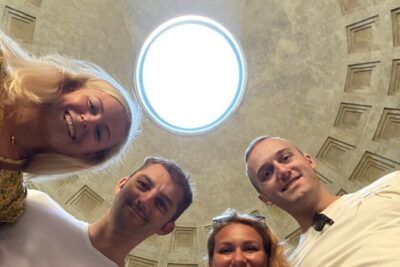
Inside the Pantheon, your family’s attention usually clicks into place. The building has a kind of gravity that makes trivia feel worth it. Instead of random facts, you’ll hear explanations connected to the design and the features you can actually spot as you look around.
This is also where the hunt’s structure pays off emotionally. Kids often remember the final challenge more than the earlier clues. Adults remember it too, because the guide’s job is easier when everyone is focused on the same “wow” moment.
Your guide is the secret ingredient (and you can feel it)
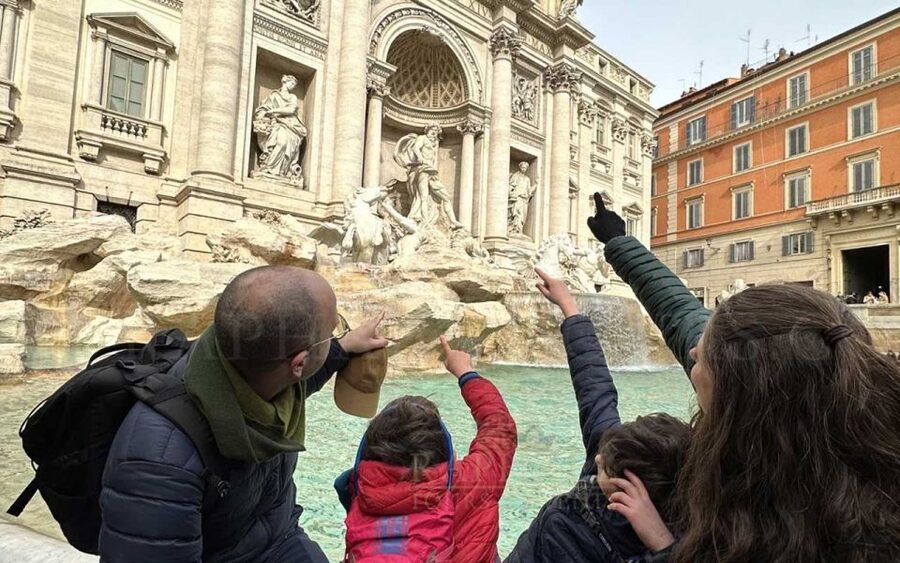
This tour lives or dies by the guide’s style. The names that show up—Bruno, Tomas, Maria, Alessandra, Francesco, and Gabriël—aren’t random. The common thread is that the guides know how to turn attention into learning.
In practice, that means your guide is constantly scanning the group. Questions get directed so kids participate without feeling put on the spot. Adults still get engaging commentary, but it’s connected to what you’re actively looking at.
You’ll also notice that guides use specific, real details as clues. One example: a honey-bee carving in a column becomes a scavenger hunt moment. That’s a smart technique, because kids learn to look for texture and ornamentation, not just big silhouettes.
And if you’re traveling as adults with no kids, the tour still has charm. Gabriël’s approach is described as accessible with stories and background, so the activity isn’t only for children—it’s a way to make the city feel less passive.
Prize time and how to pace the last stretch
At the end, there’s a prize for the winner. That sounds small, but it changes behavior. Kids listen longer when they think they’re close to scoring. Adults often participate more because they’re trying to help their child succeed.
The last part of the tour tends to feel like a sprint with purpose. You’ll want to stay close, keep voices calm in crowded areas, and avoid falling behind for photos. It’s totally fine to take pictures, but do it quickly so you don’t miss the clue moment that unlocks the final game rhythm.
If your family has a “we need a snack” personality, plan for that too. In one case, Tomas built in time for picture-taking and also included a suggested café stop. Even if your guide doesn’t match that exactly, you can expect there may be a chance to refuel along the way or shortly after.
Price and value: what $105 buys you in 2 hours
At $105 per person for a 2-hour experience, this sits in the midrange for guided Rome tours. The value comes from a few things that are hard to replicate on your own in the same time window.
First, you’re paying for a trained guide who turns sightseeing into a structured game. If you were doing it solo, you’d still visit Trevi and the Pantheon, but you’d lose the clue design, the pacing, and the way your attention gets redirected.
Second, the Pantheon time is the big bet. If the guide has skip-the-line handling ready, that’s not just convenience—it’s time saved when you’re traveling with children. Time is the most precious currency in a 2-hour Rome plan.
Third, you’re not just getting facts. You’re getting interactive quizzes and trivia plus a prize. That combination makes a short tour feel complete instead of rushed.
Is it “cheap”? No. But for families who want structure and a memorable approach, the price makes sense because you’re buying attention management and a guided route designed to keep kids engaged.
Who should book this Rome treasure hunt
This is a strong choice for families who want an efficient introduction to central Rome without turning the day into a long museum grind. If your kids need movement, puzzles, and frequent prompts, this style usually works well.
It’s also a good fit for first-timers in Rome. The route hits major names—Pantheon, Trevi Fountain, Spanish Steps—and includes Piazza Navona, so you get a quick sense of how Rome’s center is connected by walkable streets.
If you’re traveling with adults only, it can still be enjoyable because the guide storytelling and the focus on small details can make the walking feel purposeful. One caution: if you prefer deep, quiet museum time, this may feel more like an active city walk than a slow cultural immersion.
Possible drawbacks to weigh before you go
Let’s keep it real. This tour is not for wheelchair users or people with mobility impairments. That’s explicitly part of the offering’s limitations, and central Rome walking can be unpredictable.
It’s also short. If your family wants to linger at every monument, this will feel like a “highlights in motion” plan. You’ll see the big sights, but you won’t have hours to wander independently afterward unless you plan extra time.
Finally, since it’s a treasure hunt, some people who hate games might feel slightly less relaxed. The good news is that the activity is built around the city itself—so even when the game element is fun, you’re still getting real Rome sights and explanations.
Should you book this Pantheon and Trevi treasure hunt?
If you’re traveling with kids, I think this is a smart first-Rome day choice. You’re getting major monuments, a guide who actively manages engagement, and a structure that turns famous places into something your family remembers.
If you’re adults traveling as a couple or group without mobility needs, it can still be a fun, low-pressure way to see central Rome with better focus than a free-for-all stroll. Just go in expecting a guided game, not a slow, quiet museum experience.
If anyone in your group has mobility limitations, skip this one and look for a more accessible format. And if you need long stays at monuments, plan longer independent time before or after, using this tour as your concentrated highlights hit.
Overall, for families and first-time visitors, this is one of those rare city tours that makes the walk feel like the point—not the waiting between photos.
FAQ
How long is the Rome treasure hunt tour?
The tour lasts 2 hours.
Where is the meeting point?
Meet your guide by the Column of the Immaculate Conception in Piazza Mignanelli.
What sites are included?
You’ll explore Rome’s historic center and visit iconic monuments including the Pantheon and Trevi Fountain, with time around the Spanish Steps and Piazza Navona.
Is the tour available in English?
Yes, the live tour guide speaks English.
What is included in the price?
The tour includes a licensed guide and a prize for the winner.
What is the format like for families?
It’s a kid-friendly treasure hunt with quizzes and trivia, using hints and clues at famous locations.
Is the tour suitable for wheelchair users or mobility impairments?
No. It is not suitable for people with mobility impairments or wheelchair users.
What is the price per person?
The price is $105 per person.
Can I cancel and get a refund?
Yes. You can cancel up to 24 hours in advance for a full refund.
Can I reserve now and pay later?
Yes. You can reserve now and pay later, so you can keep travel plans flexible.
More Tour Reviews in Rome
- Vatican Museums, Sistine Chapel & St. Peter’s Basilica Tour
★ 4.3 · 73,970 reviews - Vatican Museums, Sistine Chapel & St Peter’s Basilica Guided Tour
★ 4.5 · 39,149 reviews - Rome: Colosseum, Palatine Hill and Roman Forum Guided Tour
★ 4.8 · 32,814 reviews - Rome: Guided Tour of Colosseum, Roman Forum & Palatine Hill
★ 4.7 · 27,897 reviews - Rome: Colosseum & Forum with Audio Guide App -Optional Arena
★ 4.2 · 24,770 reviews - Rome: Colosseum, Roman Forum and Palatine Hill Guided Tour
★ 4.5 · 23,903 reviews
Near the Trevi: More to See
- Rome: Trevi Fountain and Underground Guided Tour
★ 4.3 · 1,664 reviews - Rome: Opera Concert at Palazzo Poli – Fontana di Trevi
★ 4.7 · 1,026 reviews - Best of Rome Walking Tour including Trevi Fountain
★ 4.5 · 923 reviews - Catacombs Tour with Transfer – Optional Capuchin Crypt or Trevi
★ 4.5 · 694 reviews - Rome Walking Tour with Piazza Navona, Trevi Fountain and Pantheon
★ 4.5 · 676 reviews - The Great Opera Arias Concert at Palazzo Poli – Trevi Fountain
★ 5.0 · 533 reviews
Back to the Pantheon
- Rome: Pantheon Priority Entry Ticket & Interactive App
★ 4.1 · 5,114 reviews - Rome: Pantheon Priority Entry Tickets with Interactive App
★ 4.6 · 4,108 reviews - Rome: Pantheon Timeless Marvel Guided Tour with Entry Ticket
★ 4.9 · 4,002 reviews - Castel Sant’Angelo: Ticket with optional Vatican or Pantheon
★ 4.4 · 3,088 reviews - Pantheon Elite Guided Tour – Rome’s Iconic Ancient Temple
★ 5.0 · 1,447 reviews - Rome: Pantheon Small-Group Guided Tour with Entry Ticket
★ 4.9 · 1,226 reviews
Just added to our Rome reviews





Pantheon Tours, compared.
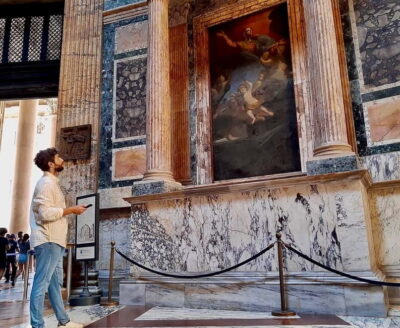 ★ 4.1Pantheon Priority Entry Ticket & Interactive AppFrom $145,114 reviews
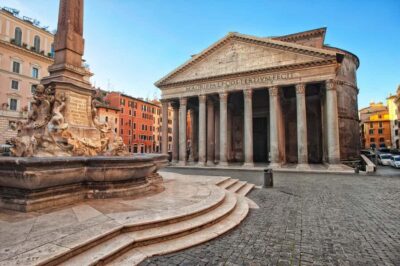 ★ 4.6Pantheon Priority Entry Tickets with Interactive AppFrom $54,108 reviews
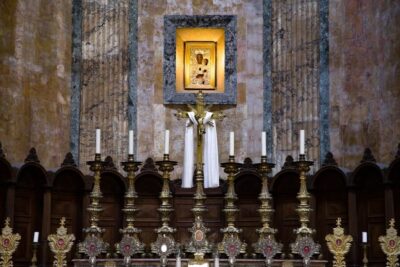 ★ 4.9Pantheon Timeless Marvel Guided Tour with Entry TicketFrom $214,002 reviews
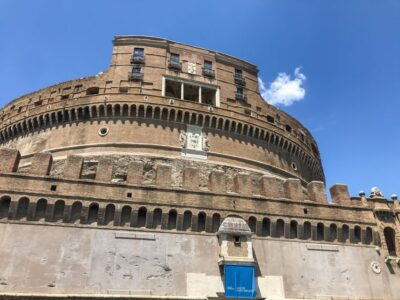 ★ 4.4Castel Sant’Angelo: Ticket with optional Vatican or PantheonFrom $183,088 reviews
 ★ 5.0Pantheon Elite Guided Tour – Rome’s Iconic Ancient TempleFrom $411,447 reviews
 ★ 4.9Pantheon Small-Group Guided Tour with Entry TicketFrom $511,226 reviews
 ★ 4.0Rome’s Iconic Temple: Pantheon Audio Guided Tour with Fast AccessFrom $211,188 reviews
 ★ 4.7Pantheon Small Group Tour and Skip-the-Line TicketFrom $531,008 reviews
Browse the lists this tour appears in