
Reviewed · ST. PETER'S BASILICA TOURS
Rome: Tour of St. Clement’s Basilica Underground Temples
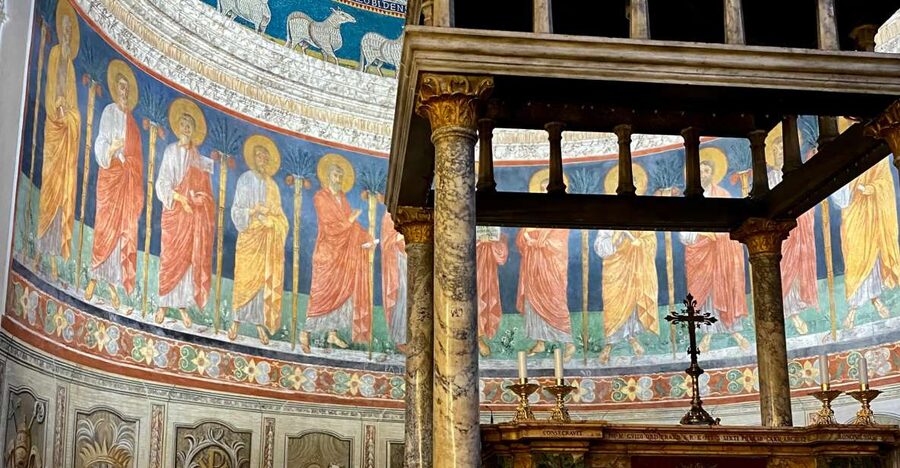
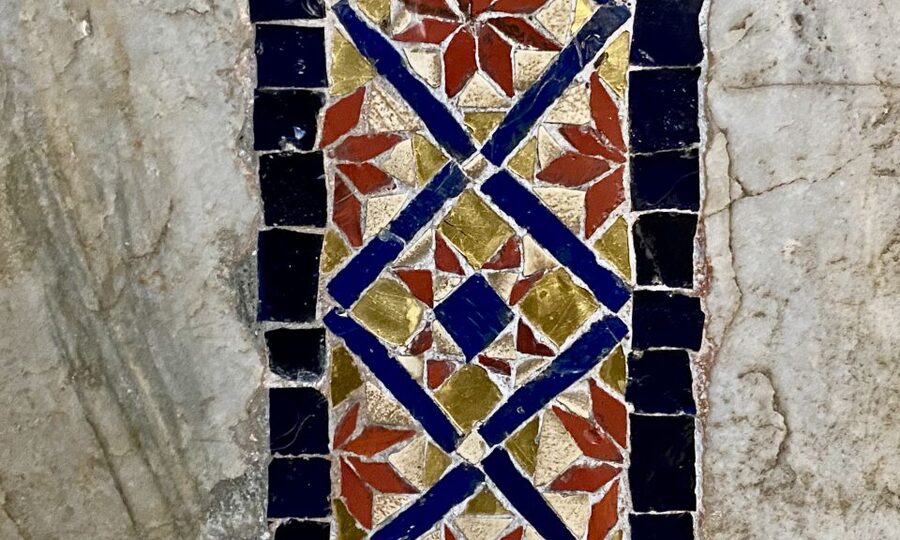
Go underground and see Rome differently. The experience starts at the 12th-century Basilica of San Clemente and then drops 14 meters into earlier layers, where the Mithraic temple and underground river set a mood you don’t get at the usual top-shelf sites. I also love how the guide points out the golden mosaic and its symbolism before you even start descending, so you’re already thinking in patterns and meanings when you reach the underground church.
One real consideration: this tour is not wheelchair accessible and it’s not a good fit if you’re claustrophobic, since you’ll spend time in tight underground spaces.
In This Review
- Key highlights you’ll remember
- Going down 14 meters: San Clemente’s layered site setup
- The 12th-century apse mosaic: where the guide teaches you to look
- The underground church: 4th-century martyr frescoes up close
- Mithraic temple and the underground river: the pagan layer beneath Christianity
- Extending to Santo Stefano Rotondo: a second chapter of martyrdom art
- Price, guides, and why headsets are included
- Practical rules: shoes, dress code, and photo limits
- Should you book this San Clemente underground tour?
- FAQ
- How long is the St. Clement’s Underground Temples tour?
- What do I see at the Basilica of San Clemente?
- What’s included if I choose the Santo Stefano Rotondo extension?
- How deep do you go underground?
- Is this tour wheelchair accessible?
- Can I take photos or videos inside?
Key highlights you’ll remember
- A 14-meter descent beneath the basilica, with the site’s layers explained as you go
- Mithraic temple remains plus an underground river, adding atmosphere and mystery
- Early-Christian frescoes linked to martyrs in a 4th-century basilica
- Golden mosaic symbolism in the apse, explained with clear, practical guidance
- Optional Santo Stefano Rotondo add-on for haunting martyrdom frescoes
Going down 14 meters: San Clemente’s layered site setup
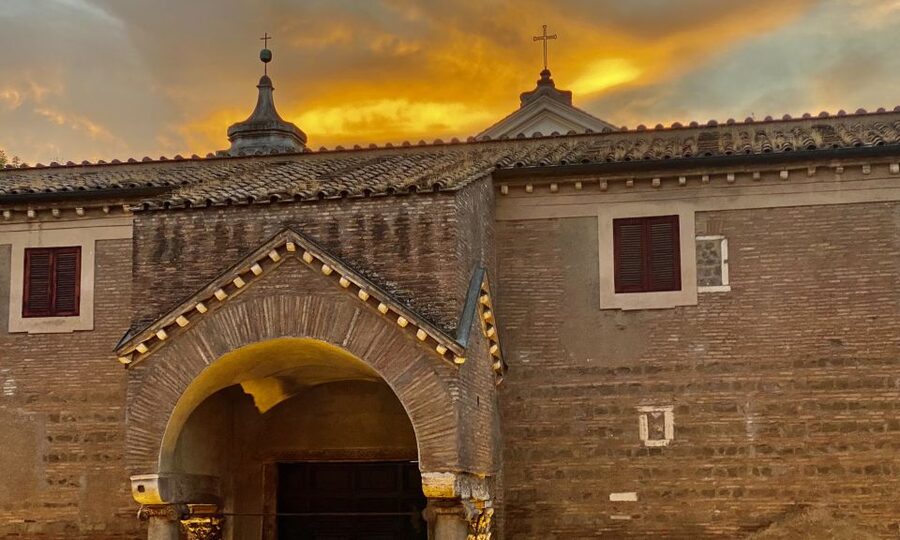
At San Clemente, the story is physical. You’re not just looking at one church. You’re moving through time, from the 12th-century church down to earlier Christian space, and then further toward the pagan world that existed before Christianity took over the spotlight.
You begin above ground where the atmosphere is brighter, and the guide gets you oriented fast. That matters here, because the whole site works like a stack of “Roman history layers,” and it’s easy to feel lost if you’re wandering on your own. With a guide, you connect what you’re seeing to why it’s there, including how the underground church connects directly to the home of St. Clement (the third pope of Rome).
You also get time control. The core visit runs about 1 hour with guided focus, and if you choose it, the extension adds about 45 minutes at Santo Stefano Rotondo. Either way, you’re kept moving at a steady pace, which helps because the underground spaces can feel intense—especially if you don’t love enclosed rooms.
A small-but-important detail: the tour includes headsets, so you won’t spend the experience trying to hear over stone echoes. Several reviews praise the guide’s ability to keep explanations clear, even when you’re surrounded by crowds in the upper basilica.
More time under Michelangelo's dome
- Vatican Museums, Sistine Chapel & St. Peter’s Basilica Tour
★ 4.3 · 73,970 reviews - Vatican Museums, Sistine Chapel & St Peter’s Basilica Guided Tour
★ 4.5 · 39,149 reviews - Rome: Vatican Museums, Sistine Chapel and Basilica Tour
★ 4.3 · 16,039 reviews - Rome: Vatican Museums, Sistine Chapel & Basilica Tour
★ 4.7 · 13,217 reviews
The 12th-century apse mosaic: where the guide teaches you to look
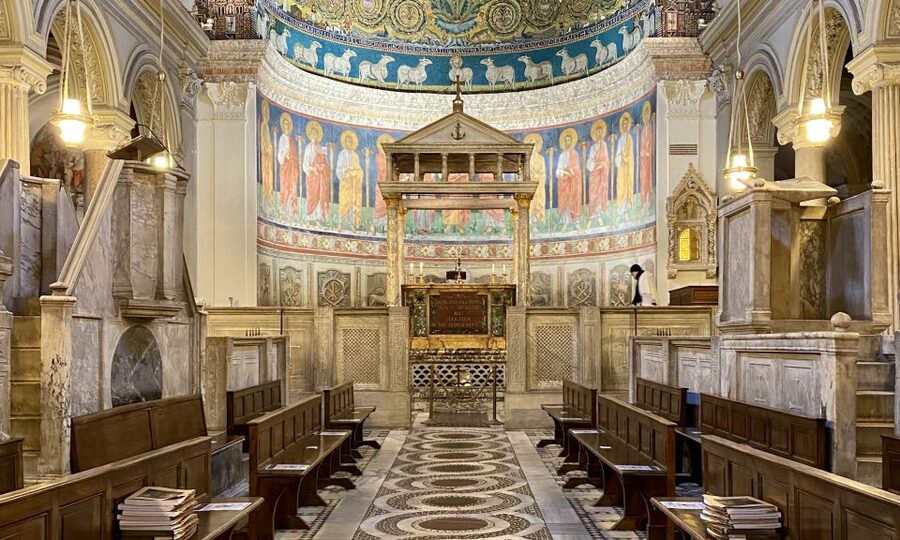
This is one of those Rome stops where the “art lesson” is not separate from the “history lesson.” The guide starts in the 12th-century basilica by focusing on the golden mosaic in the apse and how it carries meaning. You’ll hear about spiritual significance and hidden symbolism—so you’re not just watching gold tiles shimmer. You’re learning the logic behind what you’re seeing.
This is also why the top part of the tour feels more than a lobby. It gives you a reference point. Later, when you’re looking at early Christian frescoes and pagan-era remains, your brain is already trained to spot symbols and messages rather than treating everything like random ornamentation.
In reviews, guides like Francesca and Lorenzo come up often for enthusiasm and storytelling that makes details feel connected. If you get a guide in that style, you’ll likely find yourself asking questions like why this symbol here or how would people understand this at the time. The explanations are built to handle those questions without turning the tour into a lecture.
The underground church: 4th-century martyr frescoes up close
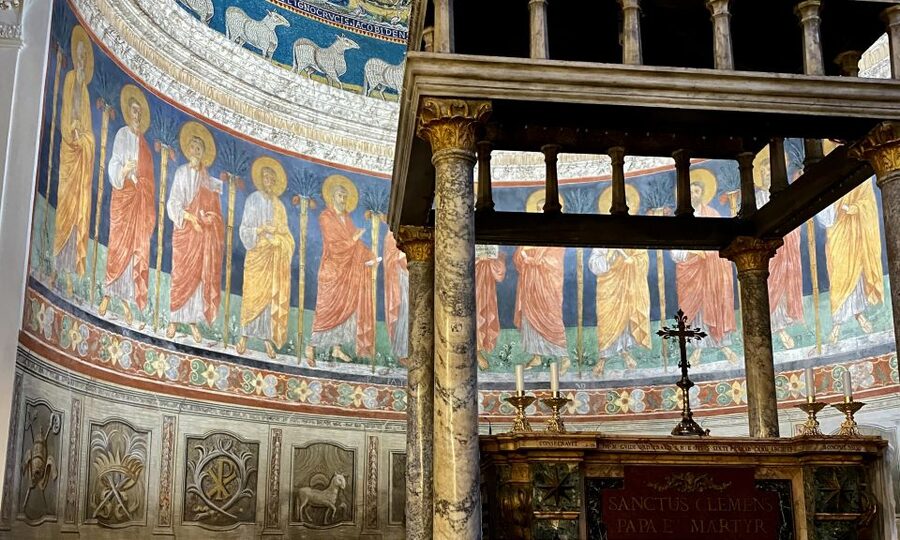
Once you descend (14 meters down), the tone shifts. The underground church is tied to early Christianity, built atop the area associated with St. Clement. Here you’ll see some of the earliest Christian frescoes, including depictions connected to martyrs and persecution, framed in a 4th-century basilica context.
What makes this section work is how the guide turns “old paint” into a narrative. You don’t just see scenes. You learn what the frescoes are showing about early Christian lives and the idea of persecution they faced. If you like religion-as-storytelling, this part lands harder than you might expect.
One practical note: if you’re bringing kids, the tour data flags that the Santo Stefano Rotondo frescoes depict graphic martyrdom scenes. For San Clemente itself, the underground frescoes are still about martyrs and persecution, so use your judgment based on your child’s sensitivity.
Also, the atmosphere is part of the lesson. You may feel the site’s eerie mood more strongly underground, especially when the guide pauses so you can focus on the paintings and architectural cues.
Mithraic temple and the underground river: the pagan layer beneath Christianity
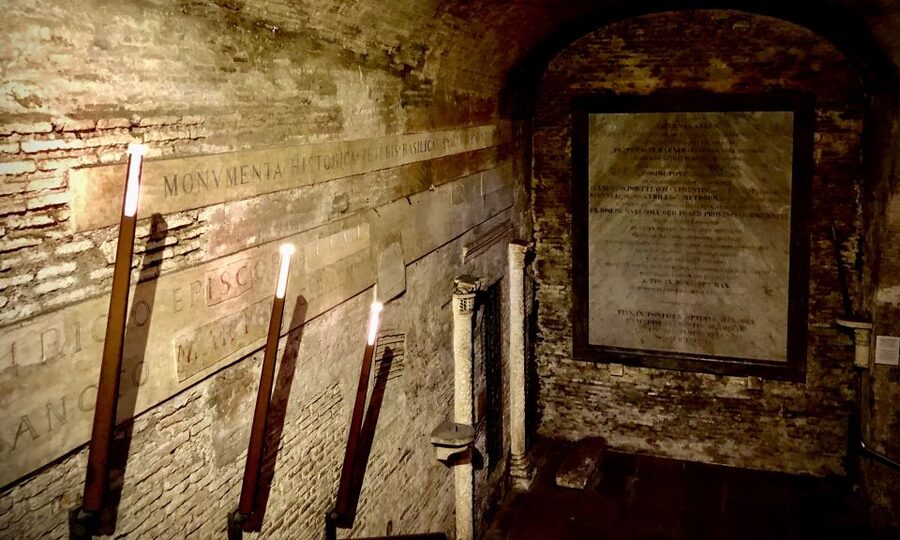
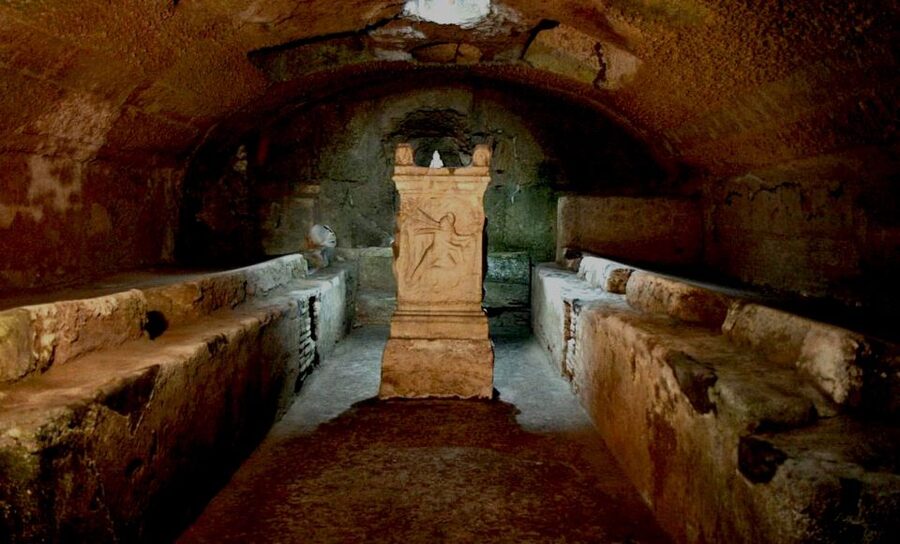
Now comes the part that most people book for: one of Rome’s best-preserved Mithraic temples hidden under San Clemente. The guide explains the pagan cult world before Christianity rose to dominance, including hidden rituals and beliefs—presented in a way that helps you understand how different religious systems lived side by side in the same city.
The space itself is special because it’s preserved enough to feel real. You’re not looking at a blurry “maybe it was this.” You’re looking at a temple area that still communicates the cult’s world. And then there’s the underground river, which adds an extra layer of atmosphere. The sound and presence of water can make the area feel even stranger and more alive than a dry ruin.
This is also where a strong guide can really change the experience. In reviews, people mention guides who sounded like active researchers and teachers—one guest described a guide named Paul as an archaeologist and professor in Rome. If your guide is that type, you’ll probably appreciate how they connect what you’re seeing to why it was built here and how it was used.
Even if you know little about Mithraic worship going in, you’ll leave with a clearer mental map. You’ll understand that the “underground” isn’t just about damp stone. It’s about religious continuity, transformation, and reuse.
Extending to Santo Stefano Rotondo: a second chapter of martyrdom art
If you select the extension, you’ll add a 45-minute guided visit to Santo Stefano Rotondo. This is where the tour becomes more emotional. The circular architecture sets the stage, and then the frescoes focus on early Christian martyrdom, continuing the themes you saw underground at San Clemente.
The tone here is more graphic in its imagery. The tour data explicitly warns that the frescoes show graphic martyrdom scenes and may not be appropriate for children. So if you’re traveling with young kids, check your comfort level before choosing the add-on.
One detail that keeps this extension from feeling rigid: depending on scheduling, your day might start at San Clemente and move to Santo Stefano Rotondo, or the reverse order. And if Santo Stefano Rotondo is affected by special events or liturgical celebrations, the extension can occasionally be unavailable.
Still, for adults who want a fuller picture of early Christianity through art and architecture, this add-on is a strong match. You’ll leave with two different “visual languages” for the same era: frescoes underground at San Clemente, then fresco cycles in Santo Stefano Rotondo’s circular space.
Price, guides, and why headsets are included
The price is $70 per person, and the value depends on what you want out of Rome. If you’re the type who enjoys museums and historic layers, this price can feel very fair because you’re paying for guided access to parts of Rome most people don’t experience well on their own. You also get included entrance to the San Clemente basilica.
The included headsets are a quiet win. Many historic sites have acoustics that make casual listening harder, and underground spaces can be even tougher. With headsets, you can focus on the guide’s explanations instead of competing with stone echoes.
Reviews strongly emphasize guide quality. Names like Francesca and Lorenzo appear repeatedly for enthusiasm and clear answers to questions. Some guests even call out how guides helped them understand Roman church history in a way they hadn’t heard elsewhere. That’s exactly what you want in a site like this, where the architecture layers can confuse you if nobody is guiding the connections.
Group size can also matter for comfort and questions. One review notes a very small group experience (just two participants), which is the kind of setup where you can ask follow-ups without feeling rushed.
Practical rules: shoes, dress code, and photo limits
This tour happens in real religious sites and enclosed archaeological spaces, so there are some straightforward rules.
Bring comfortable shoes. You’ll be walking indoors and through different levels, and you’ll want sure footing in potentially damp-feeling underground areas.
Dress matters because restrictions are listed clearly: no short skirts, no sleeveless shirts, and no shorts. The tour also forbids video recording and photography inside. If you’re the type who documents everything, plan on using your eyes instead of your camera for the key moments.
You can’t bring pets, and you also can’t bring weapons or sharp objects. Food and drinks are not allowed during the visit.
If you’re sensitive to crowds or enclosed spaces, take this seriously: wheelchair access isn’t supported, and claustrophobia is called out as a concern. This is one of those “know your body” tours.
Should you book this San Clemente underground tour?
Book it if you love Rome that’s not just postcards. This is a great fit for you if you want to understand how pagan and early-Christian stories overlap in the same physical site, and if you like art that carries meaning—especially when a guide points out the symbolism in the apse mosaic and helps you read fresco scenes in context.
Skip or rethink it if you’re dealing with claustrophobia or need wheelchair access, because the underground spaces and structure make that a problem. Also think twice about the extension if your group includes kids who may find martyrdom frescoes graphic.
If you’re deciding between the basic San Clemente underground visit and the Santo Stefano Rotondo add-on, choose the extension when you want a second chapter with more martyrdom fresco storytelling. Choose the shorter option when you want the core experience, plus flexibility.
In short: if you want Rome’s layers—literally stacked under your feet—this is one of the most focused ways to experience them.
FAQ
How long is the St. Clement’s Underground Temples tour?
The guided visit is listed as about 1 hour for San Clemente, and the full experience can run 1–2 hours depending on whether you add Santo Stefano Rotondo.
What do I see at the Basilica of San Clemente?
You’ll see the golden mosaic in the apse and go down to explore an underground church with early Christian frescoes, plus a preserved Mithraic temple area and an underground river.
What’s included if I choose the Santo Stefano Rotondo extension?
You’ll add a 45-minute guided visit to Santo Stefano Rotondo, focusing on its circular architecture and frescoes depicting early Christian martyrdom.
How deep do you go underground?
The tour describes descending 14 meters beneath the basilica.
Is this tour wheelchair accessible?
No. The tour is not accessible to wheelchair users due to the architectural structures inside and under the Basilica di San Clemente.
Can I take photos or videos inside?
No. Video recording and photography inside are not allowed.
More Tours in Rome
- Vatican Museums, Sistine Chapel & St. Peter’s Basilica Tour
★ 4.3 · 73,970 reviews - Vatican Museums, Sistine Chapel & St Peter’s Basilica Guided Tour
★ 4.5 · 39,149 reviews - Rome: Colosseum, Palatine Hill and Roman Forum Guided Tour
★ 4.8 · 32,814 reviews - Rome: Guided Tour of Colosseum, Roman Forum & Palatine Hill
★ 4.7 · 27,897 reviews - Rome: Colosseum, Roman Forum and Palatine Hill Guided Tour
★ 4.5 · 23,903 reviews - Rome: Colosseum Arena Floor, Palatine & Forum Guided Tour
★ 4.5 · 20,180 reviews
More Tour Reviews in Rome
- Vatican Museums, Sistine Chapel & St. Peter’s Basilica Tour
★ 4.3 · 73,970 reviews - Vatican Museums, Sistine Chapel & St Peter’s Basilica Guided Tour
★ 4.5 · 39,149 reviews - Rome: Colosseum, Palatine Hill and Roman Forum Guided Tour
★ 4.8 · 32,814 reviews - Rome: Guided Tour of Colosseum, Roman Forum & Palatine Hill
★ 4.7 · 27,897 reviews - Rome: Colosseum & Forum with Audio Guide App -Optional Arena
★ 4.2 · 24,770 reviews - Rome: Colosseum, Roman Forum and Palatine Hill Guided Tour
★ 4.5 · 23,903 reviews
More at St. Peter's Basilica
- Vatican Museums, Sistine Chapel & St. Peter’s Basilica Tour
★ 4.3 · 73,970 reviews - Vatican Museums, Sistine Chapel & St Peter’s Basilica Guided Tour
★ 4.5 · 39,149 reviews - Rome: Vatican Museums, Sistine Chapel and Basilica Tour
★ 4.3 · 16,039 reviews - Rome: Vatican Museums, Sistine Chapel & Basilica Tour
★ 4.7 · 13,217 reviews - Skip-the-Line Group Tour of the Vatican, Sistine Chapel & St. Peter’s Basilica
★ 4.5 · 12,779 reviews - Rome: St. Peter’s Basilica, Papal Tombs, and Dome Climb Tour
★ 4.5 · 10,099 reviews
Just added to our Rome reviews

St. Peter's Basilica Tours, compared.
 ★ 4.3Vatican Museums, Sistine Chapel & St. Peter’s Basilica TourFrom $7273,970 reviews
 ★ 4.5Vatican Museums, Sistine Chapel & St Peter’s Basilica Guided TourFrom $2239,149 reviews
 ★ 4.3Vatican Museums, Sistine Chapel and Basilica TourFrom $7316,039 reviews
 ★ 4.7Vatican Museums, Sistine Chapel & Basilica TourFrom $7213,217 reviews
 ★ 4.5Skip-the-Line Group Tour of the Vatican, Sistine Chapel & St. Peter’s BasilicaFrom $3012,779 reviews
★ 4.6Vatican Museums, Sistine Chapel & St Peter’s Basilica TourFrom $6810,222 reviews
★ 4.5Skip-the-Line Group Tour of the Vatican, Sistine Chapel & St. Peter’s BasilicaFrom $3012,779 reviews
★ 4.6Vatican Museums, Sistine Chapel & St Peter’s Basilica TourFrom $6810,222 reviews
 ★ 4.5St. Peter’s Basilica, Papal Tombs, and Dome Climb TourFrom $6410,099 reviews
 ★ 4.2Vatican, Sistine Chapel & St. Peter’s Basilica TourFrom $759,089 reviews
Browse the lists this tour appears in