
Reviewed · COLOSSEUM & ANCIENT ROME TOURS
Rome: Roman Forum Super Pass Entry with Audio Guide App
Six sites, one ticket, and you set the pace. This Roman Forum Super Pass lets you walk the heart of Ancient Rome across the Forum, Palatine Hill, and the Imperial Fora with a digital audio guide app to keep you moving. It’s a smart way to see major archaeology without being locked into a rigid tour schedule.
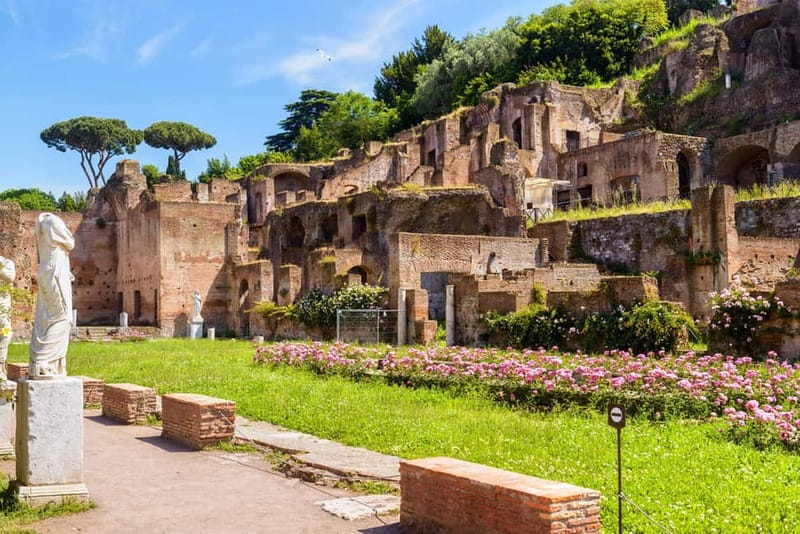
I especially like the chance to visit the SUPER sites where preserved paintings and frescoes are protected, including key domestic spaces like the House of Augustus and the House of Livia. I also love that Palatine Hill comes with big payoffs, including museum stops and classic viewpoints over the ruins.
One consideration: the route is popular and you’ll likely deal with crowds and queues at entry points, plus the audio guide needs a little prep (download it before you arrive, not at the gate).
In This Review
- Key highlights you’ll feel fast
- What this ticket really covers (and why it’s good value)
- Entering the Roman Forum: the easiest doors to use
- Roman Forum Museum + the “walk through government” feeling
- Palatine Hill: the view from the center of the Seven Hills
- SUPER sites that feel worth the extra effort
- House of the Vestals + Curia Iulia: where ritual and politics overlap
- Aula Isiaca + Loggia Mattei: frescoes you can actually study
- Domus Tiberiana + Santa Maria Antiqua: layers of Rome in one route
- Imperial Fora: Forum of Caesar and Forum of Nerva
- Timing and closures: plan your day like a local
- Using the audio guide app without losing time
- Crowds, queues, and the real-life details
- Best for who? (And how to pair it with Colosseum)
- Should you book the Roman Forum Super Pass?
- FAQ
- Is this ticket valid only on the day I pick at purchase?
- Do I need a time reservation?
- Where do I enter with my voucher?
- Is there a guide included with the ticket?
- What’s included in the ticket besides the Roman Forum?
- Does this pass include Colosseum entry?
- Is the route wheelchair accessible?
- Are there any closures I should know about?
- Can I bring a small dog?
- Can I get a refund if I cancel?
Key highlights you’ll feel fast
- SUPER sites access with extra rooms tied to preserved frescoes and paintings
- Roman Forum Museum stops that turn scattered ruins into an actual story
- Palatine Hill views plus Palatine Museum exhibits and sculpture/fresco collections
- House of the Vestals + Curia Iulia for the Rome of rituals and politics
- Imperial Forum route through Forum of Caesar and Forum of Nerva
- Barrier-free routing across the included route for easier movement
What this ticket really covers (and why it’s good value)
For $25 per person, this pass is built for people who want more than the basics. You’re not just entering the Roman Forum once—you’re getting entry across multiple related archaeological zones, plus museum content that helps you understand what you’re looking at.
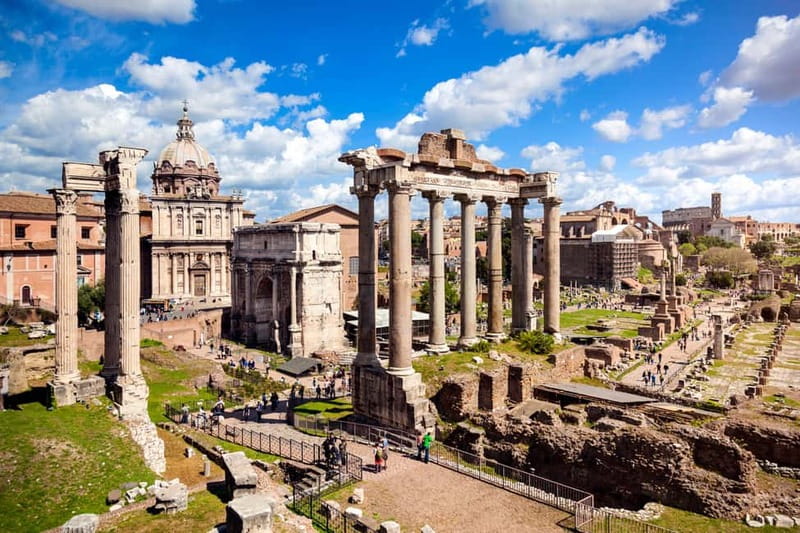
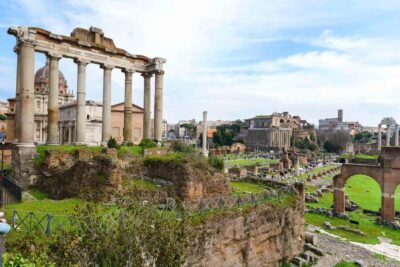
Your included sites cover the core layers of Rome: government and ceremonial space in the Forum, elite residences and myth-laced views on Palatine Hill, and the ceremonial/political centerpieces of the Imperial Fora. Add in the Roman Forum Museum and Palatine Museum, and the ticket becomes less like a single visit and more like a guided walk you can shape yourself.
Still on ancient Rome? A few more we rated
- Rome: Colosseum, Palatine Hill and Roman Forum Guided Tour
★ 4.8 · 32,814 reviews - Rome: Guided Tour of Colosseum, Roman Forum & Palatine Hill
★ 4.7 · 27,897 reviews - Rome: Colosseum & Forum with Audio Guide App -Optional Arena
★ 4.2 · 24,770 reviews - Rome: Colosseum, Roman Forum and Palatine Hill Guided Tour
★ 4.5 · 23,903 reviews
Entering the Roman Forum: the easiest doors to use
You don’t meet a person. Instead, you show your voucher at any Roman Forum entrance. Convenient options include via Sacra near the Arch of Titus, via di San Gregorio, via del Tulliano, via del Foro Romano, and Piazza della Madonna di Loreto/Trajan’s Column.
If you’re arriving with limited time, I’d pick the entrance closest to your next stop in the app—because once you’re inside, the whole day becomes about flow, not about backtracking. Also note: there’s a requirement to provide the names of each participant when booking, or access can be blocked.
Roman Forum Museum + the “walk through government” feeling
Most first-timers think the Roman Forum is just a big open ruin. That’s true—and also not the full picture. With this pass, you can move through major Forum zones and then anchor your visit with the Roman Forum Museum.
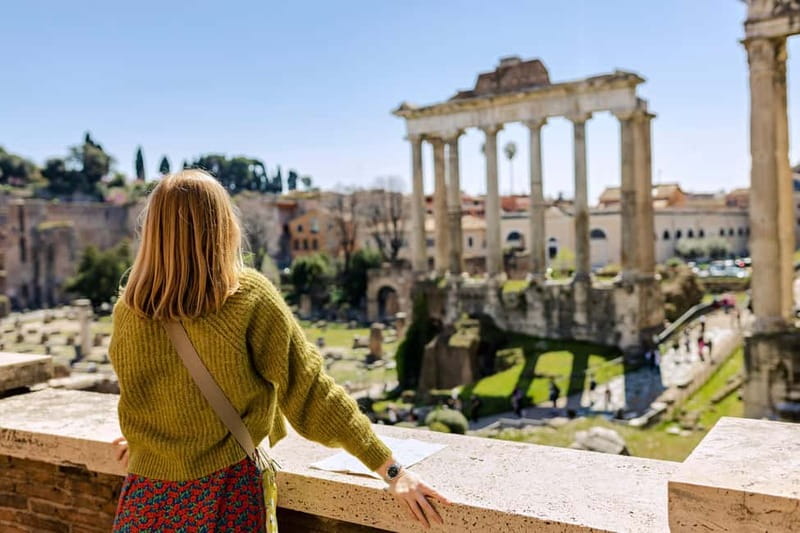
In the Forum, you’re looking at the spine of public life: ancient government buildings and temple spaces. The museum part matters because it fills in what you can’t read from broken stone alone. It’s the difference between seeing locations and understanding how power and ritual worked in the same neighborhoods.
Practical tip: give the museum a chunk of time even if the ruins look tempting. A quick museum stop makes the outside stops make more sense, and you’ll move faster because you’re orienting yourself.
Palatine Hill: the view from the center of the Seven Hills
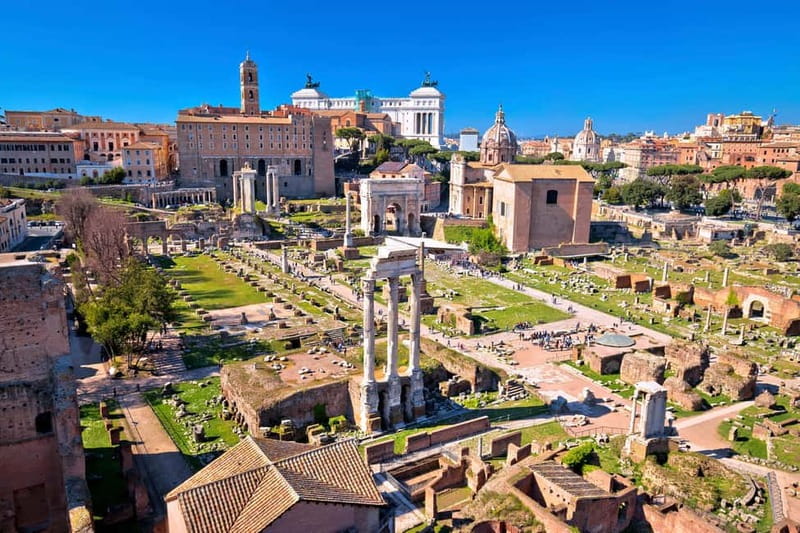
Palatine Hill is where you feel Rome’s scale. It’s also where your visit shifts from public buildings to elite life—because Palatine is tied to wealth, legends, and imperial power.
This ticket includes Palatine Hill and the Palatine Museum. You can expect sculpture and fresco-focused displays that help explain what you’re seeing in the surrounding structures. The views are a standout: you get to look out over the Forum area in a way that makes the layout click, even if you’ve seen photos before.
Also included are stops such as Ninfeo della Pioggia and Domus Tiberiana. These add the “how people lived” layer, not just the “who ruled” layer.
Worth a look next to this Rome booking:

SUPER sites that feel worth the extra effort
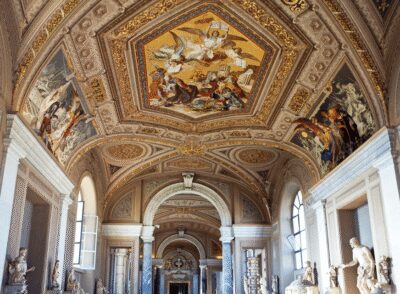
One reason people like this pass is the extra access to the SUPER sites—areas with restricted entry meant to protect valuable paintings and frescoes. In other words: you’re paying for preserved interiors, not just open-air walls.
Key SUPER-level inclusions you should plan around:
- House of Augustus
- House of Livia
- Aula Isiaca and Loggia Mattei
- House of the Vestals
- Domus Tiberiana
If you care about wall decoration, domestic spaces, and how art signals status, this is the heart of the value. If you only want open ruins, you could do less—but then you’d miss the parts that make the Forum and Palatine Hill feel personal.
House of the Vestals + Curia Iulia: where ritual and politics overlap
The House of the Vestals is one of the most memorable stops on this pass. It’s tied to the Vestal Virgins, and the included route lets you connect the physical space to the role: religious duty, state symbolism, and a kind of protected place in Roman life.
Next door in spirit is Curia Iulia, a key seat associated with Roman government and ceremony. This pairing works well because the story doesn’t switch abruptly from religion to politics—it shows how woven they were.
For a smooth visit, don’t try to rush this section. Take your time, because it’s easy to walk past details when you’re trying to cover everything quickly. The audio guide is particularly useful here for explaining what you’re standing in front of.
Aula Isiaca + Loggia Mattei: frescoes you can actually study
Some stops are special not because they’re famous, but because they’re readable. That’s why the Aula Isiaca and Loggia Mattei area gets a lot of love: it’s a place where well-preserved fresco work helps you see Roman aesthetics up close.
The ticket gives you access to this area as part of the included route, but remember the SUPER restrictions exist to protect fragile artwork. So the experience is carefully managed—you won’t be wandering freely in ways that would risk damage.
If you’re short on time, I’d prioritize this fresco-focused stop, because it delivers more “wow per minute” than a lot of exterior stones.
Domus Tiberiana + Santa Maria Antiqua: layers of Rome in one route
The pass includes Domus Tiberiana, plus Santa Maria Antiqua. This is where the visit becomes about layers: Roman imperial life and later religious significance sharing the same broader landscape.
Domus Tiberiana is linked to imperial spaces, so it helps connect Palatine Hill’s elite feel to the reality of power housed in buildings. Santa Maria Antiqua adds a different tempo—religious continuity and the way older spaces get re-used over time.
One useful note: the Domus Transitoria remains closed and can’t be visited. If this stop is a must for you, treat this pass as flexible: the route still includes enough to make the day meaningful even with that closure.
Imperial Fora: Forum of Caesar and Forum of Nerva
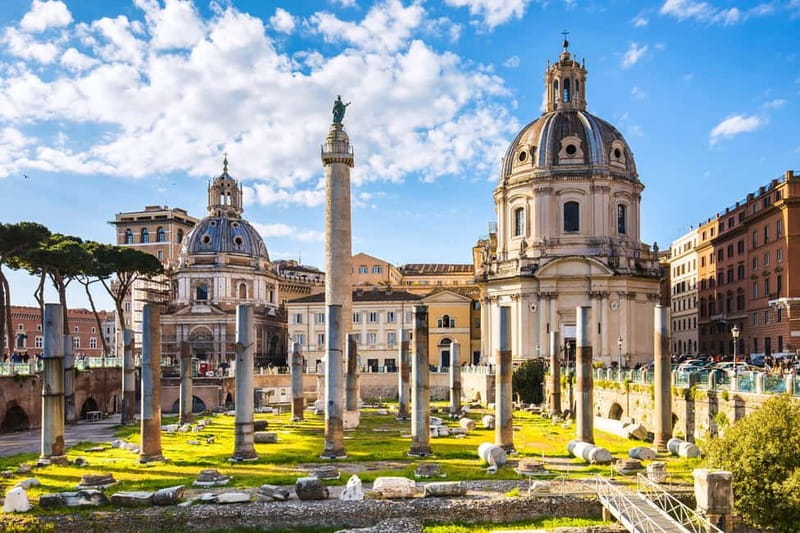
After Palatine, you’ll shift into the Imperial Forum zone. This is the route where Rome starts feeling more like a designed statement—places built to impress, not just to function.
Your included stops here include:
- Forum of Caesar
- Forum of Nerva
- Imperial Forum
This section is also a good reset for your brain. By the time you reach the Imperial Fora, the audio guide and museum exhibits help you read the symbolism behind the stone. You’ll recognize patterns: power, public ceremony, and architecture used as messaging.
Timing and closures: plan your day like a local
This is a self-paced ticket, so your best strategy is to match your visit length to your interests and your patience level for crowds.
For March to September 2025, the operating windows listed are:
- Palatine Museum, Aula Isiaca and Loggia Mattei, House of Augustus, House of Livia, Domus Tiberiana: 9:00 AM–6:00 PM (last entry 5:30 PM)
- Santa Maria Antiqua: 9:00 AM–6:30 PM (last entry 6:00 PM)
Closure days are also listed:
- House of Augustus closes on Mondays
- House of Livia closes on Tuesdays
If you’re visiting on a Monday or Tuesday, you should still be fine—this pass has many included stops—but you’ll want your “must-see” order to reflect those closures.
Also keep in mind: the route is barrier-free for the included areas. That’s helpful if you’re moving with mobility needs or just want an easier day with fewer detours.
Using the audio guide app without losing time
Your ticket includes a digital audio guide app. Instructions are provided with booking confirmation, and the guide is designed to support you at your own pace.
What makes it practical:
- It can trigger automatically when you approach a significant area (so you don’t need to stop and press start constantly).
- One key review-style lesson: download and prep the app before you go. People who did this felt less frustration at the start.
If your phone struggles with maps, don’t panic. The site is big, and orientation can take a moment. Use the audio prompts to keep you moving through the route, and aim to arrive with enough time that you’re not rushing at every junction.
Crowds, queues, and the real-life details
Even with good entry access, the Roman Forum area can be busy. Some people report short waits; others hit longer queues. I treat this like part of the Rome experience: show up early, keep your expectations realistic, and don’t try to schedule the rest of your day too tightly.
One other practical point that came up: toilets can mean queues. Since the pass doesn’t include food, plan breaks around what’s available nearby and treat rest stops as part of the visit, not as an afterthought.
Best for who? (And how to pair it with Colosseum)
This pass is ideal for you if:
- you want maximum Roman Forum + Palatine Hill coverage without paying for a full guided group tour
- you care about interiors and frescoes in the SUPER sites
- you like using an app at your pace instead of standing in a big line behind someone’s script
It’s not built for you if you’re expecting the Colosseum. This ticket explicitly does not include Colosseum entry. Still, the area works perfectly as a lead-in to Colosseum day, because the Forum and Palatine Hill give context for what you’ll see later.
Should you book the Roman Forum Super Pass?
Yes, if your goal is to get the most meaning out of the Forum area in one go. At $25, the ticket becomes a value play when you want museum stops and SUPER sites—not just open ruins.
Book it if you can plan around closures (House of Augustus Monday, House of Livia Tuesday) and you’re willing to do a small bit of phone prep for the audio guide. If you’re trying to visit in an ultra-short window or you rely heavily on a map with perfect GPS guidance, you might feel the day is less friction-free than you hoped.
If you want the Roman Forum to feel like more than a dramatic pile of stones, this pass is one of the most practical ways to do that.
FAQ
Is this ticket valid only on the day I pick at purchase?
It’s a one-time admission ticket that can be used within 30 days of purchase. Once validated, it is only valid for the day of use.
Do I need a time reservation?
No. It states there is no time reservation required.
Where do I enter with my voucher?
Present your voucher at any Roman Forum entrance. Options include via Sacra near the Arch of Titus, via di San Gregorio, via del Tulliano, via del Foro Romano, or Piazza della Madonna di Loreto/Trajan’s Column.
Is there a guide included with the ticket?
A tour guide is not included. You get a digital audio guide app instead.
What’s included in the ticket besides the Roman Forum?
In addition to Roman Forum entry, you get access to the Roman Forum Museum, Palatine Hill, the Palatine Museum, and multiple specific sites including the House of the Vestals, Curia Iulia, Aula Isiaca and Loggia Mattei, House of Augustus, House of Livia, Domus Tiberiana, and others listed as included.
Does this pass include Colosseum entry?
No. Access to the Colosseum is not included.
Is the route wheelchair accessible?
Yes. The entire route of the visit included in the Forum Pass ticket is barrier-free, and it notes wheelchair accessibility.
Are there any closures I should know about?
Yes. House of Augustus is closed on Mondays, and House of Livia is closed on Tuesdays. Also, Domus Transitoria remains closed and cannot be visited.
Can I bring a small dog?
Small dogs are allowed in special carriers (dog prams are not allowed).
Can I get a refund if I cancel?
No. This activity is non-refundable.
More Guided in Rome
- Vatican Museums, Sistine Chapel & St Peter’s Basilica Guided Tour
★ 4.5 · 39,149 reviews - Rome: Colosseum, Palatine Hill and Roman Forum Guided Tour
★ 4.8 · 32,814 reviews - Rome: Guided Tour of Colosseum, Roman Forum & Palatine Hill
★ 4.7 · 27,897 reviews - Rome: Colosseum & Forum with Audio Guide App -Optional Arena
★ 4.2 · 24,770 reviews - Rome: Colosseum, Roman Forum and Palatine Hill Guided Tour
★ 4.5 · 23,903 reviews - Rome: Colosseum Arena Floor, Palatine & Forum Guided Tour
★ 4.5 · 20,180 reviews
More Tour Reviews in Rome
- Vatican Museums, Sistine Chapel & St. Peter’s Basilica Tour
★ 4.3 · 73,970 reviews - Vatican Museums, Sistine Chapel & St Peter’s Basilica Guided Tour
★ 4.5 · 39,149 reviews - Rome: Colosseum, Palatine Hill and Roman Forum Guided Tour
★ 4.8 · 32,814 reviews - Rome: Guided Tour of Colosseum, Roman Forum & Palatine Hill
★ 4.7 · 27,897 reviews - Rome: Colosseum & Forum with Audio Guide App -Optional Arena
★ 4.2 · 24,770 reviews - Rome: Colosseum, Roman Forum and Palatine Hill Guided Tour
★ 4.5 · 23,903 reviews
Ancient Rome, Kept Going
- Rome: Colosseum, Palatine Hill and Roman Forum Guided Tour
★ 4.8 · 32,814 reviews - Rome: Guided Tour of Colosseum, Roman Forum & Palatine Hill
★ 4.7 · 27,897 reviews - Rome: Colosseum & Forum with Audio Guide App -Optional Arena
★ 4.2 · 24,770 reviews - Rome: Colosseum, Roman Forum and Palatine Hill Guided Tour
★ 4.5 · 23,903 reviews - Rome: Colosseum Arena Floor, Palatine & Forum Guided Tour
★ 4.5 · 20,180 reviews - Rome: Colosseum Arena, Palatine Hill & Forum Guided Tour
★ 4.7 · 14,510 reviews
Just added to our Rome reviews



Colosseum & Ancient Rome Tours, compared.
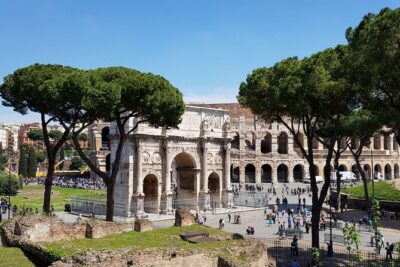 ★ 4.8Colosseum, Palatine Hill and Roman Forum Guided TourFrom $5232,814 reviews
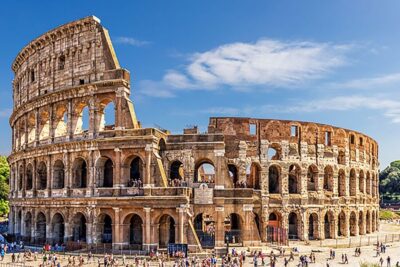 ★ 4.7Guided Tour of Colosseum, Roman Forum & Palatine HillFrom $5527,897 reviews
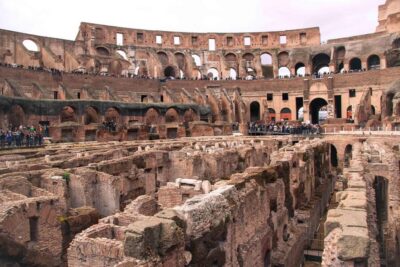 ★ 4.2Colosseum & Forum with Audio Guide App -Optional ArenaFrom $4124,770 reviews
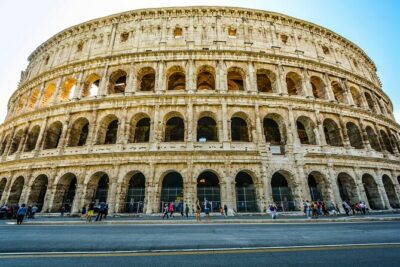 ★ 4.5Colosseum, Roman Forum and Palatine Hill Guided TourFrom $5923,903 reviews
 ★ 4.5Colosseum Arena Floor, Palatine & Forum Guided TourFrom $4120,180 reviews
 ★ 4.7Colosseum Arena, Palatine Hill & Forum Guided TourFrom $8414,510 reviews
 ★ 4.6Colosseum,Forum & Palatine Tour + Optional Arena FloorFrom $4513,169 reviews
 ★ 4.7Colosseum: Underground and Ancient Rome TourFrom $16012,691 reviews
Browse the lists this tour appears in