
Reviewed · COLOSSEUM & ANCIENT ROME TOURS
Rome: Roman Forum and Palatine Hill Entry & SuperSites Pass
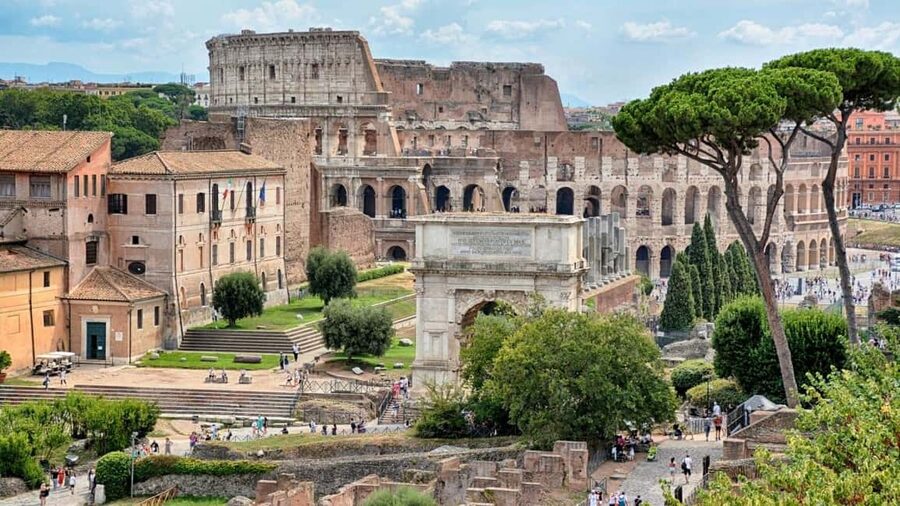
Rome rewards slow walking. This Roman Forum and Palatine Hill entry with the Super Sites Pass is one of the most efficient ways to see how imperial power and everyday life overlapped. I like that you’re planning your own route with a digital guide book while you move through the core of ancient Rome and then climb up for big city views.
What I really like is the range packed into one visit: you get access to key buildings across the Forum and the Palatine Hill complex, including stops like House of Augustus (note closures), House of Livia (note closures), Aula Isiaca and Loggia Mattei, and the exhibition rooms of Domus Tiberiana. You also pass through Santa Maria Antiqua, which gives a different angle on what survives here beyond marble and columns.
One drawback to watch is the logistics style: there’s no one meeting and escorting you at the entrance. If your ticket email/WhatsApp directions are unclear or your timing is off, you can waste time—so I’d verify everything before you head out, and remember the specific house sites close on certain weekdays.
In This Review
- Key takeaways before you go
- Super Sites Pass at the Roman Forum: what you’re actually buying
- The Roman Forum experience: temples, basilicas, and the government core
- House of Augustus, House of Livia, and the Palatine Museum: plan around closures
- Aula Isiaca, Loggia Mattei, and Domus Tiberiana: variety beyond open-air ruins
- Santa Maria Antiqua and the Forum’s layered stories
- Ascending Palatine Hill for panoramic views: how to pace it
- Price and value: is $43 worth it for this Super Sites pass?
- Before you go: tickets, no escort entry, and photo rules
- Should you book this Roman Forum and Palatine Hill entry?
- FAQ
- What’s included with the Roman Forum and Palatine Hill Super Sites Pass?
- Is there a live guide during the visit?
- Where do I get my tickets, and do I meet someone at the entrance?
- Are the House of Augustus and House of Livia included every day?
- Can I take photos with flash?
- Is this suitable for wheelchair users or mobility impairments?
- What should I bring for the day?
Key takeaways before you go
- Super Sites coverage: You’re not just seeing a couple ruins; you’re getting a curated bundle of Forum + Palatine Hill areas.
- Self-guided freedom: You control pacing, photos, and where you pause for context from the digital guide.
- Day-of-week closures: House of Augustus and House of Livia are closed on specific weekdays.
- Indoor-style stops: Aula Isiaca/Loggia Mattei and Domus Tiberiana add variety beyond open-air columns.
- Panoramic payoff: Palatine Hill is where the view makes the climb feel worth it.
- No escort at the entrance: You must show your emailed ticket and valid ID, then enter on your own.
Super Sites Pass at the Roman Forum: what you’re actually buying
This entry is built around the Roman Forum and Palatine Hill, and the value comes from how the Super Sites Pass strings together multiple “must-see” areas into a single visit. Instead of treating the Forum like one big open-air blur, you move through clusters tied to politics, religion, and daily Roman public life.
You’ll be walking through remnants of temples, basilicas, and government buildings—exactly the kind of places where you can start to understand how status worked in ancient Rome. The ruins aren’t just scenery here; they’re the stage for commerce, power, speeches, and the routines of people who lived in the city’s center.
The ticket is priced as a ticket plus reservation/service costs, so you’re paying for the convenience of timed entry handling and the bundled access. If your priority is to hit several sites in one day without hunting for separate entry permissions, this format usually makes sense.
Still on ancient Rome? A few more we rated
- Rome: Colosseum, Palatine Hill and Roman Forum Guided Tour
★ 4.8 · 32,814 reviews - Rome: Guided Tour of Colosseum, Roman Forum & Palatine Hill
★ 4.7 · 27,897 reviews - Rome: Colosseum & Forum with Audio Guide App -Optional Arena
★ 4.2 · 24,770 reviews - Rome: Colosseum, Roman Forum and Palatine Hill Guided Tour
★ 4.5 · 23,903 reviews
The Roman Forum experience: temples, basilicas, and the government core
In the Roman Forum, it helps to think less about one single highlight and more about a “set of rooms” spread across a site. You’re moving through areas where different functions overlapped: religious spaces sat close to civic spaces, and buildings linked to government rubbed shoulders with commercial activity.
With a self-guided setup, your best move is to slow down at crossroads—places where multiple building remnants face each other. That’s where the Forum clicks. If you rush, the site can feel like columns and stones. If you linger, you’ll start to connect what you’re seeing with the idea of public life happening in waves.
Also keep an eye on what’s open the day you go. Even when your ticket includes multiple stops, you still depend on what the site operators allow that day. One reason to bring a bit of flexibility is that several Palatine Hill features operate on a day-of-week schedule.
House of Augustus, House of Livia, and the Palatine Museum: plan around closures
On paper, the Palatine Hill side is where you get the most “imperial” feeling. You’re walking among the remains tied to rulers and elite households—plus you get a Palatine Museum option (lower floor only). In practice, the day-of-week closures are the part that can change your experience the most.
Here’s the key scheduling reality:
- House of Augustus is closed on Monday.
- House of Livia is closed on Tuesday.
- The Palatine Museum is lower floor only.
If your travel dates land on those closure days, don’t assume you’re getting a “half experience.” You’re still visiting the broader Palatine grounds and the other included stops, but you may want to adjust what you treat as your top “must linger” places. Think of it like choosing which parts of the story you want your eyes to focus on, given that not everything opens every day.
I also like the way these household sites add texture to the Forum. Government buildings explain power; household ruins show the lifestyle that power financed. Even without a live guide, the included digital guide book helps you keep your bearings and understand why these structures matter.
Aula Isiaca, Loggia Mattei, and Domus Tiberiana: variety beyond open-air ruins
If you worry that the day will be nonstop outdoor walking, these stops help balance things out. Aula Isiaca and Loggia Mattei bring you to a different kind of viewing experience—more like structured spaces where you can pause and take in details without constant sun and wind.
Then there’s Domus Tiberiana (exhibition rooms). Even if you’re not an archaeology superfan, exhibition rooms tend to offer a “reset” for your brain. Open-air sites can blur together after an hour or two; indoor or semi-contained rooms break the rhythm and make it easier to absorb what you’re seeing.
This variety is also part of the pass’s value. You’re not paying just to walk through one giant outdoor corridor. You’re paying for a “mix” of spaces, which matters because your energy is the real limiting factor on a Roman ruins day.
Santa Maria Antiqua and the Forum’s layered stories
Santa Maria Antiqua is included, and I think it’s a smart addition to a Roman Forum + Palatine Hill ticket. It’s the kind of stop that reminds you these spaces weren’t frozen in time. Over centuries, people continued to use, adapt, and preserve what they could.
Even if your focus is on Roman politics and daily life, a church site like this can broaden your understanding of how history layers physically. You’re still in the same broader area, but the story shifts from purely Roman civic power to how later periods interacted with what remained.
If you like photography, this is also a stop where you might spend longer simply because you’re not chasing the same “columns everywhere” view. Just remember: flash photography is not allowed.
Ascending Palatine Hill for panoramic views: how to pace it
Palatine Hill is famous for the view, and you’ll earn it. The ticket includes the ascent, and that’s where the “big picture” finally appears. From the top, you can start to connect how the Forum below fits into the wider city—how elevation shaped status, and how rulers anchored power in a place designed to be seen.
To make it enjoyable, I’d avoid the temptation to sprint from viewpoint to viewpoint. Your goal here is to take breaks at moments where you can look out and then look down at what you just walked through. That mental switch—top view to below—helps the ruins feel coherent.
Also: bring water and plan for sun. A hill day in Rome can be surprisingly draining even in comfortable weather. Comfortable shoes matter a lot, because this isn’t a flat stroll.
Price and value: is $43 worth it for this Super Sites pass?
At about $43 per person, the headline price is reasonable if you compare it to the cost of separate admissions and the time you save by having bundled access. The fine print here matters: the underlying ticket price is listed as 18 euro, and the rest covers reservation costs and service charges.
So the real value question is: are you paying for convenience and access management as much as for the sites themselves? If your plan is a tight one-day Rome itinerary and you want to maximize the number of included sites, this pass can be a strong deal.
If you prefer a more relaxed museum pace or you only care about one or two specific stops, you might feel the cost more. In that case, you’d be better off comparing what you’d actually visit. But if Palatine Hill and the Roman Forum are both on your list—and you like the idea of multiple included buildings—this format usually pays off.
Before you go: tickets, no escort entry, and photo rules
This is where you’ll make or lose time.
First, your entry ticket(s) are delivered to your email and WhatsApp number used during booking. There’s no person meeting you at a meeting point or escorting you into the ruins. Your best move is to screenshot or download your ticket on your phone, and bring a valid ID because the entrance authority checks it.
Second, match your expectations to the scope: this is specifically for the Roman Forum and Palatine Hill. If you’re assuming this ticket covers nearby iconic sites you may have visited with a different ticket before, you’ll likely be disappointed.
Third, plan for the small practical rules:
- No flash photography
- Bring comfortable shoes, a hat, sunscreen, water, and a camera
- This experience is not suitable for people with mobility impairments or wheelchair users
Finally, if you arrive and can’t find the route you expected, don’t wait around for staff. The format here is self-entry with your digital ticket and ID.
Should you book this Roman Forum and Palatine Hill entry?
Book it if you want a one-day plan that covers both the Forum’s political heart and Palatine Hill’s elevated viewpoints, while keeping control of pacing through a digital guide. I’d especially recommend it if you like structured “site bundles” where you can move from one themed stop to the next—Forum civic spaces, household/power spaces, then views.
Skip or reconsider if you’re the type who gets stressed by self-guided entry and depends on staff to meet you. This ticket model expects you to show your emailed/WhatsApp ticket and valid ID and enter on your own, and the day-of-week closures for House of Augustus and House of Livia can affect your ideal lineup.
If you read that and think you’re prepared, this is a solid value way to experience the core of ancient Rome without turning your day into a ticket-administration project.
FAQ
What’s included with the Roman Forum and Palatine Hill Super Sites Pass?
It includes entrance to the Roman Forum and Palatine Hill, a digital guide book (self-guided), Palatine Museum (lower floor only), House of Augustus, House of Livia, Aula Isiaca and Loggia Mattei, Domus Tiberiana (exhibition rooms), and Santa Maria Antiqua.
Is there a live guide during the visit?
No. The experience is self-guided with a digital guide book.
Where do I get my tickets, and do I meet someone at the entrance?
Your entry ticket(s) are delivered to your email and WhatsApp number used during booking. This reservation does not include a person to meet and escort you at the entrance, so you should go directly to the entrance by yourself with your emailed ticket and valid ID.
Are the House of Augustus and House of Livia included every day?
No. House of Augustus is closed on Monday, and House of Livia is closed on Tuesday.
Can I take photos with flash?
Flash photography is not allowed.
Is this suitable for wheelchair users or mobility impairments?
No. It is not suitable for people with mobility impairments and wheelchair users.
What should I bring for the day?
Bring comfortable shoes, a hat, a camera, sunscreen, and water.
More Tour Reviews in Rome
- Vatican Museums, Sistine Chapel & St. Peter’s Basilica Tour
★ 4.3 · 73,970 reviews - Vatican Museums, Sistine Chapel & St Peter’s Basilica Guided Tour
★ 4.5 · 39,149 reviews - Rome: Colosseum, Palatine Hill and Roman Forum Guided Tour
★ 4.8 · 32,814 reviews - Rome: Guided Tour of Colosseum, Roman Forum & Palatine Hill
★ 4.7 · 27,897 reviews - Rome: Colosseum & Forum with Audio Guide App -Optional Arena
★ 4.2 · 24,770 reviews - Rome: Colosseum, Roman Forum and Palatine Hill Guided Tour
★ 4.5 · 23,903 reviews
Ancient Rome, Kept Going
- Rome: Colosseum, Palatine Hill and Roman Forum Guided Tour
★ 4.8 · 32,814 reviews - Rome: Guided Tour of Colosseum, Roman Forum & Palatine Hill
★ 4.7 · 27,897 reviews - Rome: Colosseum & Forum with Audio Guide App -Optional Arena
★ 4.2 · 24,770 reviews - Rome: Colosseum, Roman Forum and Palatine Hill Guided Tour
★ 4.5 · 23,903 reviews - Rome: Colosseum Arena Floor, Palatine & Forum Guided Tour
★ 4.5 · 20,180 reviews - Rome: Colosseum Arena, Palatine Hill & Forum Guided Tour
★ 4.7 · 14,510 reviews
Just added to our Rome reviews





Colosseum & Ancient Rome Tours, compared.
 ★ 4.8Colosseum, Palatine Hill and Roman Forum Guided TourFrom $5232,814 reviews
 ★ 4.7Guided Tour of Colosseum, Roman Forum & Palatine HillFrom $5527,897 reviews
 ★ 4.2Colosseum & Forum with Audio Guide App -Optional ArenaFrom $4124,770 reviews
 ★ 4.5Colosseum, Roman Forum and Palatine Hill Guided TourFrom $5923,903 reviews
 ★ 4.5Colosseum Arena Floor, Palatine & Forum Guided TourFrom $4120,180 reviews
 ★ 4.7Colosseum Arena, Palatine Hill & Forum Guided TourFrom $8414,510 reviews
 ★ 4.6Colosseum,Forum & Palatine Tour + Optional Arena FloorFrom $4513,169 reviews
 ★ 4.7Colosseum: Underground and Ancient Rome TourFrom $16012,691 reviews