
Reviewed · DINNER EXPERIENCES
Rome: Lunch or Dinner with typical Roman Dishes
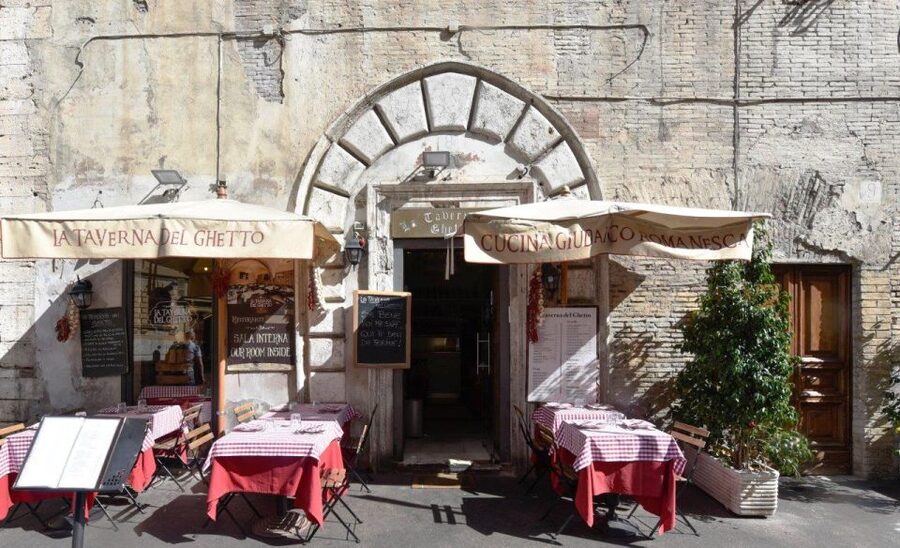
Dinner in Rome starts in a quiet alley. This 2-hour meal experience puts you in the old Jewish Quarter atmosphere near archaeological Rome, with a cozy 3-course lunch or dinner setup inside La Taverna del Ghetto. I like that it keeps things simple: you come for food, you leave full, and you still get that sense of place walking around the old streets.
Two things I really like. First, the starter list leans Roman and Jewish-Roman at the same time, including the world-famous artichoke style you’ll see in local menus. Second, you get real pasta decisions, from Tagliolino al ragù to Amatriciana or Spaghettone alla Carbonara, with drinks portioned into the price so you’re not guessing what the bill will be. One possible drawback: if you want a highly guided, lecture-style evening with lots of structured storytelling, this is more about a shared meal than a roaming tour.
In This Review
- Key points before you go
- La Taverna del Ghetto and the Jewish Quarter feel
- The real itinerary: 3 courses, chosen from Roman staples
- Starters you can choose from
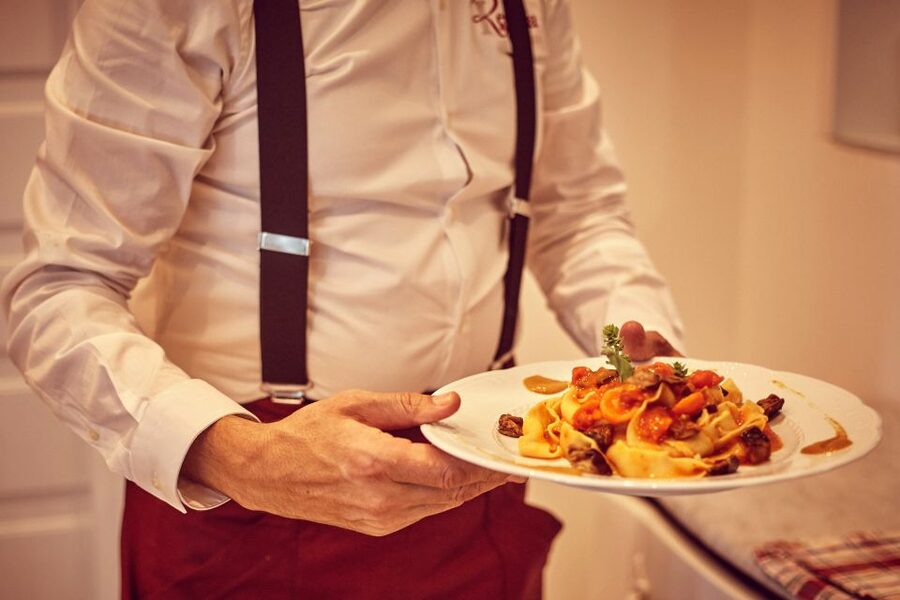
- The pasta course: three strong Roman directions
- Dessert: one listed homemade option
- Drinks included: wine, water, and espresso in set amounts
- Pasta showdown: ragù vs Amatriciana vs Carbonara
- Tagliolino al ragù
- all’Amatriciana
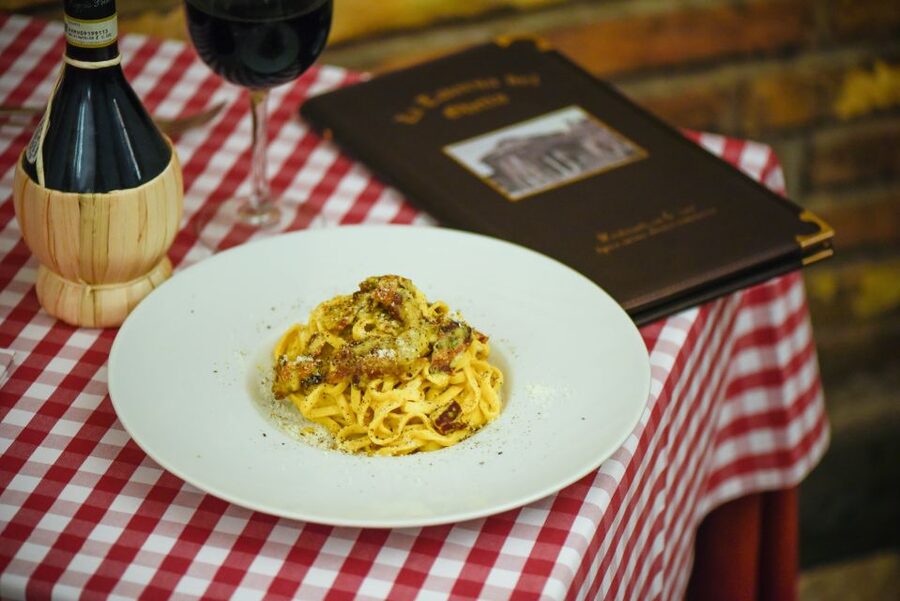
- Spaghettone alla Carbonara
- The starters that bring the story: artichoke, cod, anchovy mozzarella
- Jewish-style artichoke
- Pumpkin flowers with anchovies and mozzarella
- Fried codfish
- Antipasti platter (cold cuts and cheese)
- Service and the group vibe: small, friendly, sometimes very social
- Price and value: what $45 really buys in Rome
- Who should book, and who should skip
- Should you book lunch or dinner here?
- FAQ
- How long is the lunch or dinner?
- Where do I meet for the experience?
- How much does it cost?
- What is included in the price?
- What drinks are included?
- Can I choose what I eat during the meal?
- Is the experience held rain or shine?
- How big is the group?
- Is it suitable for people with mobility impairments?
- What are the cancellation terms?
Key points before you go
- La Taverna del Ghetto is the meetup and the whole experience centers on one meal
- Jewish-style artichoke shows up in multiple starter options
- Pasta choices include ragù, Amatriciana, and Carbonara variations
- Drinks are included in set amounts: red wine, mineral water, and espresso
- Small group size (up to 10) and an Italian/English host or greeter
- Rain or shine, you’ll still have your 2-hour sitting
La Taverna del Ghetto and the Jewish Quarter feel
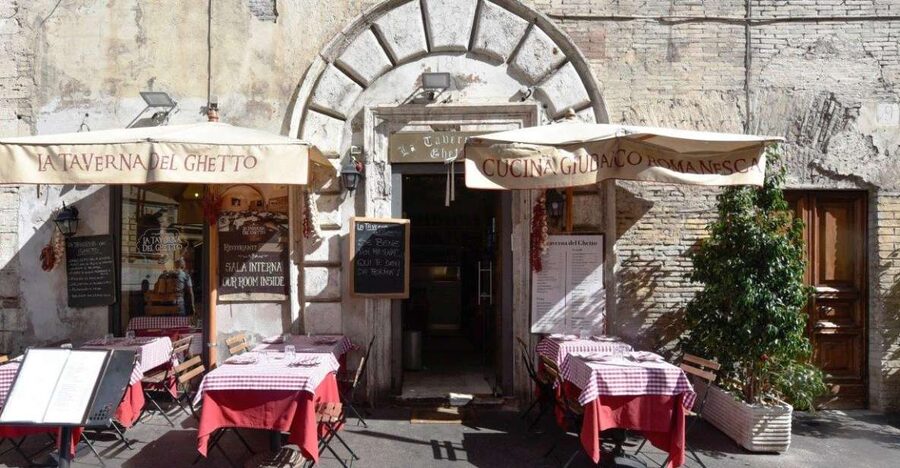
You meet at La Taverna del Ghetto, and that matters more than people think. Rome dining can be scattered: one place for drinks, another for dinner, another for dessert. Here, the focus stays in one spot for the whole 2-hour experience, which is ideal if you’re juggling museums and walking all day.
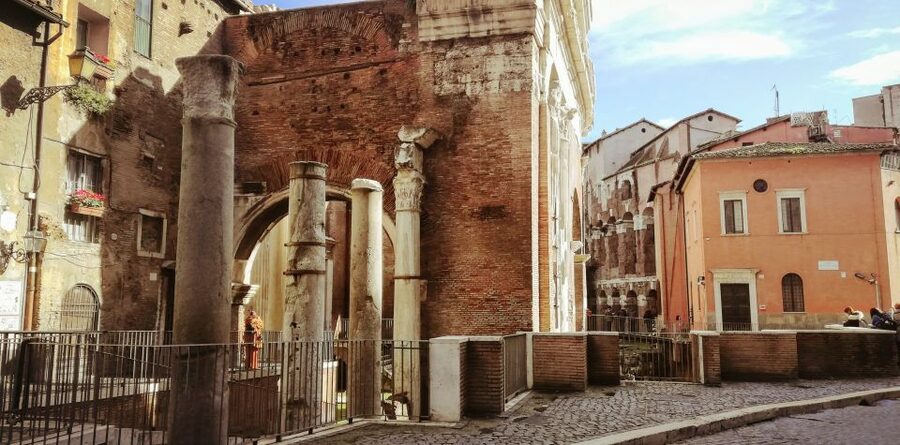
The setting also gives you context. The experience is centered in Rome’s old Jewish Quarter area, where you get that sense of everyday life layered over time. Even if you’re not doing a full neighborhood walkthrough, you’re still eating close to the archaeological vibe that makes Rome feel like it never fully stops.
Language support is straightforward. You’ll have an Italian or English host/greeter, which helps if you need help picking between similar-sounding classics. Group size is capped at 10, so you’re not stuck in a giant dining hall with no chance to hear anyone. That said, because this is primarily a meal, don’t expect a moving itinerary with frequent stops and photo breaks.
Also note one practical detail: the experience isn’t suitable for people with mobility impairments. If mobility is a concern for you, it’s worth planning alternatives and checking the restaurant’s access situation in advance.
Worth a look next to this Rome booking:
- Rome: Gourmet Food Tour with Dinner & Barolo Wine
★ 4.9 · 2,347 reviews - Pasta Making & Wine Tasting with Dinner in Frascati from Rome
★ 5.0 · 1,326 reviews - Rome Food Tour: Hidden Gems of Trastevere with Dinner & Wine
★ 5.0 · 1,166 reviews - Rome: Pasta Making with Wine Tasting and Dinner in Frascati
★ 4.9 · 979 reviews
The real itinerary: 3 courses, chosen from Roman staples
This is a 3-course lunch or dinner experience, depending on the time slot you book. The structure is consistent: starter, pasta, then a homemade dessert. What changes is what you pick from the menu list for your course.
Starters you can choose from
You’ll start with one of these options:
- Roman-style appetizer with Jewish-style artichoke
- Pumpkin flowers with anchovies and mozzarella
- Fried codfish
- Antipasti platter of cold cuts and cheese, including a Jewish-style artichoke option in the listed set
This range is a good sign for your enjoyment. You can go toward the Roman-Jewish signature (the artichoke) or pick something more typical Italian (like antipasti) depending on what you’re craving. And if you’re curious about different flavors, the menu gives you enough variety to try more than one style across courses, even without ordering extra.
The pasta course: three strong Roman directions
For pasta, you choose one:
- Tagliolino al ragù
- all’Amatriciana
- Spaghettone alla Carbonara
Each one scratches a different itch. Ragù tends to be heavier and comforting. Amatriciana is all about tomato-forward sauce with a Roman attitude. Carbonara is the creamy, egg-and-cheese comfort zone. You’re not stuck with one choice that might not match your taste.
Worth a look next to this Rome booking:

Dessert: one listed homemade option
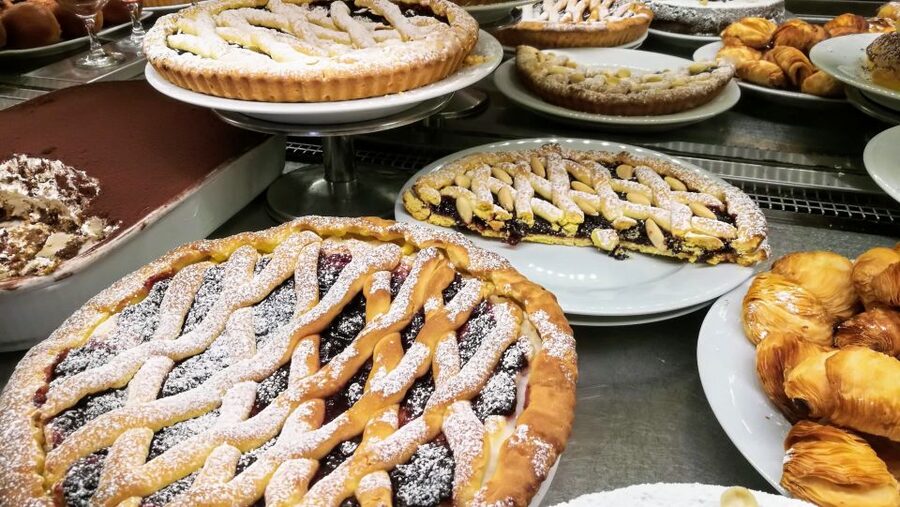
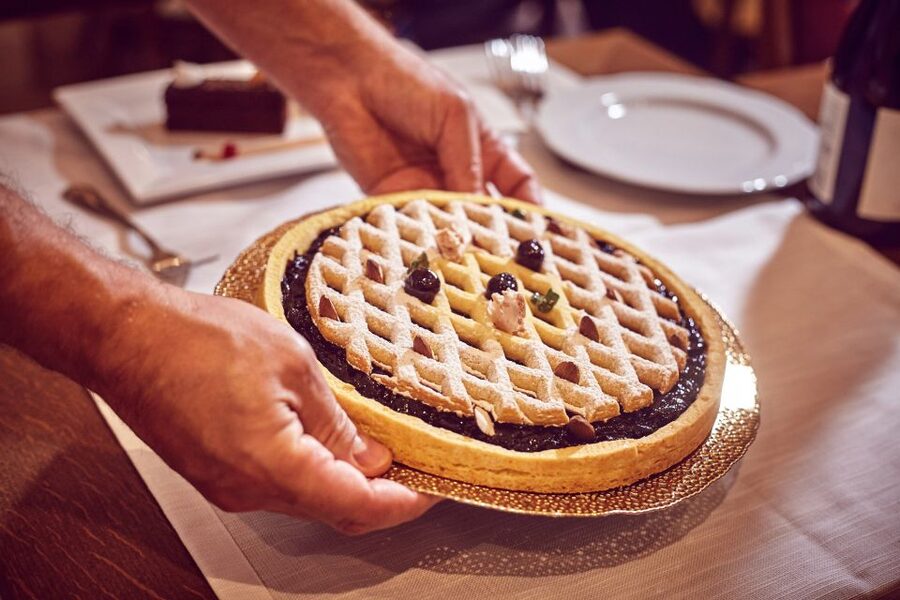
You finish with a homemade dessert: Crostata di ricotta e visciole. This is a practical ending choice in Rome. Crostata is usually a dependable crowd-pleaser, and ricotta plus visciole (sour cherries) tends to land well after a pasta-forward meal. No dessert roulette here.
Drinks included: wine, water, and espresso in set amounts
Price in Rome can feel like a math puzzle. Here, your drinks are built into the experience, which makes budgeting way easier.
Included drinks:
- 250 ml red wine
- 500 ml mineral water
- 1 espresso
That red wine amount is not an unlimited pour, but it’s enough to match a typical lunch/dinner rhythm. The included water is helpful too because it keeps you comfortable without hunting for an extra bottle.
The espresso at the end is also a smart touch. In Italy, coffee is often treated like part of the final act, not an optional add-on. With this package, you get that moment without needing to flag down a server at the end.
One small pacing tip: if you tend to sip slowly, you’ll still finish within the 2-hour window. If you’re the fast-eater type, you might feel the espresso comes quickly, so don’t plan to linger too long.
Pasta showdown: ragù vs Amatriciana vs Carbonara
If you like your pasta choices to feel intentional, this menu is set up well. You’re choosing between three Roman-family classics, not picking from a long list with weak options.
Tagliolino al ragù
Ragù means comfort. Think slow-cooked depth with a sauce that clings. If you’re arriving hungry after a day of walking, this is the “steady and filling” option. It also tends to pair nicely with your included red wine.
all’Amatriciana
Amatriciana is Roman pride with a tomato-based sauce. It’s bolder, usually more tangy and savory than ragù, and it often feels like a stronger match if your starter was more delicate. If you want the pasta to taste distinctly Roman, this is one of the best picks.
Spaghettone alla Carbonara
Carbonara is creamy and egg-driven, with the flavors that make people argue happily about what counts as authentic. Spaghettone (thicker spaghetti) can feel extra satisfying because it gives you that hearty bite. If you want something rich after a starter, this is your move.
If you’re unsure, use this rule: choose ragù if you want comfort, choose Amatriciana if you want tomato-forward punch, choose Carbonara if you want creamy richness.
The starters that bring the story: artichoke, cod, anchovy mozzarella
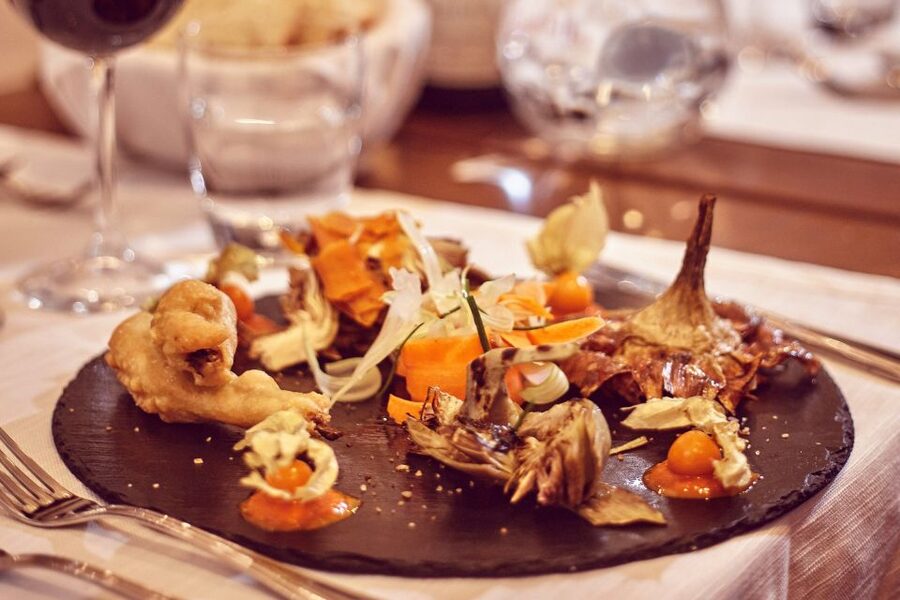
Here’s where the experience earns its name. You’re not just eating generic Italian. The starter list includes Jewish-style artichoke in multiple ways, which is the key “only-in-this-area” flavor thread.
Jewish-style artichoke
Artichokes are common in Italy, but the Jewish-style preparation shows up as a distinctive Roman-Jewish influence. If you like trying something that feels connected to place rather than just to pasta-and-wine tradition, this is the standout. Even if you’re not normally an artichoke fan, this version is often the kind that wins people over because it’s flavorful and not bland.
Pumpkin flowers with anchovies and mozzarella
This combo is for the adventurous eater who still wants something Italian. The anchovies bring salt and depth, while mozzarella adds softness. If you’re sensitive to strong fish flavor, consider the other starters.
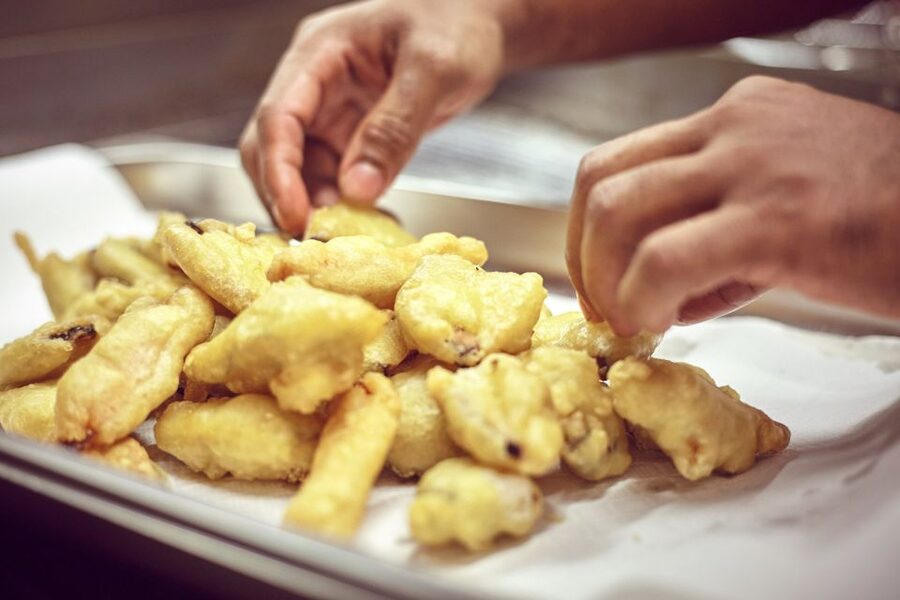
Fried codfish
Fried codfish gives you crunch and a more straightforward taste compared with the anchovy route. It’s a good pick if you want contrast with the pasta course afterward.
Antipasti platter (cold cuts and cheese)
This option is practical if you want a sampler. It also helps if you have trouble choosing between the more specific starters. It’s a classic appetizer format, and the cold cuts and cheese keep it satisfying without being overly delicate.
Service and the group vibe: small, friendly, sometimes very social
The small group size (up to 10) is the heart of the comfort here. You can talk without shouting, and the host/greeter can actually make contact.
One name pops up in the service story for this restaurant: Massimo. In at least one recent case, he was described as exceptionally cheerful and authentic, and the meal even included a birthday serenade that spread to other diners in the garden area. That kind of spontaneous warmth is the kind of Roman dining moment you remember.
Still, be honest with your expectations. The setup is built around your meal and choices, not around a long guided talk. If you’re looking for a dinner that feels like a guided cultural performance with lots of explanation and interaction, you may want to seek something more structured elsewhere. If you mostly want great food, this format usually works fine because the menu does most of the work for you.
Price and value: what $45 really buys in Rome
At $45 per person, you’re paying for a 3-course meal plus a defined drinks package. In Rome, the cost of food is one thing. The cost of drinks and coffee can quietly add up fast. Here, the included 250 ml of red wine and 1 espresso help prevent that budget surprise.
You’re also not paying extra for each course. That’s a real value point if you tend to order cautiously. Instead of deciding how much to drink or whether to add dessert, you’re locked into the menu structure: starter, pasta, dessert, wine, water, espresso.
Is it a bargain? Rome dining prices vary a lot by neighborhood and type of restaurant. But what makes this feel fair is the combination of meal + drinks in a single package with a small group. For an organized night out without a lot of decision fatigue, it can be good value.
Who should book, and who should skip
This works best if you want a low-stress Roman dinner plan where food choices are the main event.
You’ll likely love it if:
- You want Roman classics with a special nod to Jewish-Roman influences, especially the artichoke starters
- You prefer a small group dinner instead of a big tour group
- You like having wine and espresso handled for you, so you can just enjoy the meal
You might want to think twice if:
- You’re expecting a highly guided tour with lots of planned cultural narration during the meal
- You need mobility-friendly access (this experience is not suitable for people with mobility impairments)
Also keep one practical expectation in mind: this is a sit-down dinner/lunch that lasts about 2 hours. If you’re trying to fit a museum sprint right after, plan a buffer. You’ll need time to eat, digest, and enjoy the final coffee.
Should you book lunch or dinner here?
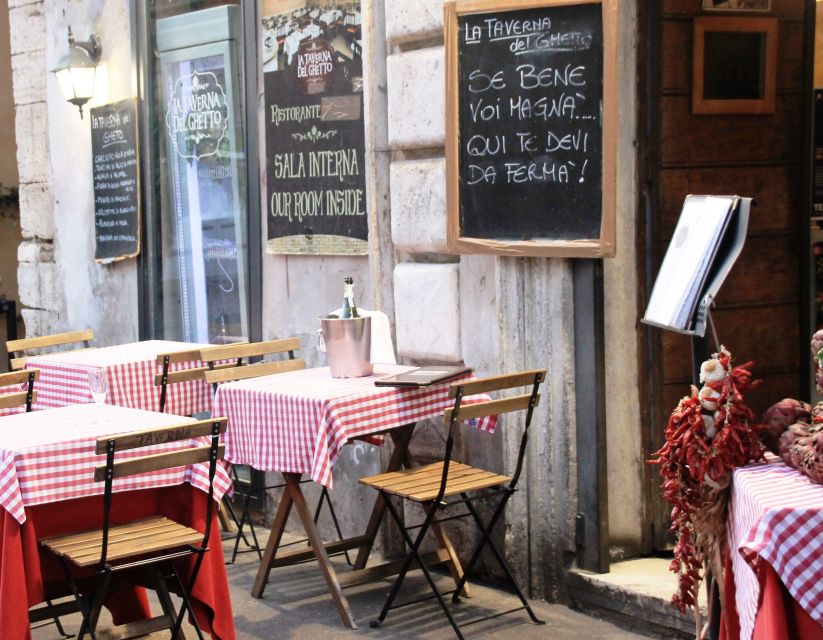
I’d book this if your goal is straightforward: eat a Roman meal that feels connected to the area, with smart menu options and included drinks that keep the cost predictable. The artichoke starter and the pasta choice are the main reasons to go, and the small group setting helps it feel comfortable rather than rushed.
I would not book if you’re mainly chasing a guide-led, conversation-heavy experience. This one is built around the meal format, not around a roaming storyline. If that’s what you want, you’ll enjoy a more tour-like evening elsewhere.
If you do book, show up hungry, pick your pasta with confidence, and treat the dessert as part of the plan, not an afterthought. Rome does dessert better than most places, and Crostata di ricotta e visciole is a satisfying way to end.
FAQ
How long is the lunch or dinner?
The experience lasts 2 hours.
Where do I meet for the experience?
You meet at La Taverna del Ghetto, as indicated on the map.
How much does it cost?
It costs $45 per person.
What is included in the price?
A 3-course meal (lunch or dinner based on your booking), 250 ml red wine, 500 ml mineral water, and 1 espresso.
What drinks are included?
You get 250 ml of red wine, 500 ml of mineral water, and an espresso.
Can I choose what I eat during the meal?
Yes. You choose one starter from the listed options and one pasta course from Tagliolino al ragù, all’Amatriciana, or Spaghettone alla Carbonara. Dessert is listed as Crostata di ricotta e visciole.
Is the experience held rain or shine?
Yes, it runs rain or shine.
How big is the group?
It’s a small group limited to 10 participants.
Is it suitable for people with mobility impairments?
No, it is not suitable for people with mobility impairments.
What are the cancellation terms?
You can cancel up to 24 hours in advance for a full refund.
More Lunch Experiences in Rome
- Pompeii and Mount Vesuvius Day Trip from Rome with Pizza Lunch
★ 4.5 · 6,151 reviews - Rome: Tuscany & Montepulciano Day Trip with Lunch & Wine Tasting
★ 4.5 · 5,232 reviews - From Rome: Pompeii Day Trip with Optional Vesuvius and Lunch
★ 4.6 · 5,067 reviews - Rome: Tuscany & Montepulciano Day Trip with Lunch & Wines
★ 4.7 · 3,004 reviews - Rome to Pompeii Guided Tour with Wine & Lunch by High Speed Train
★ 5.0 · 1,379 reviews - From Rome: Bagnoregio & Orvieto Day Trip with Wines & Lunch
★ 4.6 · 1,075 reviews
More Dining Experiences in Rome
- Rome: Gourmet Food Tour with Dinner & Barolo Wine
★ 4.9 · 2,347 reviews - Pasta Making & Wine Tasting with Dinner in Frascati from Rome
★ 5.0 · 1,326 reviews - Rome Food Tour: Hidden Gems of Trastevere with Dinner & Wine
★ 5.0 · 1,166 reviews - Rome: Pasta Making with Wine Tasting and Dinner in Frascati
★ 4.9 · 979 reviews - Rome All in One: Trastevere Food Tour, Dinner & Drinks
★ 4.9 · 838 reviews - Night Tour of Rome with Local Pizza Dinner and Gelato Experience
★ 4.5 · 780 reviews
More Tour Reviews in Rome
- Vatican Museums, Sistine Chapel & St. Peter’s Basilica Tour
★ 4.3 · 73,970 reviews - Vatican Museums, Sistine Chapel & St Peter’s Basilica Guided Tour
★ 4.5 · 39,149 reviews - Rome: Colosseum, Palatine Hill and Roman Forum Guided Tour
★ 4.8 · 32,814 reviews - Rome: Guided Tour of Colosseum, Roman Forum & Palatine Hill
★ 4.7 · 27,897 reviews - Rome: Colosseum & Forum with Audio Guide App -Optional Arena
★ 4.2 · 24,770 reviews - Rome: Colosseum, Roman Forum and Palatine Hill Guided Tour
★ 4.5 · 23,903 reviews
Just added to our Rome reviews





Dinner Experiences, compared.
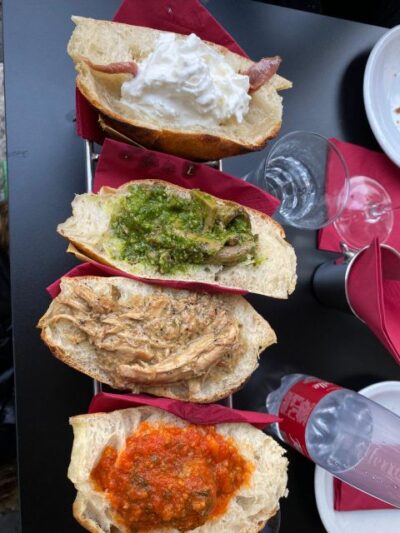 ★ 4.9Gourmet Food Tour with Dinner & Barolo WineFrom $772,347 reviews
 ★ 5.0Pasta Making & Wine Tasting with Dinner in Frascati from RomeFrom $451,326 reviews
 ★ 5.0Rome Food Tour: Hidden Gems of Trastevere with Dinner & WineFrom $521,166 reviews
 ★ 4.9Pasta Making with Wine Tasting and Dinner in FrascatiFrom $35979 reviews
 ★ 4.9Rome All in One: Trastevere Food Tour, Dinner & DrinksFrom $93838 reviews
 ★ 4.5Night Tour of Rome with Local Pizza Dinner and Gelato ExperienceFrom $237780 reviews
 ★ 4.1Italian Opera Concert and Traditional DinnerFrom $94453 reviews
 ★ 5.0Rome Pantheon: Fine Food & Wine Pairing Dinner with SommelierFrom $145283 reviews
Browse the lists this tour appears in