
Reviewed · WALKING TOURS
Rome Jubilee Walking Tour of Churches, Bridges & Legends
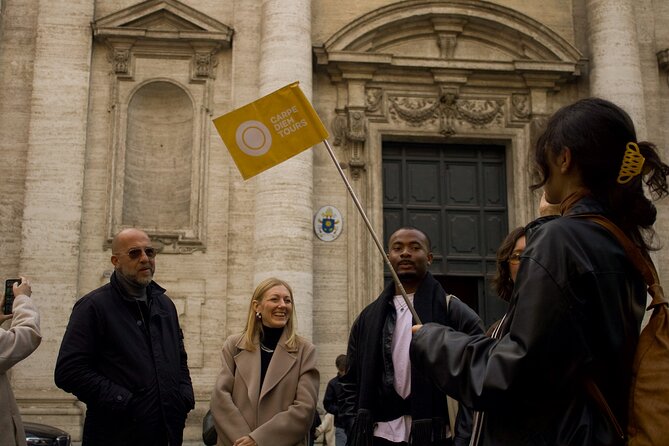
Pilgrim paths, church art, and bridge stories. This 2-hour small-group Rome walk puts Vatican City into context, using churches, bridges, and street-level legends to help you understand what you’re looking at and why people walked these routes in the first place. You start at Piazza di Pietra and finish in the Piazza Pia area near Castel Sant’Angelo, with a guide helping you read the city fast.
I love how the route mixes standout visual moments with practical navigation tips, so the holy sights feel connected instead of random stops. Two big wins for me are the Baroque and art-focused church interiors (including major works at Santa Maria Sopra Minerva) and the “pilgrim trail” storytelling that explains how this area functioned as a living journey. One thing to plan for: entry into the Pantheon and St. Peter’s Basilica isn’t included, so if you want to go inside, you’ll need tickets and modest dress (knees and shoulders covered).
In This Review
- Key highlights that make this tour worth your time
- Rome at 5:00 pm: a guided walk built for momentum
- Why the Jubilee theme changes how you see churches and bridges
- Stop 1: Piazza di Pietra and the Temple of Hadrian viewpoint
- Stop 2: Chiesa di Sant’Ignazio di Loyola’s Baroque ceiling details
- Stop 3: Basilica of Saint Mary of Minerva and art with real weight
- A Pantheon-era sightline: why the dome belongs in this story
- Stop 4: Piazza Navona—once a stadium, now a church-and-fountain stage
- Stop 5: Via dei Coronari and the pilgrim route’s everyday reality
- Stop 6: St. Angelo Bridge—statues, Tiber views, and a pilgrim shortcut
- Castel Sant’Angelo: fortress, residence, prison, and museum views
- Stop 7: Piazza Pia and the last meeting point before St. Peter’s Square
- What you’ll miss if you expected entry to everything
- Price and value: what $120.14 buys you (and why small group matters)
- Who this tour is best for
- Should you book the Rome Jubilee Walking Tour?
- FAQ
- How long is the Rome Jubilee Walking Tour of Churches, Bridges & Legends?
- What time does the tour start, and where do I meet?
- Where does the tour end?
- Is this tour offered in English?
- How big is the group?
- What’s included in the tour price?
- Are tickets to the Pantheon and St. Peter’s Basilica included?
- What should I wear if I plan to visit St. Peter’s Basilica or the Sistine Chapel?
- Can I get a refund if my plans change?
Key highlights that make this tour worth your time
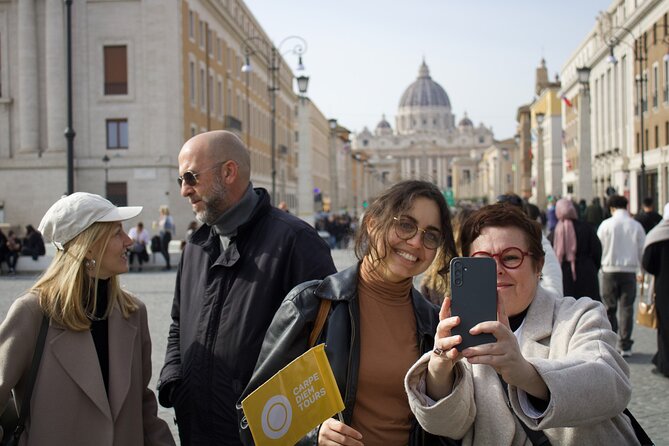
- Vatican-area context without the chaos: you’ll connect buildings to the pilgrim route, not just snap photos
- Baroque ceiling storytelling at Chiesa di Sant’Ignazio di Loyola: the guide helps you see what to look for
- Santa Maria Sopra Minerva with major art points: including Christ the Redeemer and the tomb of Saint Catherine of Siena
- Ponte Sant’Angelo as a pilgrimage gateway: learn why this bridge mattered for travelers heading toward St. Peter’s
- Small group, max 15: more questions, tighter pacing, and less wandering
Rome at 5:00 pm: a guided walk built for momentum
This tour starts at 5:00 pm, which is a smart time if you want your Rome evening to feel like sightseeing instead of a full-day slog. With an approx 2-hour pace and a group capped at 15, you’ll get a steady rhythm: stop, look, listen, walk again.
The vibe is practical. You’re not just collecting landmarks—you’re learning how this part of Rome “works” as a route people used to reach the center of Catholic pilgrimage. Even if you only have a day or two in town, you’ll come away with a clearer mental map of where the big sights sit in relation to each other.
Worth a look next to this Rome booking:
- Rome: Guided Food Walking Tour with Wine in Trastevere
★ 4.9 · 3,105 reviews - Rome: Trastevere & Campo de Fiori Street Food Walking Tour
★ 4.9 · 2,768 reviews - Rome: Paranormal Night Walking Tour & Secret Backstreets
★ 4.9 · 1,921 reviews - Rome: Trastevere Street Food Walking Tour with Local Expert
★ 4.8 · 1,784 reviews
Why the Jubilee theme changes how you see churches and bridges
The Jubilee angle isn’t just marketing. It’s a lens that turns architecture into a story about movement—people traveling, pausing, praying, and trying to make meaning out of long days on foot.
That matters because Rome can feel like a visual overload. This tour helps you slow down without getting stuck. Each stop ties back to a “pilgrim-minded” question: Why is this here? Who would have seen it on the way to St. Peter’s? What did people notice when they arrived?
You’ll also get tips and tricks for navigating Rome’s holy sights, which is useful before you add your own visits afterward. If you’ve ever felt lost near St. Peter’s Square, this kind of guided orientation pays off.
Stop 1: Piazza di Pietra and the Temple of Hadrian viewpoint
You begin in Piazza di Pietra, a quieter starting point that instantly shifts your brain from modern Rome to ancient Rome. The big visual payoff is the Temple of Hadrian—its columns are a clean reminder that this neighborhood wasn’t always “church-and-bridge Rome.”
What I like about this opener is how it sets context. Rome’s pilgrimage route didn’t sprout out of thin air. It evolved on top of older roads, older power, and older monuments. Starting with Hadrian’s temple trains you to look for layers rather than treating each era like a separate museum.
Stop 2: Chiesa di Sant’Ignazio di Loyola’s Baroque ceiling details
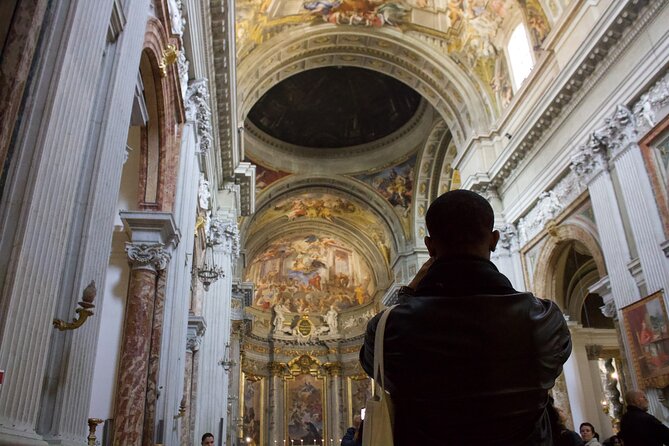
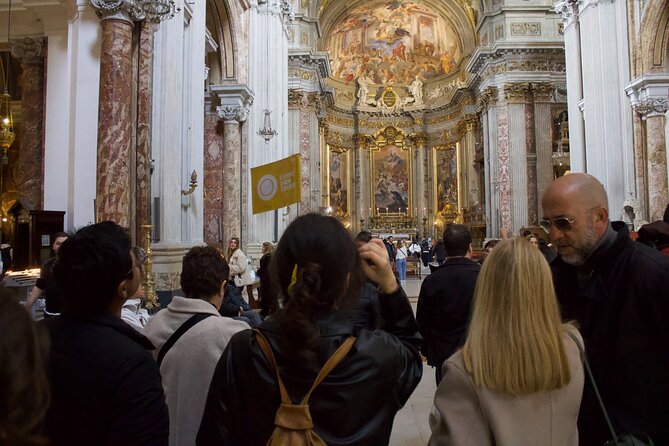
Next is the Chiesa di Sant’Ignazio di Loyola, a church that’s famous for its unique ceiling and ornate interior. This is the kind of Baroque space where your eyes can wander in five directions at once—so you’ll appreciate having a guide point out what the art is doing.
The tour’s payoff here is meaning, not just style. You learn how 17th-century religious art communicated ideas visually, and you’ll understand why certain details weren’t meant to be neutral decoration. When you know what to look for, the interior stops being overwhelming.
Stop 3: Basilica of Saint Mary of Minerva and art with real weight
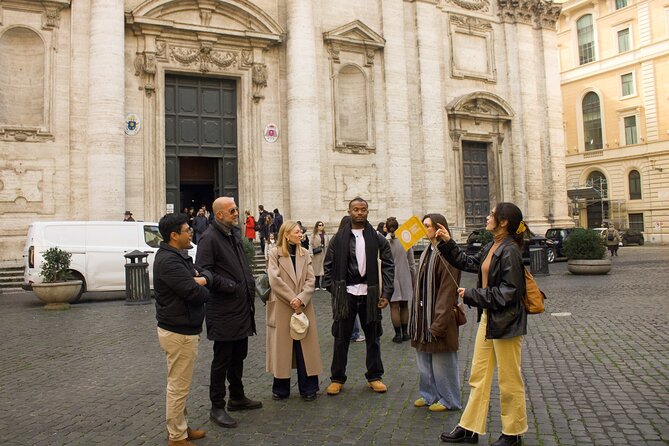
Then you move to the Basilica of Saint Mary of Minerva (Santa Maria Sopra Minerva). This stop is strong for anyone who likes art history without turning it into a textbook.
Inside, you’ll focus on specific anchors: Michaelangelo’s Christ the Redeemer and the tomb of Saint Catherine of Siena. Even if you don’t know much about these figures, the guide’s framing helps you connect the artworks and memorials to the church’s spiritual role.
One practical benefit: this church stop gives you a change of pace from the street view stops. It’s where you slow down and take in a carefully guided look at objects you can’t recreate at home.
A Pantheon-era sightline: why the dome belongs in this story
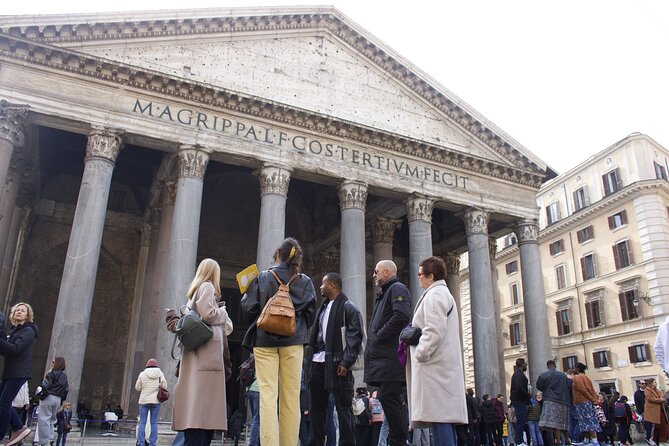
At a key point along the route, you’ll get a view of the Pantheon from the outside. The tour calls out the iconic dome and the portico, emphasizing how well preserved the ancient building is.
Even without entry, the Pantheon makes sense here. This is the kind of Rome landmark that anchors the “old world” feel of the route. It also helps you understand why pilgrims and visitors would have noticed the grand architectural backbone around them—because Rome’s greatness is visible at street level.
If you’re planning to go inside the Pantheon on another day, note that this tour doesn’t include that entry. You’ll get the orientation now, the full experience later.
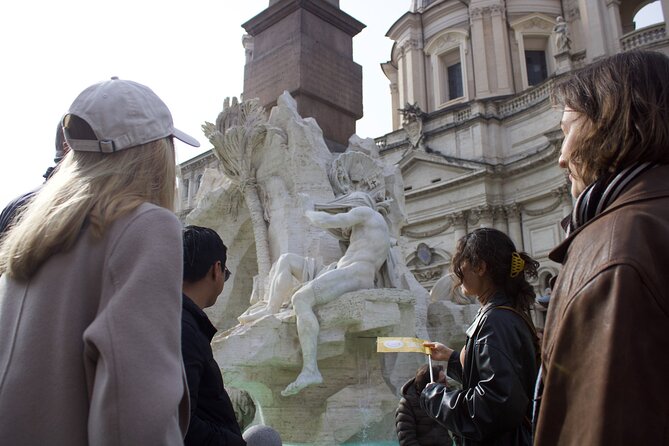
Stop 4: Piazza Navona—once a stadium, now a church-and-fountain stage
Next up is Piazza Navona, which still carries the memory of being an ancient Roman stadium. You’ll see how the square’s layout supports the big open-space feel that makes it perfect for lingering.
The tour also zooms in on the Baroque fountains and the church Sant’Agnese in Agone, designed by Borromini and Bernini. This stop is great if you like the moment when a place feels both historical and theatrical.
The only drawback to watch for: Piazza Navona can feel busy. A guide helps you keep your bearings so you’re not stuck dodging crowds just to look at one detail.
Stop 5: Via dei Coronari and the pilgrim route’s everyday reality
Then you walk down Via dei Coronari, a narrow cobblestone street with views of Renaissance-era buildings. This is a “feet-on-stone” moment—perfect for learning the route’s texture.
The tour shares two sides of what this street represented. On one hand, it’s tied to pilgrims who gathered here heading toward St. Peter’s Basilica. On the other, it explains that not every establishment along the way was exactly holy, which adds a real human edge to the legend.
I like this stop because it keeps the story grounded. Pilgrimage wasn’t just pure devotion—it was travel, services, people watching, and life happening around faith.
Stop 6: St. Angelo Bridge—statues, Tiber views, and a pilgrim shortcut
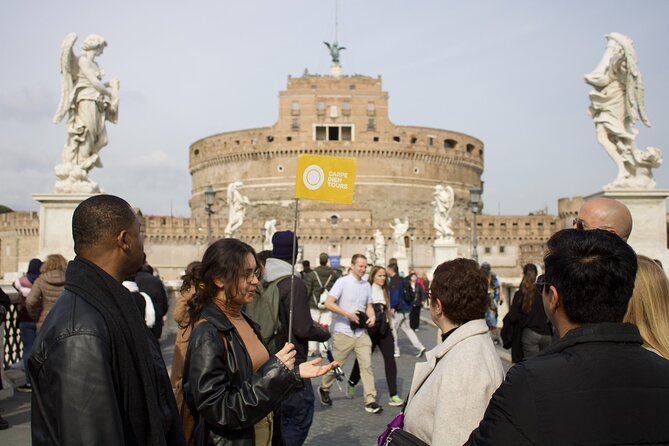
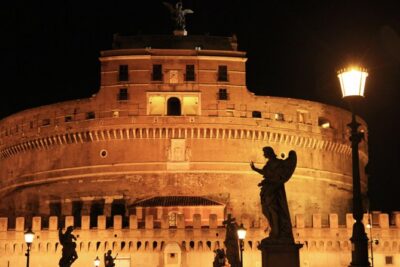
One of the most cinematic moments is crossing Ponte Sant’Angelo (St. Angelo Bridge). The bridge is adorned with angel statues, and the views over the Tiber River and toward Castel Sant’Angelo make it a natural photo break.
More important than the scenery is the meaning. The tour explains that this bridge served as an entrance route to Hadrian’s mausoleum, and later became a key travel path for pilgrims going to St. Peter’s Basilica.
This stop is also where you learn how the city channels movement. Bridges in Rome weren’t just crossings; they were thresholds—visual and spiritual checkpoints.
Castel Sant’Angelo: fortress, residence, prison, and museum views
After the bridge, you’ll head your attention toward Castel Sant’Angelo. You’ll get the “big idea” of the building: it has served as a fortress, a papal residence, and even a prison, and it now functions as a museum.
The location also gives you panoramic Rome views, so this is a stop that works for both the history-minded and the skyline-leaning crowd. If you like places with complicated pasts, this is a win.
Stop 7: Piazza Pia and the last meeting point before St. Peter’s Square
You’ll then take in Piazza Pia, described as a key meeting point for visitors heading toward St. Peter’s Basilica—basically the “we’re almost there” area. This is a nice emotional beat in the walk because it signals progress.
Finally, the route brings you to St. Peter’s Square from the outside, focusing on Bernini’s grand colonnades and the church façade. The tour frames St. Peter’s Square as the heart of Catholicism built over the tomb of Saint Peter, and it ends so you can continue on your own.
No inside access is included here either. But this outside look is still a big help if you want to plan a later visit with the right ticket and time.
What you’ll miss if you expected entry to everything
This tour includes guided walking, plus stops where you view major sites from the outside. Specifically, entry to the Pantheon and St. Peter’s Basilica isn’t included.
So, if St. Peter’s Basilica interior is a must-do, plan to add that separately. The good news is you’ll finish the tour right in the right neighborhood—so going on your own is usually easier than starting from far away.
Also, if you’re visiting St. Peter’s Basilica or the Sistine Chapel before or after, bring modest clothing: knees and shoulders covered. The tour itself keeps you respectful, but your personal itinerary is still on you.
Price and value: what $120.14 buys you (and why small group matters)
At $120.14 per person, you’re paying for a guided route with a local guide, city highlights, and hidden-gems style storytelling—plus the convenience of a tight, planned walking loop.
The best value piece here is the small-group size (max 15). When you’re learning how to navigate a dense area like this, the difference between a big group and a small group is real. You’ll get more chance to ask questions, and you’ll spend less time waiting in a line just because someone else is lost.
The other value factor: the guides. People highlight names like Alina and Kasia for being organized and for giving strong historical context tied to what you can actually see. Domenica and Domenic/Dominica also show up in feedback for being fluent in English and for keeping the walk entertaining while teaching.
One small consideration: the route is designed around key stops and context, not a long bridge marathon. Some feedback notes there’s only one bridge as part of the core plan, so don’t book expecting multiple bridge crossings.
Who this tour is best for
This is a strong fit if you:
- Want a first evening in Rome near the Vatican and a quick “map in your head”
- Like church art when someone connects details to meaning, not just dates
- Prefer a small group and an organized route over wandering alone
- Want context before you do your own big-ticket indoor visits later
It’s less ideal if you only care about interiors and already know exactly what you want to see inside the Pantheon and St. Peter’s Basilica. In that case, you might use this as a primer, then add separate ticketed visits.
Should you book the Rome Jubilee Walking Tour?
I’d book it if you want your Vatican-area time to feel coherent. This walk gives you a route-based understanding—churches, bridges, and pilgrim legends—that makes later visits easier and more meaningful.
Skip it (or pair it with other tickets) if your top priority is going inside every major site included. Since Pantheon and St. Peter’s Basilica entry are not part of this tour, you’ll need to plan those separately anyway.
If you’re looking for a 5 pm small-group orientation with strong storytelling and practical navigation help, this is a solid choice.
FAQ
How long is the Rome Jubilee Walking Tour of Churches, Bridges & Legends?
The tour lasts about 2 hours.
What time does the tour start, and where do I meet?
It starts at 5:00 pm at Piazza di Pietra, 45, 00186 Rome (RM), Italy.
Where does the tour end?
The tour ends at Piazza Pia, 00193 Rome (RM), next to Castel Sant’Angelo.
Is this tour offered in English?
Yes, it’s offered in English.
How big is the group?
The tour has a maximum of 15 travelers.
What’s included in the tour price?
It includes a guided walking tour with a local guide, plus city highlights and hidden gems.
Are tickets to the Pantheon and St. Peter’s Basilica included?
No. You’ll view them from outside and entry isn’t included.
What should I wear if I plan to visit St. Peter’s Basilica or the Sistine Chapel?
Dress modestly, with knees and shoulders covered.
Can I get a refund if my plans change?
Yes. You can get free cancellation up to 24 hours in advance for a full refund.
More Walking Tours in Rome
- Rome: Guided Food Walking Tour with Wine in Trastevere
★ 4.9 · 3,105 reviews - Rome: Trastevere & Campo de Fiori Street Food Walking Tour
★ 4.9 · 2,768 reviews - Rome: Paranormal Night Walking Tour & Secret Backstreets
★ 4.9 · 1,921 reviews - Rome: Trastevere Street Food Walking Tour with Local Expert
★ 4.8 · 1,784 reviews - Rome: Small-Group Guided Day or Night Walking Tour
★ 4.8 · 1,009 reviews - Rome by Night Walking Tour – Legends & Criminal Stories
★ 4.5 · 1,003 reviews
More Tours in Rome
- Vatican Museums, Sistine Chapel & St. Peter’s Basilica Tour
★ 4.3 · 73,970 reviews - Vatican Museums, Sistine Chapel & St Peter’s Basilica Guided Tour
★ 4.5 · 39,149 reviews - Rome: Colosseum, Palatine Hill and Roman Forum Guided Tour
★ 4.8 · 32,814 reviews - Rome: Guided Tour of Colosseum, Roman Forum & Palatine Hill
★ 4.7 · 27,897 reviews - Rome: Colosseum, Roman Forum and Palatine Hill Guided Tour
★ 4.5 · 23,903 reviews - Rome: Colosseum Arena Floor, Palatine & Forum Guided Tour
★ 4.5 · 20,180 reviews
More Tour Reviews in Rome
- Vatican Museums, Sistine Chapel & St. Peter’s Basilica Tour
★ 4.3 · 73,970 reviews - Vatican Museums, Sistine Chapel & St Peter’s Basilica Guided Tour
★ 4.5 · 39,149 reviews - Rome: Colosseum, Palatine Hill and Roman Forum Guided Tour
★ 4.8 · 32,814 reviews - Rome: Guided Tour of Colosseum, Roman Forum & Palatine Hill
★ 4.7 · 27,897 reviews - Rome: Colosseum & Forum with Audio Guide App -Optional Arena
★ 4.2 · 24,770 reviews - Rome: Colosseum, Roman Forum and Palatine Hill Guided Tour
★ 4.5 · 23,903 reviews
Just added to our Rome reviews





Walking Tours, compared.
 ★ 4.9Guided Food Walking Tour with Wine in TrastevereFrom $1003,105 reviews
 ★ 4.9Trastevere & Campo de Fiori Street Food Walking TourFrom $512,768 reviews
 ★ 4.9Paranormal Night Walking Tour & Secret BackstreetsFrom $341,921 reviews
 ★ 4.8Trastevere Street Food Walking Tour with Local ExpertFrom $571,784 reviews
 ★ 4.8Small-Group Guided Day or Night Walking TourFrom $231,009 reviews
 ★ 4.5Rome by Night Walking Tour – Legends & Criminal StoriesFrom $141,003 reviews
 ★ 4.4Guided City Center Evening Sightseeing Walking TourFrom $46953 reviews
 ★ 4.9Small-Group City Highlights Moonlight Walking TourFrom $29949 reviews
Browse the lists this tour appears in