
Rome flips its mood after sunset. This 80-minute haunted history walk turns famous streets into storyboards, with Beatrice Cenci leading the charge at Castel Sant’Angelo. I love the way the tour ties eerie legends to specific places you can actually stand in, not just vague “ghost vibes.” I also like the pacing: it is an easy after-dinner stroll that keeps you moving from one real location to the next, with enough story at each stop to feel earned.
One thing to plan for: it’s still a night walking tour. If you have heart problems or need wheelchair access, this one is not a fit, so pick something more comfortable and fully accessible instead.
In This Review
- Key takeaways before you go
- Where the tour starts on Rome’s “Santo Spirito” edge
- Castel Sant’Angelo and Beatrice Cenci’s tragic shadow
- Via Giulia: poison, power, and the Church of Death
- Via Monserrato’s quieter scares: disappearances and whispers
- Campo de’ Fiori: flames, fate, and Giordano Bruno’s presence
- Palazzo Farnese: a beautiful façade with darker rumors
- The route logic: why the 80-minute timing works
- Price value: $15 for guided spooky history
- Who this tour is best for
- Should you book this ghost-history night walk?
- FAQ
- How long is the Rome Ghosts, Legends, and Haunted History Night Tour?
- What does the tour cost?
- Where does the tour start?
- What’s included in the price?
- Are church entrances included?
- What should I bring for a night walk?
- Is this tour suitable for everyone?
Key takeaways before you go
- Beatrice Cenci at Castel Sant’Angelo: a tragic 16th-century story with big “goosebumps” energy.
- Via Giulia in the spotlight: you’ll hear about the Church of Death and the poisoner Giulia Tofana.
- Side-street mystery on Via Monserrato: whispers of disappearances and unsettling corners of the city.
- Campo de’ Fiori’s execution memory: you’ll connect the square to the flames and fate behind it.
- Palazzo Farnese after the façade: you’ll stand before a Renaissance landmark with dark rumors attached.
Where the tour starts on Rome’s “Santo Spirito” edge
The meeting point is Via del Banco di Santo Spirito, 25, by a barbershop with a big BARBIERE sign (it’s noted as closed). This matters because it sets the tone: you start on the Rome that feels lived-in, not the Rome that’s been built for postcard photos.
From there, you’ll spend the evening walking between some of the city’s most dramatic historic spaces. The tour is designed to be an easy, after-dinner length, so you are not stuck in “all-night excursion” mode. Just bring comfortable shoes and a light jacket for the chill that hits once the sun drops.
If you like stories that have names, dates, and a physical setting you can point to, you’ll enjoy this. If you’re expecting a costume-and-scream ghost tour, you might find the tone more “historical storytelling with chills” than full horror movie theatrics.
After dark: other Rome walks
- Winner 2025 Rome Twilight Trastevere Food Tour by Eating Europe
★ 5.0 · 5,157 reviews - Rome: City Highlights Open-Top Bus Night Tour
★ 4.1 · 2,038 reviews - Rome: Paranormal Night Walking Tour & Secret Backstreets
★ 4.9 · 1,921 reviews - Vespa Sidecar Tour By Night with Pickup
★ 5.0 · 1,803 reviews
Castel Sant’Angelo and Beatrice Cenci’s tragic shadow
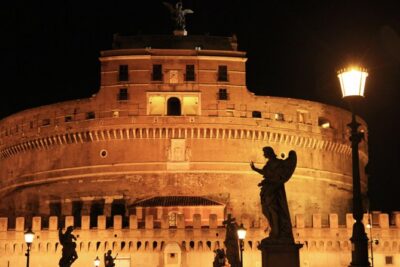
Castel Sant’Angelo is already dramatic by day, but at night it feels like it has its own atmosphere. The tour begins here, and the standout story is Beatrice Cenci, whose tale is tied to the haunting legend of her presence on the bridge.
The narrative centers on the brutal arc that shaped her life: an abusive father, Beatrice’s defiance, and her execution in 16th-century Rome. Even if you treat the haunting parts as legend, the tragedy lands. It’s the kind of story that makes you look at stone and metal differently, because you’re not just seeing a fortress. You’re seeing what authority, punishment, and fear looked like in real life.
Practical tip: when you stop for the story, look around slowly. Castel Sant’Angelo is a “layers” site, and the tour works best when you let yourself notice how the space changes your sense of scale and tension.
Via Giulia: poison, power, and the Church of Death
After Castel Sant’Angelo, the walk shifts to Via Giulia, one of Rome’s best streets for mixing charm with unease. This is where the tour’s spooky history gets especially personal because it moves from political violence to darker social survival.
You’ll hear about Giulia Tofana, described as a 17th-century poisoner who allegedly helped women escape unhappy marriages. The key detail is not just that she was infamous, but what that story implies about the world around her: there were people desperate enough to turn to lethal options, and there were systems that trapped women in dangerous lives.
Then comes the Church of Death connection. The tour explains that it was built by a confraternity focused on burying unclaimed bodies, and you’ll get the unsettling part too: the idea of what sits below, and why that organization existed in the first place. The effect is powerful because it reframes the word “death” from abstract into practical. This wasn’t only religion. It was logistics, fear management, and the city dealing with human remains when nobody came forward.
Note on access: the tour includes special access to certain areas when permitted, but churches can be closed at the time of your visit. So expect the emphasis to be on storytelling and what you can see and access, rather than guaranteed interior entry.
Via Monserrato’s quieter scares: disappearances and whispers
Next, you’ll get a change in feel with Via Monserrato. This street is described as tied to rumors of mysterious disappearances, and that’s exactly the kind of detail that makes night walking feel different. Wide streets give you theater. Narrow corners give you doubt.
What I like about this stop is that the tour doesn’t rely only on legends that sound like pure fantasy. It places the “what happened here” feeling in a real neighborhood setting, which makes the stories stick. You’re not just hearing that something strange happened. You’re walking through the kind of lanes where people could vanish from sight, and where you can easily imagine rumor growing teeth.
Practical tip: keep your head up. If you’re used to drifting while you walk, this is a stop where you’ll want to watch the street layout. Rome’s shape is a huge part of why these stories feel believable.
Worth a look next to this Rome booking:


Campo de’ Fiori: flames, fate, and Giordano Bruno’s presence
You’ll spend time at Campo de’ Fiori, a square that carries historical memory like it has been permanently inked into the paving. Here, one of the most memorable connections is Giordano Bruno, a philosopher who was burned at the stake in 1600 for his “heretical” beliefs.
The tour includes the look-and-feel detail too: a bronze statue in the square that stands as a kind of silent witness over the place where punishment became spectacle. Even if you’re not a philosophy buff, Bruno’s story is a turning point in understanding how Rome dealt with dissent. This is not only about one man. It’s about how authority used public spectacle to enforce ideas.
And yes, the square is also one of Rome’s more lively areas now. That contrast is the point. At night, you feel the layers more clearly: commerce and culture on top, older fear underneath.
If you’re traveling with teenagers, this stop often works well because the story is vivid and concrete, and the setting is easy to picture. The tour also tends to keep the pace moving so you don’t get stuck long enough for the group to lose energy.
Palazzo Farnese: a beautiful façade with darker rumors
The tour also brings you to Palazzo Farnese, an imposing Renaissance presence. On the surface, it’s all elegance and power. Underneath, the stories are the opposite: you’ll hear rumors that it is linked to a woman said to have been walled up alive centuries ago.
This is one of those stops where the tour’s real value is interpretation. You learn how legends attach themselves to architecture, and why people in the past needed explanations when something felt cruel or inexplicable. Standing in front of the building, the story becomes less about a single supernatural claim and more about how fear traveled through rumor.
Practical note: Palazzo Farnese is a “stand and absorb” moment. Don’t treat it like a quick photo stop. Let the guide’s story give you a reason to look carefully at the façade, because that’s when the whole haunting effect clicks.
The route logic: why the 80-minute timing works
This tour lasts 80 minutes, which is a sweet spot in Rome. It’s long enough to connect the dots between multiple sites, but short enough that you still feel in control of your evening. That is especially helpful if you have dinner plans or you’re trying not to burn a full afternoon and night on one activity.
The pacing also matters because it’s a walking format through older streets. Night air slows people down. A good guide keeps the group from stalling, which helps you stay engaged without feeling rushed.
Based on guides highlighted in past bookings, the storytelling approach is a big part of why the tour doesn’t drag. People praise guides such as Emilie and Mike for answering questions and making the walk lively, not just reciting a script. That’s what turns a set of landmarks into a shared experience, even if you’re traveling alone or with a mixed-age group.
Price value: $15 for guided spooky history
At $15 per person, this tour feels like one of those rare Rome deals where you get more than you pay for. You are paying for a live guide, real-world location access when permitted, and a focused route that would take you longer to assemble on your own.
The value comes from two things:
1) Story density per minute. Eighty minutes is a compact time window, and you get multiple heavy-hitter stories tied to multiple recognizable sites.
2) Specificity of places. Castel Sant’Angelo, Via Giulia, Campo de’ Fiori, and Palazzo Farnese are not random stops. They’re anchor points you can remember later when you look at Rome during the day.
Could you find “haunted Rome” content online for free? Sure. But the real advantage here is someone walking you to the exact places and explaining what matters at each one, while also keeping the pacing easy.
Who this tour is best for
This fits well if you want:
- An evening activity that is spooky but historical, not just jump-scare entertainment.
- A walk that takes you off the most crowded rhythms and into Rome’s darker, lesser-noticed corners.
- Stories that include named people like Beatrice Cenci, Giulia Tofana, and Giordano Bruno, with context you can actually connect to the city.
It is not suitable for heart problems or for wheelchair users, since it’s a walking night tour with a route that likely involves uneven surfaces.
If you’re the type of traveler who likes to ask questions, you’ll probably get a lot out of this. Past bookings highlight guides who keep the conversation going and answer curiosity on the spot, which makes the whole experience feel less like a lecture.
Should you book this ghost-history night walk?
Yes, if you’re visiting Rome and you want one evening that teaches you something new while still being fun to experience. This tour has a clear payoff: it connects Rome’s tragic and execution-linked past to the streets you’re already walking past during the day, but with a darker lens.
I would especially recommend it if:
- You like stories with real names, not vague “something happened here.”
- You want a compact plan that still feels substantial at 80 minutes.
- You’re looking for a night activity that works for different ages, including teens who usually hate “standing and listening.”
Skip it if you’re sensitive to dark subject matter, or if your mobility or health needs make night walking and uneven streets a problem. In that case, choose a more accessible daytime option and save your energy for Rome’s lighter side.
If you do book it, go in with this mindset: you’re not chasing ghosts as proof. You’re reading the city’s memory through the people and punishments that shaped it. That’s where the real chill lives.
FAQ
How long is the Rome Ghosts, Legends, and Haunted History Night Tour?
It lasts 80 minutes.
What does the tour cost?
The price is $15 per person.
Where does the tour start?
The meeting point is at Via del Banco di Santo Spirito, 25, near a barbershop with a large BARBIERE sign.
What’s included in the price?
You get a live English-speaking tour guide and special access to certain areas when permitted.
Are church entrances included?
No. Entrances to churches are not included, and churches may be closed at the time of your visit.
What should I bring for a night walk?
Wear comfortable shoes and bring a light jacket, since it can get chilly at night.
Is this tour suitable for everyone?
It is not suitable for people with heart problems and wheelchair users.
More Tours in Rome
- Vatican Museums, Sistine Chapel & St. Peter’s Basilica Tour
★ 4.3 · 73,970 reviews - Vatican Museums, Sistine Chapel & St Peter’s Basilica Guided Tour
★ 4.5 · 39,149 reviews - Rome: Colosseum, Palatine Hill and Roman Forum Guided Tour
★ 4.8 · 32,814 reviews - Rome: Guided Tour of Colosseum, Roman Forum & Palatine Hill
★ 4.7 · 27,897 reviews - Rome: Colosseum, Roman Forum and Palatine Hill Guided Tour
★ 4.5 · 23,903 reviews - Rome: Colosseum Arena Floor, Palatine & Forum Guided Tour
★ 4.5 · 20,180 reviews
More Tour Reviews in Rome
- Vatican Museums, Sistine Chapel & St. Peter’s Basilica Tour
★ 4.3 · 73,970 reviews - Vatican Museums, Sistine Chapel & St Peter’s Basilica Guided Tour
★ 4.5 · 39,149 reviews - Rome: Colosseum, Palatine Hill and Roman Forum Guided Tour
★ 4.8 · 32,814 reviews - Rome: Guided Tour of Colosseum, Roman Forum & Palatine Hill
★ 4.7 · 27,897 reviews - Rome: Colosseum & Forum with Audio Guide App -Optional Arena
★ 4.2 · 24,770 reviews - Rome: Colosseum, Roman Forum and Palatine Hill Guided Tour
★ 4.5 · 23,903 reviews
When the Lights Come On in Rome
- Winner 2025 Rome Twilight Trastevere Food Tour by Eating Europe
★ 5.0 · 5,157 reviews - Rome: City Highlights Open-Top Bus Night Tour
★ 4.1 · 2,038 reviews - Rome: Paranormal Night Walking Tour & Secret Backstreets
★ 4.9 · 1,921 reviews - Vespa Sidecar Tour By Night with Pickup
★ 5.0 · 1,803 reviews - Rome by Night – Ebike Small Group Tour – Food and Wine (Option)
★ 5.0 · 1,275 reviews - Rome by Night: E-bike Small Group Tour -Food & Wine (Option)
★ 4.9 · 1,233 reviews
Just added to our Rome reviews





Rome Night Tours, compared.
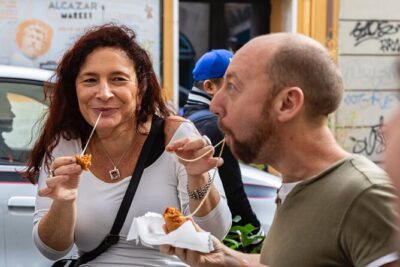 ★ 5.0Winner 2025 Rome Twilight Trastevere Food Tour by Eating EuropeFrom $1255,157 reviews
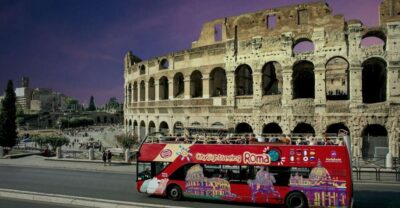 ★ 4.1City Highlights Open-Top Bus Night TourFrom $222,038 reviews
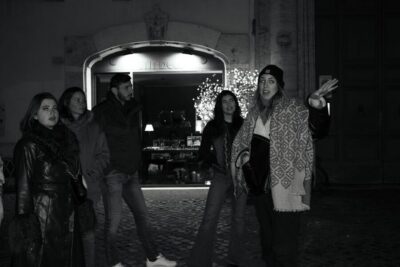 ★ 4.9Paranormal Night Walking Tour & Secret BackstreetsFrom $341,921 reviews
 ★ 5.0Vespa Sidecar Tour By Night with PickupFrom $1461,803 reviews
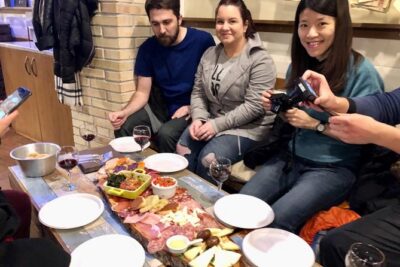 ★ 5.0Rome by Night – Ebike Small Group Tour – Food and Wine (Option)From $711,275 reviews
 ★ 4.9Rome by Night: E-bike Small Group Tour -Food & Wine (Option)From $691,233 reviews
 ★ 4.8Small-Group Guided Day or Night Walking TourFrom $231,009 reviews
 ★ 4.5Rome by Night Walking Tour – Legends & Criminal StoriesFrom $141,003 reviews
Browse the lists this tour appears in