
Reviewed · WALKING TOURS
Rome Fountains & Squares Walking Tour–Small Group w/ Local Expert
Small-group Rome turns into a story you can walk through. This 2-hour fountains and squares tour is built for easy sightseeing: you hit major landmarks, get clear context, and move at a pace that leaves room for questions and photos. I especially love the mix of showpiece stops (Piazza Navona and Trevi Fountain) with the deeper “wait, look closer” moments (like the Stadium of Domitian underneath the square). The main possible drawback is that the schedule is tight—if you want extra time for slower picture-taking at every fountain, you may wish for more minutes at the biggest stops.
What makes it feel genuinely local is the human factor. I’ve seen guides like Felice and Luisa praised for turning the sculptures and street corners into real history you can picture, plus practical help like where to grab gelato and how to handle public transport safely. English is offered, and most people find it easy to follow—but one guest noted trouble understanding a specific guide’s English, so it’s smart to go in expecting a lively guide who may speak fast.
In This Review
- Key takeaways before you go
- Getting your bearings fast: how the tour makes Rome easier
- Piazza Navona: where Domitian’s stadium becomes Baroque Rome
- Fontana dei Quattro Fiumi: art with a political backbone
- Campo de’ Fiori and Giordano Bruno: a piazza with a darker past
- Under Piazza Navona: seeing the Stadium of Domitian’s arcades
- Pantheon: ancient scale, Christian reuse, and royal burials
- Fontana della Barcaccia and the Spanish Steps area
- Trevi Fountain: the grand finale that you’ll remember
- Price and value: what $67.29 buys you in real terms
- Who should book this tour (and who might want something else)
- Should you book it?
- FAQ
- How long is the Rome Fountains & Squares Walking Tour?
- How much does the tour cost?
- What language is the tour offered in?
- What group size is this tour?
- Where does the tour start and end?
- Do I need to buy entrance tickets for the stops?
- What should I wear?
- Is public transportation nearby?
- Is there free cancellation?
Key takeaways before you go
- Small group (max 15): you’ll get closer attention than on big bus tours, and photos are easier.
- Central starting point at Piazza Barberini: you begin in a recognizable area and glide into the historic core.
- Piazza Navona’s hidden layer: you’re not just viewing fountains—you also see the Stadium of Domitian story under the square.
- Meaning behind the fountains: Fontana dei Quattro Fiumi connects art to the church and papal power, not just aesthetics.
- First-timer-friendly route: Spanish Steps, Pantheon, and Trevi are all in one walk with context stitched in.
- Mostly free-to-view stops: the stops listed are marked as free, so you can focus on the walk rather than ticket hunting.
Getting your bearings fast: how the tour makes Rome easier
Rome is huge, and first days can feel like you’re bouncing between landmarks instead of understanding the city. This tour helps you connect the dots in a short time. You start in the central area around Piazza Barberini, then work through some of the city’s best-known squares and fountain fronts, finishing back in the Piazza Navona area.
The biggest value for me is pacing. It’s long enough to feel like a “real tour,” but short enough that you’re still fresh for the rest of your day. With a group cap of 15, you’re not constantly stuck behind a crowd of strangers. That matters at places like Trevi Fountain and along the Spanish Steps, where foot traffic can get messy fast.
You’ll also get the kind of guidance that changes how you walk afterward. Instead of just seeing famous facades, you learn what to look for: symbols on fountains, why certain spaces were built in specific eras, and how older structures shaped what you see today. That turns the rest of your Rome days into smarter wandering.
Worth a look next to this Rome booking:
- Rome: Guided Food Walking Tour with Wine in Trastevere
★ 4.9 · 3,105 reviews - Rome: Trastevere & Campo de Fiori Street Food Walking Tour
★ 4.9 · 2,768 reviews - Rome: Paranormal Night Walking Tour & Secret Backstreets
★ 4.9 · 1,921 reviews - Rome: Trastevere Street Food Walking Tour with Local Expert
★ 4.8 · 1,784 reviews
Piazza Navona: where Domitian’s stadium becomes Baroque Rome
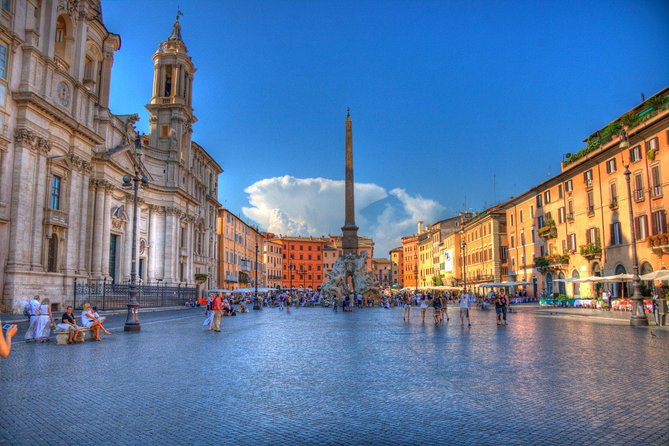
Piazza Navona is the kind of place you immediately understand why people love Rome. The baroque-style square is famous for its fountains—and it sits on top of something older that completely changes the way you think about the location.
Here’s the key detail: the square traces back to the Stadium of Domitian, a horseshoe-shaped arena for foot races built in the 1st century AD. That shape still influences how the buildings embrace the piazza. So when you stand in the middle, you’re not just looking at artwork—you’re standing in a space that has been repurposed for centuries.
This stop works especially well if you care about architecture and history, because it gives you a “layer-cake” view of the city. You get to see how Rome reuses space: athletic arena to grand square, then to the baroque stage with three major fountains. If you like to compare eras with your own eyes, Piazza Navona is one of the best places to do it.
Fontana dei Quattro Fiumi: art with a political backbone
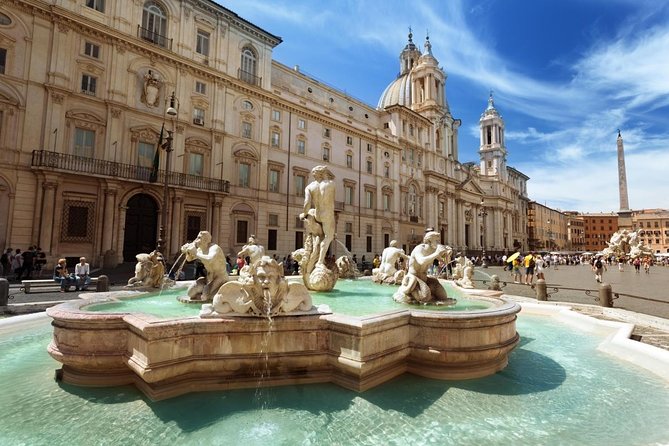
Fontana dei Quattro Fiumi is the fountain that makes you stop in place. It was designed in 1651 by Gian Lorenzo Bernini for Pope Innocent X, tied directly to the Palazzo Pamphili that faced the piazza and to the sponsorship of the church of Sant’Agnese in Agone.
What you’ll notice, with the guide pointing it out, is how the fountain is “about more than water.” The base is a basin with travertine rocks rising to support four river gods, and above them sits a copy of an Egyptian obelisk with the Pamphili family emblem: a dove with an olive twig.
The symbolism matters because it explains why those four rivers were chosen. They represent major rivers associated with four continents through which papal authority had spread: the Nile (Africa), the Danube (Europe), the Ganges (Asia), and the Río de la Plata (the Americas). Even if you’re not a history person, you can follow the logic: the fountain is a visual statement of power, shaped into religious-era art.
This stop is also great for photos—especially if you position yourself so you can frame both the river-god figures and the obelisk top.
Campo de’ Fiori and Giordano Bruno: a piazza with a darker past
Not every iconic Rome square is all postcards. Campo de’ Fiori has a strong atmosphere because it shifts across the day—active in the morning as a market area, then turning into an evening social hub. But beneath the energy is a heavy historical note: the square was where executions were carried out.
That story is brought into focus by the central Statua di Giordano Bruno. The statue was created in 1888 and placed in the center of the piazza at the exact location of his execution. The point of this stop isn’t to make you feel gloomy. It’s to help you see that Rome’s public spaces often held very real consequences long before today’s cafés and people-watching took over.
If you’re the type who likes to understand what you’re standing on, this adds weight to your whole walk. It also balances the tour nicely: you get baroque spectacle at Piazza Navona, then a different side of civic life at Campo de’ Fiori.




Under Piazza Navona: seeing the Stadium of Domitian’s arcades
One of the smartest parts of this tour is that you don’t only talk about ancient Rome—you get a “look down” moment. The stop called Stadio di Domiziano – Navona Square Underground connects the piazza’s surface to the interior arena story.
The Stadium of Domitian, also known as the Circus Agonalis, was located north of the Campus Martius. It was used almost entirely for athletic contests. Today, Piazza Navona sits over the stadium’s interior arena, and the sweep of buildings that embraces the piazza incorporates the stadium’s original lower arcades.
You’ll likely come away with a more accurate mental map of how Rome works. It’s not just that monuments survive—it’s that the city builds again on top of older layers, and the layout still carries traces of earlier uses.
If you enjoy Roman planning and urban design, this is one of those “I’m glad I booked this guided walk” moments. It’s also a good pause from outdoor crowds, depending on how the group moves through the underground area.
Pantheon: ancient scale, Christian reuse, and royal burials
The Pantheon is one of those places where being there feels automatic. The tour frames it as one of the best preserved ancient monuments in Rome, and it highlights something you can’t really get from a quick stop: it’s a prime example of reuse from a Christian perspective of a sacred building consecrated to all gods.
You’ll stand with the imposing facade dominating the southern side of Piazza della Rotonda, in the heart of the ancient Campus Martius, in one of the lower parts of Rome. The guide’s context also adds weight to the building’s later story—because in 1870, the Pantheon became the shrine of the kings of Italy, hosting the mortal remains of Victor Emanuel the Second, Humbert the First, and Margaret of Savoy. Raffaello Sanzio is also buried in the Pantheon.
Even if you’ve seen photos before, this stop works better with guidance because you start looking at the building as a timeline, not just a single “must-see.”
One practical note: it’s a high-impact stop, so if you’re the type who likes to move quietly and take in details slowly, try to avoid rushing your own views. Ask for a moment to breathe if the group is moving fast.
Fontana della Barcaccia and the Spanish Steps area
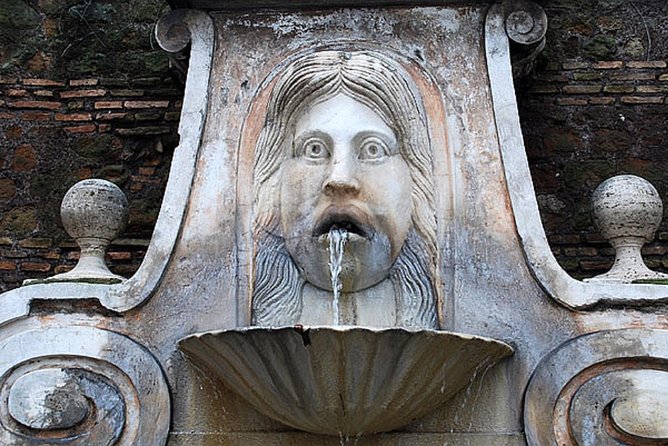
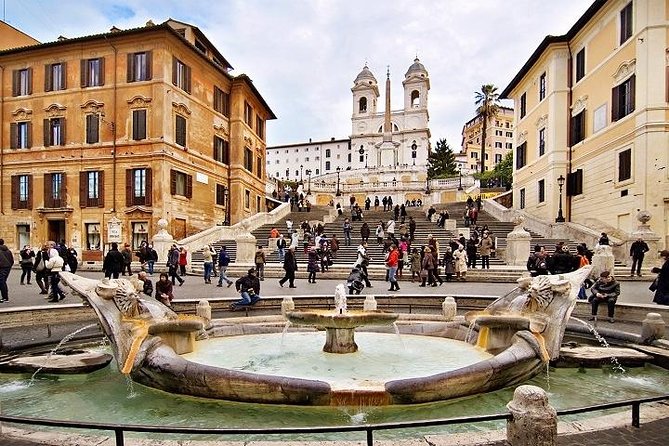
After Pantheon, the tour shifts toward one of Rome’s most photogenic stair-and-fountain scenes. You’ll see the Fontana della Barcaccia at the foot of the Spanish Steps in Piazza di Spagna. This fountain is Baroque-style, decorated with two papal coats of arms, and water gushes out of the mouths of two suns—another Barberini family symbol.
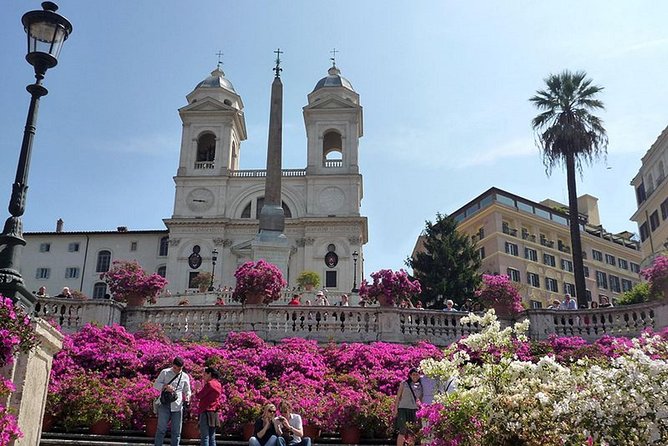
Then you’ll move up to Trinità dei Monti, the church of the Santissima Trinità dei Monti (often shortened to Trinità dei Monti). It sits in a commanding position above the Spanish Steps. The tour also notes that the church and surrounding area (including Villa Medici) are a French State property. That fact helps you understand why the area feels a bit different in its presence and history.
Finally, you’ll reach the Spanish Steps themselves at Piazza di Spagna. The square is named for the Palazzo di Spagna, the seat of the Embassy of Spain to the Holy See. Nearby is the Column of the Immaculate Conception of the Blessed Virgin Mary, and the center includes the Fontana della Barcaccia dating to the beginning of the Baroque period, sculpted by Pietro Bernini and his son Gian Lorenzo Bernini.
This part of the walk is where the photos usually multiply. Do yourself a favor: take a wide shot first, then come back for close details. That way you don’t get stuck later chasing angles while the group is moving on.
Trevi Fountain: the grand finale that you’ll remember
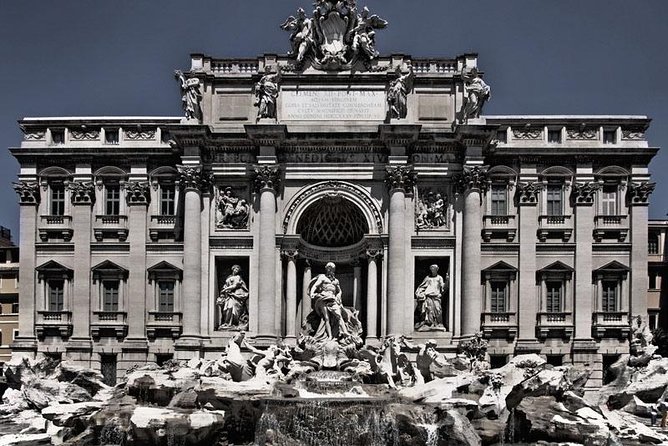
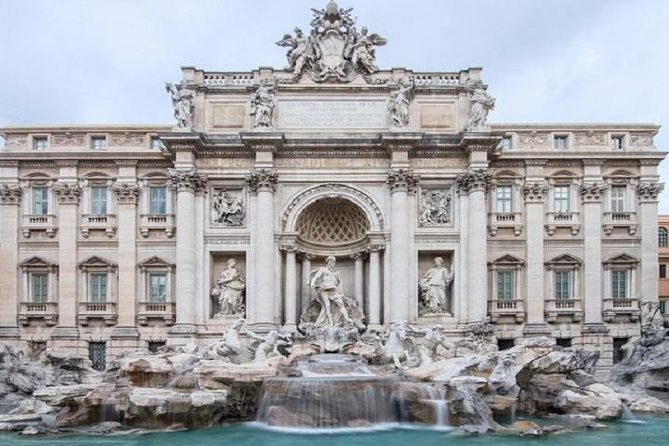
No Rome fountains walk is complete without Trevi Fountain, and this tour ends with it. Trevi is the largest Baroque fountain in the city and one of the most famous fountains in the world, designed by Nicola Salvi and completed by Giuseppe Pannini in 1762 (with others involved).
The scale is hard to ignore. It stands 26.3 meters high and 49.15 meters wide. You don’t need a lecture to appreciate size, but the guide’s context makes it stick in your memory longer. It’s not just a landmark—you learn how it fits the larger Baroque language of Rome’s visual storytelling.
Because this is also a crowd magnet, the small-group aspect really pays off. With fewer people, you can usually find a better spot to see the main form before the immediate cluster thickens.
If you care about capturing the fountain cleanly, plan to take at least one photo that shows the full width, then one that focuses on the sculptural details at your eye level. The second one is often the one you’ll love later when the famous postcard shots start to blur together.
Price and value: what $67.29 buys you in real terms
At about $67.29 per person for roughly 2 hours, you’re paying for more than a route. You’re buying interpretation and a group size that doesn’t bury you.
Here’s why it can feel like good value:
- You’re walking through multiple top-tier stops in a single go, with a local guide connecting the places.
- The tour includes personalized attention for questions and photos.
- Many of the listed sights are free to view on the itinerary, so you aren’t stuck adding costs to see what you came for.
- The max group size of 15 keeps the experience interactive rather than just a lecture march.
The main thing to watch is pace. One criticism you might consider is that some walkers want more time at fountains and squares for better photos. If that’s you, I’d treat this as your “learn first, photograph later” strategy. Use the guide to learn what matters; then schedule extra time afterward for the one or two spots you love most.
Who should book this tour (and who might want something else)
This tour is a strong fit if:
- You like architecture and history, especially when it explains how old Rome shapes what you see now.
- You want a short, efficient orientation walk that still feels personal.
- You appreciate a guide who helps you notice details instead of just pointing and moving.
You might want to skip or pair it with more free time if:
- You’re determined to spend long minutes photographing each major fountain with no group pressure.
- You’re very sensitive to English clarity and prefer extremely slow pacing (there’s at least one note about difficulty understanding a specific guide).
It’s also ideal if this is your first Rome day. Getting the logic of the city’s famous spaces explained early makes the rest of your self-guided time easier.
Should you book it?
Yes, I think you should book this tour if your goal is to understand Rome’s fountains and squares fast, without getting trapped in a huge crowd and without ticket-stress. The small-group feel, the focus on how places relate to each other, and the attention to details like Stadium of Domitian under Piazza Navona make it feel more than sightseeing.
If you’re the type who wants maximum time at Trevi or Piazza Navona to shoot and reshoot, plan to do a second pass on your own later. Book this for context and orientation first, then let your favorite spots become your own slow-motion photo sessions.
FAQ
How long is the Rome Fountains & Squares Walking Tour?
It runs for about 2 hours.
How much does the tour cost?
The price is $67.29 per person.
What language is the tour offered in?
The tour is offered in English.
What group size is this tour?
It’s a small group experience with a maximum of 15 travelers.
Where does the tour start and end?
It starts at Piazza Barberini (P.za Barberini, 00187 Roma RM, Italy) and ends at Piazza Navona (00186 Roma RM, Italy).
Do I need to buy entrance tickets for the stops?
The tour notes admission ticket free for the listed stops, and entrance tickets are not included. So you can plan around mostly free-to-view sightseeing.
What should I wear?
Wear comfortable shoes. In summer months, a hat and sunglasses are recommended.
Is public transportation nearby?
Yes, the meeting area is near public transportation.
Is there free cancellation?
Yes. You can cancel for a full refund up to 24 hours in advance.
More Walking Tours in Rome
- Rome: Guided Food Walking Tour with Wine in Trastevere
★ 4.9 · 3,105 reviews - Rome: Trastevere & Campo de Fiori Street Food Walking Tour
★ 4.9 · 2,768 reviews - Rome: Paranormal Night Walking Tour & Secret Backstreets
★ 4.9 · 1,921 reviews - Rome: Trastevere Street Food Walking Tour with Local Expert
★ 4.8 · 1,784 reviews - Rome: Small-Group Guided Day or Night Walking Tour
★ 4.8 · 1,009 reviews - Rome by Night Walking Tour – Legends & Criminal Stories
★ 4.5 · 1,003 reviews
More Tours in Rome
- Vatican Museums, Sistine Chapel & St. Peter’s Basilica Tour
★ 4.3 · 73,970 reviews - Vatican Museums, Sistine Chapel & St Peter’s Basilica Guided Tour
★ 4.5 · 39,149 reviews - Rome: Colosseum, Palatine Hill and Roman Forum Guided Tour
★ 4.8 · 32,814 reviews - Rome: Guided Tour of Colosseum, Roman Forum & Palatine Hill
★ 4.7 · 27,897 reviews - Rome: Colosseum, Roman Forum and Palatine Hill Guided Tour
★ 4.5 · 23,903 reviews - Rome: Colosseum Arena Floor, Palatine & Forum Guided Tour
★ 4.5 · 20,180 reviews
More Tour Reviews in Rome
- Vatican Museums, Sistine Chapel & St. Peter’s Basilica Tour
★ 4.3 · 73,970 reviews - Vatican Museums, Sistine Chapel & St Peter’s Basilica Guided Tour
★ 4.5 · 39,149 reviews - Rome: Colosseum, Palatine Hill and Roman Forum Guided Tour
★ 4.8 · 32,814 reviews - Rome: Guided Tour of Colosseum, Roman Forum & Palatine Hill
★ 4.7 · 27,897 reviews - Rome: Colosseum & Forum with Audio Guide App -Optional Arena
★ 4.2 · 24,770 reviews - Rome: Colosseum, Roman Forum and Palatine Hill Guided Tour
★ 4.5 · 23,903 reviews
Just added to our Rome reviews





Walking Tours, compared.
 ★ 4.9Guided Food Walking Tour with Wine in TrastevereFrom $1003,105 reviews
 ★ 4.9Trastevere & Campo de Fiori Street Food Walking TourFrom $512,768 reviews
 ★ 4.9Paranormal Night Walking Tour & Secret BackstreetsFrom $341,921 reviews
 ★ 4.8Trastevere Street Food Walking Tour with Local ExpertFrom $571,784 reviews
 ★ 4.8Small-Group Guided Day or Night Walking TourFrom $231,009 reviews
 ★ 4.5Rome by Night Walking Tour – Legends & Criminal StoriesFrom $141,003 reviews
 ★ 4.4Guided City Center Evening Sightseeing Walking TourFrom $46953 reviews
 ★ 4.9Small-Group City Highlights Moonlight Walking TourFrom $29949 reviews
Browse the lists this tour appears in