
Reviewed · WALKING TOURS
Rome: Fountains and Fallen Angels Small Group Walking Tour
Fountains and faith meet on the same walk. This Rome small-group tour is built around fountains and sacred art, linking “fallen angels” themes with major church treasures. I love the way it mixes famous stops like Trevi with quieter corners where Roman water, stone, and spirituality share the spotlight. One thing to plan for: church visits require shoulders, back, and knees covered, and dress rules are enforced by the sites.
I also love the structure for real interaction: a group capped at 5 means you can actually ask questions, not just listen while you stand in line. Guides like Roberto are repeatedly praised for story-telling that ties art to history and belief, so the monuments feel less like postcard points and more like clues. You’ll still be walking steadily for about 3 to 4 hours, so bring comfortable shoes and expect an active pace.
In This Review
- Key highlights you’ll care about
- A 3–4 hour Rome walk built around fallen angels and fountains
- Who it’s for
- Getting oriented: meeting at San Giovanni Paolo II and ending in Piazza Venezia
- Stop 1: Piazza della Repubblica (Piazza Esedra) as your warm-up
- Stop 2: Santa Maria degli Angeli e dei Martiri and Michelangelo’s clever reuse
- Stop 3: Fountain of Moses—Roman water with a biblical storyline
- Stop 4: Santa Maria della Vittoria and Bernini’s Ecstasy of Saint Teresa
- Stop 5: Quattro Fontane—four fountains at a crossroads
- Stop 6: San Carlo alle Quattro Fontane by Borromini
- Stop 7: Sant’Andrea al Quirinale—Bernini’s oval church
- Stop 8: Palazzo del Quirinale—see it, but don’t enter
- Stop 9: Trevi Fountain—the finale that still feels fresh
- Stop 10: Santi Apostoli—paintings and the tombs of two apostles
- Stop 11: Museo Nazionale del Palazzo di Venezia—an oasis-style pause
- Stop 12: Chiesa del Gesù—Jesuit mother church and baroque showmanship
- Price and value: $60.07 for a guided art-and-faith route
- What the small-group size changes (and what it doesn’t)
- Should you book this Rome Fountains and Fallen Angels tour?
- FAQ
- FAQ
- How long is the Rome Fountains and Fallen Angels walking tour?
- What is the group size?
- Is it available in English?
- Where do I meet the guide, and where does the tour end?
- Are there entry fees for the stops?
- What should I wear for the church stops?
- Does the tour include Trevi Fountain?
- Can you enter Palazzo del Quirinale during the tour?
- What is the cancellation policy?
Key highlights you’ll care about
- Small group size (max 5): more question time, less crowd chaos.
- Faith + art + history theme: the tour explains what you’re seeing, not just where it is.
- Big-name masterpieces on a focused route: Bernini and Michelangelo are part of the story.
- Classic Roman water landmarks: Fountain of Moses, Quattro Fontane, and Trevi get placed in context.
- Church etiquette matters: cover up, and you’ll avoid last-minute stress at entrances.
- Strategic breaks: Palazzo Venezia is used as a calmer pause during the walk.
A 3–4 hour Rome walk built around fallen angels and fountains
This is the kind of Rome tour that makes the city feel like one connected artwork. Instead of hopping randomly between “top 10” sights, you follow a path that keeps returning to the same ideas: how religion shaped what Romans built, and how artists used light, drama, and symbolism to make spiritual stories feel real.
The timing fits well if you’re trying to balance sightseeing with breathing room. You get roughly 3 to 4 hours to cover a lot of stops without feeling like you’re sprinting through a checklist. And because it’s offered as either a morning or afternoon option, you can pick the session that matches your energy level and the day’s heat.
Worth a look next to this Rome booking:
- Rome: Guided Food Walking Tour with Wine in Trastevere
★ 4.9 · 3,105 reviews - Rome: Trastevere & Campo de Fiori Street Food Walking Tour
★ 4.9 · 2,768 reviews - Rome: Paranormal Night Walking Tour & Secret Backstreets
★ 4.9 · 1,921 reviews - Rome: Trastevere Street Food Walking Tour with Local Expert
★ 4.8 · 1,784 reviews
Who it’s for
You’ll probably enjoy this tour most if you:
- want more meaning than a standard guided tour,
- like churches and art (even if you’re not a “museum person”),
- prefer a smaller group over the big-bus scene.
If you’re the type who wants only exterior photos and fast scrolling, the church portion might feel a bit slower. But if you’re curious, the pacing is part of why it works—you’re given time to look closely and ask questions.
Getting oriented: meeting at San Giovanni Paolo II and ending in Piazza Venezia
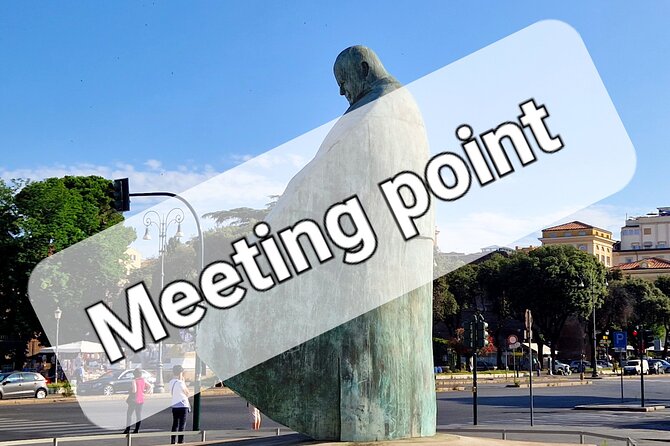
The tour starts at the statue of San Giovanni Paolo II in the Esquilino area (near 00185 Rome) and finishes at Piazza Venezia. That ending matters because Piazza Venezia is a convenient hub for connecting to more sightseeing.
If you want an easy start, do two simple things:
- Arrive a little early so you’re not rushing in.
- Use the exact meeting landmark (the statue) rather than trying to “eyeball” it from nearby streets.
One review notes that the meeting point experience can be stressful if you can’t pinpoint the spot. If you don’t have mobile data, take a screenshot of the meeting point on Google Maps before you head out. It’s a small effort that can save a lot of wandering.
Also, it’s a walking tour, and it’s designed for a smooth flow. That means you shouldn’t expect long “stop-and-stare” breaks whenever you hit the perfect photo moment.
Stop 1: Piazza della Repubblica (Piazza Esedra) as your warm-up
You begin in Piazza della Repubblica, also known historically as Piazza Esedra. It’s a good opening point because it gives you a broad sense of the area before you narrow in on the smaller, more intimate details later.
Even if you only spend about 5 minutes here, it sets the theme. This piazza helps frame the walk as something connected—more than a list of separate monuments. You’ll start to notice how Rome uses open spaces to shape movement and attention.




Stop 2: Santa Maria degli Angeli e dei Martiri and Michelangelo’s clever reuse
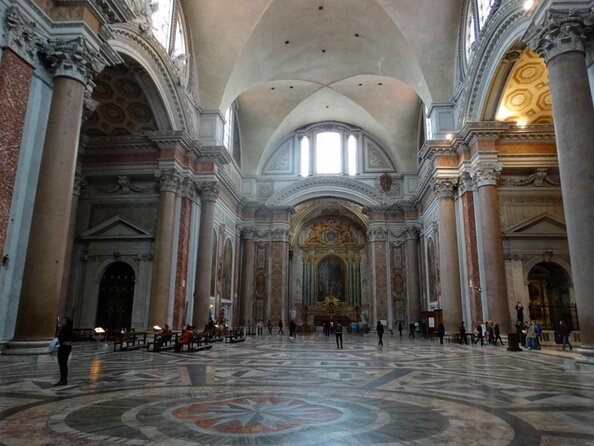
Next up is Basilica di Santa Maria degli Angeli e dei Martiri, a church designed by Michelangelo that fits into the remains of the Baths. This is a stop I always appreciate on guided routes because the “what am I looking at?” moment is real for many people.
The draw here is the contrast:
- Michelangelo’s church design
- set within older Roman structures
It’s a reminder that Rome didn’t scrap its past. It worked with it. The tour gives you time—around 20 minutes—to look around without feeling pushed out the door. And because the stop is free for entry, you can focus your attention on the art and architecture rather than mentally budgeting for fees.
Practical note: churches require covered shoulders, back, and knees. If you’re visiting in summer, plan your outfit so you don’t end up trying to improvise at the last second.
Stop 3: Fountain of Moses—Roman water with a biblical storyline
Then it’s a quick 5-minute stop at the Fountain of Moses, designed by Domenico Fontana. This is the kind of place that can look like “just another fountain” until someone explains why it’s there and what it’s meant to communicate.
The benefit of having a guide for short stops is that you don’t waste time staring at details without knowing what matters. Here, the tour helps you connect the fountain to the broader spiritual theme—perfect for travelers who like meaning, not just landmarks.
Stop 4: Santa Maria della Vittoria and Bernini’s Ecstasy of Saint Teresa
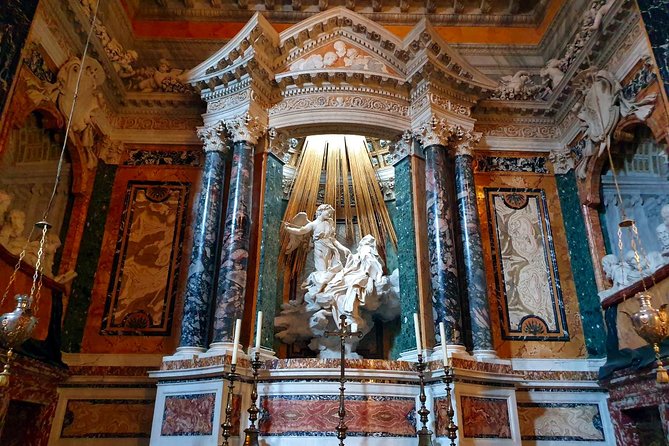
This is one of the big emotional payoff stops: Santa Maria della Vittoria. The church is dedicated to the victories granted by Saint Mary, and it houses one of Bernini’s best-known works, Ecstasy of Saint Teresa.
This is the moment where the tour’s theme becomes concrete. Bernini is famous for turning marble into drama—expressions, movement, and theatrical lighting. With a guide, you’ll get the story behind the scene, and that changes your experience from viewing to understanding.
You’re given around 20 minutes. That’s long enough to:
- look at key elements,
- take in the composition,
- and still have time to ask questions before moving on.
If you’re someone who tends to rush through churches, this is worth slowing down for.
Stop 5: Quattro Fontane—four fountains at a crossroads
Next you hit Quattro Fontane, famous for its four fountains at the crossroads. This is quick—about 5 minutes—but it’s a classic Rome “pattern” location. Once you see it, you start spotting how Rome repeats motifs and symbolism throughout different neighborhoods.
What makes it satisfying on a tour is the framing. You don’t just walk past a corner—you learn how to read it, which makes the stop feel deliberate rather than accidental.
Stop 6: San Carlo alle Quattro Fontane by Borromini
A short walk brings you to San Carlo alle Quattro Fontane, designed by Borromini, with about 15 minutes here. Borromini churches can feel challenging if you’re looking at them like a “photo object.” With context, they become a study in ideas: space, geometry, and movement.
This stop works well if you like architecture that doesn’t behave in a straight line. If you prefer simple, flat views, take your time anyway. The church’s design language is meant to reward attention.
Stop 7: Sant’Andrea al Quirinale—Bernini’s oval church
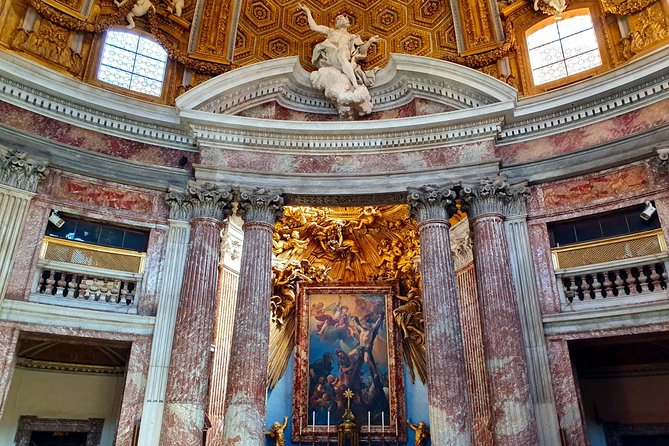
Then comes Chiesa di Sant’Andrea al Quirinale, an oval church designed by Bernini, with about 20 minutes. The oval shape is part of the attraction, but what you’ll likely enjoy more is learning how the space guides your eye.
When you walk into a church like this with a guide, you’re not guessing. You know what to look for, and you start recognizing how Bernini used form to create emotion and focus.
Stop 8: Palazzo del Quirinale—see it, but don’t enter
You’ll get a look at Palazzo del Quirinale, the residence of the President of the Italian Republic. The key detail: the building can’t be entered during the tour.
So think of this stop as an exterior “context moment,” not a full visit. About 10 minutes gives you time to orient yourself in relation to major landmarks and understand why this area matters.
Even if you’re a “must-enter-everything” traveler, this can still be worthwhile. Knowing what you’re looking at from the outside helps you enjoy Rome more later, when you’re exploring on your own.
Stop 9: Trevi Fountain—the finale that still feels fresh
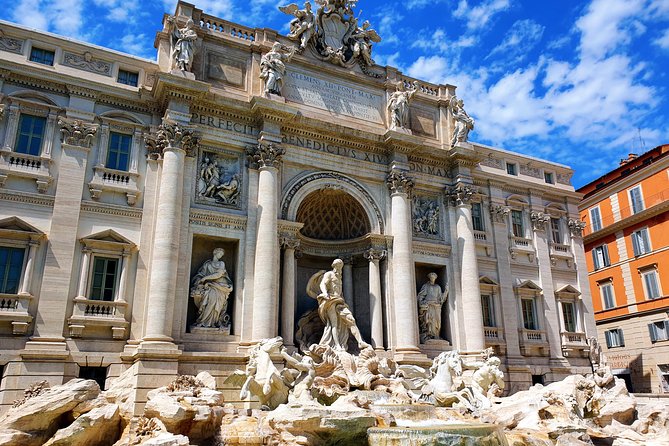
Of course you reach Trevi Fountain, one of the world’s best-known fountains, with about 20 minutes here. Trevi can be crowded and noisy, so the real value isn’t the fountain existing—it’s how you experience it.
With a guide, you’re more likely to notice the sculptural details, the water’s choreography, and the symbolism that made Trevi more than just a photo magnet. The theme of the tour also helps: Trevi becomes part of a network of “water stories” across the city.
Tip for enjoying it: stand where you can see the fountain’s overall layout, then rotate for details. Don’t just face one angle for the entire 20 minutes.
Stop 10: Santi Apostoli—paintings and the tombs of two apostles
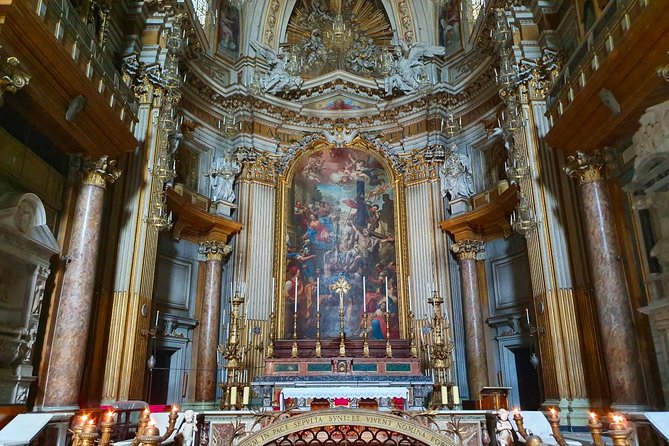
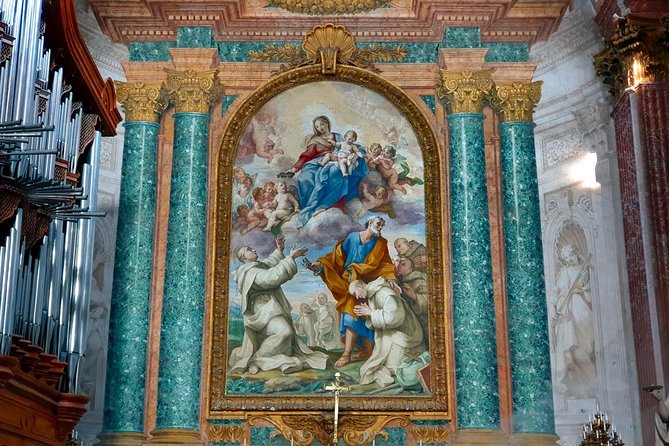
Next is Santi Apostoli, a church with impressive paintings and the tombs of two Apostles. The time here is about 20 minutes.
This stop is useful if you want a break from “fountain focus” without losing the sacred-art vibe. It’s also a reminder that Rome is never just about the famous stuff—many stories sit in the churches that look ordinary from far away.
You’ll get time to look around rather than being pushed out quickly, which matters in churches where attention takes a minute to train.
Stop 11: Museo Nazionale del Palazzo di Venezia—an oasis-style pause
Then you reach Museo Nazionale del Palazzo di Venezia, used as a calmer stop with about 20 minutes. It functions as a break: you’re still in the middle of the story, but the atmosphere helps you reset.
This is a smart design choice for a walking tour. Without a pause like this, a 3–4 hour route can start to feel like one long effort. With a short “breather” stop, you finish the walk more mentally refreshed.
If you want to take a photo, this is a good time. If you want to sit down and recharge your legs, this is one of the most logical moments to do it.
Stop 12: Chiesa del Gesù—Jesuit mother church and baroque showmanship
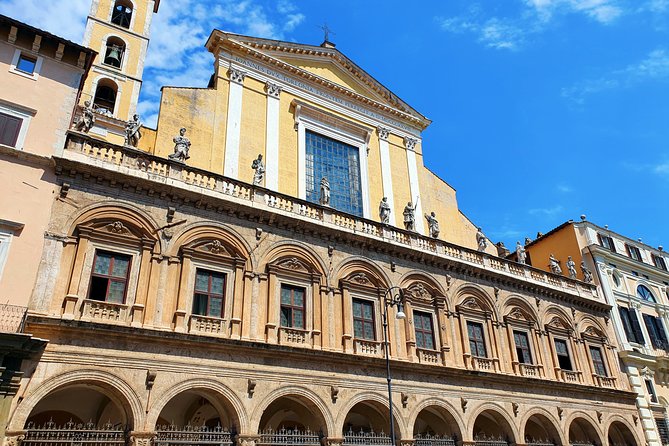
The closing church is Chiesa del Gesù, the Jesuit mother church and a model building of baroque. Time here is about 20 minutes.
This is a strong finish because it ties together the tour’s “fallen angels” theme with the broader role of Catholic art in shaping belief and emotion. Baroque churches are meant to hit you with drama, and the Jesuit connection adds another layer.
If you care about the spiritual side of Rome’s art, this final stop often lands well. It’s also a good moment to ask any last questions, since the walk is almost done and you won’t feel rushed into leaving right away.
Price and value: $60.07 for a guided art-and-faith route
At $60.07 per person for a 3–4 hour small-group walking tour, you’re paying mainly for guide time and interpretation. The stops listed include free admission at each site, so you’re not handing over extra money for entry fees as the day goes on.
What you’re really buying is:
- a guide who connects symbols to stories,
- a route that reduces guesswork,
- and a small-group setting where questions are welcome.
In Rome, the “value” of a guided tour often comes down to whether you understand what you’re seeing after the fact. With the repeated praise for story-telling and patience, this tour seems designed to leave you with clearer impressions—not just photos.
That said, if you hate walking and prefer passive sightseeing, your money may feel better spent on a lighter option. This one is for active adults who want meaning and movement together.
What the small-group size changes (and what it doesn’t)
With a maximum of 5 travelers, you get something rare: the guide can slow down if you have a question, and you’re less likely to feel swallowed by a crowd. That’s a big deal in churches, where people often rush and miss what’s important.
But small-group also means you’re still on the tour’s timeline. A guide may keep you moving to maintain the flow and avoid missing key moments. If you need absolute freedom to wander on your own schedule, this format might feel restrictive.
Should you book this Rome Fountains and Fallen Angels tour?
I’d book it if you want Rome with explanations, not just sights. The route makes practical sense—churches, fountains, and major baroque names like Bernini and Michelangelo are all woven into one theme. The small group size and the emphasis on Q&A are perfect if you like to ask why something was built the way it was.
Skip it (or consider another style of tour) if:
- you want only quick photo stops,
- you’re not comfortable with church dress rules,
- you prefer free-roaming without a set meeting point and route.
If you’re in the middle—curious, active, and open to a thoughtful walking day—this is a very solid choice for understanding Rome’s artistic and spiritual language.
FAQ
FAQ
How long is the Rome Fountains and Fallen Angels walking tour?
It runs about 3 to 4 hours.
What is the group size?
The tour has a maximum of 5 travelers.
Is it available in English?
Yes, the tour is offered in English.
Where do I meet the guide, and where does the tour end?
You start at the statue of San Giovanni Paolo II in the Esquilino area (00185 Rome) and end at Piazza Venezia, Rome.
Are there entry fees for the stops?
The listed stops show free admission at each location, and the tour uses a route where you aren’t forced into paid ticket lines at every site.
What should I wear for the church stops?
To enter churches, you need to cover your shoulders, back, and knees.
Does the tour include Trevi Fountain?
Yes, Trevi Fountain is one of the stops.
Can you enter Palazzo del Quirinale during the tour?
No, the building cannot be entered during the tour.
What is the cancellation policy?
You can cancel for a full refund up to 24 hours in advance. If the tour is canceled due to poor weather, you’ll be offered another date or a full refund.
More Walking Tours in Rome
- Rome: Guided Food Walking Tour with Wine in Trastevere
★ 4.9 · 3,105 reviews - Rome: Trastevere & Campo de Fiori Street Food Walking Tour
★ 4.9 · 2,768 reviews - Rome: Paranormal Night Walking Tour & Secret Backstreets
★ 4.9 · 1,921 reviews - Rome: Trastevere Street Food Walking Tour with Local Expert
★ 4.8 · 1,784 reviews - Rome: Small-Group Guided Day or Night Walking Tour
★ 4.8 · 1,009 reviews - Rome by Night Walking Tour – Legends & Criminal Stories
★ 4.5 · 1,003 reviews
More Tours in Rome
- Vatican Museums, Sistine Chapel & St. Peter’s Basilica Tour
★ 4.3 · 73,970 reviews - Vatican Museums, Sistine Chapel & St Peter’s Basilica Guided Tour
★ 4.5 · 39,149 reviews - Rome: Colosseum, Palatine Hill and Roman Forum Guided Tour
★ 4.8 · 32,814 reviews - Rome: Guided Tour of Colosseum, Roman Forum & Palatine Hill
★ 4.7 · 27,897 reviews - Rome: Colosseum, Roman Forum and Palatine Hill Guided Tour
★ 4.5 · 23,903 reviews - Rome: Colosseum Arena Floor, Palatine & Forum Guided Tour
★ 4.5 · 20,180 reviews
More Tour Reviews in Rome
- Vatican Museums, Sistine Chapel & St. Peter’s Basilica Tour
★ 4.3 · 73,970 reviews - Vatican Museums, Sistine Chapel & St Peter’s Basilica Guided Tour
★ 4.5 · 39,149 reviews - Rome: Colosseum, Palatine Hill and Roman Forum Guided Tour
★ 4.8 · 32,814 reviews - Rome: Guided Tour of Colosseum, Roman Forum & Palatine Hill
★ 4.7 · 27,897 reviews - Rome: Colosseum & Forum with Audio Guide App -Optional Arena
★ 4.2 · 24,770 reviews - Rome: Colosseum, Roman Forum and Palatine Hill Guided Tour
★ 4.5 · 23,903 reviews
Just added to our Rome reviews





Walking Tours, compared.
 ★ 4.9Guided Food Walking Tour with Wine in TrastevereFrom $1003,105 reviews
 ★ 4.9Trastevere & Campo de Fiori Street Food Walking TourFrom $512,768 reviews
 ★ 4.9Paranormal Night Walking Tour & Secret BackstreetsFrom $341,921 reviews
 ★ 4.8Trastevere Street Food Walking Tour with Local ExpertFrom $571,784 reviews
 ★ 4.8Small-Group Guided Day or Night Walking TourFrom $231,009 reviews
 ★ 4.5Rome by Night Walking Tour – Legends & Criminal StoriesFrom $141,003 reviews
 ★ 4.4Guided City Center Evening Sightseeing Walking TourFrom $46953 reviews
 ★ 4.9Small-Group City Highlights Moonlight Walking TourFrom $29949 reviews
Browse the lists this tour appears in