
Reviewed · VATICAN MUSEUMS TOURS
Rome: Excursion to the Vatican Museums
The Vatican in 2.5 hours is a sprint. This guided Rome experience strings together Vatican Museums highlights, a Sistine Chapel focus (if open), and skip-the-line entry into St. Peter’s Basilica, with headsets so you can actually hear the guide. It is tightly organized, heavy on masterpieces, and built for people who want big impact without spending the whole day stuck in queues.
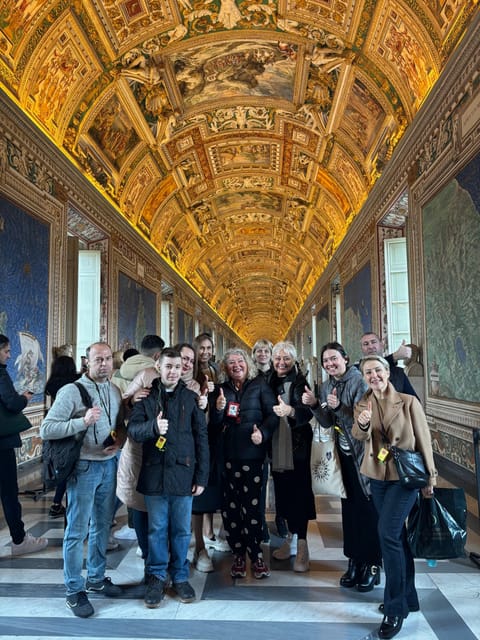
I especially love the way this route makes the museum feel human, not just endless rooms. The Gallery of Maps and the 16th-century Gallery of Tapestries do a great job showing how art, power, and belief shaped what people thought the world looked like.
One drawback to keep in mind: the live guide is Russian, and the Vatican’s schedule can change fast. In particular, the Sistine Chapel may be closed due to papal proceedings, so you should be ready for the tour to pivot toward other accessible areas instead.
In This Review
- Key highlights you will feel on the day
- Where to meet and how to start smoothly on your Vatican day
- Vatican Museums: Pigna Court and the art-power mix you will recognize fast
- Gallery of Maps and Tapestries: how the Vatican pictured the world
- The Candelabra Gallery and the move into the Raphael Rooms
- Sistine Chapel: what to expect, and what can change
- St. Peter’s Basilica: skip the line and go straight for the meaning
- Price and pace: does $113.29 per person make sense for this short route?
- Who this tour fits best (and who might want a different plan)
- Final call: should you book this Vatican and St. Peter’s guided tour?
- FAQ
- How long is the Rome excursion to the Vatican Museums?
- Do I get skip-the-line access?
- Is the Sistine Chapel included?
- What language is the live guide?
- What should I wear during summer?
- Are bags allowed?
- Is food or drinks included?
Key highlights you will feel on the day
- Skip-the-line Vatican Museums access so you spend more time looking and less time waiting
- Headsets for clear commentary during a crowded, echoing museum environment
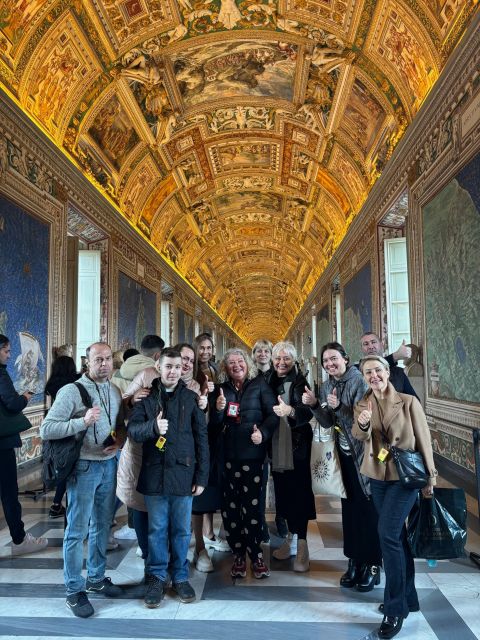
- Gallery of Maps showing ancient cartography and how the world was imagined in Vatican times
- Raphael Rooms painted for Pope Julius II, for a direct line between art and leadership
- St. Peter’s Basilica skip-the-line entry, with highlights like Bernini’s altar and mosaics
- Sistine Chapel timing depends on Vatican officials, since it can close for major events
Where to meet and how to start smoothly on your Vatican day
Meet at Via Santamaura, 12. There is no hotel pickup, so you’ll want to arrive with enough buffer to handle Rome’s walking and street navigation. This tour is short—about 2.5 hours—so your best move is treating the meeting point like check-in for a timed appointment, not a casual meetup.
The tour is also designed for sound. You get headsets, which matters in the Vatican because crowds can swallow voices. With headsets, you can focus on what the guide is connecting—why a room looks the way it does, who commissioned it, and how the art fits into church power and politics.
Dress matters here more than in most museums. For summer, shoulders and knees must be covered. You’ll also run into the tour rule that bags aren’t allowed, so plan for a small, minimal carry. I usually pack the bare essentials: wallet, phone, water if permitted by local rules, and nothing bulky.
One more practical note: starting times can vary, so confirm your time slot when you check availability. With a short tour window, even a small delay can cut into the number of rooms you get to see.
Other ways through the Vatican Museums
- Vatican Museums, Sistine Chapel & St. Peter’s Basilica Tour
★ 4.3 · 73,970 reviews - Vatican Museums, Sistine Chapel & St Peter’s Basilica Guided Tour
★ 4.5 · 39,149 reviews - Rome: Vatican Museums, Sistine Chapel and Basilica Tour
★ 4.3 · 16,039 reviews - Vatican Museums & Sistine Chapel Skip-the-Line Entry Ticket
★ 4.4 · 13,838 reviews
Vatican Museums: Pigna Court and the art-power mix you will recognize fast
The Vatican Museums can be intimidating. The beauty is that this tour picks a route that helps you understand what you are seeing, instead of just marching through famous halls. You start with a guided run through key areas, including classic stops tied to the museum’s grand identity.
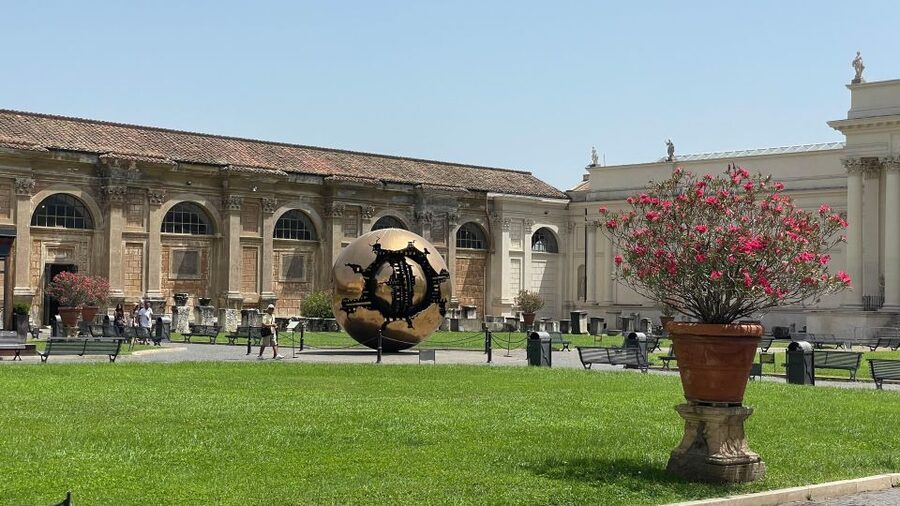
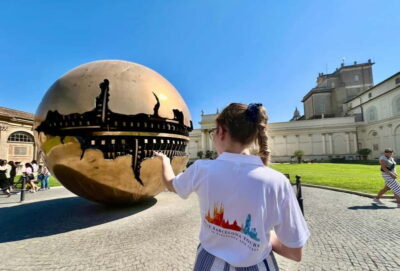
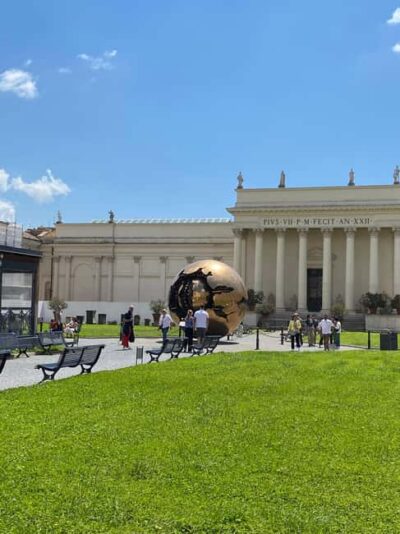
A highlight is the Courtyard of the Pigna. It is one of those places where the scale hits you first and the story comes second. The courtyard centers on a massive pinecone sculpture, and it sets a tone for the rest of the museum: Rome’s ancient world and the Vatican’s modern authority sharing the same space.
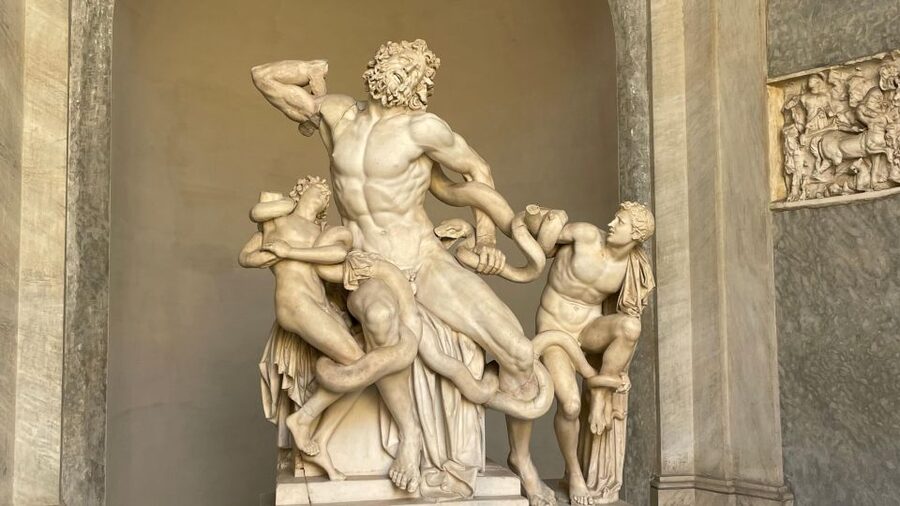
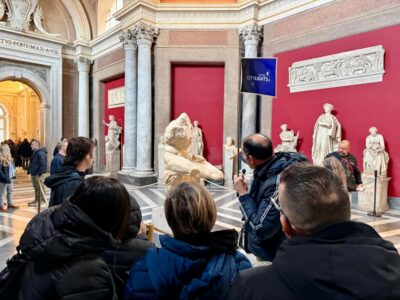
Then you move through major visual themes. One area you will be guided through includes the Chiaramonti Museum and Palazzo Belvedere, with an emphasis on ancient sculpture. This is where masterpieces like Apollo, Laocoön, and the Belvedere Torso enter the conversation—not as random statues, but as proof of how the Renaissance loved to study, copy, and compete with the classical past.
Why this route works: it trains your eye. After you see the sculpture emphasis, later paintings and rooms make more sense. You start to notice how the Vatican used art to project authority—first by collecting what it considered the best of antiquity, then by commissioning new works to tell its own story.
If you like to take photos, you can—but keep in mind that museum crowds slow everyone down. Use your time for your favorite angles rather than trying to capture everything.
Gallery of Maps and Tapestries: how the Vatican pictured the world
Two stops do a special job on this tour: they help you see the Vatican not just as a temple, but as a place that managed information.
In the Gallery of Maps, you will walk through stunning ancient cartography. It is not geography in the modern sense; it is geography as politics and belief. The idea is simple: map-making was part of how societies claimed understanding and influence. When you look at the maps while a guide connects the context, you start to see the Vatican as a major information hub in its own era, not only a maker of religious art.
Next comes the Gallery of Tapestries. These woven works are 16th century, made from designs associated with Raphael’s pupils. The material makes a difference here. Paintings are flat and quiet; tapestries have weight. They also show you how the Vatican promoted status. In a world where elite power needed visible symbols, textiles were a big deal.
A practical tip: when you move into galleries like these, let your eyes rest. It is easy to rush to the next room because the museum feels endless. Pause for a minute, then look again. The details are often what separate a quick glance from a real memory.
If you are wondering whether this tour is “too curated,” this is the answer: it is curated on purpose. A short route that hits Maps and Tapestries gives you context you would likely miss if you wandered on your own without a guide.
The Candelabra Gallery and the move into the Raphael Rooms
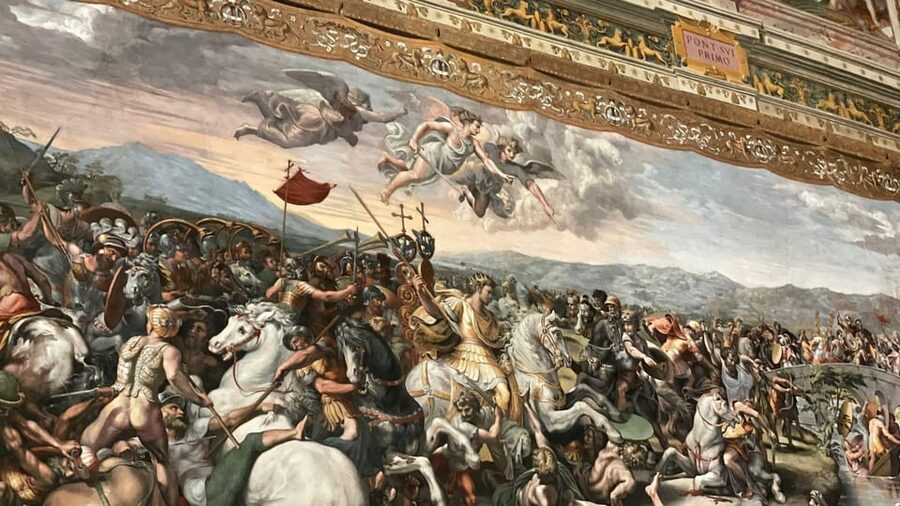
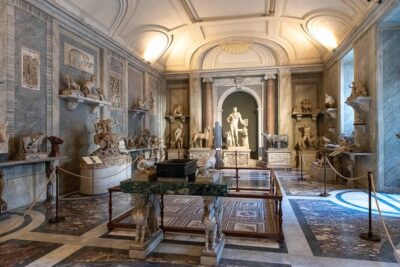
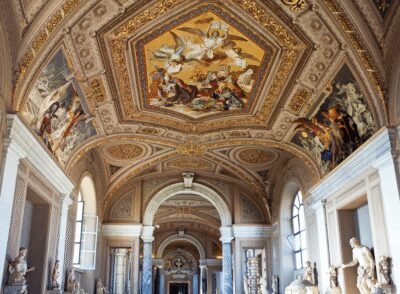
The Gallery of the Candelabra is one of those rooms where decorative architecture does more than decorate. You’ll see why it mattered: dramatic visual rhythm, religious setting, and the kind of spectacle the Vatican wanted visitors to feel.
This is a good pause point. By now, your brain has absorbed ancient statuary and “world-picture” art. The Candelabra space helps reset you. Instead of focusing only on single famous works, you start noticing how the room itself supports the experience—lines, shapes, and lighting that guide your attention.
Then you head toward the Raphael Rooms. These are painted for Pope Julius II, and the guide’s job is to connect the artwork to the people and goals behind it. That is what makes this stop more than a museum flex. You are seeing the Vatican using painting as messaging—religion, legitimacy, and authority all tied together.
If you want to get the most value, listen for the guide’s connections between the Pope’s agenda and what you see on the walls. It makes the rooms feel less like wallpaper and more like communication.
At this stage in the tour, your pace is still quick. That is the tradeoff of a compact, highlight-driven route. The upside is that you leave with a coherent story, not a random pile of famous stops.
Worth a look next to this Rome booking:
Sistine Chapel: what to expect, and what can change
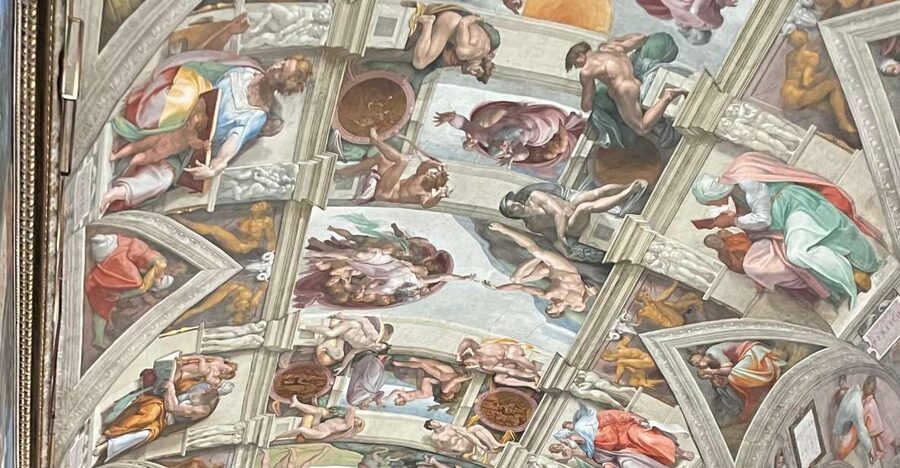
The Sistine Chapel is the big emotional target. The tour description focuses on Michelangelo’s frescoes, including The Creation of Adam and The Last Judgment. Those titles matter because they are not just famous—they are the reason many people save time in Rome for this one room.
But you should know the situation can change. Due to the passing of the Pope and the upcoming papal conclave, the Sistine Chapel may be closed until Vatican officials announce otherwise. The tour is described as remaining valid for the Vatican Museums and other accessible areas, which means you should expect a shift if access is restricted.
So what does that mean for you practically?
- If the Sistine Chapel is open, you will get guided time inside and a framework for understanding what Michelangelo was doing.
- If it is closed, you will still see guided museum areas and should not assume the tour becomes a wasted ticket.
Either way, bring patience. The Vatican is not a “one fixed schedule” site; it is an active center with decisions happening at high levels. Your best mindset is to treat the tour as a guided route through key Vatican masterpieces, with Sistine access as a bonus when permitted.
St. Peter’s Basilica: skip the line and go straight for the meaning
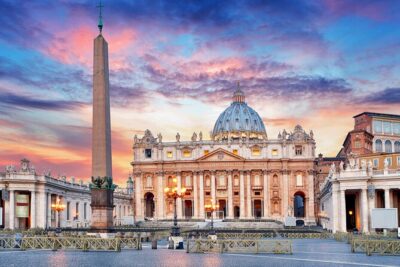
After the museum portion, the tour includes skip-the-line access to St. Peter’s Basilica. This is huge for value because St. Peter’s is not just large—it is popular. Cutting time waiting lets the moments you care about actually happen.
Inside, the basilica is presented as built over the tomb of the Apostle Peter, Christ’s closest disciple. It also took over 120 years to complete, with contributions from major Renaissance and Baroque architects. Even if you are not an architecture nerd, that timeline helps you understand why the building feels like layers of time rather than one single style.
Your guide will point out key sights, including:
- Tombs of the popes
- Intricate Vatican mosaics
- The Holy Gates
- Bernini’s grand altar
Bernini’s work is where many people suddenly go quiet. Not because it is subtle, but because it is so intentional—made to draw your eyes and then keep them there. If you take just a few seconds to look at how the altar frames the space, you will feel why it has become a defining image of Catholic Baroque art.
One good mindset here: St. Peter’s can overwhelm you with scale. This tour helps you avoid getting lost by giving you anchors—specific features to look for, plus context on what they represent.
And remember the time tradeoff. You will not “live” in the basilica for hours. You will get guided highlights, and then you’ll need to decide whether you want to stay longer on your own afterward.
Price and pace: does $113.29 per person make sense for this short route?
At $113.29 per person (plus your chosen departure time), the question is value: are you paying mainly for access, or mainly for instruction?
You are paying for both, and that matters here. Skip-the-line access at the Vatican is not a luxury—it is practical. The museum and basilica draw constant demand, so the time you save is often the difference between seeing key rooms and barely scratching the surface.
You also get a live guide with headsets, which is a strong upgrade over self-guided wandering. In a place where art and symbols can look similar to the untrained eye, the guide’s explanations are what turn famous rooms into meaningful ones.
Now for the honest pace part. 2.5 hours is short for a complex this big. This tour is built for highlights, not for exhausting every gallery. If you want to read every label and step into every side corridor, you’ll likely need extra time either before or after.
If you are planning a tight Rome itinerary, the pace can feel efficient—in a good way. You’ll come out with the big names and the clearest context, instead of leaving with photos and no story.
A final consideration: the Sistine Chapel closure risk changes what you can expect. Your purchase is described as still valid even if Sistine access is paused, which helps protect your day. Still, if you are traveling specifically for that single room experience, treat closures as a real variable and plan mentally for alternatives.
Who this tour fits best (and who might want a different plan)
This tour is a strong match if you want:
- Big Vatican highlights in a short window
- Clear narration, helped by headsets
- Access that reduces time spent in lines
- A route that connects artworks to leadership, belief, and context
It is especially good for first-time Rome visitors who have heard the names—Raphael Rooms, Maps Gallery, Michelangelo—but want the “why” without turning the day into a study session.
It may be a weaker match if:
- You do not understand Russian and need your guide narration in another language
- You want slow, thorough exploration with lots of free time to wander
- You are uncomfortable with the idea that Sistine Chapel access may be affected by Vatican events
One more thing I like to remind people about: when your day is compressed, you’ll feel every minute. That is not a dealbreaker, but it changes how you should pack the rest of your schedule. Leave buffer time around your Vatican slot so you are not stressed.
Also, don’t forget the basics: covered shoulders and knees in summer, and no bags on the tour route.
Final call: should you book this Vatican and St. Peter’s guided tour?
I think you should book if your goal is simple: see the Vatican’s most important art and landmarks with skip-the-line access, plus guided context that makes the rooms click. For $113.29, the value is strongest when you factor in the time saved and the headset-supported guide route.
I would hesitate only if you are counting on Sistine Chapel entry no matter what, or if the Russian-language guide is a problem for you. In that case, you may want to consider a different language option or a plan that includes more independent time.
If you go in with the right expectations—highlights, not everything—this tour can turn a stressful Vatican schedule into a satisfying, structured art day.
FAQ
How long is the Rome excursion to the Vatican Museums?
The duration is listed as 2.5 hours. Starting times can vary, so check availability for the schedule.
Do I get skip-the-line access?
Yes. The tour includes skip-the-line access to the Vatican Museums and access to St. Peter’s Basilica.
Is the Sistine Chapel included?
The tour is described as including the Sistine Chapel and Michelangelo frescoes. However, due to Vatican circumstances, the Sistine Chapel can be closed until further notice, and the tour remains valid for the Vatican Museums and other accessible areas.
What language is the live guide?
The live tour guide is listed as Russian. Headsets are included to hear the guide clearly.
What should I wear during summer?
The tour notes that shoulders and knees must be covered in summer.
Are bags allowed?
No. Bags are not allowed for this activity.
Is food or drinks included?
No. Food and drinks are not included.
More Tours in Rome
- Vatican Museums, Sistine Chapel & St. Peter’s Basilica Tour
★ 4.3 · 73,970 reviews - Vatican Museums, Sistine Chapel & St Peter’s Basilica Guided Tour
★ 4.5 · 39,149 reviews - Rome: Colosseum, Palatine Hill and Roman Forum Guided Tour
★ 4.8 · 32,814 reviews - Rome: Guided Tour of Colosseum, Roman Forum & Palatine Hill
★ 4.7 · 27,897 reviews - Rome: Colosseum, Roman Forum and Palatine Hill Guided Tour
★ 4.5 · 23,903 reviews - Rome: Colosseum Arena Floor, Palatine & Forum Guided Tour
★ 4.5 · 20,180 reviews
More Tour Reviews in Rome
- Vatican Museums, Sistine Chapel & St. Peter’s Basilica Tour
★ 4.3 · 73,970 reviews - Vatican Museums, Sistine Chapel & St Peter’s Basilica Guided Tour
★ 4.5 · 39,149 reviews - Rome: Colosseum, Palatine Hill and Roman Forum Guided Tour
★ 4.8 · 32,814 reviews - Rome: Guided Tour of Colosseum, Roman Forum & Palatine Hill
★ 4.7 · 27,897 reviews - Rome: Colosseum & Forum with Audio Guide App -Optional Arena
★ 4.2 · 24,770 reviews - Rome: Colosseum, Roman Forum and Palatine Hill Guided Tour
★ 4.5 · 23,903 reviews
The Vatican, A Few More Ways In
- Vatican Museums, Sistine Chapel & St. Peter’s Basilica Tour
★ 4.3 · 73,970 reviews - Vatican Museums, Sistine Chapel & St Peter’s Basilica Guided Tour
★ 4.5 · 39,149 reviews - Rome: Vatican Museums, Sistine Chapel and Basilica Tour
★ 4.3 · 16,039 reviews - Vatican Museums & Sistine Chapel Skip-the-Line Entry Ticket
★ 4.4 · 13,838 reviews - Rome: Vatican Museums, Sistine Chapel & Basilica Tour
★ 4.7 · 13,217 reviews - Skip-the-Line Group Tour of the Vatican, Sistine Chapel & St. Peter’s Basilica
★ 4.5 · 12,779 reviews
Just added to our Rome reviews





Vatican Museums Tours, compared.
 ★ 4.5Vatican: Museums & Sistine Chapel Entrance TicketFrom $38144,003 reviews
 ★ 4.3Vatican Museums, Sistine Chapel & St. Peter’s Basilica TourFrom $7273,970 reviews
 ★ 4.5Vatican Museums, Sistine Chapel & St Peter’s Basilica Guided TourFrom $2239,149 reviews
 ★ 4.3Vatican Museums, Sistine Chapel and Basilica TourFrom $7316,039 reviews
 ★ 4.4Vatican Museums & Sistine Chapel Skip-the-Line Entry TicketFrom $4313,838 reviews
 ★ 4.7Vatican Museums, Sistine Chapel & Basilica TourFrom $7213,217 reviews
 ★ 4.5Skip-the-Line Group Tour of the Vatican, Sistine Chapel & St. Peter’s BasilicaFrom $3012,779 reviews
 ★ 4.3Vatican Museums & Sistine Chapel Guided TourFrom $11812,117 reviews