

Reviewed · WALKING TOURS
Rome: Eternal City Walking Tour with Local Guide
Rome has a way of sounding mythic. This walking tour turns that myth into street-level sense, layer by layer, with a local guide who connects emperors, popes, and everyday Romans into one flowing story. I really like the scope for the time—you cover major classics without feeling rushed. I also like the mix of big sights (hello, Pantheon) plus the small questions, like why coins get tossed and what’s up with those Egyptian obelisks. One possible drawback: it’s a straight walking route, so you’ll want solid shoes and patience for crowds around the busiest stops.
The guide energy matters here, and the standout in the group was Harshit—fast on facts, quick with humor, and willing to slow down if you had questions. You’ll also pick up food instincts as you go, including the very Rome-style idea of chasing the best pizza and even basil-flavored gelato. If you’re looking for a slow museum-style pace or lots of seated time, you might find the moving-and-photo-stop rhythm a little more active than you expected.
In This Review
- Key things you’ll notice on this Rome Eternal City route
- Why this Rome walking tour works: 2.5 hours, big sights, human stories
- Piazza di San Marco to Piazza Venezia: how the guide sets Rome’s timeline
- Piazza Venezia and the Altar of the Fatherland: where politics meets monumentality
- Trajan’s Column and Trajan’s Market: seeing Rome as infrastructure
- Galleria Colonna and the fountain-and-obelisk questions
- Trevi Fountain break: how to see it (and not just photograph it)
- Church of Sant’Ignazio di Loyola: a calmer pause in a loud city
- Pantheon finale: the classic ending that makes the rest click
- Pizza and gelato tips you can act on the same day
- Price and value: why $11 feels unusually fair
- Who should book this tour, and who might want a different style
- Should you book this Rome Eternal City Walking Tour?
- FAQ
- FAQ
- Where does the tour start?
- Where does the tour finish?
- How long is the walking tour?
- Is the tour guide available in English?
- Which major sights are included?
- What’s included in the price?
- Are meals or drinks included?
- Do you get recommendations for pizza and gelato?
- What should I bring for the walk?
- Can I cancel or reserve without paying right away?
Key things you’ll notice on this Rome Eternal City route
- Stories that connect emperors, popes, and regular Romans, not just dates and plaques
- Trajan’s Column and Trajan’s Market framed as real-world power and engineering
- Fountain myths with practical answers, including the coin-toss tradition
- Egyptian obelisks explained so the monuments stop feeling random
- Time-efficient photo stops with just enough breathing room for real looking
- Pizza and gelato tips that help you eat well the same day
Why this Rome walking tour works: 2.5 hours, big sights, human stories
At $11 per person for a 2.5-hour guided walk, the value is hard to ignore. You’re not paying for a bus ride or a long itinerary designed to impress with distance. You’re paying for a local guide who can do something more useful: translate Rome’s layers into something you can actually remember as you walk.
The format is simple. You move through the historic center in a way that keeps you oriented. You stop often enough to photograph, but not so often that the tour becomes a series of detours. Most importantly, the guide keeps the historical thread active—Rome isn’t treated like a frozen postcard.
For me, the best part of this kind of tour is the way it helps you see. You start noticing the logic behind the city: where power shows up in marble, where religion changes the mood of a square, and how everyday life kept going even when rulers changed. That’s the kind of “secret” that makes a city feel less like a checklist.
Worth a look next to this Rome booking:
- Rome: Guided Food Walking Tour with Wine in Trastevere
★ 4.9 · 3,105 reviews - Rome: Trastevere & Campo de Fiori Street Food Walking Tour
★ 4.9 · 2,768 reviews - Rome: Paranormal Night Walking Tour & Secret Backstreets
★ 4.9 · 1,921 reviews - Rome: Trastevere Street Food Walking Tour with Local Expert
★ 4.8 · 1,784 reviews
Piazza di San Marco to Piazza Venezia: how the guide sets Rome’s timeline
The tour begins at Piazza di San Marco, and the early minutes are about orientation. Instead of dumping history at you, the guide starts building the frame: hopes, rivalries, and passions—plus the idea that Rome formed itself over time, family by family and generation by generation.
As you walk toward Piazza Venezia, you’ll get the rhythm of the city. You learn to watch how Rome moves between eras: ancient remains in the background, power structures nearby, and the modern city using the same street logic to this day. This is where the “local guide” part pays off. A good guide doesn’t just tell you what you’re seeing. They teach you what to look for next.
In practical terms, this early segment is your warm-up. The walking is manageable, the pace is steady, and you’re primed to understand the next stops instead of treating them like isolated monuments.
Piazza Venezia and the Altar of the Fatherland: where politics meets monumentality
Piazza Venezia is one of those places that feels like a hub—even if you don’t know Rome’s layout yet. Here, the guide helps you read the square as more than a viewpoint. It’s a place where Rome’s storytelling shifts from ancient to the present, with national symbolism taking center stage.
Then you head toward the Altar of the Fatherland (Altare della Patria). The quick guided moment here matters because it prevents you from viewing the monument as just scenery. You’ll hear how Rome’s layers of power show up in stone and positioning—how rulers want to be remembered, and how those messages shift over centuries.
Quick note: this area can be busy and photo-friendly in a very chaotic way. So if you’re picky about angles, plan to be flexible. The guide’s timing helps; you’re not left waiting forever, but you also get enough time to look without turning it into a stress test.
Trajan’s Column and Trajan’s Market: seeing Rome as infrastructure
Next up are two stops that, on paper, might sound like “just another historic site.” On the ground, they’re a lesson in how Rome worked.
Trajan’s Column gets a photo stop and guided explanation. You’re not only learning that it’s famous—you’re learning why Romans made monumental storytelling part of governance. The column isn’t just art. It’s a public record designed to communicate power in a single glance.
Then you pass Trajan’s Market (and hear guided context). This is where you start appreciating Rome’s practical side. Rome built spaces that served people and projected authority at the same time. You’ll get that sense that the city didn’t become great only through big campaigns or dramatic emperors. It became great through systems—markets, movement, and public space.
If you’re a casual history fan, this segment is still a win. You don’t need a degree to get the idea. You’ll simply walk away thinking differently about “ancient ruins.” They’re not random stones. They’re design choices.
Worth a look next to this Rome booking:

Galleria Colonna and the fountain-and-obelisk questions
After Trajan, the tour keeps tightening the theme: secrets, symbols, and the way Rome repeats ideas across time. You’ll stop at Galleria Colonna for a photo moment and guided visit, plus a short window for free time.
This is also where the guide’s explanation style really shows. You’ll hear answers to questions like:
- How many fountains Rome actually has
- Why people toss coins into one of them
- What the Egyptian obelisks are doing in Rome
That last one is especially useful. Obelisks can look like decorative history. The guide helps you connect them to a deeper pattern: how Rome borrowed prestige and turned it into local meaning.
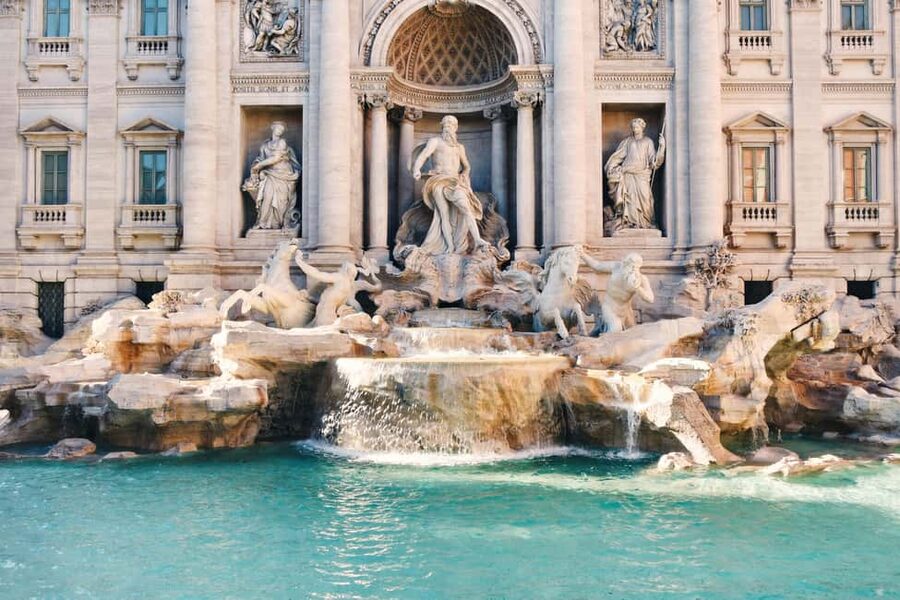
And the fountain discussion does more than kill curiosity. It changes how you look at water in the city. Once you understand what’s going on (the tradition behind the coins, the idea behind the fountains), Trevi stops being just a landmark you pose in front of. It becomes a living ritual you can participate in without feeling lost.
Trevi Fountain break: how to see it (and not just photograph it)
Trevi Fountain is the kind of stop that can go two ways: you either get swept into the crowd or you manage to slow down. This tour includes a break with time for photos and sightseeing, so you can choose your own rhythm.
You’ll get guided context, then you’re on your own for a bit—enough to get your shot, look from different angles, and enjoy the scale without feeling like you’re sprinting. The guide also links the fountain tradition to the earlier answer about coins, which makes the whole thing feel less like a tourist gimmick.
Practical tip: if you care about photos, be ready to wait a minute, move half a step, and try again. With Trevi, the best photos often come from patience and positioning, not from holding your phone perfectly still. The timing here is designed so you can do that.
Church of Sant’Ignazio di Loyola: a calmer pause in a loud city
After Trevi, the route shifts tone. You’ll head to the Church of Sant’Ignazio di Loyola, with a photo stop plus time to visit and time to wander.
This is a good moment to reset your brain. Up to now, the tour is about monuments and crowds. A church visit gives you a different kind of history: the way faith, art, and politics overlap in a space that asks you to look carefully.
You’ll still be guided, but you’ll also have enough free time to actually enter, watch details, and not just stand outside counting arches. The guided part helps you notice what matters; the free part lets you experience it rather than just record it.
Pantheon finale: the classic ending that makes the rest click
The tour finishes at the Pantheon, with a final guided stop and time to take it in. This is an excellent way to end because the Pantheon is a kind of historical “anchor.” Everything you learned earlier starts to feel connected when you see a site that has such lasting influence.
What’s valuable here is not only the monument itself, but how the guide frames it. After hours of hearing about emperors, popes, and everyday Romans, the Pantheon becomes more than architecture. It becomes a snapshot of what Rome valued: durability, design, and public life.
You also get a walk-and-photo rhythm that feels comfortable at the end. You’re not hauled through a final stop like a deadline. Instead, the Pantheon is treated like the finishing point where the stories you heard earlier can finally land in your head.
Pizza and gelato tips you can act on the same day
One of the smartest parts of this tour is the food guidance built into the experience. You’ll receive recommendations for the best pizza in town, and you’ll likely get a fun prompt to try basil-flavored gelato—yes, basil. In Rome, it’s not weird; it’s part of the local logic of flavor.
Here’s how I’d use this, practical-style:
- If you’re hungry after the Pantheon, treat the guide’s pizza suggestion as your “safe bet” for quality and speed.
- If you like trying one unusual local thing, basil gelato is an easy choice because it doesn’t require a complex menu decision. It’s memorable and very Rome.
- Ask your guide what they’d choose today based on your day’s energy level. You’ll get better guidance than random online rankings.
Food tips are also a hidden value driver. Tours can be great at history and weak at helping you eat. This one does both without making food the main event.
Price and value: why $11 feels unusually fair
Let’s talk value. For $11 per person, you’re getting a live English guide, a 2.5-hour walking route through central Rome, guided information at multiple historical sites, and practical local food recommendations.
In a city where “guided” often means expensive, this price is a big part of why the tour is worth considering. You’re not paying for luxury. You’re paying for someone to translate Rome for you in real time. That translation is what saves you effort once you’re on your own later.
Also, the duration matters. Two and a half hours is long enough for your brain to start building connections, but short enough that you still have energy afterward to explore on your own. If your Rome schedule is already tight, this kind of value-price tour makes sense.
Who should book this tour, and who might want a different style
This tour is a strong fit if:
- you like history but also want it explained in a way that stays human
- you enjoy walking through the city center and learning what to notice
- you want a route that covers classic Rome without overloading you
- you want both monuments and local food tips in one block
You might consider another option if:
- you prefer long inside-the-site time with minimal walking
- you want a more specialized focus, like only ancient Rome or only art history
- you’re sensitive to crowds around major landmarks (you will be near them)
That said, the tour timing and frequent guide context help you avoid the feeling of being dropped in front of something and left to guess.
Should you book this Rome Eternal City Walking Tour?
If you want a guided walk that helps Rome make sense fast, I’d book it. The main sights are covered, but the real win is how the guide ties them to bigger themes: how power and faith shaped the city, why symbols like obelisks and fountains matter, and how Rome kept reinventing itself.
Book it especially if you’re the type who likes to understand what you’re looking at before you commit to an afternoon of wandering. You’ll leave with better bearings and a more personal connection to the city, not just photos.
If your priority is total comfort or minimal crowds, consider your tolerance. You’ll be walking and moving through busy areas, and the tour works best when you treat it like a focused city stroll with a smart storyteller.
FAQ
FAQ
Where does the tour start?
The tour starts in Piazza di San Marco.
Where does the tour finish?
It finishes at the Pantheon.
How long is the walking tour?
The duration is 2.5 hours.
Is the tour guide available in English?
Yes. The live tour guide speaks English.
Which major sights are included?
You’ll cover sites such as Piazza Venezia, the Altar of the Fatherland, Trajan’s Column, Trajan’s Market, Galleria Colonna, Trevi Fountain, the Church of Sant’Ignazio di Loyola, and the Pantheon.
What’s included in the price?
Included are the guided walking tour, guided information about Rome’s history and culture, historical site visits, and recommendations for local food.
Are meals or drinks included?
No. Meals and drinks are not included.
Do you get recommendations for pizza and gelato?
Yes. The tour includes insider recommendations for the best pizza and gelato, including basil-flavored gelato.
What should I bring for the walk?
Wear comfortable shoes and bring a reusable water bottle. Be prepared for various weather conditions.
Can I cancel or reserve without paying right away?
You can cancel up to 24 hours in advance for a full refund, and you can reserve now and pay later.
More Walking Tours in Rome
- Rome: Guided Food Walking Tour with Wine in Trastevere
★ 4.9 · 3,105 reviews - Rome: Trastevere & Campo de Fiori Street Food Walking Tour
★ 4.9 · 2,768 reviews - Rome: Paranormal Night Walking Tour & Secret Backstreets
★ 4.9 · 1,921 reviews - Rome: Trastevere Street Food Walking Tour with Local Expert
★ 4.8 · 1,784 reviews - Rome: Small-Group Guided Day or Night Walking Tour
★ 4.8 · 1,009 reviews - Rome by Night Walking Tour – Legends & Criminal Stories
★ 4.5 · 1,003 reviews
More Tours in Rome
- Vatican Museums, Sistine Chapel & St. Peter’s Basilica Tour
★ 4.3 · 73,970 reviews - Vatican Museums, Sistine Chapel & St Peter’s Basilica Guided Tour
★ 4.5 · 39,149 reviews - Rome: Colosseum, Palatine Hill and Roman Forum Guided Tour
★ 4.8 · 32,814 reviews - Rome: Guided Tour of Colosseum, Roman Forum & Palatine Hill
★ 4.7 · 27,897 reviews - Rome: Colosseum, Roman Forum and Palatine Hill Guided Tour
★ 4.5 · 23,903 reviews - Rome: Colosseum Arena Floor, Palatine & Forum Guided Tour
★ 4.5 · 20,180 reviews
More Tour Reviews in Rome
- Vatican Museums, Sistine Chapel & St. Peter’s Basilica Tour
★ 4.3 · 73,970 reviews - Vatican Museums, Sistine Chapel & St Peter’s Basilica Guided Tour
★ 4.5 · 39,149 reviews - Rome: Colosseum, Palatine Hill and Roman Forum Guided Tour
★ 4.8 · 32,814 reviews - Rome: Guided Tour of Colosseum, Roman Forum & Palatine Hill
★ 4.7 · 27,897 reviews - Rome: Colosseum & Forum with Audio Guide App -Optional Arena
★ 4.2 · 24,770 reviews - Rome: Colosseum, Roman Forum and Palatine Hill Guided Tour
★ 4.5 · 23,903 reviews
Just added to our Rome reviews





Walking Tours, compared.
 ★ 4.9Guided Food Walking Tour with Wine in TrastevereFrom $1003,105 reviews
 ★ 4.9Trastevere & Campo de Fiori Street Food Walking TourFrom $512,768 reviews
 ★ 4.9Paranormal Night Walking Tour & Secret BackstreetsFrom $341,921 reviews
 ★ 4.8Trastevere Street Food Walking Tour with Local ExpertFrom $571,784 reviews
 ★ 4.8Small-Group Guided Day or Night Walking TourFrom $231,009 reviews
 ★ 4.5Rome by Night Walking Tour – Legends & Criminal StoriesFrom $141,003 reviews
 ★ 4.4Guided City Center Evening Sightseeing Walking TourFrom $46953 reviews
 ★ 4.9Small-Group City Highlights Moonlight Walking TourFrom $29949 reviews
Browse the lists this tour appears in