
Reviewed · VATICAN MUSEUMS TOURS
Rome: Early Bird Vatican Museums Small Group Tour (MAX 6 People)
Beat the Vatican rush with real breathing room. I like how this small-group format keeps you moving faster, and I also love the first access timing that helps you see the Vatican Museums before the biggest tide of people arrives. The main drawback to plan for: even early, you’ll face crowds at key checkpoints, and the day can get hot fast (no real air-conditioning to rely on).
What makes this tour feel worth your time is the guide-led flow from museum highlights straight into the Sistine Chapel and then St. Peter’s Basilica. You get a structured route, skip-the-line entry, and enough context to understand what you’re looking at—so it’s not just a pile of rooms and ceilings. And with a max of 6 people, you’re less likely to get separated or lose track of what matters most.
In This Review
- Why This Early Bird Vatican Tour Works So Well
- Quick Reasons You’ll Feel the Difference
- Meeting Point and Early Start: How You Save Your Legs
- Vatican Museums: First Access at Opening Beats the Usual Line Chaos
- The Courtyard of the Pigna and Pomodoro’s Sphere Within a Sphere
- Why this early museum chunk matters
- Gallery of Maps, Tapestries, and Candelabra: Art With Context, Not Random Stops
- Gallery of Maps: Italy as seen from the 1500s
- Gallery of Tapestries: Renaissance storytelling in woven form
- Gallery of Candelabra: ancient sculpture with dramatic stagecraft
- Sistine Chapel: Timing, Rules, and How to Actually Look
- Dress code reality check
- St. Peter’s Basilica: Pietà, John Paul II, and the Most Cinematic Stops
- Why I like this portion of the route
- Bernini at Full Volume: Baldachin and St. Peter’s Square
- St. Peter’s Baldachin
- St. Peter’s Square
- Price and Value: Is $179.81 Actually Fair?
- What You Can Learn From the Best Guides (And Why It Matters)
- Practical Tips That Will Make This Tour Easier
- Should You Book This Early Bird Vatican Tour?
Why This Early Bird Vatican Tour Works So Well
If you only have a few hours, the Vatican can feel like a maze that keeps expanding. This experience is built to solve that problem: start early, enter early, and let a guide handle the tricky pacing so you can focus on art and architecture instead of logistics.
The best part is that you’re not stuck in the usual long bottlenecks right at the start. Instead, you get into the Museums at opening access and then follow a route that funnels you toward the rooms people most want to see.
And yes, the Vatican is still the Vatican—big, crowded, and rules-heavy—but this tour is designed to make it manageable.
Quick Reasons You’ll Feel the Difference
- First access at opening (8:00 AM): You’re positioned to see the Museums and Sistine Chapel before the main crunch.
- Skip-the-line entry tickets: Less waiting at checkpoints means more time looking and less time standing.
- Max 6 people: Small group size helps your pace feel human and makes questions actually possible.
- Guided focus on the right rooms: Maps, tapestries, candelabra, then the Sistine Chapel, then St. Peter’s.
- St. Peter’s Basilica highlights included: You’ll specifically go after Michelangelo’s Pietà and major Bernini features.
- Mobile ticket format: Helpful for keeping your day smooth once you’re on-site.
Other ways through the Vatican Museums
- Vatican Museums, Sistine Chapel & St. Peter’s Basilica Tour
★ 4.3 · 73,970 reviews - Vatican Museums, Sistine Chapel & St Peter’s Basilica Guided Tour
★ 4.5 · 39,149 reviews - Rome: Vatican Museums, Sistine Chapel and Basilica Tour
★ 4.3 · 16,039 reviews - Vatican Museums & Sistine Chapel Skip-the-Line Entry Ticket
★ 4.4 · 13,838 reviews
Meeting Point and Early Start: How You Save Your Legs
The tour starts at Giuly’s Café, Via Santamaura 3, with a 7:30 AM start time. In other words, you’re up early, but you’re doing it for a reason: the Vatican Museums open at first access, and you want to be inside before lines swell.
There’s no hotel pickup, so you’ll need to get yourself to the meeting point. Once you arrive, you’ll group up with the guide and the small party, and then the day’s pacing starts working in your favor.
One practical tip: plan for the walk across Vatican grounds. The tour involves moderate walking, and comfortable shoes matter. This is one of those “wear your best boots, not your cutest sandals” Rome days.
Vatican Museums: First Access at Opening Beats the Usual Line Chaos
The big promise here is simple: you enter the Vatican Museums at first access. That’s where your value comes from. The Vatican Museums are huge, and crowd flow can eat your time. When you start early, you get to see the galleries when they’re still moving—before the room becomes a slow shuffle.
You’ll spend about 1 hour 10 minutes in the Museums area with admission included. That time frame is tight enough to keep things exciting, but long enough for your guide to connect the dots so the art doesn’t blur together.
The Courtyard of the Pigna and Pomodoro’s Sphere Within a Sphere
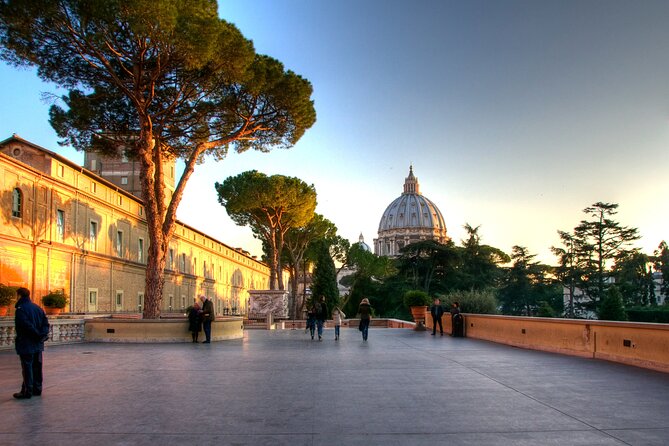
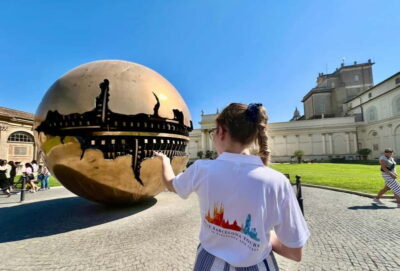
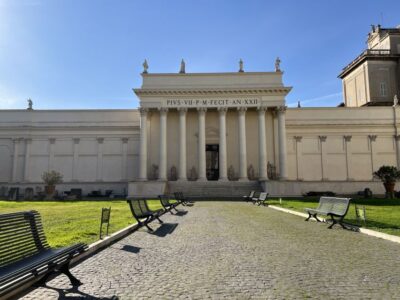
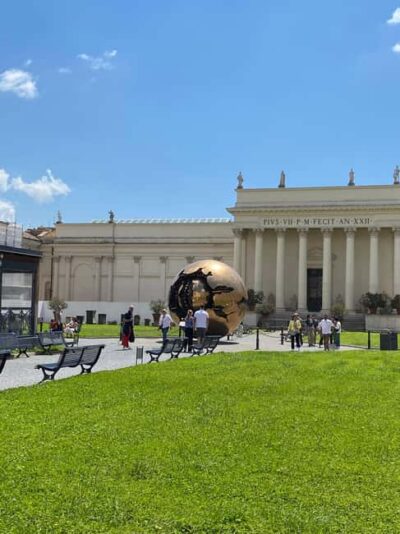
A standout stop is the Courtyard of the Pigna, an area tied to the 16th-century Belvedere complex. It’s the kind of place where the scale hits you. You’ll also see Arnaldo Pomodoro’s Sphere within a Sphere in the Cortile della Pigna.
This sculpture is worth a pause because it’s not just “pretty bronze.” The fractured surface and the smaller sphere inside work like a visual metaphor: outward complexity paired with inner depth. Your guide can point out how the placement and light change the look as you move, which makes the artwork feel alive instead of static.
Worth a look next to this Rome booking:
Why this early museum chunk matters
If you try the Vatican on your own, you end up making survival decisions: which line, which corridor, which room, and which rules you’ll hit next. This early museum window is where the tour earns its keep. You’re not wandering—you’re progressing toward the key rooms while the crowd pressure is still low.
Gallery of Maps, Tapestries, and Candelabra: Art With Context, Not Random Stops
After the Courtyard moment, you shift into galleries that show different ways the Vatican collected power and imagination.
Gallery of Maps: Italy as seen from the 1500s
You’ll have a short, focused visit to the Gallery of Maps, created in the 16th century under Pope Gregory XIII. The maps stretch across about 120 meters, covering topographical views of Italy from that era.
Even if you’re not a map person, this room is fascinating because it’s a snapshot of what “the land” meant when it was being studied, painted, and politically framed. If you like history that you can see (not just read), this is a strong stop.
Gallery of Tapestries: Renaissance storytelling in woven form
Next up is the Gallery of Tapestries, featuring 15th and 16th-century tapestries with scenes from biblical and historical narratives. The designs were inspired by Raphael’s school, and that connection helps you understand why the figures and compositions feel so purposeful.
Tapestries are tricky to appreciate at a distance, so the guide’s pacing helps. You get just enough time to notice how the scenes are constructed rather than treating it like a decorative wall.
Gallery of Candelabra: ancient sculpture with dramatic stagecraft
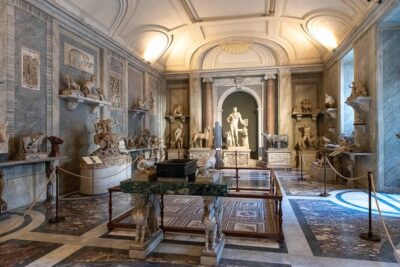
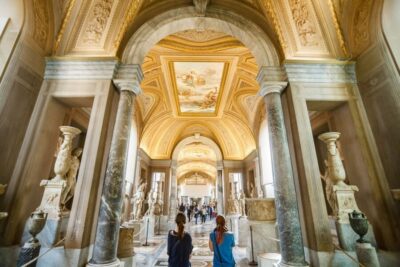
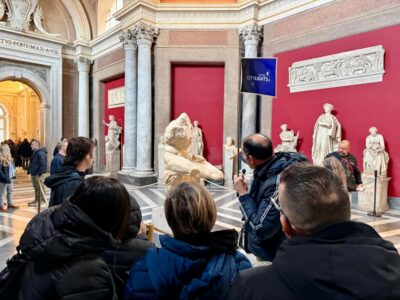
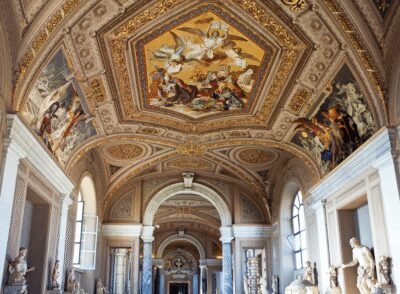
Then comes the Gallery of the Candelabra, named for the grand marble candelabra that split the gallery into sections. You’ll see a mix of Greek and Roman statues, sarcophagi, and reliefs, set inside a space that’s as carefully designed as the art itself.
This stop works well because it gives you a visual “breather.” The Vatican isn’t only frescoes and saints. It also showcases ancient forms—and the gallery layout helps you sense how those collections were curated.
Sistine Chapel: Timing, Rules, and How to Actually Look
Your next major stop is the Sistine Chapel with admission included. Expect about 30 minutes here.
This is the moment everyone comes for, but it can also be the hardest to enjoy because people rush in, take photos, and then rush out again. What makes this tour different is that the guide helps you understand what you’re seeing before you hit the ceiling.
The Sistine Chapel is tied to Pope Sixtus IV della Rovere, who restored the old Cappella Magna between 1477 and 1480. It’s also historically tied to papal ceremonies like conclaves. But the reason it’s famous is Michelangelo’s frescoes.
Dress code reality check
The tour notes a dress code that’s enforced at places of worship and selected museums: no shorts or sleeveless tops, and knees and shoulders must be covered for both men and women. If you show up dressed wrong, you risk denied entry.
So do yourself a favor: bring a light layer. Rome mornings can start cool and end hot, but the rules don’t change.
St. Peter’s Basilica: Pietà, John Paul II, and the Most Cinematic Stops
After the Sistine Chapel, you head into St. Peter’s Basilica, guided for about 45 minutes. The admission here is listed as free, and the guide focuses you on a set of major works.
The highlight is Michelangelo’s Pietà (1498–1499). Your tour is set up so you can actually reach it and take it in. The Pietà is housed in the basilica, and it’s notable for being the only Michelangelo piece he signed.
Your route also includes a stop near the tomb of Saint John Paul II and Pope Karol Wojtyla. This is one of those moments where the basilica stops being “art” and becomes a living place of memory for many visitors.
Why I like this portion of the route
If you just walk St. Peter’s on your own, it’s easy to bounce from sight to sight without really connecting what you’re seeing to why it matters. This route is built around anchor points: Pietà first, a major papal memorial next, then the Bernini architecture that makes the basilica feel like theater.
And yes, it can still be busy, but your guide’s focus helps you avoid wandering for an hour trying to decide what to prioritize.
Bernini at Full Volume: Baldachin and St. Peter’s Square
Your tour continues with two quick but high-impact architecture stops.
St. Peter’s Baldachin
You’ll visit the Baldachin by Gian Lorenzo Bernini, a bronze canopy over the high altar. It rises over 90 feet tall and is covered in detailed Baroque design.
This piece is worth more than a glance because it sits at the visual center of the basilica interior. Up close, you can feel how it was made to pull your eyes upward and keep you inside the “grand space” the church creates.
St. Peter’s Square
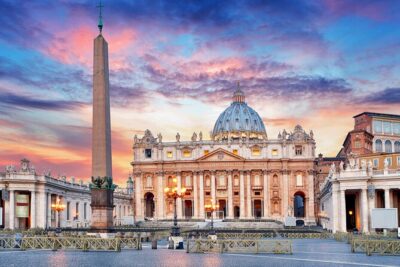
Finally, you step into St. Peter’s Square with about 15 minutes allocated. This space is an elliptical masterpiece enclosed by 284 Doric columns in four rows. It measures roughly 196 meters wide and 148 meters long.
Even if you’re not into architecture, you’ll likely notice the geometry immediately. It’s the kind of public space designed for crowds—so it’s helpful to see it at the end of your visit, when your brain already has context from the basilica.
Your tour ends at St. Peter’s Square (Piazza San Pietro).
Price and Value: Is $179.81 Actually Fair?
Let’s talk value without hand-waving.
At $179.81 per person for about 3 hours 30 minutes, you’re paying for three things that add up in the Vatican:
1) Skip-the-line entry (huge in time saved)
2) First access at 8:00 AM (crowd pressure reduced right when it matters)
3) A small-group guide route (so your time inside targets the rooms you care about)
You’re not just buying museum entry. You’re buying a plan that reduces the chaos that typically steals your best viewing hours.
One caution: it’s still a lot for a short afternoon, so if you’re the type who wants to wander without structure—or you’re traveling totally independently with lots of patience—this might feel pricey. But if you’d rather pay to avoid stress, this setup tends to justify itself fast.
Also note: you’re not paying for transfers. You’ll get yourself to the meeting point, which is normal in Rome, but it’s part of the “real” total cost in time and planning.
What You Can Learn From the Best Guides (And Why It Matters)
In a tour like this, the guide is more than a ticket-holder. You’ll see it immediately in how the experience feels.
Some guides you may get mention real specialization and practical narration—art historians and even archaeology backgrounds have been reported, and that matters because they help you interpret what you’re staring at. When you understand what a room represents, the Vatican stops being a checklist.
The guide also handles crowd movement and reroutes when needed. For example, some groups have been able to experience unusually special moments around papal arrivals when timing lines up—and the guide helps position the group so you’re not just watching from the back.
That kind of small, on-the-ground help is hard to replicate alone.
Practical Tips That Will Make This Tour Easier
A few things that can make or break your enjoyment:
- Wear your best walking shoes. You’re moving through museums and basilica spaces back-to-back.
- Bring a layer for the dress code. Shoulders and knees covered for men and women is required; plan for warmth and comfort.
- Bring water. Some indoor spaces can feel airless, and the notes indicate no reliable A/C in many areas.
- Expect it to be busy even at opening. Early reduces the crush, but it doesn’t make the Vatican empty.
- Have your phone ready for the mobile ticket. This tour uses mobile tickets, which keeps check-in simpler.
Should You Book This Early Bird Vatican Tour?
I’d book this tour if:
- you want Vatican Museums + Sistine Chapel + St. Peter’s Basilica without spending your day in lines
- you like a clear plan and prefer your time inside to feel intentional
- you want max 6 people so it’s easier to hear explanations and move as a unit
I’d think twice if:
- you’re allergic to paying for skip-the-line (even though it saves time)
- you strongly prefer solo wandering and don’t want a structured route
- you’re not able to meet the dress code requirements (knees and shoulders covered)
For most first-timers, this is one of the most practical ways to get the Vatican’s greatest hits in a manageable window—without turning your trip into an endurance event.
More Tours in Rome
- Vatican Museums, Sistine Chapel & St. Peter’s Basilica Tour
★ 4.3 · 73,970 reviews - Vatican Museums, Sistine Chapel & St Peter’s Basilica Guided Tour
★ 4.5 · 39,149 reviews - Rome: Colosseum, Palatine Hill and Roman Forum Guided Tour
★ 4.8 · 32,814 reviews - Rome: Guided Tour of Colosseum, Roman Forum & Palatine Hill
★ 4.7 · 27,897 reviews - Rome: Colosseum, Roman Forum and Palatine Hill Guided Tour
★ 4.5 · 23,903 reviews - Rome: Colosseum Arena Floor, Palatine & Forum Guided Tour
★ 4.5 · 20,180 reviews
More Tour Reviews in Rome
- Vatican Museums, Sistine Chapel & St. Peter’s Basilica Tour
★ 4.3 · 73,970 reviews - Vatican Museums, Sistine Chapel & St Peter’s Basilica Guided Tour
★ 4.5 · 39,149 reviews - Rome: Colosseum, Palatine Hill and Roman Forum Guided Tour
★ 4.8 · 32,814 reviews - Rome: Guided Tour of Colosseum, Roman Forum & Palatine Hill
★ 4.7 · 27,897 reviews - Rome: Colosseum & Forum with Audio Guide App -Optional Arena
★ 4.2 · 24,770 reviews - Rome: Colosseum, Roman Forum and Palatine Hill Guided Tour
★ 4.5 · 23,903 reviews
The Vatican, A Few More Ways In
- Vatican Museums, Sistine Chapel & St. Peter’s Basilica Tour
★ 4.3 · 73,970 reviews - Vatican Museums, Sistine Chapel & St Peter’s Basilica Guided Tour
★ 4.5 · 39,149 reviews - Rome: Vatican Museums, Sistine Chapel and Basilica Tour
★ 4.3 · 16,039 reviews - Vatican Museums & Sistine Chapel Skip-the-Line Entry Ticket
★ 4.4 · 13,838 reviews - Rome: Vatican Museums, Sistine Chapel & Basilica Tour
★ 4.7 · 13,217 reviews - Skip-the-Line Group Tour of the Vatican, Sistine Chapel & St. Peter’s Basilica
★ 4.5 · 12,779 reviews
Just added to our Rome reviews





Vatican Museums Tours, compared.
 ★ 4.5Vatican: Museums & Sistine Chapel Entrance TicketFrom $38144,003 reviews
 ★ 4.3Vatican Museums, Sistine Chapel & St. Peter’s Basilica TourFrom $7273,970 reviews
 ★ 4.5Vatican Museums, Sistine Chapel & St Peter’s Basilica Guided TourFrom $2239,149 reviews
 ★ 4.3Vatican Museums, Sistine Chapel and Basilica TourFrom $7316,039 reviews
 ★ 4.4Vatican Museums & Sistine Chapel Skip-the-Line Entry TicketFrom $4313,838 reviews
 ★ 4.7Vatican Museums, Sistine Chapel & Basilica TourFrom $7213,217 reviews
 ★ 4.5Skip-the-Line Group Tour of the Vatican, Sistine Chapel & St. Peter’s BasilicaFrom $3012,779 reviews
 ★ 4.3Vatican Museums & Sistine Chapel Guided TourFrom $11812,117 reviews