
Reviewed · GUIDED
Rome: Domus Aurea Guided Tour with VR Experience
Nero’s palace is underground, and now you can see it whole. This 1.5-hour Domus Aurea guided visit mixes a live site walkthrough with VR so you understand what you’re looking at, not just where it sits.
I especially liked two things: the way the guide ties each space to Nero’s story and Roman art, and the VR OCULUS moment that shows what the Golden House may have looked like when it was new. Guides I heard named include Stefano and Claudia, and their answers went beyond basics—useful if you’re the type to ask why a ceiling mosaic survives or how restoration choices affect what you see.
One caution: the pre-arranged ticket handoff and the meeting point instructions can feel confusing on the ground. Plan extra buffer time near the corner of via delle Terme di Tito and via Nicola Salvi, so you’re not hunting paperwork while the clock ticks.
In This Review
- Key things to know before you go
- Domus Aurea + VR: what makes this tour different
- Starting point at Via delle Terme di Tito: don’t arrive late
- How you get inside fast (and how to avoid ticket confusion)
- What the 1.5-hour guided tour feels like on the ground
- VR OCULUS: seeing Nero’s Golden House as a working palace
- Restoration on an active dig: why this part matters
- Meeting your guide inside: language options and question-friendly pacing
- What to bring (and what to leave behind)
- Price and value: what $59 buys you in Rome
- Who should book this Domus Aurea VR tour?
- Should you book this tour?
- FAQ
- How long is the Domus Aurea guided tour with VR?
- What languages are available?
- Where do we meet before entering Domus Aurea?
- Do I need to bring anything special?
- Is the tour suitable for wheelchair users or people with mobility impairments?
- Is the ticket refundable if plans change?
Key things to know before you go
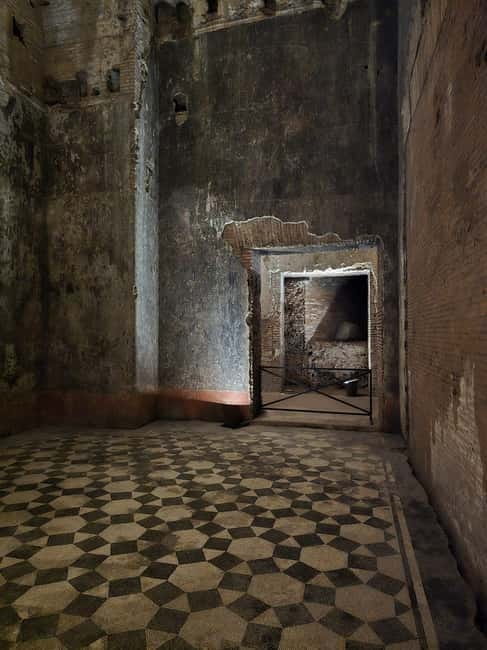
- VR OCULUS + narration helps you visualize Nero’s rooms rather than staring at the floor plan.
- Restoration in progress: you can watch recovery and restoration phases as part of the guided experience.
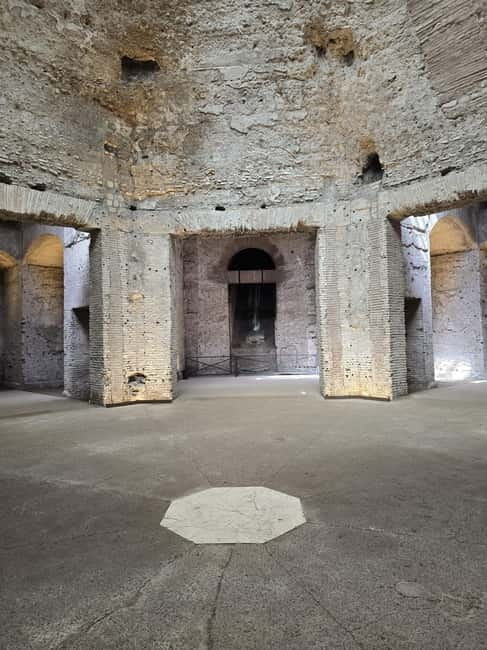
- Underground scale surprises people; expect huge vaulted spaces that feel cathedral-sized.
- Small temperature reality: inside is around 10°C, so a light jacket is not optional.
- Not for wheelchair users: the experience isn’t set up for mobility impairments.
Domus Aurea + VR: what makes this tour different
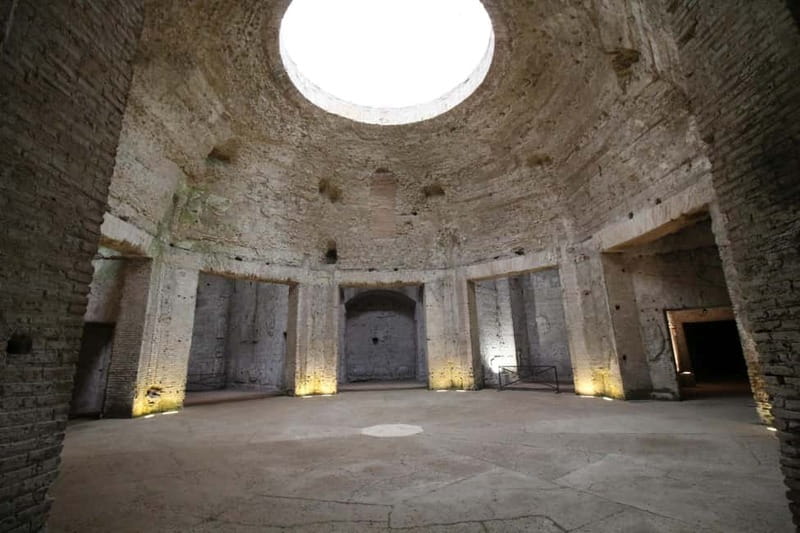
The Domus Aurea (Nero’s Golden House) is one of those Rome sites that can look a bit vague at first glance. You see walls, fragments, and a lot of “this used to be something.” This tour fixes that feeling by pairing a guide-led walk with VR devices that aim to reconstruct what the palace might have looked like when it was functioning.
I like the concept because it’s not VR for VR’s sake. The tech is there to help you read the site. You get a guided walkthrough of the archaeological area, and the VR layer gives you a visual target: ceilings, room proportions, and decorative ideas that help the ruins click into place. The effect is practical. Once your brain has a version of the original spaces, the traces on the ground make more sense.
The other reason this works is that you’re not only looking backward. The tour also talks about restoration: how excavators recover sections and how specialists bring surviving elements back into better condition. That matters because the Domus Aurea isn’t a museum relic frozen in time—it’s an active archaeological worksite.
Worth a look next to this Rome booking:
- Vatican Museums, Sistine Chapel & St Peter’s Basilica Guided Tour
★ 4.5 · 39,149 reviews - Rome: Colosseum, Palatine Hill and Roman Forum Guided Tour
★ 4.8 · 32,814 reviews - Rome: Guided Tour of Colosseum, Roman Forum & Palatine Hill
★ 4.7 · 27,897 reviews - Rome: Colosseum & Forum with Audio Guide App -Optional Arena
★ 4.2 · 24,770 reviews
Starting point at Via delle Terme di Tito: don’t arrive late
Your tour begins at Via delle Terme di Tito, 72. You’ll meet your coordinator at the corner between via delle Terme di Tito and via Nicola Salvi, on the park side. The coordinator wears a white and blue uniform and carries a blue flag that says ONCE UPON A TIME tours.
This might sound straightforward, but I’d treat it like the way you’d treat meeting up for a flight connection: give yourself slack. One of the most common frustrations is time lost to figuring out where to collect a ticket person. You’ll want your head clear before you even reach Domus Aurea proper.
If you’re navigating on foot, do a quick check before you leave your hotel. This area sits near major landmarks, but street-level directions can still be annoying when there’s also a race or crowd movement.
How you get inside fast (and how to avoid ticket confusion)
You’ll be using prepaid entry tickets arranged by the tour operator. The coordinator’s job is to provide you with the entry tickets (the tickets are prepaid, and they’re valid only for the date and time you booked). At the site entrance, staff will verify your purchase matches the booked slot.
Here’s the practical rhythm you should expect:
- Meet the coordinator at the corner spot.
- Take your ticket(s).
- Go to the Domus Aurea entrance (the activity notes the entrance area as Vle della Domus Aurea).
- Show the entry ticket to the staff you find at the entrance.
- The staff will then let you meet the guide inside.
If you don’t want stress, show up early enough that you can handle the handoff calmly. The VR part is cool, but the day can feel less fun if you’re flustered before you even start.
Also note the tour includes skip-the-ticket-line. That’s a big deal in Rome when queues can soak up your energy. The tradeoff is that you’ll do a small amount of ticket validation on-site instead of just walking in directly.
What the 1.5-hour guided tour feels like on the ground
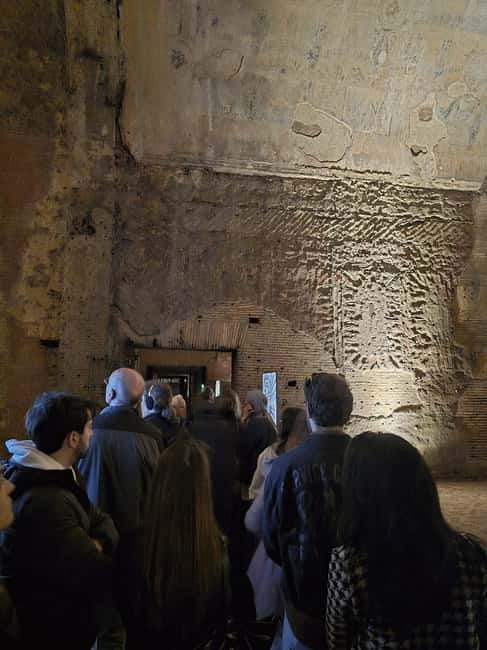
The guided portion runs about 1.5 hours. Inside Domus Aurea, you’re moving through an archaeological environment that’s partly museum-like and partly work-in-progress. That mix is why the guide matters. Without explanations, it can be easy to focus only on “what’s left.”
With the guide, you get orientation: where you are in Nero’s plan, what the spaces were meant to communicate, and how restoration decisions affect what you see today. You also hear about the site as a physical dig—recovery and restoration phases are part of the storytelling.
A few details that help you set expectations:
- The tour includes understanding how the Golden House was designed and used, not just what’s been uncovered.
- You’ll spend time in spaces described as cathedral-scale underground, which can genuinely surprise people used to flat Roman ruins.
- The tour aims to connect ceiling elements to your sense of the original interior, not just the walls and floor remains. That ceiling perspective is one of the biggest “aha” moments for many first-timers.
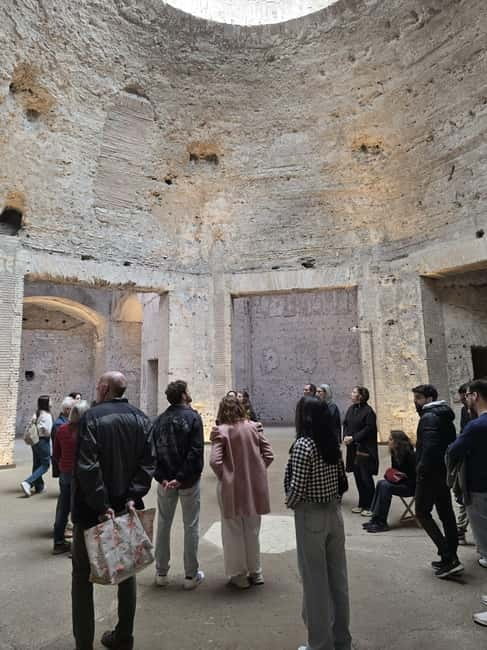
Group size can matter. Some experiences run with larger groups (around 20–25 people has been observed), which can make it harder to see exactly what the guide points to when people cluster. If you want better sightlines, aim for an earlier position near the guide when you can, and be ready for a bit of shuffling when everyone needs to look in the same direction.
VR OCULUS: seeing Nero’s Golden House as a working palace
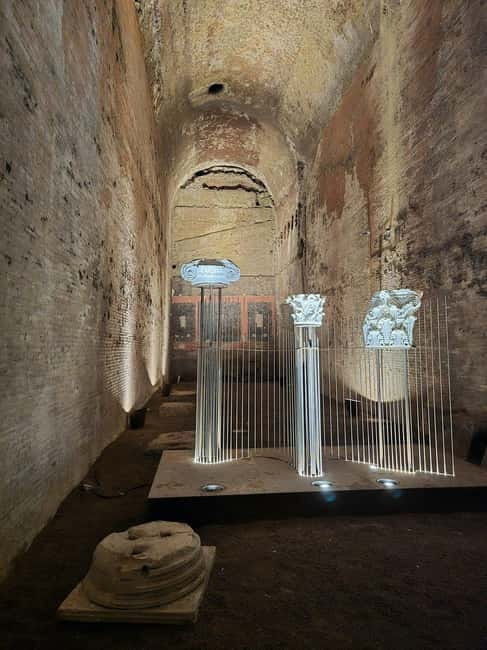
The headline feature here is VR OCULUS. You’ll use the VR devices as part of the guided visit, with video narration layered into what the guide is explaining. The goal is to show what Emperor Nero’s golden palace looked like around 2,000 years ago.
I like this approach because it doesn’t ask you to do mental math. Instead of guessing what a fragment might have become, you can look at a reconstruction aligned with the exact area you’re standing in.
What you should watch for during the VR moments:
- Pay attention to ceiling and room proportions. That’s where VR tends to do the most work.
- Keep one eye on what your guide says before you put on the headset, so the VR doesn’t feel like a random video.
- If you’re a detail person, jot down questions after the VR sequence. The guide can often answer questions about Nero, Roman art, and how restoration affects visibility.
The VR is paired with the idea of “time travel”—not in the sci-fi sense, but in a cognitive way. You see a more complete version of the spaces, then you look at the real archaeology and understand how the present-day site arrived at this state.
Restoration on an active dig: why this part matters
One of the most interesting parts of this experience is that you’re not only touring a finished exhibition. You’re shown the recovery and restoration phases as they happen at the site. That’s a rare angle in Rome, where many sights are “see it, admire it, move on.”
Here you get to think like a conservator for a short time:
- What gets recovered first, and why.
- How restoration choices can bring some elements back into clearer view.
- How the archaeological process shapes what visitors can experience today.
This matters because it makes the Domus Aurea feel less like a static ruin and more like a living project. You’ll still appreciate the drama of Nero’s extravagance, but you’ll also come away understanding the effort behind the scenes—literally underground.
Meeting your guide inside: language options and question-friendly pacing
Guides speak French, English, Spanish, and Italian. That language coverage matters because it lets you pick the version of the experience you can fully enjoy without playing catch-up.
A good sign: this is a tour where people ask questions, including ones that go beyond the typical Rome script. You might find yourself in a group with real Roman Empire nerd energy, and the guides you’ll encounter (people named Stefano and Claudia are examples) can handle deeper follow-ups about what you’re seeing and why.
That said, with larger groups, pacing can become a little tricky. When the guide moves forward, the back half of the group can have trouble seeing what was just explained. If you’re sensitive to that, try to stay close early on and don’t be shy about shifting position when the guide stops.
What to bring (and what to leave behind)
Plan for the practical side of this tour. The site temperature inside is around 10 degrees, so bring a light jacket even if Rome is warm outside. Comfortable shoes help too, because you’ll be walking through a site that’s not designed for long stumbles.
The tour also has clear rules:
- No food or drinks.
- No luggage or large bags.
For identification, you’ll need an ID card, and the activity notes that a copy is accepted.
One more detail that affects your stress level: tickets are nominative. You’ll need to provide first and last names for every participant. The operator also asks for an email address or WhatsApp number—useful because that’s how you likely handle pre-visit confirmations.
Price and value: what $59 buys you in Rome
At $59 per person for a 1.5-hour experience, this isn’t the cheapest thing you’ll do in Rome. But it’s also not overpriced when you look at what’s included.
Your ticket package covers:
- Guided tour entry to the Domus Aurea
- The entrance ticket
- All fees and taxes
- VR devices
In other words, you’re paying for both access and interpretation, plus the VR component that most people can’t get on their own without extra planning. If you want a Domus Aurea visit that explains what you’re seeing and gives you a visual reconstruction, this bundle format makes sense.
Where it offers the biggest value is if you’re the type who gets more from guided context than from wandering. If you like reading ruins on your own, you might feel like 90 minutes is short. If you want an “I get it now” experience, the time feels right.
Who should book this Domus Aurea VR tour?
This tour is a great fit if you:
- Want Nero’s Golden House with strong guidance, not just basic signage.
- Like tech when it has a clear purpose (here, VR is tied to the areas you visit).
- Enjoy archaeology and restoration as much as you enjoy big names and myths.
It’s not a good fit if you:
- Need wheelchair access or mobility-friendly routing. The activity notes it’s not suitable for mobility impairments and wheelchair users.
If you’re visiting in the colder months, this is even easier to enjoy because the inside chill already matches your expectations. Either way, bring the jacket and don’t plan on eating beforehand on-site since food and drinks aren’t allowed.
Should you book this tour?
Yes, I think you should book it—if Domus Aurea is on your “must-see” list and you’re open to a guided experience that uses VR to explain what you’d otherwise miss.
Book with confidence if you:
- Want skip-the-line entry and a structured 1.5-hour plan.
- Care about how the site is restored and what’s still being uncovered.
- Prefer guides who can answer questions, including deeper ones about Nero and Roman art.
Skip it or choose a different format if:
- You’re easily bothered by tight group logistics (bigger groups can mean some crowding during explanations).
- You dislike any tech component, even if it’s brief.
- You need accessibility support that this tour isn’t set up for.
If you do go, show up early near the coordinator meeting point, bring that light jacket, and treat the VR parts like learning moments—not a separate attraction. That mindset is what turns Nero’s underground palace from “cool ruins” into “I finally understand it.”
FAQ
How long is the Domus Aurea guided tour with VR?
The tour duration is 1.5 hours.
What languages are available?
The guided tour is offered in French, English, Spanish, and Italian.
Where do we meet before entering Domus Aurea?
You meet your coordinator at the corner between via delle Terme di Tito and via Nicola Salvi, on the park side. The meeting includes a coordinator in a white and blue uniform with a blue flag that says ONCE UPON A TIME tours.
Do I need to bring anything special?
Bring a jacket and comfortable shoes. Inside the Domus the temperature is around 10 degrees. You also need an ID card (a copy is accepted).
Is the tour suitable for wheelchair users or people with mobility impairments?
No. The activity is not suitable for people with mobility impairments and wheelchair users.
Is the ticket refundable if plans change?
No. This activity is non-refundable.
More Guided in Rome
- Vatican Museums, Sistine Chapel & St Peter’s Basilica Guided Tour
★ 4.5 · 39,149 reviews - Rome: Colosseum, Palatine Hill and Roman Forum Guided Tour
★ 4.8 · 32,814 reviews - Rome: Guided Tour of Colosseum, Roman Forum & Palatine Hill
★ 4.7 · 27,897 reviews - Rome: Colosseum & Forum with Audio Guide App -Optional Arena
★ 4.2 · 24,770 reviews - Rome: Colosseum, Roman Forum and Palatine Hill Guided Tour
★ 4.5 · 23,903 reviews - Rome: Colosseum Arena Floor, Palatine & Forum Guided Tour
★ 4.5 · 20,180 reviews
More Tours in Rome
- Vatican Museums, Sistine Chapel & St. Peter’s Basilica Tour
★ 4.3 · 73,970 reviews - Vatican Museums, Sistine Chapel & St Peter’s Basilica Guided Tour
★ 4.5 · 39,149 reviews - Rome: Colosseum, Palatine Hill and Roman Forum Guided Tour
★ 4.8 · 32,814 reviews - Rome: Guided Tour of Colosseum, Roman Forum & Palatine Hill
★ 4.7 · 27,897 reviews - Rome: Colosseum, Roman Forum and Palatine Hill Guided Tour
★ 4.5 · 23,903 reviews - Rome: Colosseum Arena Floor, Palatine & Forum Guided Tour
★ 4.5 · 20,180 reviews
More Tour Reviews in Rome
- Vatican Museums, Sistine Chapel & St. Peter’s Basilica Tour
★ 4.3 · 73,970 reviews - Vatican Museums, Sistine Chapel & St Peter’s Basilica Guided Tour
★ 4.5 · 39,149 reviews - Rome: Colosseum, Palatine Hill and Roman Forum Guided Tour
★ 4.8 · 32,814 reviews - Rome: Guided Tour of Colosseum, Roman Forum & Palatine Hill
★ 4.7 · 27,897 reviews - Rome: Colosseum & Forum with Audio Guide App -Optional Arena
★ 4.2 · 24,770 reviews - Rome: Colosseum, Roman Forum and Palatine Hill Guided Tour
★ 4.5 · 23,903 reviews
Just added to our Rome reviews





Guided, compared.
 ★ 4.5Vatican Museums, Sistine Chapel & St Peter’s Basilica Guided TourFrom $2239,149 reviews
 ★ 4.8Colosseum, Palatine Hill and Roman Forum Guided TourFrom $5232,814 reviews
 ★ 4.7Guided Tour of Colosseum, Roman Forum & Palatine HillFrom $5527,897 reviews
 ★ 4.2Colosseum & Forum with Audio Guide App -Optional ArenaFrom $4124,770 reviews
 ★ 4.5Colosseum, Roman Forum and Palatine Hill Guided TourFrom $5923,903 reviews
 ★ 4.5Colosseum Arena Floor, Palatine & Forum Guided TourFrom $4120,180 reviews
 ★ 4.7Colosseum Arena, Palatine Hill & Forum Guided TourFrom $8414,510 reviews
 ★ 4.3Vatican Museums & Sistine Chapel Guided TourFrom $11812,117 reviews