
Reviewed · COLOSSEUM & ANCIENT ROME TOURS
Rome: Colosseum & Roman Forum Guided Tour
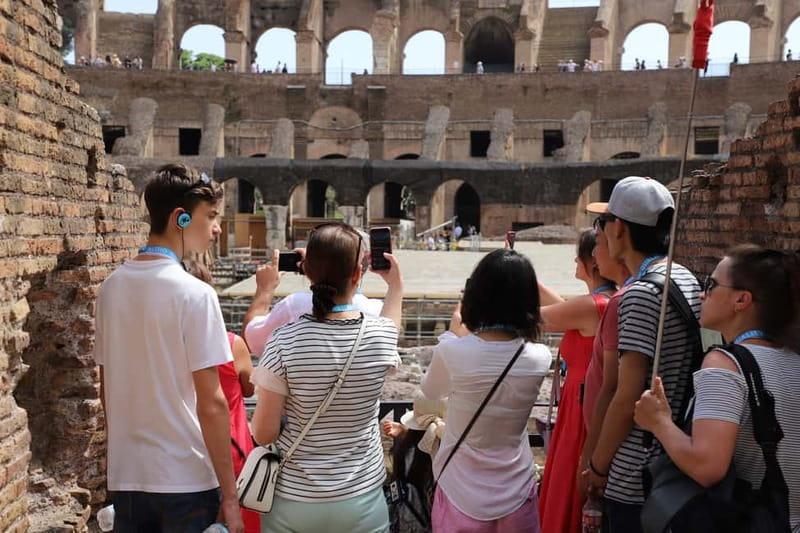
The Colosseum hits different with context. This guided tour of Rome’s top ruins uses headsets and dedicated group access so you can spend more time learning and less time guessing your way through crowds. I especially like how it covers the Colosseum from multiple angles, then carries you into the Roman Forum where everyday power and public life felt close enough to touch.
Two things I like most: you get an on-the-ground story of gladiators, crowds, and the arena’s backstage tech, and you also see key hills and monuments that connect the Colosseum to how Rome ruled. If you end up with a guide like Ferdinando, Alessia, Kate, or Anna (names I saw in past departures), you’ll likely get clear, human explanations plus smart pacing—shade and short stops help.
One consideration: this is still a lot of walking over uneven ancient ground, and it is not set up for wheelchair users or people with mobility impairments. Plan for heat too; several guides reportedly kept groups moving to shaded spots and took water breaks, but you should still wear comfy shoes and be ready for sun.
In This Review
- Key things to know before you go
- Meeting at Largo Agnesi: finding your guide fast
- Dedicated Colosseum access: walking in while crowds surge
- Inside the Colosseum: the 1st level, 2nd level, and the top tiers
- Roman Forum and Sacred Road: where power and daily life mixed
- Imperial Forums stop and Michelangelo’s Pietà: politics meets art
- Palatine Hill and Farnese Gardens: Romulus, Remus, and the view from power
- How long it really takes: pacing, heat, and where comfort matters
- Price and value: is $93 worth it for Colosseum + Forum + Palatine?
- Who this tour fits best (and who might want a different plan)
- Should you book this Colosseum, Forum, and Palatine tour?
- FAQ
- How long is the Rome Colosseum & Roman Forum guided tour?
- What sites are included in the tour?
- Is the tour guided in English?
- How much does the tour cost?
- Where do I meet the guide?
- Are headsets included?
- Is this tour suitable for wheelchair users or people with mobility impairments?
Key things to know before you go
- Dedicated Colosseum group entrance lane helps reduce your wait at the busiest moments
- Headsets included so you don’t miss details in the loud crowd
- A full sweep of the highlights: Colosseum (including upper tiers), Roman Forum, and Palatine Hill
- You hear how the arena worked: gladiators, voting crowds, training, and underground systems
- A rare stop included: Michelangelo’s Pietà is part of the experience package
Meeting at Largo Agnesi: finding your guide fast
Start your day on the right foot. Meet at the corner of Caffè Roma at Largo Agnesi 1, with your guide holding a rounded Emotion.club sign so you can spot the group easily. The metro stop is Colosseo (Line B), and you’ll want the “upper” exit—this puts the meeting point on the right as you come out.
It’s worth arriving a few minutes early. Rome’s big sights work like a slow-motion pinball machine: people stream in from multiple directions, and you want your check-in to feel calm.
Also bring the practical stuff: a passport or ID card and comfortable shoes. This isn’t the kind of tour where you can “save your feet for later.”
Still on ancient Rome? A few more we rated
- Rome: Colosseum, Palatine Hill and Roman Forum Guided Tour
★ 4.8 · 32,814 reviews - Rome: Guided Tour of Colosseum, Roman Forum & Palatine Hill
★ 4.7 · 27,897 reviews - Rome: Colosseum & Forum with Audio Guide App -Optional Arena
★ 4.2 · 24,770 reviews - Rome: Colosseum, Roman Forum and Palatine Hill Guided Tour
★ 4.5 · 23,903 reviews
Dedicated Colosseum access: walking in while crowds surge
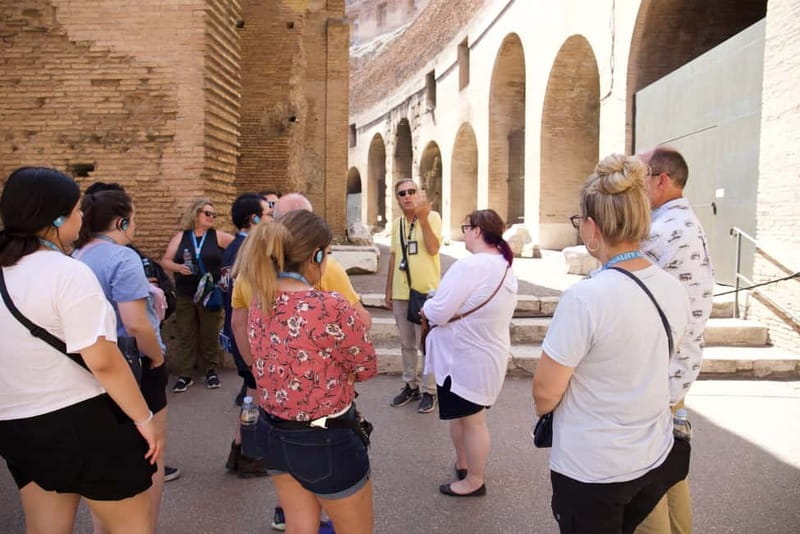
The Colosseum is always busy. The value here is that you don’t start your day stuck in the same bottleneck as every random line of people—your group uses a dedicated entrance lane.
Once you’re inside, the guide’s job is to turn the building from an impressive chunk of stone into a machine that made spectacle. You’ll move through the space with a plan, not just drift around taking photos like you’re in a museum maze.
Headsets make a real difference. In a place this loud and crowded, it’s the difference between hearing a few stray facts and catching the full story the guide is telling.
Inside the Colosseum: the 1st level, 2nd level, and the top tiers
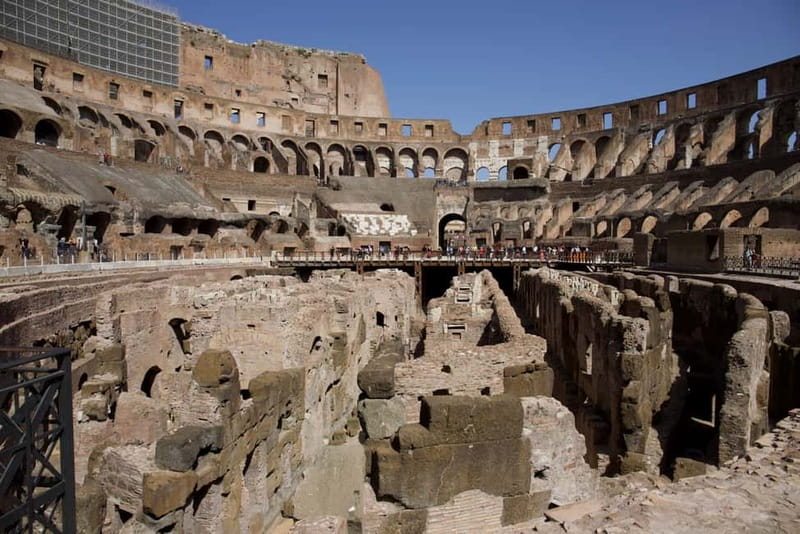
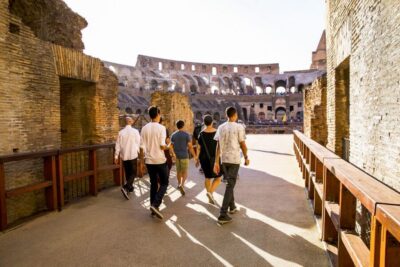
This tour is structured to show you more than one “version” of the Colosseum. You start with both the 1st and 2nd levels, then later you go up to the upper tiers to absorb the scale from higher viewpoints.
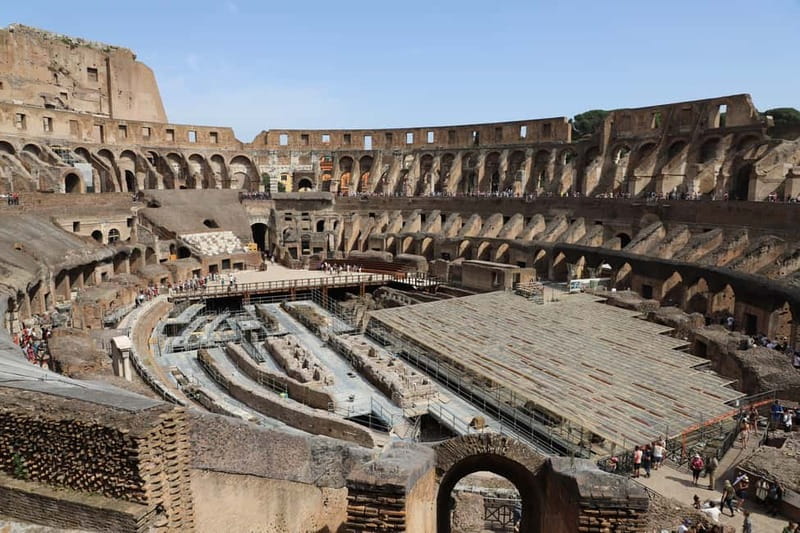
What changes as you climb? The perspective does. From lower levels, you can better picture how spectators surrounded the arena. Higher up, the building’s geometry becomes obvious, and your brain finally grasps how enormous this was—not just from the outside, but from within the experience of being there.
Your guide also walks you through how events actually worked:
- why brutal fights were staged
- how the crowd participated (including how they voted)
- how gladiators lived and trained
- what fighters were paid
- how the arena’s backstage systems and underground tunnels supported the show
Even if you know the basics, this is the part that makes the Colosseum feel less like a postcard. It becomes a working system built for drama, logistics, and control.
Roman Forum and Sacred Road: where power and daily life mixed
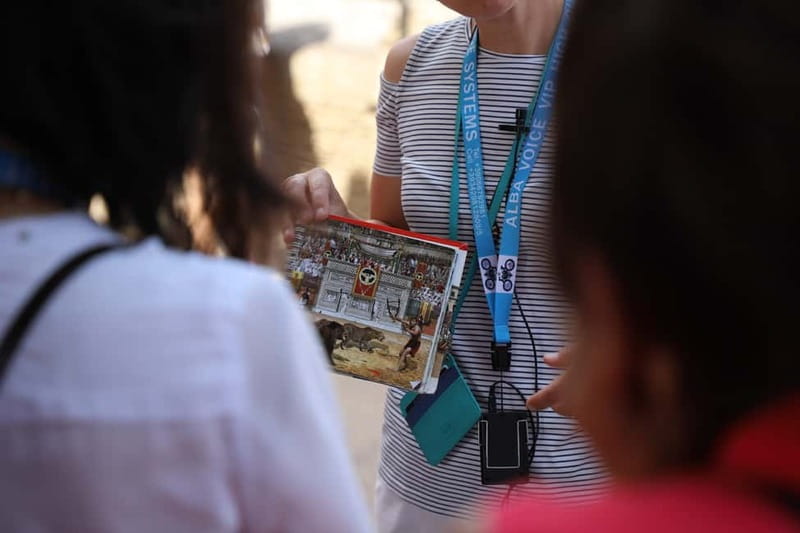
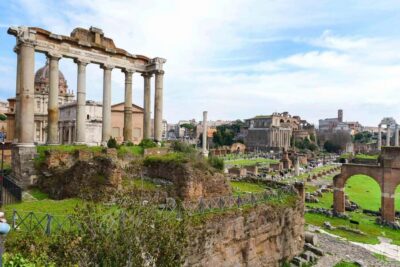
After the arena, you pivot into the Roman Forum, the big public stage where Rome’s politics and social life overlapped. This area is a UNESCO World Heritage site, but the practical payoff is simpler: it’s where you can connect emperors and laws to the daily routines of the city.
Your guide helps you picture real people in a real crowd:
- doctors, sailors, priests, and prostitutes
- residents across social classes
- temples, market spaces, villas, and triumphal arches
- roads and routes that feel like a map of public life
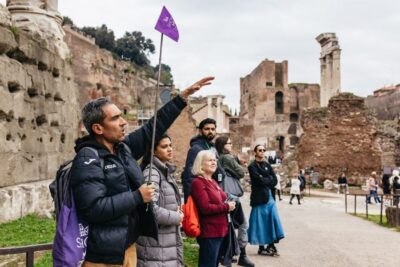
One of the best moments is walking along the Sacred Road in the footsteps of Roman citizens. It’s not just moving through ruins—it’s learning how people used space to organize belief, commerce, and status.
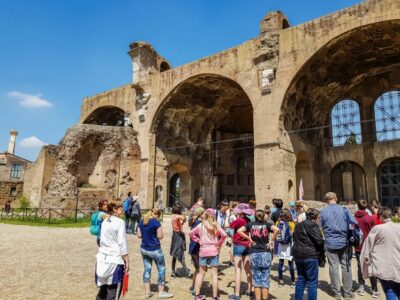
The Forum can feel overwhelming on your own. There are so many fragments that your brain keeps asking what matters most. With a guide, you’re pointed toward the relationships between buildings—how power looked, how it moved, and why it lasted.
Worth a look next to this Rome booking:
Imperial Forums stop and Michelangelo’s Pietà: politics meets art
The experience also includes the Imperial Forums, described as the political and economic heart of Ancient Rome. This matters because it broadens the story beyond the everyday Forum. You’re seeing how Rome projected authority through massive building projects—how rulers turned city planning into messaging.
Then there’s an art moment that many people don’t expect on a Roman ruins tour: you’ll see Michelangelo’s Pietà, listed as one of the included highlights. Even with a short stop, it’s a powerful contrast. You go from ancient stone built for crowds to a sculpture built for emotion and spiritual reflection.
If you’re the type who loves connections—how places echo through time—this section can be a mental break from ruins overload. It also helps break up the day so you don’t just march from one photo spot to another.
Palatine Hill and Farnese Gardens: Romulus, Remus, and the view from power
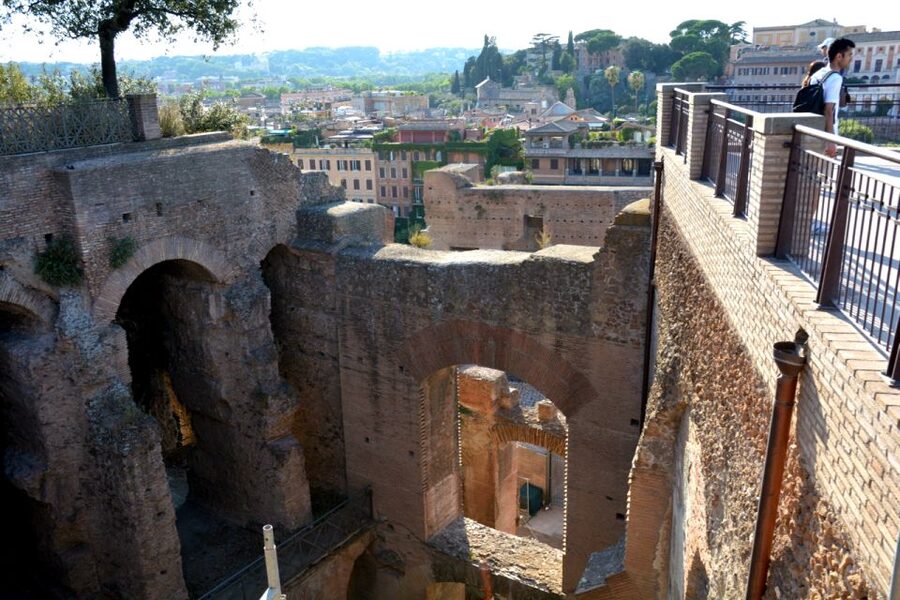
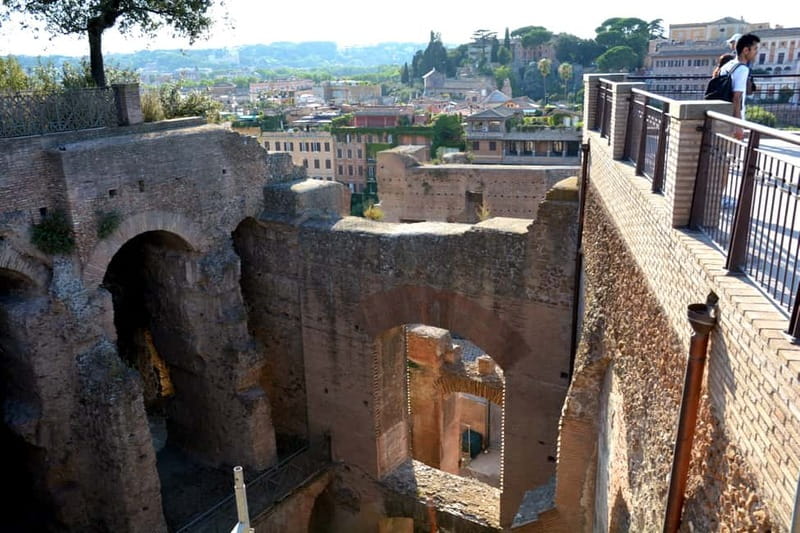
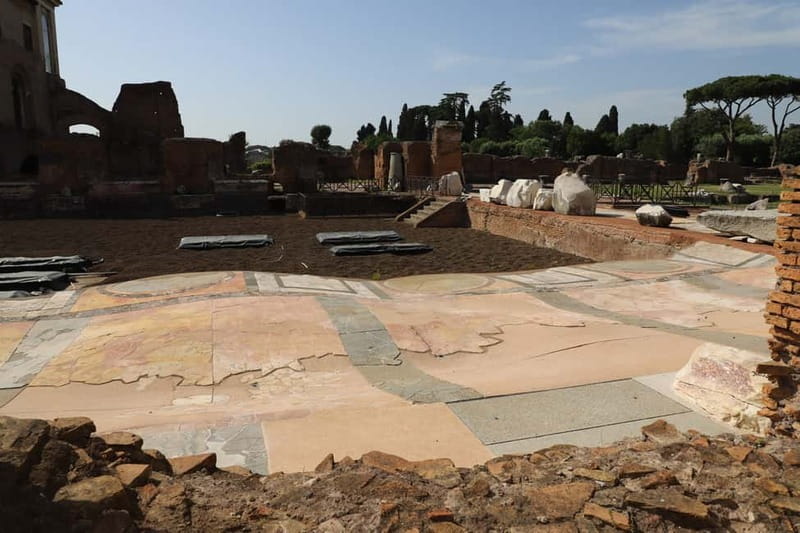
Next comes Palatine Hill and the Farnese Gardens area. This is where the tour tells the foundational story of Rome—legend has it that Romulus and Remus were raised here by the she-wolf. The point isn’t only the myth. It’s that Palatine sits at the start of the Rome narrative and also at the end of the empire’s dominance, which gives your walk a built-in emotional arc.
You’ll also see why Palatine became the place for the rich and influential. Your guide points out remains of emperors’ villas and helps you visualize how elite residents lived, not just where they built.
One of the most memorable ideas here is the view. The tour includes perspective over Circus Maximus and the chariot races that would have filled parts of this broader area with spectacle. From the right angle, Palatine doesn’t feel like a hill of ruins. It feels like a seat in the audience of power.
How long it really takes: pacing, heat, and where comfort matters
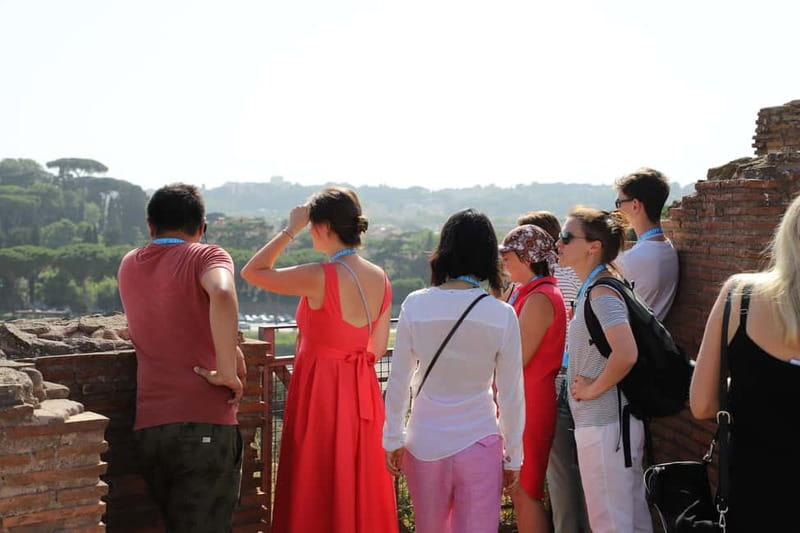
Three hours sounds short until you’re doing it on ancient ground. The Colosseum and the Forum involve uneven surfaces, stair sections, and steady walking. Several guides in past departures reportedly kept groups in shade when possible and took regular water breaks, which is smart, especially in hot months.
So here’s your practical checklist:
- wear shoes you can handle for hills and steps
- bring your own water bottle if you’re visiting in warm weather
- expect frequent photo stops but don’t expect long detours
The tour is designed to hit a lot of major sites without dragging. But “fast” here still means movement. If you’re the kind of person who wants long, slow museum-style browsing, you may find yourself wanting more time at each stop. The tradeoff is that you leave with a connected sense of Rome, not a stack of unrelated ruins.
Price and value: is $93 worth it for Colosseum + Forum + Palatine?
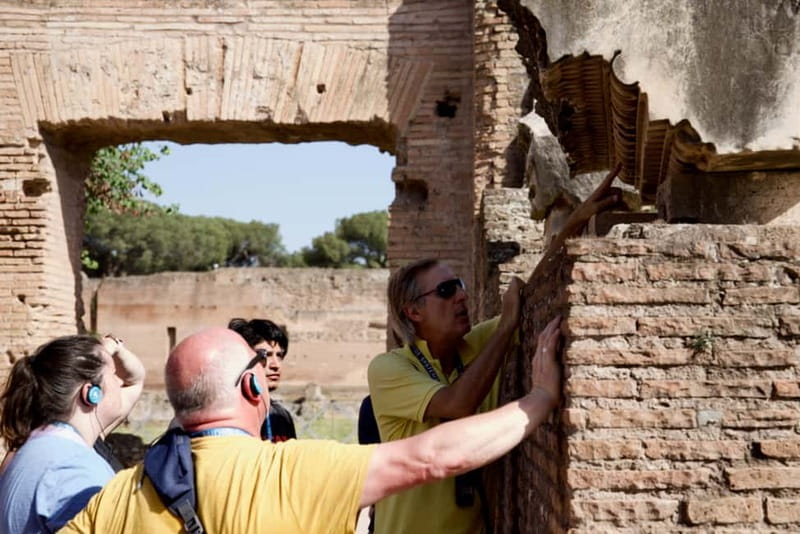
At $93 per person for a 3-hour guided experience, the value is mostly about efficiency and interpretation.
You’re getting:
- a guide who stitches the story across multiple sites
- headsets included for clarity in crowded spaces
- access to the Colosseum, Roman Forum, and Palatine areas
The dedicated entrance lane is also part of the value story. Even a modest reduction in waiting time can make the whole experience feel smoother, especially when the Colosseum gets slammed.
Where you might question the price is if you mainly want to wander quietly and read plaques at your own pace. A guided format gives less control over your timeline. But if you want the ruins to make sense quickly, the price starts looking fair.
For most people, this is one of the better “all hits” combinations in Rome. You’re not just visiting one site—you’re connecting the arena to the political center and then to the original center of power on Palatine.
Who this tour fits best (and who might want a different plan)
This tour makes a lot of sense if you want:
- a structured overview of three of Rome’s heavy-hitters
- stories about gladiators, crowds, and how the arena operated
- a path that connects the Colosseum to politics (Forum and Imperial Forums) and the roots of the empire (Palatine Hill)
It’s also a good match for families and groups—many past departures highlighted guides who kept everyone engaged and helped manage heat with shade and breaks.
But it may not be your best choice if:
- you need wheelchair access or mobility support (it’s not suitable for wheelchair users)
- you’re hoping for a mostly flat, low-walking outing
- you don’t like guided groups and prefer quiet self-guided time
Should you book this Colosseum, Forum, and Palatine tour?
I’d book it if you want Rome’s top sites to feel connected by real explanations, not by random walking routes. The big wins are the headsets, the guided pacing through the Colosseum’s major levels, and the way the day links gladiator spectacle to Roman power centers.
I’d skip it (or consider a different style tour) if your main goal is slow sightseeing or if the walking and stairs won’t work for your body.
If you’re aiming for the classic Rome “wow” day and you want it to make sense fast, this one is a strong bet.
FAQ
How long is the Rome Colosseum & Roman Forum guided tour?
The tour lasts 3 hours.
What sites are included in the tour?
You’ll visit the Colosseum, the Roman Forum, and Palatine Hill (including Farnese Gardens areas), plus an Imperial Forums segment and a stop to see Michelangelo’s Pietà.
Is the tour guided in English?
Yes, the live guide offers the tour in English.
How much does the tour cost?
The price is $93 per person.
Where do I meet the guide?
Meet on the corner of Caffè Roma at Largo Agnesi 1. The guide holds a rounded Emotion.club logo sign. The metro stop is Colosseo (Line B), using the upper exit.
Are headsets included?
Yes. Headsets are included with the tour.
Is this tour suitable for wheelchair users or people with mobility impairments?
No. It is not suitable for people with mobility impairments or wheelchair users.
More Tours in Rome
- Vatican Museums, Sistine Chapel & St. Peter’s Basilica Tour
★ 4.3 · 73,970 reviews - Vatican Museums, Sistine Chapel & St Peter’s Basilica Guided Tour
★ 4.5 · 39,149 reviews - Rome: Colosseum, Palatine Hill and Roman Forum Guided Tour
★ 4.8 · 32,814 reviews - Rome: Guided Tour of Colosseum, Roman Forum & Palatine Hill
★ 4.7 · 27,897 reviews - Rome: Colosseum, Roman Forum and Palatine Hill Guided Tour
★ 4.5 · 23,903 reviews - Rome: Colosseum Arena Floor, Palatine & Forum Guided Tour
★ 4.5 · 20,180 reviews
More Tour Reviews in Rome
- Vatican Museums, Sistine Chapel & St. Peter’s Basilica Tour
★ 4.3 · 73,970 reviews - Vatican Museums, Sistine Chapel & St Peter’s Basilica Guided Tour
★ 4.5 · 39,149 reviews - Rome: Colosseum, Palatine Hill and Roman Forum Guided Tour
★ 4.8 · 32,814 reviews - Rome: Guided Tour of Colosseum, Roman Forum & Palatine Hill
★ 4.7 · 27,897 reviews - Rome: Colosseum & Forum with Audio Guide App -Optional Arena
★ 4.2 · 24,770 reviews - Rome: Colosseum, Roman Forum and Palatine Hill Guided Tour
★ 4.5 · 23,903 reviews
Ancient Rome, Kept Going
- Rome: Colosseum, Palatine Hill and Roman Forum Guided Tour
★ 4.8 · 32,814 reviews - Rome: Guided Tour of Colosseum, Roman Forum & Palatine Hill
★ 4.7 · 27,897 reviews - Rome: Colosseum & Forum with Audio Guide App -Optional Arena
★ 4.2 · 24,770 reviews - Rome: Colosseum, Roman Forum and Palatine Hill Guided Tour
★ 4.5 · 23,903 reviews - Rome: Colosseum Arena Floor, Palatine & Forum Guided Tour
★ 4.5 · 20,180 reviews - Rome: Colosseum Arena, Palatine Hill & Forum Guided Tour
★ 4.7 · 14,510 reviews
Just added to our Rome reviews





Colosseum & Ancient Rome Tours, compared.
 ★ 4.8Colosseum, Palatine Hill and Roman Forum Guided TourFrom $5232,814 reviews
 ★ 4.7Guided Tour of Colosseum, Roman Forum & Palatine HillFrom $5527,897 reviews
 ★ 4.2Colosseum & Forum with Audio Guide App -Optional ArenaFrom $4124,770 reviews
 ★ 4.5Colosseum, Roman Forum and Palatine Hill Guided TourFrom $5923,903 reviews
 ★ 4.5Colosseum Arena Floor, Palatine & Forum Guided TourFrom $4120,180 reviews
 ★ 4.7Colosseum Arena, Palatine Hill & Forum Guided TourFrom $8414,510 reviews
 ★ 4.6Colosseum,Forum & Palatine Tour + Optional Arena FloorFrom $4513,169 reviews
 ★ 4.7Colosseum: Underground and Ancient Rome TourFrom $16012,691 reviews