
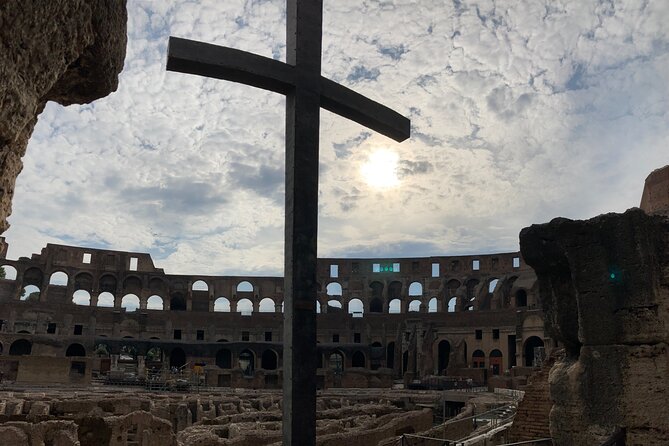
Reviewed · COLOSSEUM & ANCIENT ROME TOURS
Rome: Colosseum, Palatine Hill, and Roman Forum Tour
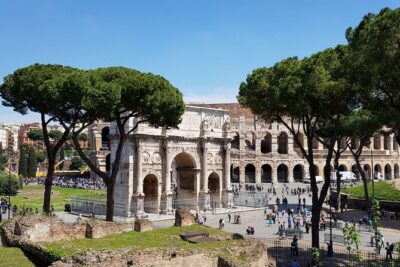
Rome hits hard when the Colosseum clock starts. This tour’s real value is the timed entrance and skip-the-line access to three top Ancient Rome sights in one smooth run. You also start at the Arch of Constantine area, so you get context before you ever step into the amphitheater zone.
I especially like the way the professional guide stitches it all together, from gladiator-era storytelling to the layout of the Forum. A big help is the radio system, so you can actually follow the explanation as you move between ruins. Some groups have had guides like Francisco, Mauricio, and Julia, who were praised for making the stone-and-grass details make sense.
One thing to keep in mind: skip-the-line is not guaranteed during peak season, because intense security checks can still slow group entry. Plan for heat, lines at security, and the fact that you will be walking.
In This Review
- Key Things You’ll Get From This Tour
- Why Timed Entrance Changes Everything at the Colosseum
- Meeting Point: The Souvenir Colosseo Shop and a Smooth Start
- Inside the Colosseum: Gladiator-Era Storytelling That Actually Fits the Space
- Palatine Hill: The Romulus and Remus Origin Story With Real Visual Anchors
- Capitoline Hill Views: Why the Panorama Matters
- The Roman Forum: Temples, Arches, and the Sacred Way
- Time, Walking, and Heat: What 2.5 Hours Really Means
- Radio Devices and How to Hear Your Guide Clearly
- Price and Value: Is $89.50 a Good Deal?
- Who This Tour Is Best For
- Should You Book This Colosseum, Palatine, and Forum Tour?
Key Things You’ll Get From This Tour
- Timed entrance that cuts down the worst queue time
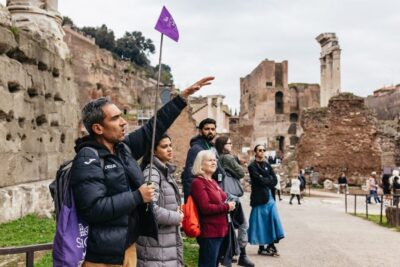
- A certified guide using on-the-ground storytelling, not just placards
- Radio system support (with a €10 deposit for each device)
- Palatine Hill scenes tied to Romulus and Remus
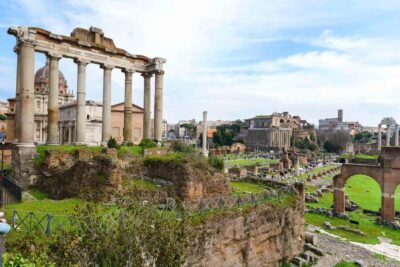
- Forum highlights like the Temple of Julius Caesar and the Arch of Titus
- Views over the Forum from Capitoline Hill
Why Timed Entrance Changes Everything at the Colosseum
The Colosseum is famous for a reason, but it’s also famous for long waits. A timed entry format matters because it gets you into the monument area when your group is supposed to enter, instead of drifting into an unpredictable line.
You’re not just buying a ticket. You’re buying time and momentum. Once you’ve gone through the initial security checks, your guide can take you where the best viewpoints and key moments are, instead of you spending your energy trying to figure out what matters first.
And yes, you still need to respect security. Even with reservations, peak-season entry can get delayed. The practical move is simple: show up early, keep your ID ready, and don’t arrive at the last second hoping everything will be instant.
Still on ancient Rome? A few more we rated
- Rome: Colosseum, Palatine Hill and Roman Forum Guided Tour
★ 4.8 · 32,814 reviews - Rome: Guided Tour of Colosseum, Roman Forum & Palatine Hill
★ 4.7 · 27,897 reviews - Rome: Colosseum & Forum with Audio Guide App -Optional Arena
★ 4.2 · 24,770 reviews - Rome: Colosseum, Roman Forum and Palatine Hill Guided Tour
★ 4.5 · 23,903 reviews
Meeting Point: The Souvenir Colosseo Shop and a Smooth Start
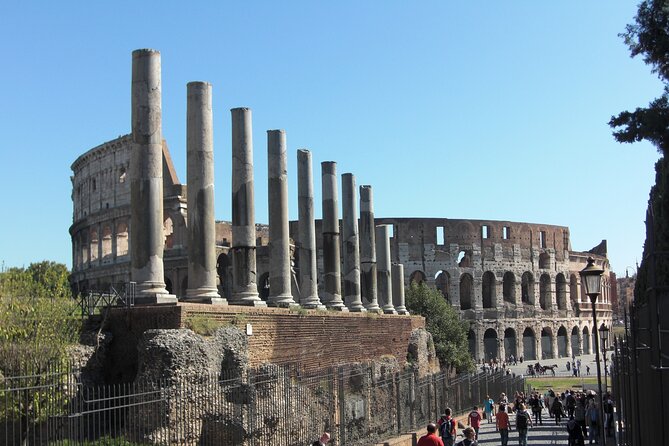
You meet at the Souvenir Colosseo Shop on Via di S. Giovanni in Laterano, 14 (00184 Roma RM). The most important practical tip is to be there 30 minutes before departure. That buffer is what helps you check in, get organized, and avoid missing the group.
From there, the tour starts at the Arch of Constantine area, which is a smart warm-up. You get a sense of Rome’s triumph culture right away, so when the Colosseum comes next, it feels like a chapter in a bigger story instead of a single stop.
If you want this to feel easy, treat the first 10 minutes like you’re catching a train. Comfortable shoes, water, ID in hand, and a calm attitude toward security lines.
Inside the Colosseum: Gladiator-Era Storytelling That Actually Fits the Space
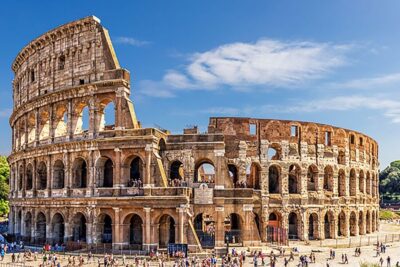
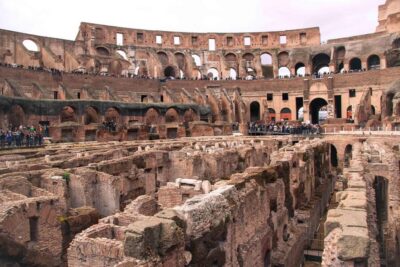
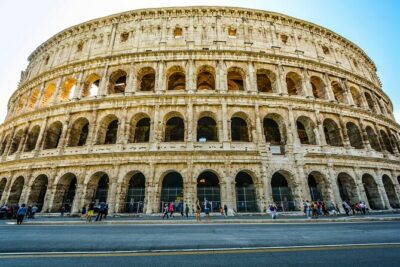
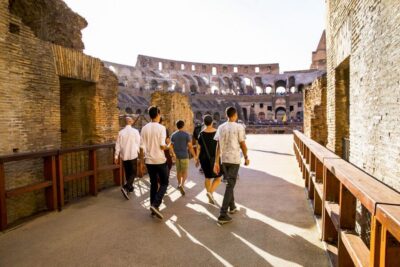
The Colosseum stop is the star. You’ll use your reserved ticket to get in, and your guide brings the amphitheater to life with the kind of details that are hard to pull out from a brochure.
Here’s what makes the Colosseum experience better with a guide: you’re not only looking at ruins. You’re learning how the arena functioned, what kinds of events happened there, and what daily life and spectacle meant in that era. Your guide describes the cruel and grueling events associated with gladiators and the pressure of survival for those who fought.
This is also where a good radio setup earns its keep. Several guests said they could clearly follow the narration, while at least one person noted issues hearing when radios were not received. So if radios are part of your tour day, make sure you pick them up promptly and keep them working.
And a quick mindset shift: the Colosseum isn’t trying to be pretty. It’s trying to be readable. When your guide points out where to look, you start seeing the logic in the structure instead of only seeing the scale.
Palatine Hill: The Romulus and Remus Origin Story With Real Visual Anchors
After the Colosseum, you head to Palatine Hill, often the most personal-feeling stop. The reason is simple: Palatine is where the legend of Rome’s beginnings is tied to the ground you’re standing on.
You’ll hear the tale of twin brothers Remus and Roman, including the battle that’s part of the origin mythology. Then the guide connects that story to the idea of Romulus founding the city. This isn’t just legend recited for drama. It helps you understand why Palatine Hill carried such symbolic weight.
Palatine Hill also includes specific areas that make the tour feel more than a walk among low walls. You may see references to frescoes in the House of Augustus and the Hippodrome, and you’ll learn about the elliptical sunken garden associated with the Palace of Domitian. If you’re into seeing how wealth, power, and leisure were built into daily Roman life, this stop clicks.
One note: a few people felt Palatine Hill had fewer big “wow” moments compared with the Forum, because it’s more small ruins and spreads out more visually. That doesn’t mean it’s not worth it. It just means you’ll enjoy it more if you’re in the mood for interpretation rather than only big set-piece views.
Capitoline Hill Views: Why the Panorama Matters
The tour includes a spectacular view over the Forum from Capitoline Hill. This is more than a photo moment. It helps you orient yourself, because the Forum is one of those places where everything looks connected but you can’t tell the exact relationships until you see the layout from above.
If you’ve never been to the Roman Forum before, that view can be the difference between feeling lost and feeling like you’re moving through a real city center. Your guide uses the perspective to point you toward what you’ll see next, so the Forum ruins start to feel organized.
A practical tip: take a minute here even if you’re tempted to keep walking. A short pause to look down and match what you’re about to visit will pay off during the next stop.
The Roman Forum: Temples, Arches, and the Sacred Way
The Roman Forum is where Ancient Rome feels most like a lived-in neighborhood—only it’s been hollowed out into iconic ruins.
Your guide leads you through areas associated with the marketplace and the kinds of people who shaped it, including moneylenders and shopkeepers. That “people first” approach matters because it stops the Forum from being just monuments on a map. You start understanding it as a space where politics, commerce, and ceremony overlapped.
You’ll see and discuss major landmarks, including:
- The Temple of Julius Caesar
- The Arch of Titus
- The House of the Vestal Virgins
- The Senate House
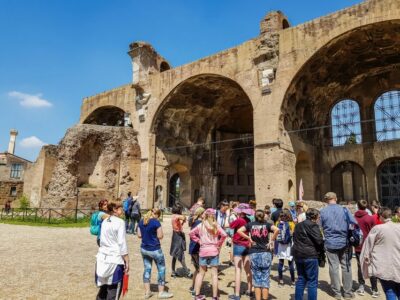
- The Basilica of Maxentius
The tour also highlights the triumphal road, often described as the Sacred Way of the Roman Forum. That’s the kind of detail that makes you feel the sweep of Roman ceremony, not only the architecture.
This is also a good place to remember that the Forum is open-air and exposed. It’s not a sit-and-learn museum. It’s walking, looking, and listening under the Roman sun.
Time, Walking, and Heat: What 2.5 Hours Really Means
This tour is listed as 2.5 hours, but in practice you might find it runs a little longer depending on the day and how entry flows. Some guests reported around 3 to 3.5 hours.
That extra time isn’t always bad. It can mean you get more explanation and a bit more breathing room between stops. Still, the reality is that you’ll do moderate walking at multiple sites and you’ll be out in the open.
Rome can be hot, and one of the funniest practical tips that came up is that some guides helped with comfort in small ways—like water moments during explanations and even filling water bottles. That’s not something to assume on every day, but it’s a reminder to plan for heat like you’re the one responsible for it (because you are).
Bring water, wear sun-friendly layers, and keep your focus on what your guide is pointing out. If you get distracted by the sheer number of ruins, your brain will lag behind your feet.
Radio Devices and How to Hear Your Guide Clearly
The tour includes a radio system so you can hear the guide while you walk. There’s a €10 deposit per radio device, refunded when you hand the device back at the end.
This matters because the Colosseum and Forum attract heavy foot traffic. Even if skip-the-line gets you moving faster, sound can still get swallowed by noise and crowd movement. Radios are the fix.
Before the tour starts, check that you actually receive the device and that it’s tuned properly. If you don’t have radios, you might end up doing more guessing than learning, especially in the busier sections.
Price and Value: Is $89.50 a Good Deal?
At $89.50 per person for about 2.5 hours, you’re paying for three things at once: reserved entry access to major sites, guided context, and radio support.
Here’s the value logic:
- Without guidance, you’ll spend more time figuring out what matters first, where to stand, and what each ruin meant.
- Without timed entry, you’ll likely lose hours to waiting and crowd flow.
- Without a radio system, you risk missing the details that make the stops click.
If you’re the kind of visitor who wants to understand what you’re seeing instead of just checking boxes, this format makes sense. You get a guided path through the Colosseum, Palatine Hill, and the Forum with a sequence that builds. That sequence is hard to recreate on your own without already knowing the site logic.
If you’re traveling very slowly or prefer to wander without structure, you might feel rushed. But if you want the most payoff per hour, this is a solid use of time.
Who This Tour Is Best For
This tour fits well if you:
- Want to see the biggest Ancient Rome highlights in one go
- Like history explained through storytelling tied to the physical space
- Prefer a guide path so you don’t spend your vacation stuck reading stone-and-sign math
- Are comfortable with moderate walking and summer heat
It may not suit you if:
- You rely on a wheelchair (the tour is not suitable for wheelchair users)
- You’re hoping for very large “free time” at each stop
- You plan to travel with large bags or suitcases (there’s no cloakroom, and entry with large items isn’t allowed)
Should You Book This Colosseum, Palatine, and Forum Tour?
I’d book it if you want a guided route that makes the Colosseum and Forum feel connected, and you want the efficiency of reserved, timed access. The key reasons are the skip-the-line focus, the storytelling-driven guide experience, and the fact that you get the Forum landmarks plus the origin-myth layer from Palatine Hill.
I wouldn’t feel great about booking if your top priority is slow wandering with zero structure, or if you’re sensitive to walking and heat. Also, if you’re traveling during peak season, accept that security checks can still add delays even when you have timed reservations.
If you like your Rome with context, direction, and a guide who helps you “read” the ruins, this is a strong choice.
More Tours in Rome
- Vatican Museums, Sistine Chapel & St. Peter’s Basilica Tour
★ 4.3 · 73,970 reviews - Vatican Museums, Sistine Chapel & St Peter’s Basilica Guided Tour
★ 4.5 · 39,149 reviews - Rome: Colosseum, Palatine Hill and Roman Forum Guided Tour
★ 4.8 · 32,814 reviews - Rome: Guided Tour of Colosseum, Roman Forum & Palatine Hill
★ 4.7 · 27,897 reviews - Rome: Colosseum, Roman Forum and Palatine Hill Guided Tour
★ 4.5 · 23,903 reviews - Rome: Colosseum Arena Floor, Palatine & Forum Guided Tour
★ 4.5 · 20,180 reviews
More Tour Reviews in Rome
- Vatican Museums, Sistine Chapel & St. Peter’s Basilica Tour
★ 4.3 · 73,970 reviews - Vatican Museums, Sistine Chapel & St Peter’s Basilica Guided Tour
★ 4.5 · 39,149 reviews - Rome: Colosseum, Palatine Hill and Roman Forum Guided Tour
★ 4.8 · 32,814 reviews - Rome: Guided Tour of Colosseum, Roman Forum & Palatine Hill
★ 4.7 · 27,897 reviews - Rome: Colosseum & Forum with Audio Guide App -Optional Arena
★ 4.2 · 24,770 reviews - Rome: Colosseum, Roman Forum and Palatine Hill Guided Tour
★ 4.5 · 23,903 reviews
Ancient Rome, Kept Going
- Rome: Colosseum, Palatine Hill and Roman Forum Guided Tour
★ 4.8 · 32,814 reviews - Rome: Guided Tour of Colosseum, Roman Forum & Palatine Hill
★ 4.7 · 27,897 reviews - Rome: Colosseum & Forum with Audio Guide App -Optional Arena
★ 4.2 · 24,770 reviews - Rome: Colosseum, Roman Forum and Palatine Hill Guided Tour
★ 4.5 · 23,903 reviews - Rome: Colosseum Arena Floor, Palatine & Forum Guided Tour
★ 4.5 · 20,180 reviews - Rome: Colosseum Arena, Palatine Hill & Forum Guided Tour
★ 4.7 · 14,510 reviews
Just added to our Rome reviews



Colosseum & Ancient Rome Tours, compared.
 ★ 4.8Colosseum, Palatine Hill and Roman Forum Guided TourFrom $5232,814 reviews
 ★ 4.7Guided Tour of Colosseum, Roman Forum & Palatine HillFrom $5527,897 reviews
 ★ 4.2Colosseum & Forum with Audio Guide App -Optional ArenaFrom $4124,770 reviews
 ★ 4.5Colosseum, Roman Forum and Palatine Hill Guided TourFrom $5923,903 reviews
 ★ 4.5Colosseum Arena Floor, Palatine & Forum Guided TourFrom $4120,180 reviews
 ★ 4.7Colosseum Arena, Palatine Hill & Forum Guided TourFrom $8414,510 reviews
 ★ 4.6Colosseum,Forum & Palatine Tour + Optional Arena FloorFrom $4513,169 reviews
 ★ 4.7Colosseum: Underground and Ancient Rome TourFrom $16012,691 reviews