
Gladiators get a VIP door here. This Colosseum and Roman Forum tour is built around special access and time on the arena floor, with a guide telling the stories that make the stones feel alive. I especially like the view from the arena toward the underground levels, because it instantly changes how you picture what happened below.
You also get a guided walk beyond the Colosseum, into the Roman Forum and Palatine Hill, where the center of imperial power becomes easy to understand. With headsets and a group capped at 24, it tends to feel intimate, and guides like Sam and Serena show up in feedback for their sharp storytelling.
One drawback to plan for: this is not a sit-and-watch experience. Expect a moderate amount of walking (and plenty of steps), plus the metal-detector security check can add 20–30 minutes to your start time.
In This Review
- Key things I’d bet you’ll care about
- Getting There: Piazza di San Clemente and Security Reality
- Entering the Colosseum Like a Gladiator (Porta Libitinaria)
- Arena-Floor Time: The View Above the Undergrounds
- Colosseum First and Second Rings: Engineering and Stories
- Roman Forum on Foot: Where Power Had a Pulse
- Palatine Hill: The Emperor Neighborhood Walk
- Group Size, Headsets, and How the Pace Really Feels
- Price and Value: Why $82 Can Make Sense Here
- Who Should Book This Tour (and Who Should Skip It)
- Should You Book It? My Simple Decision Rule
- FAQ
- How long is the Rome Colosseum Gladiator’s Arena and Roman Forum group tour?
- Where is the meeting point?
- What parts of the Colosseum do you visit?
- What should I bring, and what is not included?
- What security and restrictions should I expect?
- Is the tour suitable for wheelchair users or mobility impairments?
Key things I’d bet you’ll care about
- Porta Libitinaria access for a gladiator-style arrival into the Colosseum
- Arena-floor time with a clear perspective toward the underground areas below
- First and second rings so you see more than just the floor plan
- Roman Forum + Palatine Hill guided coverage in one smooth outing
- Small group (max 24) with headsets to keep you from craning your neck
- Security reality check: metal detectors mean expect a wait even with a tour
Getting There: Piazza di San Clemente and Security Reality
You start in the Piazza di San Clemente, right in front of the Basilica San Clemente. Look for the signboard that reads Tour in the City, and don’t cut it close—being early helps you settle in before the group moves.
Before you even think about the Colosseum, you’ll pass through metal detectors. The wait can be 20 to 30 minutes, so I’d treat the start time as real time, not optional time.
Bring a passport or ID card for the security check, and keep your bag situation simple. Backpacks, large bags, and luggage aren’t allowed, and there’s no bag check at the Colosseum—so if you’re traveling light, you’ll thank yourself.
Still on ancient Rome? A few more we rated
- Rome: Colosseum, Palatine Hill and Roman Forum Guided Tour
★ 4.8 · 32,814 reviews - Rome: Guided Tour of Colosseum, Roman Forum & Palatine Hill
★ 4.7 · 27,897 reviews - Rome: Colosseum & Forum with Audio Guide App -Optional Arena
★ 4.2 · 24,770 reviews - Rome: Colosseum, Roman Forum and Palatine Hill Guided Tour
★ 4.5 · 23,903 reviews
Entering the Colosseum Like a Gladiator (Porta Libitinaria)
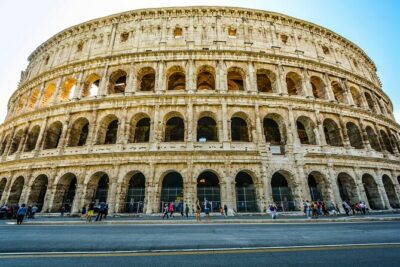
The headline here is the special entrance from the gladiator’s access at Porta Libitinaria. Instead of funneling through the typical route, you come in through a door that fits the theme of the place, and the guide sets the scene as you enter.
This matters more than it sounds. The Colosseum is crowded, and crowds flatten your experience. Getting inside with a guided flow, plus the atmosphere of a themed entrance, helps you focus on what you’re actually seeing.
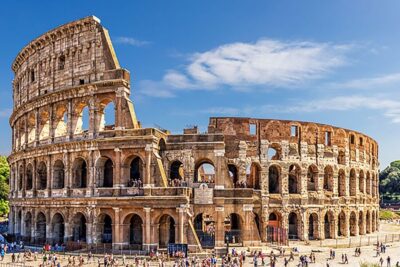
If you’ve only ever seen the Colosseum from the outside, this is where it clicks. You’re standing in a space designed to stage spectacle, and the guide’s stories—especially about emperors and combat—help you connect the architecture to the events.
Arena-Floor Time: The View Above the Undergrounds
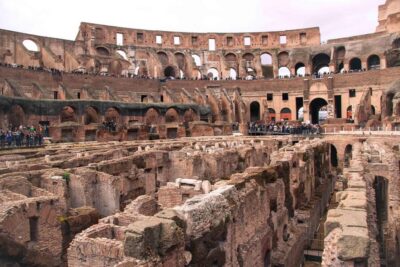
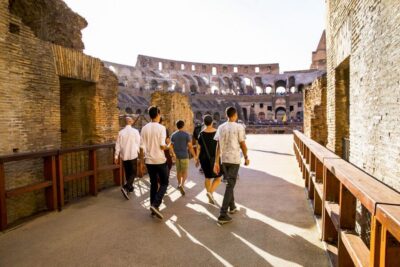
The best moment is stepping onto the arena floor. From there, you get a view directly above the underground levels, which changes everything because you stop thinking of the arena as a flat surface.
You can feel the scale. You’re in the ring where thousands once watched fighters and wild animals, and your guide links what you see overhead to what once operated below.
The tour also leans into the feeling of being part of the production—partly through the route, partly through the commentary. The Ludus Gladiatorius angle is part of the way the guide frames the experience, so you’re not just reading facts on a wall; you’re getting a guided story you can picture.
Practical note: the arena portion takes focus and patience. If you’re someone who gets restless standing in one spot, this is still worth it—but you may want to balance photos with listening so you don’t miss the moment the guide cues the best views.
Colosseum First and Second Rings: Engineering and Stories
After the arena, the tour keeps moving through the first and second rings. That vertical walk is where you start to understand the genius of the stadium design, including how quickly the Romans built something this massive.
The guide gives context with a clear narrative pace. You’ll hear about gladiator combat, and you’ll also get stories about emperors who became performers—sometimes described as foolish or showy—so the history doesn’t sit in a textbook tone.
Guides in this program also use visual aids at times. One guest specifically mentioned reconstruction images shown via a guide’s tablet, and that kind of support helps you picture what’s gone without getting stuck in guesswork.
A balanced expectation: you won’t have hours to wander on your own during the guided part. The value is the guided structure—facts and orientation—paired with the option to keep exploring afterward if you still have energy.
Roman Forum on Foot: Where Power Had a Pulse
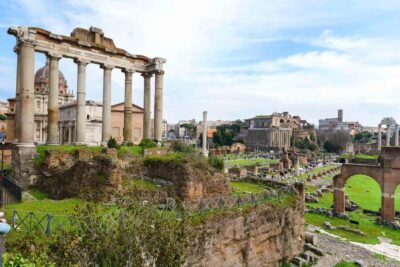
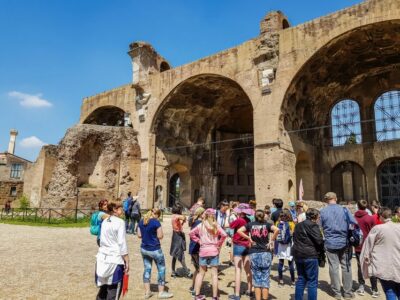
Next comes the Roman Forum, with a guided tour lasting about an hour. This is where you shift from spectacle to politics—what the Colosseum dramatized, the Forum organized in daily life.
The guide’s job here is to make ruins legible. Standing in the Forum without help can feel like walking through stone leftovers. With a guide, you start placing landmarks in a bigger story, so the walk becomes a sequence rather than a shuffle.
I like that this stop isn’t just a list of famous names. You get explanations that connect why this space mattered, and you move at a walking pace that’s active but not frantic.
As always, plan your energy. Food and drinks aren’t included, so if you tend to get lightheaded or cranky in the sun, you’ll want to plan around that. Comfortable shoes aren’t optional here—they’re the difference between enjoying the Forum and regretting your footwear.
Palatine Hill: The Emperor Neighborhood Walk
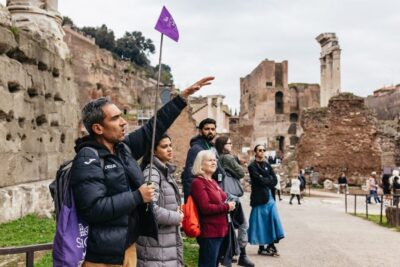
The final major stop is Palatine Hill, with a guided segment around 45 minutes. Palatine is often described as where emperors lived, and the guide uses that anchor to help you understand what this “neighborhood” meant in Roman terms.
This is the part of the tour that tends to feel like a change in viewpoint. It’s less about one single dramatic structure and more about understanding a place where rulers were surrounded by prestige and power.
You’ll come away with stronger spatial memory. Once you’ve connected the Palatine setting to the Forum below, the whole city starts to make sense in your head, not just as separate sites.
Even with a guide, Palatine is still an outdoor walking experience. Weather and heat can affect how smoothly you move, and the tour can vary depending on conditions like rain or high temperatures.
Group Size, Headsets, and How the Pace Really Feels
The group is capped at 24 people, and that size helps. It’s big enough to meet others, but small enough that the guide can keep track of everyone and adjust pacing.
Headsets are included, which is a big deal at the Colosseum. The stadium echoes, and without audio support you end up missing key lines while trying to hear over noise.
There’s one worth-the-know caution: one guest noted that audio clarity wasn’t always perfect. If you’re sensitive to audio, I’d treat the headsets as useful backup, not guaranteed crystal-clear sound—bring your own listening routine if you use it elsewhere.
Expect stairs and walking. Reviews repeatedly point out that the tour involves a lot of steps, and that matters for kids and adults alike. If stairs are tough for you, this won’t be a comfortable day, even if you’re otherwise able to walk.
Price and Value: Why $82 Can Make Sense Here
At $82 per person for about 150 minutes, the value comes from access and guided orientation—not just ticking off famous sights.
You’re paying for:
- Colosseum ticket + guided time, including arena floor access
- Special entrance tied to the gladiator route at Porta Libitinaria
- Roman Forum and Palatine Hill guided segments as part of the same outing
- Headsets, which help you actually follow the commentary
If you compare what you’d likely do on your own—buying tickets, handling timed entry, and trying to make sense of the Forum and Palatine without a narrative—you’re really buying time, context, and a smoother route through crowds.
Could it feel pricey? Sure. A few guests felt the price was on the high side. But when you factor in arena access and guided coverage across multiple sites, the price stops looking random and starts looking like you’re paying for structure.
Who Should Book This Tour (and Who Should Skip It)
This tour is a strong fit if you want more than photos of monuments. You’ll enjoy it if you like guided storytelling, want the arena-floor perspective, and want the Forum and Palatine Hill connected in one day.
It also tends to work well for families who can handle a walking-and-stairs schedule. Several feedback notes mention kids doing fine, especially because the guide keeps the pace and explains the context in an engaging way.
It’s not suitable for people with mobility impairments or wheelchair users, based on the tour’s stated limitations. It also has rules like no pets and no unaccompanied minors, so plan accordingly if you’re traveling with family.
If you’re traveling with big luggage or a backpack, rethink your packing. The Colosseum doesn’t provide bag check, and large bags aren’t allowed—so bring only what fits the allowed category.
Should You Book It? My Simple Decision Rule
Book this tour if you want the Colosseum to feel like more than a landmark. The Porta Libitinaria entrance plus arena-floor time plus the guided Forum/Palatine wraparound is a rare combo for people who don’t want to piece the day together.
Skip it if your main goal is lounging at viewpoints. The tour is active. You’ll be on your feet, and the stairs and security timing mean you need patience.
If you fit the sweet spot—curious, okay with walking, and you want the most meaningful access for your time in Rome—this is the kind of day that sticks.
FAQ
How long is the Rome Colosseum Gladiator’s Arena and Roman Forum group tour?
The tour lasts about 150 minutes total, with roughly 75 minutes at the Colosseum, 1 hour at the Roman Forum, and 45 minutes at Palatine Hill.
Where is the meeting point?
Meet at Piazza di San Clemente, in front of Basilica San Clemente. Staff will have a signboard that reports Tour in the City.
What parts of the Colosseum do you visit?
You enter the Colosseum with special access from the gladiator’s entrance, visit the arena floor, and continue through the Colosseum’s first and second rings. From the arena floor, you also get a view directly above the undergrounds.
What should I bring, and what is not included?
Bring a passport or ID card, comfortable shoes, and sunscreen. Hotel pickup/drop-off, food, and drinks are not included.
What security and restrictions should I expect?
You must pass through metal detectors, and you should expect a 20 to 30 minute wait to clear security. Selfie sticks are not allowed inside the Colosseum, and you cannot bring luggage or large bags or backpacks (small bags may be possible).
Is the tour suitable for wheelchair users or mobility impairments?
No. The tour is not suitable for people with mobility impairments or wheelchair users. Children must be accompanied by an adult.
More Tours in Rome
- Vatican Museums, Sistine Chapel & St. Peter’s Basilica Tour
★ 4.3 · 73,970 reviews - Vatican Museums, Sistine Chapel & St Peter’s Basilica Guided Tour
★ 4.5 · 39,149 reviews - Rome: Colosseum, Palatine Hill and Roman Forum Guided Tour
★ 4.8 · 32,814 reviews - Rome: Guided Tour of Colosseum, Roman Forum & Palatine Hill
★ 4.7 · 27,897 reviews - Rome: Colosseum, Roman Forum and Palatine Hill Guided Tour
★ 4.5 · 23,903 reviews - Rome: Colosseum Arena Floor, Palatine & Forum Guided Tour
★ 4.5 · 20,180 reviews
More Tour Reviews in Rome
- Vatican Museums, Sistine Chapel & St. Peter’s Basilica Tour
★ 4.3 · 73,970 reviews - Vatican Museums, Sistine Chapel & St Peter’s Basilica Guided Tour
★ 4.5 · 39,149 reviews - Rome: Colosseum, Palatine Hill and Roman Forum Guided Tour
★ 4.8 · 32,814 reviews - Rome: Guided Tour of Colosseum, Roman Forum & Palatine Hill
★ 4.7 · 27,897 reviews - Rome: Colosseum & Forum with Audio Guide App -Optional Arena
★ 4.2 · 24,770 reviews - Rome: Colosseum, Roman Forum and Palatine Hill Guided Tour
★ 4.5 · 23,903 reviews
Ancient Rome, Kept Going
- Rome: Colosseum, Palatine Hill and Roman Forum Guided Tour
★ 4.8 · 32,814 reviews - Rome: Guided Tour of Colosseum, Roman Forum & Palatine Hill
★ 4.7 · 27,897 reviews - Rome: Colosseum & Forum with Audio Guide App -Optional Arena
★ 4.2 · 24,770 reviews - Rome: Colosseum, Roman Forum and Palatine Hill Guided Tour
★ 4.5 · 23,903 reviews - Rome: Colosseum Arena Floor, Palatine & Forum Guided Tour
★ 4.5 · 20,180 reviews - Rome: Colosseum Arena, Palatine Hill & Forum Guided Tour
★ 4.7 · 14,510 reviews
Just added to our Rome reviews


Colosseum & Ancient Rome Tours, compared.
 ★ 4.8Colosseum, Palatine Hill and Roman Forum Guided TourFrom $5232,814 reviews
 ★ 4.7Guided Tour of Colosseum, Roman Forum & Palatine HillFrom $5527,897 reviews
 ★ 4.2Colosseum & Forum with Audio Guide App -Optional ArenaFrom $4124,770 reviews
 ★ 4.5Colosseum, Roman Forum and Palatine Hill Guided TourFrom $5923,903 reviews
 ★ 4.5Colosseum Arena Floor, Palatine & Forum Guided TourFrom $4120,180 reviews
 ★ 4.7Colosseum Arena, Palatine Hill & Forum Guided TourFrom $8414,510 reviews
 ★ 4.6Colosseum,Forum & Palatine Tour + Optional Arena FloorFrom $4513,169 reviews
 ★ 4.7Colosseum: Underground and Ancient Rome TourFrom $16012,691 reviews