

Reviewed · COLOSSEUM & ANCIENT ROME TOURS
Rome: Colosseum and Ancient Rome Guided Walking Tour
Few places hit harder than the Colosseum in person. This Rome Colosseum and Ancient Rome guided walking tour strings together the arena, the Forum, and the Palatine Hill so you can connect the dots between emperors, citizens, and spectacle.
I especially love how you get the inside thread—your guide turns stone ruins into stories you can actually follow, from crowd drama to political life along the Via Sacra. I also like the practical pacing: headsets help you hear every detail, and the Palatine Hill stop includes a climb to citywide views that make the whole area click.
One thing to consider: this tour keeps moving. There may be short breaks, and you’ll want sturdy shoes and patience if the Colosseum entry line is slow due to security checks.
In This Review
- Key tour takeaways
- Entering the Colosseum without losing the story
- What I’d watch for at the arena
- The Roman Forum and Via Sacra: politics, markets, and power
- Why Via Sacra is the key to understanding the Forum
- Palatine Hill: the climb, the views, and the sense of place
- What you’ll get from the hill beyond photos
- A practical note on pacing
- Listening comfort: headsets you’ll actually use
- Languages available
- How much time you really get in 2.5 hours
- Meeting point and getting oriented fast in Rome
- What to bring and what not to bring
- Who this tour suits best
- Value for money: what you get for $41
- Should you book this Colosseum, Forum, and Palatine Hill tour?
- FAQ
- How long is the Rome Colosseum, Roman Forum, and Palatine Hill walking tour?
- What is included in the price?
- Where do I meet the tour group?
- What ID do I need to bring?
- Does the tour cancel for bad weather?
- Is there free cancellation?
Key tour takeaways

- Colosseum-to-Forum flow: You see the big set pieces and the political heart in one continuous story.
- Palatine Hill climb + views: The uphill segment pays off with wide Rome panoramas.
- Headsets included: Makes a huge difference when you’re surrounded by other groups.
- Guides named for their style: Maria and Joseph are repeatedly singled out for clarity and humor; Stefania De Majo for engaging kids and thoughtful pacing.
- Weather-ready: It runs in all conditions, so pack for sun or rain.
- Schedule can shift slightly: Colosseum ticket availability can affect the exact segments.
Entering the Colosseum without losing the story
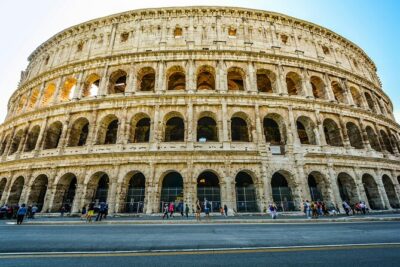
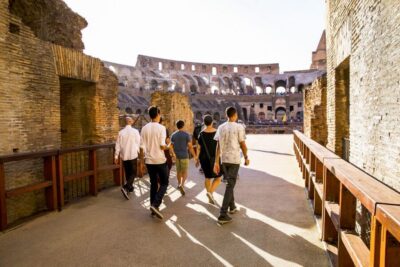
The Colosseum isn’t just impressive—it’s huge in a way photos can’t fully explain. On this tour, you’re not dropped at a viewpoint and left to figure it out. A live guide walks you through the main monument and the surrounding context so the arena stops feel connected rather than random stops.
If you care about how the Roman world functioned, the timing matters. The tour is built around understanding what you’re looking at: the Colosseum as the place where gladiators and other spectacle figures met their fate, and the Forum/Palatine area as the stage where power played out daily. That contrast is one of the best parts, because it helps you see Ancient Rome as more than just fighting and stone arches.
Still on ancient Rome? A few more we rated
- Rome: Colosseum, Palatine Hill and Roman Forum Guided Tour
★ 4.8 · 32,814 reviews - Rome: Guided Tour of Colosseum, Roman Forum & Palatine Hill
★ 4.7 · 27,897 reviews - Rome: Colosseum & Forum with Audio Guide App -Optional Arena
★ 4.2 · 24,770 reviews - Rome: Colosseum, Roman Forum and Palatine Hill Guided Tour
★ 4.5 · 23,903 reviews
What I’d watch for at the arena
Even when you’re not an architecture nerd, the Colosseum becomes easier to read when someone points out the structure’s purpose. Your guide shares facts and ancient myths tied to the building, and you’ll also learn why the surrounding spaces matter to the full picture of Roman life. It’s the kind of explanation that helps your brain stop treating the ruins like a postcard.
You’ll also want to plan for security checks. There can be a line, and the tour can only start entering when that process allows. If you arrive at the meeting point late, you might miss the start, so showing up on time isn’t optional.
The Roman Forum and Via Sacra: politics, markets, and power

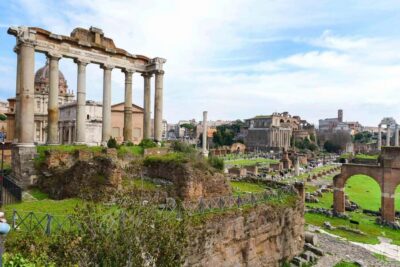
The Roman Forum is where Rome’s everyday life and official life tangled together. If the Colosseum is the spectacle, the Forum is the engine room—decisions, public debate, ceremony, and commerce all happening in the same general neighborhood.
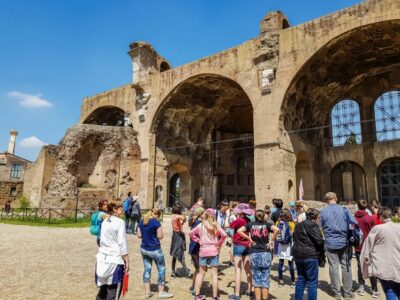
On this tour, you specifically get time in and around the Roman Forum and Via Sacra area, and your guide ties what you see to the role it played during the Roman Empire. The “main monuments” label can sound generic, but the value here is that you’re walking through the heart of political and social life, not just staring at a few isolated ruins.
Why Via Sacra is the key to understanding the Forum
The Via Sacra—often described as the main processional way—comes up in how your guide explains the site. You’ll see remains of temples and markets along it, which matters because it shows Rome wasn’t only built for elite politics. It was also built for people moving, trading, worshipping, and gathering.
This is where guided context saves you time. Without help, the Forum can feel like a lot of broken columns and confused sightlines. With a guide, you start to recognize patterns: where movement likely flowed, why certain places mattered, and how the Romans used public space to project authority.
Worth a look next to this Rome booking:



Palatine Hill: the climb, the views, and the sense of place
Palatine Hill is the stop that makes the tour feel bigger than a checklist. You ascend the hill during the walking route, and the payoff is a set of breathtaking vistas over sprawling Rome. It’s not just a photo break. It’s a mental reset.
From up there, the ruins look different because you can finally see the geographic logic. You understand why the Forum sits where it does, and why the city expanded outward the way it did. It’s also a reminder that Rome’s “ancient” center wasn’t a closed museum. It was a living neighborhood, built on slopes, roads, and changing power.
What you’ll get from the hill beyond photos
Your guide shares facts and myths tied to the emperors and citizens connected to the Palatine area. Even if you don’t catch every detail, the experience lands because you’re standing in the terrain that shaped the story. When someone explains how these places fit together, the Palatine Hill climb turns into the tour’s emotional peak.
A practical note on pacing
One of the more useful bits of real-world advice from past groups is that the pacing can feel like you’re moving steadily through the sites. In other words: plan to keep up. If you’re easily stressed by walking time, it may help to wear shoes you trust from the moment you arrive.
Listening comfort: headsets you’ll actually use
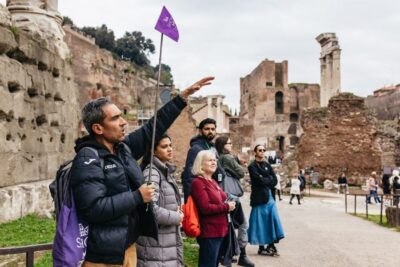
This tour includes headsets, and that matters more than you might think. Colosseum and Forum areas can get loud and busy, and it’s hard to hear a guide when you’re surrounded by other visitors. With headsets, you’re more likely to catch the key points without constantly turning your head and craning your neck.
You can also expect your guide to cover both historical facts and the stories tied to the myths around the monuments. That mix lands better when you can hear every sentence clearly.
Languages available
The live tour guide operates in German, Spanish, English, Italian, and French. If English or another language is important to you, double-check the tour’s language option during booking so you’re not stuck working around gaps in comprehension.
How much time you really get in 2.5 hours
The duration is about 2.5 hours, which is a solid length for hitting three major areas without turning the day into a marathon. The trade-off is that the schedule is tight enough that you won’t have long, wandering pauses.
In practice, I think this format works best when you go in with a plan:
- You want the big sites covered.
- You want the story explained clearly.
- You don’t need to spend an entire afternoon slowly exploring every corner.
If you’re the type who likes to linger at museums and read every plaque for an extra hour, you may find this tour a bit fast. But if you’re trying to get oriented and understand what you’re seeing, it’s a smart use of time.
Meeting point and getting oriented fast in Rome
Meet at Via delle Terme di Tito 93. If you’re arriving by Metro, you’ll want to start at the Colosseo metro station, then reach the terrace above the station. From there, walk on Via Nicola Salvi about 100 meters and turn left.
One practical tip: meeting point navigation can be a little chaotic around major landmarks. GPS pins don’t always match real-world street signage, so I strongly suggest you arrive early and confirm you’re standing where the tour team expects you. If you’re the couple who arrives one minute late and then spends ten minutes searching, this is where it can hurt—because late arrivals aren’t covered by any extra buffer.
Also, be ready for a queue at the Colosseum due to security checks. That line doesn’t mean the tour is falling apart. It means you’re doing the right thing: checking IDs, walking through the process, and then getting in.
What to bring and what not to bring
This tour is straightforward on items, but you do need to respect the rules.
Bring:
- Passport or ID card (and you’ll need the same for children)
Don’t bring:
- Pets
- Weapons or sharp objects
- Luggage or large bags
- Alcohol and drugs
- Glass objects
From a comfort standpoint, I’d also bring practical day gear even though it’s not listed as required:
- Water
- Sun protection (the route includes open areas)
- A light layer for evening chill or rain if the forecast looks iffy
The tour runs in all weather conditions, so you should expect to go even if Rome decides to throw a thunderstorm at the schedule.
Who this tour suits best
This is a great fit if you:
- Want a guided walk that ties Colosseum + Forum + Palatine Hill together into one narrative
- Prefer a structured route over random wandering
- Like clear explanations with humor and real engagement (especially if you’re traveling with teens or kids)
Guides like Maria and Joseph have been praised for making the facts understandable and keeping groups focused. Stefania De Majo has also stood out for professional, engaging guidance, including keeping a 10-year-old interested, plus stepping into shaded breaks when the sun is intense. If any of that matters to you, you’re likely to feel comfortable on this tour.
It’s not suitable for people with mobility impairments or wheelchair users, so if that affects your party, it’s worth looking for an alternative format with different access.
Value for money: what you get for $41
At around $41 per person for a 2.5-hour guided experience, the value comes from what’s included, not just the headline cost. You’re getting:
- Entry fees
- Headsets
- A live guide
Transportation isn’t included, but that’s typical for these walking tours. The cost makes sense if you’d otherwise pay entry fees and then still want a guide to explain what you’re seeing. For first-timers, that guided context usually feels like the biggest payoff because it helps you interpret sites you’d otherwise struggle to understand quickly.
If you’re someone who knows Rome well already, you might feel less wowed by the standard route. But for most people, the guide-led storytelling plus the included entry fees adds up to a practical deal.
Should you book this Colosseum, Forum, and Palatine Hill tour?
I’d book this tour if you want a well-paced way to see Rome’s top Ancient Rome landmarks in one go, with enough explanation to make the ruins meaningful. It’s especially smart if you’re short on time or you want a guided route that builds from spectacle (Colosseum) to civic life (Forum) to high-ground perspective (Palatine Hill).
Skip it or look for another option if you:
- Need a slower, longer exploration with lots of free time
- Are traveling with accessibility needs that can’t be met on a walking climb
- Hate the idea of security lines and a tight schedule in peak areas
If you’re okay with moving steadily and you bring good shoes, this is a strong way to understand why Ancient Rome still looks like a stage—even after all these centuries.
FAQ
How long is the Rome Colosseum, Roman Forum, and Palatine Hill walking tour?
The tour lasts about 2.5 hours.
What is included in the price?
Entry fees, headsets, and a live guide are included.
Where do I meet the tour group?
You meet at Via delle Terme di Tito 93. If you arrive by Metro at Colosseo station, go to the terrace above the station, walk about 100m on Via Nicola Salvi, then turn left.
What ID do I need to bring?
You need a passport or ID card. Children also require a passport or ID card.
Does the tour cancel for bad weather?
The tour operates in all weather conditions.
Is there free cancellation?
Yes. You can cancel up to 3 days in advance for a full refund.
More Tours in Rome
- Vatican Museums, Sistine Chapel & St. Peter’s Basilica Tour
★ 4.3 · 73,970 reviews - Vatican Museums, Sistine Chapel & St Peter’s Basilica Guided Tour
★ 4.5 · 39,149 reviews - Rome: Colosseum, Palatine Hill and Roman Forum Guided Tour
★ 4.8 · 32,814 reviews - Rome: Guided Tour of Colosseum, Roman Forum & Palatine Hill
★ 4.7 · 27,897 reviews - Rome: Colosseum, Roman Forum and Palatine Hill Guided Tour
★ 4.5 · 23,903 reviews - Rome: Colosseum Arena Floor, Palatine & Forum Guided Tour
★ 4.5 · 20,180 reviews
More Tour Reviews in Rome
- Vatican Museums, Sistine Chapel & St. Peter’s Basilica Tour
★ 4.3 · 73,970 reviews - Vatican Museums, Sistine Chapel & St Peter’s Basilica Guided Tour
★ 4.5 · 39,149 reviews - Rome: Colosseum, Palatine Hill and Roman Forum Guided Tour
★ 4.8 · 32,814 reviews - Rome: Guided Tour of Colosseum, Roman Forum & Palatine Hill
★ 4.7 · 27,897 reviews - Rome: Colosseum & Forum with Audio Guide App -Optional Arena
★ 4.2 · 24,770 reviews - Rome: Colosseum, Roman Forum and Palatine Hill Guided Tour
★ 4.5 · 23,903 reviews
Ancient Rome, Kept Going
- Rome: Colosseum, Palatine Hill and Roman Forum Guided Tour
★ 4.8 · 32,814 reviews - Rome: Guided Tour of Colosseum, Roman Forum & Palatine Hill
★ 4.7 · 27,897 reviews - Rome: Colosseum & Forum with Audio Guide App -Optional Arena
★ 4.2 · 24,770 reviews - Rome: Colosseum, Roman Forum and Palatine Hill Guided Tour
★ 4.5 · 23,903 reviews - Rome: Colosseum Arena Floor, Palatine & Forum Guided Tour
★ 4.5 · 20,180 reviews - Rome: Colosseum Arena, Palatine Hill & Forum Guided Tour
★ 4.7 · 14,510 reviews
Just added to our Rome reviews





Colosseum & Ancient Rome Tours, compared.
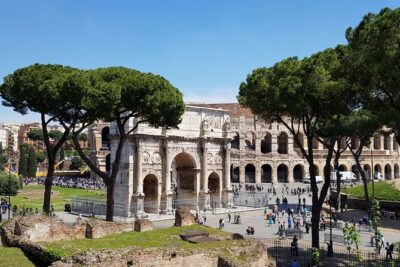 ★ 4.8Colosseum, Palatine Hill and Roman Forum Guided TourFrom $5232,814 reviews
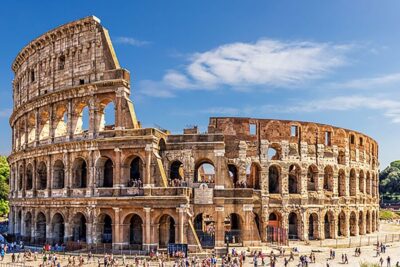 ★ 4.7Guided Tour of Colosseum, Roman Forum & Palatine HillFrom $5527,897 reviews
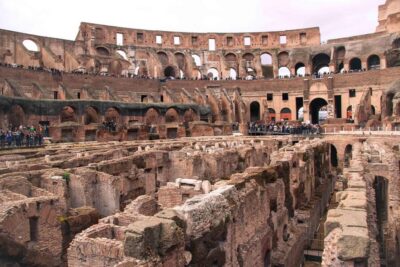 ★ 4.2Colosseum & Forum with Audio Guide App -Optional ArenaFrom $4124,770 reviews
 ★ 4.5Colosseum, Roman Forum and Palatine Hill Guided TourFrom $5923,903 reviews
 ★ 4.5Colosseum Arena Floor, Palatine & Forum Guided TourFrom $4120,180 reviews
 ★ 4.7Colosseum Arena, Palatine Hill & Forum Guided TourFrom $8414,510 reviews
 ★ 4.6Colosseum,Forum & Palatine Tour + Optional Arena FloorFrom $4513,169 reviews
 ★ 4.7Colosseum: Underground and Ancient Rome TourFrom $16012,691 reviews
Browse the lists this tour appears in