
Reviewed · COLOSSEUM & ANCIENT ROME TOURS
Rome: Circus Maximus Virtual Reality Game near the Colosseum
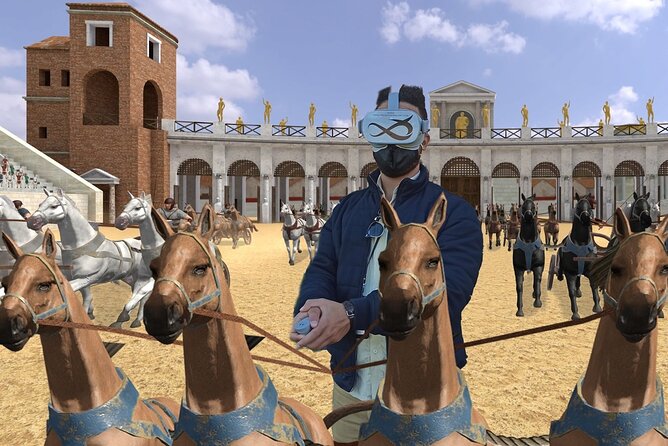
Rome’s Circus Maximus comes alive in VR. One minute you’re on Roman pavement near the Colosseum area, and the next you’re watching the stadium world feel real through a headset. I especially liked the combo of Roman landmarks in 3D and the hands-on VR chariot race experience.
Two things I really liked: the staff guide you in English/Italian so you’re not stuck guessing, and the set-up makes it practical for families with kids. One watch-out: you’ll want to match your language expectations carefully, since the included audio guide is in English and Italian.
In This Review
- Key things to know before you go
- Circus Maximus VR near the Colosseum: the big idea
- How the 2-hour experience is paced at Circo Massimo
- VR chariot racing: your faction vs the stadium
- The guides in English/Italian (and why names matter)
- What you actually see: Arch of Titus and the Septizodium
- Included equipment vs what you must buy separately
- Price and value: is $35.89 worth it?
- Practical logistics that can make or break your day
- Language choice: English, Italian, Spanish, and the audio guide detail
- Who should book this Circus Maximus VR experience
- Should you book Circus Maximus VR near the Colosseum?
- FAQ
- How long is the Circus Maximus VR experience?
- How much does it cost per person?
- Where does the experience start?
- Is the VR headset and equipment provided?
- Do I need to buy tickets to the archaeological area of Circus Maximus?
- What languages are available?
- Is there a guide during the VR portion?
- Is this suitable for children?
- What about bags or luggage?
- When should I arrive and where will it end?
Key things to know before you go
- VR chariot racing inside Circus Maximus with you choosing a faction and aiming for the Emperor’s favor
- On-foot story time around Circo Massimo, then the main event happens with the headset
- Equipment is provided, including headsets, audio, and a headset eye-mask cover
- Group size stays small (up to 25 people), which helps with pace and support
- Circus Maximus entrance tickets are not included, so plan that extra cost
- Large suitcases and bags aren’t allowed in the attraction space
Circus Maximus VR near the Colosseum: the big idea
This isn’t a museum video where you sit and watch. The point here is to experience the Circus Maximus area as a story, then switch into VR for the moment that feels most like the real thing: racing inside the arena setting.
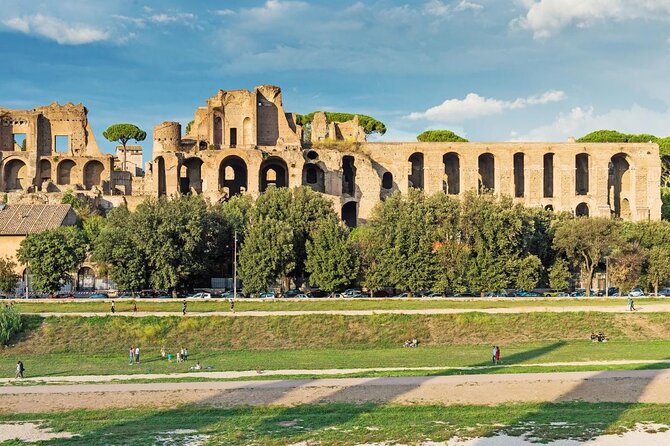
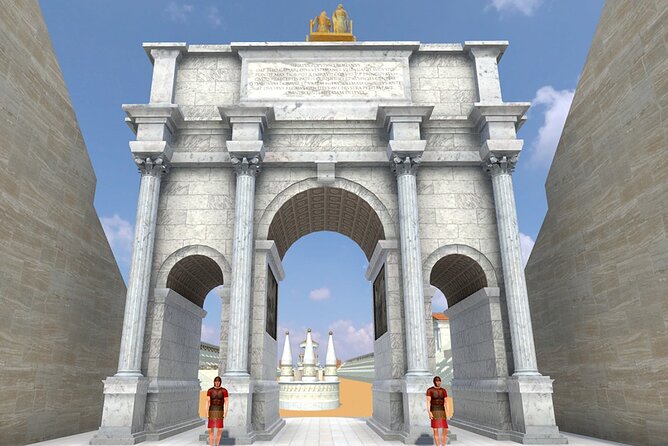
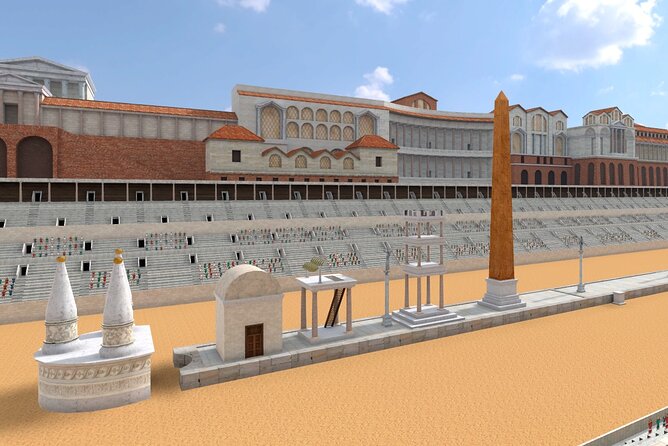
Circus Maximus is the huge, legendary showground of ancient Rome, the kind of place people talked about for generations. In this experience, you’re shown how it fits into the imperial city, with iconic references like the Arch of Titus and the monumental fountain of the Septizodium in the mix. The effect is simple: you stop thinking of Circus Maximus as a flat ruin and start seeing it as part of a full Roman scene.
The location choice also helps. Being near the Colosseum means you can treat this like a “history block” day without having to hop all over town. If you like Roman big-ticket sites but want something more interactive than standing behind a rope barrier, this is a strong fit.
Still on ancient Rome? A few more we rated
- Rome: Colosseum, Palatine Hill and Roman Forum Guided Tour
★ 4.8 · 32,814 reviews - Rome: Guided Tour of Colosseum, Roman Forum & Palatine Hill
★ 4.7 · 27,897 reviews - Rome: Colosseum & Forum with Audio Guide App -Optional Arena
★ 4.2 · 24,770 reviews - Rome: Colosseum, Roman Forum and Palatine Hill Guided Tour
★ 4.5 · 23,903 reviews
How the 2-hour experience is paced at Circo Massimo
The full experience runs about 2 hours. That’s enough time to do more than one thing, but not so long that kids melt down or you feel trapped in a long program.
The flow is basically:
- Start at the Circo Massimo area with an on-the-ground guided component
- Move through different scenes as part of the story setting
- Then put on the VR headset for the main chariot-race sequence
Because the program has a max group size of 25, you’re not fighting a crowd. It also tends to make instructions clearer when it’s time to adjust headsets, understand controls, or just ask questions mid-activity.
Practical tip: wear comfortable shoes. The “walk-and-scene” part matters. Even if the VR is the headline, you’ll still be walking around the meeting area to set up the story and context.
Timing-wise, arrive about 15 minutes early. That buffer helps everyone get sorted before the VR portion begins, especially if you need help with comfort or language questions.
VR chariot racing: your faction vs the stadium
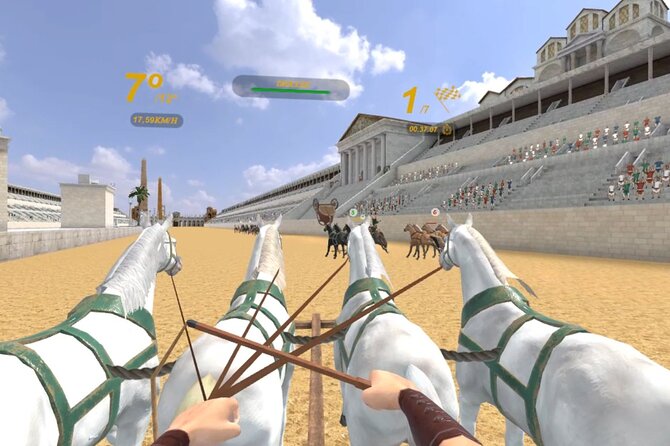
Once the headset goes on, you’re placed inside the kind of grand arena that could hold an astonishing 385,000 spectators in its heyday. That number is part awe, part “okay, this really was a big deal.”
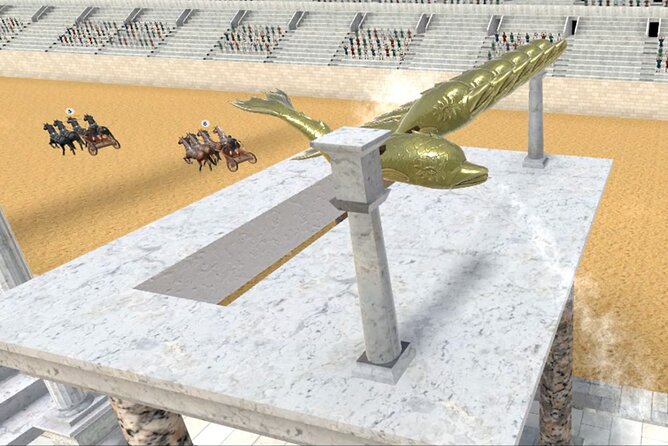
The VR segment is built around competition. You get to choose your favorite faction, then prepare to compete in a chariot race with the goal of winning the Emperor’s favor. It’s a video-game structure, but the content stays tied to Roman spectacle and place.
Here’s what I think makes this VR approach work: it’s not just 3D scenery. It ties you to decisions and action. That means you’re not only observing ancient Rome; you’re participating in its most famous public entertainment style.
Also, the experience is offered in multiple languages (English, Italian, and Spanish). Just note the specific language pieces you get “inside the box” can be a bit different from the overall program language. I’ll come back to that, because it matters.
The guides in English/Italian (and why names matter)
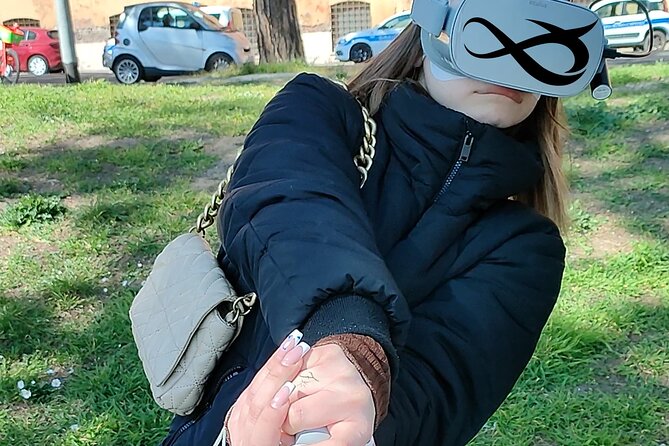
Good guidance can turn VR from confusing tech into a smooth, fun history lesson. This experience uses a VR assistant who supports you in English and Italian, plus an integrated audio guide in English and Italian.
In the real world, that support matters most during two moments:
1) when you’re figuring out how the headset and audio work
2) when you want context fast, without stopping the group
The guide quality comes through in the way it’s described. I saw particular praise for patience and friendliness. Names that came up include Sara and Alessia, and both were described as engaging and supportive, especially when kids were involved.
If you’re traveling as a family, this kind of calm, patient coaching makes a big difference. Kids may be curious, but they also get overwhelmed fast. A guide who can slow things down and explain clearly keeps the experience moving in the right direction.
What you actually see: Arch of Titus and the Septizodium
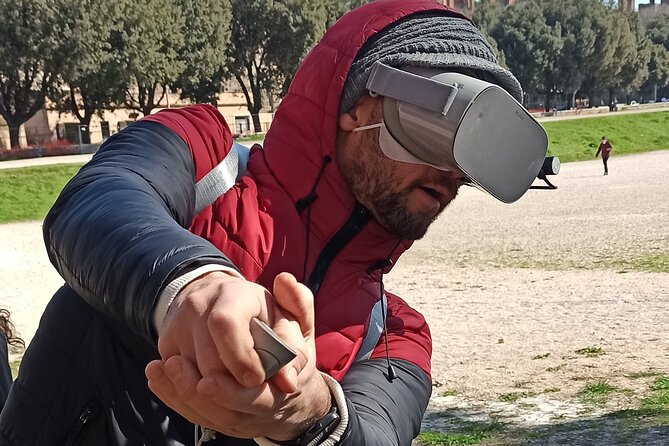
One of the best parts of this kind of historical VR is when it connects the arena to the wider city. In this program, you get references to real imperial monuments and features, including the Arch of Titus and the monumental fountain of the Septizodium.
You’re not asked to know these sites ahead of time. The value is that you get mental anchors. Instead of “Circus Maximus, okay,” you come away with a stronger sense of what the arena sat inside—Rome’s imperial show-and-power world.
And because the on-the-ground portion includes movement through scenes in real time, it avoids the feeling that you’re watching a floating video. Even when you’re walking near the Circo Massimo area, the story is meant to pull your attention toward the right visual cues.
Included equipment vs what you must buy separately
This part is easy to miss, so let’s be very clear.
Included:
- VR assistant support (English and Italian)
- VR headsets
- Integrated audio guide (English and Italian)
- Eye-mask cover for the headset
- Hand sanitizing gel
- RC insurance
Not included:
- Drinks
- Transport
- Souvenirs
- A tourist guide (separate from the VR assistant)
- Entrance ticket to the Archaeological Area of Circus Maximus
That last item is the one that can surprise people. If you show up without the archaeological entrance ticket, you may have an awkward gap before the experience can proceed as expected. Since it’s explicitly not included, you should plan that add-on cost in advance.
As for the included items: the headset eye-mask cover and sanitizing gel are small, practical touches that make shared equipment feel more comfortable. The RC insurance is also included, which is reassuring on a tech-and-activity combo.
Price and value: is $35.89 worth it?
At $35.89 per person for about 2 hours, the value depends on how you like spending a Rome day.
You’re paying for three things bundled together:
- a guide-led experience
- VR equipment and audio
- structured time with a specific theme (Circus Maximus racing)
If you’re already planning to visit the archaeological area anyway, this VR add-on can feel like it turns your visit from “look at ruins” into “do something with the ruins.”
If you don’t care about VR, the price might feel steep because the on-foot part is context-setting, not a long walking tour. The experience earns its cost when you like interactive tech and when you enjoy action-based learning more than passive sightseeing.
One more value signal: this activity tends to be booked in advance (on average about 21 days ahead). That doesn’t guarantee it’s perfect, but it suggests people find it a useful, timed slot in a tight itinerary.
Practical logistics that can make or break your day
Meeting point is Via di S. Gregorio, 58, 00186 Roma RM, Italy. The activity ends back at the meeting point, so you don’t have to solve a “where do we go next” problem.
It’s also listed as near public transportation, which helps if you’re combining it with other Colosseum-area stops.
Rules that matter:
- Large suitcases and bags aren’t allowed inside the attraction
- Kids under 18 must be accompanied by an adult and bring a valid ID
What I’d do in your shoes: pack light, use a day bag you can keep with you, and bring only what you can manage during headset time.
Comfort-wise, the headset plus ear audio can feel like “you’re wearing gear” for a bit. If you have comfort issues with headwear, consider preparing accordingly (a smooth-fitting hat or careful adjustment can help, but you’re still expected to use their headset setup).
Language choice: English, Italian, Spanish, and the audio guide detail
This is the big one to get right.
The experience is offered in three languages: Italian, English, and Spanish. But the included integrated audio guide is specifically listed as English and Italian.
So here’s my practical advice:
- If you speak English or Italian, you should be in great shape.
- If you’re booking in Spanish, confirm how Spanish is delivered for the on-site experience (the data clearly states Spanish is available, but the included audio guide languages are listed as English and Italian).
Also, don’t assume there will be a French track, even if you see multiple language options mentioned. The safe move is to choose your language at booking based on what’s explicitly covered by the audio guide and assistant support.
That one mismatch can take a great experience and turn it into a frustrating one.
Who should book this Circus Maximus VR experience
You’ll likely enjoy this most if you:
- like VR or interactive history
- want a Roman site experience that includes action, not just photos
- travel with children who need participation to stay interested
- prefer short, guided programming close to the Colosseum area
It’s also a good choice if you’ve already done the major “stand and look” stops in Rome and you want one activity that changes your perspective.
The main reason some people hesitate is the same reason it works for others: it’s technology-driven. If you’re hoping for a traditional, deep, long-form guided walking tour with lots of explanation, VR may not be your top match. If you’re mainly there for the technology and the chariot-race segment, it’s a strong fit.
Should you book Circus Maximus VR near the Colosseum?
I’d book it if you want an active Roman experience that fits into a normal Rome day and you’re comfortable using a headset.
Book it soon if:
- you travel with kids or want a guide-forward experience (the support described for families is a big plus)
- you want something fun that still points at real places like the Arch of Titus and the Septizodium
- you’re okay planning the archaeological entrance ticket separately
Skip or rethink if:
- you need a specific language track not covered by the integrated audio guide
- you hate VR or would rather spend your time on a classic walking tour instead
- you’re traveling with large luggage you don’t want to manage (since big bags aren’t allowed)
If your goal is to turn Circus Maximus from ruins into a moment in action, this is one of the clearer ways to do it near the Colosseum.
FAQ
How long is the Circus Maximus VR experience?
It lasts about 2 hours.
How much does it cost per person?
The price is $35.89 per person.
Where does the experience start?
You start at Via di S. Gregorio, 58, 00186 Roma RM, Italy.
Is the VR headset and equipment provided?
Yes. VR headsets are provided, along with an eye-mask cover and hand sanitizing gel.
Do I need to buy tickets to the archaeological area of Circus Maximus?
Yes. Entrance tickets to the Archaeological Area of Circus Maximus are not included.
What languages are available?
The experience is offered in English, Italian, and Spanish. The included integrated audio guide is in English and Italian, and the VR assistant support is in English and Italian.
Is there a guide during the VR portion?
Yes. You have a VR assistant (English and Italian) and an integrated audio guide.
Is this suitable for children?
Children under 18 must be accompanied by an adult and bring a valid ID.
What about bags or luggage?
Large suitcases and bags are not allowed inside the attractions.
When should I arrive and where will it end?
Arrive 15 minutes before your agreed time. The activity ends back at the meeting point.
More Tour Reviews in Rome
- Vatican Museums, Sistine Chapel & St. Peter’s Basilica Tour
★ 4.3 · 73,970 reviews - Vatican Museums, Sistine Chapel & St Peter’s Basilica Guided Tour
★ 4.5 · 39,149 reviews - Rome: Colosseum, Palatine Hill and Roman Forum Guided Tour
★ 4.8 · 32,814 reviews - Rome: Guided Tour of Colosseum, Roman Forum & Palatine Hill
★ 4.7 · 27,897 reviews - Rome: Colosseum & Forum with Audio Guide App -Optional Arena
★ 4.2 · 24,770 reviews - Rome: Colosseum, Roman Forum and Palatine Hill Guided Tour
★ 4.5 · 23,903 reviews
Ancient Rome, Kept Going
- Rome: Colosseum, Palatine Hill and Roman Forum Guided Tour
★ 4.8 · 32,814 reviews - Rome: Guided Tour of Colosseum, Roman Forum & Palatine Hill
★ 4.7 · 27,897 reviews - Rome: Colosseum & Forum with Audio Guide App -Optional Arena
★ 4.2 · 24,770 reviews - Rome: Colosseum, Roman Forum and Palatine Hill Guided Tour
★ 4.5 · 23,903 reviews - Rome: Colosseum Arena Floor, Palatine & Forum Guided Tour
★ 4.5 · 20,180 reviews - Rome: Colosseum Arena, Palatine Hill & Forum Guided Tour
★ 4.7 · 14,510 reviews
Just added to our Rome reviews





Colosseum & Ancient Rome Tours, compared.
 ★ 4.8Colosseum, Palatine Hill and Roman Forum Guided TourFrom $5232,814 reviews
 ★ 4.7Guided Tour of Colosseum, Roman Forum & Palatine HillFrom $5527,897 reviews
 ★ 4.2Colosseum & Forum with Audio Guide App -Optional ArenaFrom $4124,770 reviews
 ★ 4.5Colosseum, Roman Forum and Palatine Hill Guided TourFrom $5923,903 reviews
 ★ 4.5Colosseum Arena Floor, Palatine & Forum Guided TourFrom $4120,180 reviews
 ★ 4.7Colosseum Arena, Palatine Hill & Forum Guided TourFrom $8414,510 reviews
 ★ 4.6Colosseum,Forum & Palatine Tour + Optional Arena FloorFrom $4513,169 reviews
 ★ 4.7Colosseum: Underground and Ancient Rome TourFrom $16012,691 reviews