
Reviewed · WALKING TOURS
Rome: Caravaggio Guided Walking Tour
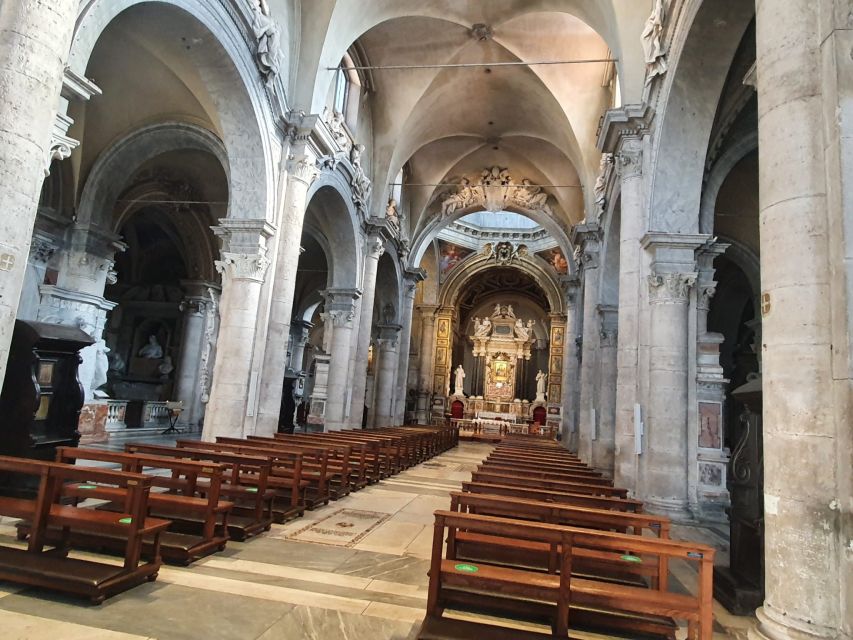
Caravaggio’s Rome hits different on foot. This 2.5-hour Caravaggio walking tour strings together the places where his work fits into the real streetscape—starting at Piazza del Popolo and finishing in the Contarelli Chapel. You’ll see famous paintings where they were made to be seen, not in a sterile “museum version.”
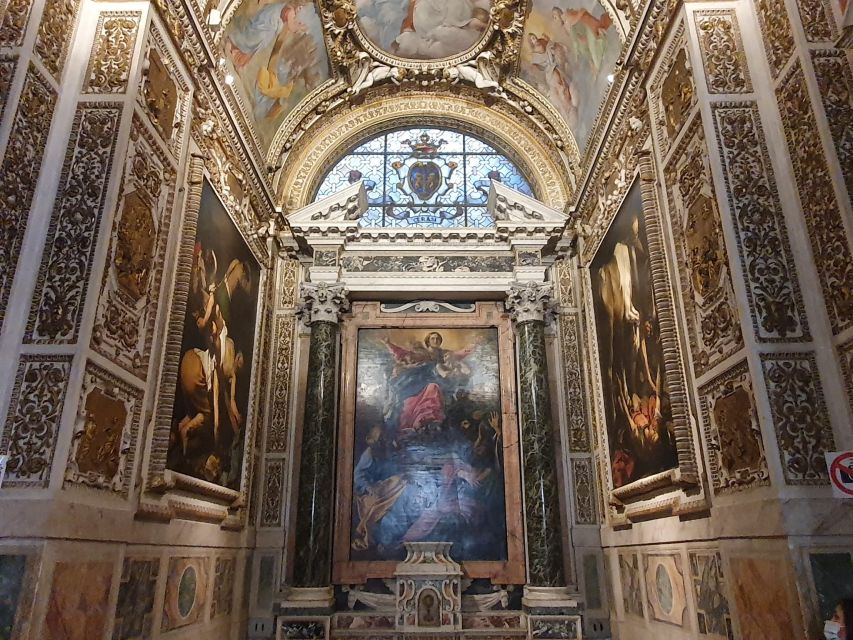
I especially love how the tour focuses on specific masterpieces in three churches—The Crucifixion of St. Peter, The Conversion of St. Paul, The Madonna of the Pilgrims, and The Life of St. Matthew—so you get clear visual anchors. I also like the storytelling style from guides; sessions led by Patricia are often praised for connecting technique to life, including pointing out the street context around Caravaggio’s residences.
The one drawback to plan for is that this is still a moderate walking route through old Roman lanes, plus there’s a strict church dress code. If you’re not dressed with shoulders and knees covered, or you have limited mobility, this one can feel more like hassle than art time.
In This Review
- Key things you’ll notice on this Caravaggio walking tour
- Why this Rome Caravaggio tour works (and why it isn’t just sightseeing)
- Meeting in Piazza del Popolo and getting the group fast
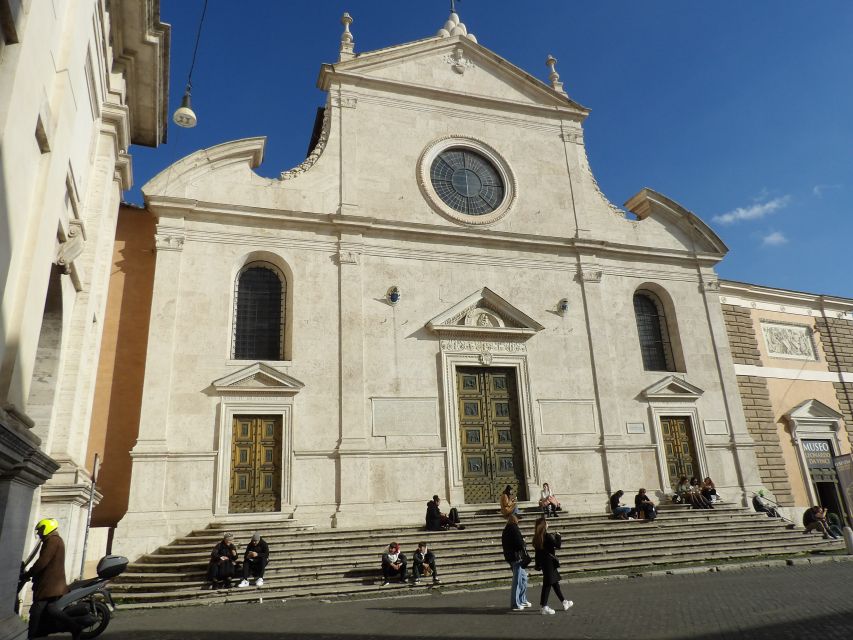
- Basilica of Santa Maria del Popolo: where the paintings feel made-to-measure
- Passing Palazzo Madama and Giustiniani Palace: Caravaggio’s life in the margins
- Church St. Augustine: The Madonna of the Pilgrims and a different mood
- St. Louis of France’s Contarelli Chapel: the last stop that tends to stick
- The walking pace, timing, and comfort: what you should plan for
- Live guide quality: what the best sessions get right (like Patricia)
- Value: is $71 worth it for a 2.5-hour Caravaggio route?
- Who should book this Rome Caravaggio walking tour (and who shouldn’t)
- Should you book this Caravaggio walking tour?
- FAQ
- How long is the Rome: Caravaggio Guided Walking Tour?
- Where does the tour start, and how do I find the guide?
- What is included in the price?
- What is not included?
- What languages are available?
- Are there dress rules for the churches?
- Is the tour suitable for people with mobility impairments?
- Is the tour refundable if my plans change?
Key things you’ll notice on this Caravaggio walking tour
- Three church stops with named works: you know exactly what you’re looking for at each site
- Headsets included: your guide’s explanations stay clear even in busy sanctuaries
- Street-level context: you pass sites tied to Caravaggio’s life, including Palazzo Madama and Giustiniani Palace
- A guide who links painting to process: technique gets explained in human terms, not just dates
- Strict entry rules: shoulders and knees covered for worship spaces
- Group-finding matters: you’ll want to spot the Voyager flag early at the start
Why this Rome Caravaggio tour works (and why it isn’t just sightseeing)
Caravaggio in Rome is more than a list of masterpieces. What makes this tour worthwhile is that it connects the paintings to the neighborhoods and churches where they belong. You’re not just consuming art—you’re learning how the art “talks” with its setting.
You’ll get a guided path through three churches, plus a bit of street wandering between them. That combination helps you read Caravaggio’s choices—lighting, drama, realism—through the same kind of walls and corners that once framed the work.
Also, the tour uses live commentary and includes headsets, which is a big deal in Rome where churches can be crowded and sound can bounce around. When the guide can be heard, you’ll actually follow along instead of doing the usual squinting-and-guessing routine.
Worth a look next to this Rome booking:
- Rome: Guided Food Walking Tour with Wine in Trastevere
★ 4.9 · 3,105 reviews - Rome: Trastevere & Campo de Fiori Street Food Walking Tour
★ 4.9 · 2,768 reviews - Rome: Paranormal Night Walking Tour & Secret Backstreets
★ 4.9 · 1,921 reviews - Rome: Trastevere Street Food Walking Tour with Local Expert
★ 4.8 · 1,784 reviews
Meeting in Piazza del Popolo and getting the group fast
The tour starts at Piazza del Popolo, with the guide holding a flag showing the The Voyager logo. This is one of those details that sounds small until you’re standing there with your camera out and no idea where the group went.
You’ll want to arrive a little early, because Rome streets and church entrances can be busy and confusing. If you’re traveling with a tight schedule, build in a few extra minutes so you can get your bearings fast and not waste the first 15 minutes hunting for a flag.
One practical tip: wear comfortable shoes from the start. Even if the route is only about 2.5 hours, the uneven pavement and stair steps inside churches can add up quicker than you expect.
Basilica of Santa Maria del Popolo: where the paintings feel made-to-measure
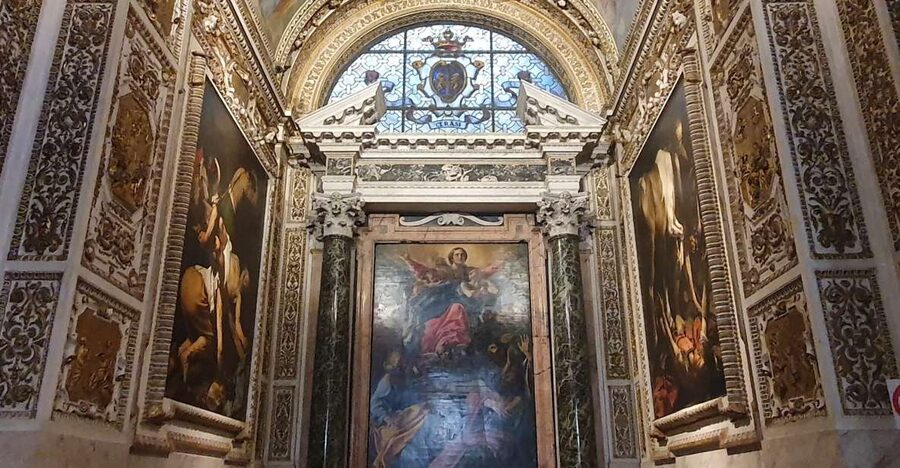
Your first big art stop is the Basilica of Santa Maria del Popolo. This is where the tour gives you two major works by Caravaggio: The Crucifixion of St. Peter and The Conversion of St. Paul.
What you’ll likely appreciate most here is how the guide frames what you’re looking at. Caravaggio’s style can feel intense on its own, but when someone explains what to focus on—like the emotional pull of the scene and the way the figures are staged—it becomes easier to see the craft, not just the drama.
This is also the first chance for you to slow down and “reset” your eyes. In a walking tour, you want at least one moment where the pace drops and you can really connect the guide’s explanation to what you see in front of you.
Possible drawback: churches can have lines and bottlenecks at entrances. If you’re the kind of person who hates pausing for crowd flow, you may feel a little rushed once you’re inside. Headsets help, but your personal pace still matters here.
Passing Palazzo Madama and Giustiniani Palace: Caravaggio’s life in the margins
After the first church, you’ll be walking through central Rome and passing by Palazzo Madama and Giustiniani Palace, two places tied to Caravaggio’s residences. This part isn’t a museum stop with a sign and a ticket booth—it’s about using the city itself as context.
This is where the tour can feel extra satisfying if you like “place-based” travel. Rome has layers, and it’s easy to forget that artists lived in real streets, in real neighborhoods, dealing with real logistics. The guide’s job here is to connect the dots between the person and the paintings you saw moments earlier.
One reason this section is valuable: it keeps you from treating Caravaggio like a distant genius. When your route includes the streets connected to his life, the paintings start to feel less like artwork-only objects and more like the output of someone working in a specific time and place.
Worth a look next to this Rome booking:
Church St. Augustine: The Madonna of the Pilgrims and a different mood
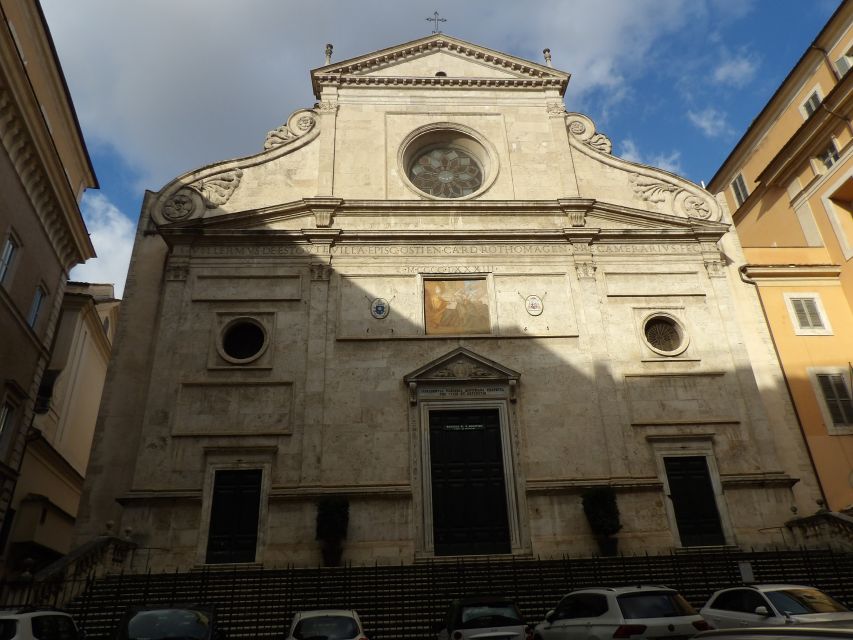
Next up is Church St. Augustine, where you’ll see The Madonna of the Pilgrims. Caravaggio can be famously dramatic, and moving from one emotional register to another is part of the learning curve on a good tour like this.
Here, the guide’s storytelling approach matters. If your guide is the kind of person who explains technique and intention alongside the narrative, you’ll likely leave this stop thinking differently about what Caravaggio was trying to communicate—especially how the painting’s human focus fits into a religious setting.
This is also a good place to practice “quiet looking.” With headsets on, you can get the explanation, then take a minute to re-watch the painting with your own eyes. That back-and-forth is often what turns a guided visit into a memory you actually keep.
Practical consideration: this is also one of the churches where entry rules can be strict. If you’re wearing something that crosses the line (shorts or sleeveless tops), you may lose time—or be turned away.
St. Louis of France’s Contarelli Chapel: the last stop that tends to stick
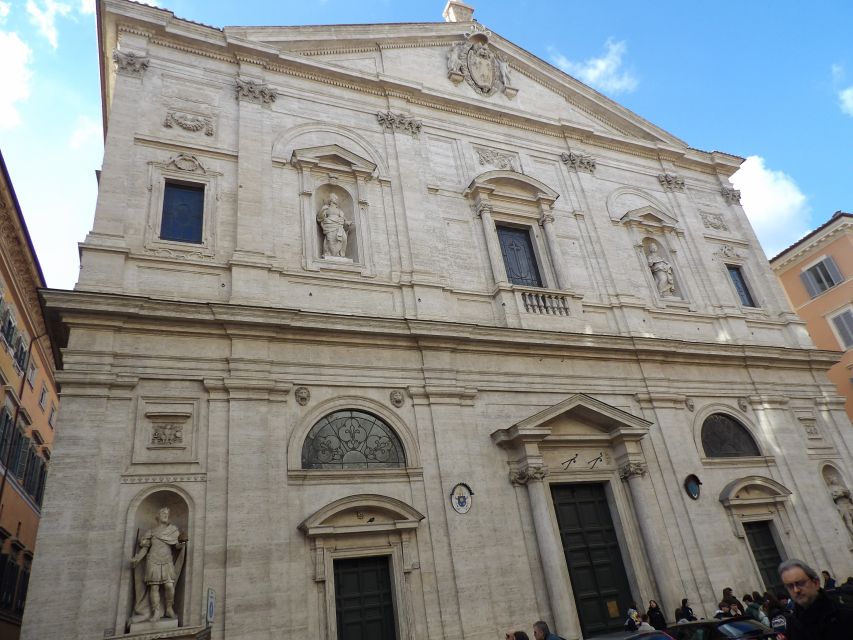
The tour’s final masterpiece stop is The Life of St. Matthew in St. Louis of France’s Contarelli Chapel. This is typically the kind of work that people remember later, because the subject matter and Caravaggio’s dramatic realism make it hard to “window shop” your way through.
By the time you reach the chapel, you’ll probably be in a stronger position to notice how the guide has trained your eye. Earlier stops give you baseline themes—religious intensity, staging, and the way figures pull you into the moment. Then the Contarelli Chapel caps it with a different angle of Caravaggio’s storytelling.
Even if you’re not a hardcore art person, this stop can work because it’s not just about facts. It’s about how the painting feels when you’re standing in the room it was made for—space, lighting, and all.
One heads-up: chapels can be tight. Your comfort and patience during crowd flow will affect how much you enjoy this finale.
The walking pace, timing, and comfort: what you should plan for
This is an intensive 2.5-hour walking experience. That means you should expect moderate walking and time spent moving between sites in historic center Rome. You don’t need to be an athlete, but you do need to be comfortable on uneven surfaces and in-and-out of churches.
Here’s what I’d plan around:
- Comfortable shoes are non-negotiable
- Wear layers. Churches can be cooler than the street
- Bring clothing that fits the dress code so you don’t lose time getting sorted at the door
Also, you can’t bring luggage or large bags. If you’re traveling with a backpack, keep it manageable. Large items are usually the kind of problem that slows down everyone—including you.
There’s a dress rule for places of worship: no shorts, no short skirts, and no sleeveless shirts. Both men and women need shoulders and knees covered. This is the one practical thing that can turn a smooth morning into an awkward scramble, so handle it before you leave the hotel.
Finally, note the tour can be impacted if sites close temporarily. If that happens suddenly and alternatives aren’t possible, refunds may not be available. The lesson: keep expectations flexible for church sites.
Live guide quality: what the best sessions get right (like Patricia)
The biggest factor behind this tour’s satisfaction seems to be the guide. One name that comes up in the strongest praise is Patricia, described as passionate and highly prepared, with an ability to make Caravaggio’s paintings feel connected to real life and real working methods.
What sets good guides apart is how they handle the balance: explanation without turning the visit into a lecture. In the best versions of this tour, you’re walking with someone who loves the art and knows how to share it clearly. You get stories, but you also get direction about what to notice.
Headsets help you catch every key point, even when you’re standing in crowded spaces. And because the tour includes multiple churches, you benefit from a guide who can keep the thread going—so each painting builds on the last instead of feeling like separate stops.
That said, there’s a downside worth acknowledging: if the group can’t be easily found at the start, you can lose the opening minutes. Arrive early, look for the Voyager flag, and double-check you’re with the right group before you walk into your first church.
Value: is $71 worth it for a 2.5-hour Caravaggio route?
At $71 per person for about 2.5 hours, the value comes down to what you’re getting: a live guide, headsets, and access to three major Caravaggio works in specific churches, plus contextual street stops.
If you went on your own, you’d still have to do the hard part—figuring out where to look and what to focus on. This tour bundles that direction into a tight timeline, so you spend less time searching and more time seeing.
The best part for value-minded travelers is the combination of:
- multiple masterpieces in meaningful locations
- guided interpretation that helps you see technique and intention
- headsets, which make the guide’s effort actually usable
So if you like museums but find self-guided visits too passive, this format tends to pay off. If you prefer complete freedom and quiet, you might question the cost. But if you enjoy a guided pace where the art comes with a human explanation, $71 can feel fair for what you get.
Who should book this Rome Caravaggio walking tour (and who shouldn’t)
This tour is a great match if you want a focused route through central Rome and you like learning how art connects to place. It’s also ideal if you enjoy getting practical guidance on what to look for at each work—especially in churches where details are easy to miss.
It’s less suitable if you have mobility impairments, because the tour involves walking and visits inside churches. It also can be a headache if you’re not prepared for the dress code. The content is art-focused, but the logistics are church-focused, and Rome churches enforce rules.
Also, if you’re the kind of traveler who hates being on a schedule at all, consider that the tour is structured around stops and movement. It’s not a long free-roam city stroll—this one has a plan.
Should you book this Caravaggio walking tour?
Book it if you want a short, high-impact Caravaggio experience that links masterpieces to real Roman streets. This is especially compelling when you know you’ll appreciate guided attention in three different church spaces, and you value the guide’s ability to connect painting technique to Caravaggio’s life and work.
Skip it (or at least adjust expectations) if walking is tough for you, you can’t follow the church dress code, or you hate the idea of finding a specific meeting spot and moving on with the group. Also, if you’re running late on travel days, give yourself extra margin so you don’t end up searching for the Voyager flag.
If you do book, show up early, wear the right clothes, and plan to look slowly once you’re inside each church. The paintings are powerful on their own—but with the right guidance and a little patience, they land harder.
FAQ
How long is the Rome: Caravaggio Guided Walking Tour?
It lasts about 2.5 hours.
Where does the tour start, and how do I find the guide?
The tour starts at Piazza del Popolo. The guide will have a flag with the The Voyager logo.
What is included in the price?
The tour includes a live guide and headsets.
What is not included?
Hotel pickup and drop-off, and food and drinks are not included.
What languages are available?
The live tour guide and audio support are available in English and Italian.
Are there dress rules for the churches?
Yes. You need shoulders and knees covered. Shorts, short skirts, and sleeveless shirts are not allowed.
Is the tour suitable for people with mobility impairments?
No, it is not suitable for people with mobility impairments.
Is the tour refundable if my plans change?
Free cancellation is available up to 24 hours in advance for a full refund.
More Walking Tours in Rome
- Rome: Guided Food Walking Tour with Wine in Trastevere
★ 4.9 · 3,105 reviews - Rome: Trastevere & Campo de Fiori Street Food Walking Tour
★ 4.9 · 2,768 reviews - Rome: Paranormal Night Walking Tour & Secret Backstreets
★ 4.9 · 1,921 reviews - Rome: Trastevere Street Food Walking Tour with Local Expert
★ 4.8 · 1,784 reviews - Rome: Small-Group Guided Day or Night Walking Tour
★ 4.8 · 1,009 reviews - Rome by Night Walking Tour – Legends & Criminal Stories
★ 4.5 · 1,003 reviews
More Tours in Rome
- Vatican Museums, Sistine Chapel & St. Peter’s Basilica Tour
★ 4.3 · 73,970 reviews - Vatican Museums, Sistine Chapel & St Peter’s Basilica Guided Tour
★ 4.5 · 39,149 reviews - Rome: Colosseum, Palatine Hill and Roman Forum Guided Tour
★ 4.8 · 32,814 reviews - Rome: Guided Tour of Colosseum, Roman Forum & Palatine Hill
★ 4.7 · 27,897 reviews - Rome: Colosseum, Roman Forum and Palatine Hill Guided Tour
★ 4.5 · 23,903 reviews - Rome: Colosseum Arena Floor, Palatine & Forum Guided Tour
★ 4.5 · 20,180 reviews
More Tour Reviews in Rome
- Vatican Museums, Sistine Chapel & St. Peter’s Basilica Tour
★ 4.3 · 73,970 reviews - Vatican Museums, Sistine Chapel & St Peter’s Basilica Guided Tour
★ 4.5 · 39,149 reviews - Rome: Colosseum, Palatine Hill and Roman Forum Guided Tour
★ 4.8 · 32,814 reviews - Rome: Guided Tour of Colosseum, Roman Forum & Palatine Hill
★ 4.7 · 27,897 reviews - Rome: Colosseum & Forum with Audio Guide App -Optional Arena
★ 4.2 · 24,770 reviews - Rome: Colosseum, Roman Forum and Palatine Hill Guided Tour
★ 4.5 · 23,903 reviews
Just added to our Rome reviews





Walking Tours, compared.
 ★ 4.9Guided Food Walking Tour with Wine in TrastevereFrom $1003,105 reviews
 ★ 4.9Trastevere & Campo de Fiori Street Food Walking TourFrom $512,768 reviews
 ★ 4.9Paranormal Night Walking Tour & Secret BackstreetsFrom $341,921 reviews
 ★ 4.8Trastevere Street Food Walking Tour with Local ExpertFrom $571,784 reviews
 ★ 4.8Small-Group Guided Day or Night Walking TourFrom $231,009 reviews
 ★ 4.5Rome by Night Walking Tour – Legends & Criminal StoriesFrom $141,003 reviews
 ★ 4.4Guided City Center Evening Sightseeing Walking TourFrom $46953 reviews
 ★ 4.9Small-Group City Highlights Moonlight Walking TourFrom $29949 reviews
Browse the lists this tour appears in