
Reviewed · WALKING TOURS
Rome: Between Holy Doors Small Group Walking Tour
Holy Doors in Rome are the easy part. The real win is the church-hopping route.
This tour takes you off the usual tourist track and into historic, art-rich basilicas where you’ll get a clear story for what you’re looking at. I especially like how the experience is built for a tight, small-group pace, so you can ask questions without shouting over the crowd, and guide Roberto can point out details you would miss on your own.
The main catch is simple: you need to be comfortable with walking, stairs, and cobblestones. This is not a sit-down museum outing.
In This Review
- Key Highlights You Should Know Before You Go
- A Holy Doors Tour That Actually Makes Sense of Rome
- Meet the Guide and Work the Route With Only Up to 5 People
- Dress Code Rules That Save You From the Doorway Awkwardness
- The 7-Church Route: What You’ll See and Why It Matters
- Stop 1: Basilica di Santa Maria Maggiore
- Stop 2: Basilica di Santa Prassede
- Stop 3: San Pietro in Vincoli
- Stop 4: Basilica of San Clemente
- Stop 5: Ss. Quattro Coronati
- Stop 6: Arcibasilica di San Giovanni in Laterano
- Stop 7: Pontifical Sanctuary of the Holy Stairs (Scala Sancta)
- How Jubilee Changes the Holy Door Part of the Day
- Price and Value: Is $83.48 Worth It?
- Who This Tour Suits Best (and Who Might Feel Frustrated)
- What to Pack and How to Make the Most of 3–4 Hours
- Should You Book This Holy Doors Small-Group Tour?
- FAQ
- How long is the Rome Holy Doors small-group walking tour?
- What time does the tour start?
- How many people are in the group?
- Is the tour in English?
- Do I need tickets or is it included?
- What should I wear to enter the churches?
- Where does the tour meet and end?
- Will I definitely get inside the Holy Stairs and Holy Doors?
- What’s the cancellation and weather policy?
Key Highlights You Should Know Before You Go
- Seven churches in one route so you cover a lot of sacred art without crisscrossing the city
- Roberto’s on-site explanations make mosaics, sculptures, and relics click into place
- Holy doors focus plus other major Catholic sites, including Scala Sancta at San Giovanni in Laterano
- A real dress code request (shoulders, back, and knees covered) to enter most churches
- A small group (max 5) for easier navigation and more personal questions
- Jubilee conditions may change access, so Holy Door passage isn’t something you can 100% count on
A Holy Doors Tour That Actually Makes Sense of Rome
Rome’s big-name sights can leave your brain full and your legs tired. This tour swaps the usual pattern for a cleaner mission: understand the city through the churches connected to Catholic devotion.
Instead of treating churches like disconnected stops, the route builds a religious and artistic thread across several different eras. You’ll move through places tied to saints, relic traditions, and famous sacred objects, and you’ll get context fast enough to keep interest high.
And yes, it’s also practical. The churches are close enough to walk between, and the whole outing is designed to fit into a morning block of about 3 to 4 hours.
Worth a look next to this Rome booking:
- Rome: Guided Food Walking Tour with Wine in Trastevere
★ 4.9 · 3,105 reviews - Rome: Trastevere & Campo de Fiori Street Food Walking Tour
★ 4.9 · 2,768 reviews - Rome: Paranormal Night Walking Tour & Secret Backstreets
★ 4.9 · 1,921 reviews - Rome: Trastevere Street Food Walking Tour with Local Expert
★ 4.8 · 1,784 reviews
Meet the Guide and Work the Route With Only Up to 5 People
The tour caps at five travelers, which changes the whole feel of a walking church tour. You spend less time trying to herd people through doorways and more time actually looking at what’s in front of you.
You’ll be guided in English, and the guide name you’ll hear along the way is Roberto. Multiple visitors emphasize how he balances reverence with solid explanations, and how he answers questions without rushing you out the door.
If you like your travel with a little structure and a little flexibility, this size is a sweet spot. It’s small enough for a conversation, but not so tiny that you feel like you’re on display.
Dress Code Rules That Save You From the Doorway Awkwardness
Churches in Rome often enforce basic coverage rules. For this tour, plan on covering shoulders, back, and knees to enter.
That means no short shorts, no strapless tops, and no sleeveless outfits that expose your shoulders. If you travel in summer, this is the moment where a lightweight scarf or shawl can quietly become your best friend.
Also remember church etiquette: keep your voice down and follow what staff ask at each site. The guide typically sets this tone early, which helps you move smoothly through the spaces.
The 7-Church Route: What You’ll See and Why It Matters
The schedule moves you through seven stops, each one selected for a specific kind of religious art or significance. Below is what each place adds to the overall story, plus what to watch for so the time feels worth it.
Stop 1: Basilica di Santa Maria Maggiore
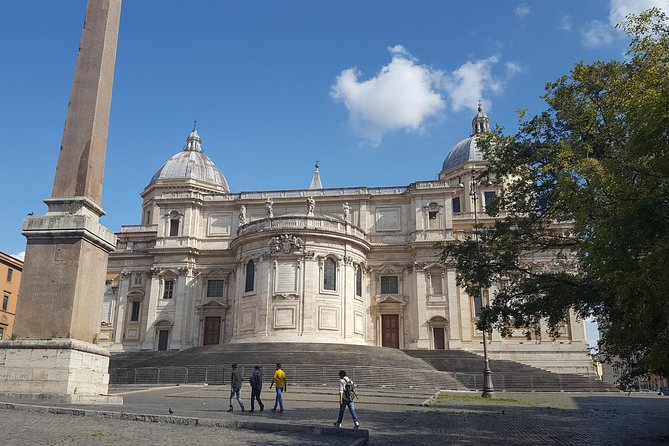
This is the heavyweight. Santa Maria Maggiore is one of Rome’s most important Marian basilicas, and it’s famous for major architecture and impressive internal chapels.
A couple details make it extra memorable here:
- It’s associated with the Virgin Mary in a major way
- You’ll also see a Holy Door at this basilica
- The bell tower is noted as the city’s highest
Why this stop works early: you arrive with a big visual baseline. Once you’ve seen a major centerpiece like this, the smaller, weirder, more surprising places later hit harder.
Stop 2: Basilica di Santa Prassede
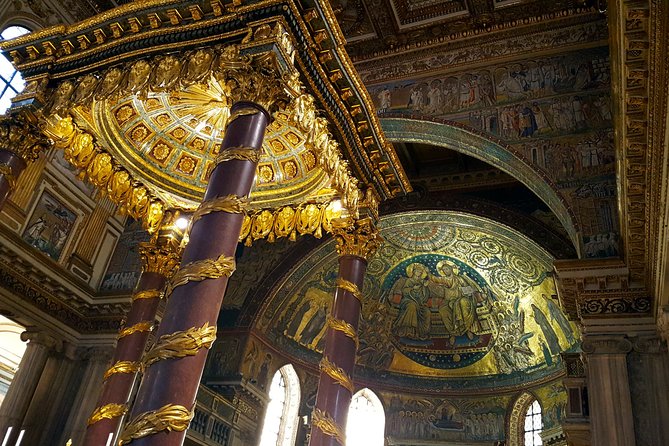
Santa Prassede is the mosaic church. If you like images that feel ancient and layered, this is your kind of stop.
It’s known for having one of the oldest apse mosaics in the world, and it also has a relic tied to the Passion of Christ. This combination matters because it explains how early Christianity used art as devotion, not decoration.
What to do here: slow down for the apse area. Even if you only catch a few scenes clearly, the guide’s framing helps you understand what you’re actually seeing.
Stop 3: San Pietro in Vincoli
This church is famous for two things that together feel like a highlight reel.
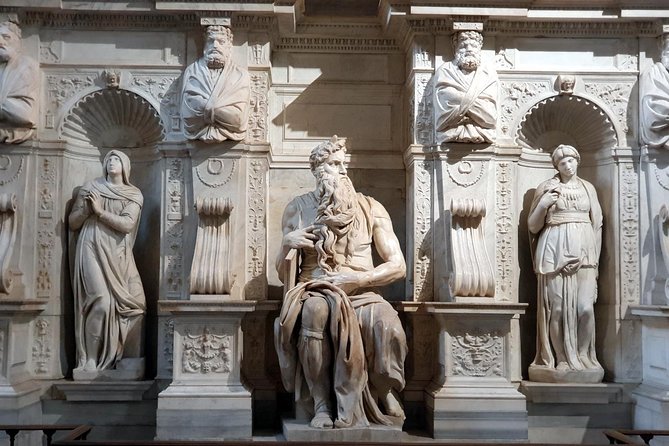
First, there’s Michelangelo’s sculpture of Moses. Second, there are the wonder-working chains of Saint Peter.
This stop is a great reminder that Rome’s religious history isn’t just paintings in frames. It’s also objects and sculpture made to anchor belief.
If you’re someone who usually reads museum labels and still feels lost, this is likely to click. The guide’s explanations connect the artwork to the devotion behind it.
Stop 4: Basilica of San Clemente
San Clemente brings you into depth—literal and historical. You’ll see an impressive apse and one of the oldest church settings in the city.
What I like about this kind of stop is the contrast. After the more famed names and famous relic stories, you get a sense of early Rome’s complexity—how sacred spaces often build on older sacred spaces.
Expect this stop to feel slightly more “discoverable,” because it’s easier to notice how different layers of history can exist within the same footprint.
Stop 5: Ss. Quattro Coronati
This is one of those churches that rewards people who enjoy odd legends and symbolic art.
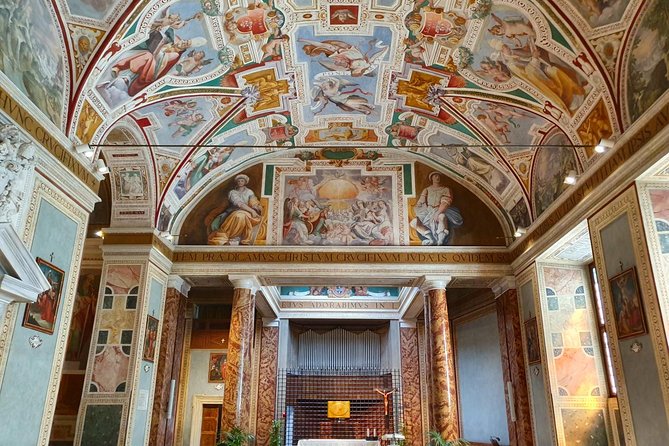
Inside, there’s a fresco depicting the legends of Saint Silvester. This stop is less about one single world-famous object and more about storytelling through image.
If you tend to ignore frescoes because they look busy, don’t. The guide helps you find the logic in the scenes so you can follow the legend instead of just staring at color.
Stop 6: Arcibasilica di San Giovanni in Laterano
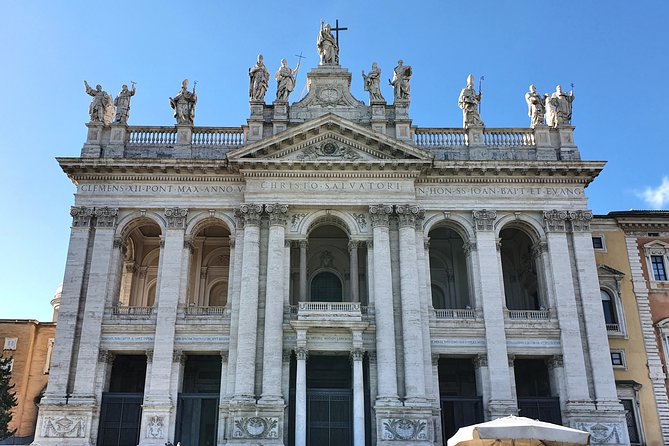
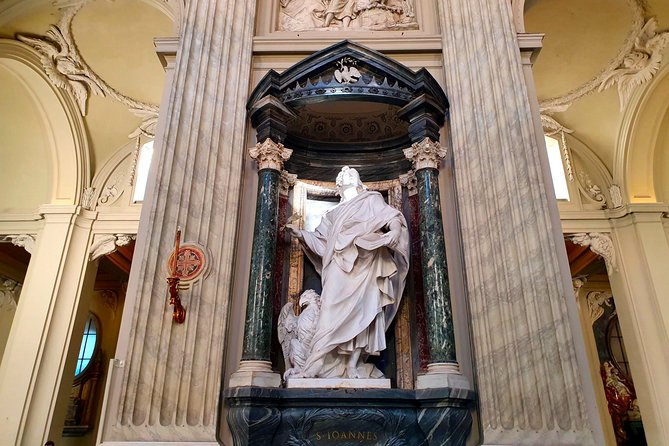
Now we get back to the biggest Catholic gravity. San Giovanni in Laterano is considered one of the most important churches for Catholics, and this stop is about power, relics, and central devotion.
You’ll also encounter relics connected to saints Peter and Paul.
It’s a stop where the church’s importance shows up in sheer presence. Even with a limited visit length, it’s a place where you feel the weight of history.
Stop 7: Pontifical Sanctuary of the Holy Stairs (Scala Sancta)
The Holy Stairs are the emotional peak for many people, even if you’re not religious in the strictest sense. They’re famous for devotion tied to Christ’s Passion.
Here’s a key detail that helps you not feel confused: the tour provides a guided explanation just outside the sanctuary. Then the group is disbanded so you can enter at your own pace.
Important notes for your expectations:
- Talking and photography are not permitted inside
- Your own timing matters, especially during high season
This explains why experiences can feel different from one traveler to another. Some people focus on the devotion itself. Others simply want to see the stairs and understand the story first.
How Jubilee Changes the Holy Door Part of the Day
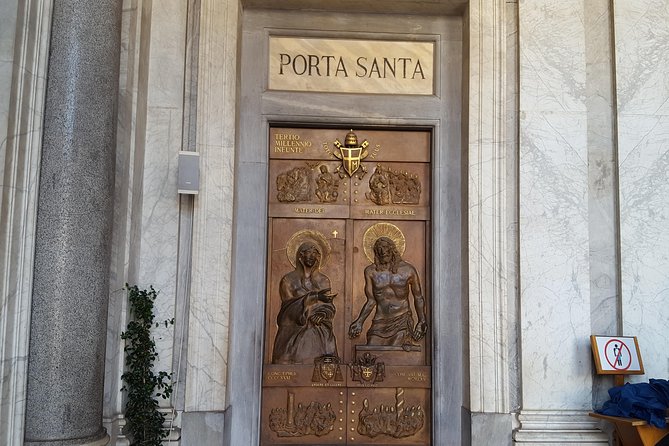
Rome’s Jubilee years bring changes, mainly related to lines and access. This tour states that during jubilee the route might be adapted and the Holy Door passage can’t be guaranteed.
That’s the only honest way to manage expectations in a city where entry rules can shift fast. If you’re traveling specifically to do every Holy Door, treat this as the best guided attempt, not a guaranteed checklist.
Still, you should expect the churches themselves to remain the core of the experience. Even when access changes, the art and religious context are still the point.
Price and Value: Is $83.48 Worth It?
At about $83.48 per person, the value depends on how you travel.
If you like to wander and figure things out with your own reading, you can probably cover some of these churches independently. But you’d lose the “why this matters” layer. The tour is built for interpretation—what relic traditions mean, why specific artworks were chosen, and how the churches connect through Catholic history.
The math also improves because many visits are ticket-free for entry, and you get a mobile ticket to simplify the process. Add in the small group size (max 5) and the guide’s time on-site, and the per-person cost starts to look more like a guided lesson than a sightseeing “bundle.”
Also, this tour typically books ahead (on average, about 53 days). If you’re traveling in a popular period, locking it in earlier is smart.
Who This Tour Suits Best (and Who Might Feel Frustrated)
This is a great fit if you:
- Want Catholic history and church art with explanation, not just photos
- Prefer small groups where questions are actually possible
- Like routes that show lesser-known churches, not only the headline basilicas
You might feel less happy if you:
- Need frequent long breaks or step-free routes
- Struggle with stairs and uneven Roman cobblestones
- Are expecting a leisurely pace with a lot of sitting time
One more practical note: the churches are active places. If you’re sensitive to waiting or crowded moments inside, keep your expectations flexible and let the guide steer.
What to Pack and How to Make the Most of 3–4 Hours
Bring comfortable walking shoes with grip. Even if the distances between churches feel short on a map, Rome’s surfaces are not smooth pavement.
For summer: bring water. The tour covers multiple stops with indoor time but still involves outside walking, plus churches can be warm.
For churches: bring your coverage plan. If your outfit only partially fits the dress rule, a scarf or light layer can save your entry.
And if you’re the type who likes to remember details, use this tactic: before each church starts, pick one thing you want to understand. By the time the guide finishes explaining, you’ll notice it more clearly than if you try to absorb everything.
Should You Book This Holy Doors Small-Group Tour?
Book it if you want a high-value church route with context, and you’re comfortable with a walking pace that includes stairs. This tour is especially compelling because it focuses on the sacred art and relic stories that make Rome’s churches feel alive, not just old.
Skip or reconsider if your body needs a more relaxed plan with fewer steps, or if you’re counting on a perfect Holy Door “passage” outcome during jubilee conditions. The route is designed well, but Rome can still be Rome.
If you can handle the walking and want a richer Rome through its churches, this one belongs on your short list.
FAQ
How long is the Rome Holy Doors small-group walking tour?
It runs about 3 to 4 hours.
What time does the tour start?
The tour starts at 9:00 am.
How many people are in the group?
The maximum group size is 5 travelers.
Is the tour in English?
Yes, it’s offered in English.
Do I need tickets or is it included?
You get a mobile ticket. Admission for the listed churches is free.
What should I wear to enter the churches?
You’ll need to cover shoulders, back, and knees to enter the churches.
Where does the tour meet and end?
It starts at Statua di San Giovanni Paolo II (Esquilino) and ends at Basilica of San Giovanni in Laterano, near the Line A metro station San Giovanni.
Will I definitely get inside the Holy Stairs and Holy Doors?
The tour includes a stop at the Pontifical Sanctuary of the Holy Stairs. During jubilee, the itinerary may be adapted and passage through Holy Doors can’t be guaranteed.
What’s the cancellation and weather policy?
You can cancel for a full refund up to 24 hours in advance. The tour requires good weather; if it’s canceled due to poor weather, you’ll be offered a different date or a full refund.
More Walking Tours in Rome
- Rome: Guided Food Walking Tour with Wine in Trastevere
★ 4.9 · 3,105 reviews - Rome: Trastevere & Campo de Fiori Street Food Walking Tour
★ 4.9 · 2,768 reviews - Rome: Paranormal Night Walking Tour & Secret Backstreets
★ 4.9 · 1,921 reviews - Rome: Trastevere Street Food Walking Tour with Local Expert
★ 4.8 · 1,784 reviews - Rome: Small-Group Guided Day or Night Walking Tour
★ 4.8 · 1,009 reviews - Rome by Night Walking Tour – Legends & Criminal Stories
★ 4.5 · 1,003 reviews
More Tours in Rome
- Vatican Museums, Sistine Chapel & St. Peter’s Basilica Tour
★ 4.3 · 73,970 reviews - Vatican Museums, Sistine Chapel & St Peter’s Basilica Guided Tour
★ 4.5 · 39,149 reviews - Rome: Colosseum, Palatine Hill and Roman Forum Guided Tour
★ 4.8 · 32,814 reviews - Rome: Guided Tour of Colosseum, Roman Forum & Palatine Hill
★ 4.7 · 27,897 reviews - Rome: Colosseum, Roman Forum and Palatine Hill Guided Tour
★ 4.5 · 23,903 reviews - Rome: Colosseum Arena Floor, Palatine & Forum Guided Tour
★ 4.5 · 20,180 reviews
More Tour Reviews in Rome
- Vatican Museums, Sistine Chapel & St. Peter’s Basilica Tour
★ 4.3 · 73,970 reviews - Vatican Museums, Sistine Chapel & St Peter’s Basilica Guided Tour
★ 4.5 · 39,149 reviews - Rome: Colosseum, Palatine Hill and Roman Forum Guided Tour
★ 4.8 · 32,814 reviews - Rome: Guided Tour of Colosseum, Roman Forum & Palatine Hill
★ 4.7 · 27,897 reviews - Rome: Colosseum & Forum with Audio Guide App -Optional Arena
★ 4.2 · 24,770 reviews - Rome: Colosseum, Roman Forum and Palatine Hill Guided Tour
★ 4.5 · 23,903 reviews
Just added to our Rome reviews





Walking Tours, compared.
 ★ 4.9Guided Food Walking Tour with Wine in TrastevereFrom $1003,105 reviews
 ★ 4.9Trastevere & Campo de Fiori Street Food Walking TourFrom $512,768 reviews
 ★ 4.9Paranormal Night Walking Tour & Secret BackstreetsFrom $341,921 reviews
 ★ 4.8Trastevere Street Food Walking Tour with Local ExpertFrom $571,784 reviews
 ★ 4.8Small-Group Guided Day or Night Walking TourFrom $231,009 reviews
 ★ 4.5Rome by Night Walking Tour – Legends & Criminal StoriesFrom $141,003 reviews
 ★ 4.4Guided City Center Evening Sightseeing Walking TourFrom $46953 reviews
 ★ 4.9Small-Group City Highlights Moonlight Walking TourFrom $29949 reviews
Browse the lists this tour appears in