
Reviewed · ROME
Rome and Art: Michelangelo, Raphael, Bernini, Caravaggio
Rome’s art comes with a scandalous twist. This 3-hour walk uses an art expert to connect Renaissance masterpieces and Baroque drama through the streets where those stories actually unfolded. You’re not just ticking off famous sights; you’re hearing how artists lived, competed, and staged their reputations in public.
I especially like the way the tour turns famous names into people with messy lives. I also love Louisa’s storytelling style, repeatedly praised for being clear and dynamic, so the history lands without feeling like a lecture. You get the art gossip layer too, with mentions of courtesans and scandals woven into what you’re seeing.
The main drawback to plan for is comfort and mobility: it’s a walking route that includes churches, and it’s not suitable for wheelchair users or people with motion sickness. You’ll also want to dress for churches (shoulders covered), because this tour asks you to enter sacred spaces as part of the experience.
In This Review
- Key highlights worth knowing
- Art With Street-Level Drama: How This Walk Stays Interesting for 3 Hours
- Louisa’s Storytelling: The Reviews’ Favorite Feature (and What You’ll Feel on the Walk)
- Starting in Via della Stamperia: Your First Clue About the Whole Tour
- Trevi Fountain to Sant’Ignazio di Loyola: Famous Views, Not Just Famous Names
- The Pantheon and Raphael: Why Renaissance Changes the Tone
- Caravaggio at St. Louis of the French: The Trilogy Story You’ll Remember
- Piazza Navona: Bernini vs Borromini and the Art of Rivalry
- The Human Side of Great Art: Costanza de Cupis, Pasquino, and Fiammetta
- Price and Tickets: Getting Value From $53 in 3 Hours
- Who Should Book This (and Who Should Skip It)
- Should You Book This Rome Art Walk?
- FAQ
- How long is the tour?
- What is the price per person?
- Is the tour in English, and is there a live guide?
- How large is the group?
- Where do I meet the guide?
- Are Pantheon tickets included?
- What should I wear since the tour includes churches?
Key highlights worth knowing
- Small group (max 10) keeps the walk interactive and easier to manage through crowded streets
- Louisa’s guided storytelling is the big standout in the reviews: structured, lively, and easy to follow
- Trevi Fountain to Pantheon to Piazza Navona covers Rome’s top art backdrops in one smooth circuit
- Caravaggio’s trilogy at St. Louis of the French comes with a strong narrative hook, not just art facts
- Bernini vs Borromini is explained through rivalry, not just labels on a map
- Ending at Piazza Fiammetta brings the focus toward an underrated woman in Italian history
Art With Street-Level Drama: How This Walk Stays Interesting for 3 Hours
This is the kind of Rome tour that keeps your eyes moving. The route is built around major touchpoints in the center, but the real engine is the stories tying artists to places: where they worked, who they bothered, and why power mattered as much as talent.
What makes it feel different from a standard “see-and-summarize” tour is the emphasis on human stakes. The guide frames Renaissance and Baroque art as the result of ambition, conflict, and reputation. That helps when you’re staring at buildings that have been admired for centuries—suddenly they feel like stages, not museums.
You also get a practical pace: short guided stops, then walking time to reposition and re-focus. In a city like Rome, that matters. You don’t want to spend all your energy sitting inside facts while the afternoon slips away.
Weighing this one up? Here is how a few Rome favourites compare:
- Vatican Museums, Sistine Chapel & St. Peter’s Basilica Tour
★ 4.3 · 73,970 reviews - Vatican Museums, Sistine Chapel & St Peter’s Basilica Guided Tour
★ 4.5 · 39,149 reviews - Rome: Colosseum, Palatine Hill and Roman Forum Guided Tour
★ 4.8 · 32,814 reviews - Rome: Guided Tour of Colosseum, Roman Forum & Palatine Hill
★ 4.7 · 27,897 reviews
Louisa’s Storytelling: The Reviews’ Favorite Feature (and What You’ll Feel on the Walk)
English-speaking, live guide, and small group size are the obvious benefits. The deeper one is the way Louisa tells the story: clear, structured, and animated, with enough variety to keep you from tuning out.
The art details stick better when they’re paired with narrative. For example, the tour doesn’t treat Bernini, Borromini, and Caravaggio like isolated geniuses; it positions them in competition and scandal, where patrons and public opinion shaped what they could make. When you hear the “why” behind the work, the “what” becomes easier to remember.
If you like your history with personality—less dust, more human behavior—this is your style. The reviews make one thing consistent: the guide invites you to imagine what was happening around those artists, not just recite dates.
Starting in Via della Stamperia: Your First Clue About the Whole Tour
You start in the area of Via della Stamperia, meeting in front of Hotel Accademia. That neighborhood is perfect for this format because you can roll directly into central Rome without long transfers. It’s also the kind of starting point that feels like you’re stepping into the real city fabric, not starting on a tourist-only island.
From the first minutes, the tour sets expectations: you’ll be walking through the historical center and hearing about secret places tied to the artists. You’ll hear that theme repeatedly as you move—public masterpieces first, then the quieter corners where the stories get stranger.
This is one reason the small-group size matters. A group of up to 10 can slow down for the parts that need it—like a specific viewpoint, a doorway, or a façade detail—without getting stuck behind a larger crowd.
Trevi Fountain to Sant’Ignazio di Loyola: Famous Views, Not Just Famous Names
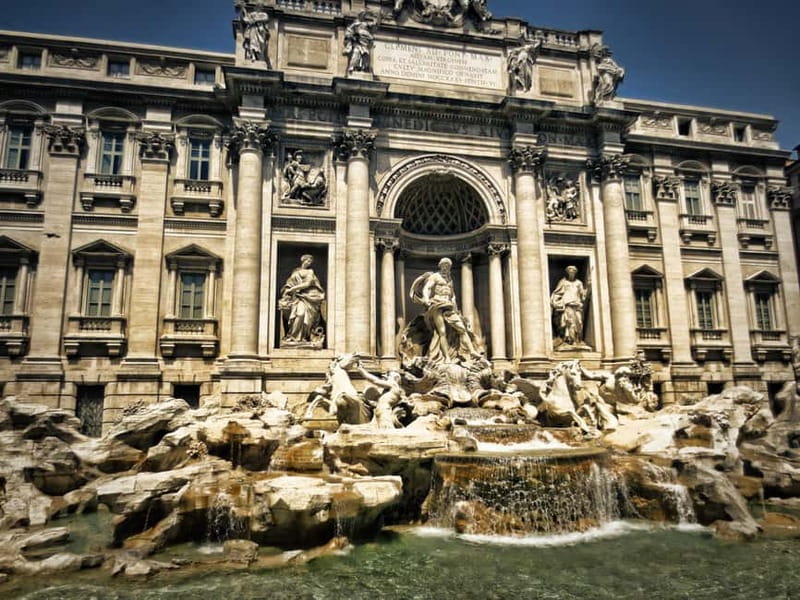
The walk begins at Trevi Fountain, with a guided stop around 20 minutes. Trevi is one of those sights where most people assume they already “know” it—until someone frames it in the right story. Here, the fountain isn’t just a photo moment. It’s part of the tour’s bigger idea: artists and patrons building power in public spaces.
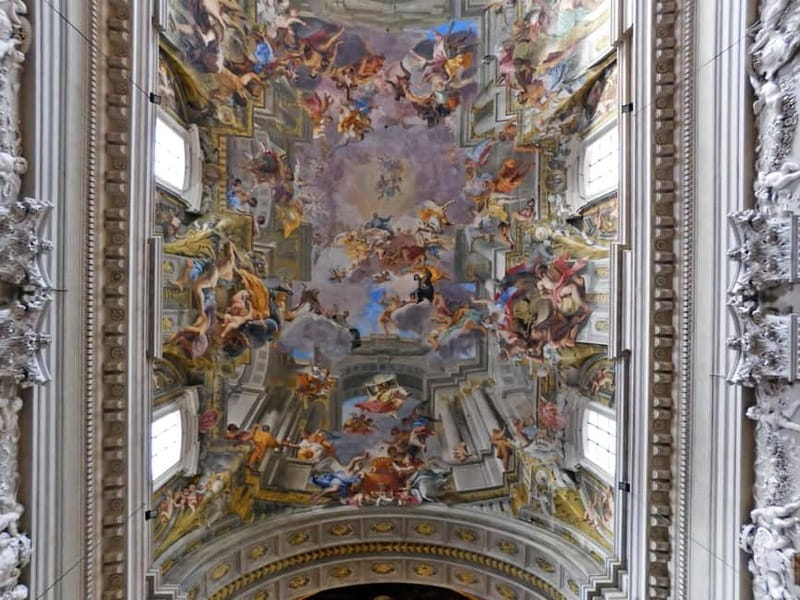
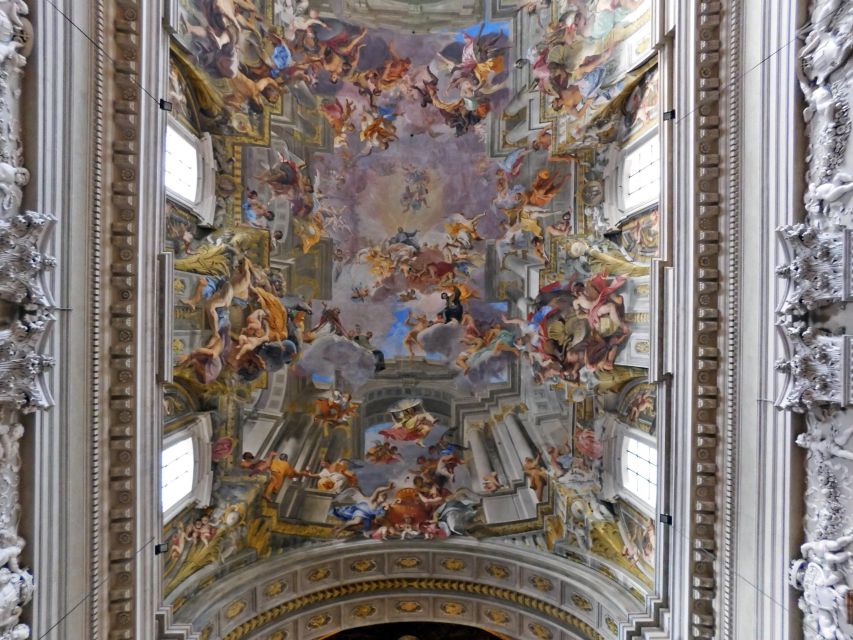
Next you head to the Church of Sant’Ignazio di Loyola for another guided visit (about 20 minutes). Churches work well for this kind of theme tour because they’re where art, politics, and devotion overlap. You’re in a setting where symbolism is normal, and the guide can connect what you see to what it was meant to communicate.
A practical note: because churches are part of the experience, dress matters. Plan on comfortable clothes that cover shoulders. Shorts and mini-skirts aren’t recommended, and you don’t want your outfit turning into a stress test mid-tour.
The Pantheon and Raphael: Why Renaissance Changes the Tone
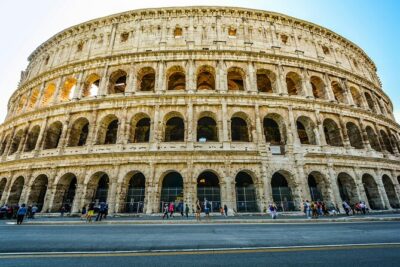
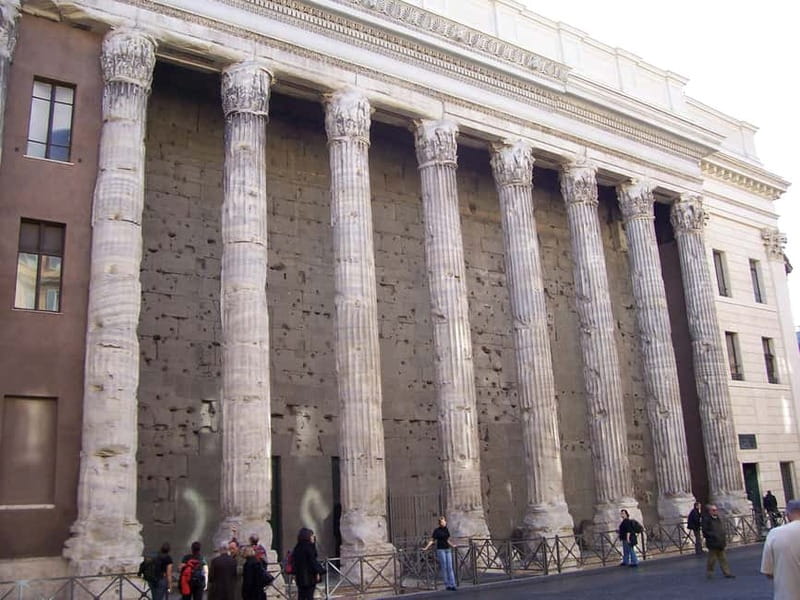
You move onward to the Pantheon area, with a shorter guided stop (around 15 minutes). The Pantheon always has its own gravity, even before the guide starts talking. What makes this part worthwhile is the focus on Raphael—how Renaissance thinking and aesthetics fit into the story the tour is building.
This is where the tour’s structure pays off. The morning of art in Rome can feel like a swirl of different eras, unless someone helps you connect the dots. By placing Raphael at the Pantheon stop, the guide gives you a calmer “anchor” before the story shifts more sharply into Baroque drama.
One consideration: Pantheon entry is a separate practical piece. Pantheon tickets are not included, so you should decide in advance whether you want to go inside on your own timeline. If you only care about the guided narrative around it, you can still benefit from the explanation without making this the center of your logistics.
Caravaggio at St. Louis of the French: The Trilogy Story You’ll Remember
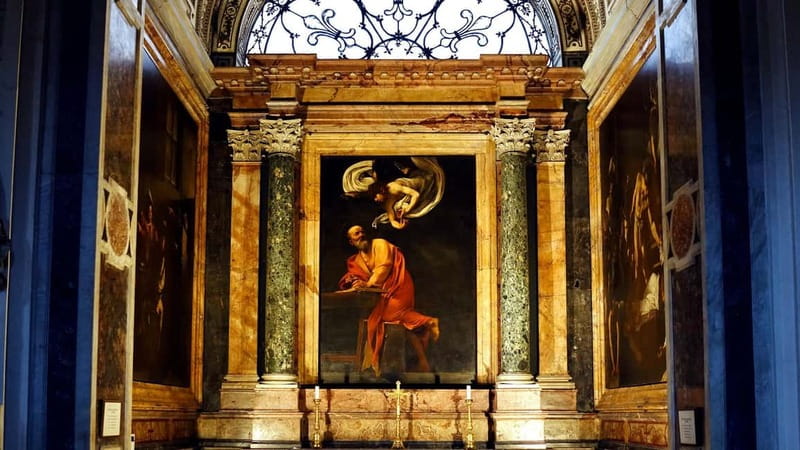
The tour includes the Church of St. Louis of the French for a guided stop of about 20 minutes. This is the big Caravaggio moment, built around a trilogy of paintings. The tour’s pitch is clear: there’s a story behind the paintings that feels almost unbelievable, and the guide uses that to make the art more personal.
Caravaggio works best when you treat him like a real-life force. He didn’t create in a vacuum, and the guide frames these works in that spirit—where passion, competition, and shock factor into what you’re looking at. Even without getting too technical, you come away with a sense of what made Caravaggio’s world so tense.
Also, churches can change the way you experience art. Light, space, and distance affect what you notice. Your guide helps you look for the details that matter, rather than letting you wander for 20 minutes trying to decode everything yourself.
If you’re the type who likes stories with a darker edge, this part will hit. The tour’s “scandal” theme shows up here in a way that feels earned, not forced.
Piazza Navona: Bernini vs Borromini and the Art of Rivalry
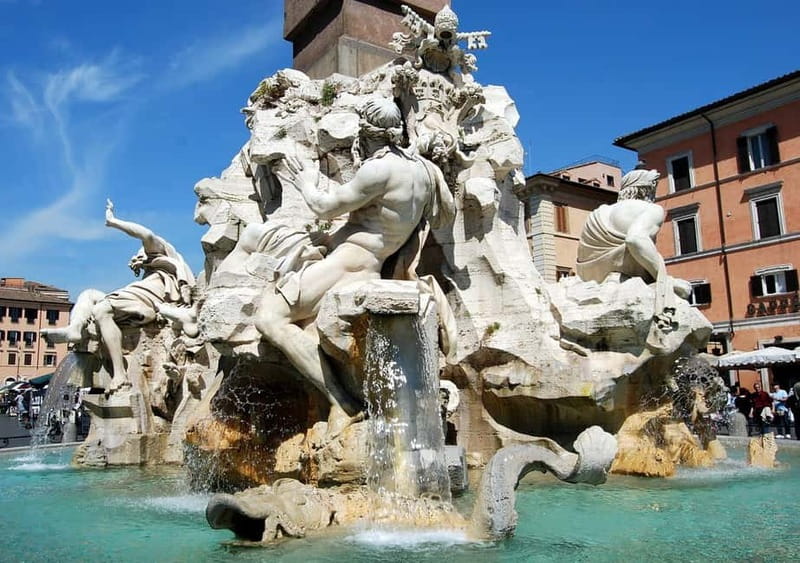
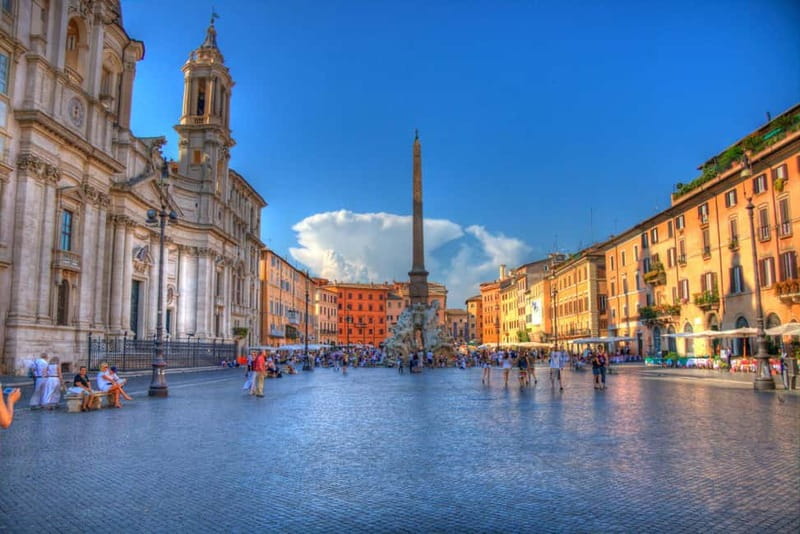
Piazza Navona is where the tour turns up the dramatic volume. You spend about 20 minutes there with guided explanation tied to competition between two major sculptors: Bernini and Borromini. Instead of treating their work like museum labels, the guide uses the rivalry angle to explain how artistic choices connect to ambition and status.
This matters because Baroque art is theatrical by design. When you understand that artists were competing for patronage and prestige, the emotion in the work feels less random and more intentional. Even if you don’t know every term, you can feel the logic behind the style.
There are also playful legends woven into this area of the story. The tour mentions the funny legend of Pasquino and the sad destiny of Costanza de Cupis, and those bits make the streets feel like they’re holding secrets. They’re the kind of details you’ll repeat to friends later because they’re memorable on their own.
The Human Side of Great Art: Costanza de Cupis, Pasquino, and Fiammetta
One of the best things about this tour is how it refuses to make artists the only characters. You get a broader cast, which is a relief in Rome, where too many narratives focus on kings, generals, and a few famous men.
Costanza de Cupis is handled with care through the tour’s mention of her sad destiny. Pasquino is treated as a funny legend, which gives the walk breathing room. That balance keeps you from getting stuck in heavy tone for every stop.
Then you end at the House of Fiammetta, finishing in front of Piazza Fiammetta. The tour frames Fiammetta as one of the most interesting and underrated women of Italian history. Ending there is a smart choice because it shifts the focus: you’re leaving with an image of a person who lived inside the same culture that shaped the art—rather than only thinking about the creators.
Price and Tickets: Getting Value From $53 in 3 Hours
At $53 per person for a 3-hour, English live guided walk with a small group, the value comes from three things.
First, you’re getting a guided route through multiple major art settings in central Rome. If you tried to assemble that on your own—finding stories, matching them to the right places, and reading enough to make it meaningful—you’d spend time and still miss the connections a good guide supplies.
Second, the tour is designed as story-driven looking. When the guide teaches you what to notice in churches and public squares, you’re not just seeing; you’re understanding faster. That’s usually where guided tours earn their cost.
Third, the Pantheon ticket detail is the one place you should plan ahead. Pantheon tickets aren’t included, so if you want to enter, budget that extra step. If you only want the guided narrative around it, the missing ticket won’t matter much—but you should still decide before you arrive so you don’t get surprised.
Overall, for people who want big art names—Michelangelo, Raphael, Bernini, Caravaggio in the tour’s framing—plus the gossip layer, this is a fair price for a focused half-day.
Who Should Book This (and Who Should Skip It)
This tour fits best if you like art with personality. If you enjoy human stories—competition, scandals, courtesans, and rivalry—and you want explanations tied to what you can see in the streets, you’ll likely love the format.
It also works well for first-time Rome visitors who want a strong art thread without a long day. You’re getting central highlights and meaningful stops in a compact time window.
But it’s not for everyone. It’s not suitable for wheelchair users and it’s not suitable for people with motion sickness. It’s also not aimed at very elderly visitors (the tour notes people over 80 are not suitable). If you fall into any of those categories, you’ll be happier choosing a different format with more flexibility.
Finally, if you hate churches or prefer only outdoor sights, know that churches are a core part of the tour. You’ll need to dress accordingly with shoulders covered.
Should You Book This Rome Art Walk?
If your idea of a great Rome day includes art plus stories—especially Baroque-era tension and Caravaggio-level drama—this tour is a solid pick. The repeated praise for Louisa’s clear, lively storytelling is exactly what turns a city tour into a memory you can keep.
Book it if you want the art names in context and you like learning how artists lived, fought for status, and left clues in the places you can still visit today. Skip it if mobility or motion sensitivity is an issue, or if church visits don’t work for you.
If you’re planning around the Pantheon, check your ticket plan early. Then go in ready to listen—Rome’s best art stories show up when you stop treating the city like a backdrop.
FAQ
How long is the tour?
The tour lasts 3 hours.
What is the price per person?
The price is $53 per person.
Is the tour in English, and is there a live guide?
Yes. It’s a live English tour with an art expert guide.
How large is the group?
The group is small, limited to 10 participants.
Where do I meet the guide?
The meeting point is in front of Hotel Accademia on via della Stamperia.
Are Pantheon tickets included?
No. Pantheon tickets are not included.
What should I wear since the tour includes churches?
You should wear comfortable clothes that cover your shoulders. Shorts and mini-skirts are not recommended.
More Tour Reviews in Rome
- Vatican Museums, Sistine Chapel & St. Peter’s Basilica Tour
★ 4.3 · 73,970 reviews - Vatican Museums, Sistine Chapel & St Peter’s Basilica Guided Tour
★ 4.5 · 39,149 reviews - Rome: Colosseum, Palatine Hill and Roman Forum Guided Tour
★ 4.8 · 32,814 reviews - Rome: Guided Tour of Colosseum, Roman Forum & Palatine Hill
★ 4.7 · 27,897 reviews - Rome: Colosseum & Forum with Audio Guide App -Optional Arena
★ 4.2 · 24,770 reviews - Rome: Colosseum, Roman Forum and Palatine Hill Guided Tour
★ 4.5 · 23,903 reviews




