
Reviewed · HISTORICAL TOURS
Rome After Dark Mysteries Myths and Haunted History
One eerie walk can change how you see Rome.
This Rome After Dark tour mixes haunted history with the real geography of the city, so you’re not just hearing spooky talk—you’re using the streets, squares, and monuments to understand why the myths stuck. I especially like the way it keeps the pace tight (about 1 hour 20 minutes) and the stories focus on the darker turns of Roman life, from executions to plague legends. One thing to consider: it ends in a lively nightlife square, and you’ll want to plan on buying your own drink or snack if you stop for one.
The route is designed to help you feel oriented fast, even when it’s dark outside. You’ll get night views without getting lost, and you’ll step away from some of the busiest daytime foot traffic. If you’re hoping for long museum time or indoor cooling breaks, this is a walking tour, so bring shoes you trust and be ready for evening chill.
Key highlights at a glance
- Castel Sant’Angelo stories tied to executions, the Passetto di Borgo escape corridor, and Saint Michael’s 590 AD plague vision
- Via Giulia at night: Pope Julius II’s Renaissance “direct route” lined with grand palaces
- Piazza Farnese and its famous fountains made from ancient Roman bathtubs
- Passetto del Biscione: a covered passage with remnants of medieval frescoes in a quiet corner near Campo de’ Fiori
- Campo de’ Fiori after dark: market energy by day, bar scene at night, plus Giordano Bruno’s statue in a square with a darker past
In This Review
- Why Rome After Dark Feels Different Than Daytime Sightseeing
- The 9:00 pm Walk Route: What 1h20 Looks Like
- Castel Sant’Angelo: Prison Walls, the Passetto Escape Route, and Saint Michael
- Via Giulia at Night: Pope Julius II’s Renaissance Direct Route
- Piazza Farnese and the Ancient Bathtub Fountains
- Passetto del Biscione: A Quiet Square With a Covered Passage
- Campo de’ Fiori After Dark: Market Square, Giordano Bruno, and Executions
- Guides, Storytelling Style, and What You’ll Actually Take Away
- Price and Value: Why $4.58 Can Be a Smart Rome Evening Plan
- Who Should Book This Tour (and Who Might Skip It)
- Final Call: Should You Book Rome After Dark Mysteries, Myths and Haunted History?
- FAQ
- How long is the Rome After Dark tour?
- What time does the tour start?
- Where do I meet the guide, and where does the tour end?
- Is the tour in English?
- Is a mobile ticket provided?
- What is included in the price?
- Is food or drink included?
- Do I need to buy tickets for the sights?
- What group size should I expect?
- Can I cancel for a full refund?
Why Rome After Dark Feels Different Than Daytime Sightseeing
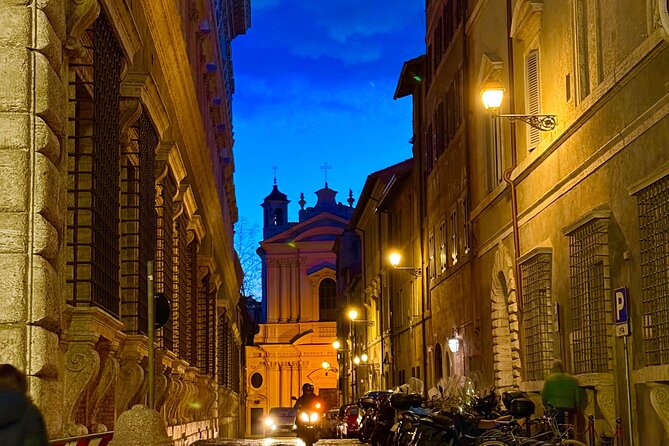
Rome by day can be overwhelming. At 9:00 pm, the city flips into a calmer rhythm: the same streets feel sharper, shadows feel longer, and the buildings look almost theatrical.
What makes this tour work is that it doesn’t just chase spooky vibes. It ties the eerie myths and “haunted history” themes to real places, so you’re learning why a fortress, a river, a church route, or a square developed a reputation over time.
And because you’re walking a compact loop, it’s an evening plan that doesn’t steal half your trip. It’s also a good way to see “Rome at night” without spending your night trying to figure out where you are.
The 9:00 pm Walk Route: What 1h20 Looks Like
You start at Via del Banco di Santo Spirito, 25, then finish at Piazza Campo de’ Fiori. The tour is about 1 hour 20 minutes total, with short stop times that keep the momentum going instead of turning into a slow crawl.
You’ll be on foot through central Rome, and the stops are close enough that the evening stays manageable. Admission is free at each of the featured stops, which helps keep the tour simple and budget-friendly.
It’s offered in English, uses a mobile ticket, and runs with a maximum group size of 100. Most people can participate, and service animals are allowed.
If you’re planning the rest of your night, keep a little space open at the end. The tour finishes in Campo de’ Fiori, where bars line the square, and you can extend the evening on your own.
Worth a look next to this Rome booking:
- Rome in a Day Tour with Vatican, Colosseum and Historic Center
★ 4.5 · 1,042 reviews - Rome Food Tour in the Historic Centre with 8+ Food Tastings
★ 5.0 · 1,000 reviews - Rome: Forbidden History Walking Tour & Pub Crawl with Drinks
★ 4.9 · 688 reviews - Rome: Guided Bar Crawl with Drinks & Dark History
★ 4.9 · 444 reviews
Castel Sant’Angelo: Prison Walls, the Passetto Escape Route, and Saint Michael
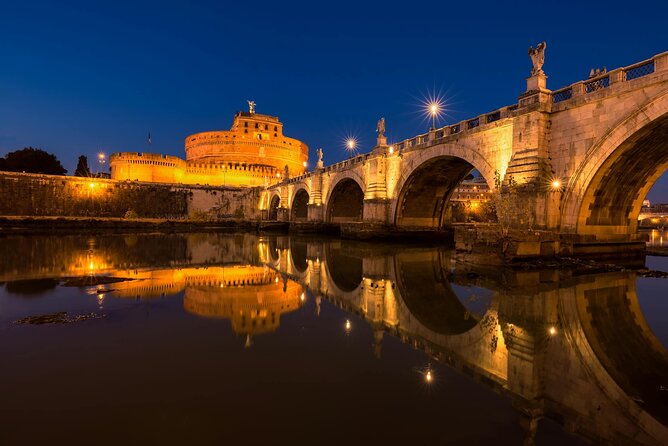
Castel Sant’Angelo is where the tour really earns its haunted-history label. You’ll get a focused rundown of the fortress’s role in Rome’s darker past, including its use as a prison and a place associated with punishment.
The story gets especially vivid with the Passetto di Borgo, the fortified corridor that links the castle to the Vatican area. This isn’t just a cool medieval detail—it’s an example of how power responded to danger, with an escape route built for moments when leaders needed to move quietly and fast.
You’ll also hear how the Tiber River ties into defense and the city’s growth. In Rome, geography isn’t background—it’s a reason events happened where they did.
Finally, Saint Michael the Archangel is part of the castle’s identity. You’ll learn about the apparition in 590 AD, presented as a turning point that signaled the end of a devastating plague and helped give the fortress its name.
One practical note: this stop can be emotionally heavy if you don’t like execution-related stories. The tour frames it as history—still, it’s worth knowing the tone before you arrive.
Via Giulia at Night: Pope Julius II’s Renaissance Direct Route
Next comes Via Giulia, one of Rome’s elegant Renaissance-era streets. The big idea here is planning: Pope Julius II designed it in the early 16th century as a direct route through the city, and you’ll understand how that kind of urban design shaped daily movement.
Even in the dark, the street’s character comes through. You’ll see how it’s lined with Renaissance palaces and churches, and you’ll hear about hidden courtyards—those quieter spaces that make Rome feel layered rather than flat.
This is a lighter stop compared to Castel Sant’Angelo, but it still fits the tour’s theme. Rome’s “mystery” isn’t always supernatural. Sometimes it’s architecture, access, and the way certain routes were built for power, money, and influence.
If you’re the type who enjoys city planning as much as ancient ruins, you’ll probably find this stretch satisfying. It’s short, but it gives you a new way to look at Rome’s street logic.
Piazza Farnese and the Ancient Bathtub Fountains
Piazza Farnese is a classic Rome square, and the tour uses it well. The spotlight is Palazzo Farnese, a grand Renaissance palace associated with famous architects like Michelangelo.
What I like about this stop is that it mixes big-name art history with a detail you won’t expect. The square has two large fountains made from ancient Roman bathtubs, so you’re literally looking at how reused materials helped shape later beauty.
This is the kind of moment that works at night. The open square makes it easier to see the architecture clearly, and the lighting helps the monuments look crisp without the midday crush.
Keep an eye out for how the space feels. Squares in Rome often served as stages—market spots, political spaces, and gathering points. Here, the tour nudges you to notice the “why” behind the dramatic setting.
Passetto del Biscione: A Quiet Square With a Covered Passage
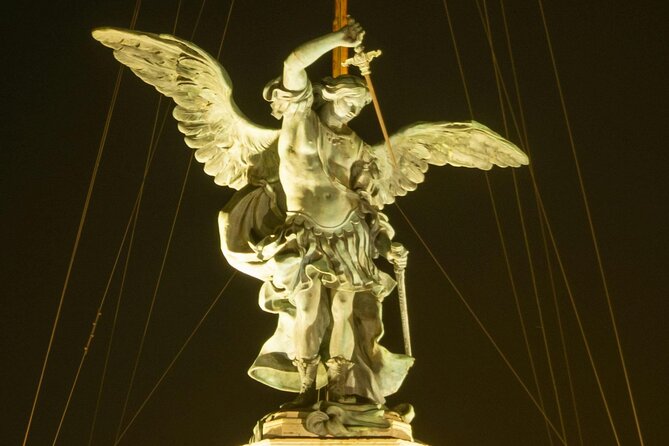
Passetto del Biscione is smaller, quieter, and more “wait, what is that?” than the earlier stops. You’ll be taken near Campo de’ Fiori to a small hidden square known for old-world charm and a calmer atmosphere than the surrounding streets.
The key attraction is the covered passageway with remnants of medieval frescoes. Even if you only catch part of what’s left, it changes how you read the area. Instead of thinking only about the famous open piazzas, you notice the in-between spaces that held daily movement and secrets.
This stop is a nice palate cleanser. If the earlier sites leaned into fortress drama and Renaissance grandeur, Passetto del Biscione shifts into mystery and atmosphere.
It’s also a useful reminder that Rome’s layers aren’t just stacked in big monuments. They show up in small corridors and tucked-away corners too.
Campo de’ Fiori After Dark: Market Square, Giordano Bruno, and Executions
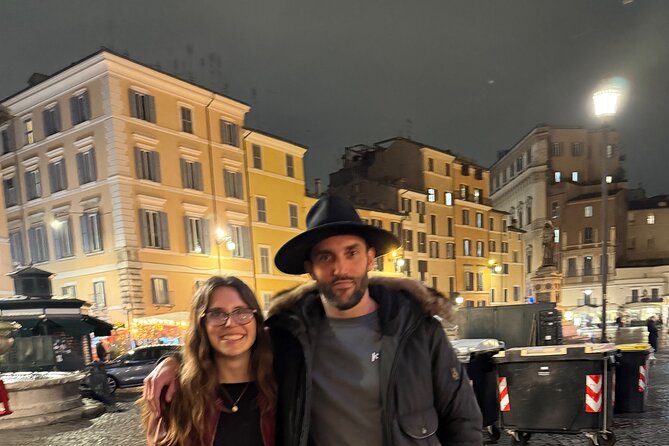
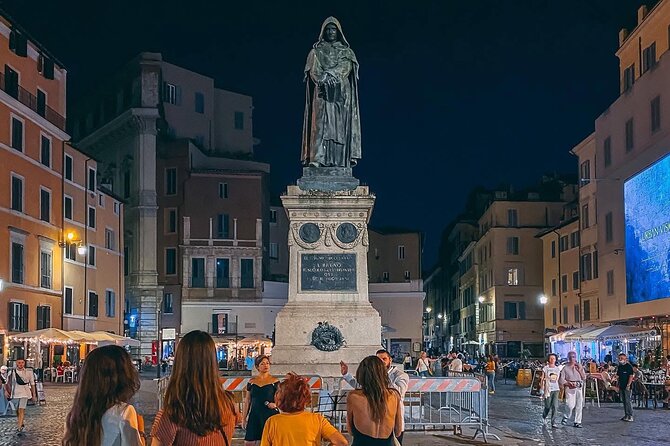
Campo de’ Fiori is where the tour ends—and it’s smart. The square is lively by day with its daily market selling produce, flowers, and local goods. At night, it turns into a social hub with restaurants and bars, so it’s easy to keep the evening going.
But the tour doesn’t let the square stay charming. In the center stands the statue of philosopher Giordano Bruno, and the story includes the square’s darker past, including its association with public executions.
That contrast is exactly why this stop works for the tour’s theme. Rome isn’t one mood. It’s many moods stacked on top of each other, and Campo de’ Fiori is a clear example.
Also, because bars line the square, this is where you can grab a drink if you want. Just remember food or drink is not included—so budget separately if you plan to sit down.
Guides, Storytelling Style, and What You’ll Actually Take Away
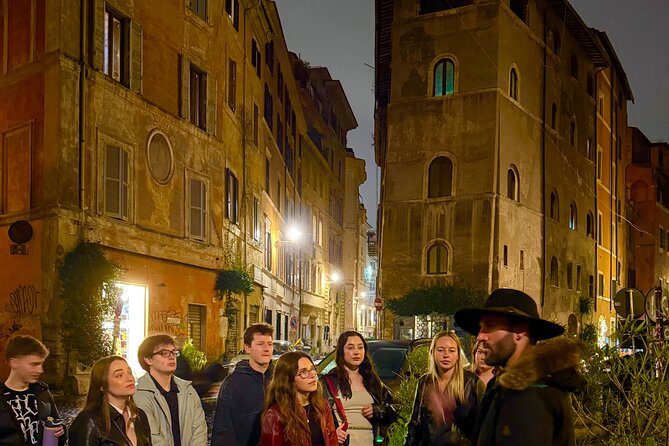
This tour is led by a local guide, and the biggest difference-maker is the tone of the storytelling. One guide named in participant feedback is Emilie, praised for being very knowledgeable and turning the evening into a quick, absorbing history session without dragging.
Another guide named is Mike, described as personable with a casual, conversational approach that made listening easy. That matters in Rome at night, when you don’t want a lecture—you want a story that fits the streets you’re standing in.
What you’re taking away isn’t just names. You’re learning how events became landmarks and how legends attached themselves to real locations. You’ll also get a feel for Rome’s defensive logic—fortresses, corridors, and the river’s role—and how that thinking shaped the city.
If you love classic horror-movie energy but prefer it tied to actual Roman places, this style fits. It’s not just “spooky for spooky’s sake.” It’s spooky because the history behind it is dramatic.
Price and Value: Why $4.58 Can Be a Smart Rome Evening Plan
At $4.58 per person, this is priced like a budget-friendly add-on, but the value comes from what you get: a haunted-themed tour with a local guide, a tight route, and free admissions at the featured stops.
The biggest value element is time. Most visitors spend evenings either resting or making a long dinner run. This gives you a structured, story-led walk that uses the night light and the city’s atmosphere, without eating your entire evening.
Also, because each featured stop is listed with admission ticket free, you’re not hit with multiple attraction fees during the tour. That keeps the cost predictable.
One more value factor: the meeting-to-finish route means you don’t have to backtrack. Starting near Castel Sant’Angelo area and ending in Campo de’ Fiori helps you stitch the tour into dinner or a post-tour drink.
Who Should Book This Tour (and Who Might Skip It)
This is a great fit if you want a different kind of Rome evening. It’s especially good for people who enjoy horror-adjacent storytelling, myths, and the darker side of history, but still want it tied to actual sites you can point to.
It’s also a strong choice if you’re tired from walking all day. The duration is short, the route stays compact, and the stop times are built for an evening pace instead of a full-day grind.
You might skip it if you need a very light, cheerful tour. The themes include executions and plague-era legends, so the tone is not all fun and fantasy.
And if you dislike walking at night, plan accordingly. You’ll be outdoors through multiple stops, so comfortable shoes and a jacket help a lot.
Final Call: Should You Book Rome After Dark Mysteries, Myths and Haunted History?
If you’re looking for a Rome evening plan that’s affordable, guided, and story-driven, this one is a strong yes. The route hits five memorable locations and turns them into a coherent narrative about power, fear, and legend—without requiring museum time or extra tickets.
I’d book it if you want to see Rome illuminated at night and get your bearings fast. I’d also book it if you like the idea of learning the darker context behind famous places like Campo de’ Fiori, instead of only taking in the nightlife surface.
If you prefer daytime sightseeing, or you don’t enjoy execution-related history, you may want a calmer alternative. But if your ideal evening is a short walking tour with spooky threads you can verify on the street, this one fits the mood.
FAQ
How long is the Rome After Dark tour?
The tour lasts about 1 hour 20 minutes.
What time does the tour start?
It starts at 9:00 pm.
Where do I meet the guide, and where does the tour end?
You meet at Via del Banco di Santo Spirito, 25, 00186 Roma RM, Italy, and the tour ends in Piazza Campo de’ Fiori, 00186 Roma RM, Italy.
Is the tour in English?
Yes, it’s offered in English.
Is a mobile ticket provided?
Yes, the tour includes a mobile ticket.
What is included in the price?
What’s included is a haunted tour with a local guide.
Is food or drink included?
No. Food or drink is not included if the tour stops at bars.
Do I need to buy tickets for the sights?
No. The featured stops are listed as Admission Ticket Free.
What group size should I expect?
The tour has a maximum of 100 travelers.
Can I cancel for a full refund?
Yes. You can cancel up to 24 hours in advance for a full refund. If you cancel less than 24 hours before the start time, the amount paid is not refunded.
More Historical Tours in Rome
- Rome in a Day Tour with Vatican, Colosseum and Historic Center
★ 4.5 · 1,042 reviews - Rome Food Tour in the Historic Centre with 8+ Food Tastings
★ 5.0 · 1,000 reviews - Rome: Forbidden History Walking Tour & Pub Crawl with Drinks
★ 4.9 · 688 reviews - Rome: Guided Bar Crawl with Drinks & Dark History
★ 4.9 · 444 reviews - Rome: Vespa Photo Tour with Historic City Highlights
★ 5.0 · 395 reviews - Twilight Treasures: An Evening Tour Through Rome’s Rich History
★ 4.5 · 263 reviews
More Tour Reviews in Rome
- Vatican Museums, Sistine Chapel & St. Peter’s Basilica Tour
★ 4.3 · 73,970 reviews - Vatican Museums, Sistine Chapel & St Peter’s Basilica Guided Tour
★ 4.5 · 39,149 reviews - Rome: Colosseum, Palatine Hill and Roman Forum Guided Tour
★ 4.8 · 32,814 reviews - Rome: Guided Tour of Colosseum, Roman Forum & Palatine Hill
★ 4.7 · 27,897 reviews - Rome: Colosseum & Forum with Audio Guide App -Optional Arena
★ 4.2 · 24,770 reviews - Rome: Colosseum, Roman Forum and Palatine Hill Guided Tour
★ 4.5 · 23,903 reviews
Just added to our Rome reviews





Historical Tours, compared.
 ★ 4.5Rome in a Day Tour with Vatican, Colosseum and Historic CenterFrom $1921,042 reviews
 ★ 5.0Rome Food Tour in the Historic Centre with 8+ Food TastingsFrom $1181,000 reviews
 ★ 4.9Forbidden History Walking Tour & Pub Crawl with DrinksFrom $61688 reviews
 ★ 4.9Guided Bar Crawl with Drinks & Dark HistoryFrom $77444 reviews
 ★ 5.0Vespa Photo Tour with Historic City HighlightsFrom $33395 reviews
 ★ 4.5Twilight Treasures: An Evening Tour Through Rome’s Rich HistoryFrom $4263 reviews
 ★ 5.0Small-Group Rome to Pompeii & Amalfi: Day of History & SeaFrom $144239 reviews
 ★ 4.7Colosseum, Vatican Museums & Historic Center in a Day228 reviews
Browse the lists this tour appears in