
Reviewed · WALKING TOURS
Roamin’ Around Rome Guided Walking Tour
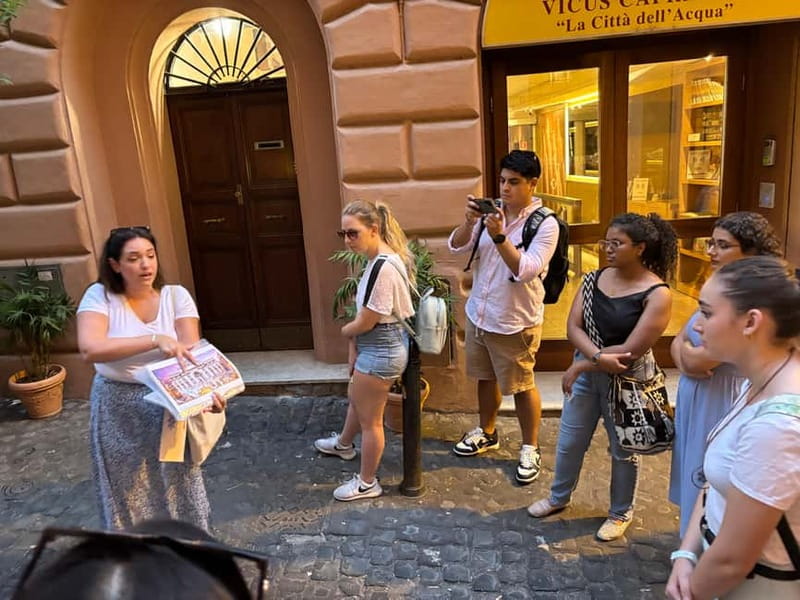
Rome feels walkable with a great guide. This Roamin’ Around Rome route stitches together Pantheon views, Trevi Fountain lore, and a quick hit of downtown art in just 2.5 hours. I like that it turns a scatter of famous names into a logical route you can actually enjoy without map stress.
I also love the way the tour slips in lesser-pressured stops like Galleria Sciarra and the St. Ignazio di Loyola church, with a real moment inside. The one thing to watch: if something requires an entrance ticket, you’ll typically see it from the outside, not inside.
In This Review
- Key highlights you’ll notice fast
- Day vs. night: what changes in this 2.5-hour Rome walk
- Piazza di San Marco to Piazza Venezia: the route’s control center
- Palazzo Venezia and the Vittoriano zone: history you can actually point at
- Trajan’s Column and Forum area: seeing it in motion
- Pontifical Gregorian University area: a perspective break
- Galleria Sciarra: the pause that makes the whole tour feel special
- St. Ignazio di Loyola: the church stop that people remember
- The Pantheon: the stop that anchors the whole day
- Piazza Navona: when Rome’s street life becomes a stage
- Trevi Fountain: the coin toss, minus the scramble
- Colosseum on the night route: an evening payoff
- Price and value: what $36 buys you in central Rome
- Pace, comfort, and who this tour suits best
- Making the most of it: simple moves that improve your experience
- Should you book Roamin’ Around Rome?
- FAQ
- How long is the Roamin’ Around Rome Guided Walking Tour?
- Where do I meet the guide?
- Are entrance fees included?
- What languages are the tours offered in?
- What should I bring to the tour?
- Can I cancel and get a full refund?
Key highlights you’ll notice fast
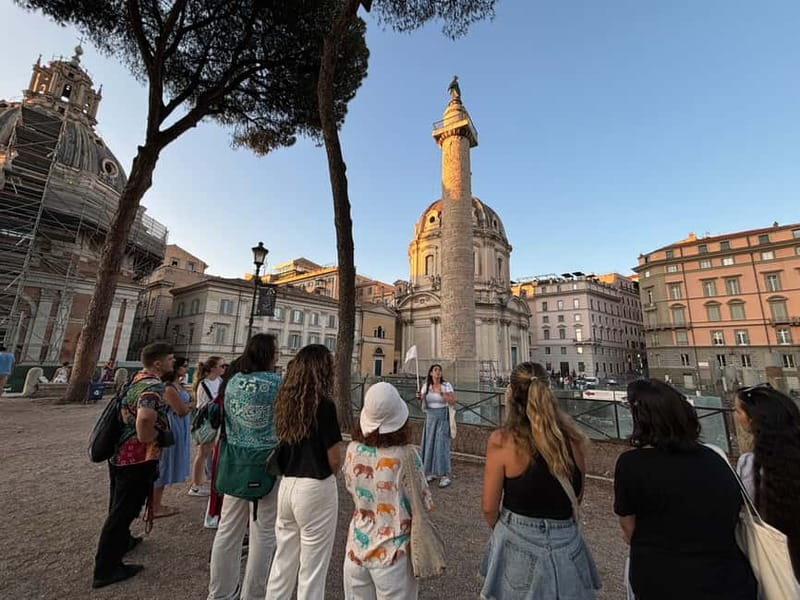
- Expert storytelling at major landmarks: you get the what and the why, not just photos.
- St. Ignazio di Loyola inside visit: the baroque church is part of the walking plan.
- Galleria Sciarra’s frescoes: a pretty, calmer pocket of Rome between bigger stops.
- Trevi coin-toss moment built into the route: easy good-luck timing, no scrambling.
- Two different itineraries: day focuses on the central core, night adds more evening viewpoints.
Day vs. night: what changes in this 2.5-hour Rome walk
This is a short tour, so the biggest decision is which version fits your energy: day or night.
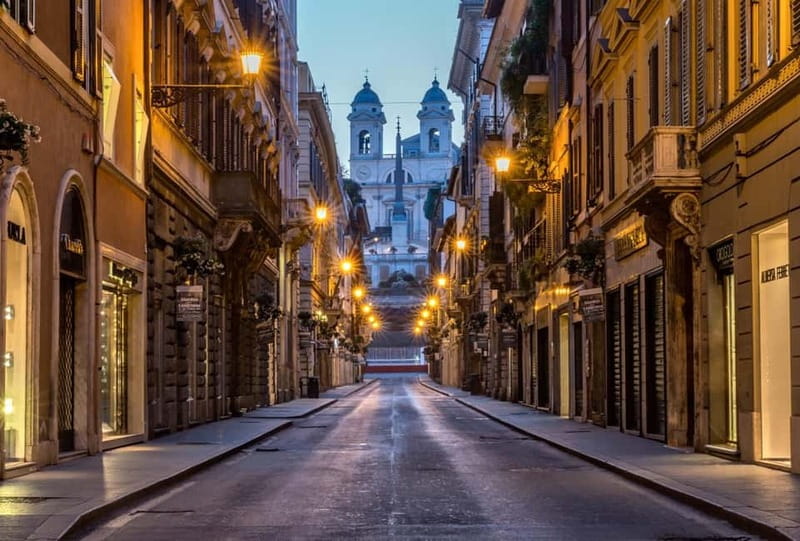
On the day tour, you bounce through classic Rome geometry: Piazza Navona’s open space, the Pantheon area, then on to Trevi. You also get the Palazzo Venezia/Vittoriano zone and a run past Trajan’s Column and the Forum area from outside. The schedule mixes big icons with side stops that keep it from feeling like a checklist.
On the night tour, the order shifts and the mood turns more atmospheric. You still hit Piazza Navona, the Pantheon area, Trevi, and the Palazzo Venezia sights, but the route also pushes farther toward Imperial Rome and ends with the Colosseum area in the evening glow. If you want Rome to feel like a movie set instead of a museum flyer, night is the more fun choice.
Either way, you’re looking at a tight 2.5-hour walk. That’s ideal for seeing a lot without burning a whole day, but it does mean you’ll want comfy shoes and a good attitude toward crowds.
Worth a look next to this Rome booking:
- Rome: Guided Food Walking Tour with Wine in Trastevere
★ 4.9 · 3,105 reviews - Rome: Trastevere & Campo de Fiori Street Food Walking Tour
★ 4.9 · 2,768 reviews - Rome: Paranormal Night Walking Tour & Secret Backstreets
★ 4.9 · 1,921 reviews - Rome: Trastevere Street Food Walking Tour with Local Expert
★ 4.8 · 1,784 reviews
Piazza di San Marco to Piazza Venezia: the route’s control center
The tour often starts around the Piazza di San Marco / central core area, then works toward Piazza Venezia and the Vittoriano/Palazzo Venezia zone. This is a smart move. The Vittoriano area looks monumental and a little intimidating on your own; with a guide, it becomes understandable fast—what you’re seeing, how the buildings relate, and why this part of town matters.
What I like here is the pacing. You’re not rushing straight to the Pantheon. Instead, the guide helps you build orientation: where you are, how the route will thread through the city, and what to pay attention to later. It’s the difference between collecting landmarks and actually grasping Rome’s layout.
If you’re the type who likes to know what you’re standing in front of before you take the photo, this opening stretch is made for you. And if you’re not, it still works, because it sets up the rest of the walk so the famous sights land with more meaning.
Palazzo Venezia and the Vittoriano zone: history you can actually point at
One of the stated highlights is learning about Palazzo Venezia. This is one of those Rome buildings that can look like a backdrop until someone explains the role it played over time. Expect your guide to connect the architecture and location to the larger story of the city’s political and cultural center.
From a value standpoint, this is a strong use of your time. You’re not paying entrance fees here, and you’re not relying on ticket availability. You’re paying for someone to make sense of what you can see right now—facade, street alignment, and the way this whole area sits in the middle of Rome’s story.
Trajan’s Column and Forum area: seeing it in motion
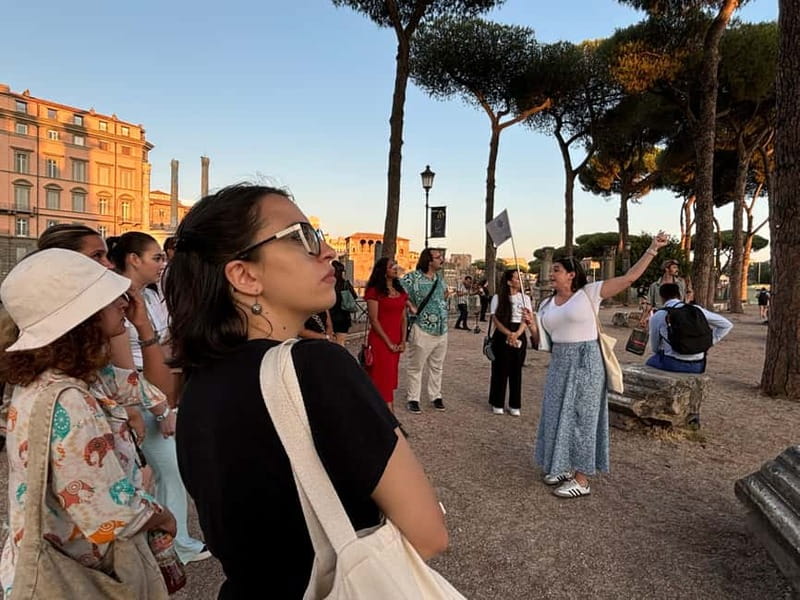
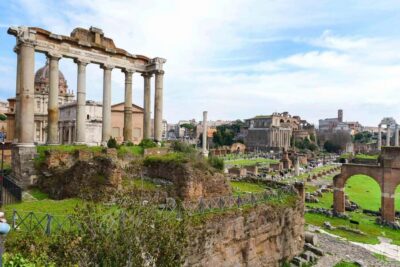
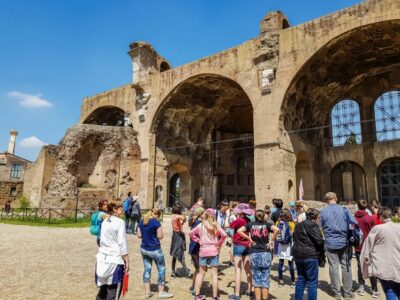
Both day and night routes include time passing Trajan’s Column, the Market and Forum areas from outside. Even if you don’t go inside anything, this is still useful.
Why? Because once you’ve walked through the “outside view” positions, you’ll understand the scale. You’ll start to picture the Forum not as a single postcard angle, but as a connected zone of spaces. The column is a great anchor for that. It’s tall, detailed, and impossible to ignore, even when you’re just glancing while walking.
Outside-only viewing can feel limiting if you came for a ticket-and-tour inside kind of day. But here, the guide’s job is to help you read what you’re seeing. If you like history told with your feet on the ground, this stop fits the format.
Worth a look next to this Rome booking:

Pontifical Gregorian University area: a perspective break
The day route includes Pontifical Gregorian University as a stop, and the night route also brings you back through that area later. This is likely where the guide slows things down and sets up the next famous-photo sequence.
Even without an interior visit listed, these are often the moments that make a walking tour feel smooth. You get a breath, you get a reference point, and you understand which direction you’ll head next—especially useful when you’re weaving between major squares.
Galleria Sciarra: the pause that makes the whole tour feel special
If you want one stop that feels like a reward, make it Galleria Sciarra. It’s one of the tour’s featured hidden-leaning moments, especially for its frescoes and the way it changes the street-level rhythm.
This is the kind of place where you look up and realize Rome has more layers than the big three (Pantheon, Colosseum, Trevi). In a short tour, that matters. It keeps the experience from becoming a blur of famous names and forces a slower look.
I like this because it’s visually different. Big monuments can feel same-y if you’re overloaded. Galleria Sciarra gives you a calmer, more artsy interlude that breaks the mental fatigue.
St. Ignazio di Loyola: the church stop that people remember
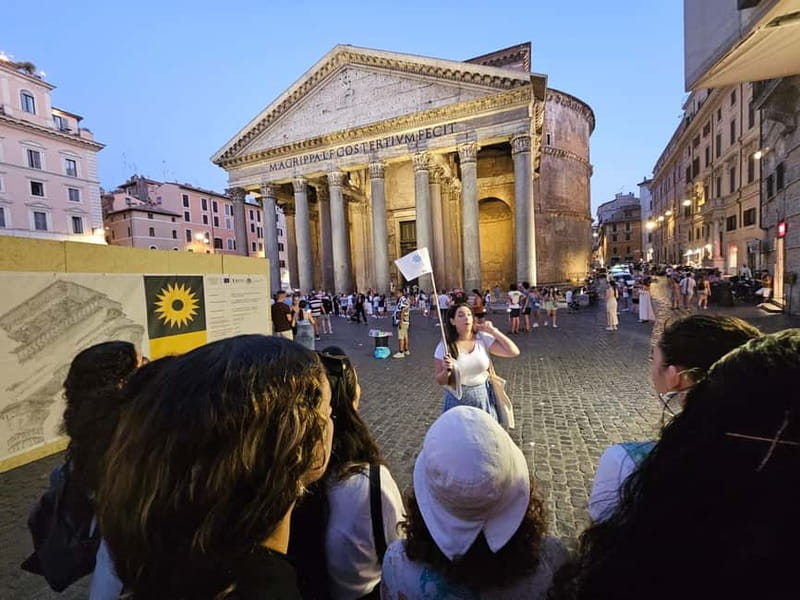
The tour includes St. Ignazio di Loyola with an inside visit (often called the Instagram church). This is a centerpiece moment because you actually go indoors. For a 2.5-hour walk, that’s a meaningful use of time.
If you’ve ever stood in a Rome church and realized you were too busy rushing to notice the details, this is a corrective. The guide’s job is to point out what to look for before your attention scatters. And because it’s an interior stop, the sensory experience resets from street noise to something more focused.
One practical note: churches can still be busy, and your time inside won’t be unlimited. Go in expecting a guided highlight moment, not a long solo wandering session.
The Pantheon: the stop that anchors the whole day
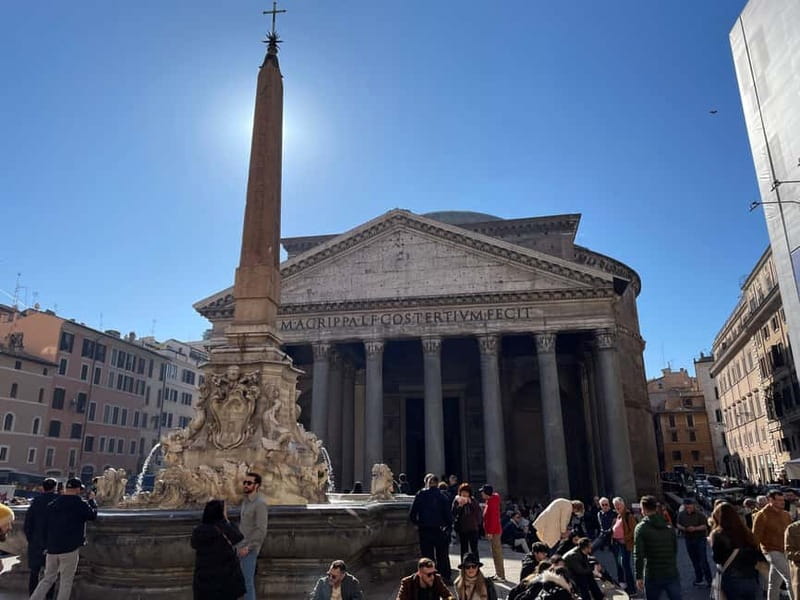
The Pantheon is one of the best-preserved monuments from Rome’s imperial era, and this tour treats it like the anchor it is. You’ll pass by it as part of the route on both day and night versions.
The guide can help you read it faster. When you know what you’re looking at—its key elements and why people still call it impressive after all these centuries—you stop feeling like you’re just walking through a crowd.
Also, the timing matters. Seeing the Pantheon during a route like this means you’re not trying to fit it into your day like an obstacle. It’s built into a flow: you arrive, you look, you move on—without losing your momentum.
Piazza Navona: when Rome’s street life becomes a stage
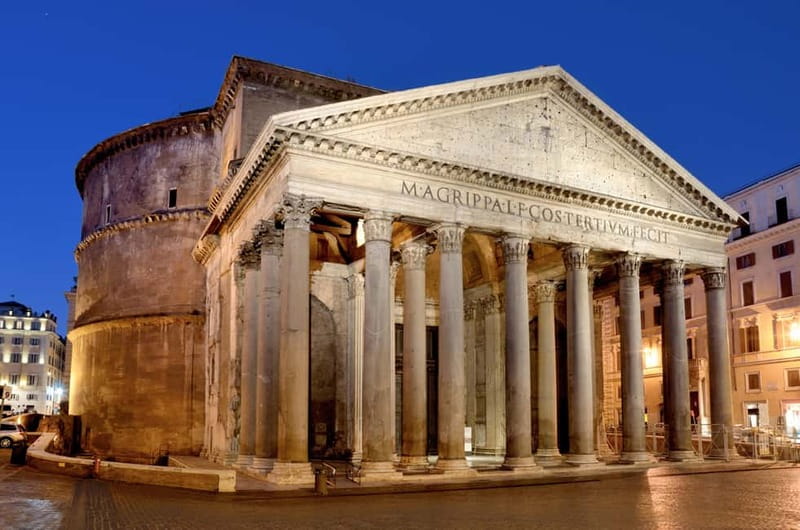
You’ll pass through or spend time around Piazza Navona, a favorite square because it looks formal but still feels alive. The shape of the space works for photos, sure—but it also works for absorbing Rome’s everyday energy.
What I like about putting Navona on a guided walk is that you understand what you’re seeing while you’re standing in front of it. A guide can connect the plaza’s role in the city’s evolution and help you notice architectural details beyond the obvious.
Short tours often skip squares because they’re not “major attractions.” This one doesn’t. That’s a good sign.
Trevi Fountain: the coin toss, minus the scramble
The tour includes the famous Fontana di Trevi moment where you toss a coin and make sure you return to the Eternal City. This isn’t just for fun—it’s also a practical waypoint.
In a short walking schedule, Trevi can be a bottleneck if you show up unplanned. Built into the route, it becomes a scheduled pause. You can enjoy the moment, take a few photos, and keep going without feeling like you’re fighting the city.
One more reason this stop works on a guided walk: the guide often helps you avoid the worst crowd-fog. You’ll know where to stand for the best views and when to move if the flow changes.
Colosseum on the night route: an evening payoff
The night tour ends up including the Colosseum area. Even if you’re not going inside (entrance fees aren’t included), you’ll still get the payoff: the sense of scale and the atmosphere shift that happens after sunset.
This is a good pairing with the rest of the night itinerary. You’re already walking past Forum-adjacent viewpoints and returning through major central squares. By the time you reach the Colosseum, the whole walk feels like a storyline instead of disconnected sights.
If you’re doing only one tour and you’re choosing between day and night, this is the night’s strongest argument.
Price and value: what $36 buys you in central Rome
At $36 per person for 2.5 hours, the value is real—if you understand what’s included.
You’re paying for a professional guide and a guided walking tour through Rome’s historic heart. What’s not included: food and drinks, and entrance fees. And important detail: attractions that require tickets are typically visited from outside.
So, this is not a “buy once, enter everything” kind of tour. It’s a route-based orientation tour with expert guidance. You get:
- structured sight order (so you’re not wasting time deciding)
- history and context attached to what you’re seeing
- a couple of higher-impact stops where you can look longer and enjoy interior time (like St. Ignazio)
If your goal is to cover a lot quickly while someone helps you read Rome, $36 is a fair deal. If your goal is to spend long hours entering major sites, you’ll likely want this as part of a bigger plan—pair it with separate ticketed experiences.
Pace, comfort, and who this tour suits best
This is a walking-focused experience. It includes major squares, landmark-to-landmark strolling, and an indoor church stop. That makes it exciting, but it also means you’ll be on your feet most of the time.
The tour notes it’s not suitable for wheelchair users and not recommended for travelers with back problems, pregnancy, heart problems, or other serious medical conditions. If you’re dealing with mobility limitations, plan carefully or skip this one.
If you’re in good walking shape, here’s what helps: wear shoes you’d trust for a long urban day and dress for weather. Also, bring your ID—passport or ID card (a copy is accepted).
Finally, there’s a small rule that matters for devices: no audio recording is allowed.
Making the most of it: simple moves that improve your experience
Because this is a tight schedule, the best results come from preparation.
- Arrive ready to walk. Late arrivals won’t be refunded, so don’t treat the start time like a suggestion.
- Bring a real ID card/passport, not just a photo.
- If you care about hearing every detail, choose a spot closer to the guide when you can. One review pointed out that audio support isn’t always available, so the front tends to win.
- At photo stops like Trevi and the Pantheon area, take your shot, then give your eyes a minute. That’s where the guide’s context makes the landmark feel less generic.
And if you’re doing this on a day full of other Roman plans, keep expectations realistic: you’re getting a smart slice of central Rome, not exhausting the city in one go.
Should you book Roamin’ Around Rome?
Book it if you want a short, well-paced guided walk through the core sights—Pantheon, Trevi, Piazza Navona—plus stand-out side stops like Galleria Sciarra and an inside moment at St. Ignazio di Loyola. The route structure is the big selling point, especially if you like your history explained while you’re moving.
Skip it (or pair it differently) if you’re hoping for long interior access to the big-ticket monuments, because ticketed attractions are generally outside-only on this format. Also skip if you know walking long distances or rough surfaces will be a problem for your body.
If you do book, choose day for a classic highlights mix, and choose night if you want the Colosseum-area payoff in evening light. It’s one of those rare 2.5-hour tours that feels like it was designed for sanity, not just attendance.
FAQ
How long is the Roamin’ Around Rome Guided Walking Tour?
It lasts 2.5 hours.
Where do I meet the guide?
The meeting point may vary depending on the option you booked, so you’ll want to confirm it when you receive your details.
Are entrance fees included?
No. Entrance fees aren’t included, and attractions that require tickets are typically visited from outside.
What languages are the tours offered in?
The live guide speaks English and Spanish.
What should I bring to the tour?
Bring a passport or ID card. A copy is accepted.
Can I cancel and get a full refund?
Yes. You can cancel up to 24 hours in advance for a full refund.
More Walking Tours in Rome
- Rome: Guided Food Walking Tour with Wine in Trastevere
★ 4.9 · 3,105 reviews - Rome: Trastevere & Campo de Fiori Street Food Walking Tour
★ 4.9 · 2,768 reviews - Rome: Paranormal Night Walking Tour & Secret Backstreets
★ 4.9 · 1,921 reviews - Rome: Trastevere Street Food Walking Tour with Local Expert
★ 4.8 · 1,784 reviews - Rome: Small-Group Guided Day or Night Walking Tour
★ 4.8 · 1,009 reviews - Rome by Night Walking Tour – Legends & Criminal Stories
★ 4.5 · 1,003 reviews
More Tours in Rome
- Vatican Museums, Sistine Chapel & St. Peter’s Basilica Tour
★ 4.3 · 73,970 reviews - Vatican Museums, Sistine Chapel & St Peter’s Basilica Guided Tour
★ 4.5 · 39,149 reviews - Rome: Colosseum, Palatine Hill and Roman Forum Guided Tour
★ 4.8 · 32,814 reviews - Rome: Guided Tour of Colosseum, Roman Forum & Palatine Hill
★ 4.7 · 27,897 reviews - Rome: Colosseum, Roman Forum and Palatine Hill Guided Tour
★ 4.5 · 23,903 reviews - Rome: Colosseum Arena Floor, Palatine & Forum Guided Tour
★ 4.5 · 20,180 reviews
More Tour Reviews in Rome
- Vatican Museums, Sistine Chapel & St. Peter’s Basilica Tour
★ 4.3 · 73,970 reviews - Vatican Museums, Sistine Chapel & St Peter’s Basilica Guided Tour
★ 4.5 · 39,149 reviews - Rome: Colosseum, Palatine Hill and Roman Forum Guided Tour
★ 4.8 · 32,814 reviews - Rome: Guided Tour of Colosseum, Roman Forum & Palatine Hill
★ 4.7 · 27,897 reviews - Rome: Colosseum & Forum with Audio Guide App -Optional Arena
★ 4.2 · 24,770 reviews - Rome: Colosseum, Roman Forum and Palatine Hill Guided Tour
★ 4.5 · 23,903 reviews
Just added to our Rome reviews





Walking Tours, compared.
 ★ 4.9Guided Food Walking Tour with Wine in TrastevereFrom $1003,105 reviews
 ★ 4.9Trastevere & Campo de Fiori Street Food Walking TourFrom $512,768 reviews
 ★ 4.9Paranormal Night Walking Tour & Secret BackstreetsFrom $341,921 reviews
 ★ 4.8Trastevere Street Food Walking Tour with Local ExpertFrom $571,784 reviews
 ★ 4.8Small-Group Guided Day or Night Walking TourFrom $231,009 reviews
 ★ 4.5Rome by Night Walking Tour – Legends & Criminal StoriesFrom $141,003 reviews
 ★ 4.4Guided City Center Evening Sightseeing Walking TourFrom $46953 reviews
 ★ 4.9Small-Group City Highlights Moonlight Walking TourFrom $29949 reviews
Browse the lists this tour appears in