
Reviewed · TOURS
Renaissance Scarlet Ladies Tour: Caravaggio’s and Borgia’s Women
One afternoon is enough to change how you see Rome. This walking tour focuses on the women behind art and power—courtesans, muses, and Borgia family figures—then ties their lives to places most people miss.
I especially love the way the guide brings the stories to street level: you don’t just hear names, you get the setting. Two of my favorite threads here are Caravaggio’s models (with Anna Bianchini at Villa Doria Pamphilj) and the Borgia connection (with Vannozza Cattanei at Campo de’ Fiori).
One consideration: it’s still a walking tour, and you’ll cover several stops over about three hours, so comfy shoes help.
In This Review
- Key Things You’ll Notice on This Tour
- A Different Angle on Renaissance Rome: Women at the Center
- The Guide Makes It Work: Massimo’s Storytelling Style
- Time, Pace, and Group Size: Plan Around an Afternoon Walk
- Price and Value: What $47.07 Buys You
- Meeting Point to Ending Point: Where You Start and Where You Land
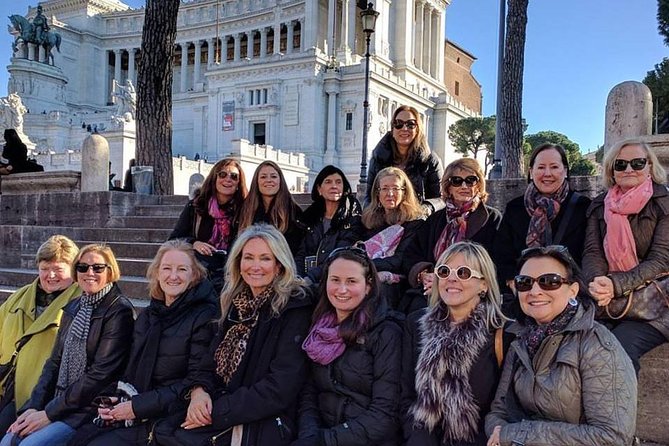
- Stop 1: Basilica San Marco Evangelista and the Statue of Lady Lucrezia
- Stop 2: Villa Doria Pamphilj Courtyard and Anna Bianchini’s Caravaggio Connection
- Stop 3: Santa Maria Sopra Minerva and Courtesan Power Through Art
- Stop 4: Basilica S. Agostino and Caravaggio’s Virgin Mary and the Pilgrims
- Stop 5: Via dei Coronari and Street-Level Courtesan Life
- Stop 6: Campo de’ Fiori and Vannozza Cattanei, Mother of Two Borgias
- Stop 7: Piazza Farnese and the Moving Giulia Farnese Finale
- Who Should Book This Tour (and Who Might Skip It)
- The Practical Stuff: Language, Tickets, and How to Prepare
- Should You Book the Renaissance Scarlet Ladies Tour?
- FAQ
- How long is the Renaissance Scarlet Ladies Tour?
- What time does it start?
- Where does the tour begin and end?
- What is the group size limit?
- Is the tour offered in English?
- Do I need to pay admission for the stops?
- What is the cancellation policy?
Key Things You’ll Notice on This Tour
- Small-group feel with a maximum of 18 people, so you can ask questions without shouting.
- Caravaggio gets personal, with Anna Bianchini highlighted as his first model and the one he worked with most.
- Church art matters here, including Caravaggio’s Virgin Mary and the Pilgrims in Sant’Agostino.
- Renaissance courtesan life in the places they lived, especially around Via dei Coronari.
- Borgia family drama at street corners, from Vannozza Cattanei to Giulia Farnese.
A Different Angle on Renaissance Rome: Women at the Center
Most Rome tours walk you through famous men, then toss in women as an afterthought. This one flips the lens and keeps it there: women shape culture, patronage, politics, and the visual record. It’s not romance-poster history; it’s the real-world kind, where reputation, money, and influence collide.
That approach also changes how you read what you’re seeing. When you stand in a church with famous paintings, you’re not just looking for style—you’re learning who these stories circled around and why that mattered.
Weighing this one up? Here is how a few Rome favourites compare:
- Vatican Museums, Sistine Chapel & St. Peter’s Basilica Tour
★ 4.3 · 73,970 reviews - Vatican Museums, Sistine Chapel & St Peter’s Basilica Guided Tour
★ 4.5 · 39,149 reviews - Rome: Colosseum, Palatine Hill and Roman Forum Guided Tour
★ 4.8 · 32,814 reviews - Rome: Guided Tour of Colosseum, Roman Forum & Palatine Hill
★ 4.7 · 27,897 reviews
The Guide Makes It Work: Massimo’s Storytelling Style
The standout factor is the guide. Massimo has a reputation for using knowledge plus humor to explain everyday economic reality for women in Renaissance Rome. People consistently flag how well he connects dates, names, and art into a story you can hold onto.
You’ll also feel the structure: you move stop to stop, and each one ties cleanly to the next woman in the narrative. With a maximum of 18 people, it stays intimate enough to ask questions when something sparks curiosity.
Time, Pace, and Group Size: Plan Around an Afternoon Walk
This experience runs about 3 hours and starts at 2:30 pm. It’s designed for most people, with service animals allowed, and you’ll be near public transportation for getting there and leaving.
The “walk a fair bit” part is real, but it’s not marathon Rome. Still, wear shoes you trust on uneven pavement, and keep a light layer for air-conditioned churches and sun outside.
Price and Value: What $47.07 Buys You
At $47.07 per person, the value comes from the mix: guided storytelling plus multiple major sites within walking distance. The stops listed are marked as admission ticket free for each location, which means you’re not paying surprise site fees on top of the tour cost.
More importantly, you’re paying for interpretation. In Rome, that’s often the difference between “I saw a church” and “I understand why that artwork ended up there and what it meant.”

Meeting Point to Ending Point: Where You Start and Where You Land
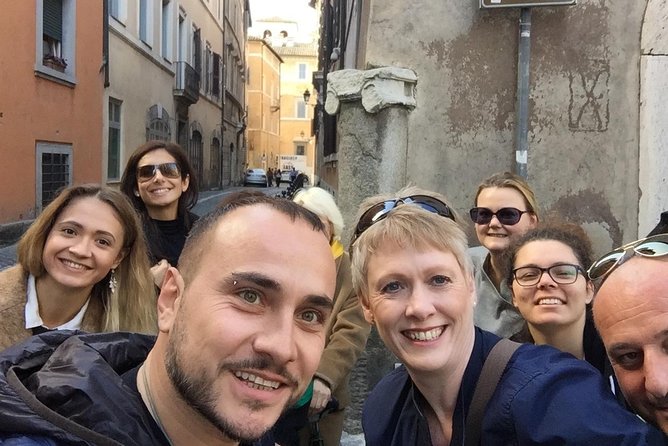
You’ll begin at the Basilica of St Mark Evangelist at Campidoglio/Palazzo Venezia, Piazza di S. Marco, 48. The tour ends at Piazza Farnese, 44, a central spot that’s convenient for taxis and buses.
That ending matters because you’ll likely want to keep exploring after the stories hit their emotional finale. Piazza Farnese also puts you close to Campo de’ Fiori and not far from Piazza Navona, so you can stretch the day without a long commute.
Stop 1: Basilica San Marco Evangelista and the Statue of Lady Lucrezia
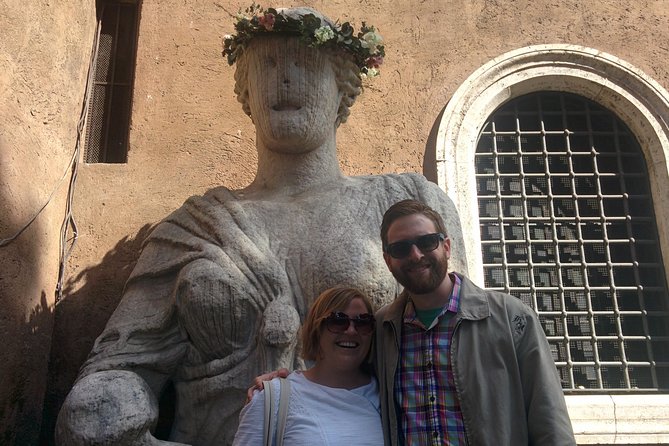
The tour starts with a massive statue tied to a real court-era courtesan: the figure now known as Lady Lucrezia. You begin with the shock of it—how a public monument can be named after a woman whose life would have been anything but ordinary.
The guide frames her as a first story, then uses her to set up the bigger theme: women could be celebrated in one way while still navigating risk, secrecy, and dependence. Even if you’ve seen the area before, this kind of framing makes the statue feel like a clue, not just decoration.
Stop 2: Villa Doria Pamphilj Courtyard and Anna Bianchini’s Caravaggio Connection
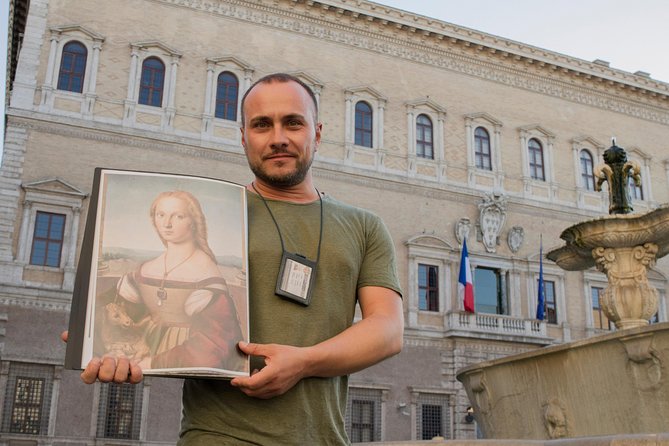
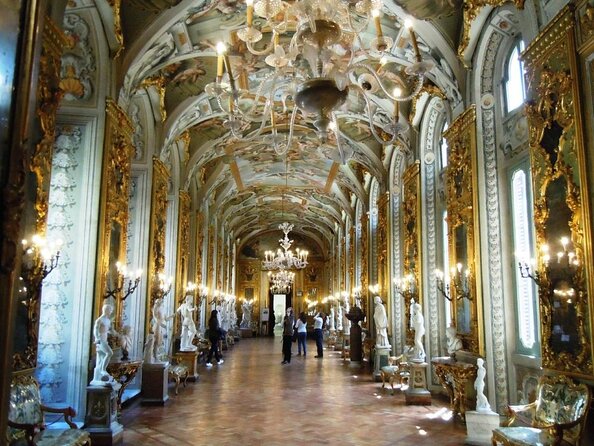
Next comes Villa Doria Pamphilj, where you pause in the courtyard to talk about Anna Bianchini. She modeled many times for Caravaggio, and in this story she’s highlighted as his first model and the one he worked with most.
This stop is especially valuable if you care about art but feel you’re missing the human part. You don’t have to be an art expert to connect the dots: a painter’s “muse” wasn’t a concept. It was a person who stood in the world and influenced the images that survive.
Stop 3: Santa Maria Sopra Minerva and Courtesan Power Through Art
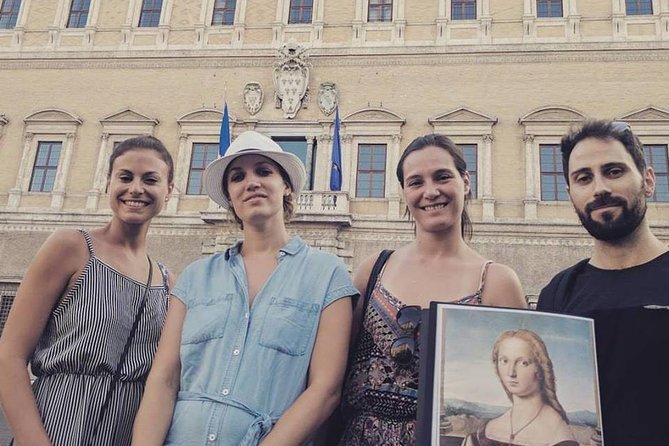
In Chiesa di Santa Maria Sopra Minerva, you step into a church filled with important artworks. The focus here is the story of a top courtesan in Europe in the early 1500s, presented as the kind of figure who could move through power circles and reshape reputations.
This is where the tour’s tone shifts slightly from biography to meaning. You’re learning how art, status, and public worship could intersect—sometimes in ways that look surprising today.
A practical tip: churches can be cooler and dimmer than the streets. Bring your patience for slower looking, and let the guide’s story steer your attention to what matters.
Stop 4: Basilica S. Agostino and Caravaggio’s Virgin Mary and the Pilgrims
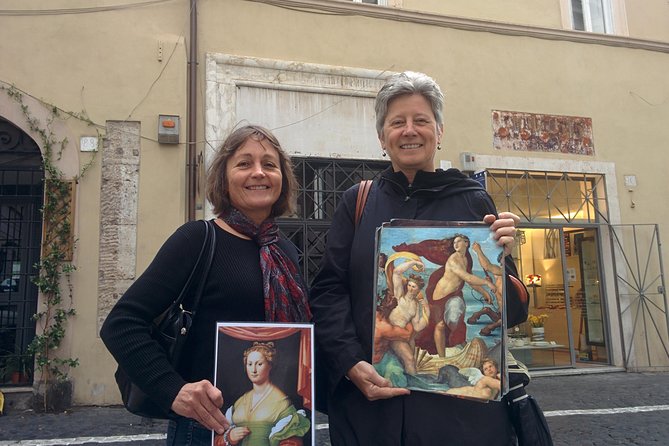
At Sant’Agostino, the story turns toward women again, but with a sharper art anchor: Caravaggio’s Virgin Mary and the Pilgrims is connected here. The tour notes this canvas as the original painting.
This stop is a great example of why the tour’s theme works. It’s not only “women were important,” it’s “women’s stories are part of how artworks were made, displayed, and remembered.”
If you like art history, this is likely the moment you’ll feel the most payoff. You’ll have a named model in one place and a major Caravaggio work connected to a church context in another, which helps the whole tour snap into focus.
Stop 5: Via dei Coronari and Street-Level Courtesan Life
Then you walk Via dei Coronari, moving through original XV and XVI century buildings tied to courtesan ownership. The idea is simple but effective: you’re not just hearing about courtesans as characters in books—you’re looking at streets where their daily lives would have played out.
This is also one of those Rome areas where the architecture can easily blur together if you’re sightseeing casually. With the story attached, the street becomes readable: entrances, facades, and the scale of the buildings start to feel connected to how someone lived and worked.
Stop 6: Campo de’ Fiori and Vannozza Cattanei, Mother of Two Borgias
At Campo de’ Fiori, you get the Borgia-family piece: Vannozza Cattanei, mother of Cesare and Lucrezia Borgia. Her story is usually the favorite, and it’s easy to see why.
This stop adds a different kind of power to the tour. Courtesan life isn’t only about social survival; it can connect to dynasties, succession, and court politics. If you’ve ever wondered how personal relationships shaped the Borgia era, this is the kind of origin story that makes the rest click.
Stop 7: Piazza Farnese and the Moving Giulia Farnese Finale
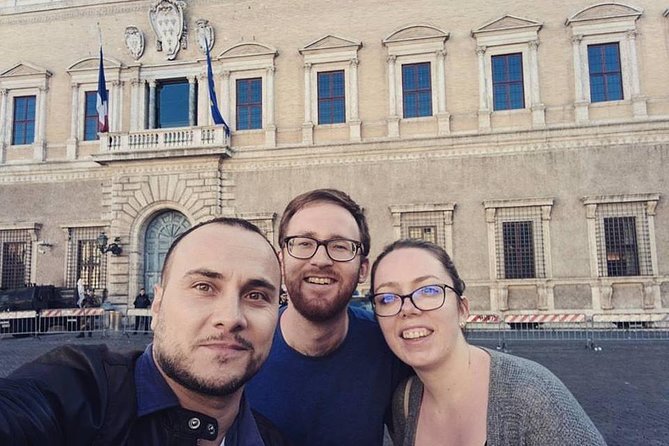
The tour ends at Piazza Farnese, near the Palazzo designed by Michelangelo, now the French Embassy. Here, you hear the story of Giulia Farnese, with the finale described as moving and intentionally kept for the last stop.
That ending choice works because it leaves you with emotion rather than a checklist. By the time you reach Piazza Farnese, you’ve already seen how women were written into public life—statues, churches, and family networks. The final story lands because the tour has built momentum toward it.
Who Should Book This Tour (and Who Might Skip It)
I think this tour fits best if you want Rome that feels human and specific. It’s a strong match for people who enjoy art but want the story behind the brushstrokes, and for anyone interested in power, gender, and reputation in the Renaissance.
If you only want the biggest skyline sights and short stops for photos, this might feel too story-driven and too focused on churches and neighborhoods. But if you like walking and learning how places connect to real people, it’s a good bet.
The Practical Stuff: Language, Tickets, and How to Prepare
The tour is offered in English and uses a mobile ticket. You’ll also want to plan for a walking route across central Rome, with no mention of elevators or special transfers in the tour details.
Bring small essentials: water, sun protection if it’s hot, and a way to see inside churches comfortably. And if you tend to ask questions, this group size supports it.
Should You Book the Renaissance Scarlet Ladies Tour?
I’d book it if you’re craving a Rome experience that goes beyond the usual monuments and gives you names you can connect to what you’re standing in front of. With a 5/5 average rating across 65 reviews and 100% recommended, this isn’t a niche pitch—it’s consistently well received.
Skip it if you dislike walking, hate story-heavy tours, or only want classic “must-see” sights with minimal context. Otherwise, for the price, the small-group pace, and the Caravaggio-and-Borgia focus, it’s a smart use of an afternoon.
FAQ
How long is the Renaissance Scarlet Ladies Tour?
The tour is about 3 hours (approx.).
What time does it start?
It starts at 2:30 pm.
Where does the tour begin and end?
It starts at the Basilica of St Mark Evangelist at Campidoglio/Palazzo Venezia (Piazza di S. Marco, 48) and ends at Piazza Farnese (44).
What is the group size limit?
The tour has a maximum of 18 travelers.
Is the tour offered in English?
Yes, the tour is offered in English.
Do I need to pay admission for the stops?
The listed stops are marked as admission ticket free.
What is the cancellation policy?
You can cancel for a full refund up to 24 hours in advance of the experience start time. If you cancel less than 24 hours before, the amount paid will not be refunded.
More Tours in Rome
- Vatican Museums, Sistine Chapel & St. Peter’s Basilica Tour
★ 4.3 · 73,970 reviews - Vatican Museums, Sistine Chapel & St Peter’s Basilica Guided Tour
★ 4.5 · 39,149 reviews - Rome: Colosseum, Palatine Hill and Roman Forum Guided Tour
★ 4.8 · 32,814 reviews - Rome: Guided Tour of Colosseum, Roman Forum & Palatine Hill
★ 4.7 · 27,897 reviews - Rome: Colosseum, Roman Forum and Palatine Hill Guided Tour
★ 4.5 · 23,903 reviews - Rome: Colosseum Arena Floor, Palatine & Forum Guided Tour
★ 4.5 · 20,180 reviews
More Tour Reviews in Rome
- Vatican Museums, Sistine Chapel & St. Peter’s Basilica Tour
★ 4.3 · 73,970 reviews - Vatican Museums, Sistine Chapel & St Peter’s Basilica Guided Tour
★ 4.5 · 39,149 reviews - Rome: Colosseum, Palatine Hill and Roman Forum Guided Tour
★ 4.8 · 32,814 reviews - Rome: Guided Tour of Colosseum, Roman Forum & Palatine Hill
★ 4.7 · 27,897 reviews - Rome: Colosseum & Forum with Audio Guide App -Optional Arena
★ 4.2 · 24,770 reviews - Rome: Colosseum, Roman Forum and Palatine Hill Guided Tour
★ 4.5 · 23,903 reviews
Just added to our Rome reviews





Tours, compared.
 ★ 4.3Vatican Museums, Sistine Chapel & St. Peter’s Basilica TourFrom $7273,970 reviews
 ★ 4.5Vatican Museums, Sistine Chapel & St Peter’s Basilica Guided TourFrom $2239,149 reviews
 ★ 4.8Colosseum, Palatine Hill and Roman Forum Guided TourFrom $5232,814 reviews
 ★ 4.7Guided Tour of Colosseum, Roman Forum & Palatine HillFrom $5527,897 reviews
 ★ 4.5Colosseum, Roman Forum and Palatine Hill Guided TourFrom $5923,903 reviews
 ★ 4.5Colosseum Arena Floor, Palatine & Forum Guided TourFrom $4120,180 reviews
 ★ 4.3Vatican Museums, Sistine Chapel and Basilica TourFrom $7316,039 reviews
 ★ 4.7Colosseum Arena, Palatine Hill & Forum Guided TourFrom $8414,510 reviews