
Reviewed · ROME
Renaissance Rome and Baroque Rome
A good Rome tour should make you feel oriented fast. This one strings together key Renaissance and Baroque sights into a smooth 2 hours 15 minutes walking route. What I like is the staff’s kind, accommodating help, and the guide’s ability to make each stop feel clear and worth your time.
There’s also a practical upside: it’s a small group (max 15) and delivered in English with a mobile ticket. One thing to plan for is that the Pantheon admission is not included, so you’ll want to handle that ahead of time.
You start at the Altare della Patria area in Piazza Venezia and finish in Piazza del Popolo. Along the way, you’ll pause at major photo stops like Piazza Navona, the Spanish Steps/Trinità dei Monti zone, and the Fountain of Trevi area, then cap it off with a wide-open view finish near Piazza del Popolo.
In This Review
- Key highlights to know before you go
- A Renaissance-to-Baroque walk that’s built for orientation
- Piazza Venezia: Altare della Patria plus balcony legends
- Piazza Navona: where Baroque looks like theater
- Pantheon stop: classic grandeur, plan for tickets
- Spanish Steps and Trinità dei Monti: the Barcaccia effect
- Fountain of Trevi: a classic stop on the way
- Piazza del Popolo: a wide finish with strong city energy
- What makes the guide feel different (and worth the money)
- Price and value: is $60.01 a good deal?
- Who should book this Renaissance Rome and Baroque Rome walk
- Practical tips for a smooth 2 hours 15 minutes
- Should you book it?
- FAQ
- How long is the Renaissance Rome and Baroque Rome tour?
- Where do I start and where does the tour end?
- Is the tour offered in English?
- Do I need a mobile ticket?
- Are tickets included for all stops?
- How big is the group?
- What happens if the weather is bad?
Key highlights to know before you go
- Small group feel (up to 15 people): less crowd pressure, easier questions.
- Engaging guide at every stop: clear, interesting context rather than rushed statements.
- Piazza Venezia viewpoints: Balcony connections plus the big Altare della Patria presence.
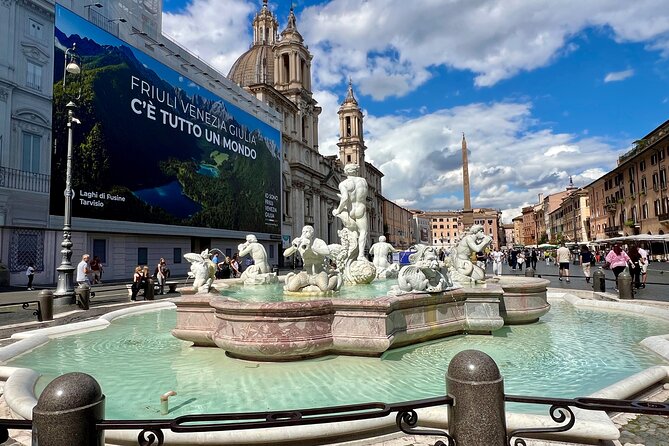
- Piazza Navona’s Four Rivers Fountain: iconic Baroque drama in a walkable square.
- Spanish Steps and Bernini’s Barcaccia: a classic Rome composition you’ll see from the right angles.
- Pantheon stop needs extra planning: the site ticket is not included.
A Renaissance-to-Baroque walk that’s built for orientation
Rome can feel like a pile of masterpieces—amazing, but also messy. This tour helps you organize the city by time periods and by neighborhood flow. You get a practical route through the center, with stops that connect Renaissance power, Baroque showmanship, and classic Roman grandeur.
The timing also matters. At roughly 2 hours 15 minutes, you’re not stuck all day, and you can still layer in your own wandering afterward. For an “I have limited time” day, this is the kind of structure that keeps you from drifting without a plan.
Weighing this one up? Here is how a few Rome favourites compare:
- Vatican Museums, Sistine Chapel & St. Peter’s Basilica Tour
★ 4.3 · 73,970 reviews - Vatican Museums, Sistine Chapel & St Peter’s Basilica Guided Tour
★ 4.5 · 39,149 reviews - Rome: Colosseum, Palatine Hill and Roman Forum Guided Tour
★ 4.8 · 32,814 reviews - Rome: Guided Tour of Colosseum, Roman Forum & Palatine Hill
★ 4.7 · 27,897 reviews
Piazza Venezia: Altare della Patria plus balcony legends
Your first stop is Piazza Venezia, anchored by the massive Altare della Patria. Even if you’re not going inside anything right away, the square gives you scale, and it’s a strong launch point for Rome sightseeing.
You’ll also hear about the Balcony Mussolini and the Balcony Letizia Bonaparte (Napoleon’s mother). That mix is fascinating because it turns the square into more than scenery—it becomes a stage where different eras tried to control the story. It’s a useful way to “read” Rome: big stone forms are one thing, but what happened there is what makes it stick.
One practical note: Piazza Venezia is a major crossroads. That’s great for transit access and meeting up, but it also means you’ll want to pay attention to your guide’s cues so you don’t lose the group in the flow of people.
Piazza Navona: where Baroque looks like theater
Next you hit Piazza Navona, one of the best squares in Rome for spotting Baroque flair. The star here is the Fountain of the Four Rivers, a showy centerpiece designed to impress. Standing in the right spot helps you see how the fountain plays with symmetry and scale, and the square around it becomes part of the artwork.
What makes this stop valuable is the way a square tour can teach your eyes. You’re not just taking a quick look; you’re learning why this place feels dramatic—why it’s arranged the way it is, and how Baroque style aimed for impact.
This is also a good mental reset. If you’ve been moving between landmarks, Piazza Navona gives you a pause that still feels like momentum, because it’s visually busy and memorable.
Pantheon stop: classic grandeur, plan for tickets
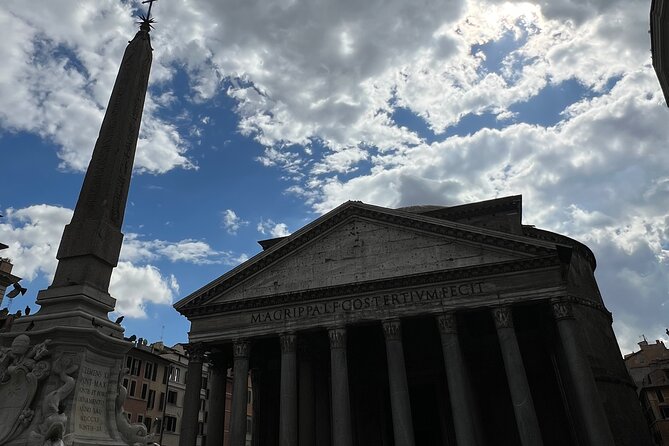
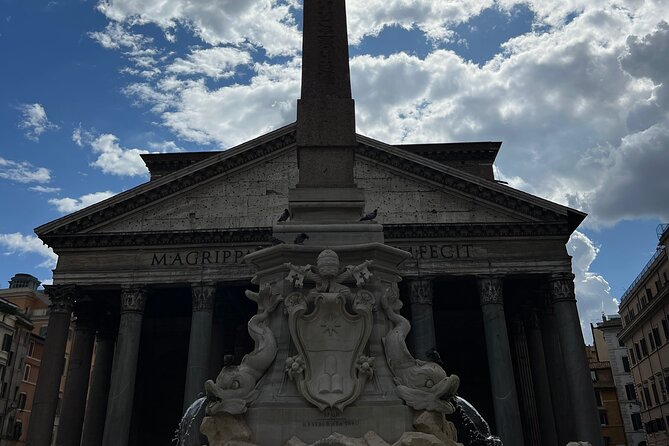
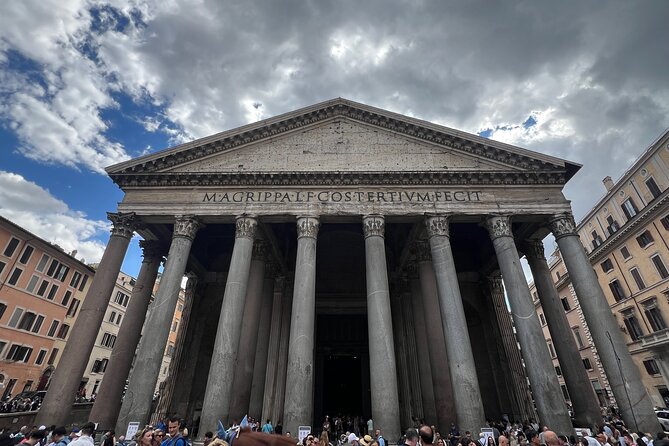
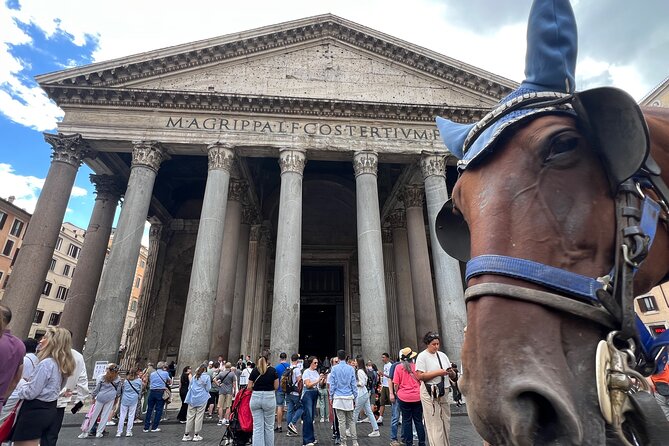
The Pantheon is one of those sites that needs little explaining. Still, what you gain on a guided stop is the order of things—what to look at first, where your attention should land, and how to make sense of the structure without getting lost.
Here’s the key logistics detail: Pantheon admission is not included. So you’ll want to check your timing and have tickets handled so the “20 minutes” doesn’t turn into a scramble. If you’re visiting during busy periods, having your entry sorted beforehand can save a lot of stress.
Even without going deep into “inside” details, the Pantheon stop is a strong anchor in the day. It bridges Rome’s ancient core with the later Renaissance-to-Baroque focus, which makes your overall route feel more connected.




Spanish Steps and Trinità dei Monti: the Barcaccia effect
Then it’s on to the Spanish Steps area, including the Trinità dei Monti church zone and Barcaccia del Bernini (the famous fountain by Bernini). This is where Rome often goes from “I see it” to “I get why people love it.”
The Spanish Steps are famous for a reason: they’re a visual funnel leading your eyes upward and outward. Pair that with the Barcaccia fountain below, and suddenly you understand how Baroque style used movement, contrast, and showy composition to pull you in.
This stop is also a reminder that Rome’s best moments are often about placement. If you just rush by, you miss the little angles that make the design work. Slow down a touch around the guide’s preferred viewpoints, and you’ll feel the difference.
Fountain of Trevi: a classic stop on the way
The Fountain of Trevi is included as part of the course. Even if you’re not spending a huge chunk of time staring into a postcard version of Rome, a scheduled stop here helps you avoid the typical trap: running past a landmark without actually seeing it properly.
Trevi works best when you treat it like a composition. Let the crowd noise fade in your head and focus on the scene layout and how the whole area frames the fountain. With a guide, you also get quick context to make the look feel less random.
If you’re photographing, choose your spot carefully. With a planned guide stop, you’ll usually have a window to get a couple of solid shots without the panic of trying to beat everyone for position.
Piazza del Popolo: a wide finish with strong city energy
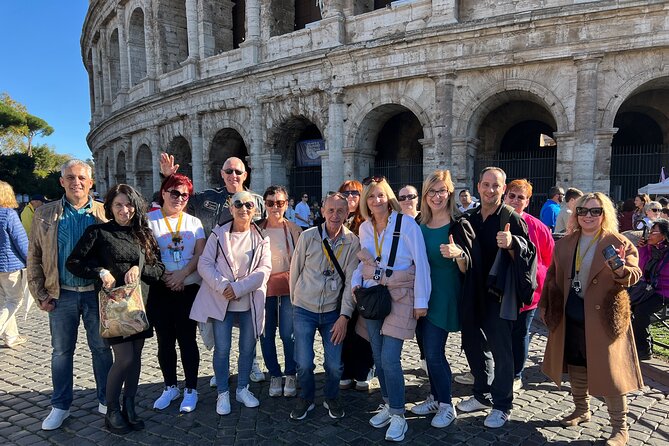
Your day wraps at Piazza del Popolo, a great end point because it’s open and expansive compared with some of the tighter streets you pass through on the way. This final square makes the route feel complete: you start with a bold civic presence at Piazza Venezia and finish with a broad stage at the edge of the central sightseeing zone.
Piazza del Popolo is also a good place to regroup and decide what you want next. After a structured 2 hours 15 minutes, you’re better at choosing your follow-up stroll because you know where you are in relation to the major sights you just hit.
If you’re the type who likes to keep moving, this is also a comfortable finish for heading out via public transportation. The tour is described as near public transportation, and the end location is practical for continuing your day.
What makes the guide feel different (and worth the money)
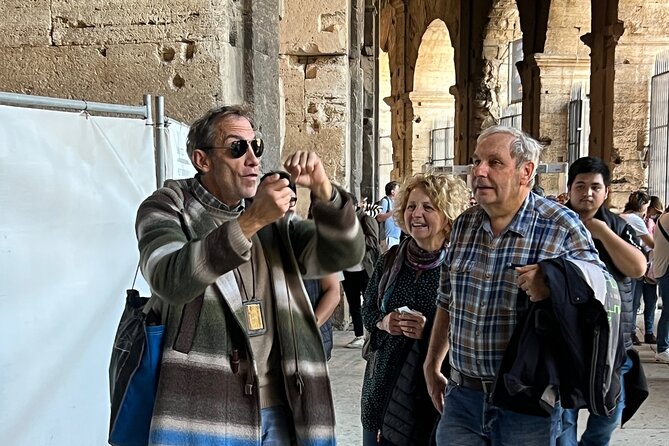
This tour’s biggest strength is the people side. The staff come across as extremely kind and accommodating, and there’s a standout touch: the owner can call to confirm that you know where to go. That’s not just polite—it reduces the common fear of meeting points and makes the whole start smoother.
Then there’s the guide’s delivery. The commentary is described as interesting at every stop, not just facts for facts’ sake. That matters because Rome doesn’t reward inattentive wandering. When your guide gives you the right prompts—what to look for and why it matters—you end up spending your limited time on the right details.
For a short tour, that kind of guidance is a real value lever. You’re paying for focus and context, not just walking from one famous object to the next.
Price and value: is $60.01 a good deal?
At $60.01 per person, the price isn’t “cheap,” but it also isn’t trying to be luxury. For this kind of compact route—major sights grouped together—it can be good value if you want organization and an engaging guide rather than DIY guessing.
Here’s how I judge the value:
- You get several major stops in a short window, which can save time.
- The group size is capped at 15 people, which helps the experience feel manageable.
- The ticket structure is mixed: most stops you see are free, while the Pantheon admission is not included. That’s normal for Rome tours, but it means you should budget for Pantheon entry separately if you plan to go inside.
If you already know you want to see Pantheon and Spanish Steps and Navona on the same day, a guided route can reduce wasted time. If you prefer total freedom and don’t care about context, you might choose a self-guided plan. But if you like having someone point out what matters quickly, this price can make sense.
Who should book this Renaissance Rome and Baroque Rome walk
This tour fits best if you want a structured sampler without committing to a half-day marathon. It’s also a strong option if:
- You’re visiting for the first time and want a clear sequence of the central sights.
- You like guided explanations but still want time afterward to explore on your own.
- You prefer smaller groups over big-coach chaos.
It may be less ideal if you want lots of time inside buildings or expect every major sight’s entry fee to be included. The Pantheon part is the big planning point.
Practical tips for a smooth 2 hours 15 minutes
Keep these in mind so the tour works the way it’s supposed to:
- Plan for Pantheon admission separately, since it’s not included.
- Arrive a little early at Piazza Venezia near the Altare della Patria meeting area so you can get oriented before the group forms.
- Wear comfortable walking shoes. This is a compact city-center walk, and you’ll want your feet to thank you.
- Bring a charged phone. A mobile ticket means you’ll likely rely on your device to show entry or check-in materials.
Because Rome weather can shift fast, you should also be ready for outdoor walking. The experience notes it requires good weather, and if it’s canceled due to poor weather, you’re offered a different date or a full refund.
Should you book it?
I’d book this if you want an efficient, guided route through Renaissance and Baroque Rome with an attentive staff and a guide who explains things at each stop. The small group size and the quick structure make it a good “save time, see the essentials” option.
I’d think twice if you hate ticket planning. Since the Pantheon admission isn’t included, you’ll need to manage that part on your own. If that’s not your thing, you may prefer a fully ticket-included option.
Bottom line: for a short Rome day, this tour is a smart way to connect the city’s big visual moments into a coherent walk.
FAQ
How long is the Renaissance Rome and Baroque Rome tour?
The tour lasts about 2 hours 15 minutes.
Where do I start and where does the tour end?
You start at Altare della Patria in Piazza Venezia and end at Piazza del Popolo (square Flaminio).
Is the tour offered in English?
Yes, it’s offered in English.
Do I need a mobile ticket?
Yes. The tour includes a mobile ticket.
Are tickets included for all stops?
Most stops are listed as free admission, but Pantheon admission is not included.
How big is the group?
The tour has a maximum of 15 people.
What happens if the weather is bad?
The experience requires good weather. If it’s canceled due to poor weather, you’ll be offered a different date or a full refund.
More Tour Reviews in Rome
- Vatican Museums, Sistine Chapel & St. Peter’s Basilica Tour
★ 4.3 · 73,970 reviews - Vatican Museums, Sistine Chapel & St Peter’s Basilica Guided Tour
★ 4.5 · 39,149 reviews - Rome: Colosseum, Palatine Hill and Roman Forum Guided Tour
★ 4.8 · 32,814 reviews - Rome: Guided Tour of Colosseum, Roman Forum & Palatine Hill
★ 4.7 · 27,897 reviews - Rome: Colosseum & Forum with Audio Guide App -Optional Arena
★ 4.2 · 24,770 reviews - Rome: Colosseum, Roman Forum and Palatine Hill Guided Tour
★ 4.5 · 23,903 reviews




