
Reviewed · WALKING TOURS
Private Walking Tour of the Squares and Fountains in Rome
Rome’s center feels endless—this route helps. A private walking tour of the big squares and fountains keeps you moving in a smart loop instead of wandering blind. You get personal attention from your guide and a chance to read the city’s vibe street-by-street, not just stand in front of landmarks.
What I like most is the tight focus: you hit Piazza del Popolo, the Spanish Steps, Trevi Fountain, and Piazza Navona in only a few hours. I also like that the major sights on the walk are listed as admission-free, so your money goes to the guide and the experience, not ticket juggling. One consideration: you’ll spend real time walking and you’ll face the slope and stone steps around the Spanish Steps area—comfortable shoes matter.
In This Review
- Key highlights and what you’ll actually get
- Why This Squares-and-Fountains Loop Works for First Timers
- Price and Time: What $229.78 Buys You in Rome
- Getting Started at Fontane dei Leoni Egizi: Smooth Begin, Good First Views
- Piazza del Popolo: The “People’s Square” That Welcomed Arrivals
- Via del Corso: Rome’s Straight Shot Through the Trident
- Spanish Steps to Trevi Fountain: One Iconic Climb, Then a Big Payoff
- Pantheon Area and Fontana del Pantheon: Ancient Rome Hits Different Up Close
- Piazza Navona: When Rome Feels Like Theater
- Fontana dei Quattro Fiumi: Innocent X, Water, and a Bold Competition
- Piazza della Minerva: Minerva’s Area and Santa Maria sopra Minerva
- The Pantheon Drop-Off: Your Choice to Enter or Keep Exploring
- What I’d Watch For: Walking Pace, Spanish Steps, and Ticket Decisions
- Should You Book This Tour?
Key highlights and what you’ll actually get
- A private, small-group format (max 8) so your guide can adjust pace and explanations to your questions
- Iconic squares in one coherent loop: Popolo → Trident street (Via del Corso) → Spanish Steps → Trevi → Navona → Minerva
- Fountains with real backstories, like how Fontana dei Quattro Fiumi connects to Pope Innocent X and Roman water engineering
- Orientation help for first-timers, especially around the “big picture” road layout and viewpoints from major piazzas
- Guides who know how to keep people engaged, with examples like Paulo’s passion and Gaia holding attention even for teenagers
Why This Squares-and-Fountains Loop Works for First Timers
Rome has a way of turning your first day into “wow… wait, where am I?” This tour tackles that problem by stringing together the most famous piazzas and fountains in a path that makes geography click fast.
You’re not just collecting photos. Your guide points out why each place exists where it does—who used it, what streets fed into it, and how power, religion, and design shaped the view. After this, you’ll understand how the center is laid out well enough to explore on your own afterward.
Worth a look next to this Rome booking:
- Rome: Guided Food Walking Tour with Wine in Trastevere
★ 4.9 · 3,105 reviews - Rome: Trastevere & Campo de Fiori Street Food Walking Tour
★ 4.9 · 2,768 reviews - Rome: Paranormal Night Walking Tour & Secret Backstreets
★ 4.9 · 1,921 reviews - Rome: Trastevere Street Food Walking Tour with Local Expert
★ 4.8 · 1,784 reviews
Price and Time: What $229.78 Buys You in Rome
At $229.78 per person for a 3 to 4 hour private walking tour, this isn’t the cheapest way to see central Rome. The value comes from the combination of hotel pickup and a professional guide who gives context while you walk—plus the undivided attention that’s harder to get on larger group tours.
This setup makes the price feel more reasonable if you want:
- a fast overview without hours of research
- a guide who can answer your questions as you move
- less time spent “figuring out the next stop”
Also, the tour uses a mobile ticket, and it’s listed as English. If you’re traveling with a small group, you may find it’s a practical upgrade rather than a big splurge.
Getting Started at Fontane dei Leoni Egizi: Smooth Begin, Good First Views
The tour starts at Fontane dei Leoni Egizi on Via del Teatro di Marcello (near the Theater of Marcellus area). That’s a good warm-up location because it’s central, walkable, and visually Roman without feeling like you’re dropped in at the most crowded photo spot first.
With hotel pickup included, you don’t have to stress about reaching the starting point. Once you’re with your guide, you’ll get the route logic early—how you’ll flow from piazza to piazza instead of crisscrossing the city.
Piazza del Popolo: The “People’s Square” That Welcomed Arrivals
Your first major stop is Piazza del Popolo, a landmark square in Rome with a name that means People’s Square. The twist is that the name is tied to the poplar trees that used to surround the oval space.
This piazza was designed between 1811 and 1822 as a formal welcome for travelers and pilgrims coming in from the north over the Via Flaminia. That “arrival gateway” feeling matters, because it changes how you look at the place: you’re seeing a city entrance, not just a scenic open area.
One practical note: this is a classic first-time Roman square. Expect it to be visually impressive, but also busy at peak times, so having your guide help you time your viewing can make the difference between a good stop and a frustrating one.
Worth a look next to this Rome booking:


Via del Corso: Rome’s Straight Shot Through the Trident
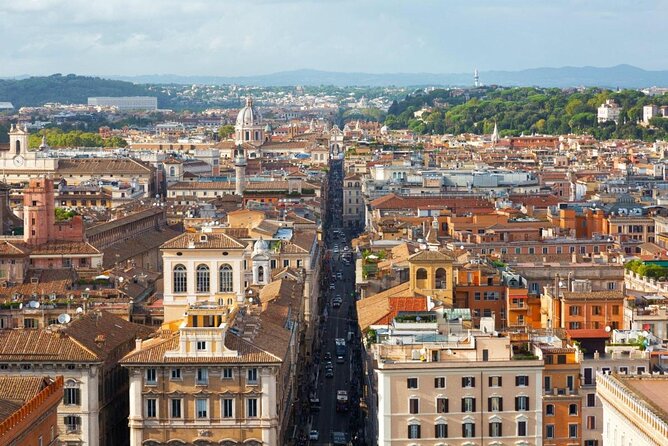
Next you’ll walk Via del Corso, the main historical street that connects Piazza Venezia to Piazza del Popolo. It’s about 1.6 kilometers and forms the central artery of Rome’s Trident road complex (the three-finger road pattern).
This section is valuable because it’s where you feel Rome as a working city. It’s not just a monument corridor—it’s the spine of movement, shopping streets, and everyday life that locals actually use.
If you like understanding how cities function, this is a smart mid-tour moment. It also helps you mentally link the earlier plaza (Popolo) to the later ones you’ll reach through the center.
Spanish Steps to Trevi Fountain: One Iconic Climb, Then a Big Payoff
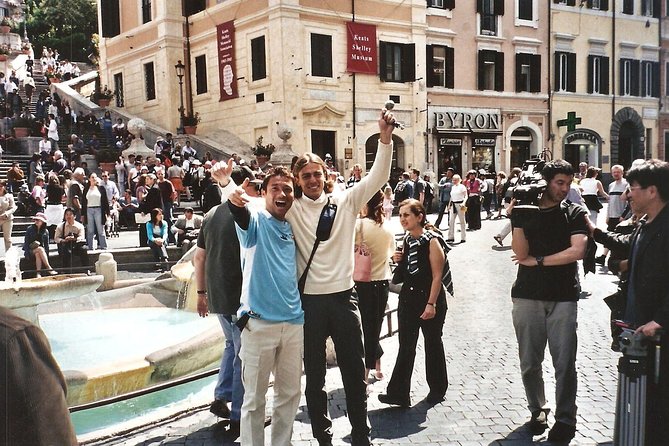
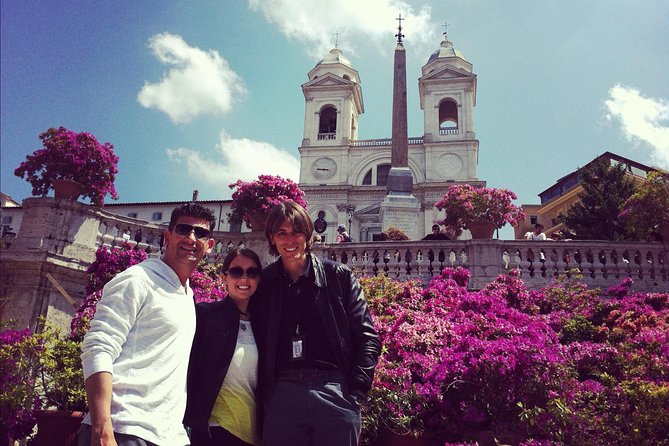
You’ll reach the Spanish Steps (Scalinata di Trinità dei Monti), a dramatic 135-step staircase between Piazza di Spagna and Piazza Trinità dei Monti. The steps were funded in the early 1700s by French diplomat Étienne Gueffier, using money left in his bequest (20,000 scudi).
The stairway links important places in a political and cultural way: it connects the church at the top and the Spanish presence near the bottom. Even if you only pause for photos, your guide’s explanation helps you see it as architecture with purpose, not just a famous slope.
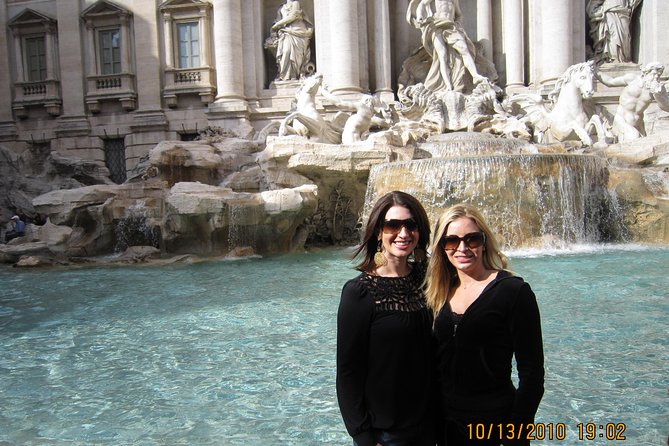
From there, you move to Trevi Fountain (Fontana di Trevi), the 18th-century masterpiece designed by Nicola Salvi. Trevi is one of those places where your expectations can run ahead of the reality. With a guide, you can slow down and look at the details and the role the fountain plays in the overall design of the area.
If you’re short on time, this is where the tour earns its keep. It hits two headline stops that many visitors treat as separate day-long missions.
Pantheon Area and Fontana del Pantheon: Ancient Rome Hits Different Up Close
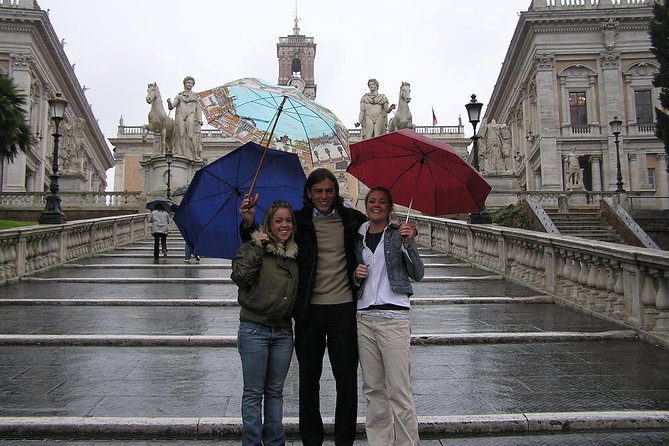
You’ll spend time around the Pantheon area. The itinerary includes a stop named Fontana del Pantheon, and during that portion you’ll get the big picture on the Pantheon itself: an ancient Rome building tied to the cult of all divinities and founded in 27 BC. It’s associated with Marco Vipsanio Agrippa, son-in-law of Augustus.
Even if you don’t go inside, the Pantheon zone has that instantly recognizable scale and symmetry that makes Rome feel like Rome. Your guide’s framing helps you understand why it still grabs attention—long after emperors and patrons are gone.
One caution: the tour lists Pantheon admission as not included, so consider whether you want to pay separately to enter at the end. The tour ends with drop-off at the Pantheon, which gives you the option to go in if timing works.
Piazza Navona: When Rome Feels Like Theater
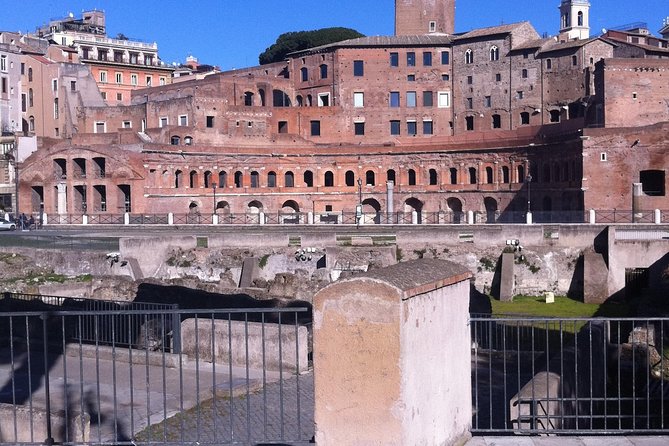
Piazza Navona is one of the most famous monumental squares in Rome, built in a grand style by the Pamphili family at the request of Pope Innocent X. When you stand here, it’s easy to see why. The square feels staged—like you’re watching Rome perform.
This stop matters because it’s not just a place to pass through. Piazza Navona gives you a sense of how powerful patrons used public spaces. A square like this isn’t accidental; it’s a designed statement.
Your guide can help you spot the cues that connect the architecture to its period and purpose, so you understand what you’re seeing instead of just admiring it.
Fontana dei Quattro Fiumi: Innocent X, Water, and a Bold Competition
Then you’ll reach Fontana dei Quattro Fiumi in Piazza Navona. This fountain was commissioned by Pope Innocent X to decorate the square during work on Palazzo Pamphilj.
The water story is part of why the fountain is so interesting: in 1647 Innocent X commissioned Francesco Borromini to plan a pipeline to bring water from the Aqua Virgo to Piazza Navona. There was also a competition for the fountain’s design, and the pope wanted to recover an obelisk later called Agonale, which lay in ruins in the Circus of Maxentius on the Appia Antica.
That’s the kind of detail that turns a fountain into a mini history lesson you can feel under your feet. You’ll likely look at it differently afterward—less like a single photo spot, more like a product of engineering, ambition, and storytelling.
Piazza della Minerva: Minerva’s Area and Santa Maria sopra Minerva
Next is Piazza della Minerva, a square named from an earlier temple dedicated to Minerva Chalkidiki. The cult statue connected to that temple is now in the Vatican. In other words, this square’s identity stretches beyond what’s standing there today.
At the center is Santa Maria sopra Minerva, and the square’s significance is referenced in the 8th century by the Anonymous of Einsiedeln as ecclesia S. Mariae in Minervio. Your guide can help you connect the dots between the ancient religious roots and the later Christian presence.
This stop is a good change of pace. After the big spectacle of Piazza Navona, Piazza della Minerva feels more grounded—still famous, but not as loud.
The Pantheon Drop-Off: Your Choice to Enter or Keep Exploring
The tour ends with a drop-off at the Pantheon. Since Pantheon admission isn’t included, this is where you decide what you want next.
If you’d like to go inside, plan for that as a separate add-on. If you’re happy with exterior views, use the drop-off as a convenient landing point for your next move—coffee, gelato, or a wider walk through the historic center.
Either way, the drop-off is useful because it prevents the tour from rushing you at the very end. You get to make the final choice based on energy and timing.
What I’d Watch For: Walking Pace, Spanish Steps, and Ticket Decisions
This tour is designed for movement, not for lingering. You’ll get about 20 minutes at several major stops (with Pantheon time handled by nearby viewing and the end drop-off), so if you like slow museum-style pacing, bring that energy and accept that this format is about overview.
The Spanish Steps area includes a steep climb and lots of stairs. Even if you only rest at viewpoints, you’ll feel it. For best comfort, go in with solid footwear and a plan to take short breaks rather than trying to “power through.”
Finally, remember that Pantheon entry isn’t included. If you want the inside experience, budget for it. If you’re unsure, you can still use the tour as your orientation and decide at the end.
Should You Book This Tour?
Book it if you want a high-value Rome day with a guide who helps you connect famous dots. It’s especially smart for first-time visitors and for anyone short on time who still wants context at each stop.
Skip it or think twice if you dislike walking, want a long sit-down pace, or you’re only interested in one or two landmarks. This is best when you want the full center loop and you like the idea of turning “famous places” into a story.
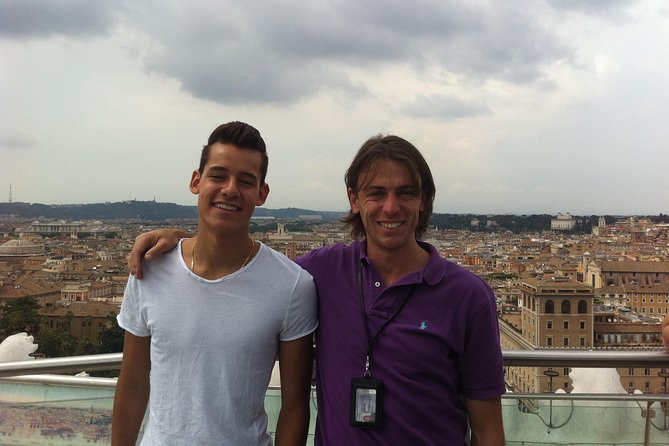
If you book, you’ll benefit most by doing one thing: ask questions. Guides like Paulo (who brings serious passion and knowledge) and Gaia (who can keep even teenagers engaged while giving a real overview) make the tour feel less like a checklist and more like you’re traveling with a smart local.
More Walking Tours in Rome
- Rome: Guided Food Walking Tour with Wine in Trastevere
★ 4.9 · 3,105 reviews - Rome: Trastevere & Campo de Fiori Street Food Walking Tour
★ 4.9 · 2,768 reviews - Rome: Paranormal Night Walking Tour & Secret Backstreets
★ 4.9 · 1,921 reviews - Rome: Trastevere Street Food Walking Tour with Local Expert
★ 4.8 · 1,784 reviews - Rome: Small-Group Guided Day or Night Walking Tour
★ 4.8 · 1,009 reviews - Rome by Night Walking Tour – Legends & Criminal Stories
★ 4.5 · 1,003 reviews
More Tours in Rome
- Vatican Museums, Sistine Chapel & St. Peter’s Basilica Tour
★ 4.3 · 73,970 reviews - Vatican Museums, Sistine Chapel & St Peter’s Basilica Guided Tour
★ 4.5 · 39,149 reviews - Rome: Colosseum, Palatine Hill and Roman Forum Guided Tour
★ 4.8 · 32,814 reviews - Rome: Guided Tour of Colosseum, Roman Forum & Palatine Hill
★ 4.7 · 27,897 reviews - Rome: Colosseum, Roman Forum and Palatine Hill Guided Tour
★ 4.5 · 23,903 reviews - Rome: Colosseum Arena Floor, Palatine & Forum Guided Tour
★ 4.5 · 20,180 reviews
More Tour Reviews in Rome
- Vatican Museums, Sistine Chapel & St. Peter’s Basilica Tour
★ 4.3 · 73,970 reviews - Vatican Museums, Sistine Chapel & St Peter’s Basilica Guided Tour
★ 4.5 · 39,149 reviews - Rome: Colosseum, Palatine Hill and Roman Forum Guided Tour
★ 4.8 · 32,814 reviews - Rome: Guided Tour of Colosseum, Roman Forum & Palatine Hill
★ 4.7 · 27,897 reviews - Rome: Colosseum & Forum with Audio Guide App -Optional Arena
★ 4.2 · 24,770 reviews - Rome: Colosseum, Roman Forum and Palatine Hill Guided Tour
★ 4.5 · 23,903 reviews
Just added to our Rome reviews





Walking Tours, compared.
 ★ 4.9Guided Food Walking Tour with Wine in TrastevereFrom $1003,105 reviews
 ★ 4.9Trastevere & Campo de Fiori Street Food Walking TourFrom $512,768 reviews
 ★ 4.9Paranormal Night Walking Tour & Secret BackstreetsFrom $341,921 reviews
 ★ 4.8Trastevere Street Food Walking Tour with Local ExpertFrom $571,784 reviews
 ★ 4.8Small-Group Guided Day or Night Walking TourFrom $231,009 reviews
 ★ 4.5Rome by Night Walking Tour – Legends & Criminal StoriesFrom $141,003 reviews
 ★ 4.4Guided City Center Evening Sightseeing Walking TourFrom $46953 reviews
 ★ 4.9Small-Group City Highlights Moonlight Walking TourFrom $29949 reviews
Browse the lists this tour appears in