
Reviewed · ROME
Pastamania in Rome
If you like eating well, this is your kind of class. You’ll roll dough by hand, shape real pastas, and finish with a communal meal near the Pantheon. Pastamania is run by Dalle Nostre Mani in a historic palazzo, and the whole point is simple: learn the steps of pasta making and then enjoy what you made at the same table.
Two things I’d put at the top of my list are hands-on teaching and the fact you eat everything together at the end. In past sessions led by instructors like Christian, Giorgio, Fabrizio, and Luca, the lessons stay practical and upbeat, not stiff. One thing to consider: the experience is not accessible for limited mobility, so it’s best if you can comfortably stand and move during the class.
In This Review
- Key Highlights You’ll Care About
- A Historic Palazzo Near the Pantheon (Where the Evening Starts)
- Your 3-Hour Pasta Lesson: Ravioli, Tortelli, Fettuccine
- What You Actually Do at the Table (Not Just Watch)
- The Sauce Phase: Butter and Sage, Tomato, and Truffle Notes
- The Communal Feast: Eating What You Made
- Price and Value: What $49.58 Gets You in Real Terms
- Who This Class Suits Best (and Who Might Feel It’s Not for Them)
- Tips to Make Your Evening Smoother (and Tastier)
- Should You Book Pastamania in Rome?
- FAQ
- How long is the Pastamania in Rome pasta class?
- Where do I meet for the experience?
- What group size should I expect?
- What languages is the class offered in?
- What pasta do you make during the class?
- Is there food included after the cooking?
- Does the experience use a mobile ticket?
- Is the experience accessible for people with limited mobility?
- Do I need to book far in advance?
- What is the cancellation window for a full refund?
Key Highlights You’ll Care About
- Small group size (max 10) keeps the instructor close when your dough needs help
- Make ravioli, tortelli, and fettuccine instead of just watching demos
- Historic palazzo setting near the Pantheon and Piazza Venezia makes the meal feel special
- End-of-class communal table turns the session into a shared Roman food moment
- Food includes a plated pasta feast plus dessert, with wine and limoncello shots mentioned in the experience style
A Historic Palazzo Near the Pantheon (Where the Evening Starts)
The meeting point is Palazzo Grazioli on Via della Gatta, a short walk area that puts you right in central Rome. The address is Palazzo Grazioli, Via della Gatta, 14, 00186 Roma RM, and the activity ends back at the meeting point, so you’re not stuck figuring out late-night logistics.
What I like about the palazzo setting is that it makes the class feel like something Roman, not like a factory-style cooking workshop. You’re inside a historic building for the whole experience window (about 3 hours), and that “we’re doing this here, in town” feeling matters. You can also pair it easily with a day of sightseeing around the Pantheon and Piazza Venezia, because you’re starting in the same neighborhood you already want to explore.
Another practical detail: the class is offered in English, and you’ll get a mobile ticket. That reduces the usual Rome pre-show stress—no printer hunting, no complicated paper trail.
Weighing this one up? Here is how a few Rome favourites compare:
- Vatican Museums, Sistine Chapel & St. Peter’s Basilica Tour
★ 4.3 · 73,970 reviews - Vatican Museums, Sistine Chapel & St Peter’s Basilica Guided Tour
★ 4.5 · 39,149 reviews - Rome: Colosseum, Palatine Hill and Roman Forum Guided Tour
★ 4.8 · 32,814 reviews - Rome: Guided Tour of Colosseum, Roman Forum & Palatine Hill
★ 4.7 · 27,897 reviews
Your 3-Hour Pasta Lesson: Ravioli, Tortelli, Fettuccine
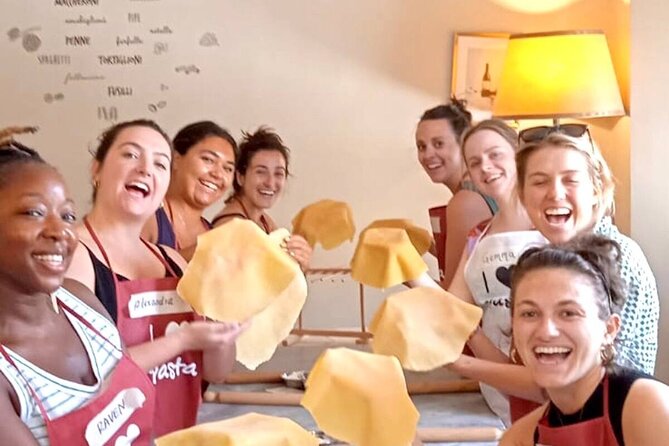
This is not a quick “tourist pasta” crash course. The core of the lesson is making fresh pasta dough and shaping multiple types of pasta. Expect a guided intro first, then hands-on rolling, kneading, and shaping.
Here’s the lineup you should plan around:
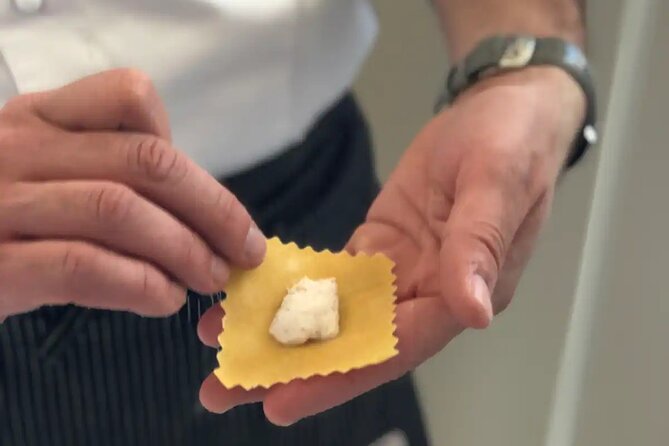
- Ravioli with a parmigiano and ricotta filling plus truffle oil
- Tortelli with parmigiano and ricotta plus nutmeg, finished with butter and sage sauce
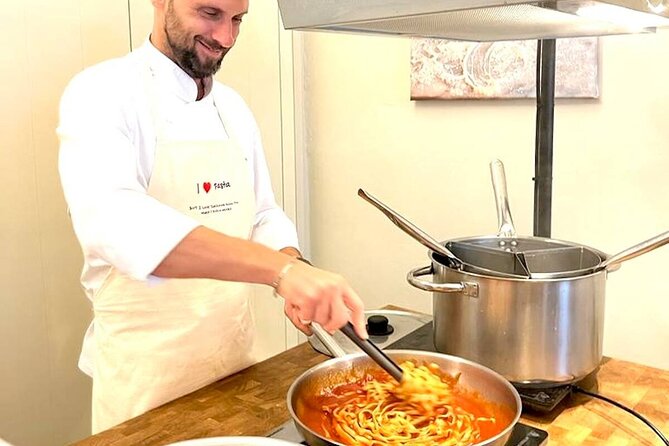
- Fettuccine with tomato sauce
You’ll also see the difference between filled pasta (ravioli and tortelli) and rolled pasta (fettuccine), which is a big deal if you want to cook at home later. The class teaches the technique in a way that’s meant to transfer. That shows up in what people say after: they feel capable of making pasta again once they’re back in their own kitchen.
A lot of instructors in this program are praised for making steps feel doable. Names that come up often include Christian, Giorgio, Fabrizio, Ricardo, Luca, and Sofia. Even when the group includes mixed ages—from kids to grandparents—the teaching approach stays patient and structured.
What You Actually Do at the Table (Not Just Watch)
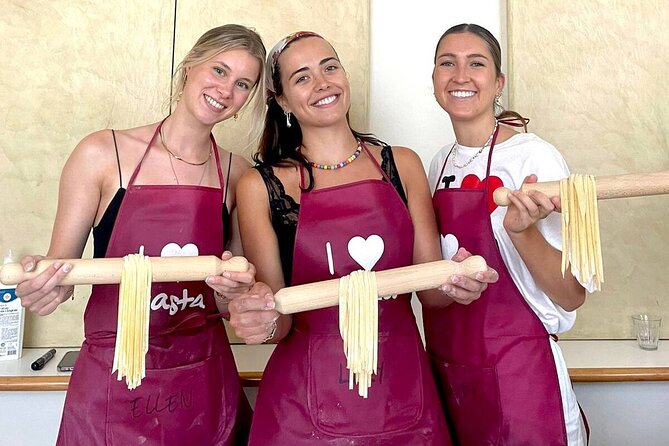
The best classes don’t just give you recipes. They help you build muscle memory. That’s the core value here: you’re the one working the dough—kneading, rolling, and shaping. Then you move on to sauce-making and finishing touches for the table.
From how this class is described, the teaching flow looks like this:
- An early explanation so you understand what you’re aiming for with dough texture and thickness
- A hands-on section where the instructor watches and corrects
- A communal sit-down where everything you made becomes dinner
That instructor attention is why the small group size matters. With a maximum of 10 travelers, you’re more likely to get real-time help rather than general advice from across the room. If you’ve ever tried rolling pasta and ended up with sheets that are too thick or too thin, you’ll understand why that matters.
Also, the tone seems to be friendly and relaxed. Multiple instructors get described as funny, warm, and patient, and that helps a lot if you feel a little intimidated by food technique. It’s easier to learn when you’re not worried about messing up.
The Sauce Phase: Butter and Sage, Tomato, and Truffle Notes
Pasta is only half the story. The other half is how you finish it. This class covers sauces that match the pasta you’re making, so your dinner is cohesive instead of random plates.
You’ll see a few featured sauce styles:
- Butter and sage with stuffed pastas (ravioli and tortelli)
- Tomato sauce for fettuccine
- Truffle oil mentioned for the ravioli filling flavor direction
What I like about these choices is that they help you understand how simple ingredients can taste elegant when handled correctly. Butter and sage is quick and classic, but the details matter (timing, coating, and flavor balance). Tomato sauce is a great test of whether you can make something bright and satisfying without overthinking it.
And since you’re making the pasta first, you get a clearer sense of how the sauce interacts with the shape and filling. That’s the kind of lesson you don’t get from a restaurant.




The Communal Feast: Eating What You Made
A major reason this class gets such high praise is the ending. You don’t make pasta and then receive it as a vague take-home. You gather around a large communal table and eat together, like a real Italian family meal.
That communal style does two things for your experience:
- It turns technique into celebration. You recognize the pasta shapes you made and can actually taste your progress.
- It creates a natural social scene. People talk while eating, not awkwardly after finishing a cooking step.
This is also where the experience becomes very “Rome in practice.” You’re in central Rome, inside a historic palazzo, with dinner that feels like comfort food—but you earned it.
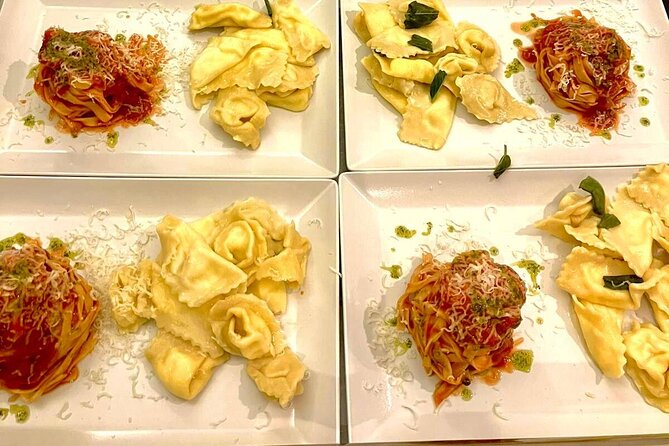
The sample menu gives you a clear picture of what you’ll be served:
- Ravioli with parmigiano and ricotta with truffle oil filling, plus butter and sage
- Tortelli with parmigiano and ricotta and nutmeg filling, plus butter and sage sauce
- Fettuccine with tomato sauce
- Dessert: chocolate salami
In several accounts, wine and limoncello shots are part of the evening rhythm, and there are also mentions of biscuits/dessert surprises. If you come hungry, you’ll likely appreciate that there’s more to this than just a “taste.”
Practical tip: plan to eat less before you go. One simple piece of advice that shows up clearly is don’t come full. You want room for the plated pasta feast and dessert.
Price and Value: What $49.58 Gets You in Real Terms
$49.58 for about 3 hours in a small group is not a random “pay for a meal” price. You’re paying for instruction, equipment/time in the teaching space, and the fact that the class culminates in a meal built from what you make.
Here’s how to think about value:
- You’re not paying for a lecture. You’re paying for hands-on coaching and a structured lesson.
- You’re not paying for one pasta. You’re making multiple types: ravioli, tortelli, and fettuccine.
- The experience ends with a communal table meal and dessert, plus the style of drinks that often includes wine and limoncello shots.
If you’ve got limited time in Rome, this is also a smart use of evening hours. Instead of a late dinner reservation with one dish, you get a full food story: dough work, sauce finishing, and an actual sit-down meal.
In short: this price works best if you like interactive activities and you want to leave Rome with a skill you can reuse at home.
Who This Class Suits Best (and Who Might Feel It’s Not for Them)
This experience works especially well for:
- Couples and small friend groups who want a shared activity instead of another museum ticket
- Families where kids can participate hands-on (there are accounts of taking a 9-year-old and having it go smoothly)
- Solo travelers who want conversation at the communal table
- Anyone who wants to understand Roman pasta beyond ordering dishes
It may feel less ideal if:
- You need mobility accommodations. The experience is listed as not accessible for people with limited mobility.
- You strongly prefer to watch rather than work with dough. This one is built around doing.
Also, if you’re the type who loves buying specialty tools, you might be tempted after class. One recurring regret in feedback is not purchasing a chitarra pasta maker during the experience—so if that interests you, keep an eye out for pasta tools and consider whether you want to take something practical home.
Tips to Make Your Evening Smoother (and Tastier)
A few practical moves can raise your odds of a great session:
- Come slightly hungry. The meal and dessert are part of the package, and you’ll enjoy it more if you’re not already stuffed.
- Be ready to get your hands involved. Rolling dough and shaping pasta are the main show, so lean into it.
- Ask questions while you’re working. The class format is built for guidance. If you’re unsure about dough thickness or sealing filled pasta, speak up.
- Think in techniques, not just names. You’ll remember results better if you focus on what makes a ravioli seam seal, how fettuccine thickness affects texture, and how the sauce clings.
- Plan a relaxed return after. Since it ends back at the meeting point, you can pair it with nearby sights before you go.
And if you’re a pasta fan, this lesson will likely make you more confident ordering pasta in restaurants afterward. You’ll start noticing texture and sauce balance instead of just judging by taste.
Should You Book Pastamania in Rome?
I’d book it if you want a hands-on Rome experience that ends with a real meal you helped create. The biggest strengths are the small group size, the chance to make multiple pasta types, and the friendly instructor energy that makes technique feel achievable. If you like cooking classes but hate ones where you mostly stand around, this one fits.
I’d skip or choose another option if you need accessibility support, or if you’re coming to Rome and just want to browse and watch from the sidelines. This isn’t built for that style—it’s built for doing.
If you’re on the fence, use this simple checklist: you’ll be happy if fresh pasta sounds fun, if you’re willing to roll and shape dough for part of the evening, and if you’re excited by the idea of eating ravioli, tortelli, and fettuccine you made yourself.
FAQ
How long is the Pastamania in Rome pasta class?
It lasts about 3 hours.
Where do I meet for the experience?
You meet at Palazzo Grazioli, Via della Gatta, 14, 00186 Roma RM, Italy, and the activity ends back at the same meeting point.
What group size should I expect?
The experience has a maximum of 10 travelers.
What languages is the class offered in?
It is offered in English.
What pasta do you make during the class?
You’ll make ravioli, tortelli, and fettuccine.
Is there food included after the cooking?
Yes. The experience culminates in a communal table meal where you eat the pastas you made, plus dessert. The sample menu includes chocolate salami.
Does the experience use a mobile ticket?
Yes, the ticket is mobile.
Is the experience accessible for people with limited mobility?
No, it is not accessible for people with limited mobility (for example, crutches).
Do I need to book far in advance?
It is often booked about 25 days in advance on average.
What is the cancellation window for a full refund?
You can cancel up to 24 hours in advance for a full refund. If you cancel less than 24 hours before the experience starts, the amount paid is not refunded.
More Tour Reviews in Rome
- Vatican Museums, Sistine Chapel & St. Peter’s Basilica Tour
★ 4.3 · 73,970 reviews - Vatican Museums, Sistine Chapel & St Peter’s Basilica Guided Tour
★ 4.5 · 39,149 reviews - Rome: Colosseum, Palatine Hill and Roman Forum Guided Tour
★ 4.8 · 32,814 reviews - Rome: Guided Tour of Colosseum, Roman Forum & Palatine Hill
★ 4.7 · 27,897 reviews - Rome: Colosseum & Forum with Audio Guide App -Optional Arena
★ 4.2 · 24,770 reviews - Rome: Colosseum, Roman Forum and Palatine Hill Guided Tour
★ 4.5 · 23,903 reviews




