
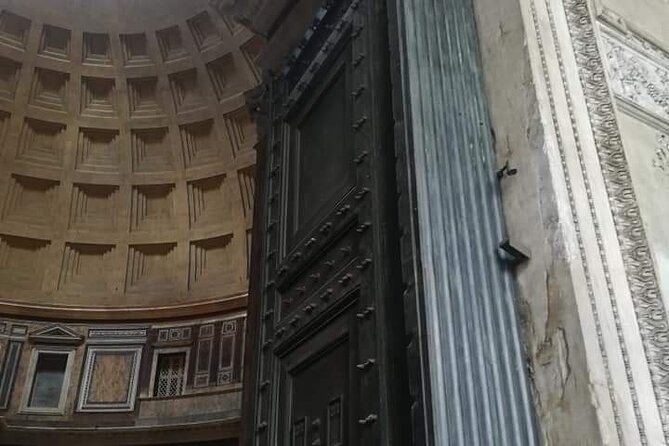
Reviewed · PANTHEON TOURS
Pantheon: Tour with Archaeologist of the best preserved Roman work
The Pantheon never feels like a museum. You’ll meet Olga di Cagno, an archaeologist, for an expert-led walk through one of Rome’s best-preserved Roman monuments.
This tour focuses on how the Pantheon was built to project Rome’s power—and how to read what you’re seeing. I love the interactive, question-friendly pace and the way Olga connects architecture with meaning you can actually picture.
One thing to keep in mind: the tour is short, and time can feel tighter if the area is busy or you’re trying to match your pace to the group’s flow—so don’t expect a long engineering seminar.
In This Review
- Why the Pantheon Visit Feels Different (Even in a Crowd)
- What You’ll Love Most About This Small-Group Tour
- 5 Things to Know Before You Go
- Pantheon With An Archaeologist: What You’ll Actually Learn
- Inside the Pantheon Experience: Monumentality, Art, and Stories
- Olga di Cagno’s Style: Questions, Latin, and Engineering Focus
- A practical note on depth
- Time, Group Size, and Finding the Right Pace
- Dress code tip (don’t skip this)
- Price and Value: Is $64.88 Worth It?
- Who This Tour Suits Best (and Who Might Prefer Another Fit)
- Should You Book This Pantheon Tour With Olga di Cagno?
- FAQ
- How long is the Pantheon tour?
- Is admission to the Pantheon included?
- What language is the tour offered in?
- Where do we meet for the tour?
- Is this a small group tour?
- Do I need a specific dress code?
- Will I receive a ticket on my phone?
- Is free cancellation available?
Why the Pantheon Visit Feels Different (Even in a Crowd)
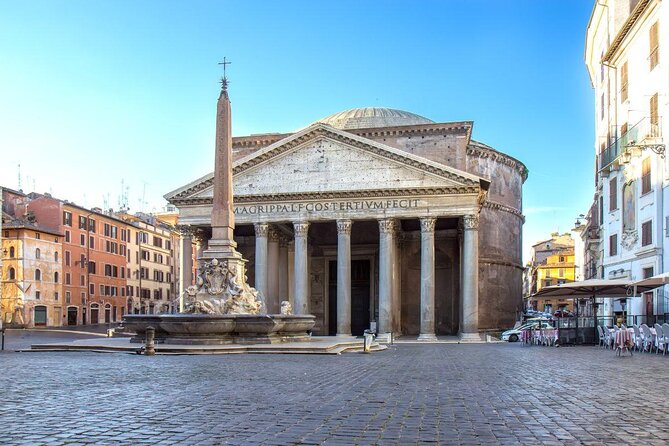
The Pantheon is one of those places where your brain instantly starts doing two jobs at once: soaking in the scale, and trying to make sense of why it still hits so hard after centuries. This tour leans into that second job. Instead of rushing through highlights, Olga helps you slow down and notice the details that tell you how Romans thought about monumentality, design, and lasting power.
A key part of the experience is what makes the monument so special on a practical level: it survived almost completely intact, and even today it’s surrounded by hundreds of people. That contrast matters. You’re standing in a working, crowded public space, but you’re also guided to feel the “back in time” effect that comes from seeing Roman work that has not been reduced to fragments.
What You’ll Love Most About This Small-Group Tour
Olga di Cagno’s archaeology background. She brings training that’s visible in how she frames the Pantheon—not just as a famous stop, but as a site with layers of meaning and history.
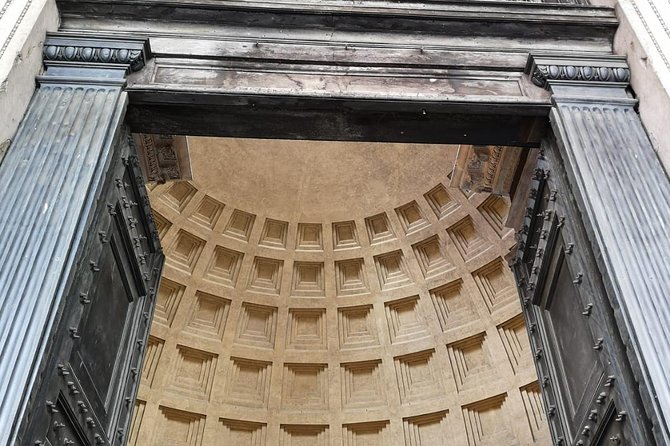
Clear, organized teaching with real visuals. The tour presentation is made up of 50 slides, with a heavy focus on architecture and engineering, so you’re not only hearing stories—you’re seeing how the pieces fit together.
A short format that rewards focus. The experience is about 1 hour, so you’ll get a strong hit of context, but you’ll also want to come with a few questions ready if you want the maximum payoff.
The Pantheon, a couple more takes
- Rome: Pantheon Priority Entry Ticket & Interactive App
★ 4.1 · 5,114 reviews - Rome: Pantheon Priority Entry Tickets with Interactive App
★ 4.6 · 4,108 reviews - Rome: Pantheon Timeless Marvel Guided Tour with Entry Ticket
★ 4.9 · 4,002 reviews - Castel Sant’Angelo: Ticket with optional Vatican or Pantheon
★ 4.4 · 3,088 reviews
5 Things to Know Before You Go
Archival-grade context, led by Olga di Cagno. Her training in archaeology shapes what you notice and how you interpret it.
Architecture-and-engineering explanations using 50 slides. You’ll spend time on how the building works and why Romans chose what they chose.
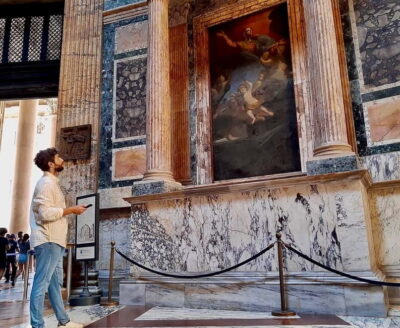
You’ll get help reading paintings, sculptures, and mosaics. Olga explains the stories behind what’s on display.
A small group capped at 15. It stays manageable enough for questions without turning into a lecture.
Dress code matters: shoulders and knees covered. Bring something that lets you comply comfortably.
Pantheon With An Archaeologist: What You’ll Actually Learn
This isn’t the kind of tour where you mostly collect trivia. The heart of the experience is learning how to look at the Pantheon like a Roman architect and like a historian at the same time. Olga’s approach helps you connect the building’s design choices to what Romans wanted it to communicate: Rome’s power, prestige, and the kind of public statement that lasts.
A recurring theme in the feedback about Olga is that you walk away with fewer blank spaces in your understanding. You’re not just told that the Pantheon is important—you’re shown how to think about it as a monument: what a monument is supposed to do, why it was lavish, and how it served as a kind of high-stakes messaging tool.
If you enjoy classics, architecture, or engineering logic, you’ll probably feel the value quickly. Even if you’re not from those fields, you still benefit because Olga explains things in a way that makes the Pantheon feel readable.
Inside the Pantheon Experience: Monumentality, Art, and Stories
The guided walk centers on the Pantheon itself, with a focus on how the monument communicates across time. You’ll spend about an hour on site, and in that time Olga aims to cover more than just the building’s reputation. The tour touches on stories tied to what you see, including paintings, sculptures, and mosaics—how they fit into the monument’s meaning.
One of the most memorable parts, based on the tour’s described approach, is the emphasis on the monument’s power and the planning behind it. There’s also an edge of realism: you’ll be reminded that this kind of lavish public display was tied to money and status. The Pantheon wasn’t created to be polite or subtle.
Olga also pays attention to the monument’s shifting identity over time. The tour includes showing you aspects tied to what was originally pagan, with references to areas around the back that still show ruins. That makes the Pantheon feel less like a single snapshot and more like a site that kept being used, adapted, and reinterpreted.




Olga di Cagno’s Style: Questions, Latin, and Engineering Focus
Olga’s background comes through in how she teaches. The tour uses a visual slide deck of 50 slides, with most of it focused on architecture and engineering. That matters because it changes what you can remember after you leave. You’re not relying only on spoken explanations while standing in a noisy crowd—you’re seeing structured ideas.
Another standout element is her interactive style. Several comments highlight that Olga takes time, leaves room for questions, and answers in a way that makes the history feel connected rather than pasted on. If you’re the type who likes asking why something is the way it is—materials, design logic, or purpose—you’ll likely enjoy this.
There’s also a language element. Olga is said to do Latin and translate meanings, which can add an extra layer if you like words and context. Even if you don’t read Latin, the translation approach can make the cultural references feel more grounded.
A practical note on depth
One concern that appears in the feedback is that the tour may feel rushed for some people, and the engineering focus may not match everyone’s expectations—especially if you want a heavy technical breakdown. If you’re an engineer or you love structural detail, it may help to come ready with specific questions about what you want explained most.
Time, Group Size, and Finding the Right Pace
This is a mobile ticket tour in English, and it’s set up for a maximum of 15 travelers. That small group size is one of the biggest reasons the experience can feel personal even though you’re at one of Rome’s most famous monuments.
The tour runs about 1 hour, and the Pantheon entrance area can be busy. That means your real experience time depends on crowd flow. If you’re strict about schedules, plan a little breathing room so you don’t feel squeezed.
You’ll meet at Piazza della Rotonda (00186 Roma RM, Italy). The tour ends back at the same meeting point. That simple loop is convenient: no complicated transfer, no need to map out where you’ll reconnect. You just spend your time on the monument with the guide.
Dress code tip (don’t skip this)
You’ll need to cover shoulders and knees. It’s a small thing, but it affects whether your visit feels comfortable from the start. If you’re traveling in warm weather, bring something light that still covers properly.
Price and Value: Is $64.88 Worth It?
At $64.88 per person for about an hour, you’re paying for two things: access to an expert-led explanation and time saved by having someone point out what matters.
In practice, the value lands best if:
- You want more than a photo stop.
- You like learning how to interpret Roman design and public symbolism.
- You appreciate a guide who can explain art details like paintings, sculptures, and mosaics in context.
The price feels more reasonable when you consider the small group cap and the archaeologist angle. The tour isn’t trying to scale to hundreds of people. It’s built to be taught—especially with a structured slide presentation and time for questions.
The main reason the price might not feel like a win is if your goal is purely technical or purely long-form. Because the tour is short, not every topic can receive the level of detail some visitors want—particularly if they expect an ultra-deep engineering walkthrough.
If you’re torn, think of it like this: you’re buying guidance for how to see the Pantheon clearly in a limited time window. If you want a longer session, or you’re hunting for very specific technical data, you may want to consider another option. If you want clarity and context quickly, this one makes sense.
Who This Tour Suits Best (and Who Might Prefer Another Fit)
This tour fits best if you’re the kind of person who enjoys:
- Roman monuments as more than Instagram backdrops
- design choices and how they communicate power
- art details explained in plain language
- a guide with an archaeology background who connects the dots
It also tends to work well for students of classics or anyone who likes Latin references, since Olga is described as doing Latin translation.
If you prefer a slower, very deep engineering session, you might find the hour tight. Likewise, if you dislike group pacing, you may want to ask the guide directly what the tour’s focus will be so you can confirm it matches your interests.
Should You Book This Pantheon Tour With Olga di Cagno?
I’d book it if your goal is to leave the Pantheon understanding the why behind what you’re seeing. Olga di Cagno’s combination of archaeology training, structured teaching (50 slides), and attention to art plus monument meaning is exactly the kind of guide-driven value that improves your entire Rome day.
I’d hesitate if you’re looking for a long, technical engineering deep dive or if you need lots of quiet time to absorb without any group momentum. In that case, you might feel the short format doesn’t stretch far enough.
One more decision tip: with a rating of 4.8 and 94% recommending the tour, this is clearly a strong fit for many people—but your interests matter most. If you want context you can carry home, you’re in the right place.
FAQ
How long is the Pantheon tour?
It runs for about 1 hour.
Is admission to the Pantheon included?
Yes, admission ticket is included.
What language is the tour offered in?
The tour is offered in English.
Where do we meet for the tour?
You start at Piazza della Rotonda, 00186 Roma RM, Italy.
Is this a small group tour?
Yes. The maximum group size is 15 travelers.
Do I need a specific dress code?
Yes. You must cover your shoulders and knees.
Will I receive a ticket on my phone?
Yes. You receive a mobile ticket.
Is free cancellation available?
Yes. You can cancel up to 24 hours in advance for a full refund.
More Tours in Rome
- Vatican Museums, Sistine Chapel & St. Peter’s Basilica Tour
★ 4.3 · 73,970 reviews - Vatican Museums, Sistine Chapel & St Peter’s Basilica Guided Tour
★ 4.5 · 39,149 reviews - Rome: Colosseum, Palatine Hill and Roman Forum Guided Tour
★ 4.8 · 32,814 reviews - Rome: Guided Tour of Colosseum, Roman Forum & Palatine Hill
★ 4.7 · 27,897 reviews - Rome: Colosseum, Roman Forum and Palatine Hill Guided Tour
★ 4.5 · 23,903 reviews - Rome: Colosseum Arena Floor, Palatine & Forum Guided Tour
★ 4.5 · 20,180 reviews
More Tour Reviews in Rome
- Vatican Museums, Sistine Chapel & St. Peter’s Basilica Tour
★ 4.3 · 73,970 reviews - Vatican Museums, Sistine Chapel & St Peter’s Basilica Guided Tour
★ 4.5 · 39,149 reviews - Rome: Colosseum, Palatine Hill and Roman Forum Guided Tour
★ 4.8 · 32,814 reviews - Rome: Guided Tour of Colosseum, Roman Forum & Palatine Hill
★ 4.7 · 27,897 reviews - Rome: Colosseum & Forum with Audio Guide App -Optional Arena
★ 4.2 · 24,770 reviews - Rome: Colosseum, Roman Forum and Palatine Hill Guided Tour
★ 4.5 · 23,903 reviews
Back to the Pantheon
- Rome: Pantheon Priority Entry Ticket & Interactive App
★ 4.1 · 5,114 reviews - Rome: Pantheon Priority Entry Tickets with Interactive App
★ 4.6 · 4,108 reviews - Rome: Pantheon Timeless Marvel Guided Tour with Entry Ticket
★ 4.9 · 4,002 reviews - Castel Sant’Angelo: Ticket with optional Vatican or Pantheon
★ 4.4 · 3,088 reviews - Pantheon Elite Guided Tour – Rome’s Iconic Ancient Temple
★ 5.0 · 1,447 reviews - Rome: Pantheon Small-Group Guided Tour with Entry Ticket
★ 4.9 · 1,226 reviews
Just added to our Rome reviews





Pantheon Tours, compared.
 ★ 4.1Pantheon Priority Entry Ticket & Interactive AppFrom $145,114 reviews
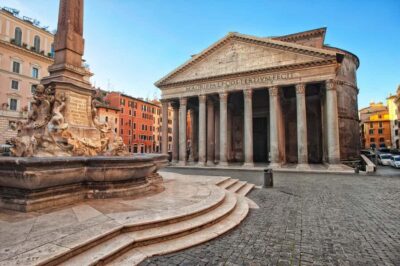 ★ 4.6Pantheon Priority Entry Tickets with Interactive AppFrom $54,108 reviews
 ★ 4.9Pantheon Timeless Marvel Guided Tour with Entry TicketFrom $214,002 reviews
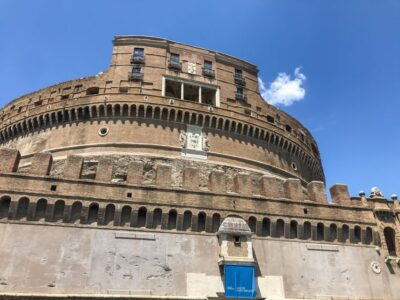 ★ 4.4Castel Sant’Angelo: Ticket with optional Vatican or PantheonFrom $183,088 reviews
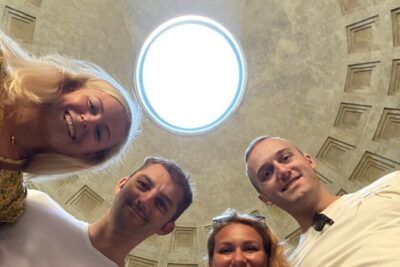 ★ 5.0Pantheon Elite Guided Tour – Rome’s Iconic Ancient TempleFrom $411,447 reviews
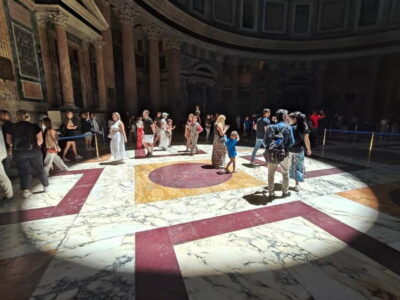 ★ 4.9Pantheon Small-Group Guided Tour with Entry TicketFrom $511,226 reviews
 ★ 4.0Rome’s Iconic Temple: Pantheon Audio Guided Tour with Fast AccessFrom $211,188 reviews
 ★ 4.7Pantheon Small Group Tour and Skip-the-Line TicketFrom $531,008 reviews
Browse the lists this tour appears in