
Reviewed · PANTHEON TOURS
Pantheon and Saint Ignatius church guided tour
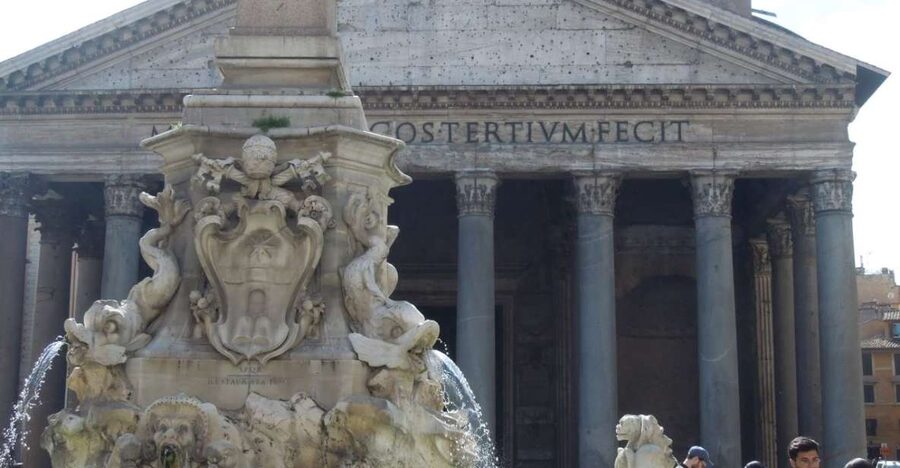
The Pantheon gets better with a live guide. In just 90 minutes, this semi-private tour (max 4 people) pairs skip-the-line entry at the Pantheon with story-driven explanations that make Roman architecture feel less like trivia and more like a real design problem solved. You also get the feeling of being in good hands right away, since the guide leads you in and sets the pace.
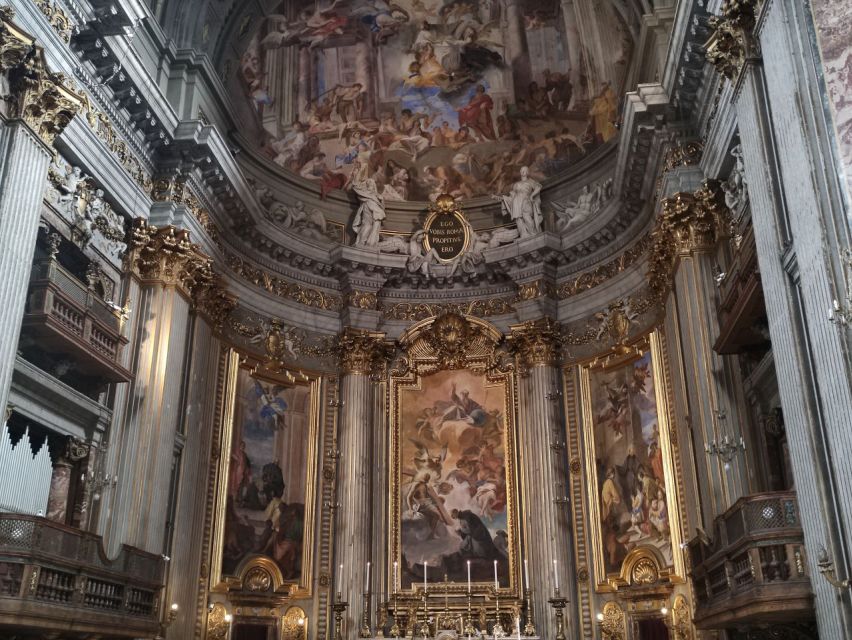
I especially like the second stop: St. Ignatius of Loyola, where Baroque art comes with surprises. You’ll learn how an anamorphism painting works (the 3D optical effect), plus there’s another moment the tour won’t spell out in advance. The guide’s way of telling the story also means you’re not just looking around.
One watch-out: the dress code is strict, and Rome can be casual about clothing. No shorts or sleeveless tops, and knees and shoulders need to be covered. If your outfit doesn’t match, you could be refused entry.
In This Review
- Key things to know before you go
- A smart Rome combo: Pantheon and St. Ignatius in 90 minutes
- Meeting under the stone elephant: small-group flow that actually works
- Skip-the-line at the Pantheon: dome engineering and surprising tomb connections
- Why the dome has a hole, and why rain matters
- Pagan temple to Christian church: the building’s second life
- What makes this better than wandering
- St. Ignatius of Loyola: Baroque drama, art techniques, and an anamorphism moment
- Anamorphism: the 3D effect that depends on where you stand
- Another surprise you won’t see coming
- The dress code reality check
- What the $71 price means: value in time saved and explanations provided
- Dress code and ID rules: the small things that can stop a big visit
- Who should book this Pantheon + St. Ignatius tour?
- Should you book? My straightforward take
- FAQ
- How long is the guided tour?
- Where do I meet the guide?
- Does the tour include tickets?
- What’s the main benefit for the Pantheon?
- Is a dress code required?
- What languages is the tour offered in?
- Do I need to bring an ID?
- Is the tour wheelchair accessible and does it run in bad weather?
Key things to know before you go
- Small group (max 4) keeps questions practical and the pace comfortable.
- Pantheon skip-the-line saves time on one of Rome’s most in-demand sites.
- Two Roman highlights in one ticket: Pantheon plus St. Ignatius of Loyola.
- Dome design details: you’ll hear why the Pantheon’s dome has a hole and what rain does.
- St. Ignatius Baroque + anamorphism makes “optical illusion art” feel real.
- Rain or shine means you should bring weather-proof plans for a 1.5-hour outing.
A smart Rome combo: Pantheon and St. Ignatius in 90 minutes

This is the kind of tour that fits cleanly into a day of classic Rome without turning your schedule into a math problem. The big win is the pairing. The Pantheon is one of Rome’s best-preserved monuments, famous for its dome and its design logic. St. Ignatius of Loyola is a very different vibe: Baroque, theatrical, and full of visual tricks that are meant to hit you with emotion and perspective.
Put together, you get two “why did they build it like that?” stories. At the Pantheon, you’re looking at ancient engineering choices that still hold up. At St. Ignatius, you’re seeing later religious art that uses technique to guide your eye and make you look twice.
The time also matters. With a 1.5-hour guided format, you’re not stuck rushing, but you also aren’t waiting around for a slow group. And because it’s semi-private, you’re more likely to get answers instead of hearing only rehearsed facts.
The Pantheon, a couple more takes
- Rome: Pantheon Priority Entry Ticket & Interactive App
★ 4.1 · 5,114 reviews - Rome: Pantheon Priority Entry Tickets with Interactive App
★ 4.6 · 4,108 reviews - Rome: Pantheon Timeless Marvel Guided Tour with Entry Ticket
★ 4.9 · 4,002 reviews - Castel Sant’Angelo: Ticket with optional Vatican or Pantheon
★ 4.4 · 3,088 reviews
Meeting under the stone elephant: small-group flow that actually works
You meet the guide under the stone elephant statue. That detail sounds simple, but it helps a lot in Rome, where “the entrance” can mean half a dozen things. Once you find the group, you’ll follow the guide’s lead through the Pantheon experience, including the skip-the-line entrance.
The group size is what makes this feel smoother. Max 4 participants means you’re not just listening—you’re asking questions without feeling like you’re holding up a train of people. It’s also a better setup if you’re traveling with a mix of interests: someone can care about Roman architecture, while someone else cares about art and still feel satisfied.
The guide speaks French, English, or Italian, so you can pick the language that matches your comfort level. That sounds minor, but interpretation changes how much you catch. In this case, the descriptions focus on what you’d likely miss if you were walking on your own.
Also note the practical bits: it runs rain or shine. Plan for weather, and don’t count on a long break built into the schedule. There’s no hotel pickup or drop-off, and no food or drinks included, so you’ll want to eat before or after based on the time you choose.
Skip-the-line at the Pantheon: dome engineering and surprising tomb connections
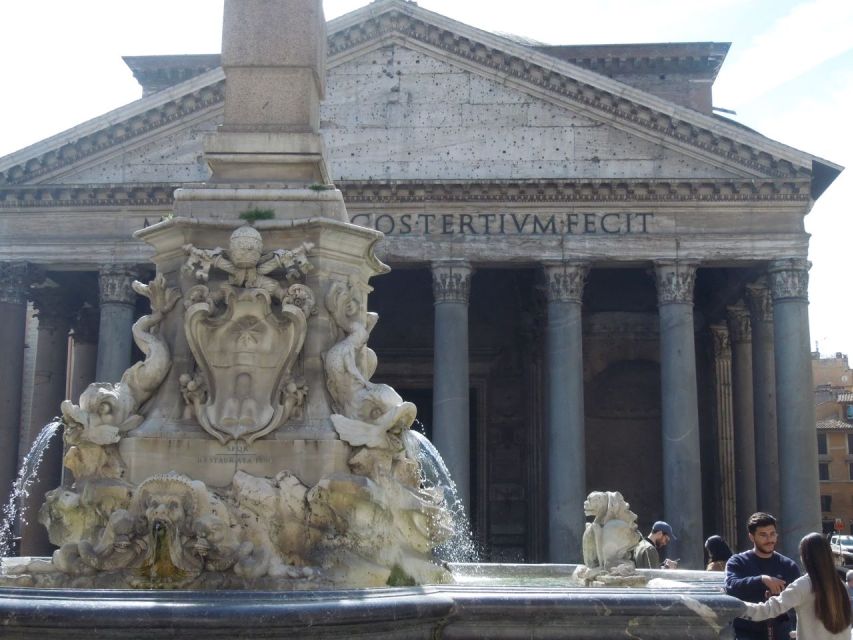
The Pantheon is one of those places where the building does half the work just by existing. But the guide’s job is to help your eyes catch what your brain might otherwise gloss over.
You’ll come in through the skip-the-line entrance, which is more valuable than it sounds. The Pantheon is popular, and lines can shrink your patience. Here, the time you save becomes time you can spend looking up and around instead of shifting your feet from one crowd to another.
Why the dome has a hole, and why rain matters
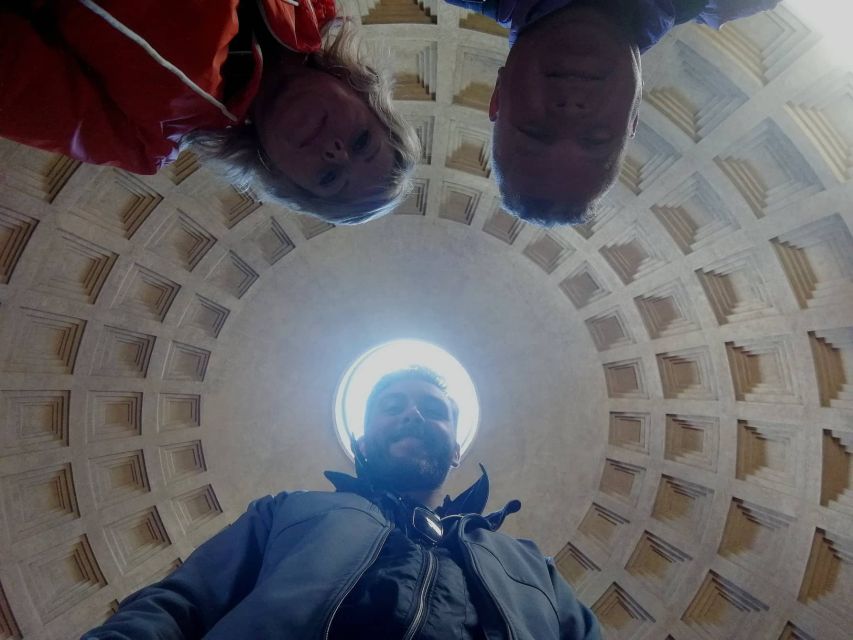
The guide will explain why the dome has a hole at the top. That opening isn’t a random architectural flourish. It links light, design, and how the space works in real conditions.
You’ll also learn what happens when it rains. That’s the kind of detail that changes your perspective instantly: you stop thinking of the dome as a closed roof and start understanding it as part of a larger system. Even if you’ve seen photos, the explanation makes the whole interior feel less like a postcard and more like a functioning machine built for worship.
Worth a look next to this Rome booking:

Pagan temple to Christian church: the building’s second life
You’ll hear how the Pantheon was originally designed as a pagan temple and later became a Christian church. This matters because the Pantheon didn’t “freeze” in one era. It kept being used, reinterpreted, and updated by later generations.
That also explains why you’ll get tomb connections that feel almost too good to be true—like the resting place of Raphael the painter, and the tomb of King Vittorio Emanuele II. Seeing those names in the same space as the dome story helps the Pantheon feel less like ancient Rome on a pedestal, and more like Rome layering its identity over time.
What makes this better than wandering
On your own, it’s easy to focus only on the famous visual: the dome, the columns, the symmetry. With a guide, you’ll get design and construction details that you won’t reliably notice just by looking. The tour is built around how the Pantheon works as a space—light, geometry, and function—so your visit sticks in memory longer.
It’s also a relief to have someone sort out what’s important without turning it into a lecture. The pace is tight enough to keep your attention, but not so rushed that you can’t watch and listen at the same time.
St. Ignatius of Loyola: Baroque drama, art techniques, and an anamorphism moment
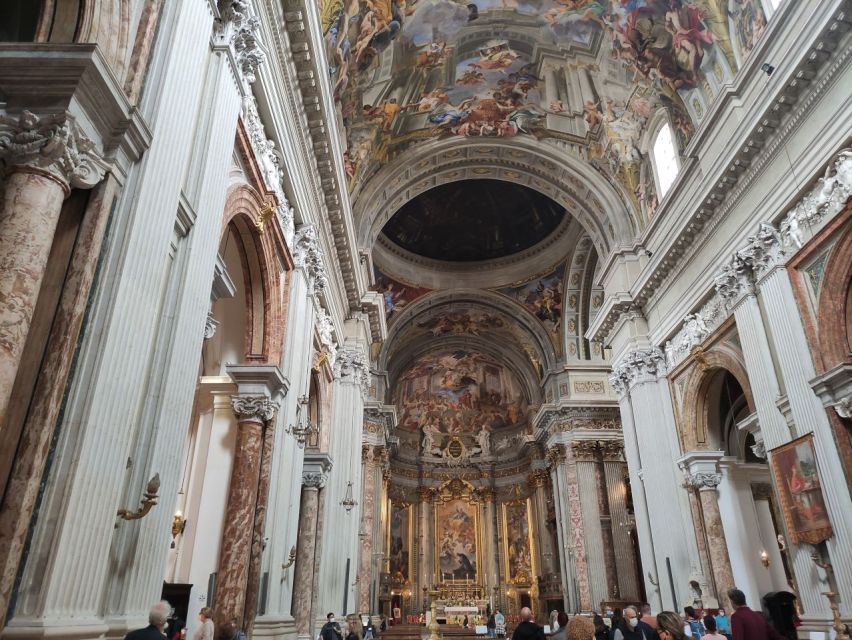
After the Pantheon, the tour moves to the church of St. Ignatius of Loyola, known for Baroque architecture and painting. This is where the experience changes gears. The Pantheon is about scale and engineering. St. Ignatius is about expression and optical effect.
You’ll spend time admiring the church’s artwork and learning how the Baroque style aims for impact—through composition, light, and theatrical presentation. The guide doesn’t just point; they explain what you’re seeing and why it was meant to land that way.
Anamorphism: the 3D effect that depends on where you stand
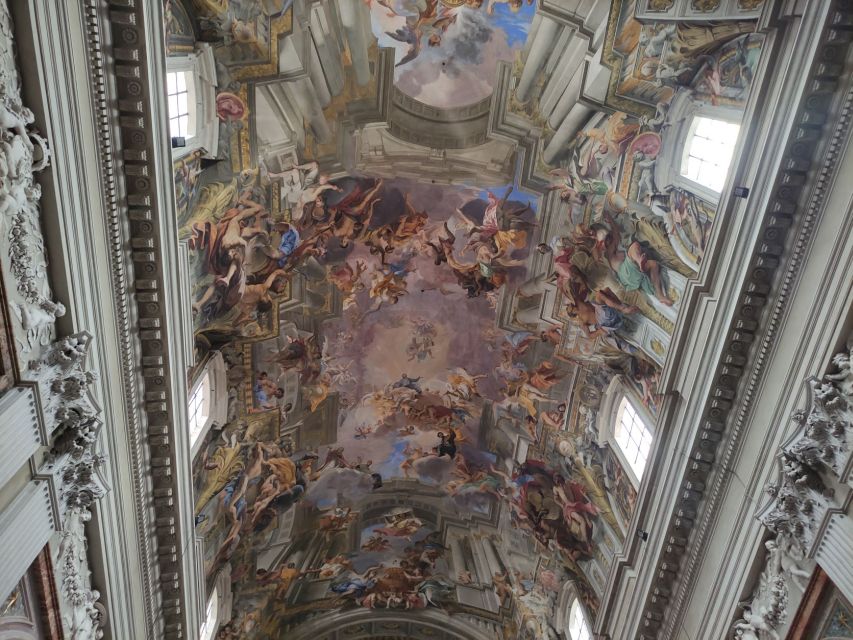
One of the main highlights here is anamorphism, a 17th-century painting technique sometimes described as the 3D look of the period. The guide will show you how it works so the painting stops being confusing.
Anamorphism is the kind of thing that can look like a weird trick on a wall until you understand the method. Once you get the explanation, your eyes start doing the “right” job. You’ll see how your viewpoint changes the result, which is exactly what makes this stop memorable.
Another surprise you won’t see coming
There’s also another surprise connected to this church that isn’t revealed in advance. That’s useful from a planning standpoint: you won’t spend your time trying to guess what it is. You can just pay attention and let the guide bring you to the moment.
And because the group is small, you’re less likely to get blocked by someone trying to take the perfect photo or leaning in at the wrong time.
The dress code reality check
This stop is also where you need to be extra sure you’re dressed correctly. The rules apply here and at other places of worship on the tour: no shorts, no sleeveless tops, and knees and shoulders covered for both men and women. If you don’t meet the requirements, you may be refused entry, and there’s no fun workaround built into a tight 90-minute schedule.
What the $71 price means: value in time saved and explanations provided
The price is $71 per person for a 1.5-hour guided experience, and that’s not the cheapest way to see the Pantheon area. But in practice, the value is in two places: skip-the-line access and a guide who can translate what you’re seeing.
Skipping the ticket line at the Pantheon is the kind of benefit that’s hard to quantify until you’ve been in a long queue in Rome. Time isn’t just convenience; it’s quality. The tour is structured so your saved minutes go back into the experience: dome explanations, construction secrets, and art technique breakdowns.
Then there’s the guide. This is semi-private, max 4 participants, and the guide shares details that you likely won’t catch alone. The reviews also highlight that guides like Daniele bring real enthusiasm and answer questions. That kind of human pacing matters, especially for technical topics like dome design and anamorphism.
Also check what’s included: entrance tickets and a top-rated tour guide. Not included: hotel pickup/drop-off and food and drinks. So the price is mostly paying for guided access and entry, not transportation or meals. If your day is already packed, that can be a fair trade.
If you’re trying to do everything by yourself, you can save money. If you want a fast, well-explained visit that respects your time, the pricing starts making sense.
Dress code and ID rules: the small things that can stop a big visit
This tour comes with clear practical requirements. Since both the Pantheon and St. Ignatius involve spaces of worship, you need to dress for entry:
- No shorts
- No sleeveless shirts/tops
- Knees and shoulders must be covered
That’s the biggest “day-killer” risk. It’s easy to show up in Rome wearing something comfortable and still get turned away. I’d treat this like a museum rule, not a suggestion.
You should also bring an identification document such as your passport or ID card. The tour notes that proof of date of birth could be requested at the entrance, especially for people entitled to reductions. If you plan to use a reduced ticket rate, don’t rely on a digital copy. Bring the document.
And because it runs rain or shine, plan clothing that works in bad weather too. Covered shoulders and knees are non-negotiable, so pick layers that still follow the rules if the sky opens.
Who should book this Pantheon + St. Ignatius tour?
This is a great fit if you want a Rome highlight combo without spending your whole day in lines or bouncing between standalone tickets.
You’ll likely enjoy it if:
- You want two major sights in one guided session.
- You prefer small-group touring where questions are welcome.
- You like architecture explanations and art technique stories, not just photo stops.
- You’re traveling with limited time and want a tight, 90-minute structure.
It may be less ideal if:
- You hate dress-code constraints.
- You need a super long, slow-paced visit where you can wander at your own tempo for an hour or more per site.
- You’re expecting hotel pickup or a meal included in the plan (it’s not part of this tour).
For wheelchair accessibility, the tour is listed as wheelchair accessible, which is a helpful baseline if you need that option.
Should you book? My straightforward take
Book it if you want a high-impact Roman day segment: skip-the-line at the Pantheon plus St. Ignatius with an explanation of Baroque art and an anamorphism moment. The format (max 4, 90 minutes) is built for people who want to understand what they’re seeing without losing hours.
Skip it if you’re traveling with clothing that won’t meet the rules or you’re not comfortable managing a dress code in summer heat. Also consider passing if you’re the type who prefers fully independent wandering and doesn’t care much about design and technique details.
If you’re on the fence, here’s the quick decision rule I’d use: if you want more than a quick look—if you want the “why” behind the dome and the “how” behind the art—this is the kind of tour that pays off fast.
FAQ
How long is the guided tour?
The tour lasts about 1.5 hours.
Where do I meet the guide?
Meet the guide under the stone elephant statue.
Does the tour include tickets?
Yes. Entrance tickets are included.
What’s the main benefit for the Pantheon?
You get skip-the-line entrance at the Pantheon.
Is a dress code required?
Yes. No shorts or sleeveless tops are allowed. Knees and shoulders must be covered for both men and women.
What languages is the tour offered in?
The live guide is available in French, English, and Italian.
Do I need to bring an ID?
You should bring a passport or ID card, since proof of date of birth could be requested at the entrance for reductions.
Is the tour wheelchair accessible and does it run in bad weather?
The tour is listed as wheelchair accessible and it takes place rain or shine.
More Tours in Rome
- Vatican Museums, Sistine Chapel & St. Peter’s Basilica Tour
★ 4.3 · 73,970 reviews - Vatican Museums, Sistine Chapel & St Peter’s Basilica Guided Tour
★ 4.5 · 39,149 reviews - Rome: Colosseum, Palatine Hill and Roman Forum Guided Tour
★ 4.8 · 32,814 reviews - Rome: Guided Tour of Colosseum, Roman Forum & Palatine Hill
★ 4.7 · 27,897 reviews - Rome: Colosseum, Roman Forum and Palatine Hill Guided Tour
★ 4.5 · 23,903 reviews - Rome: Colosseum Arena Floor, Palatine & Forum Guided Tour
★ 4.5 · 20,180 reviews
More Tour Reviews in Rome
- Vatican Museums, Sistine Chapel & St. Peter’s Basilica Tour
★ 4.3 · 73,970 reviews - Vatican Museums, Sistine Chapel & St Peter’s Basilica Guided Tour
★ 4.5 · 39,149 reviews - Rome: Colosseum, Palatine Hill and Roman Forum Guided Tour
★ 4.8 · 32,814 reviews - Rome: Guided Tour of Colosseum, Roman Forum & Palatine Hill
★ 4.7 · 27,897 reviews - Rome: Colosseum & Forum with Audio Guide App -Optional Arena
★ 4.2 · 24,770 reviews - Rome: Colosseum, Roman Forum and Palatine Hill Guided Tour
★ 4.5 · 23,903 reviews
Back to the Pantheon
- Rome: Pantheon Priority Entry Ticket & Interactive App
★ 4.1 · 5,114 reviews - Rome: Pantheon Priority Entry Tickets with Interactive App
★ 4.6 · 4,108 reviews - Rome: Pantheon Timeless Marvel Guided Tour with Entry Ticket
★ 4.9 · 4,002 reviews - Castel Sant’Angelo: Ticket with optional Vatican or Pantheon
★ 4.4 · 3,088 reviews - Pantheon Elite Guided Tour – Rome’s Iconic Ancient Temple
★ 5.0 · 1,447 reviews - Rome: Pantheon Small-Group Guided Tour with Entry Ticket
★ 4.9 · 1,226 reviews
Just added to our Rome reviews





Pantheon Tours, compared.
 ★ 4.1Pantheon Priority Entry Ticket & Interactive AppFrom $145,114 reviews
 ★ 4.6Pantheon Priority Entry Tickets with Interactive AppFrom $54,108 reviews
 ★ 4.9Pantheon Timeless Marvel Guided Tour with Entry TicketFrom $214,002 reviews
 ★ 4.4Castel Sant’Angelo: Ticket with optional Vatican or PantheonFrom $183,088 reviews
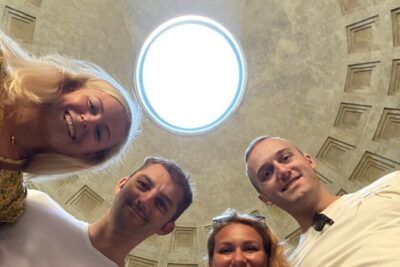 ★ 5.0Pantheon Elite Guided Tour – Rome’s Iconic Ancient TempleFrom $411,447 reviews
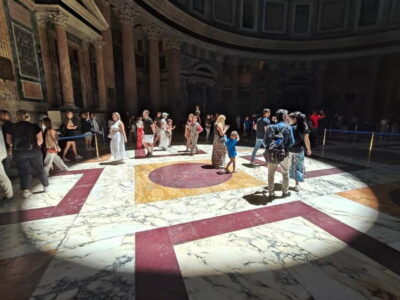 ★ 4.9Pantheon Small-Group Guided Tour with Entry TicketFrom $511,226 reviews
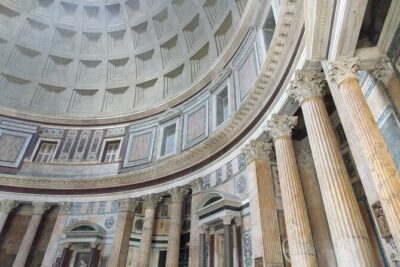 ★ 4.0Rome’s Iconic Temple: Pantheon Audio Guided Tour with Fast AccessFrom $211,188 reviews
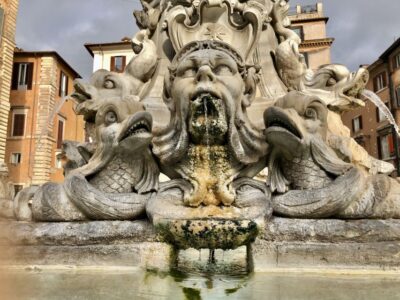 ★ 4.7Pantheon Small Group Tour and Skip-the-Line TicketFrom $531,008 reviews
Browse the lists this tour appears in