
Reviewed · ROME
Navova square underground with audioguide
Stepping under Piazza Navona feels like a secret Rome. This Navona Square Underground visit takes you into the archaeological remains of the Stadium of Domitian, about 4.5 meters below street level, and pairs it with an English audioguide built for both adults and kids. I like that you’re not stuck in a rigid schedule, and I like that the story of ancient Roman sports is explained with panels and 3D visuals.
Two big wins here: you get admission included so you can plan with less uncertainty, and the audioguide focuses on what you’re actually looking at—this stadium and how ancient sports moved from Greece to Imperial Rome. One possible drawback: at $25.53, it can feel pricey if you compare it to the basic ticket price you might find when buying directly on site, especially if you booked through a reseller with extra fees.
In This Review
- Key Things to Know Before You Go
- Piazza Navona Underground: Rome’s Stadium of Domitian, 4.5 Meters Down
- What’s Included: Admission Ticket + English Audioguide with 3D
- Stop 1: Stadio di Domiziano Under Piazza Navona
- A reality check on time
- Why the Audioguide Format Works So Well
- Price and Value: $25.53 and the Line Between Convenience and Cost
- Location and Timing: A Good Rome Add-On Near Public Transport
- Best use of your time
- Who Should Book This Underground Stadium Visit
- Practical Tips for a Smoother Visit Underground
- Should You Book Navona Square Underground with Audioguide?
- FAQ
- How long is the Navona Square Underground visit?
- Is the audioguide available in English?
- What is included with the ticket?
- How do I get the tickets for the entrance?
- Where is it located?
- What happens if the weather is bad?
Key Things to Know Before You Go
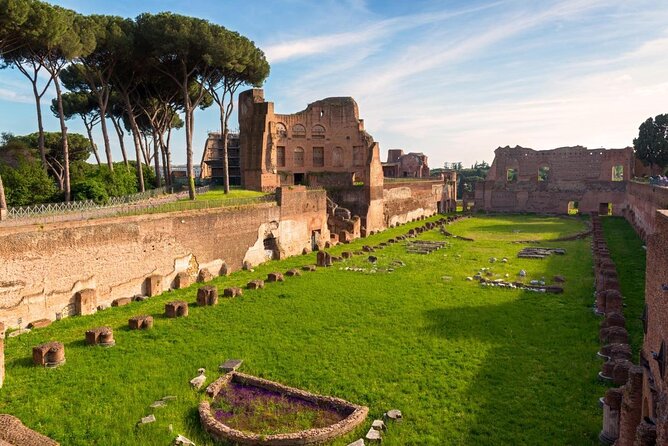
- Underground view in Piazza Navona: ruins sit about 4.5 meters below street level
- Stadio di Domiziano remains: one of the rare masonry stadium examples known in Rome
- Admission included: your ticket is part of the purchase
- English audioguide with visuals: panels plus 3D video, including for children
- Flexible visit style: come, follow the audio, and go at your own pace
- About 45 minutes: a solid add-on length for Rome without eating your whole day
Piazza Navona Underground: Rome’s Stadium of Domitian, 4.5 Meters Down
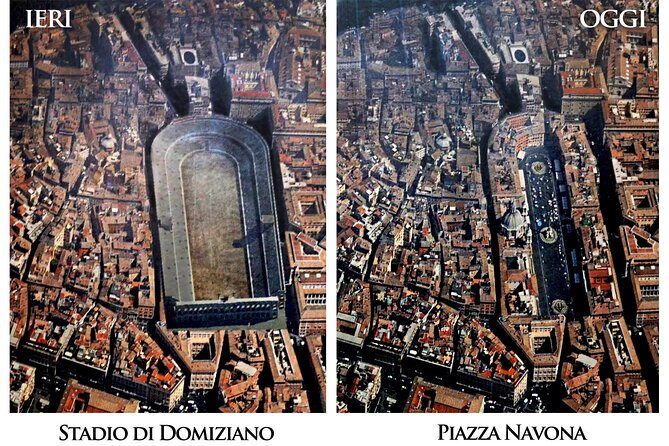
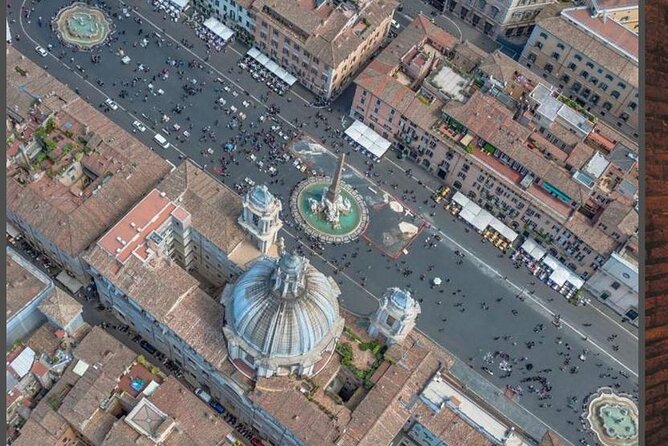
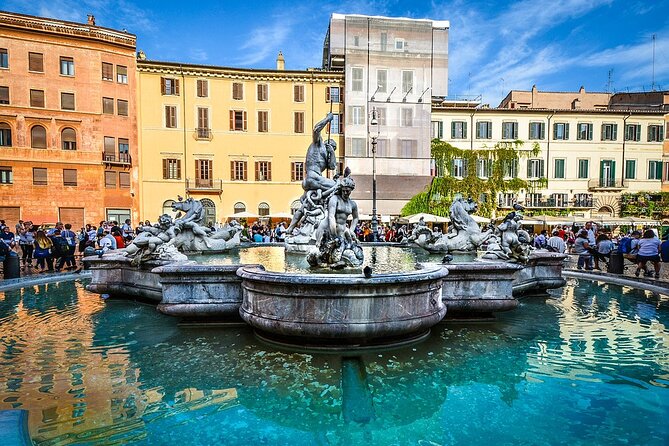
Rome loves to layer itself. Above ground, Piazza Navona is all life—streets, cafés, and the famous square shape. Underfoot, you’ll find something quieter and more surprising: the Stadio di Domiziano, the Stadium of Domitian, sitting roughly 4.5 meters below street level.
What makes this stop genuinely interesting is that you’re not looking at a random ruin. This is the archaeological remnant of an actual stadium—remarkable because it’s described as the first and only example of a masonry stadium of its type known in Rome. If you’re the kind of person who likes Roman planning, construction, and how public spaces worked, this visit gives you a focused reason to be here besides the postcard scenes above.
And since it’s underground, the experience has a different mood. Even if you only spend about 45 minutes, you’ll feel like you stepped into a different layer of the city—one where sports, spectatorship, and imperial-era public life become the topic, not just architecture.
Weighing this one up? Here is how a few Rome favourites compare:
- Vatican Museums, Sistine Chapel & St. Peter’s Basilica Tour
★ 4.3 · 73,970 reviews - Vatican Museums, Sistine Chapel & St Peter’s Basilica Guided Tour
★ 4.5 · 39,149 reviews - Rome: Colosseum, Palatine Hill and Roman Forum Guided Tour
★ 4.8 · 32,814 reviews - Rome: Guided Tour of Colosseum, Roman Forum & Palatine Hill
★ 4.7 · 27,897 reviews
What’s Included: Admission Ticket + English Audioguide with 3D
Before you even think about walking down, it helps to understand what you’re paying for. Your admission ticket is included, and you use an audioguide in English to guide you through what remains.
The audioguide isn’t just audio in a small box. It’s paired with information panels and 3D video, and the setup is available even for children. That matters, because sports history can get dry if you only get dates and names. Here, the visuals are there to help you connect the story to the actual space you’re standing in.
Also, because this is designed as a self-paced visit, you’re not trying to match a group’s pace or time window. You can spend extra moments where something clicks—like the shape of the stadium remains or how the square ties into the stadium story—then move on when you’re ready.
Stop 1: Stadio di Domiziano Under Piazza Navona
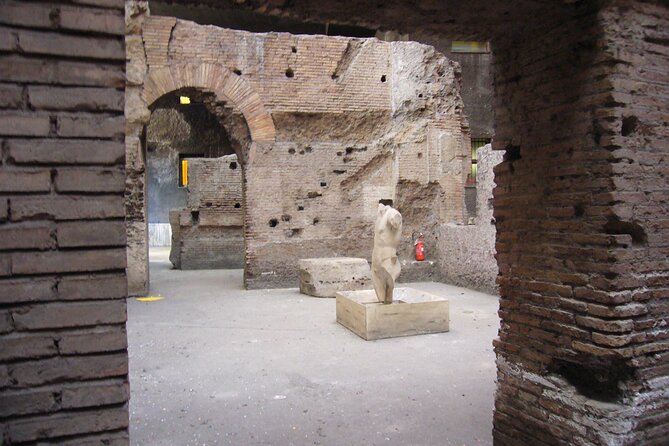
This visit is essentially one main stop, but it’s a good one. You descend into the excavations under Piazza Navona—levels that were first opened to the public in 2014—and you reach the archaeological area at the depth of the Roman Empire period, around 5 meters beneath street level.
Here’s what you’re meant to do once you’re down there:
- Admire the ancient ruins of the stadium—specifically noted as an early and rare masonry stadium example in Rome.
- Follow the audioguide’s explanation of how the stadium and the Piazza Navona area relate.
- Learn how Roman sports and games evolved, with attention moving from ancient Greece into Imperial Rome.
This theme—sports and games—isn’t as common as the usual Rome topics (temples, emperors, forum politics). So you get a different lens on the city. If you’ve ever wondered what Romans did for entertainment beyond chariot races and gladiatorial lore, this is a more specialized route. You’ll see the stadium setting and then the story of athletic practice and spectator culture behind it.
A reality check on time
With an approximate 45-minute duration, plan for a focused visit. If you love reading every label and watching every visual segment, you might stretch the time. If you’re eager to move quickly, you can do it in that same window. Either way, think of it as a concentrated stop, not a half-day project.




Why the Audioguide Format Works So Well
Self-guided with an audioguide sounds simple, but it affects your experience in a practical way. It gives you control over attention. You can:
- Pause when you want to connect what you hear to what you see.
- Spend time on the sports history sections when you’re interested, and skim when you’re not.
- Adjust to the flow of the underground space without feeling rushed.
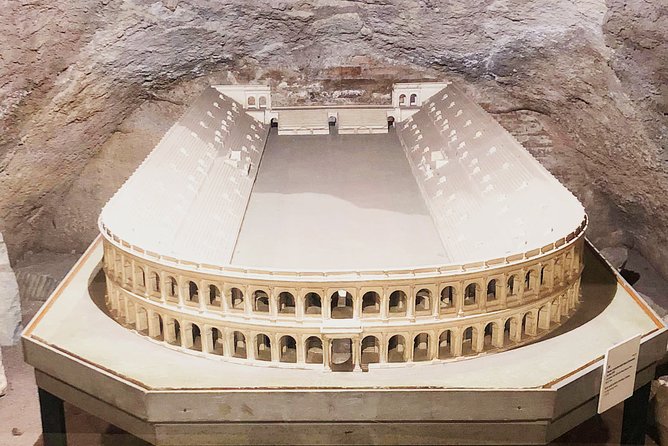
The audioguide also includes panels and 3D video, which is a big deal for an underground archaeological site. Without visuals, you can miss the bigger picture—how an ancient stadium might have functioned. With the visuals, the explanation is easier to hold in your head as you look around.
If you’re traveling with kids, the fact that the audioguide is available for children matters too. Sports stories are often easier for young visitors because it feels more like games and competitions than purely academic history. Even if your group has mixed ages, this format gives you a better chance that everyone stays engaged.
Price and Value: $25.53 and the Line Between Convenience and Cost
At $25.53 per person, this isn’t the cheapest way to access the site. So the question is value: what are you buying for that price?
You’re buying convenience and planning confidence. Admission is included, and you receive your ticket as a PDF to show at the entrance. That reduces friction on the day. You also secure a slot in advance, which can matter when a popular central site has limited availability.
Now the trade-off: one review pointed out that the basic museum ticket at the desk can be around 8€, and the response clarified that if you book on a reseller website, the total price you pay can include fees and taxes, plus what’s described as a presell add-on. In plain terms: the jump from 8€ to your total cost can come from booking channel fees, not from the site itself being dramatically more expensive.
My practical advice:
- If you hate paying extra, compare the all-in price you see at checkout with what you might pay directly on site.
- If you value certainty and hate ticket-line uncertainty, paying more for an organized prebook can still be worth it.
- If you booked through a reseller, expect higher final pricing than the basic on-site rate.
So I’d treat this as a convenience purchase. If you’re on a tight schedule or you’re trying to avoid risk, it makes sense. If you’re flexible and you’re price-sensitive, you may want to compare options before you commit.
Location and Timing: A Good Rome Add-On Near Public Transport
This experience is in Rome and it’s described as near public transportation. That’s helpful because Piazza Navona is centrally located and easy to weave into your day. You don’t have to build a whole itinerary around it.
The approximate duration is 45 minutes, which makes it a smart add-on. You can pair it with the above-ground Piazza Navona experience—seeing the lively square first, then stepping below to understand the sports connection underneath. Or do it the other way around: start underground to set context, then look at the square above with new eyes.
Best use of your time
Try to choose a time when you can stay present. Underground visits are easy to treat like a quick stop. If you want the most value from the audioguide, give it your full attention for those 45 minutes. The story is specifically tied to the stadium and sports history, so it works best when you’re not rushing to get back to something else.
Who Should Book This Underground Stadium Visit
This is ideal if you fit one (or more) of these categories:
- You like history that has a clear setting—buildings and spaces you can actually stand inside.
- You’re a sports fan curious about how ancient athletic culture worked in Rome.
- You want something off the standard Rome checklist but still right in the center.
- You prefer self-paced visits with an audioguide rather than group tours with a fixed tempo.
It may be less ideal if:
- You’re only interested in major, famous monuments and don’t want a smaller, specialized site.
- You’re extremely price-sensitive and want the lowest-cost option possible.
- You dislike visual and media-based explanations. Here, the audioguide is paired with panels and 3D video, so you’ll get more from it if you’re open to that format.
Practical Tips for a Smoother Visit Underground
A few practical things can make this feel easier on the day:
- Bring your confirmation PDF and keep it handy. You show it at the entrance.
- Wear something comfortable for walking and standing. Underground sites are meant for viewing, so expect some time looking around.
- Since this is underground, plan for the experience to feel a bit cooler and dimmer than street level. A light layer can help, even in warmer months.
- Give yourself time to settle in before you hit play on the audioguide. The first minutes matter because the story sets the context for what you’re about to see.
If you approach it like a focused museum-style visit—rather than a quick photo stop—you’ll likely get more out of the story.
Should You Book Navona Square Underground with Audioguide?
I’d book it if you want a calmer, smarter Rome detour that connects Piazza Navona to a specific ancient venue: the Stadium of Domitian. The biggest strengths are the included admission, the English audioguide with panels and 3D video, and the fact that you can explore at your own pace.
But I’d think twice if the $25.53 price feels like a stretch for you. Because the basic ticket rate you might find on site can be lower, the value here depends on why you’re booking. If you want certainty and convenience, it can be a good trade. If you’re comfortable winging it and you want the lowest price, you may want to compare booking options first.
FAQ
How long is the Navona Square Underground visit?
The experience lasts about 45 minutes.
Is the audioguide available in English?
Yes. The audioguide is offered in English.
What is included with the ticket?
Admission to the archaeological site is included, and you’ll use the audioguide during your visit. The experience also features panels and 3D video content.
How do I get the tickets for the entrance?
You’ll receive the ticket in PDF form. Show the PDF at the entrance.
Where is it located?
It’s in Rome, at Navona Square Underground near Piazza Navona. It’s also described as near public transportation.
What happens if the weather is bad?
This experience requires good weather. If it’s canceled due to poor weather, you’ll be offered a different date or a full refund.
More Tour Reviews in Rome
- Vatican Museums, Sistine Chapel & St. Peter’s Basilica Tour
★ 4.3 · 73,970 reviews - Vatican Museums, Sistine Chapel & St Peter’s Basilica Guided Tour
★ 4.5 · 39,149 reviews - Rome: Colosseum, Palatine Hill and Roman Forum Guided Tour
★ 4.8 · 32,814 reviews - Rome: Guided Tour of Colosseum, Roman Forum & Palatine Hill
★ 4.7 · 27,897 reviews - Rome: Colosseum & Forum with Audio Guide App -Optional Arena
★ 4.2 · 24,770 reviews - Rome: Colosseum, Roman Forum and Palatine Hill Guided Tour
★ 4.5 · 23,903 reviews




