
Reviewed · ROME
La Traviata The Original Opera by Giuseppe Verdi
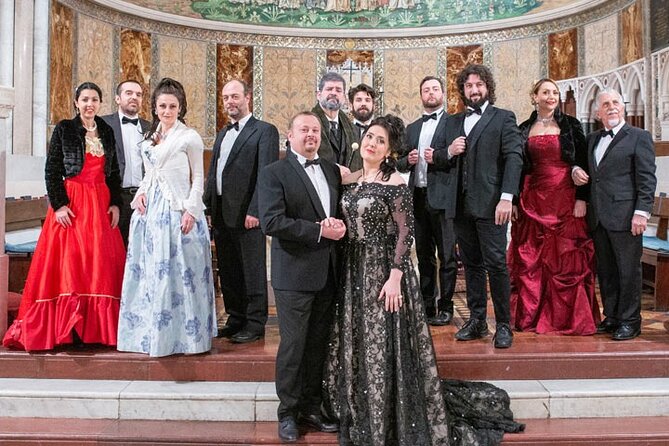
Opera sounds better in a church. This La Traviata performance takes place inside St. Paul Within the Walls, so you get an up-close, candle-and-stone kind of romance rather than a far-off stage. I love that the show brings together professional soloists, a live orchestra and choir, and ballet dancers in an intimate setting.
The big thing to plan for is comfort and sightlines. It’s a historic church with pew seating, so it can run hot (or cold in winter), and unless you land in the front area you may get blocked or limited views from the way the stage sits in the nave.
In This Review
- Key highlights worth your time
- Entering St. Paul Within the Walls for an opera night in Rome
- Finding your meeting point: Via Nazionale 16a at 8:30 pm
- The story and the music: what La Traviata gives you
- When the performers line up right
- What happens on stage: orchestra, choir, and ballet in a church
- Seating strategy: front vs middle vs back in pews
- Dress code and comfort: smart casual, plan for temperature
- Tickets and language: an opera that meets you where you are
- Price and value: is $39.54 worth it?
- How this fits different travel styles
- Final call: should you book La Traviata in St. Paul’s?
- FAQ
- FAQ
- Where does this La Traviata opera take place?
- What time does the performance start?
- How long is the performance?
- Is the performance in English?
- What is the dress code?
- Are tickets assigned by seat, and will I know my seat in advance?
- Is lunch included?
- How much does it cost?
- Can I cancel for free?
- Are service animals allowed?
- Who conducts the orchestra?
Key highlights worth your time
- St. Paul Within the Walls as the stage: historic frescoes and serious atmosphere, not a generic theater hall
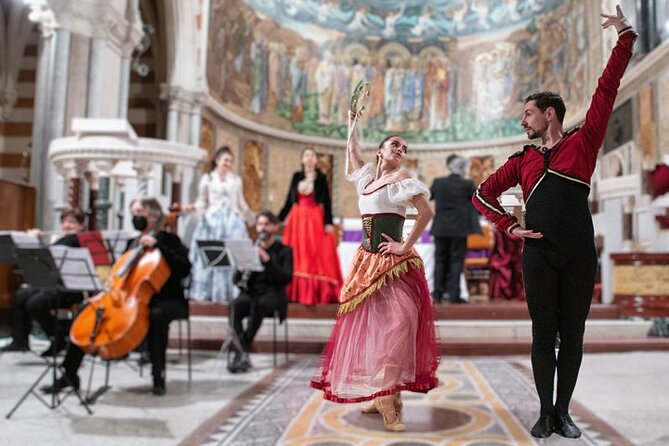
- Live orchestra, choir, and ballet: you hear the music made on-site, with dancers adding extra drama
- English performance: the singing is in English for this show version, helpful if you don’t read Italian
- Pick your vibe by seat area: closer to the front, middle, or back gives you different visibility and comfort trade-offs
- A first-opera-friendly classic: Verdi’s famous story makes for a memorable, understandable night
Entering St. Paul Within the Walls for an opera night in Rome
This is the kind of outing that makes Rome feel personal. Instead of slipping into a big, modern auditorium, you step into St. Paul Within the Walls—a working church with all the charm that comes from centuries of stonework and art.
I like that the performance doesn’t pretend to be something else. It’s still opera: singers, orchestra, choir, and ballet. But the church setting changes the whole energy. Sound reflects off walls; attention feels focused; the audience sits close. If you’ve ever thought you’d try opera someday, this is a low-barrier way to do it without needing to decode opera-house etiquette first.
The other upside: it’s a great “pair it with dinner” evening. You can grab something casual nearby, then make it a proper nighttime event with music that’s unmistakably classic and emotional.
Weighing this one up? Here is how a few Rome favourites compare:
- Vatican Museums, Sistine Chapel & St. Peter’s Basilica Tour
★ 4.3 · 73,970 reviews - Vatican Museums, Sistine Chapel & St Peter’s Basilica Guided Tour
★ 4.5 · 39,149 reviews - Rome: Colosseum, Palatine Hill and Roman Forum Guided Tour
★ 4.8 · 32,814 reviews - Rome: Guided Tour of Colosseum, Roman Forum & Palatine Hill
★ 4.7 · 27,897 reviews
Finding your meeting point: Via Nazionale 16a at 8:30 pm
The ticket redemption point is St. Paul’s Within the Walls, Via Nazionale 16a, 00184 Roma RM. The show starts at 8:30 pm, and the experience runs about 2 hours.
Because this is a church-based event, timing matters more than you’d think. Plan to arrive early enough to settle into the space before the first notes. It’s not the moment to “wing it” while you’re still figuring out where to stand.
Getting there is typically straightforward. The venue is described as near public transportation, which is a big deal in Rome when you’re mixing crowds, evening traffic, and your own energy level.
The story and the music: what La Traviata gives you
La Traviata is Giuseppe Verdi’s three-act opera, with an Italian libretto by Francesco Maria Piave. It premiered on March 6, 1853 at La Fenice in Venice, and Verdi built it on material connected to La Dame aux Camélias by Alexandre Dumas (fils).
You don’t need a graduate degree in opera to follow what’s going on, but you do need some support. This is one reason I’d recommend reading a synopsis ahead of time if you’re new. Even with English-language performance, opera moves at a musical pace—so understanding the arc beforehand helps you catch the emotional turns instead of just catching the words.
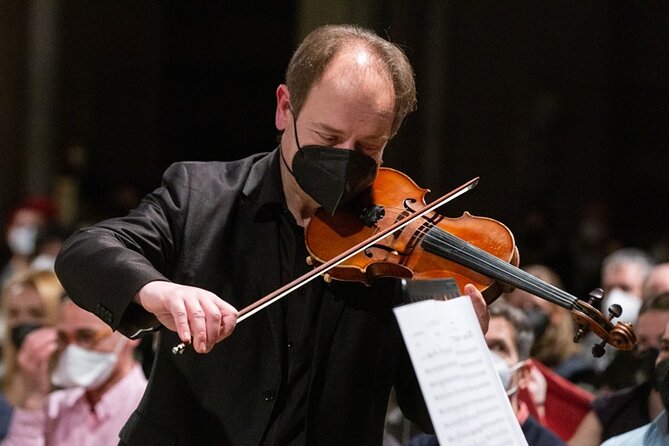
Musically, this is Verdi at his most famous: big melodies, intense drama, and orchestral writing that does more than decorate. The show also features choir and orchestra under Maestro Elvin Dhimitri, plus professional Opera e Lirica soloists from Italian theaters and music academies.
A fun practical tip: if you go in knowing the broad story beats (who wants what, who makes sacrifices, and the kind of ending this opera is heading toward), you’ll enjoy the full “roller coaster” effect instead of checking your phone in the dark.
When the performers line up right
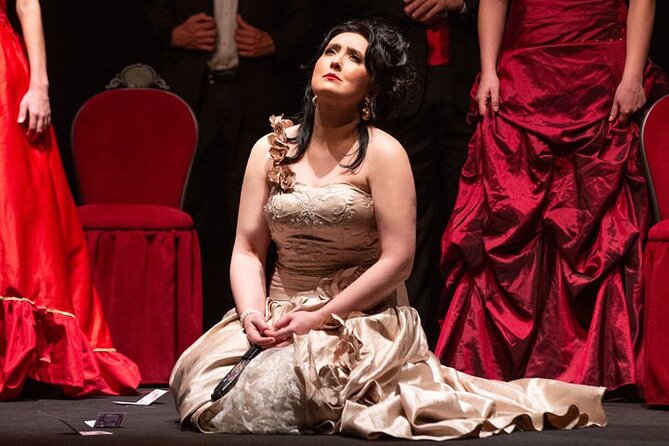
One review highlight singled out soprano Aleksandra Buck as exceptional. Of course, cast can vary by performance date, but it’s still a useful clue: this is the sort of production where the vocal performances can really carry the evening.




What happens on stage: orchestra, choir, and ballet in a church
This production includes more than just singers. You’ll have live orchestra and choir, and there’s also ballet/dancers integrated into the evening.
That matters because it changes how the story feels. Ballet works well in a tight space like this church. It gives you physical storytelling when the music is doing the heavy lifting, and it helps you stay oriented even if you miss a specific line.
And yes—the production is impressive even without a giant theater set. In reviews, people specifically noted that the church setting and the live musicians do much of the work for you. You’re not paying for Hollywood staging. You’re paying for the music and the dramatic performances inside a truly Roman environment.
Seating strategy: front vs middle vs back in pews
Here’s the honest part: church seating is not a standard theater seat. Expect pews. Reviews also mention that cushions can help, but you should still treat this like a sit-straight-with-limits situation.
The good news is you can choose a seat area—front, middle, or back. The tricky part: seats are assigned by the theater box office and you won’t know your exact seat in advance. That means the “best possible view” is not guaranteed.
Based on common comments, here’s how to think about it:
- Front area: best chance for a clear view of singers and dancers. One review specifically praised choosing the 1st row left for watching orchestra precision and close-up performance focus.
- Middle area: usually a reasonable compromise, but it’s where sightline issues can start depending on angle and any fixtures.
- Back area: more comfortable distance for some people, but reviews mention limited visibility if you’re too far from the focal point.
Also watch for restricted views from pillars or stage placement. One reviewer noted being seated behind a pillar with a restricted view. It’s not a dealbreaker for everyone, but it’s the biggest reason I tell people to be mindful if seeing every movement is your top priority.
Dress code and comfort: smart casual, plan for temperature
The dress code is smart casual. You don’t need to go full formal. But do plan to dress with the church temperature in mind.
A couple of reviews mention extreme heat (fans were present but still uncomfortable). Another review noted the church was very cold in December and recommended dressing extra warm. So treat this like a “weather-aware” performance, not a controlled studio.
If you run warm easily, bring breathable layers you can manage. If you run cold, bring something you can wear without fuss. And if you’re the type who hates hard seating, consider wearing supportive shoes and bringing a small personal comfort item if allowed.
Tickets and language: an opera that meets you where you are
This show is offered in English, which is a real plus if you’re traveling through Italy and want the story without battling subtitles or translations. Even so, opera is still opera—long musical phrases, dramatic timing, and moments where your attention is split between visuals and sound.
A smart move before you go: read a synopsis once. It’s worth it. People who weren’t familiar with the story found they could follow much better after prepping a bit.
Also note that some people reported program issues or no program in hand. I can’t promise what you’ll receive on your date, so don’t count on last-minute printed materials to do the job. Your best “prep” is simple: know the plot outline beforehand.
Price and value: is $39.54 worth it?
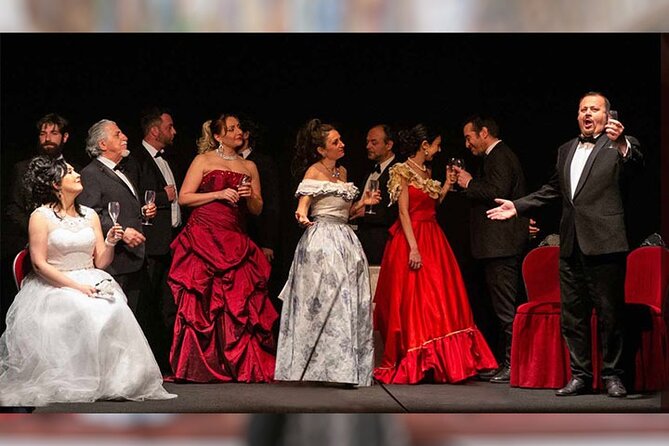
At $39.54 per person for a show that lasts about 2 hours, the value is strong—especially because the ticket includes live entertainment (not just recorded music, not just a talk). You’re paying for a real performance with live orchestra and choir in a major-cultural setting.
Where the value becomes extra clear is for first-timers. Opera house tickets can feel intimidating in price and in rules. Here, you get the experience of hearing Verdi performed seriously, in a site that makes the night memorable without needing to spend a fortune.
The trade-off is comfort and view reliability. If you get a good seat area, the value feels excellent. If you end up with a restricted sightline or hard seating, the experience is still good—but it won’t feel as “perfect” as front-row fantasies.
How this fits different travel styles
This experience works best if you want:
- A romantic, unusual night out in Rome that’s not just another museum stop
- A chance to see opera without the “big opera house” intimidation factor
- A cultural evening that’s easy to plan: 8:30 pm start, around 2 hours
It may be less ideal if:
- You need great sightlines from every seat
- You’re very sensitive to temperature swings in an older church space
- You want maximum stage spectacle and sets above all else
Think of it as opera with the architecture as part of the show. You’re buying atmosphere plus music, not a glossy production.
Final call: should you book La Traviata in St. Paul’s?
If you’re curious about opera, this is the kind of booking I’d feel good recommending. The combination of Verdi, live orchestra and choir, and a church setting that brings you close makes for a night that’s hard to replicate in Rome.
I’d say book it if you:
- can handle church seating for about 2 hours
- like the idea of an intimate performance space
- take 10 minutes to read a synopsis first
Skip or rethink if:
- you’re very worried about restricted views
- you hate sitting in pews or you’re likely to struggle with heat or cold
If you fall into the first group, you’ll probably leave smiling and already thinking about what other “classics in unexpected places” Rome can offer.
FAQ
FAQ
Where does this La Traviata opera take place?
It takes place at St. Paul’s Within the Walls, located at Via Nazionale 16a, 00184 Roma RM, Italy.
What time does the performance start?
The start time is 8:30 pm.
How long is the performance?
It runs for approximately 2 hours.
Is the performance in English?
Yes, this experience is offered in English.
What is the dress code?
The dress code is smart casual.
Are tickets assigned by seat, and will I know my seat in advance?
Seats are assigned by the theater box office, and you won’t know your exact seat in advance of the performance date.
Is lunch included?
No, lunch is not included.
How much does it cost?
The price is $39.54 per person.
Can I cancel for free?
Yes. Free cancellation is available if you cancel up to 24 hours in advance for a full refund.
Are service animals allowed?
Yes, service animals are allowed.
Who conducts the orchestra?
The orchestra is conducted by Maestro Elvin Dhimitri.
More Tour Reviews in Rome
- Vatican Museums, Sistine Chapel & St. Peter’s Basilica Tour
★ 4.3 · 73,970 reviews - Vatican Museums, Sistine Chapel & St Peter’s Basilica Guided Tour
★ 4.5 · 39,149 reviews - Rome: Colosseum, Palatine Hill and Roman Forum Guided Tour
★ 4.8 · 32,814 reviews - Rome: Guided Tour of Colosseum, Roman Forum & Palatine Hill
★ 4.7 · 27,897 reviews - Rome: Colosseum & Forum with Audio Guide App -Optional Arena
★ 4.2 · 24,770 reviews - Rome: Colosseum, Roman Forum and Palatine Hill Guided Tour
★ 4.5 · 23,903 reviews




