
Reviewed · ROME
Julius Caesar and the Emperors’ Nighttime Stories
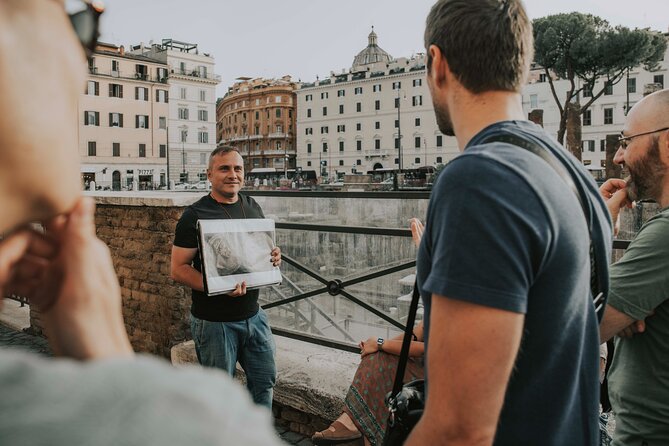
Caesar’s murder has a new soundtrack. This late-evening Rome walk turns famous places into human stories of power, family, and fear, with nighttime storytelling instead of a straight lecture.
I love the story-first format, where each stop connects the next emperor to relationships and choices. I also like the scheduling logic: an evening departure helps you avoid the worst sun and keep the mood more “cinematic.”
One consideration: it is still a walking tour on city streets after dark, and it can get cold, so pack a warm layer and wear shoes you trust.
Key points to know before you go
- Small groups (up to 20) make it easier to stay engaged without feeling rushed
- Six major Roman stops build a clear arc from Caesar to Nero
- You mostly look from the sidewalk at free, walk-by sights, so you pay for the guide, not admissions
- A high-energy guide (Massimo has been praised for pacing and humor) keeps the narrative moving
- You finish in Piazza del Popolo, a super convenient hub for taxis, metro, and dinner plans
- Bring a warm layer since the tour runs at night and the guide has advised keeping warm
In This Review
- A nighttime Rome walk where emperors feel like real people
- Stop-by-stop: Caesar to Nero in six dramatic scenes
- Largo Argentina: the assassination site of Julius Caesar
- Pantheon at night: Marcus Agrippa’s power story
- Piazza di Pietra ruins: Hadrian through the stonework
- Piazza Colonna spiral column: Marcus Aurelius in relief
- Piazza Augusto Imperatore: Augustus, Julia, and the heartbreaking centerpiece
- Piazza del Popolo: Nero’s relationship with Agrippina and his art dream
- Is $47.06 good value for a 2–3 hour storytelling walk?
- The guide’s role: why pacing and humor matter here
- Where you meet and how you end near dinner and transit
- Night-walking reality: what to wear and what to expect
- Who should book Julius Caesar and the Emperors’ Nighttime Stories?
- Should you book this Caesar-to-Nero nighttime walk?
- FAQ
- How long is the Julius Caesar and the Emperors’ Nighttime Stories tour?
- Is the tour offered in English?
- Where does the tour start and where does it end?
- Do I need to buy admission tickets for the stops?
- Is the ticket mobile?
- How large is the group?
- Is this tour suitable for most people?
- Are service animals allowed?
- What happens if weather is bad or I need to cancel?
A nighttime Rome walk where emperors feel like real people
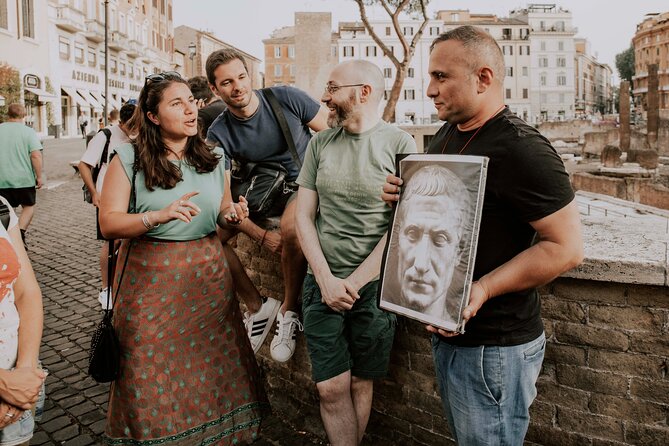
Rome at night has a different volume. Less daytime traffic noise, more echo between buildings, and a natural rhythm for stories that involve betrayal, ambition, and family pressure.
This tour is built around human drama, not a checklist of dates. You’ll connect the dots between key figures by hearing how one emperor’s choices ripple into the next part of the power story. Instead of staring at stone and guessing what it meant, you get a guided narrative that gives you something to hold onto as you walk.
Stop-by-stop: Caesar to Nero in six dramatic scenes
You move through central Rome with timed stops, roughly 2 to 3 hours total. The route is simple: you start near Largo Argentina, then work through standout squares and landmarks, with the story climaxing at Augustus’ mausoleum and ending with Nero at Piazza del Popolo.
Weighing this one up? Here is how a few Rome favourites compare:
- Vatican Museums, Sistine Chapel & St. Peter’s Basilica Tour
★ 4.3 · 73,970 reviews - Vatican Museums, Sistine Chapel & St Peter’s Basilica Guided Tour
★ 4.5 · 39,149 reviews - Rome: Colosseum, Palatine Hill and Roman Forum Guided Tour
★ 4.8 · 32,814 reviews - Rome: Guided Tour of Colosseum, Roman Forum & Palatine Hill
★ 4.7 · 27,897 reviews
Largo Argentina: the assassination site of Julius Caesar
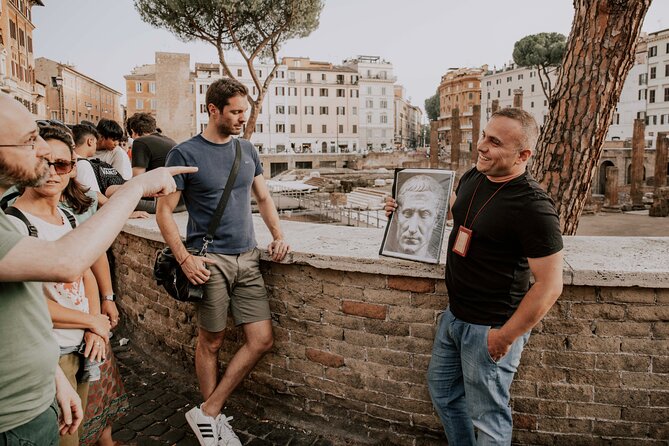
The tour begins at Via Florida, 14 and soon reaches Area Sacra di Largo Argentina, where you’ll see the square associated with the assassination of Julius Caesar. This stop is about 30 minutes, and the tone here is set fast: the story starts with the moment that changes everything.
What I like about starting here is the emotional gravity. Even if you know the broad outline of Caesar’s fate, being at the location makes the political stakes feel immediate. It’s also a good way to get your bearings for the walk that follows.
Pantheon at night: Marcus Agrippa’s power story
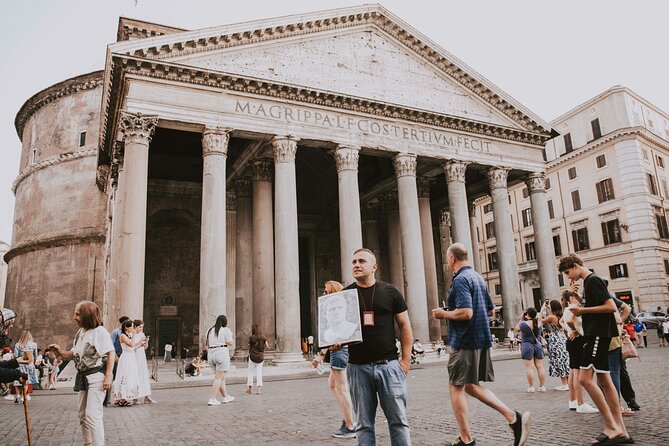
Next, you’ll pass by the Pantheon after dark, with the guide recounting the story of Marcus Agrippa—a man who became one of the most powerful figures of the 1st century BC. This stop is brief (about 20 minutes), designed to keep you moving while giving you a key character in the larger imperial network.
Why it works: Agrippa isn’t just a name you memorize. The way the guide frames him helps you understand how power in Rome wasn’t always inherited. It could be won, managed, and used by the right person at the right moment.
Piazza di Pietra ruins: Hadrian through the stonework
At Piazza Di Pietra, you’ll be looking at impressive 2nd-century AD ruins while the guide tells the story of Emperor Hadrian. This one takes about 20 minutes, and it’s a nice bridge between the early imperial period and the more complicated reigns that follow.
A small caution: ruins can be visually busy at night. If you’re the type who loves close-up details, you might want a moment to slow down and look for the specific features the guide points out, so you don’t miss the thread of the story.
Piazza Colonna spiral column: Marcus Aurelius in relief
Then comes Piazza Colonna, home to a monumental 2nd-century AD spiral column dedicated to Emperor Marcus Aurelius. The guide focuses on the hand-carved spiral relief and the way it shows major moments of his life, moving from bottom to top.
This stop is only around 20 minutes, but it can leave a strong impression because you’re seeing a visual narrative, not just hearing one. The column becomes a way to talk about legacy—what Rome wanted future generations to remember.
Piazza Augusto Imperatore: Augustus, Julia, and the heartbreaking centerpiece
In Piazza Augusto Imperatore, you’ll admire the mausoleum of Emperor Augustus and hear a more personal side of imperial life. The guide zooms in on Julia, Augustus’ only child, with a story that is often described as the climax of the tour—unique and emotionally heavy.
This is where the tone shifts. Up to this point, you’ve been dealing with power struggles. Here, you get family pressure and long-term consequences, and it’s less about who wins a fight and more about what a life costs inside a dynasty.
If you want the tour to feel more like a story than a history lecture, this is the moment that usually makes it click.
Piazza del Popolo: Nero’s relationship with Agrippina and his art dream
You finish at Piazza del Popolo, where the guide tells the story of Emperor Nero. The focus includes Nero’s relationship with his mother Agrippina and the way his strong pull toward becoming an artist put him in the center of world attention. This ending stop is about 20 minutes.
Why this wrap-up is smart: the tour closes with a figure who’s known for performance—whether that means politics, public image, or creativity. You leave with a clearer sense of how personality and ambition can shape a reign.
Is $47.06 good value for a 2–3 hour storytelling walk?
At $47.06 per person for about 2 to 3 hours, you’re not paying for museum entry. The plan is a guided stroll at night through major spots, and the stops are marked with admission ticket free in the tour format.
So what are you really buying? You’re buying:
- a guide who connects sites into one coherent story
- a nighttime pacing that helps you enjoy Rome without the daytime crush
- a route that uses central landmarks so you get context quickly
This can be especially good value if you’re the type who gets more out of narrative than from maps and audio apps. If you want to spend your evening inside buildings or pay for attractions, you may find this more “walk-and-story” than “full sight-entry day.”
The guide’s role: why pacing and humor matter here
A tour like this lives or dies on delivery. On this route, the guide Massimo has been specifically praised for being funny and engaging, with pacing that doesn’t drag. People also mention his energy and the way he keeps the characters moving, not just recited.
That matters for you because Roman history can become a list if the guide doesn’t add momentum. When the storytelling is well-timed, you start recognizing patterns: public image versus private motives, loyalty versus betrayal, and the family ties that push people into corners.
There’s also practical communication. Massimo has been noted for sharing clear meeting directions and even a photo-style aid ahead of time, plus advising people to keep warm, since the tour runs at night.
Where you meet and how you end near dinner and transit
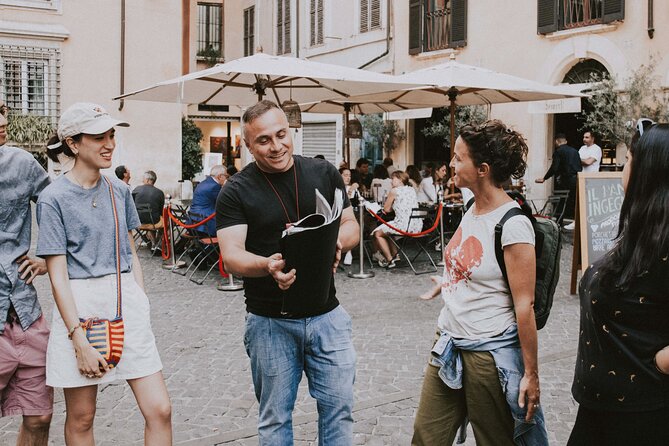
This tour starts at Via Florida, 14, 00186 Roma RM and ends at Piazza del Popolo, at Basilica Parrocchiale di Santa Maria del Popolo, Piazza del Popolo, 12, 00187 Roma RM.
Finishing in Piazza del Popolo is genuinely convenient. You’re in a central zone with practical options:
- nearby taxi access
- the Flaminio metro station on the red Line A
- lots of dinner choices within walking distance
So the tour doesn’t trap you in an awkward location. You can keep the evening going right where you drop off.
Night-walking reality: what to wear and what to expect
Because this is an evening route, plan for discomfort if you show up underdressed. A warm layer is the easy fix, and it’s the kind of advice you’ve probably seen pop up in the experience notes for this walk.
Also, think like a Rome walker:
- comfortable shoes are non-negotiable
- bring something for temperature changes
- arrive a bit early so you can settle in before the story starts
The tour format suggests it’s accessible for most people, but it’s still a walking tour, so you’ll want to feel good on your feet.
Who should book Julius Caesar and the Emperors’ Nighttime Stories?
I think this is a strong fit if you want:
- Roman history with emotion, not just names and dates
- a smaller group experience (max 20) that stays lively
- a late-day or evening plan to dodge daytime heat
- a guide-led narrative that links major sites into one storyline
It can also work well for families when the kids are curious and okay with walking. One of the recurring themes from the positive feedback is that the guide’s style can keep attention, even for people who don’t love long lectures.
If you’re chasing a “stand in the exact spot and enter the building” kind of night, you might prefer a different format. This one is built around seeing the highlights and hearing them explained.
Should you book this Caesar-to-Nero nighttime walk?
If you like the idea of walking between Rome’s iconic spots while a guide tells the story as character-driven drama, I’d book it. For $47.06, you’re getting a structured narrative arc through major imperial landmarks, with English guidance, free walk-by admissions, and a small group size that keeps it personal.
Skip it only if your main goal is indoor visits and museum time. This tour is designed as an evening stroll with storytelling, not a ticket-heavy attraction day.
FAQ
How long is the Julius Caesar and the Emperors’ Nighttime Stories tour?
It runs about 2 to 3 hours.
Is the tour offered in English?
Yes, it is offered in English.
Where does the tour start and where does it end?
You start at Via Florida, 14, 00186 Roma RM, Italy. It ends at Piazza del Popolo at the Basilica Parrocchiale di Santa Maria del Popolo, Piazza del Popolo, 12, 00187 Roma RM, Italy.
Do I need to buy admission tickets for the stops?
The stops listed in the tour are marked as admission ticket free.
Is the ticket mobile?
Yes, it uses a mobile ticket.
How large is the group?
The tour has a maximum of 20 travelers.
Is this tour suitable for most people?
The tour information says most travelers can participate.
Are service animals allowed?
Yes, service animals are allowed.
What happens if weather is bad or I need to cancel?
The experience requires good weather. If it’s canceled due to poor weather, you’ll be offered a different date or a full refund. You can cancel for a full refund up to 24 hours in advance.
More Tour Reviews in Rome
- Vatican Museums, Sistine Chapel & St. Peter’s Basilica Tour
★ 4.3 · 73,970 reviews - Vatican Museums, Sistine Chapel & St Peter’s Basilica Guided Tour
★ 4.5 · 39,149 reviews - Rome: Colosseum, Palatine Hill and Roman Forum Guided Tour
★ 4.8 · 32,814 reviews - Rome: Guided Tour of Colosseum, Roman Forum & Palatine Hill
★ 4.7 · 27,897 reviews - Rome: Colosseum & Forum with Audio Guide App -Optional Arena
★ 4.2 · 24,770 reviews - Rome: Colosseum, Roman Forum and Palatine Hill Guided Tour
★ 4.5 · 23,903 reviews




