
Reviewed · TOURS
Immersive Underground and Piazzas Tour in Rome
Rome gets stranger when you go underground. This 3-hour small-group tour stitches together Piazza Navona, the Pantheon, Trevi Fountain, and two major archaeological areas, explained by guides with archaeology training. You’ll get the big-name Rome moments, plus the parts most people miss.
I especially like seeing the Domitian Stadium remains under Piazza Navona and the Vicus Caprarius waterworks below street level, with context you can actually use. I also like the morning timing that leaves your afternoon free to roam without feeling like you booked your whole day.
The main thing I’d watch is the Pantheon dress code: shoulders and knees need coverage, or you risk being turned away.
In This Review
- Key things I’d prioritize
- A 3-hour plan that keeps Rome from swallowing your whole day
- Starting point and group vibe: easy to find, easy to ask questions
- Piazza Navona: the “stadium” square built by power and precision
- Stadio di Domiziano under Piazza Navona: what 4.5 meters changes
- Pantheon: how to keep your visit from getting derailed
- Trevi Fountain in 15 minutes: see it, then get out before it swallows you
- Vicus Caprarius: the City of Water under nine meters of modern street
- Guides and storytelling: what you should expect from the commentary
- Value math: what you’re paying for at $114.65 per person
- Practical watch-outs: dress code, Jubilee routes, and the meeting point reality
- Should you book this Rome Underground and Piazzas tour?
- FAQ
- How long is the tour?
- What does the tour cost?
- Is the tour offered in English?
- Where is the meeting point?
- Do I need a printed ticket?
- Are entrance tickets included?
- What should I wear for the Pantheon?
- What if the tour is affected by weather or the minimum number of travelers?
Key things I’d prioritize
- Small-group size (max 20) means more chances to ask questions instead of rushing with the pack
- Archaeology-trained guides help you read the ruins, not just look at them
- Two underground stops: Stadio di Domiziano and the City of Water at Vicus Caprarius
- Admission included at every listed stop, so you’re not juggling ticket lines while you’re walking
- Morning departures keep the rest of your day flexible
A 3-hour plan that keeps Rome from swallowing your whole day
If you only have a short window in Rome, this tour is designed for that reality. It takes about 3 hours, runs in English, and usually leaves you with the afternoon for gelato, neighborhoods, or whatever else you planned.
The structure also matters. You don’t spend the whole time stuck in a long line or waiting for everyone to catch up. Instead, you move between set “anchor” sights and two underground areas that explain how ancient Rome worked—especially how the city used space, engineering, and water.
This is also the kind of tour where the guide’s background is part of the value. Most guides on this experience have training as archaeologists, so the commentary tends to be about what you’re seeing and why it mattered, not just dates thrown at you.
Weighing this one up? Here is how a few Rome favourites compare:
- Vatican Museums, Sistine Chapel & St. Peter’s Basilica Tour
★ 4.3 · 73,970 reviews - Vatican Museums, Sistine Chapel & St Peter’s Basilica Guided Tour
★ 4.5 · 39,149 reviews - Rome: Colosseum, Palatine Hill and Roman Forum Guided Tour
★ 4.8 · 32,814 reviews - Rome: Guided Tour of Colosseum, Roman Forum & Palatine Hill
★ 4.7 · 27,897 reviews
Starting point and group vibe: easy to find, easy to ask questions
The official start and end point is by Trevi Fountain (Piazza di Trevi, 00187 Roma RM). That’s convenient because it keeps you in the historic center and near multiple transit options.
One small reality check: the tour’s meeting details can change due to on-the-ground conditions (including the Jubilee era). The safest move is to follow the confirmation message you receive and check it again close to departure.
Group size caps at 20 travelers, which is why you’ll often get a more personal pace. In guide-led tours, that can mean quicker answers to your questions—especially when you’re looking at archaeological features and trying to picture what the site looked like above ground.
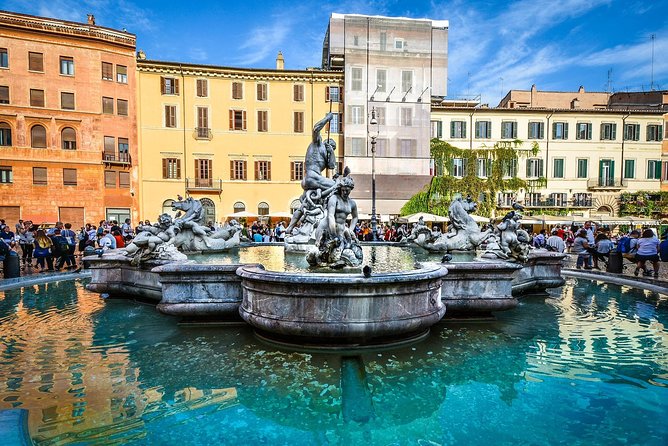
Piazza Navona: the “stadium” square built by power and precision
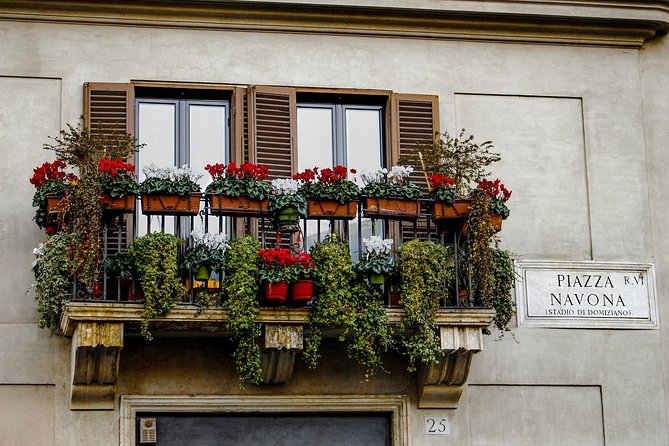
Your first stop is Piazza Navona, one of Rome’s most recognizable squares. This isn’t just pretty stonework; it has an athletic outline. The square’s shape echoes an ancient stadium, and it was built in monumental style at the behest of Pope Innocent X by the Pamphili family.
I like this stop as a warm-up because it gives you a “map” for what comes next. You’re about to look at remnants beneath a famous public space, so seeing the square above ground first helps your brain connect the layers.
What to watch for: Piazza Navona is popular and photos are everywhere. Your best strategy is to stand back for a minute, let your guide point out specific elements, and then only move in for pictures when you have a clear frame.
Stadio di Domiziano under Piazza Navona: what 4.5 meters changes
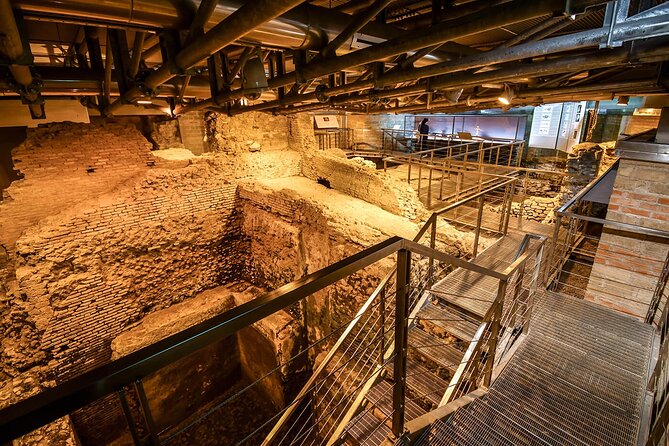
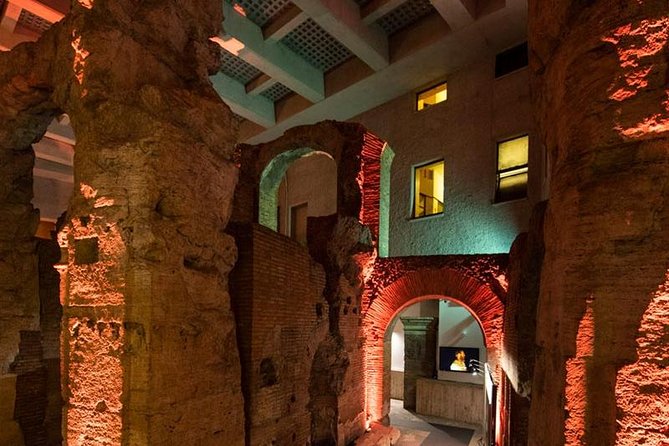
Next up is the Stadio di Domiziano – Navona Square Underground. This is where the tour earns its name.
You’ll visit the remains of the Domitian Stadium, an archaeological area located under Piazza Navona about 4.50 meters above street level. That detail is worth holding onto. It’s not “deep cave” underground. It’s more like you’re stepping into a preserved slice beneath a major square.
The big historical hook: it’s described as the first and only example of a masonry stadium known to date in Rome. When an ancient site survives with that level of construction detail, it’s easier for a good guide to explain how Roman engineering shaped everyday life.
You’ll get about 40 minutes here, which is enough time to:
- orient yourself to where the stadium sat relative to the square
- see the remains as more than “ruins”
- ask questions if something doesn’t click right away
My practical tip: wear comfortable shoes you can trust on uneven surfaces. Underground spaces can be slick when conditions change, and you’re going to want stable footing more than you want extra fashion points.

Pantheon: how to keep your visit from getting derailed
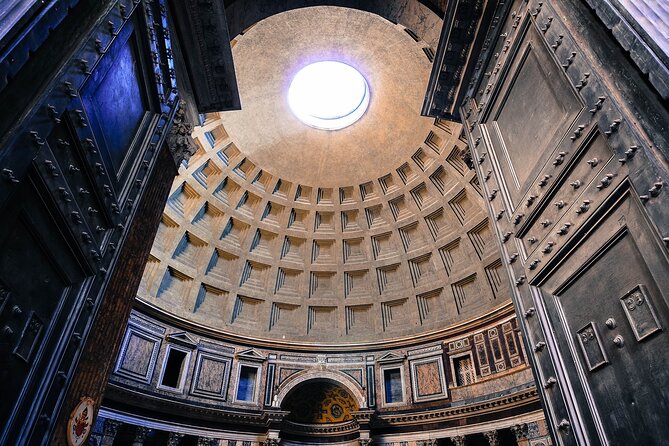
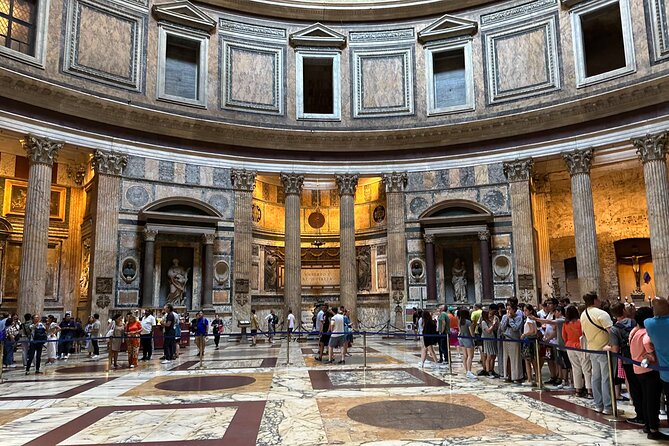
The tour then moves to the Pantheon, with about 20 minutes on the schedule.
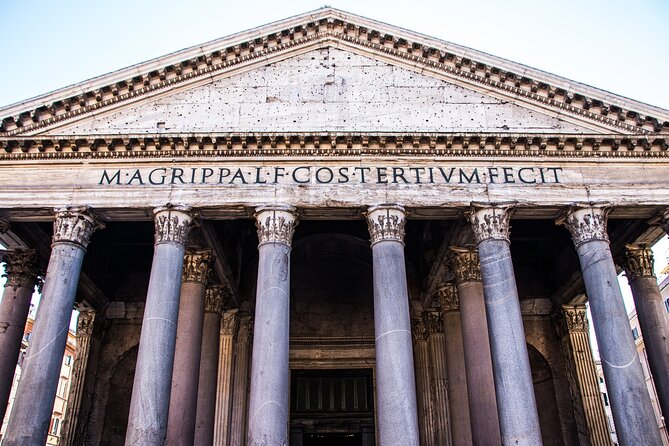
Built as a temple dedicated to all past, present, and future divinities, the Pantheon dates to 27 BC, founded by Marcus Vipsanius Agrippa—son-in-law of Augustus. Even if you’ve seen photos, being there in person is still a “stop and stare” moment. The building’s logic is visible in its proportions.
But here’s the make-or-break rule for your day: the tour data is clear that to enter the Pantheon, you must cover your shoulders and knees. If you don’t, you can be denied entry.
What that means for you: don’t assume you’ll be able to buy something at the last second and be fine. Rome’s dress expectations are real, and enforcement can vary depending on conditions. Pack a lightweight layer for your shoulders or wear bottoms that cover your knees, and you’ll remove a lot of stress from the experience.
Trevi Fountain in 15 minutes: see it, then get out before it swallows you
Your Trevi stop is about 15 minutes. That might sound short, but it’s a smart way to manage the Trevi Fountain reality: crowds, noise, and people blocking your view for the perfect shot.
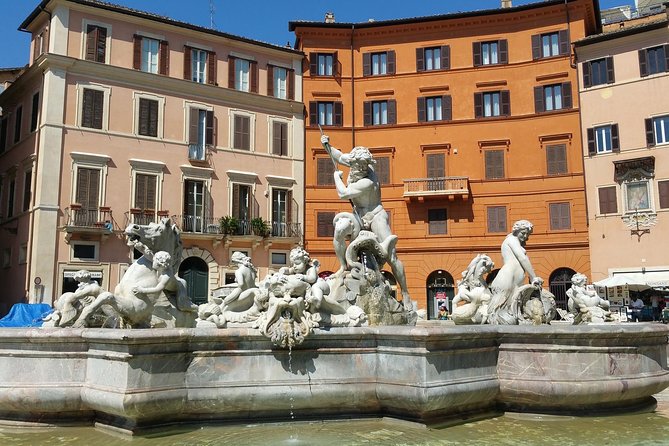
Trevi Fountain is Baroque art made for drama. It was designed by Nicola Salvi and completed by Giuseppe Pannini in 1762, with the central figure representing Oceanus, the god of the sea, riding a shell-shaped chariot pulled by sea horses. And yes, there’s the coin tradition: toss a coin in and you’re hoping for a return to Rome.
My approach here: don’t just aim for the postcard angle. I like using this short stop as a “get your bearings” visit. Stand where you can actually read the fountain’s composition, take a few photos, and then move with the group so you’re not trapped in the swirl.
One tour advantage is that this schedule often keeps you from spending your whole Trevi time stuck in the densest crowd moments.
Vicus Caprarius: the City of Water under nine meters of modern street
The final archaeological highlight is Vicus Caprarius – the City of Water. It’s a few steps from Trevi, and the archaeological area sits about nine meters below today’s street level.
Here’s what makes it compelling: the site was uncovered during renovation work on a cinema, with surveys conducted between 1999 and 2001. The nickname “City of Water” comes from the engineering feature that defines the area—a large water reservoir built in the 2nd century AD, likely in use until around the 6th century AD.
This stop is also a great “Rome systems” lesson. Seeing water infrastructure makes the rest of Rome’s grandeur feel less like decoration and more like survival tech. Water supply, storage, and distribution shaped where people lived and how cities expanded.
You’ll have about 40 minutes here. That longer block matters because it gives you time to connect the underground space to the visible Trevi Fountain above—especially if your guide explains what you’re actually looking at.
Guides and storytelling: what you should expect from the commentary
One reason people give this tour high marks is the guide quality. The tour info says most guides have training as archaeologists, and the guide names showing up in past experiences include Amanda, Alessandra, Sabrina, Alex, Francesca, Donatello, and Maria.
You can expect a mix of:
- decoding what you’re seeing in each ruin site
- explaining how it links to what you see above ground
- keeping the tone lively enough that you stay engaged for the whole route
In particular, several guide styles show up as a theme: people describe guides as funny, flexible with questions, and eager to share practical ideas for the rest of your Rome time. For example, one experience noted a guide recommending a local handmade leather store after the tour—exactly the kind of small add-on that can save you time later.
If you want maximum value: ask one question at each stop. Like, what part here was built for a specific function? Or what would this site look like at full size? Guides can usually turn that into a mini lesson.
Value math: what you’re paying for at $114.65 per person
At $114.65 per person, this isn’t a “cheap and cheerful” Rome tour. But the price makes more sense when you look at what’s bundled in.
You’re getting:
- a guided route for about 3 hours
- admission tickets included at the listed stops
- time in two underground archaeological areas
- multiple iconic sights (Piazza Navona, Pantheon, Trevi) folded into the same plan
So you’re paying for convenience and expert interpretation. If you tried to self-plan, the workload is real: you’d have to coordinate entrances, manage lines, and still figure out how to connect what you see underground to what you see above.
Also, the “morning first” approach is a value multiplier. You’re not spending your afternoon in transit and crowd management if you’re able to book the morning slot.
My bottom line: this is good value if you want a guided framework and you like archaeology and engineering. If you’re only chasing photos and don’t care why places matter, you might feel the cost more than the content.
Practical watch-outs: dress code, Jubilee routes, and the meeting point reality
Two practical things can make or break a smooth tour day.
First is the Pantheon dress code. Shoulders and knees must be covered, or entry can be denied. Bring a plan for that even if you think your outfit is fine.
Second is route changes during the Jubilee. The tour info warns that some monuments may be under restoration and access routes could change. That doesn’t mean the tour won’t happen. It means you should read any updates sent to you and stay flexible.
Finally, because the experience has a central start/end location, you can lose time if you miss a last-minute change. Central meeting points are convenient until they get confusing. If you’re prone to being late (no judgment), set a reminder for earlier than you think you need.
Should you book this Rome Underground and Piazzas tour?
Book it if you want a focused 3-hour hit of Rome: big landmarks plus real underground engineering and water infrastructure, with an archaeology-trained guide doing the interpreting. It’s also a smart pick if you’re traveling in the morning and want your afternoon clear.
Consider a different option if:
- you’re not comfortable following Pantheon dress code rules (plan your outfit ahead)
- you hate crowds and want more time at any single icon (this tour is designed for breadth, not lingering)
- you’re hoping for long underground time only (the underground stops are meaningful, but the schedule balances multiple sites)
If you do book, I’d pack two things that make the whole day easier: comfortable shoes and a layer for your shoulders. Then go in ready to ask questions. This tour works best when you treat the underground parts like clues, not just a sightseeing detour.
FAQ
How long is the tour?
It’s approximately 3 hours.
What does the tour cost?
The price listed is $114.65 per person.
Is the tour offered in English?
Yes, it’s offered in English.
Where is the meeting point?
The start and end are at Trevi Fountain, Piazza di Trevi, 00187 Roma RM, Italy.
Do I need a printed ticket?
No. A mobile ticket is provided.
Are entrance tickets included?
Yes. Admission tickets are included for the listed stops.
What should I wear for the Pantheon?
You’ll need clothing that covers your shoulders and knees. If you don’t, you may be denied entry.
What if the tour is affected by weather or the minimum number of travelers?
The experience requires good weather. If it’s canceled due to poor weather, you’ll be offered a different date or a full refund. If the minimum number of travelers isn’t met, you’ll be offered a different experience/date or a full refund.
More Tours in Rome
- Vatican Museums, Sistine Chapel & St. Peter’s Basilica Tour
★ 4.3 · 73,970 reviews - Vatican Museums, Sistine Chapel & St Peter’s Basilica Guided Tour
★ 4.5 · 39,149 reviews - Rome: Colosseum, Palatine Hill and Roman Forum Guided Tour
★ 4.8 · 32,814 reviews - Rome: Guided Tour of Colosseum, Roman Forum & Palatine Hill
★ 4.7 · 27,897 reviews - Rome: Colosseum, Roman Forum and Palatine Hill Guided Tour
★ 4.5 · 23,903 reviews - Rome: Colosseum Arena Floor, Palatine & Forum Guided Tour
★ 4.5 · 20,180 reviews
More Tour Reviews in Rome
- Vatican Museums, Sistine Chapel & St. Peter’s Basilica Tour
★ 4.3 · 73,970 reviews - Vatican Museums, Sistine Chapel & St Peter’s Basilica Guided Tour
★ 4.5 · 39,149 reviews - Rome: Colosseum, Palatine Hill and Roman Forum Guided Tour
★ 4.8 · 32,814 reviews - Rome: Guided Tour of Colosseum, Roman Forum & Palatine Hill
★ 4.7 · 27,897 reviews - Rome: Colosseum & Forum with Audio Guide App -Optional Arena
★ 4.2 · 24,770 reviews - Rome: Colosseum, Roman Forum and Palatine Hill Guided Tour
★ 4.5 · 23,903 reviews
Just added to our Rome reviews





Tours, compared.
 ★ 4.3Vatican Museums, Sistine Chapel & St. Peter’s Basilica TourFrom $7273,970 reviews
 ★ 4.5Vatican Museums, Sistine Chapel & St Peter’s Basilica Guided TourFrom $2239,149 reviews
 ★ 4.8Colosseum, Palatine Hill and Roman Forum Guided TourFrom $5232,814 reviews
 ★ 4.7Guided Tour of Colosseum, Roman Forum & Palatine HillFrom $5527,897 reviews
 ★ 4.5Colosseum, Roman Forum and Palatine Hill Guided TourFrom $5923,903 reviews
 ★ 4.5Colosseum Arena Floor, Palatine & Forum Guided TourFrom $4120,180 reviews
 ★ 4.3Vatican Museums, Sistine Chapel and Basilica TourFrom $7316,039 reviews
 ★ 4.7Colosseum Arena, Palatine Hill & Forum Guided TourFrom $8414,510 reviews