
Reviewed · HISTORICAL TOURS
Historical and Spiritual Jorney in Papal Basilicas
One day in Rome can still feel calm. This tour links St. Paul Outside the Walls, San Giovanni in Laterano (plus Scala Santa), Santa Maria Maggiore, and St. Peter’s with thoughtful context on history and theology. I love the personal pace of a tiny group (2 to 6 people) and the way the guide answers questions clearly, like Mykhailo Hevko, who blends Roman context with spiritual meaning. The one drawback to plan around is that there’s no skip-the-line for St. Peter’s Basilica, so waiting time can affect your schedule.
You’ll start at Via Ostiense, 333 near the exit of Metro B Basilica San Paolo, then move by bus and foot in a tight loop. It’s also set up for a Jubilee-style pilgrimage feel (Holy Doors), or for a classic Roman landmarks day—depending on what you ask for. Just dress for real walking: shoulders and knees covered, and comfortable shoes that can handle a few bursts of stairs and pavement.
In This Review
- Key things that make this tour work
- Why this route feels different from a generic Vatican day
- Hitting the calm start: St. Paul Outside the Walls
- San Giovanni in Laterano and Scala Santa: where the papal story gets personal
- Santa Maria Maggiore: art, Marian devotion, and a lot of storytelling
- Lunch window and snack reality
- St. Peter’s Square and the Vatican Grottoes: the “weight” moment
- St. Peter’s Basilica: masterpiece time, but plan for the line
- The value question: is $90.63 worth it?
- Who this tour is best for
- Practical tips to make the day smoother
- Should you book this tour?
- FAQ
- How many people are in the group?
- How long does the tour take?
- Does this tour include a skip-the-line entrance to St. Peter’s Basilica?
- What basilicas and sites are included?
- Where does the tour start?
- What languages is the guide available in?
- What should I wear or bring?
- Are food and drinks included?
- Are Vatican Museums and the Sistine Chapel included?
Key things that make this tour work
- Small group (2–6 people) for questions and a less rushed vibe
- Four pontifical basilicas in one day with a clear “why it matters” thread
- Scala Santa included, plus the option to add the Lateran Baptistery
- Professional, multilingual guidance (English, Italian, Ukrainian) including Mykhailo Hevko
- Practical logistics: bus transfers between major points and time to regroup
- St. Peter’s wait is real since there’s no line-skipping benefit
Why this route feels different from a generic Vatican day
If you’ve ever done Rome’s big church sites as a checklist, you know how fast it can turn into head-down sightseeing. This experience is built to slow the brain down without making the day drag. You still see major masterpieces, but the guide connects them to the ideas behind them—faith, power, art, and what Romans chose to remember.
That focus matters at places like St. Paul Outside the Walls. It can look serene at first glance, but the story behind it has had plenty of drama. Then you pivot to Lateran, the heart of the papal world, and you end with St. Peter’s—where the spiritual message and the political weight of Rome overlap in a very physical way. You’re not just looking at buildings. You’re learning how Rome’s religious center shaped its art and its identity.
And the small-group size is the sneaky advantage. When you’re in a group of just a handful, you’re more likely to get the exact explanation you need, whether that’s about early Christianity, papal history, or the symbolism behind a particular artwork. You don’t have to wait for your turn in a crowd.
Worth a look next to this Rome booking:
- Rome in a Day Tour with Vatican, Colosseum and Historic Center
★ 4.5 · 1,042 reviews - Rome Food Tour in the Historic Centre with 8+ Food Tastings
★ 5.0 · 1,000 reviews - Rome: Forbidden History Walking Tour & Pub Crawl with Drinks
★ 4.9 · 688 reviews - Rome: Guided Bar Crawl with Drinks & Dark History
★ 4.9 · 444 reviews
Hitting the calm start: St. Paul Outside the Walls
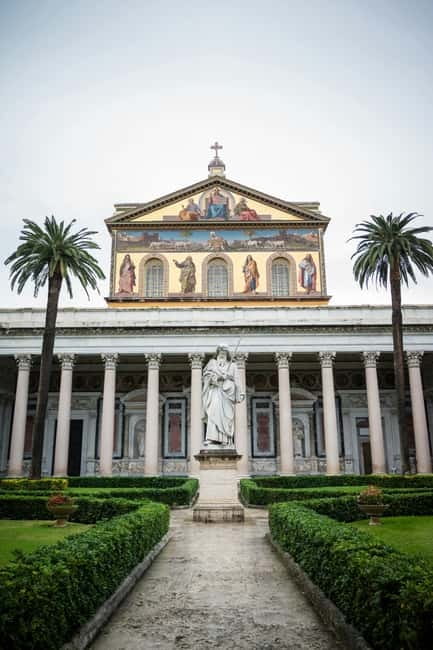
You begin near the Basilica San Paolo Metro B area at Via Ostiense, 333, then head to St. Paul Outside the Walls for the first guided stop. This opening choice is smart. The basilica’s atmosphere is described as calm and meditative, and that sets the tone for the day.
But the guide also frames it with its difficult history. That combination—peaceful space plus a tense backstory—is one of the reasons this stop works so well at the start. It helps you shift from surface “pretty church” mode into “why was this place built and defended” mode.
Practical note: because this is day-long and includes other stops, you’ll want to treat the first basilica like your warm-up. Don’t overpack the time for photos. Focus first on the architecture and what the guide points out, then snap what you need. Your feet will thank you later.
San Giovanni in Laterano and Scala Santa: where the papal story gets personal
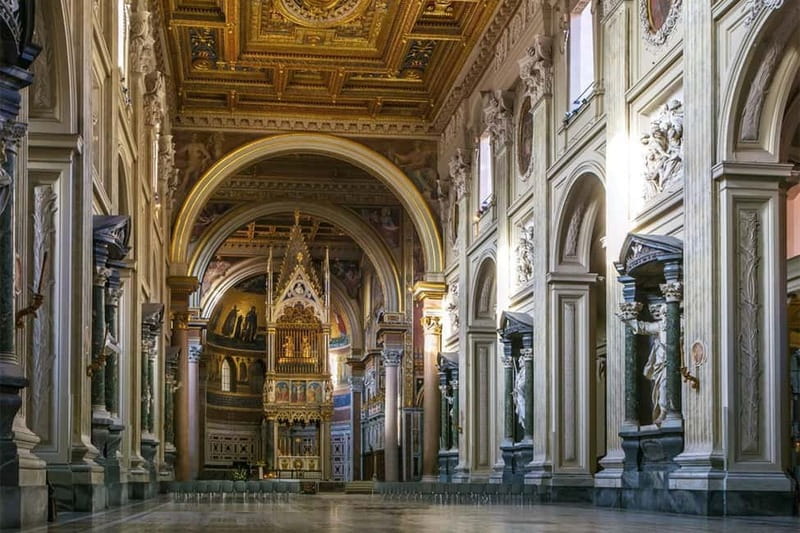
After St. Paul Outside the Walls, you take a short bus ride to San Giovanni in Laterano, the de jure main cathedral of the Roman Catholic Church. This is one of those places that can feel “less touristy” than the Vatican complex, but in a good way. It’s central to how the papal world has functioned historically.
The guided time here is focused (about 30 minutes), so you’ll want to listen for the big lines: what Lateran represents and how it connects to the theology of church authority and continuity. Even if you’re not a deep church-history person, you’ll likely start recognizing the themes the guide keeps returning to—legitimacy, memory, and sacred space.
Then comes Scala Santa, included in the tour. Scala Santa is spiritually charged, and the inclusion here is a major value point because it isn’t just another photo stop. It’s a place you experience with your body as much as your eyes. If you’re coming for a Jubilee-flavored pilgrimage mood (Holy Doors and devotion), this is one of the stops that makes that theme feel real rather than ceremonial.
What to watch: Scala Santa involves walking and likely some stairs. Wear shoes that feel secure, not just comfortable in flat terms.
Santa Maria Maggiore: art, Marian devotion, and a lot of storytelling
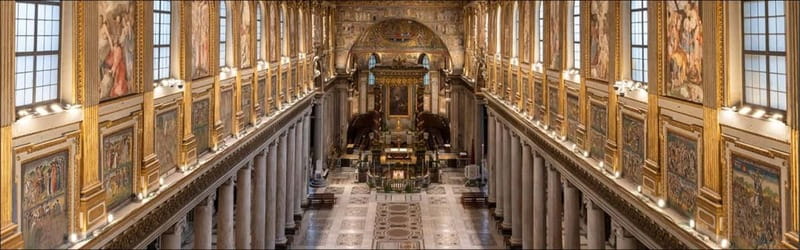
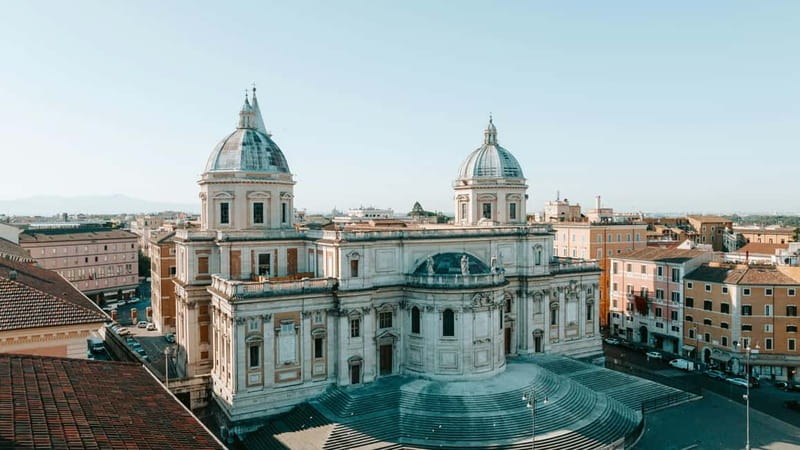
Next, you head on foot along Via Merulana toward Santa Maria Maggiore, one of the biggest and oldest Marian churches. This is where the day gains texture. You’re shifting from Lateran’s papal core to a Marian-centered tradition with its own historical layers.
The guide’s job here is especially important because Santa Maria Maggiore can be overwhelming if you’re only looking at highlights. With guidance, you’ll connect the church’s significance to religious practice and Roman cultural memory, not just to famous names.
You should expect discussion that ties the artwork and setting to broader themes—how Rome expressed devotion, and how art became a language for belief. That’s also where you may hear the names of major creators like Giotto and understand why their presence in these sacred spaces matters.
A good strategy: when you get to Santa Maria Maggiore, pause before you start walking deeper inside. Take ten seconds to orient yourself, then follow the guide’s pathway. It makes the explanations land better.




Lunch window and snack reality
After Santa Maria Maggiore, you’ll have time to grab lunch or snacks. The tour notes eating is optional, and that’s important. You don’t want to force a full sit-down meal if you’d rather stay light. But you also don’t want to skip food altogether because St. Peter’s is still ahead, and waiting can stretch.
So if you’re hungry, plan for something quick: a sandwich, fruit, or a snack you can eat standing or on a bench nearby. Keep water in mind too, but the tour data doesn’t list what’s available. Bring your own comfort items so you aren’t stuck searching in the middle of busy streets.
St. Peter’s Square and the Vatican Grottoes: the “weight” moment
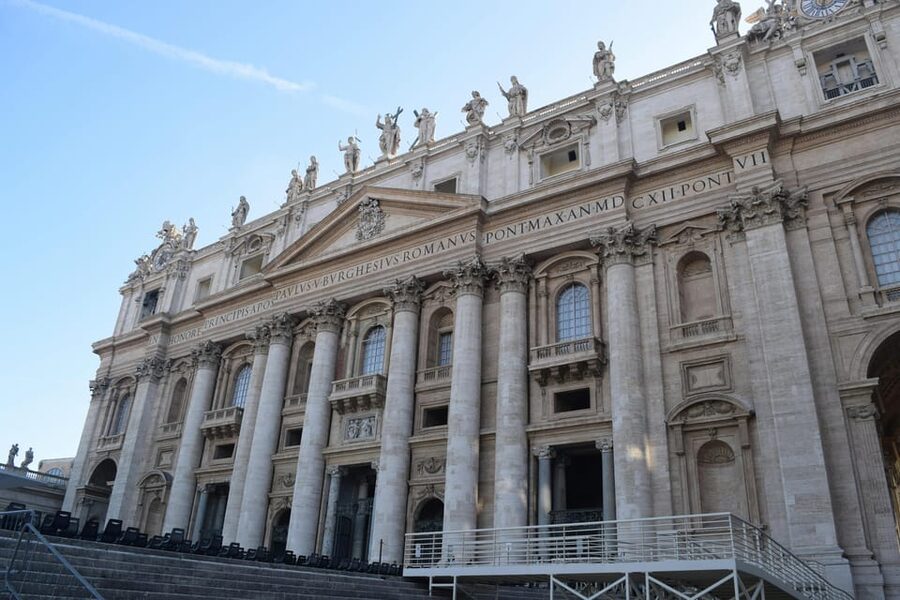
You travel onward using the metro for part of the connection, then arrive at St. Peter’s Square for guided time. This is usually where the day starts to feel bigger than the rest—space, scale, and the sense that you’re entering a world that has been rebuilt and re-emphasized many times.
Then you visit Vatican Grottoes for a guided stop. This is a meaningful add-on because it brings the idea of papal legacy down from art and architecture into human history—through Papal tombs and the quieter tone of the underground spaces.
If you care about spiritual continuity, this stop tends to land well. It’s not just about what’s visible above; it’s about the long thread of memory in the Church’s center.
St. Peter’s Basilica: masterpiece time, but plan for the line
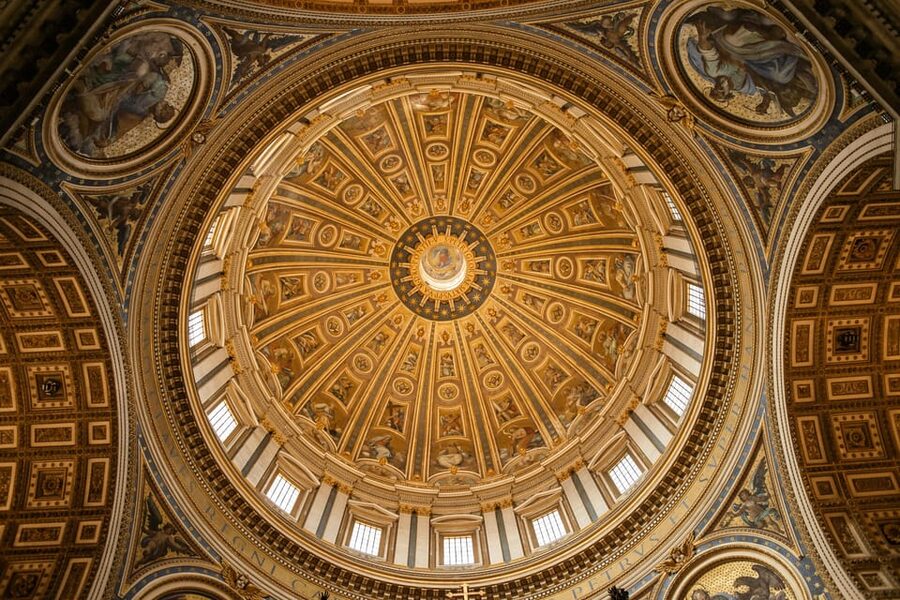
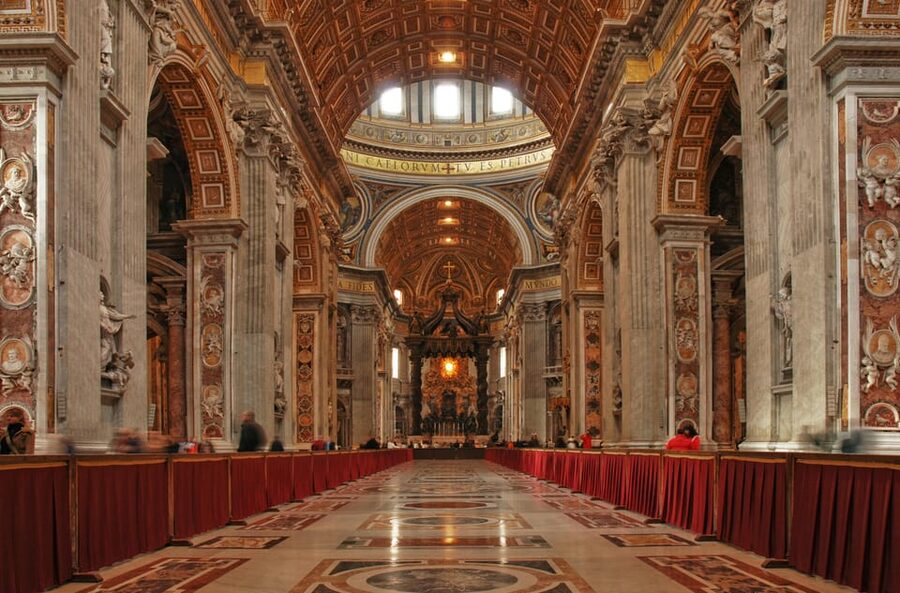
Finally, you enter St. Peter’s Basilica with guided time (about 40 minutes). This is where you’ll see major masterpieces associated with Michelangelo and Bernini—the kind of art that can overpower you if you don’t have context.
One key point: this tour does not give you the ability to skip the line for St. Peter’s Basilica or any other stop. That’s the main logistics consideration. The tour duration is listed as 4–5 hours, and it can run longer if lines are long.
So what should you do? Go in mentally ready for a wait. If you hate standing around, pack patience. If you’re the type who enjoys people-watching and soaking up the atmosphere, it’s easier. Either way, wearing the right clothes matters: shoulders and knees covered, and no sleeveless tops.
Inside, let the guide pick your “anchor sights.” With only about forty minutes, the best approach is to understand what you’re looking at. Don’t try to see everything. See the key parts the guide highlights, then do a short follow-up sweep on your own if time allows.
The value question: is $90.63 worth it?
At $90.63 per person for a roughly 4–5 hour day, the value depends on what you’d otherwise do.
If you’re planning to visit only one or two sites on your own, you might feel the cost. But here you’re getting a coordinated package: multiple pontifical basilicas, Scala Santa included, guided interpretation, and bus/transport between major points. You also get a small-group format that’s hard to replicate cheaply—especially when the guidance is tied to your interests.
Where the price feels most fair is if you care about meaning, not just checkmarks. A guided explanation at St. Paul Outside the Walls, Lateran, and St. Mary Major can save you hours of reading and guessing. And Scala Santa being included is a real add-on value because it’s not just a quick stop.
The cost isn’t trying to replace a “fast entry” Vatican plan. If your main priority is skipping lines, this isn’t built for that. But if your priority is understanding what you’re seeing, it’s a solid trade.
Who this tour is best for
This is ideal if you want a spiritual and historical day that stays human-sized. It’s a strong match for:
- People doing a Jubilee-style pilgrimage vibe, including Holy Doors interest
- Anyone who likes asking questions and wants a guide who can respond clearly
- Visitors who want a fuller picture of Rome’s papal geography, not just one famous stop
- Those who prefer guided art and theology context tied to specific places
It may be less ideal if you’re trying to minimize walking to near-zero or if you strongly dislike waiting in queues—since St. Peter’s line is not skipped.
Practical tips to make the day smoother
First, follow the dress expectations: shoulders and knees covered. It’s not just about comfort; it’s how you avoid getting turned away.
Second, bring comfortable shoes that can handle walking plus any stairs. This route uses bus, metro, and foot segments, and you’ll be on your feet enough that good footwear matters.
Third, plan for snacks. Eating and drinking aren’t included, and a quick break can help you enjoy St. Peter’s more without rushing your own body.
Finally, if you’re interested in adding extras near basilicas, know that many adjacent museum areas require separate tickets. The tour data suggests you can agree to add some, but it will likely lengthen the day. Keep your priorities tight if you don’t want the schedule to drift.
Should you book this tour?
Book it if you want a guided, small-group route across Rome’s major papal basilicas with a clear thread connecting art, doctrine, and historical context. It’s especially worth it if you like being able to ask questions and get direct answers from a guide such as Mykhailo Hevko, who’s highlighted for enthusiastic, history-focused guidance.
Skip it or adjust expectations if your top goal is speed through St. Peter’s. Since there’s no skip-the-line, you need patience. Also, if you only care about one or two sites, you may find a simpler, cheaper plan fits better.
If you’re aiming for a meaningful day that feels more like pilgrimage than sightseeing, this one hits the sweet spot.
FAQ
How many people are in the group?
The tour is a small group limited to 6 participants. It also notes a more personal feel with groups ranging from 2 to 6.
How long does the tour take?
The duration is listed as 4 to 5 hours, including transportation and waiting time connected to St. Peter’s Basilica lines. It can run longer with longer lines or if you add extra stops or take a break for snacks.
Does this tour include a skip-the-line entrance to St. Peter’s Basilica?
No. The tour explicitly does not include skipping the line for St. Peter’s Basilica or any other location.
What basilicas and sites are included?
It includes visits to three pontifical basilicas, Scala Santa, and the Vatican Grottoes, with guided time at St. Peter’s Basilica and St. Peter’s Square. It also mentions Lateran Baptistery as an optional add-on.
Where does the tour start?
The meeting point is Via Ostiense, 333, near the exit of the Basilica San Paolo Metro B station. The start time is 9:00.
What languages is the guide available in?
The live tour guide is available in English, Italian, and Ukrainian.
What should I wear or bring?
Bring comfortable shoes and clothes that cover your shoulders and knees. The tour also suggests bringing snacks.
Are food and drinks included?
No. Costs for eating and drinking during the tour are not included.
Are Vatican Museums and the Sistine Chapel included?
No. The tour does not include Vatican Museums or the Sistine Chapel.
More Historical Tours in Rome
- Rome in a Day Tour with Vatican, Colosseum and Historic Center
★ 4.5 · 1,042 reviews - Rome Food Tour in the Historic Centre with 8+ Food Tastings
★ 5.0 · 1,000 reviews - Rome: Forbidden History Walking Tour & Pub Crawl with Drinks
★ 4.9 · 688 reviews - Rome: Guided Bar Crawl with Drinks & Dark History
★ 4.9 · 444 reviews - Rome: Vespa Photo Tour with Historic City Highlights
★ 5.0 · 395 reviews - Twilight Treasures: An Evening Tour Through Rome’s Rich History
★ 4.5 · 263 reviews
More Tour Reviews in Rome
- Vatican Museums, Sistine Chapel & St. Peter’s Basilica Tour
★ 4.3 · 73,970 reviews - Vatican Museums, Sistine Chapel & St Peter’s Basilica Guided Tour
★ 4.5 · 39,149 reviews - Rome: Colosseum, Palatine Hill and Roman Forum Guided Tour
★ 4.8 · 32,814 reviews - Rome: Guided Tour of Colosseum, Roman Forum & Palatine Hill
★ 4.7 · 27,897 reviews - Rome: Colosseum & Forum with Audio Guide App -Optional Arena
★ 4.2 · 24,770 reviews - Rome: Colosseum, Roman Forum and Palatine Hill Guided Tour
★ 4.5 · 23,903 reviews
Just added to our Rome reviews





Historical Tours, compared.
 ★ 4.5Rome in a Day Tour with Vatican, Colosseum and Historic CenterFrom $1921,042 reviews
 ★ 5.0Rome Food Tour in the Historic Centre with 8+ Food TastingsFrom $1181,000 reviews
 ★ 4.9Forbidden History Walking Tour & Pub Crawl with DrinksFrom $61688 reviews
 ★ 4.9Guided Bar Crawl with Drinks & Dark HistoryFrom $77444 reviews
 ★ 5.0Vespa Photo Tour with Historic City HighlightsFrom $33395 reviews
 ★ 4.5Twilight Treasures: An Evening Tour Through Rome’s Rich HistoryFrom $4263 reviews
 ★ 5.0Small-Group Rome to Pompeii & Amalfi: Day of History & SeaFrom $144239 reviews
 ★ 4.7Colosseum, Vatican Museums & Historic Center in a Day228 reviews
Browse the lists this tour appears in