
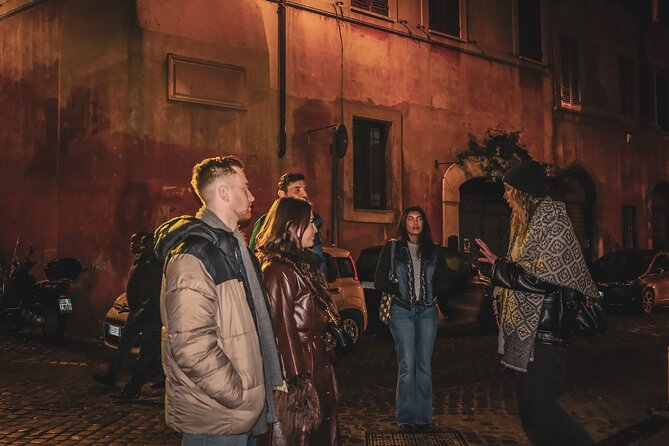
Reviewed · ROME NIGHT TOURS
Haunted Rome: Eternal City Night Walking Tour
Rome at night turns spooky fast. This 2-hour walk through Rome’s centro storico uses dark history—not jump scares—to make famous streets feel new, from Campo de’ Fiori to Castel Sant’Angelo. I especially like how the guides keep the pace lively (Simon, Ana, Domenica, and others get praised for clear, engaging storytelling) and how the evening timing helps you dodge daylight crowds and heat. One thing to consider: the tour can run shorter than the advertised time, so don’t plan a tight connection right after.
For $17.97, you’re paying for an organized route plus story time in some of Rome’s most atmospheric corners. You’ll also get a mobile ticket and a small group size (max 20), which makes it easier to stay with the guide as you move through tight streets. Still, because you’re outdoors in busy areas, street noise can make hearing tricky if you’re far back in the group.
If you want a classic Rome highlights loop, this isn’t that. It’s for you if you like your history with a darker side and your night walking with great photo chances.
In This Review
- Key Points I Think Are Worth Your Attention
- Why This Haunted Rome Tour Works Better After Dark
- Start at Campo de’ Fiori, End Near Castel Sant’Angelo
- Campo de’ Fiori and Piazza Farnese: Where Fun Came with a Price
- Madonelles Along the Route: Crime-Stopping Statues
- Ponte Sisto and the Warning of Bridges
- Fontana del Mascherone: A Fountain You Should Skip
- Chiesa di Santa Maria dell’Orazione e Morte: When Churches Show Bones
- Via di Monserrato and Monserrato degli Spagnoli: Haunted Apartments and Scandal
- Via Giulia: Beauty, Power, and When Cosmetics Go Wrong
- Via dell’Arco dei Banchi: Mastro Titta, Rome’s Infamous Executioner
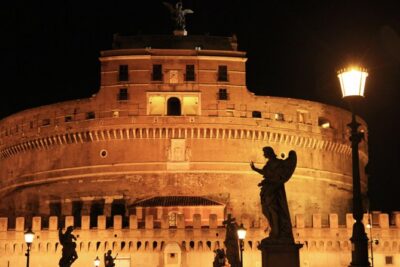
- Castel Sant’Angelo After Hours: Angels, Executions, and the Cenci Story
- Price, Time, and the Real World Walk
- What You’ll Actually Learn on This Walk
- Who Should Book This Haunted Rome Night Tour
- Should You Book This Haunted Rome Tour?
- FAQ
- How long is the Haunted Rome: Eternal City Night Walking Tour?
- How much does the tour cost?
- What language is the tour offered in?
- Where does the tour start and end?
- How big is the group?
- Is it mostly ghost stories or dark history?
- Is it suitable for families or kids?
- What places are included along the route?
- What happens if the weather is bad?
- Can I cancel for a full refund?
Key Points I Think Are Worth Your Attention
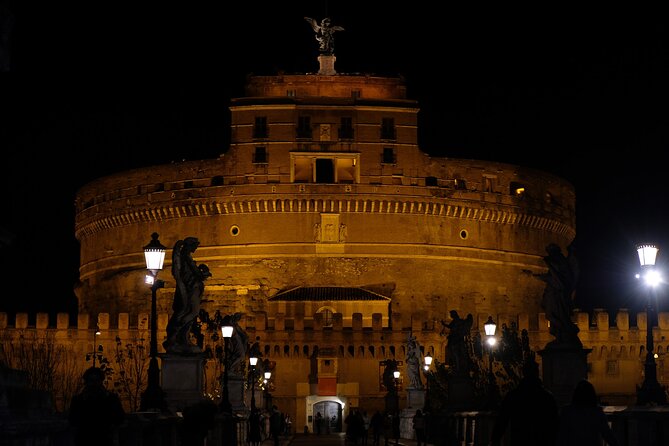
- Evening timing: it’s designed to avoid Rome’s worst crowds and scorching temperatures.
- A guided story route: you hit Campo de’ Fiori, Ponte Sisto, Ponte Sant’Angelo, Via Giulia, and more in one run.
- Bone-chilling without being a horror movie: expect dark history stories, not theatrical screaming.
- Small group: max 20 travelers, which helps the whole thing feel more personal than a cattle-call tour.
- Clear route from start to finish: you begin at Campo de’ Fiori and end near Castel Sant’Angelo.
- Practical ticketing: you get a mobile ticket and the tour runs in English.
Why This Haunted Rome Tour Works Better After Dark
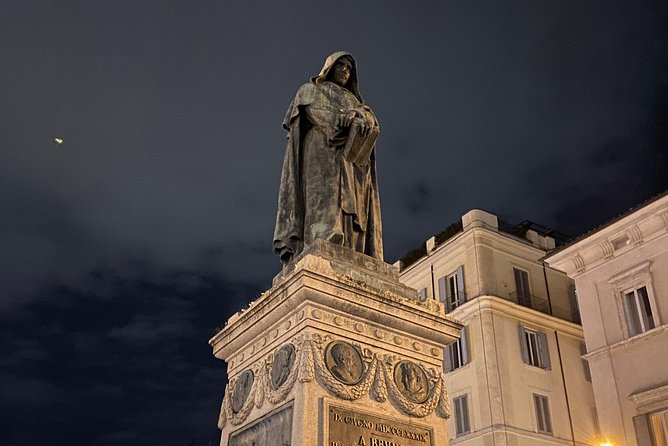
Rome is already dramatic. Add nighttime lighting on stone and suddenly the city feels like it’s telling secrets. This tour leans into that with a walk that’s less about scaring you and more about teaching you how people in earlier centuries lived, feared, and punished.
What I like most is the tone. It stays story-driven, with spooky details tied to real places you can stand in front of—like bridges where punishment and power struggles left long scars. And in the reviews, guides such as Simon and Ana are repeatedly praised for making the stories fun and easy to follow, even when questions pop up.
Your second big win is timing. An evening tour is a practical hack in Rome: you get cooler temperatures and you avoid the worst crowds. It also means your photos of landmarks in the centro storico look calmer and more cinematic than they do at peak midday.
After dark: other Rome walks
- Winner 2025 Rome Twilight Trastevere Food Tour by Eating Europe
★ 5.0 · 5,157 reviews - Rome: City Highlights Open-Top Bus Night Tour
★ 4.1 · 2,038 reviews - Rome: Paranormal Night Walking Tour & Secret Backstreets
★ 4.9 · 1,921 reviews - Vespa Sidecar Tour By Night with Pickup
★ 5.0 · 1,803 reviews
Start at Campo de’ Fiori, End Near Castel Sant’Angelo
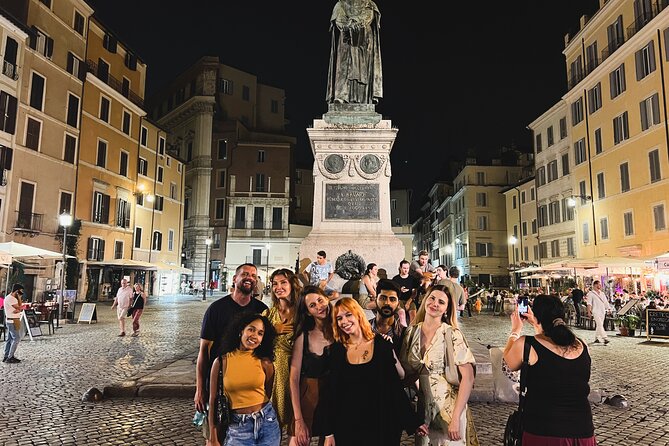
You’ll begin in Piazza Campo de’ Fiori, a place that’s famous today for bars and restaurants, but historically has been tied to executions and deaths. Starting here makes sense because Campo de’ Fiori instantly sets the mood: it’s lively on the surface, but the backstory is grim.
From there, you move through a chain of streets and squares that connect famous Rome landmarks in a walkable way. The tour is structured so you’re not guessing where to go next. When you finish, you end at Castel Sant’Angelo on the Lungotevere, a strong finishing point because the area is iconic and it’s easy to keep sightseeing after.
One practical consideration: this is a walking tour in a dense part of the city. You’ll want comfortable shoes, and you’ll benefit from being comfortable navigating tight streets. The tour fits “most travelers,” but if you’re sensitive to lots of steps or standing in place for stops, plan accordingly.
Campo de’ Fiori and Piazza Farnese: Where Fun Came with a Price
Campo de’ Fiori is your opening scene. The story framework here is simple and effective: you start with a busy square and learn how many people died on the very ground you’ll be standing on now. It’s an easy way to build a mindset for the rest of the night—Rome as layers, not one single timeline.
Next comes Piazza Farnese. This is one of those places where you can almost imagine the old-world parties—wealthy elites, big gatherings, and a sense that money could protect you. The darker angle is that in Rome, power doesn’t come without consequences. That theme keeps returning across the route.
These two stops are short, but they do a smart job. You’re not “touring” one monument for an hour. Instead, you’re learning how different pockets of the city connect to violence, punishment, and public spectacle.
Madonelles Along the Route: Crime-Stopping Statues
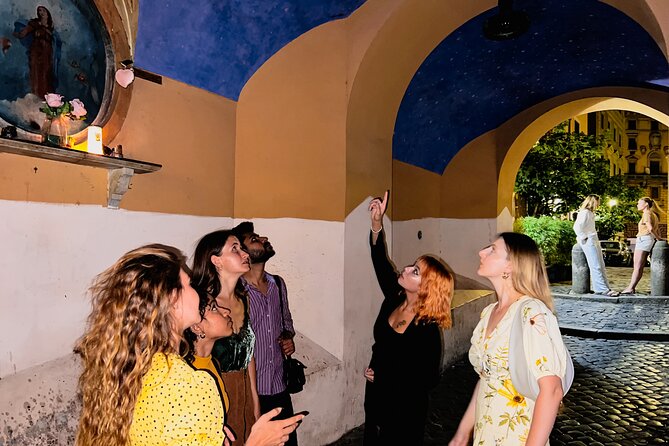
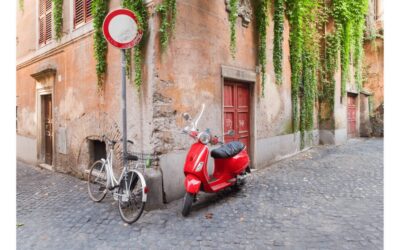
As you walk through narrower lanes, you’ll hear about madonelles, the little statue-figures (the little madonnas) found along the route. The stories connect them to the idea of protection—especially in a city where crime, fear, and social tension were constant realities.
This is one of the most interesting parts for anyone who likes street-level history. Rome’s churches and palaces get most of the attention, but these small roadside religious statues tell you a lot about how people coped day to day. They also show you that “spiritual” didn’t always mean calm. Sometimes it meant warding off harm and hoping for safety.
The route through Via del Mascherone and Vicolo dei Venti also helps break up the evening. Instead of only going from big landmark to big landmark, you get brief moments in quieter, more intimate streets where the mood feels right for the stories.
Worth a look next to this Rome booking:


Ponte Sisto and the Warning of Bridges
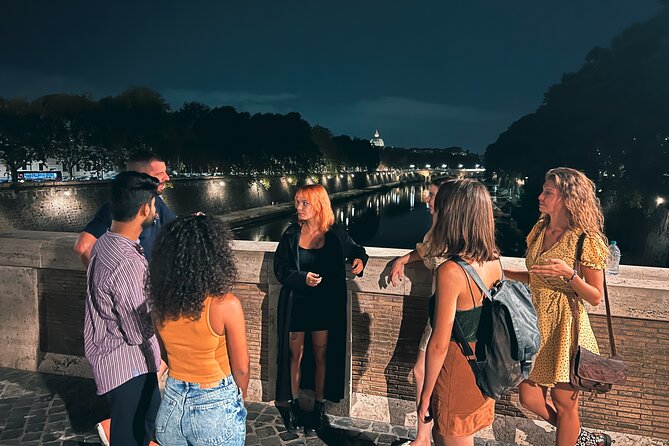
Rome’s bridges are more than pretty views. You’ll spend time at Ponte Sisto, one of Rome’s older bridges, and you’ll hear why bridges in old cities could become stages for tragedy.
The tour frames Ponte Sisto with a grim mix: tragic accidents, power struggles, theft, and suspicious deaths. Even if you’re not a crime-history person, this works because it’s grounded in a place you can actually see and picture—bridges concentrate people and movement, which also concentrates danger.
This section is a good reminder that some of Rome’s most famous structures were built for public life. Public life included conflict. That’s what makes the “haunted” label feel earned without turning it into fantasy.
Fontana del Mascherone: A Fountain You Should Skip
Then comes Fontana del Mascherone, where the message is clear: don’t drink from Rome’s deadliest fountain. The point isn’t that you’ll suddenly get poisoned for ignoring a sign. It’s about learning how everyday objects could carry fear and rumor—and how poison stories have long attached themselves to the city.
It’s also a great moment to get a little bit of humor into the evening. The guide’s job here is to keep the tone engaging, and this stop helps. You’re allowed to laugh, and still leave with a darker piece of Rome in your head.
If you like spooky humor, you’ll probably enjoy the way these stops alternate between grim facts and memorable punchlines.
Chiesa di Santa Maria dell’Orazione e Morte: When Churches Show Bones
The tour’s emotional peak for a lot of people is Chiesa di Santa Maria dell’Orazione e Morte. This 17th-century church is tied to human remains and serves as a stark reminder that death isn’t something Rome stored offstage.
Whether or not you find it creepy, it’s a powerful example of how faith, fear, and social order intersected. In Rome, religion wasn’t only about prayers. It was also a public language for mortality.
Practical tip: if you’re sensitive to bone-related imagery, keep that in mind here. The tour doesn’t turn into a medical lecture, but the topic is real and intense.
Via di Monserrato and Monserrato degli Spagnoli: Haunted Apartments and Scandal
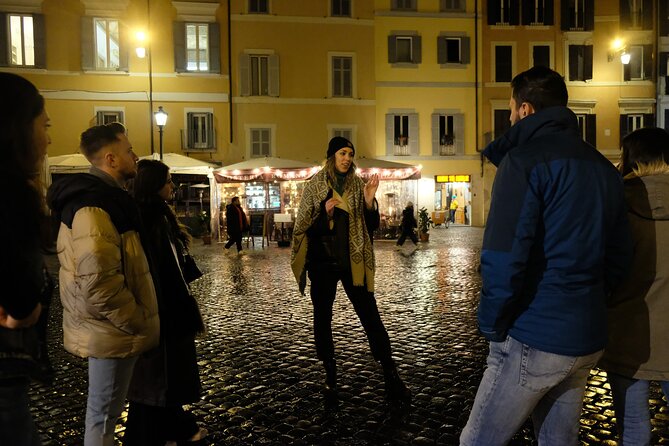
Next, the stories shift into the realm of haunting and rumor. You’ll hear why Via di Monserrato is considered one of the most haunted places in Rome. Then you move to Chiesa di Santa Maria in Monserrato degli Spagnoli, where the tour leans into scandalous stories with the drama of a telenovela.
This is where the tour becomes more “storytelling” and less “official plaque facts.” It’s a part of the walk for you if you enjoy the social side of history: secrets, status, betrayal, and the way gossip can shape reputations for centuries.
Also, this part of the route helps you connect the city’s religious spaces with its domestic realities. Rome’s churches weren’t just spiritual centers; they were connected to powerful families, politics, and everyday life.
Via Giulia: Beauty, Power, and When Cosmetics Go Wrong
Via Giulia is one of Rome’s most iconic streets, and the tour uses that fame for a specific theme: cosmetics and the danger hidden behind them. You’ll hear how an older beauty-related setting here is tied to stories where cosmetics can kill.
This is a fun stop because it’s not the usual “Roman emperors did everything” story. It’s about everyday people, desire, and how easily something meant to improve appearance could be weaponized. One of the reviews even points to the idea of Aqua Tofana living on in the story of this street.
For your night walk, Via Giulia also adds variety. After bridges and churches, you get a more street-and-shopping feel, which changes the mood while keeping the tone consistently dark.
Via dell’Arco dei Banchi: Mastro Titta, Rome’s Infamous Executioner
Next up is Via dell’Arco dei Banchi, where the tour tells the chilling story connected to Rome’s infamous executioner, Mastro Titta. This stop is a great example of why the tour works: it takes a name you’ve likely heard in passing and ties it to a specific street and setting.
If you’re into crime history, this is one of the moments you’ll remember. Not because you’re learning gore, but because you’re learning how punishment functioned as public theater—how fear was used to control behavior.
It also helps you see execution history as a system, not random brutality. Rome was obsessed with order, and the city turned order into spectacle.
Castel Sant’Angelo After Hours: Angels, Executions, and the Cenci Story
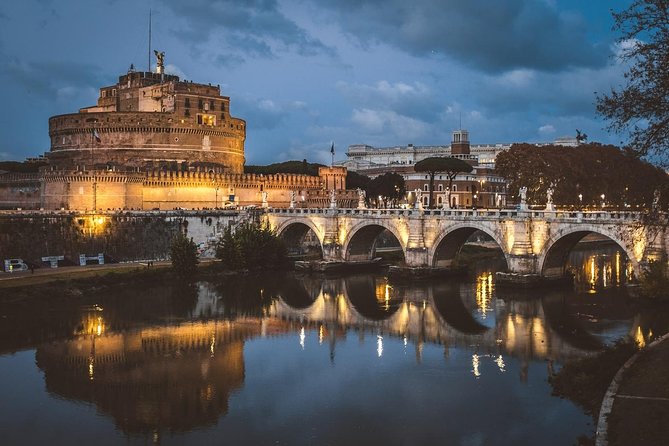
The walk ends at Castel Sant’Angelo, and it’s a strong closing point. You’ll hear how the bridge-connected fortress was once used to expose bodies of executed people as a warning, with angels and statues now replacing that grim atmosphere.
The tour also ties Castel Sant’Angelo to the Cenci family and how the story ended tragically. This finale is valuable because it pulls together several themes: public fear, power struggles, and how Rome layers sacred art over darker pasts.
From a practical standpoint, finishing near Castel Sant’Angelo is convenient. You’re in a major sightseeing zone, and you can keep walking, grab dinner, or plan your next stop without feeling trapped back at the first square.
Price, Time, and the Real World Walk
At $17.97 per person, you’re getting a guided night walk that strings together a lot of major stops for a low ticket price. You’re not paying for entrance tickets (many stops are described as no admission required), so your money mostly funds story time and route control.
The part you should watch is time. Even though the tour is advertised at about two hours, some experiences have run under that mark. One reviewer noted finishing fifteen minutes early, and others mentioned breaks that slowed things down. So for your schedule, think of it as roughly 90 to 120 minutes depending on pace and group movement.
Also, keep your expectations aligned. This is not sold as a horror movie. It’s more dark history than ghost screams, and that’s a big plus if you don’t want to be jump-scared. The goal is to change how you see the city.
What You’ll Actually Learn on This Walk
The learning isn’t random scary stuff. It’s a pattern. You’ll connect themes like public punishment, fear-based protection, and rumor-filled social life to real streets and structures.
You’ll also leave with a Rome mindset: names matter, small objects matter, and even ordinary corners can carry heavy stories. That’s the kind of knowledge that makes your future self-guided wandering better. You start spotting details instead of just passing them.
And in the reviews, the most praised guides share a common skill: they keep the group together and make sure people can hear. When that happens well—Simon was specifically praised for being clear, and Sarah and Domenica get praised for fun, clear delivery—the whole tour feels like a live history lesson.
Who Should Book This Haunted Rome Night Tour
This tour is a good match if:
- You want a night walk that feels different from the daytime sightseeing grind.
- You like history stories that include crime, punishment, rumor, and human behavior.
- You prefer a small group (max 20) rather than a crowded bus feel.
- You’re okay with walking and standing for short stops in busy areas.
It’s also a nice option for families who want something more interesting than standard museum facts. One review specifically mentions booking with a 12-year-old, and the experience worked for them as fun spooky history rather than pure fear.
If you want a quiet, respectful church visit with no scary tone, you might find some stops more intense than you expect. If you want jump scares, you’ll likely be disappointed. This is about atmosphere and darker context.
Should You Book This Haunted Rome Tour?
Yes, if you want value and you like Rome the way it really feels—old streets with big stories underneath. For under $20, you’re getting an organized, English-language night route through major centro storico areas, guided by storytellers who tend to deliver clearly (and in reviews, names like Simon, Ana, and Domenica stand out).
I’d say book it on a night when you’re ready to walk and when you can be flexible with timing. Bring comfortable shoes, plan to be outdoors around active street noise, and treat it as dark history with a spooky label—not a horror show.
If that sounds like your kind of Rome, this tour is an easy yes.
FAQ
How long is the Haunted Rome: Eternal City Night Walking Tour?
It runs for about 2 hours on average.
How much does the tour cost?
The price is $17.97 per person.
What language is the tour offered in?
The tour is offered in English.
Where does the tour start and end?
It starts at Piazza Campo de’ Fiori and ends at Castel Sant’Angelo near Lungotevere Castello, 50.
How big is the group?
The tour has a maximum of 20 travelers.
Is it mostly ghost stories or dark history?
It’s described as a haunted/ghost tour, but the focus is often on dark history stories you may not discover on your own.
Is it suitable for families or kids?
Most travelers can participate, and at least one reviewer booked it with a 12-year-old and found it fun and interesting.
What places are included along the route?
You’ll visit Campo de’ Fiori, Piazza Farnese, Ponte Sisto, Fontana del Mascherone, Chiesa di Santa Maria dell’Orazione e Morte, Via di Monserrato, Chiesa di Santa Maria in Monserrato degli Spagnoli, Via Giulia, Via dell’Arco dei Banchi, and end at Castel Sant’Angelo.
What happens if the weather is bad?
The experience requires good weather. If it’s canceled due to poor weather, you’ll be offered a different date or a full refund.
Can I cancel for a full refund?
You can cancel up to 24 hours in advance for a full refund.
More Tours in Rome
- Vatican Museums, Sistine Chapel & St. Peter’s Basilica Tour
★ 4.3 · 73,970 reviews - Vatican Museums, Sistine Chapel & St Peter’s Basilica Guided Tour
★ 4.5 · 39,149 reviews - Rome: Colosseum, Palatine Hill and Roman Forum Guided Tour
★ 4.8 · 32,814 reviews - Rome: Guided Tour of Colosseum, Roman Forum & Palatine Hill
★ 4.7 · 27,897 reviews - Rome: Colosseum, Roman Forum and Palatine Hill Guided Tour
★ 4.5 · 23,903 reviews - Rome: Colosseum Arena Floor, Palatine & Forum Guided Tour
★ 4.5 · 20,180 reviews
More Tour Reviews in Rome
- Vatican Museums, Sistine Chapel & St. Peter’s Basilica Tour
★ 4.3 · 73,970 reviews - Vatican Museums, Sistine Chapel & St Peter’s Basilica Guided Tour
★ 4.5 · 39,149 reviews - Rome: Colosseum, Palatine Hill and Roman Forum Guided Tour
★ 4.8 · 32,814 reviews - Rome: Guided Tour of Colosseum, Roman Forum & Palatine Hill
★ 4.7 · 27,897 reviews - Rome: Colosseum & Forum with Audio Guide App -Optional Arena
★ 4.2 · 24,770 reviews - Rome: Colosseum, Roman Forum and Palatine Hill Guided Tour
★ 4.5 · 23,903 reviews
When the Lights Come On in Rome
- Winner 2025 Rome Twilight Trastevere Food Tour by Eating Europe
★ 5.0 · 5,157 reviews - Rome: City Highlights Open-Top Bus Night Tour
★ 4.1 · 2,038 reviews - Rome: Paranormal Night Walking Tour & Secret Backstreets
★ 4.9 · 1,921 reviews - Vespa Sidecar Tour By Night with Pickup
★ 5.0 · 1,803 reviews - Rome by Night – Ebike Small Group Tour – Food and Wine (Option)
★ 5.0 · 1,275 reviews - Rome by Night: E-bike Small Group Tour -Food & Wine (Option)
★ 4.9 · 1,233 reviews
Just added to our Rome reviews





Rome Night Tours, compared.
 ★ 5.0Winner 2025 Rome Twilight Trastevere Food Tour by Eating EuropeFrom $1255,157 reviews
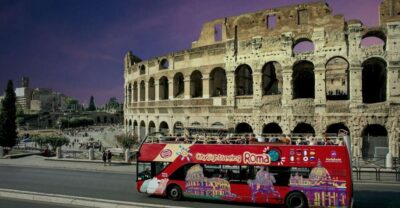 ★ 4.1City Highlights Open-Top Bus Night TourFrom $222,038 reviews
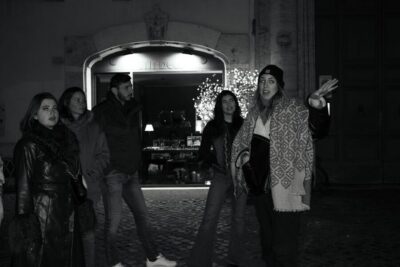 ★ 4.9Paranormal Night Walking Tour & Secret BackstreetsFrom $341,921 reviews
 ★ 5.0Vespa Sidecar Tour By Night with PickupFrom $1461,803 reviews
 ★ 5.0Rome by Night – Ebike Small Group Tour – Food and Wine (Option)From $711,275 reviews
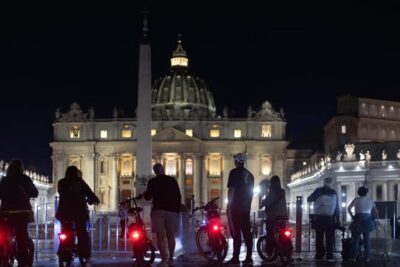 ★ 4.9Rome by Night: E-bike Small Group Tour -Food & Wine (Option)From $691,233 reviews
 ★ 4.8Small-Group Guided Day or Night Walking TourFrom $231,009 reviews
 ★ 4.5Rome by Night Walking Tour – Legends & Criminal StoriesFrom $141,003 reviews
Browse the lists this tour appears in