
Reviewed · TOURS
Golf Car Tour Rome
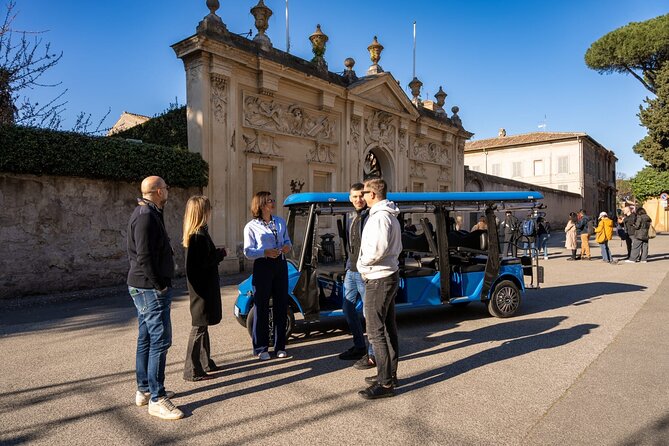
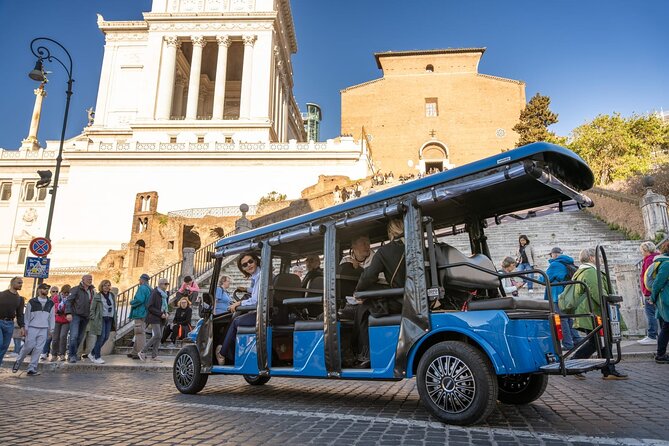
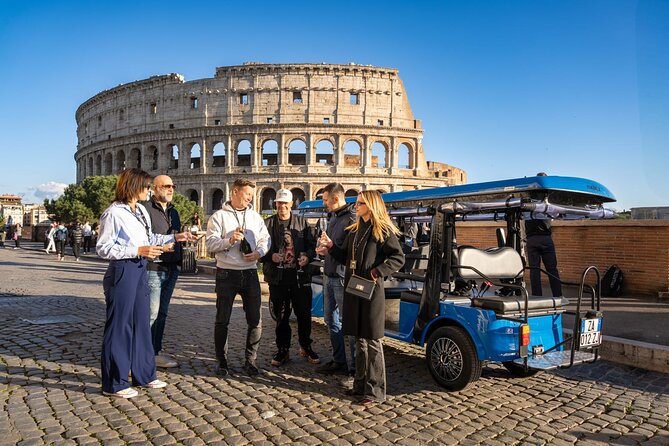
Two hours, eight Roman icons. This Golf Car Tour Rome format is perfect when you want the headline sights without losing hours in transit. I especially like the electric-powered golf carts for an easier ride on busy streets, and the tight group limit of 7 for a more personal pace. The trade-off is real: each stop is short, so this is for skimming the highlights, not lingering like you have all day.
I also like that the tour builds in free admission tickets for the major stops, so you spend less time figuring out entrances and more time seeing what you came for. One possible drawback to plan for: “free admission” doesn’t mean unlimited time at each site, so you’ll want to prioritize what you care about most before the cart rolls on.
The route starts at Via del Colosseo and ends at Trevi Fountain, with a guide who can help with next-step recommendations when you’re done. You’ll use a mobile ticket, and it’s offered in English, which makes it straightforward even if your Italian is still on the basics.
In This Review
- Key things to know before you go
- Why this electric golf cart tour makes Rome simpler
- How the route starts: Via del Colosseo to your first big moment
- Colosseum in 20 minutes: what you can actually get out of it
- Circus Maximus in 10 minutes: entertainment at full speed
- Bocca della Verità in 10 minutes: the Mouth of Truth moment
- Area Sacra di Largo Argentina in 10 minutes: Caesar’s assassination site
- Piazza Venezia and ancient city views: where streets start making sense
- Piazza Navona in 20 minutes: a classic Roman oval
- Pantheon in 15 minutes: Greek and Roman design logic
- Trevi Fountain in 20 minutes: ending where stories want to go
- Price and value: is $118.82 a smart use of time?
- Who this tour suits best (and who should consider other options)
- Should you book this Golf Car Tour Rome?
Key things to know before you go
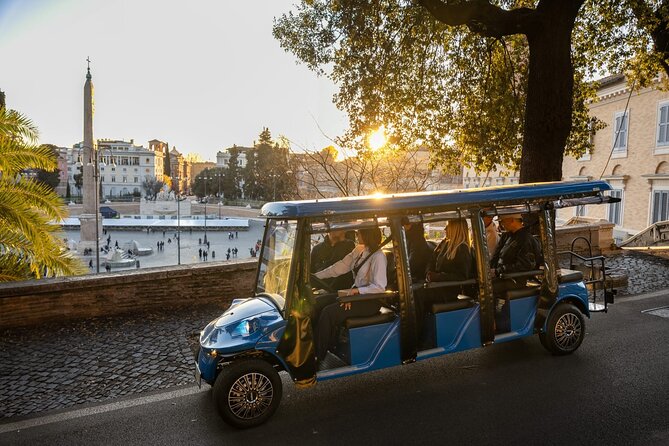
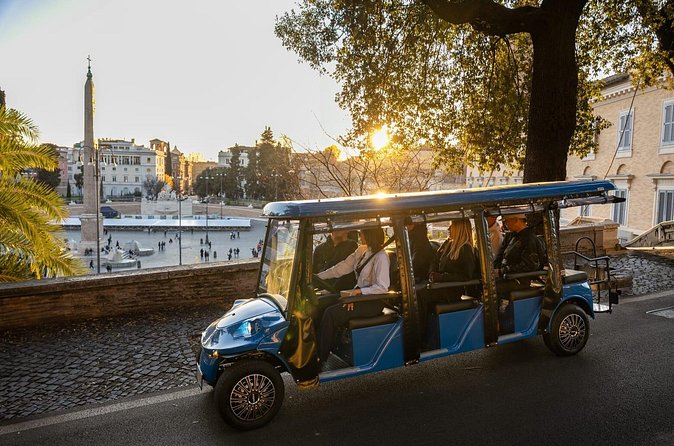
- Electric golf carts make the route feel efficient and eco-friendlier than walking
- Max 7 travelers keeps the tour from turning into a herd
- Free admission tickets are included for every major stop on the route
- Express timing means short stops, quick orientation, then move on
- English-speaking guide helps you connect the dots fast
- End at Trevi Fountain so you finish where many first-time itineraries naturally want to go
Why this electric golf cart tour makes Rome simpler
Rome can be a lot, fast. Streets are narrow, crowds are thick, and distances between top sights can add up before you know it. This tour tackles that problem head-on with an electric-powered golf cart and a route that hits major landmarks in a logical flow.
The big value for you is time. When each stop is carved out for a tight window, you get just enough to understand why each place matters and what to look for, then you move on before the day slips away. You’re not stuck in one location waiting for the perfect photo angle or the next group to thin out.
That short-stop style also shapes the experience. If you’re the type who wants to read every plaque, you’ll likely feel a little rushed. If you’re more interested in seeing the major sights, getting context, and then going off on your own later, this works well.
Also, small group matters. With a maximum of 7 people, you’re more likely to get the kind of back-and-forth questions that make landmarks click, especially when the guide connects what you’re seeing to what happened around it.
Weighing this one up? Here is how a few Rome favourites compare:
- Vatican Museums, Sistine Chapel & St. Peter’s Basilica Tour
★ 4.3 · 73,970 reviews - Vatican Museums, Sistine Chapel & St Peter’s Basilica Guided Tour
★ 4.5 · 39,149 reviews - Rome: Colosseum, Palatine Hill and Roman Forum Guided Tour
★ 4.8 · 32,814 reviews - Rome: Guided Tour of Colosseum, Roman Forum & Palatine Hill
★ 4.7 · 27,897 reviews
How the route starts: Via del Colosseo to your first big moment
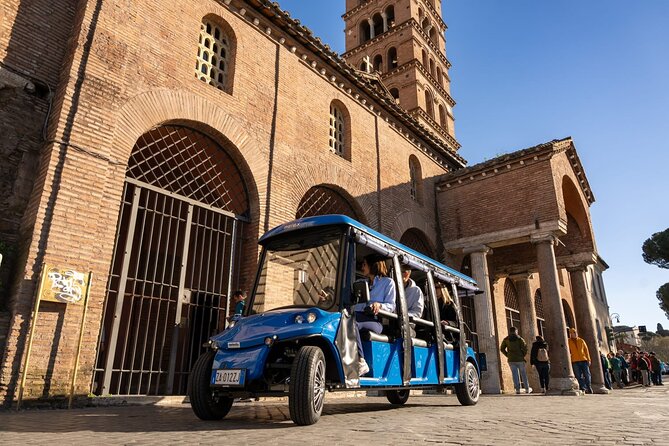
The tour’s meeting point is Via del Colosseo, 31 (00184 Roma). It’s a practical starting location because it puts you close to your first headline stop. From there, the tour heads straight into the Roman “greatest hits” mode.
I like that the start is near public transportation. It means you can build your day around it without needing a complicated plan to get to the exact meeting spot. And since the tour uses a mobile ticket, you can keep things simple on your phone instead of hunting for printed paper in your bag.
This is also where you’ll feel the time-bounded nature of the day. The cart keeps moving, and the guide’s job is to give you a strong mental map quickly. If you’re the kind of visitor who often stands in front of a famous building and thinks, okay, what am I supposed to notice first, you’ll probably appreciate how this tour frames your priorities.
Colosseum in 20 minutes: what you can actually get out of it
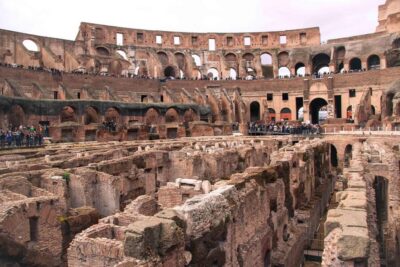
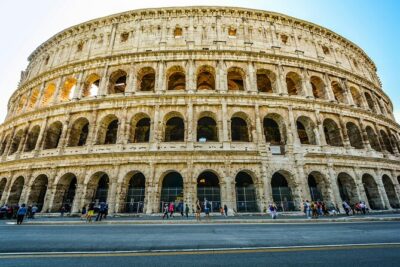
Your first stop is the Colosseum, with about 20 minutes allocated and an admission ticket included. Even if you’ve seen photos, seeing it in person is different. The tour description emphasizes that it’s one of the few mostly intact structures from the Roman Empire, tied directly to ancient Rome’s architectural and engineering power.
In a 20-minute window, you’re not going to become a full-on Roman architecture scholar. But you can do the useful part: understand its scale, recognize why it survived, and get pointed toward the features that make it more than just a famous backdrop.
A practical consideration: plan your expectations for photos. With limited time, you’ll want to decide ahead of time whether you care more about wide shots that show the structure’s size or closer angles that highlight details. Either is fine, just don’t try to do both.
You’ll likely find this stop is where the rest of the route starts to feel connected. Once your brain has the Colosseum as the anchor, the next entertainment-and-power sites start to make a lot more sense.
Circus Maximus in 10 minutes: entertainment at full speed
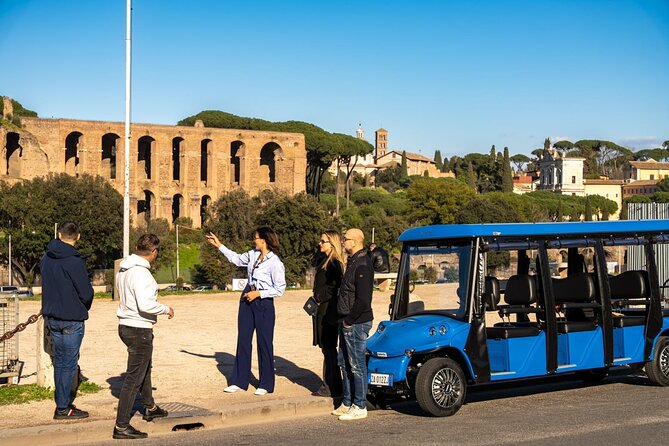
Next up is Circus Maximus, with about 10 minutes and free admission included. This place mattered as a major entertainment center in ancient Rome, hosting chariot races, animal fights, athletic competitions, and religious ceremonies.
Ten minutes sounds short. But for a first-timer, it can be enough to get the idea: this wasn’t a small venue for a niche event. It was built for crowds and spectacle, with multiple kinds of shows rolling through the calendar.
The drawback here is obvious: you may not feel like you fully explored the site. The value is that you get orientation and story. In a time-efficient tour, that orientation is what helps you later when you walk around on your own and notice things you would have otherwise missed.
If you’re someone who likes to picture everyday life in ancient cities, this stop is a good one. It shifts you from “buildings and monuments” into “how Romans spent their attention.”
Bocca della Verità in 10 minutes: the Mouth of Truth moment
Then you reach Bocca della Verità, also around 10 minutes, with an included ticket. It’s an ancient Roman marble mask located in the portico of the Santa Maria in Cosmedin church. It’s famous for legends and historical significance, which is exactly why it stays on so many Rome lists.
The practical upside of the short stop: you can experience the legend without turning it into a long detour. This is the kind of place where the fun is partly in the symbol and the story around it, not only in examining the artifact like a museum setting.
One consideration: because time is limited, don’t rely on this stop to satisfy every curiosity you might have. If you want deeper context, treat this as your jump-off point. After the cart ride ends, you’ll have plenty of time to expand on your own at a comfortable pace.
Area Sacra di Largo Argentina in 10 minutes: Caesar’s assassination site
Your next stop is Area Sacra di Largo Argentina (the tour area is described as Largo di Torre Argentina). You get about 10 minutes, plus free admission. This site is significant because it includes remains of four Roman Republican temples and parts of Pompey’s Theatre, where Julius Caesar was assassinated on the Ides of March in 44 BC.
This stop has a heavy storyline, even though you’re only there briefly. The value in the short format is getting the anchor facts in place. Once you know Caesar’s assassination connects to this area, you’ll start looking at the ruins with a different mindset than pure “cool old stones.”
The main drawback is that you might want more time. Ruins like this are made for patient walking and slow reading. But if your goal is to see the core Roman power locations in one trip, the tour does that job by keeping the story moving.
If you’re trying to balance emotion with efficiency, this stop tends to be a good middle point. It gives you intensity without derailing your whole day.
Piazza Venezia and ancient city views: where streets start making sense
After the ruins, you’ll roll into Piazza Venezia / Ancient City with about 15 minutes. Piazza Venezia is described as a central hub where major thoroughfares intersect, including Via dei Fori Imperiali and Via del Corso.
I like this type of stop because it helps you mentally connect the city grid. When you see a major square that functions like a crossroads, it becomes easier to understand where other sights sit in relation to each other. It’s also useful after you’ve hopped through several sites quickly; your brain needs a reset point.
With 15 minutes, you can get your bearings and take in the square as a navigation landmark. If you’re planning your own time after the tour, this stop can be a practical guide for where to head next.
The only caution: because it’s more of a positioning stop than a single monument, you’ll want to focus on how it links the route together rather than expecting it to feel like a museum moment.
Piazza Navona in 20 minutes: a classic Roman oval
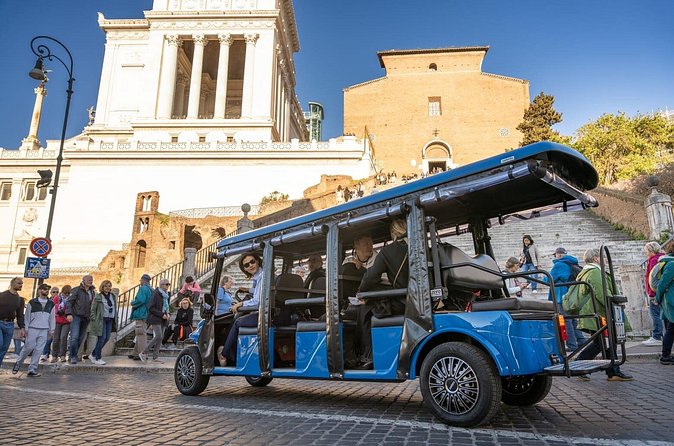
Next comes Piazza Navona with about 20 minutes and free admission included. The square matters because it was originally built in the 1st century AD as the Stadium of Domitian, a venue for athletic competitions and gladiatorial shows, which shaped its elongated oval layout.
This stop is a favorite for many first-time visitors because squares in Rome aren’t just places you pass through. They’re where the city’s outdoor energy becomes real, and the architecture of the space shapes how you experience it.
The time window is short, but it’s enough to notice the oval layout and grasp why the square feels the way it does. That’s the kind of context that makes a popular place more meaningful than just a photo stop.
One drawback: if you’re after a slow wandering experience, 20 minutes can feel like a sprint. The upside is you’ll finish this section with a stronger sense of place, especially if you plan to spend more time in central Rome after the tour.
Pantheon in 15 minutes: Greek and Roman design logic
You’ll then move to the Pantheon, about 15 minutes, with admission ticket included. It’s described as one of the best-preserved monuments of ancient Rome, and a testament to Roman architectural genius. The key point you’ll take from the tour is the innovative design that combines Greek and Roman styles, and its influence on countless buildings throughout history.
Fifteen minutes isn’t enough for a full architectural study, but it can be enough to understand the big idea: this isn’t just an old building, it’s a design breakthrough that influenced later architecture. If you’re the type who enjoys spotting design patterns across centuries, this stop can feel like a direct line from ancient creativity to later city life.
A practical consideration: because the tour is time-efficient, you’ll need to choose your focus. Look for the overall design first, then let the details make sense after. If you jump straight to tiny observations, you might miss the main impression.
Trevi Fountain in 20 minutes: ending where stories want to go
The final stop is Trevi Fountain, about 20 minutes, with the tour ending at Piazza di Trevi. The fountain is described as one of the most famous fountains in the world and a symbol of Rome’s architectural and engineering prowess. It marks the end point of the Aqua Virgo aqueduct, dating back to 19 BCE, and it’s still in use today as the Aqua Vergine.
This is a smart ending point. Even if you’ve already seen Trevi photos before, it’s the kind of place where your first-person experience often feels bigger than the pictures. And because the tour ends here, you’re free to linger after the cart ride without needing to coordinate transport.
The downside is the one you’d expect from a world-famous finish: Trevi is popular. So use the 20 minutes for your initial visit, then decide whether you want to stay longer on your own schedule.
Also, because your guide will be there until the end, you can ask for practical next-step ideas right at the finish line. That matters, especially if you want to keep the day feeling smooth instead of abruptly chaotic.
Price and value: is $118.82 a smart use of time?
The price is $118.82 per person for about two hours, offered in English, with a group size maximum of 7. For that money, you’re paying for three things: an electric cart ride, a guided narrative that connects the sights fast, and included admission tickets for the stops on the route.
If you were doing this independently, you’d still pay for entrance tickets at major attractions, and you’d spend extra time figuring out transportation and sequencing. The tour’s value is that it collapses those decisions into one plan. You show up, you go, and you get context while you’re moving.
Where it might not be the best fit is if you want long visits, museum-style pacing, or you already know Rome’s highlights well enough that you’d rather spend your money on deeper independent exploration. In that case, a self-guided route might feel more flexible.
But for many people, especially first-timers or time-crunched travelers, this is a very clean way to buy time and clarity. It’s less about collecting every inch and more about getting the essentials with guidance.
Who this tour suits best (and who should consider other options)
This tour is a strong match if you:
- want to hit major ancient Rome landmarks in a short window
- prefer a small group of up to 7 people
- like the idea of electric transport that helps you cover more ground
- want included tickets rather than figuring out entrances mid-trip
- enjoy an early evening option that keeps your daytime open for other plans
It may be less ideal if you:
- need long, quiet time at ruins or monuments
- want a slow, deeply detailed museum pace
- plan to do lots of additional nearby stops on your own during the tour time window
One more tip that can affect your experience: your guide. One guide named Fede has been noted for adding extra places when his local knowledge suggests a good fit. You can’t count on specific extra stops every time, but it’s a sign of how much the guiding can shape what you see.
Should you book this Golf Car Tour Rome?
If your goal is to see Rome’s biggest ancient landmarks fast, with included admission and a guide to connect the story pieces, I think this tour is worth serious consideration. The price makes sense as a time-saver, especially when you factor in the included tickets and the electric cart transport.
Book it if you like a guided express style and you plan to spend the rest of your day exploring on your own after. Consider something slower if you know you’ll hate being on a clock.
If you’re trying to get your bearings fast and you want the route to carry you from Colosseum to Trevi without constant decision-making, this is a practical, satisfying way to do it.
More Tours in Rome
- Vatican Museums, Sistine Chapel & St. Peter’s Basilica Tour
★ 4.3 · 73,970 reviews - Vatican Museums, Sistine Chapel & St Peter’s Basilica Guided Tour
★ 4.5 · 39,149 reviews - Rome: Colosseum, Palatine Hill and Roman Forum Guided Tour
★ 4.8 · 32,814 reviews - Rome: Guided Tour of Colosseum, Roman Forum & Palatine Hill
★ 4.7 · 27,897 reviews - Rome: Colosseum, Roman Forum and Palatine Hill Guided Tour
★ 4.5 · 23,903 reviews - Rome: Colosseum Arena Floor, Palatine & Forum Guided Tour
★ 4.5 · 20,180 reviews
More Tour Reviews in Rome
- Vatican Museums, Sistine Chapel & St. Peter’s Basilica Tour
★ 4.3 · 73,970 reviews - Vatican Museums, Sistine Chapel & St Peter’s Basilica Guided Tour
★ 4.5 · 39,149 reviews - Rome: Colosseum, Palatine Hill and Roman Forum Guided Tour
★ 4.8 · 32,814 reviews - Rome: Guided Tour of Colosseum, Roman Forum & Palatine Hill
★ 4.7 · 27,897 reviews - Rome: Colosseum & Forum with Audio Guide App -Optional Arena
★ 4.2 · 24,770 reviews - Rome: Colosseum, Roman Forum and Palatine Hill Guided Tour
★ 4.5 · 23,903 reviews
Just added to our Rome reviews





Tours, compared.
 ★ 4.3Vatican Museums, Sistine Chapel & St. Peter’s Basilica TourFrom $7273,970 reviews
 ★ 4.5Vatican Museums, Sistine Chapel & St Peter’s Basilica Guided TourFrom $2239,149 reviews
 ★ 4.8Colosseum, Palatine Hill and Roman Forum Guided TourFrom $5232,814 reviews
 ★ 4.7Guided Tour of Colosseum, Roman Forum & Palatine HillFrom $5527,897 reviews
 ★ 4.5Colosseum, Roman Forum and Palatine Hill Guided TourFrom $5923,903 reviews
 ★ 4.5Colosseum Arena Floor, Palatine & Forum Guided TourFrom $4120,180 reviews
 ★ 4.3Vatican Museums, Sistine Chapel and Basilica TourFrom $7316,039 reviews
 ★ 4.7Colosseum Arena, Palatine Hill & Forum Guided TourFrom $8414,510 reviews