
Reviewed · WALKING TOURS
Ghosts Legends and Mysteries of Rome Walking Tour
Rome feels different after dark. This 90-minute evening walk turns famous spots along the Tiber and Central Rome into a story circuit of legends, mysteries, and church-and-state dread. I love the short, walkable pace (you won’t be stuck all night) and the way the tales stay tied to real, specific landmarks. One possible drawback: this is not a jump-scare ghost hunt, so if you want pure spooky vibes, you’ll get more eerie storytelling than theatrical scares.
What makes it work for your night is the mix of timing, group size, and guide style. Tours run at 8:00 pm, you stay with a licensed guide, and the group is capped at 24, which helps on crowded streets when you’re trying to feel safe after dark. Guides I’ve heard named include Ivan and Simone, and they tend to keep the walk moving with clear pointing, pacing, and story delivery.
In This Review
- Key things to know before you go
- Price and value: what $3.63 really means
- The 8:00 pm start: timing, meeting spot, and how to stay together
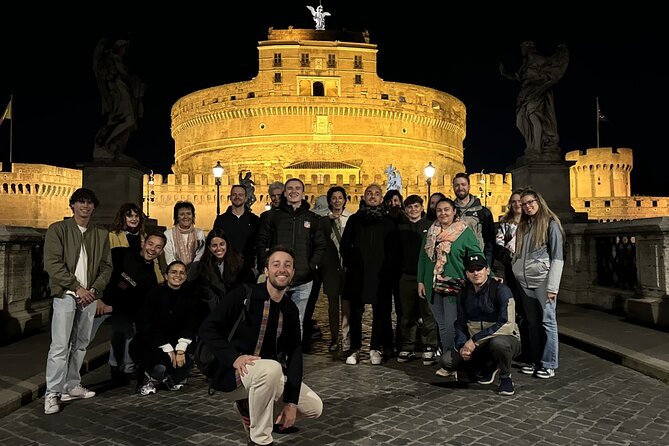
- Castel Sant’Angelo: from mausoleum to fortress to story powerhouse
- Ponte Sant’Angelo: angel statues as a bridge between worlds
- Via Paola: the story of the kindest executioner
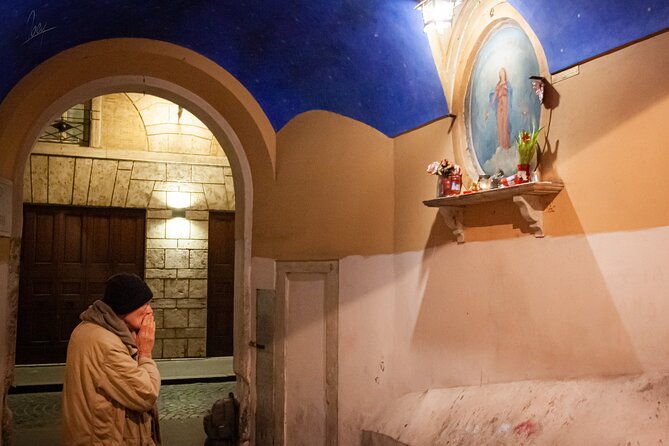
- Arco dei Banchi: a haunted arch and prayer for a controversial exorcist
- Largo Ottavio Tassoni: Benvenuto Cellini’s home and the darker edge of genius
- Vicolo della Moretta: Giulia Tofana and the fear behind whispered rumors
- Via di Monserrato and Corte Savella: the prison that executes inside its walls
- Via Giulia: where Renaissance elegance meets the tour’s growing shadow
- Santa Maria dell’Orazione e Morte: Baroque death imagery that hits hard
- Fontana del Mascherone: a grim fountain tied to a modern crime
- Campo de’ Fiori: end at the square where the night turns lively
- Guide style matters: Ivan, Simone, and why delivery changes everything
- What kind of traveler should book this?
- Should you book the Ghosts Legends and Mysteries of Rome Walking Tour?
- FAQ
- What time does the tour start?
- How long is the Ghosts Legends and Mysteries of Rome Walking Tour?
- Where does the tour meet and where does it end?
- Is the tour offered in English?
- Do I get a mobile ticket?
- Is admission included at the stops?
- Is it a tip-based tour?
- Is it suitable for children?
- How many people are in a group?
- What is the cancellation policy?
Key things to know before you go
- It’s a storytelling tour, not a paranormal investigation: think legends, mysteries, and dark history, not seances or equipment.
- Night-friendly route with famous landmarks: Castel Sant’Angelo, Ponte Sant’Angelo, Via Giulia, and Campo de’ Fiori are all part of the route.
- Every listed stop is viewable for free: you’re not paying entry fees at the sights along the way.
- Bring yourself for a low-cost base and a tip at the end: tips are expected since that’s how guides work.
- Content warning matters: the tour includes CSA topics and graphic information, and it’s not recommended for kids under 12.
- You’ll be walking the whole time: it’s an outdoor nighttime experience, so rain gear can be smart.
Price and value: what $3.63 really means
At $3.63 per person, this tour is priced so low it feels like you’re mostly paying for a guided story route and a spot in the group. The real economic model here is that it’s tip-based, so the experience cost doesn’t end at checkout. If you plan to tip generously and you’re okay with a storytelling format, it can be a great value for a one-night, time-efficient activity.
For your money, you’re getting a licensed tour guide and a structured route that focuses on dark legends tied to specific locations. Also, the stops are marked as admission ticket free, which helps keep the total out-of-pocket cost from creeping up as the night goes on.
One practical note: low upfront pricing can tempt people to treat it casually. Don’t. Put on comfortable shoes, keep your head up for directions, and listen closely when the guide talks—because this kind of tour only works if you lean into the stories.
Worth a look next to this Rome booking:
- Rome: Guided Food Walking Tour with Wine in Trastevere
★ 4.9 · 3,105 reviews - Rome: Trastevere & Campo de Fiori Street Food Walking Tour
★ 4.9 · 2,768 reviews - Rome: Paranormal Night Walking Tour & Secret Backstreets
★ 4.9 · 1,921 reviews - Rome: Trastevere Street Food Walking Tour with Local Expert
★ 4.8 · 1,784 reviews
The 8:00 pm start: timing, meeting spot, and how to stay together
This tour starts at 8:00 pm at Lungotevere Castello, 50, 00193 Roma RM and finishes at Campo de’ Fiori (P.za Campo de’ Fiori, 00186 Roma RM). That end location is convenient: it’s a major square with strong public-transport connections and taxi stands, so you can slide into dinner plans without a long slog back across town.
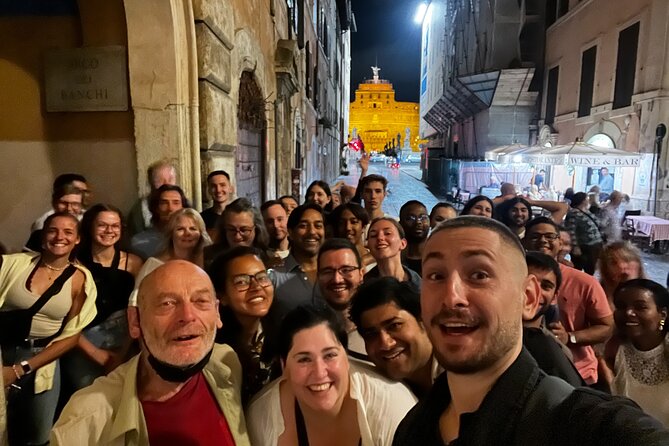
The route is built for the evening. Walking after dark in Rome means you’ll see landmarks under softer light, and the “group safety” effect is real—especially when streets get busy. Also, the tour is capped at 24 travelers, which usually keeps the guide from turning into background noise.
Still, evening tours can be a hearing test in any city. Plan to stand close enough to catch details, and don’t drift too far from the group while the guide is talking.
Castel Sant’Angelo: from mausoleum to fortress to story powerhouse
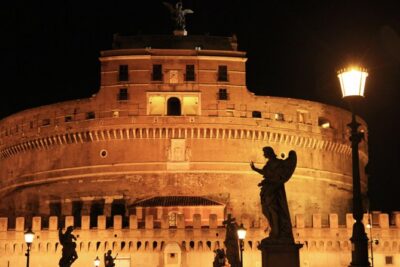
The tour begins with Castel Sant’Angelo, a cylindrical landmark on the Tiber. It started as Emperor Hadrian’s mausoleum, then it shifted roles over the centuries into a fortress, a papal residence, and a prison. That mix matters because it’s basically an origin story for why Rome’s “dark tales” keep orbiting this place.
For you, the value is the setting. When a guide links multiple eras—imperial power, church authority, and incarceration—you get a clearer picture of how the city’s institutions tangled together. And because it’s iconic and visually striking, you’re not hunting for atmosphere; the building supplies it.
The stop is short, around 15 minutes, and the tour keeps moving. That’s a plus if you’re trying to fit Rome experiences into a packed schedule, but it also means you won’t have time to linger like you would on a museum visit.
Ponte Sant’Angelo: angel statues as a bridge between worlds
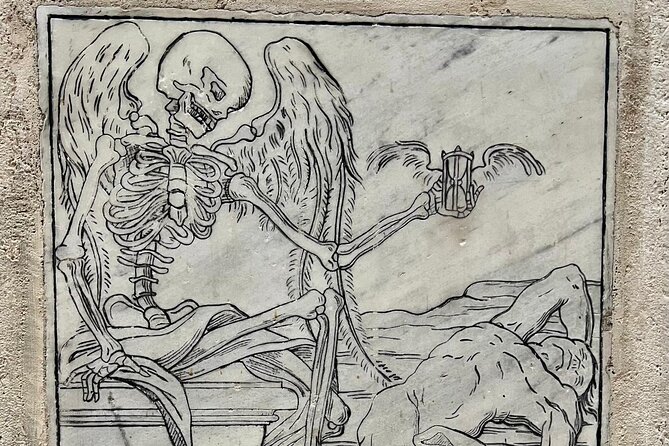
Right after Castel Sant’Angelo, you head to Ponte Sant’Angelo. By day, it’s a famous bridge. At night, it becomes a literal storytelling stage.
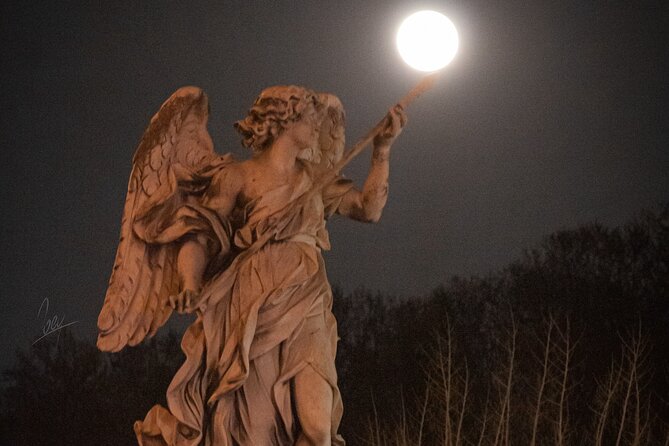
The key detail here is the sequence of angelic statues on the bridge—ten angels carved by Bernini and his students—each carrying symbols of Christ’s suffering. The guide’s framing turns those carvings into sentinels watching over a place that historically links to the fortress beyond. Even if you don’t buy into ghosts, this is still a chilling way to read religious art as emotional evidence of the past.
This stop lasts about 10 minutes. It’s enough time to look closely at the statues and absorb the narrative without turning into a traffic-stopping detour.
Via Paola: the story of the kindest executioner
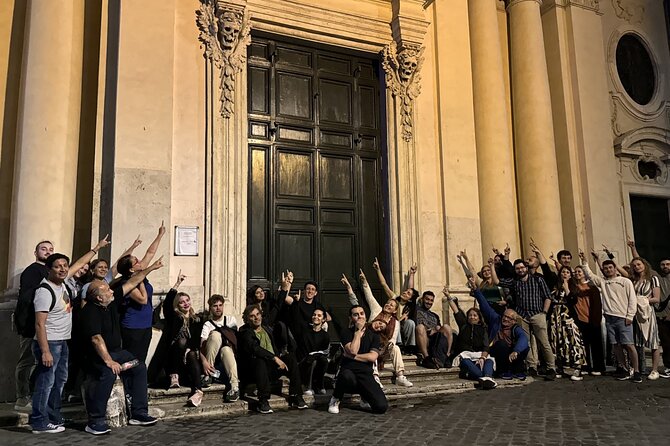
Next comes Via Paola, where the tour focuses on the house of what’s described as the kindest executioner in Rome. That alone is a hook, but it also does something useful for your understanding: it shows how moral labels get complicated in history.
It’s a quick stop, about 10 minutes, which fits the tour’s overall rhythm. Expect the guide to connect the role—executioner—with the surprising human details that rumor and legend attach to certain figures.
If you like your “ghost” content grounded in character-driven stories, this is one of the more psychologically interesting stops. If you’re looking for spooky set pieces, it’s more about the tale than the architecture.
Arco dei Banchi: a haunted arch and prayer for a controversial exorcist
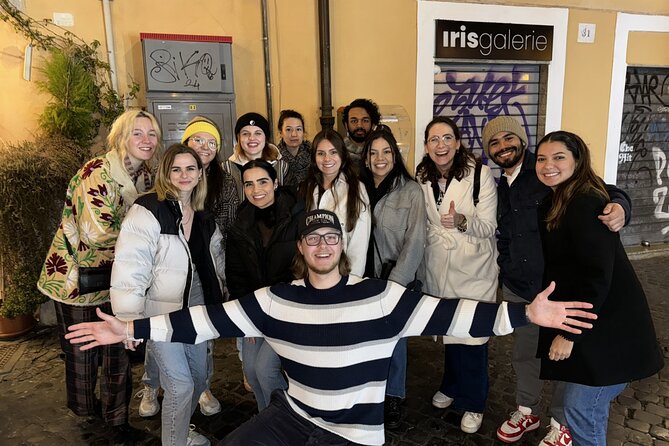
At the Arco Dei Banchi, the tour brings together two ideas: a haunted arch and prayer associated with a controversial exorcist in Rome. Arches are ideal for this kind of story because they’re natural frames. You’re physically stepping into a passage while the guide explains why people feared what they couldn’t control.
This stop is short—around 5 minutes—so don’t expect a lecture. You’re there to catch the gist and look at the details the guide points out.
Largo Ottavio Tassoni: Benvenuto Cellini’s home and the darker edge of genius
The walk continues to Largo Ottavio Tassoni, 319, tied to Benvenuto Cellini, described as a 16th-century artistic genius with a reputation that’s also described as involving serious violence. The tour uses this contrast—talent versus cruelty—to underline a theme Rome returns to again and again: power often comes wrapped in moral mess.
This is another 5-minute stop. It can feel brief, but the short timing helps keep the tour from turning into a long history seminar. It also keeps your night from collapsing into fatigue.
One word of advice: if you’re sensitive to heavy subject matter, decide in advance how you want to process it. Rome’s dark legends aren’t sanitized, and this tour doesn’t try to be.
Vicolo della Moretta: Giulia Tofana and the fear behind whispered rumors
At Vicolo della Moretta, the tour focuses on the haunted house of Giulia Tofana, plus stories tied to the holy inquisition. Tofana’s name shows up in darker European folklore, and here the guide uses that lore to create an atmosphere of secrecy and fear—exactly what makes an alley like this feel like more than just a passageway.
This stop is about 10 minutes. The architecture of narrow streets is a built-in amplifier for suspense: you’re standing in a corridor, not in an open square, so the stories land closer to you.
Via di Monserrato and Corte Savella: the prison that executes inside its walls
Then you reach Via di Monserrato and Corte Savella, described as the only prison in Rome authorized to execute convicts inside its walls. That is brutal history, and the tour connects it to Beatrice Cenci, who is described as being tortured before her execution.
This stop is about 5 minutes. Short, but weighty. The point isn’t comfort; it’s context—why certain locations in Rome keep showing up in grim legend cycles.
For your planning: if you’re pairing this tour with dinner, consider eating first or bringing a light snack. Some people find “dark history on an empty stomach” harder than they expected.
Via Giulia: where Renaissance elegance meets the tour’s growing shadow
A shift happens at Via Giulia, a historic street designed by Bramante in the early 16th century for Pope Julius II. The tour uses this segment to show old Rome’s aristocratic life and quiet elegance—Renaissance palaces, ivy-covered facades, and hidden courtyards.
Why include this on a ghost tour? Because contrast creates meaning. When you see beauty right after execution stories and inquisitorial fear, you get a stronger sense of how normal daily life coexisted with power and punishment.
This stop is about 5 minutes, so it’s more about orientation—get your bearings fast—than a long photo session.
Santa Maria dell’Orazione e Morte: Baroque death imagery that hits hard
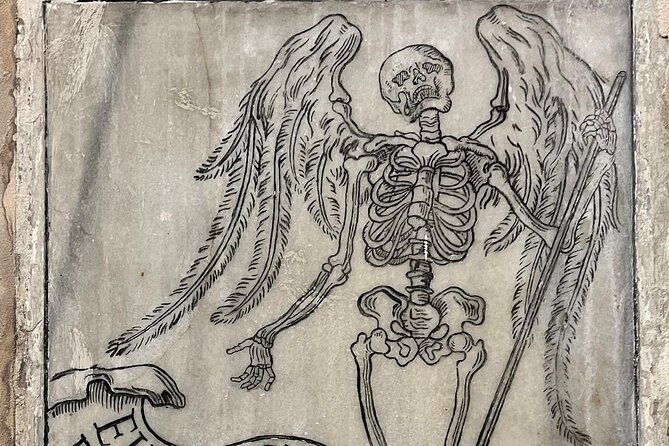
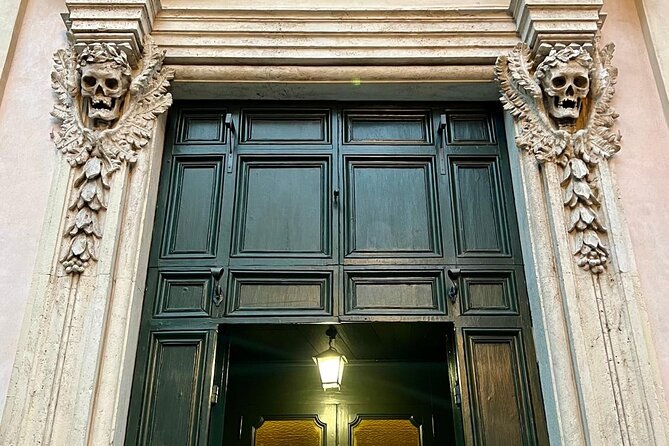
Next is Chiesa di Santa Maria dell’Orazione e Morte, described as a Baroque church built by a secretive confraternity dedicated to retrieving and burying abandoned corpses. The tour frames the interior as filled with skulls, bones, and symbols of death—making the boundary between living and dead feel uncomfortably thin.
This is the kind of stop that doesn’t just entertain; it confronts. It also explains why the tour includes content warnings: when a site is intentionally about death imagery, you should expect it to feel graphic.
This stop is about 10 minutes. If you’re the type who wants a “gentle spooky” night, you might find this one intense.
Fontana del Mascherone: a grim fountain tied to a modern crime
At Fontana del Mascherone, you’ll see a massive stone mask that mysteriously spouts water from its grimacing mouth. The tour also connects this fountain to a crime: John Paul Getty III was kidnapped.
This is a neat bridge between legend-logic and modern reality. It’s still “mystery” in the sense of unsettling events, but not in a paranormal way.
This stop is about 5 minutes. Short enough to keep pace, long enough for the guide to point out what to notice in the stonework and why it matters to the story.
Campo de’ Fiori: end at the square where the night turns lively
The final stop is Campo de’ Fiori, ending at this well-connected square. By day it’s known for a lively market, and by night it becomes a hub of bars and restaurants—an energetic place to land after a darker walk.
The tour connects Campo de’ Fiori to executions during the Inquisition through the shadow of Giordano Bruno’s statue. So you end not with a dramatic climax, but with a Rome-style reality check: even cheerful nightlife has a past you can’t ignore.
This stop is about 10 minutes. It’s also where you can safely reorient—grab a drink, meet a friend, or continue your evening. Since the tour ends here, you’re not left stranded on a random street.
Guide style matters: Ivan, Simone, and why delivery changes everything
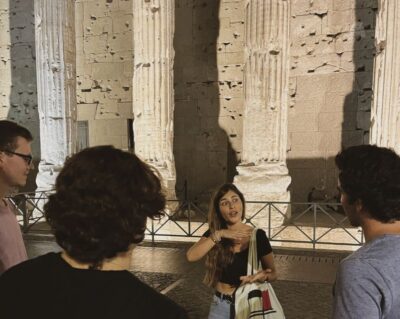
A pattern shows up in how people talk about this tour: the guide’s storytelling style can make or break the experience. Guides like Ivan are repeatedly mentioned for enthusiastic, clear delivery and for making the walk feel fast because the stories keep arriving in a steady flow. Simone is also mentioned as well rehearsed, researched, and professional, with humor that keeps the mood light even when the topics stay dark.
The counterpoint is also important. When people struggle to hear a guide—fast speech, accent, or simply not holding a sign consistently—the tour’s “spooky” effect drops quickly. This is less about the content and more about the mechanics: your ability to follow turns, hear names, and catch the key details.
My practical advice: arrive a little early, stand where you can see the guide, and don’t assume you’ll magically understand every word from the back of the group.
What kind of traveler should book this?
This tour fits best if you want:
- A short evening activity that’s easy to fit between dinner and a late stroll
- Dark legends and historical mysteries tied to real Rome landmarks
- A licensed guide and a structured route rather than wandering without a plan
You might skip it if you want:
- A true scary experience with dramatic scares or a paranormal investigation format
- A tour that’s family-friendly in tone, since it includes serious content and graphic information and isn’t recommended for kids under 12
Should you book the Ghosts Legends and Mysteries of Rome Walking Tour?
I’d book it if your ideal Rome night is: a guided walk, clear stop points, and stories that explain why certain places feel haunted even when nothing supernatural happens. The value is strong if you’re good with a tip-based model and you’re comfortable with grim history.
It’s also a smart pick for time-pressured travelers. You get a dense slice of “Rome’s darker side” in about 1 hour 30 minutes, and the route ends in Campo de’ Fiori, where you can keep moving with your own plans.
If you need the tour to be extra spooky, you should calibrate your expectations. This is more “legend + mystery + history” than “horror show.” Bring curiosity, bring comfortable shoes, and bring your willingness to look at Rome with slightly darker eyes.
FAQ
What time does the tour start?
The tour starts at 8:00 pm.
How long is the Ghosts Legends and Mysteries of Rome Walking Tour?
It lasts about 1 hour 30 minutes.
Where does the tour meet and where does it end?
It starts at Lungotevere Castello, 50, 00193 Roma RM, Italy and ends at P.za Campo de’ Fiori, 00186 Roma RM, Italy.
Is the tour offered in English?
Yes, it’s offered in English.
Do I get a mobile ticket?
Yes, the tour includes a mobile ticket.
Is admission included at the stops?
The listed stops are marked as admission ticket free.
Is it a tip-based tour?
Yes. Tips are not included, and guides work for your tips alone.
Is it suitable for children?
No. The tour includes CSA topics and graphic information, and it is not recommended for children under 12.
How many people are in a group?
The maximum group size is 24 travelers.
What is the cancellation policy?
You can cancel for a full refund if you cancel at least 24 hours in advance of the experience start time. Free cancellation is available up to 24 hours before.
If you want, tell me your travel dates and what kind of spooky you’re after (legends, torture history, or just creepy vibes), and I’ll help you decide if this is the right night for your itinerary.
More Walking Tours in Rome
- Rome: Guided Food Walking Tour with Wine in Trastevere
★ 4.9 · 3,105 reviews - Rome: Trastevere & Campo de Fiori Street Food Walking Tour
★ 4.9 · 2,768 reviews - Rome: Paranormal Night Walking Tour & Secret Backstreets
★ 4.9 · 1,921 reviews - Rome: Trastevere Street Food Walking Tour with Local Expert
★ 4.8 · 1,784 reviews - Rome: Small-Group Guided Day or Night Walking Tour
★ 4.8 · 1,009 reviews - Rome by Night Walking Tour – Legends & Criminal Stories
★ 4.5 · 1,003 reviews
More Tours in Rome
- Vatican Museums, Sistine Chapel & St. Peter’s Basilica Tour
★ 4.3 · 73,970 reviews - Vatican Museums, Sistine Chapel & St Peter’s Basilica Guided Tour
★ 4.5 · 39,149 reviews - Rome: Colosseum, Palatine Hill and Roman Forum Guided Tour
★ 4.8 · 32,814 reviews - Rome: Guided Tour of Colosseum, Roman Forum & Palatine Hill
★ 4.7 · 27,897 reviews - Rome: Colosseum, Roman Forum and Palatine Hill Guided Tour
★ 4.5 · 23,903 reviews - Rome: Colosseum Arena Floor, Palatine & Forum Guided Tour
★ 4.5 · 20,180 reviews
More Tour Reviews in Rome
- Vatican Museums, Sistine Chapel & St. Peter’s Basilica Tour
★ 4.3 · 73,970 reviews - Vatican Museums, Sistine Chapel & St Peter’s Basilica Guided Tour
★ 4.5 · 39,149 reviews - Rome: Colosseum, Palatine Hill and Roman Forum Guided Tour
★ 4.8 · 32,814 reviews - Rome: Guided Tour of Colosseum, Roman Forum & Palatine Hill
★ 4.7 · 27,897 reviews - Rome: Colosseum & Forum with Audio Guide App -Optional Arena
★ 4.2 · 24,770 reviews - Rome: Colosseum, Roman Forum and Palatine Hill Guided Tour
★ 4.5 · 23,903 reviews
Just added to our Rome reviews





Walking Tours, compared.
 ★ 4.9Guided Food Walking Tour with Wine in TrastevereFrom $1003,105 reviews
 ★ 4.9Trastevere & Campo de Fiori Street Food Walking TourFrom $512,768 reviews
 ★ 4.9Paranormal Night Walking Tour & Secret BackstreetsFrom $341,921 reviews
 ★ 4.8Trastevere Street Food Walking Tour with Local ExpertFrom $571,784 reviews
 ★ 4.8Small-Group Guided Day or Night Walking TourFrom $231,009 reviews
 ★ 4.5Rome by Night Walking Tour – Legends & Criminal StoriesFrom $141,003 reviews
 ★ 4.4Guided City Center Evening Sightseeing Walking TourFrom $46953 reviews
 ★ 4.9Small-Group City Highlights Moonlight Walking TourFrom $29949 reviews
Browse the lists this tour appears in