
Reviewed · ROME
German Verstecktes Rom im Zentrum
Rome has a second city underfoot. This 3-hour German walk pairs the famous hits with real underground stops, including a look into Piazza Navona’s ancient stadium. I also love the way the tour explains how the water network feeds the Trevi Fountain, not just the fountain itself.
The main consideration is physical comfort: you’ll move through historic streets and step into underground spaces, so wear shoes you trust on uneven ground and don’t plan to take it slow. If you want only postcard sights with zero walking and zero stairs, this route may feel like more effort than you expected.
In This Review
- Key moments you’ll feel in your camera roll
- Starting at Piazza Navona’s Quattro Fiumi Fountain
- Down Below Piazza Navona: Stadion Domitian Under Your Feet
- Between Landmarks: The Pantheon Detour That Actually Teaches
- Sant’Ignazio di Loyola and Its 3D Ceiling Trick
- Trevi Fountain: Coin Toss, Then the Water Answer
- Vicus Caprarius: The City of Water Under the Trevi Area
- Rinascente Roma Tritone: What a Department Store Has to Do With Rome
- Price, time, and what you’re really buying for $115.12
- Rain-proof Rome and why headsets matter in a small group
- Who should book this tour (and who should skip it)
- Should you book German Verstecktes Rom im Zentrum?
- FAQ
- Where does the tour start?
- Where does the tour end?
- How long is the tour?
- Is the tour in German?
- Is the group size small?
- Do we use headsets?
- Does the tour run in the rain?
- Are admission tickets included?
- What is the cancellation policy?
Key moments you’ll feel in your camera roll
- Piazza Navona’s underground Stadion Domitian: Roman sports history, down below the modern plaza
- Pantheon with church context: a quick stop that reframes what you’re looking at
- Sant’Ignazio’s 3D ceiling painting: one of those spots where the trick actually works
- Trevi Fountain coin moment, plus the water story: you learn where the water comes from
- Vicus Caprarius, the City of Water: underground remains tied to Rome’s infrastructure
- Rinascente Roma Tritone: a practical peek into what’s in a famous department store
Starting at Piazza Navona’s Quattro Fiumi Fountain
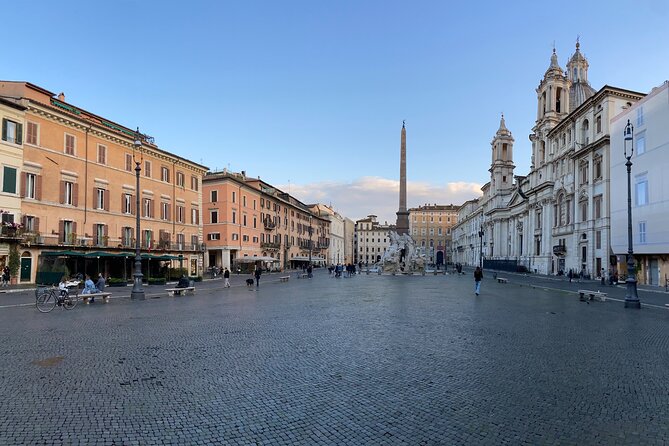
Your tour begins at the Fontana dei Quattro Fiumi, right in Piazza Navona. It’s a smart start point because the square is already a “map in stone.” From here, you can orient yourself quickly, and you’re close to the rest of the center you’ll want to see later on your own.
What I like about this opening is that it doesn’t just say here’s a famous place. Your guide sets the stage with the role of Piazza Navona in Rome’s long timeline, then you move from the surface into the kind of history that most people miss. The whole flow matters: the tour uses the big sights to frame the smaller, surprising ones, so you don’t feel like you’re bouncing around the city.
Also, this tour is built for real sightseeing conditions. It runs in rain, it stays near public transportation, and it’s a small group experience (up to 16 people). If the group is larger than four, you’ll use headsets, which helps keep the pace smooth and the explanations clear.
Weighing this one up? Here is how a few Rome favourites compare:
- Vatican Museums, Sistine Chapel & St. Peter’s Basilica Tour
★ 4.3 · 73,970 reviews - Vatican Museums, Sistine Chapel & St Peter’s Basilica Guided Tour
★ 4.5 · 39,149 reviews - Rome: Colosseum, Palatine Hill and Roman Forum Guided Tour
★ 4.8 · 32,814 reviews - Rome: Guided Tour of Colosseum, Roman Forum & Palatine Hill
★ 4.7 · 27,897 reviews
Down Below Piazza Navona: Stadion Domitian Under Your Feet
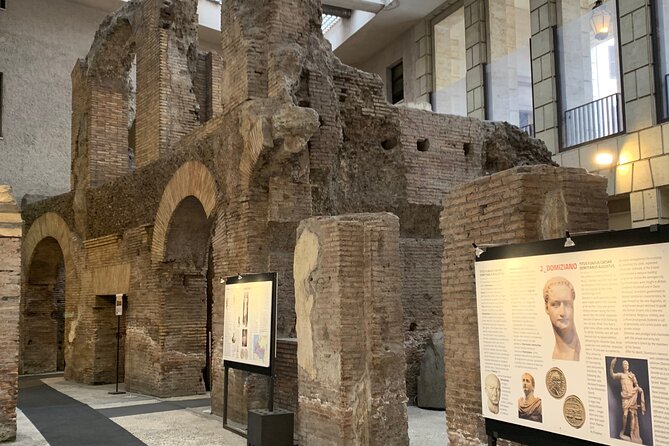
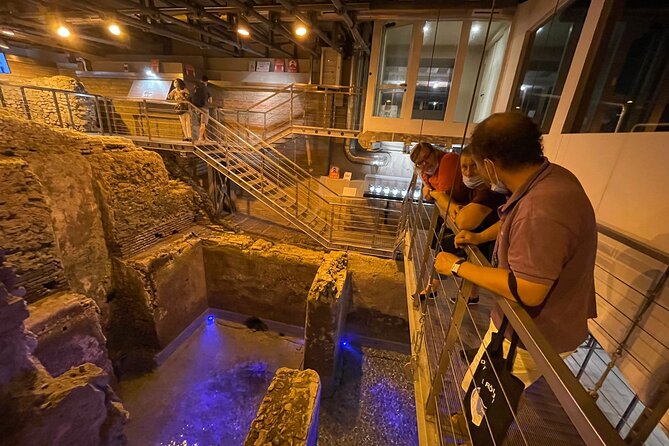
Piazza Navona looks like a masterpiece of Baroque space design on top. Underneath, it’s a totally different story. The highlight here is the visit to the underground stadium remains known as the Stadion Domitian.
This is where the tour earns its name. You’re not just standing near ruins; you’re physically confronted with what Roman life looked like when it was still functioning. And the explanations here tend to go beyond dates and names. The tour includes curious context about Roman sports culture, including the odd fact that sports events were held nude in ancient times. It’s the kind of detail that makes the underground feel less like a school lesson and more like a scene you can picture.
Time-wise, this stop is about 50 minutes. That’s enough to listen, look, and absorb the layout, but not so long that you lose the thread of the rest of the afternoon. The only thing to keep in mind is logistics: underground spaces can mean uneven floors and tighter areas. Go slow in those sections, and you’ll enjoy it more.
Between Landmarks: The Pantheon Detour That Actually Teaches
After Piazza Navona, you pass key landmarks on the way toward the Pantheon. Even if you’ve seen it from the outside before, this kind of stop helps because it answers the question you’re probably already thinking: why does this building still work so well today?
When you reach the Pantheon, you get a focused visit and curio-style stories about it in its church context. The Pantheon is famous for its dome and scale, but what makes this stop valuable is the framing. You learn how the structure connects to the present-day religious use, so you can look at details without getting stuck in trivia that doesn’t change your experience.
The stop is short (about 20 minutes), and that’s a good thing here. You’re not being asked to spend hours inside a single monument. Instead, you’re using the Pantheon as a pivot point: big, iconic, then back to smaller, less obvious discoveries.
Sant’Ignazio di Loyola and Its 3D Ceiling Trick
Next comes the Chiesa di Sant’Ignazio di Loyola, where the star of the show is the incredible 3D ceiling painting. This is exactly the kind of stop that makes you pause and re-check what you’re seeing.
In Rome, it’s easy to treat churches like backdrops. Here, the tour guides your attention to how the artwork creates depth, so it stops feeling abstract. You’re not just walking through a pretty room; you’re watching an optical illusion built with painting and perspective. If you like architecture, art, or just being surprised in a practical way, this is one of the best “small time investment, big payoff” moments on the route.
It’s only around 20 minutes, and that’s enough. You’ll get a solid look and the context you need to understand why the effect is so memorable.




Trevi Fountain: Coin Toss, Then the Water Answer
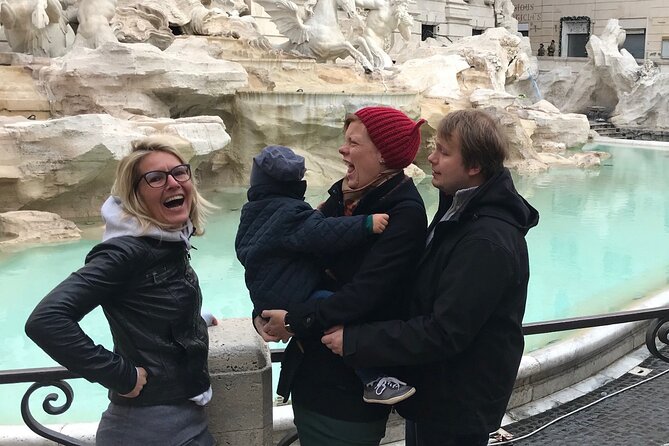
Then you reach the Trevi Fountain area, and yes, the classic coin toss is part of the experience. The tour doesn’t linger only on the postcard moment. It uses Trevi as the doorway into the real engineering story: where the water comes from.
This is one of the tour’s strongest values because it shifts your mindset. Instead of seeing Trevi as a standalone fountain in the middle of a crowd, you start seeing it as a destination at the end of a long supply chain. That changes how you notice the whole area.
One practical note: the Trevi Fountain zone is famous, so it’s rarely quiet. The group size cap and headset setup help, but you’ll still want to keep your expectations realistic for space. This is also why the tour’s underground stops matter. You get the spectacle above ground, then you escape into the infrastructure story below.
Vicus Caprarius: The City of Water Under the Trevi Area
Now you go underground again, this time near Trevi. The stop is the Vicus Caprarius, often described as the City of Water, and it’s focused on how the water reached the fountain.
This is the kind of knowledge that sticks. Once you’ve been shown how the system worked, the next time you see a fountain or aqueduct in Rome, your brain automatically connects it to the bigger network. The tour keeps it understandable instead of turning it into a lecture full of measurements you’ll never use again.
The visit is about 30 minutes. That’s a practical length: long enough to see, listen, and connect the points, but short enough that you don’t feel like you’re stuck underground for the whole afternoon. It’s also a good temperature break when the weather is warm.
As for admission costs, the information you’re given can be a bit inconsistent: some parts explicitly note admission not included, while the overall inclusions say entry tickets are in the tour price. Don’t guess. When you book, confirm what’s included for the underground stops so you can plan for exactly what you’ll pay on-site.
Rinascente Roma Tritone: What a Department Store Has to Do With Rome
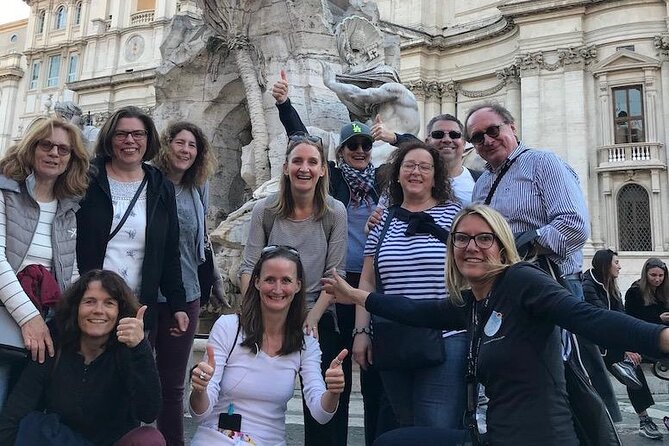
After the Roman underground, you end at Rinascente Roma Tritone near the Spanish Steps area. The tour includes a visit where you discover what’s in the famous Kaufhaus Roms, including a look into what’s down in the basement.
This might sound odd at first, but it actually makes sense. Rome is a layered city, and modern Rome is part of the story too. By the time you reach Rinascente, you’ve already seen ancient stadium remains, the Pantheon, Baroque church art, and the water system. Finishing in a well-known department store gives your brain a change of pace while still keeping you in central Rome.
The stop is about 30 minutes, and the tour includes this portion (admission listed as included for Rinascente). It’s a fun ending because it shows you a side of Rome that’s not about ruins or churches, but about modern city life.
The official tour end point is Rinascente Rome, Via del Tritone 61, close to where you’d naturally head next if you want to keep exploring.
Price, time, and what you’re really buying for $115.12
At about $115.12 per person for roughly three hours, this tour is priced for a reason: you’re paying for a guided route plus access to multiple high-impact experiences, especially the underground segments.
Here’s how I think about the value:
- You’re not just ticking off monuments. The tour builds connections between places (surface sights, then underneath, then back to a modern setting).
- Short stops help you cover more without rushing. Piazza Navona gets the deeper treatment; Pantheon and Sant’Ignazio are focused and efficient.
- Small group size improves the explanations. Max 16 people, with headsets if needed, makes it easier to hear without constant elbowing.
The only place where the value can feel unclear is admissions coverage. Since some segments are labeled admission not included while overall inclusions say tickets are included, the safest move is to confirm what’s covered before you go. If you do that, you can judge the price confidently as “a single bundled experience” instead of “a guide plus surprise add-ons.”
Rain-proof Rome and why headsets matter in a small group
One detail I really appreciate in the practical planning is that the tour runs in rain. Rome weather can flip fast, and it’s nice to have a route designed to keep moving. Underground stops also help because they don’t depend on the sky.
Headsets matter too. If the group size is above four, you’ll use them, which keeps the guide’s voice clear across distances and reduces the need to crowd in. That’s a comfort factor that often gets overlooked in tour descriptions, but it affects your enjoyment more than people think.
Finally, the tour ends near major foot-traffic areas. That means you can easily continue your day without long transit plans.
Who should book this tour (and who should skip it)
This is a great fit if you want Rome in a way that feels structured but not stiff. You’ll like it if you enjoy:
- learning how famous sites work, not just seeing them
- the story behind Trevi, especially the water supply angle
- the payoff of underground history in a short time
It’s also a strong choice for people who like guides with energy and good communication. Guides such as Mira, Janina, Giancarlo, Annett, Max, Donato, and Jutta are mentioned in connection with this kind of route, and the common thread in feedback is clear explaining, good discussion, and a knack for making the underground and legends feel understandable.
You might want to skip this tour if you:
- can’t handle steps or enclosed underground spaces
- want a long, museum-style experience with lots of free wandering time
- prefer only the most famous attractions with minimal walking
Should you book German Verstecktes Rom im Zentrum?
My call: yes, if your goal is to see central Rome in a smarter way than the usual surface-only route. The biggest reason is the underground-to-water narrative. Piazza Navona’s Stadion Domitian and Vicus Caprarius turn Rome from a list of buildings into a working system you can picture.
Also, the pacing feels right for a first or second pass through the center: you get icons (Pantheon, Trevi), a church with a real visual trick (Sant’Ignazio), and then two underground experiences that most people would miss.
Just do one thing before you go: confirm which admission tickets are covered for the underground stops. Once that’s clear, you’re paying for a guided story with strong stops and a memorable ending at Rinascente.
FAQ
Where does the tour start?
The tour starts at Fontana dei Quattro Fiumi in Piazza Navona (Piazza Navona, 90, 00186 Roma).
Where does the tour end?
The tour ends at RINASCENTE Rome, Via del Tritone 61, 00187 Roma, near the Spanish Steps.
How long is the tour?
The duration is about 3 hours.
Is the tour in German?
Yes, it is a deutschsprachige tour.
Is the group size small?
Yes. The tour has a maximum of 16 travelers.
Do we use headsets?
Headsets are needed if there are more than 4 participants.
Does the tour run in the rain?
Yes, the tour takes place even if it rains.
Are admission tickets included?
The information says admission tickets are included in the tour price, but some specific stops also note that admission tickets are not included. Check your booking details so you know what’s covered.
What is the cancellation policy?
You can cancel up to 24 hours in advance for a full refund.
More Tour Reviews in Rome
- Vatican Museums, Sistine Chapel & St. Peter’s Basilica Tour
★ 4.3 · 73,970 reviews - Vatican Museums, Sistine Chapel & St Peter’s Basilica Guided Tour
★ 4.5 · 39,149 reviews - Rome: Colosseum, Palatine Hill and Roman Forum Guided Tour
★ 4.8 · 32,814 reviews - Rome: Guided Tour of Colosseum, Roman Forum & Palatine Hill
★ 4.7 · 27,897 reviews - Rome: Colosseum & Forum with Audio Guide App -Optional Arena
★ 4.2 · 24,770 reviews - Rome: Colosseum, Roman Forum and Palatine Hill Guided Tour
★ 4.5 · 23,903 reviews




