
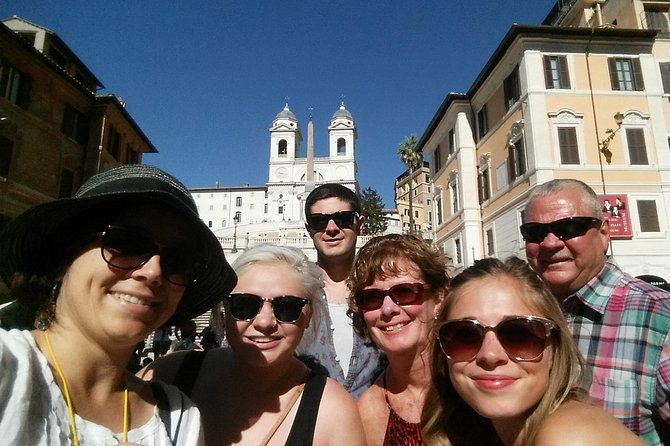
Reviewed · WALKING TOURS
Essential Walking Tour in Rome
Three hours is not enough for Rome.
This 2.5-hour highlights walk is built for speed and clarity, so you come away with a mental map of the city’s most famous sights—Trevi, the Spanish Steps, the Pantheon, plus Piazza Navona and lively piazzas. I really like the art historian guide angle, with explanations that make the buildings feel human, not just postcard-worthy. I also like that the group is kept small (up to 10), which usually means you can actually ask questions and keep moving at a pace that doesn’t feel rushed.
One possible catch: you’ll be walking a lot, and the dress code for churches and selected museum stops can be annoying in summer. Plan for covered knees and shoulders (no shorts or sleeveless tops), or you risk being turned away.
In This Review
- Key things I’d watch for
- First step: what this tour does better than DIY
- Where the walk starts: Campo de’ Fiori’s chaos, on purpose
- Piazza Navona: why Bernini’s Four Rivers makes people stare
- Trevi Fountain: the coin toss ritual, plus what’s behind the fame
- Campo de’ Fiori again: where the tour teaches you to look
- Pantheon: the best-preserved temple stop that earns its hype
- Spanish Steps: the square answer to the stairs question
- Piazza Farnese: an embassy facade with a big-name backstory
- Pace and group size: why the walk feels personal
- Timing: morning vs afternoon departures (and why it matters)
- What’s included (and what’s not) so there are no surprises
- Dress code and weather: plan for Rome’s rules
- Value check: does $355.75 make sense for 2.5 hours?
- Should you book this Essential Walking Tour in Rome?
- FAQ
- What are the main sights on this walking tour?
- How long is the tour?
- Is Pantheon entry included?
- Where do I meet the guide and where does the tour end?
- What should I wear or bring?
- How big is the group?
- Can I cancel and get a refund?
Key things I’d watch for
- Small group size (max 10) helps the guide answer questions and manage the pace.
- Pantheon entry is included so you don’t burn time lining up or hunting the right entrance.
- Choice of morning or afternoon departure lets you match Rome’s heat and your schedule.
- A fast route through the classics (Navona, Trevi, Spanish Steps) is perfect for a first visit.
- Comfortable shoes are a must; the walking adds up even though the stops are short.
- Dress code matters at worship sites and selected museums, so pack accordingly.
First step: what this tour does better than DIY
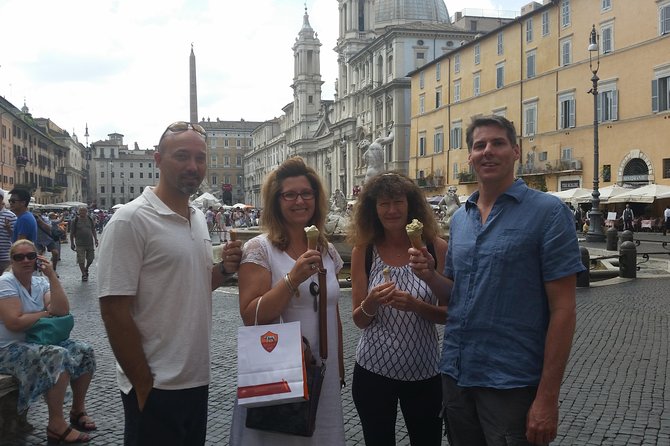
This is the kind of tour I love when you don’t have many hours left in Rome. You get the headline stops—Piazza Navona, Fontana di Trevi, the Pantheon, the Spanish Steps, and Piazza Farnese—without needing to figure out the best route, timing, and entrances yourself. The payoff is mental. By the time you’re done, Rome’s layout starts to make sense in your head.
The other reason this works is the guide style. From the guide names people mention most (Alessandra, Emma, Francesca, Simone, Damiano, and Angelica), the common thread is storytelling that connects art, architecture, and everyday Roman life. You’re not just hearing dates and descriptions; you’re getting context for why things look the way they do.
If you’re the type who likes to stop often and wander on your own, this might feel structured. But if you want a high-signal introduction that respects your time, it’s a smart way to spend 2.5 hours.
Worth a look next to this Rome booking:
- Rome: Guided Food Walking Tour with Wine in Trastevere
★ 4.9 · 3,105 reviews - Rome: Trastevere & Campo de Fiori Street Food Walking Tour
★ 4.9 · 2,768 reviews - Rome: Paranormal Night Walking Tour & Secret Backstreets
★ 4.9 · 1,921 reviews - Rome: Trastevere Street Food Walking Tour with Local Expert
★ 4.8 · 1,784 reviews
Where the walk starts: Campo de’ Fiori’s chaos, on purpose
The meeting point is Campo de’ Fiori, 23. This square is one of those places where Rome doesn’t slow down for tourists. Expect noise, food, and crowds—the kind of energy that makes Rome feel like a living city instead of a museum.
Even if you’re arriving with jet lag and camera fatigue, this start helps. It sets the tone for the rest of the day: you’ll be walking through real neighborhoods, not just hopping between isolated monuments. When the guide brings you back into the square during the route, you also get the fun detail about the statue in the center—the guide points out whose it is, and that’s the sort of small fact that makes places stick in your memory.
Practical tip: plan to stay flexible with your expectations of crowds. This is a popular area, and the whole tour is built around that reality.
Piazza Navona: why Bernini’s Four Rivers makes people stare
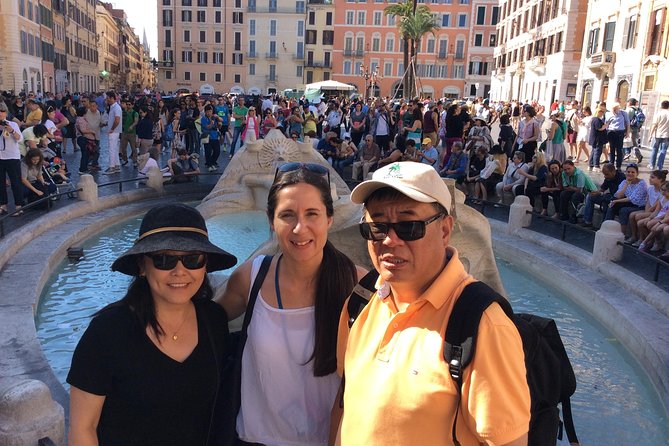
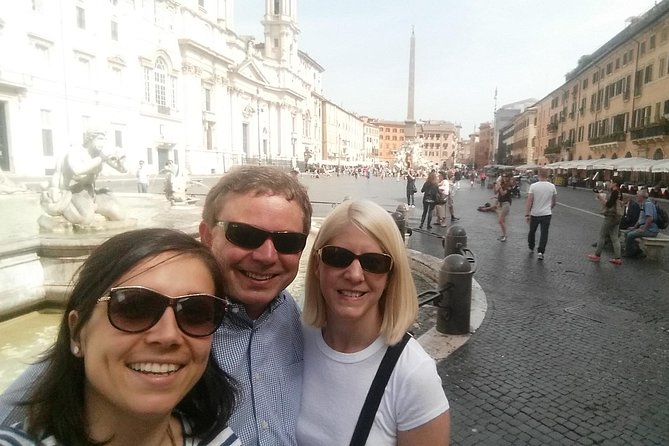
You’ll spend about 30 minutes at Piazza Navona. This square is famous for one reason: the fountain of the Four Rivers by Gianlorenzo Bernini. The guide’s job here is to help you look at what you’re seeing, not just snap a photo and move on.
What I like about this stop is that it rewards attention. The fountain is visually theatrical, and when you understand what the symbols suggest, the whole scene clicks into place. You also get time to see the square as more than a backdrop—people linger here, street life continues around it, and the architecture frames the fountain like a stage.
A small drawback: if you’re expecting a quiet stroll, Navona can be loud. But that’s not a deal-breaker; it’s part of the experience.
Trevi Fountain: the coin toss ritual, plus what’s behind the fame
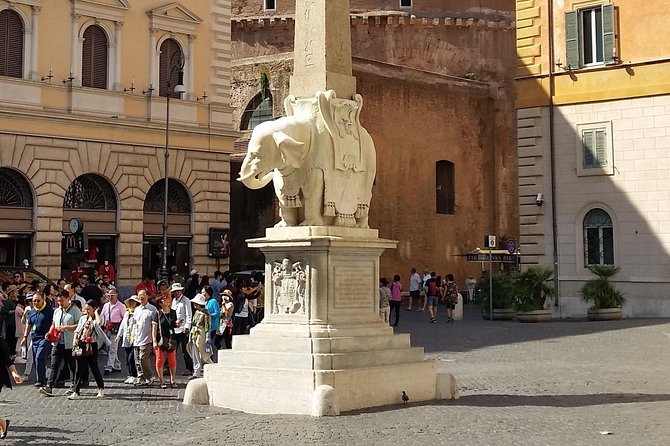
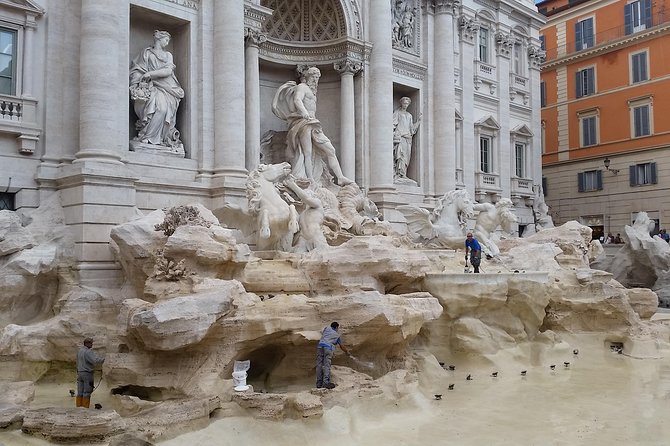
Next up is Fontana di Trevi, with about 20 minutes. Yes, it’s the coin fountain—ready to throw in the ritual and make a wish—but it’s also a masterclass in how Rome turns art into a magnet for crowds.
This stop is short by design. You don’t want to spend half your tour stuck in a bottleneck. Instead, you get a controlled window to see the fountain, understand what you’re looking at, and then move on before your momentum dies.
My advice: treat this as a photo-and-context stop, not a “hang out for an hour” stop. With 20 minutes, you’ll feel rushed if you assume you’ll be the only one there.

Campo de’ Fiori again: where the tour teaches you to look
You’ll return to Campo de’ Fiori during the walking route for about 20 minutes. This is where the tour leans into local color. You’ll get a guided look at what makes the square tick—food, movement, and the kind of public life Rome does better than most European cities.
The fun part is the guide’s focus on details, especially the central statue. Learning that one specific story changes how you see the square. Instead of just noticing the fountain or the market bustle, you start noticing layers of meaning.
If you’re traveling with kids or anyone who gets restless, this is a good payoff stop. It’s active, sensory, and not only about stone and domes.
Pantheon: the best-preserved temple stop that earns its hype
Then comes the Pantheon, about 30 minutes, with entry included. This is the moment when the tour earns its name: it’s one thing to see a photo online, and another to stand under the massive dome and feel how central the space is.
The Pantheon is “best preserved” for a reason: the scale is still legible, and you can understand the engineering without needing a technical degree. With a guide, you also get cues about what to notice and how the building works as a space for people, not just an object.
One more thing I like: included entry reduces uncertainty. You don’t have to figure out which line to join or whether you found the right timing. It helps you stay on schedule for the rest of the route.
Tip: take a beat before you start looking for the dome. Let your eyes adjust, then follow the guide’s prompts. You’ll get more from the stop that way.
Spanish Steps: the square answer to the stairs question
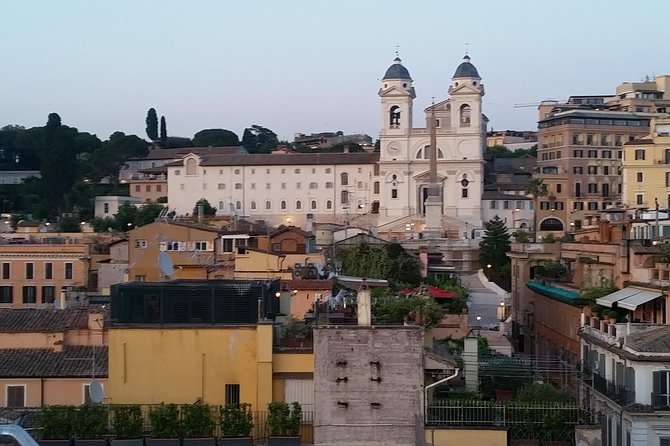
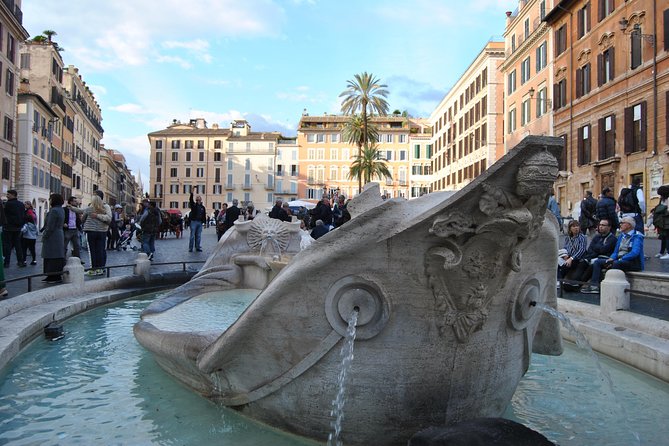
You’ll spend about 20 minutes at the Spanish Steps. The big question here is simple: why Spain, and why so many steps. The guide turns that into a story, and that story makes the steps feel less random.
What you should expect: a quick, visual stop that’s still packed with meaning. The Spanish Steps are an icon, but without context they’re easy to treat like a scenic staircase. With context, you start noticing how the place connects to Rome’s diplomatic and cultural history.
This stop is also a good time to take a short breather. After the Pantheon’s indoor focus and the walking, the outdoors air helps reset your energy.
Piazza Farnese: an embassy facade with a big-name backstory
Finally, you’ll end near Piazza Farnese, with about 20 minutes. This stop is about the drama of the facade and what it signals today and used to mean. You’ll notice the French flag—a clue it’s now an embassy—and the guide shares what the building used to be, when it was tied to a very famous family.
This is a nice way to end a highlights tour. Instead of ending on another major tourist magnet, Piazza Farnese gives you a more architectural mood. The atmosphere shifts from the loudest big icons to something a bit more formal and observant.
Also, your end point is listed as Piazza di Spagna (00187 Roma RM). In practice, your guide will lead you through the final segment and get you out where it’s useful—so treat it as a “you’re done, now go explore” drop-off near the Spanish Steps zone.
Pace and group size: why the walk feels personal
The tour runs with a maximum of 10 travelers and includes a local guide plus a professional art historian guide. That combination matters because it usually means two things happen at once: you get art/architecture context, and you also get practical local guidance on where to stand, how to flow through crowds, and how to keep the timing tight.
You’ll also hear from guides who go beyond the script. In the feedback, people mention that guides can add points of interest at request—Alessandra is specifically mentioned for taking someone to a local bakery for sweets and espresso. That’s not something to count on, but it’s a signal that the guide experience can be flexible when questions come up.
In one case, a tour ran with only one participant, creating an almost private feel. Small groups can turn “group tour” into “you actually talk to the guide.”
Timing: morning vs afternoon departures (and why it matters)
The tour offers choice of morning or afternoon departure, which is genuinely useful in Rome. Morning often means less heat and easier walking. Afternoon can still work great, but you may feel it more on your feet.
Stops are intentionally short—generally 20–30 minutes each—so you get coverage without losing the whole day to one monument. That can be exactly what you want on a tight itinerary.
If your schedule is flexible, I’d book the departure that leaves you enough energy for dinner afterward. A 2.5-hour walking tour plus Roman walking doesn’t leave much couch time.
What’s included (and what’s not) so there are no surprises
Included:
- Local guide
- Professional art historian guide
- Pantheon entry during the tour
Not included:
- Transportation to/from the attractions
- Hotel pickup/drop-off
This means you should plan to get yourself to the meeting point and be ready to walk between sights as the route takes you there. For me, that’s fine. It keeps the tour simple and avoids logistics that can eat time.
Also, you’ll want comfortable shoes. The itinerary is short per stop, but the total walking adds up. Don’t underestimate Rome’s sidewalk rhythms, uneven pavement, and the crowd shuffle around the most famous spots.
Dress code and weather: plan for Rome’s rules
The tour runs in any weather. Rome can be unpredictable, and the tour is designed to keep going.
The bigger issue is the dress code. For churches and selected museums, no shorts or sleeveless tops are allowed, and knees and shoulders must be covered for both men and women. If you ignore that, you risk being refused entry.
So even if the forecast looks perfect, pack a light layer you can put on fast. It’s the easiest way to keep your day moving and avoid the kind of awkward mid-tour scramble you don’t want.
Value check: does $355.75 make sense for 2.5 hours?
At $355.75 per person for about 2 hours 30 minutes, you’re paying for two main things: expert guidance and included access.
You get an art historian guide plus a local guide, and you also get Pantheon entry included. That combination isn’t just trivia delivery; it’s time management. In a city where waiting and confusion can waste your best hours, not having to figure out entry details for the Pantheon is real value.
The small group size (up to 10) also supports the price. This isn’t a huge bus-load experience. It’s the kind of group structure where your questions and pace actually matter.
Where the price won’t feel like a bargain is if you want deep, slow museum time. This is a highlights walk. If you’d rather linger for hours in one place, you may feel better pairing the walk with a longer independent visit later.
But if you’re a first timer, or you only have a short visit, this can be one of your best “high signal per hour” buys.
Should you book this Essential Walking Tour in Rome?
If you want a fast, high-clarity introduction to Rome—especially your first day—this is a strong pick. You’ll see the Trevi Fountain, Spanish Steps, Pantheon, and Piazza Navona, plus a quieter end at Piazza Farnese, all while learning how to read what you’re seeing.
Book it if:
- you’re short on time and want the classics done right
- you like asking questions and getting context, not just photo stops
- you prefer a small-group pace over a big crowd shuffle
Skip it or reconsider if:
- you don’t like structured walking routes
- you’re unwilling to follow the dress code rules for worship/museum entries
- you’re hoping for long time inside buildings beyond the Pantheon
FAQ
What are the main sights on this walking tour?
The tour includes stops at Piazza Navona, Fontana di Trevi, Campo de’ Fiori, the Pantheon, the Spanish Steps, and Piazza Farnese.
How long is the tour?
The duration is about 2 hours 30 minutes.
Is Pantheon entry included?
Yes. The group will enter the Pantheon during the tour.
Where do I meet the guide and where does the tour end?
The start is Campo de’ Fiori, 23, 00186 Roma RM, Italy. The end is Piazza di Spagna, 00187 Roma RM, Italy.
What should I wear or bring?
Comfortable shoes are recommended. For churches and selected museums, knees and shoulders must be covered; no shorts or sleeveless tops.
How big is the group?
This tour has a maximum of 10 travelers.
Can I cancel and get a refund?
Free cancellation is available. You can cancel up to 24 hours in advance for a full refund, and changes within 24 hours of the start time aren’t accepted.
More Walking Tours in Rome
- Rome: Guided Food Walking Tour with Wine in Trastevere
★ 4.9 · 3,105 reviews - Rome: Trastevere & Campo de Fiori Street Food Walking Tour
★ 4.9 · 2,768 reviews - Rome: Paranormal Night Walking Tour & Secret Backstreets
★ 4.9 · 1,921 reviews - Rome: Trastevere Street Food Walking Tour with Local Expert
★ 4.8 · 1,784 reviews - Rome: Small-Group Guided Day or Night Walking Tour
★ 4.8 · 1,009 reviews - Rome by Night Walking Tour – Legends & Criminal Stories
★ 4.5 · 1,003 reviews
More Tours in Rome
- Vatican Museums, Sistine Chapel & St. Peter’s Basilica Tour
★ 4.3 · 73,970 reviews - Vatican Museums, Sistine Chapel & St Peter’s Basilica Guided Tour
★ 4.5 · 39,149 reviews - Rome: Colosseum, Palatine Hill and Roman Forum Guided Tour
★ 4.8 · 32,814 reviews - Rome: Guided Tour of Colosseum, Roman Forum & Palatine Hill
★ 4.7 · 27,897 reviews - Rome: Colosseum, Roman Forum and Palatine Hill Guided Tour
★ 4.5 · 23,903 reviews - Rome: Colosseum Arena Floor, Palatine & Forum Guided Tour
★ 4.5 · 20,180 reviews
More Tour Reviews in Rome
- Vatican Museums, Sistine Chapel & St. Peter’s Basilica Tour
★ 4.3 · 73,970 reviews - Vatican Museums, Sistine Chapel & St Peter’s Basilica Guided Tour
★ 4.5 · 39,149 reviews - Rome: Colosseum, Palatine Hill and Roman Forum Guided Tour
★ 4.8 · 32,814 reviews - Rome: Guided Tour of Colosseum, Roman Forum & Palatine Hill
★ 4.7 · 27,897 reviews - Rome: Colosseum & Forum with Audio Guide App -Optional Arena
★ 4.2 · 24,770 reviews - Rome: Colosseum, Roman Forum and Palatine Hill Guided Tour
★ 4.5 · 23,903 reviews
Just added to our Rome reviews





Walking Tours, compared.
 ★ 4.9Guided Food Walking Tour with Wine in TrastevereFrom $1003,105 reviews
 ★ 4.9Trastevere & Campo de Fiori Street Food Walking TourFrom $512,768 reviews
 ★ 4.9Paranormal Night Walking Tour & Secret BackstreetsFrom $341,921 reviews
 ★ 4.8Trastevere Street Food Walking Tour with Local ExpertFrom $571,784 reviews
 ★ 4.8Small-Group Guided Day or Night Walking TourFrom $231,009 reviews
 ★ 4.5Rome by Night Walking Tour – Legends & Criminal StoriesFrom $141,003 reviews
 ★ 4.4Guided City Center Evening Sightseeing Walking TourFrom $46953 reviews
 ★ 4.9Small-Group City Highlights Moonlight Walking TourFrom $29949 reviews
Browse the lists this tour appears in