
Reviewed · TOURS
E-Tuk Tour: Highlights of Rome
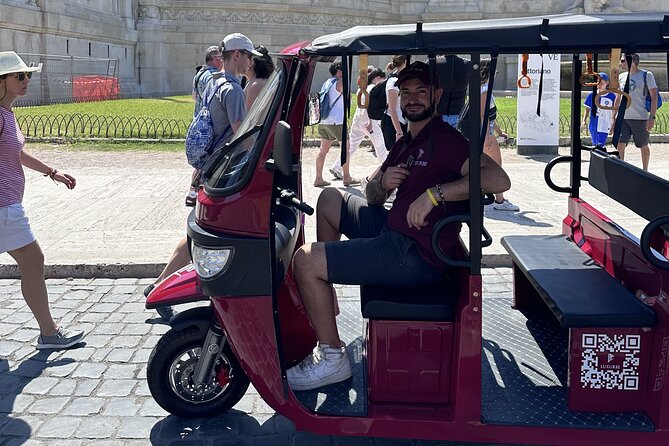
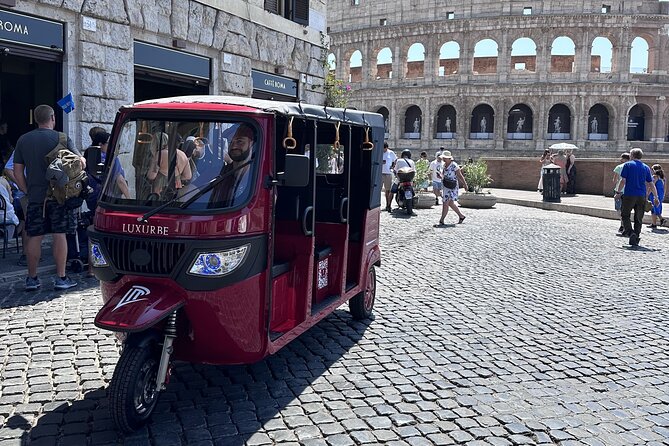
Rome on an E-Tuk beats sore feet. This 3-hour loop lets you cover major landmarks in comfort while your English driver-guide adds context on what you’re seeing. I especially liked the photo stops at big hits like the Trevi Fountain and the Colosseum area, so you’re not just rushed from one street to the next.
One thing to keep in mind: some sights are hard to park right in front of, so you’ll often view them from a nearby spot and get directions from the guide. Also, the cart rides can be noisy, so sit closer if you want every word.
In This Review
- Key highlights to look for
- Why this E-Tuk loop is a smart way to start Rome
- Piazza del Popolo: the easy jump-off point
- How the 3-hour timing really plays out
- Stop 1: Via dei Condotti and a little fashion history
- Stop 2: Piazza Venezia and the start of the ancient-modern mashup
- Stop 3: Pantheon—why 15 minutes can still matter
- Stop 4 and 5: Teatro di Marcello and the Fish Market Forum
- Stop 6: The Rome Ghetto—history you can walk through
- Stop 7: Vatican City as a view-and-orientation moment
- Stop 8 and 9: Trevi Fountain and Piazza Navona—crowds handled by a guide
- Stop 10: Colosseum—iconic, but tickets are extra
- Stop 11 and 12: Imperial Fora and Circo Massimo—where the route gives you more than photos
- Stop 13 and 14: Trinità dei Monti and a return toward Condotti
- Price and value: is $84.09 worth it?
- Small group size: why max 15 matters in Rome
- Who this tour suits best
- Things to watch for on the day
- Should you book this E-Tuk tour of Rome highlights?
- FAQ
- How long is the E-Tuk Tour: Highlights of Rome?
- Where does the tour start?
- Is hotel pickup available?
- What language is the guide?
- Is the tour ticket mobile?
- Are entrance tickets included for all stops?
- How large is the group?
- Do audio guides come with the tour?
Key highlights to look for
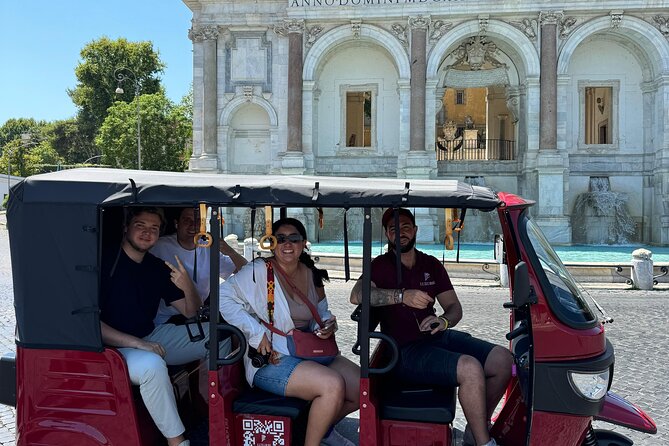
- Electric E-Tuk comfort that keeps you moving without long stretches of walking
- English driver-guide storytelling tied to what you’re seeing outside the cart windows
- Small group size (max 15) for a more personal pace through central Rome
- Photo stops at major landmarks for easy memories, even when parking is limited
- Mix of free and included sites (Pantheon and Colosseum aren’t included, but some others are)
Why this E-Tuk loop is a smart way to start Rome
If your plan is to hit the classics without turning your trip into a foot marathon, this tour is built for you. You get transportation right along the route, so your legs save their energy for museums, long lunches, and the late-afternoon gelato run.
What makes the experience work is the balance between motion and stops. You’re not stuck watching Rome from a bus window the whole time, and you’re also not doing a stop-and-go scramble on foot.
Weighing this one up? Here is how a few Rome favourites compare:
- Vatican Museums, Sistine Chapel & St. Peter’s Basilica Tour
★ 4.3 · 73,970 reviews - Vatican Museums, Sistine Chapel & St Peter’s Basilica Guided Tour
★ 4.5 · 39,149 reviews - Rome: Colosseum, Palatine Hill and Roman Forum Guided Tour
★ 4.8 · 32,814 reviews - Rome: Guided Tour of Colosseum, Roman Forum & Palatine Hill
★ 4.7 · 27,897 reviews
Piazza del Popolo: the easy jump-off point
The tour starts at Piazza del Popolo, at 11. It’s a central meeting spot, and that matters on arrival day when you’re still figuring out which streets connect where.
If you choose hotel pickup, you’ll wait outside your hotel or accommodation at street level. The driver arrives at the scheduled time, with a window of up to 10 minutes, so plan to be ready a few minutes early.
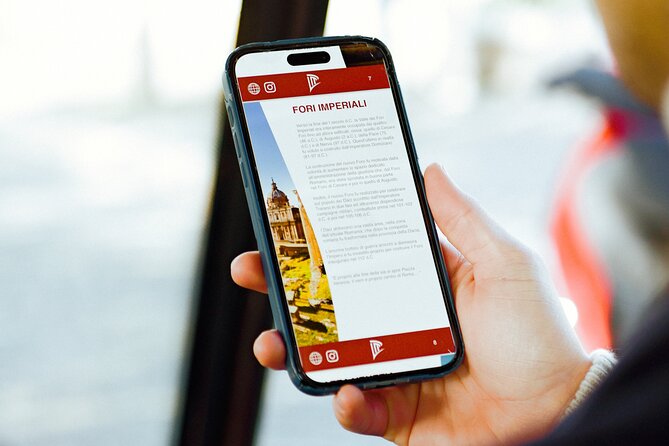
Mobile ticket users get a simple, modern process. The big practical upside here is that you don’t waste time hunting for paper tickets or figuring out last-minute details.
How the 3-hour timing really plays out
This is listed as about 3 hours, and that’s a good length for a first taste of Rome. In a city where walking times can balloon, a half-day intro helps you map out what you want to go back to later.
One caution: Rome traffic, pedestrian zones, and shared-tour logistics can affect exact timing. You’ll still get the core sights, but you should mentally plan for short stops and photo moments rather than long museum-style visits.
If you care about hearing every explanation, sit nearer the front or closer to the guide. The carts are open-air, and city noise can make the audio harder to catch from farther back.
Stop 1: Via dei Condotti and a little fashion history
You begin with Via dei Condotti, one of Rome’s most famous shopping streets. Expect cobblestones, elegant lampposts, and the kind of architecture that feels old even when storefronts are brand new.
The connection to landmarks like the Spanish Steps at the lower end gives you an instant geography lesson. Even if you’re not shopping, a quick pass here helps you understand where major Rome neighborhoods and routes intersect.
A potential drawback is that shopping areas don’t always feel like “sightseeing” if you want ruins or grand monuments. It’s more about ambiance and place—still valuable, especially on a first outing.

Stop 2: Piazza Venezia and the start of the ancient-modern mashup
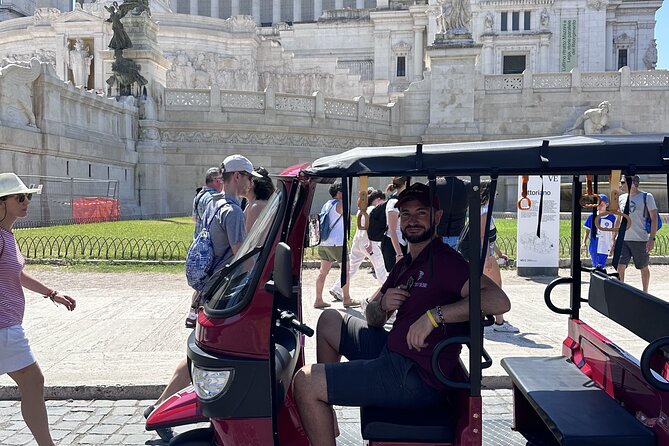
At Piazza Venezia, you’re centered on Altare della Patria, with the Vittoriano monument dominating the square. This is a big “Rome is layers” moment: grand national symbolism standing right next to older city fabric.
The timing here is short, but that’s the point. You’re getting orientation, not trying to conquer the whole square.
If you want the cleanest photos, keep an eye on where crowds funnel. Squares can feel chaotic, so the guided photo-stop approach is handy.
Stop 3: Pantheon—why 15 minutes can still matter
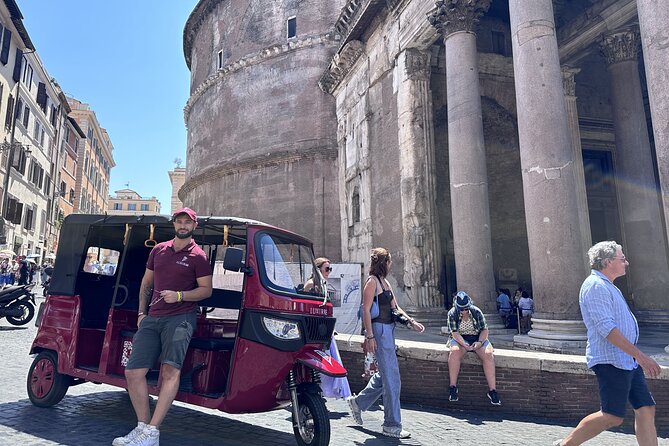
The Pantheon is pure Roman engineering magic: the dome, the oculus, and the interior details that have survived for ages. In 15 minutes, you’re not doing a deep study, but you can still appreciate the scale and the wow-factor fast.
Important detail for planning: Pantheon entrance isn’t included. If this is a must-see for you, add it to your day as a separate ticket.
Also, Pantheon viewing is often a mix of exterior appreciation and quick interior access, depending on flow and crowd control. Arrive with the mindset of a quick hit, then return later if you want to linger.
Stop 4 and 5: Teatro di Marcello and the Fish Market Forum
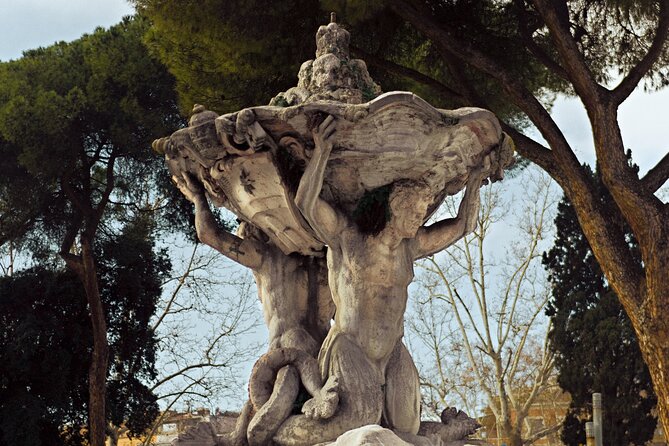
Next up is Teatro di Marcello, an ancient open-air theater tied to Emperor Augustus and his nephew, Marcus Claudius Marcellus. Even when only parts survive, the footprint tells the story: this was built for huge public audiences.
Close by is Via del Foro Piscario, connected to the ancient fish market area near the Forum Romanum. This stop doesn’t scream “big monument,” but it’s exactly the kind of detail that makes Rome feel real—people ate, traded, worked, and lived alongside politics and temples.
Both stops are mostly about seeing the setting and getting the historical framing. If you’re expecting ticketed museum time, manage expectations and focus on visuals and context.
Stop 6: The Rome Ghetto—history you can walk through
The Jewish Ghetto of Rome is one of the more meaningful stops on the route. Created in the 1500s, it’s a compact area with narrow cobblestone lanes, old synagogues, and Jewish cultural life that continues today.
You also get the chance to reference the Great Synagogue and the Jewish Museum as part of the area’s heritage. Even without tickets here, you’re walking through a neighborhood where history isn’t a distant topic—it’s part of the streetscape.
The practical upside is that the cart-and-walk rhythm can make this stop feel calmer. The drawback is time: you’ll want more time than a short visit if this subject really pulls you in.
Stop 7: Vatican City as a view-and-orientation moment
Vatican City is on the route with key references like St. Peter’s Basilica, the Vatican Museums, and the Sistine Chapel. In a short stop, you’re not getting full access, but you do get a map-in-your-head moment for planning a separate Vatican day.
This stop listing says admission ticket free, which fits the idea that you’re primarily seeing exteriors and landmark areas rather than entering major sites.
If you’re doing the Vatican later, use this stop to decide where you’ll spend your real time. The guide’s pointers help you understand which direction to target.
Stop 8 and 9: Trevi Fountain and Piazza Navona—crowds handled by a guide
Trevi Fountain is one of those places where the scenery and the ritual are inseparable. You’ll get the Baroque look—mythical sculptures and Neptune imagery—and the classic coin-toss tradition.
Just know this: parking right in front isn’t usually possible, so the guide will explain from nearby vantage points. That’s normal in Rome’s pedestrian-heavy zones.
Then it’s Piazza Navona, home to Fontana dei Quattro Fiumi and surrounded by cafes and historic buildings. Piazza Navona often feels lively even when you’re just standing still, and the open square layout makes it an easy photo stop.
The practical tip: if you care about hearing explanations, don’t park yourself far from the guide at these big stops. Noise rises with the crowd, and audio clarity can drop.
Stop 10: Colosseum—iconic, but tickets are extra
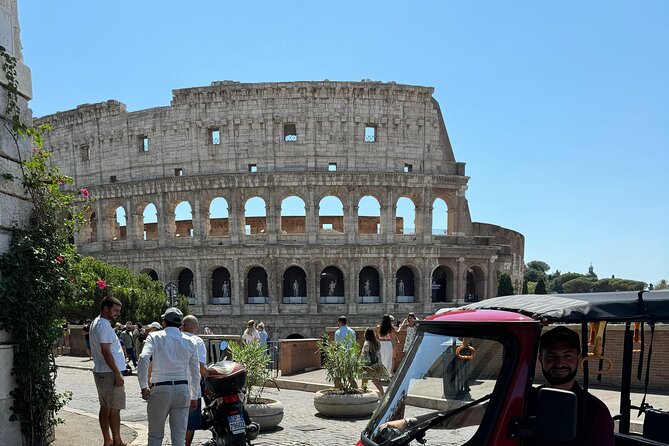
The Colosseum is the headline for a reason: grand scale, gladiator era entertainment, and a layout that still shapes how people imagine ancient Rome. The tour includes a stop here for viewing and orientation.
But Colosseum entrance isn’t included. If you want to go inside, plan to buy tickets separately and consider time for lines.
In terms of what you’ll get during the tour, think of it as an “I see it, now I can plan it” stop. Seeing it from the right angle and hearing the context can be enough to motivate a deeper visit later.
Stop 11 and 12: Imperial Fora and Circo Massimo—where the route gives you more than photos
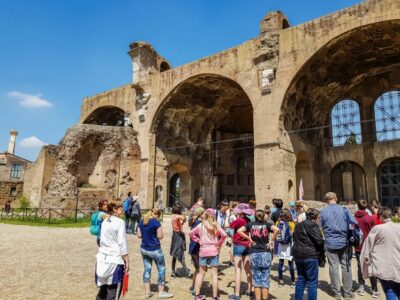
After the Colosseum area, you’ll pass into the world of the Imperial Fora, also called Via dei Fori Imperiali. These were monumental public squares built across different reigns, tying together politics, religion, and public life in ancient Rome.
Here’s a key planning detail: admission ticket is included for Via dei Fori Imperiali. That can make this part of the tour feel more substantial than a pure view-and-go stop.
Next is Circo Massimo, the ancient chariot-racing stadium between the Palatine and Aventine hills. Even though only traces survive, it’s a powerful reminder of just how much ancient Rome focused on mass entertainment.
For Circo Massimo, admission ticket is included. That’s a notable value add because it turns the route into more than a “look at things from outside” experience.
Stop 13 and 14: Trinità dei Monti and a return toward Condotti
Trinità dei Monti is a quick stop, giving you a chance to register the hill views and the area’s classic Roman skyline energy. These shorter stops are useful because they fill in the “how Rome is shaped” picture.
Then the tour loops back near Via dei Condotti again. This makes sense if you’re using the trip to get bearings. It helps you remember where the shopping street connects to larger routes and landmarks.
If you’re the type who loves to walk after a tour, this loop back is a gift. It helps you plan an after-tour route without guessing.
Price and value: is $84.09 worth it?
At $84.09 per person for about 3 hours, you’re paying for three things: transportation, a guided narrative, and reduced walking stress in a dense city. For many people, that’s the difference between a fun first day and a sore-foot survival day.
Compared with piecing together multiple tickets and transit rides, this tour’s value shines if you want broad coverage quickly. Also, it includes photo stops and an English-speaking driver-guide, plus optional hotel pickup and drop-off if selected.
The main “value question” is entrance cost. Pantheon and Colosseum tickets aren’t included, and those can be major parts of your Rome day. If you already planned to enter those sites anyway, the tour becomes even more efficient because it sets your direction.
Small group size: why max 15 matters in Rome
With a maximum of 15 travelers, this isn’t a cattle-car experience. In practice, smaller groups usually mean easier conversation, less waiting at curbs, and less time stalled while everyone regroups.
That also makes it easier to get guidance when your photos don’t come out the way you planned. You can adjust faster when the group stays compact.
Who this tour suits best
This tour is a great match if:
- You want a first-day or first-half-day Rome orientation
- You’re planning to return later for ticketed sights and you want to pick priorities
- You’d rather avoid long stretches of walking, especially on cobblestones
- You prefer a guided history explanation while still moving around
It’s less ideal if:
- You want long entry time inside major sites during the same 3 hours
- You’re very sensitive to noise and want quiet audio throughout every stop
- You expect every stop to allow a direct vehicle stop right next to the landmark
Things to watch for on the day
Because the cart can’t always stop at the ideal photo spot, rely on the guide’s directions and positioning. Rome’s pedestrian restrictions mean you should expect some viewing from nearby vantage points.
If your cart has open-air conditions, noise can interfere with clarity. Sitting closer to the guide is your best fix, and requesting audio help when available can also make things smoother.
Finally, if your itinerary feels tighter than you expected, it’s often due to real-world factors like traffic or shared-tour operations. Keep a bit of buffer for your next activity that afternoon or evening.
Should you book this E-Tuk tour of Rome highlights?
If you want a low-stress way to see Rome’s biggest names—without spending your whole day walking—this is a strong yes. The E-Tuk format, the English driver-guide storytelling, and the mix of view stops plus included admissions at Imperial Fora and Circo Massimo make it a practical value for many first-time visitors.
I’d book it if your plan includes coming back to choose your deeper visits. You’ll use the tour to learn where things are, recognize what you care about most, and then spend your ticket time where it counts.
Hold off or plan extra tickets on your own if Pantheon and Colosseum entrance are your two top priorities and you want maximum time inside during the same day.
FAQ
How long is the E-Tuk Tour: Highlights of Rome?
The tour runs for about 3 hours.
Where does the tour start?
It starts at Piazza del Popolo, 11, 00187 Roma RM, Italy.
Is hotel pickup available?
Pickup is offered if you select that option. You wait outside the main entrance of your hotel or accommodation at street level.
What language is the guide?
The driver/guide provides the tour in English.
Is the tour ticket mobile?
Yes, a mobile ticket is included.
Are entrance tickets included for all stops?
No. Tickets are not included for the Pantheon and the Colosseum. Entrance ticket is included for Via dei Fori Imperiali and Circo Massimo. Other listed stops are shown as free.
How large is the group?
This tour has a maximum of 15 travelers.
Do audio guides come with the tour?
Audio guides are provided upon request, if available.
More Tours in Rome
- Vatican Museums, Sistine Chapel & St. Peter’s Basilica Tour
★ 4.3 · 73,970 reviews - Vatican Museums, Sistine Chapel & St Peter’s Basilica Guided Tour
★ 4.5 · 39,149 reviews - Rome: Colosseum, Palatine Hill and Roman Forum Guided Tour
★ 4.8 · 32,814 reviews - Rome: Guided Tour of Colosseum, Roman Forum & Palatine Hill
★ 4.7 · 27,897 reviews - Rome: Colosseum, Roman Forum and Palatine Hill Guided Tour
★ 4.5 · 23,903 reviews - Rome: Colosseum Arena Floor, Palatine & Forum Guided Tour
★ 4.5 · 20,180 reviews
More Tour Reviews in Rome
- Vatican Museums, Sistine Chapel & St. Peter’s Basilica Tour
★ 4.3 · 73,970 reviews - Vatican Museums, Sistine Chapel & St Peter’s Basilica Guided Tour
★ 4.5 · 39,149 reviews - Rome: Colosseum, Palatine Hill and Roman Forum Guided Tour
★ 4.8 · 32,814 reviews - Rome: Guided Tour of Colosseum, Roman Forum & Palatine Hill
★ 4.7 · 27,897 reviews - Rome: Colosseum & Forum with Audio Guide App -Optional Arena
★ 4.2 · 24,770 reviews - Rome: Colosseum, Roman Forum and Palatine Hill Guided Tour
★ 4.5 · 23,903 reviews
Just added to our Rome reviews





Tours, compared.
 ★ 4.3Vatican Museums, Sistine Chapel & St. Peter’s Basilica TourFrom $7273,970 reviews
 ★ 4.5Vatican Museums, Sistine Chapel & St Peter’s Basilica Guided TourFrom $2239,149 reviews
 ★ 4.8Colosseum, Palatine Hill and Roman Forum Guided TourFrom $5232,814 reviews
 ★ 4.7Guided Tour of Colosseum, Roman Forum & Palatine HillFrom $5527,897 reviews
 ★ 4.5Colosseum, Roman Forum and Palatine Hill Guided TourFrom $5923,903 reviews
 ★ 4.5Colosseum Arena Floor, Palatine & Forum Guided TourFrom $4120,180 reviews
 ★ 4.3Vatican Museums, Sistine Chapel and Basilica TourFrom $7316,039 reviews
 ★ 4.7Colosseum Arena, Palatine Hill & Forum Guided TourFrom $8414,510 reviews