
Reviewed · MUSEUMS
Da Vinci Museum: Discover a World of Genius in the Heart of Rome
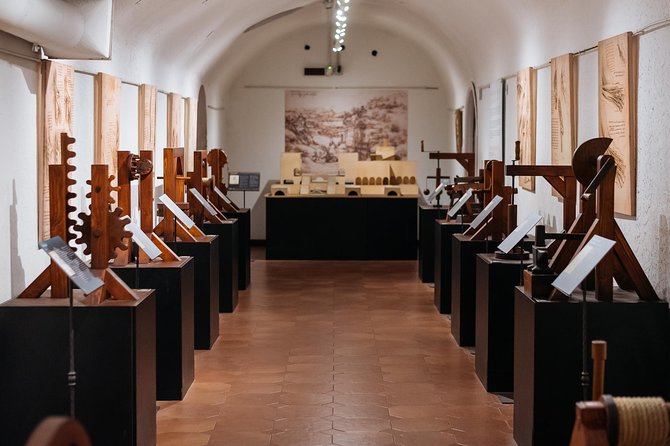
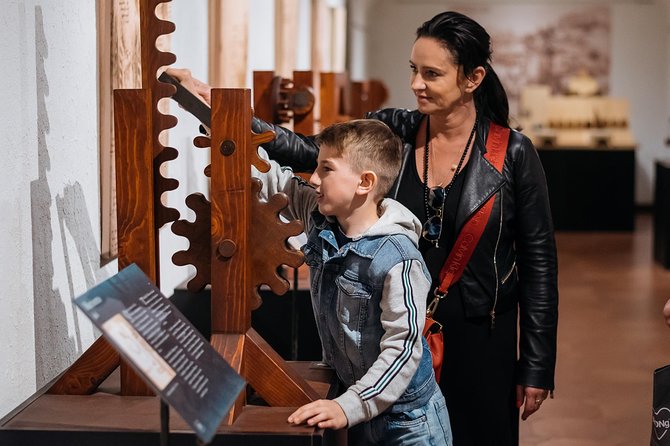
Leonardo in Rome, tucked inside a church. Museo Leonardo da Vinci turns Basilica Santa Maria del Popolo into a maker’s workshop of ideas, with study models, animations, and interactive displays in English. I love the hands-on machines built from Leonardo’s notes, because you get the logic behind the inventions instead of just reading about them.
The second thing I like is the easy, short visit rhythm. You’re typically in and out in about 1–2 hours, and then you can carry on with nearby sights around Piazza del Popolo. One consideration: there are no restroom facilities in or around the museum, so plan your timing before you go in.
In This Review
- Key things to know before you visit
- Museo Leonardo da Vinci inside Santa Maria del Popolo: a very practical location
- Tickets and the $14.38 value: what pre-booking really buys you
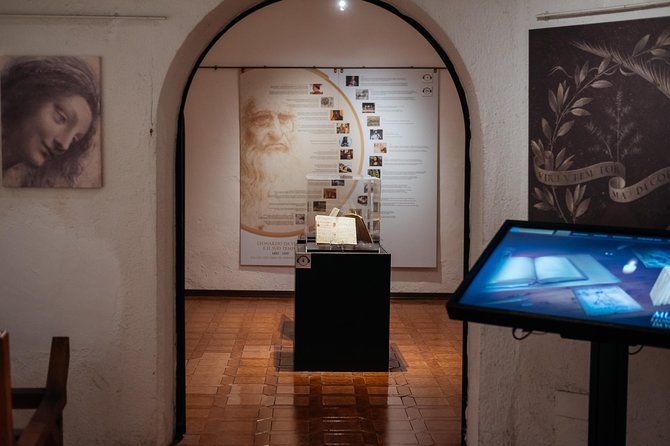
- What you’ll actually see: machines from codices, anatomy studies, and major art themes
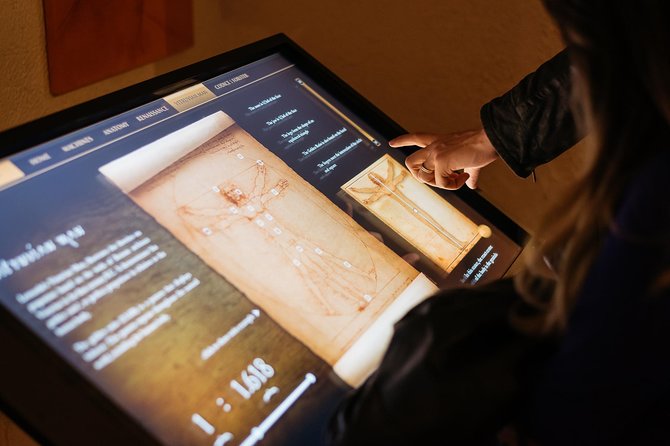
- Interactive displays: great when you want to understand, not just look
- Audio guide: worth it, but not mandatory
- VR option: fun, but treat it as an add-on
- Timing it right: 30 minutes, or a full 1–2 hours?
- Family-friendly, but aim it at the right age group
- Pairing plan: from Piazza del Popolo to Spanish Steps and beyond
- Price, add-ons, and what to budget for extras
- Should you book this Museo Leonardo da Vinci ticket?
- FAQ
- Where is the Museo Leonardo da Vinci located?
- How long does the visit take?
- What’s included in the ticket price?
- Is the audio guide included?
- Is the museum offered in English?
- Are restrooms available at the museum?
- Can I cancel for a full refund?
Key things to know before you visit
- Pre-booked admission saves time and hassle at a popular Rome stop
- Codex-based machines and studies let you see how Leonardo thought, not just what he made
- Multimedia stories connect his work to major pieces like the Last Supper and Vitruvian Man
- Located inside Basilica Santa Maria del Popolo near Piazza del Popolo (great for pairing)
- Audio is optional (about €3), and the self-guided approach is workable without it
- Plan for no on-site bathrooms and a warm interior
Museo Leonardo da Vinci inside Santa Maria del Popolo: a very practical location
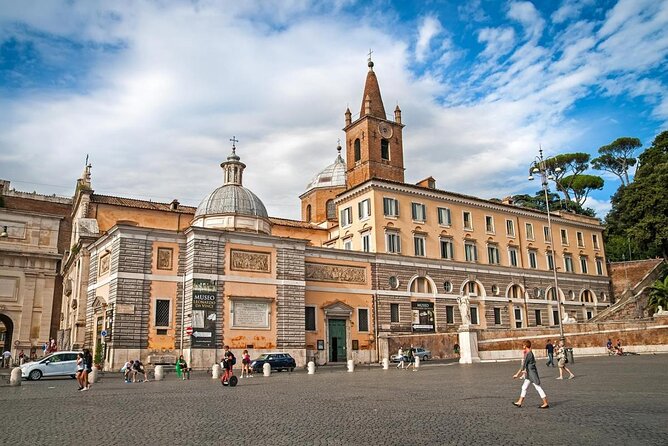
This museum is easy to fit into a Rome day because it’s not tucked away on the edge of the city. It’s inside the Basilica Santa Maria del Popolo, right around Piazza del Popolo. That matters because you can treat the visit like a focused “showcase” stop, then step right back into Rome on foot.
I like the vibe here: it feels calm for such a famous subject. The setting in a church gives it a different tone than a typical museum building. You’re walking through galleries that feel designed to guide your attention—toward mechanics, toward art studies, and toward Leonardo’s obsession with the human body.
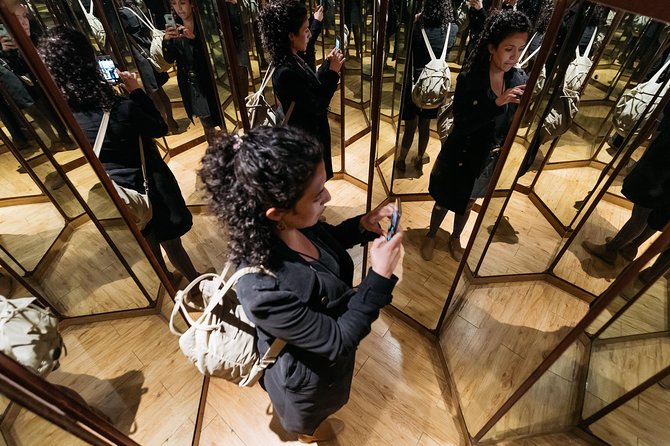
Expect a mix of formats: physical displays, multimedia animations, and sections where you can interact with the ideas. Some parts go down deeper than you might guess, with reviews noting underground complexity, so take your time and don’t rush your first pass.
And since the museum is close to major landmarks, you’re not stuck in one place. You can walk onward to the Spanish Steps area and out toward Villa Borghese after.
Worth a look next to this Rome booking:
- Vatican Museums, Sistine Chapel & St. Peter’s Basilica Tour
★ 4.3 · 73,970 reviews - Vatican Museums, Sistine Chapel & St Peter’s Basilica Guided Tour
★ 4.5 · 39,149 reviews - Rome: Vatican Museums, Sistine Chapel and Basilica Tour
★ 4.3 · 16,039 reviews - Vatican Museums & Sistine Chapel Skip-the-Line Entry Ticket
★ 4.4 · 13,838 reviews
Tickets and the $14.38 value: what pre-booking really buys you
At $14.38 per person, the price is reasonable for a dedicated, self-guided museum stop that’s designed around Leonardo’s inventions and art. The biggest value isn’t the building—it’s the ticket structure and timing. A pre-booked admission ticket means you don’t have to scramble when you arrive.
In practice, this kind of pre-booked ticket is also good for pacing your day in Rome. You can schedule it, walk there, and move on without spending time negotiating your plan in the middle of sightseeing.
One more detail: the museum is in a high-traffic zone, so reducing friction helps. Reviews mention that voucher/ticket redemption was smooth and there wasn’t a big “wait around” moment. Even if you don’t get exactly that experience every time, pre-booking is still the smarter move here.
You should also know what’s not included. The audio guide is extra (about €3 per person). If you want the extra context while you walk, budget that. If you don’t, you’ll still have plenty to read and observe.
What you’ll actually see: machines from codices, anatomy studies, and major art themes
The core of this museum is Leonardo’s world view—he’s presented as inventor, artist, scientist, anatomist, engineer, and architect. You see that approach as you move through sections that blend craft, science, and art.
Here’s what to look for:
- Life-size or life-like machines created by Italian artisans based on Leonardo’s codices and studies. These displays are meant to show the thinking behind the mechanism: gears, structures, and how a concept could work.
- Anatomical drawings and human-body research, including a strong focus on how Leonardo studied anatomy with the precision of a scientist.
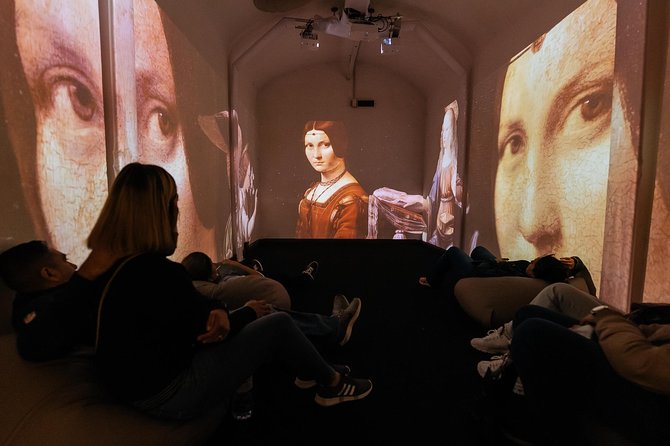
- Art and storytelling connections, supported by multimedia. You’ll find content that ties to famous subjects such as the Last Supper, the Vitruvian Man, and the Sforza equestrian sculpture.
A small set of notebook pages is also mentioned in reviews. That’s important because it reminds you that the museum isn’t only “models from imagination”—there are primary-study materials in the mix, even if much of the galleries use recreations and display models.
One balancing point: several reviews note the museum focuses on replicas/recreations rather than lots of original Renaissance artworks. If you’re hoping for walls full of original paintings, temper expectations. But if you want to understand how Leonardo’s mind connected art and engineering, the museum is built for that.
Interactive displays: great when you want to understand, not just look

This is the part that most visitors end up talking about. The museum uses interactive and hands-on elements, including displays where you can manipulate certain invention concepts. That style works especially well for families and for people who learn by doing.
I think the best way to use these interactive zones is simple: slow down at your favorite mechanics. Give yourself time to figure out what you’re looking at. Some reviews also mention that descriptions and the overall layout can feel a bit random in places, so don’t panic if the flow isn’t perfectly “linear.” You’re not on a strict timeline; you’re exploring Leonardo’s toolbox.




Audio guide: worth it, but not mandatory
The audio guide is available to purchase (about €3 per person). Reviews describe the audio as helpful for extra context and for explaining what you’re seeing.
At the same time, a few reviews mention the handheld system can become annoying, and in at least one case the audio didn’t match the exhibit at the right moment. So here’s the practical approach I recommend:
- If you like running commentary, grab the audio.
- If you prefer to read labels and move at your own pace, you may skip it and still get a full experience.
- Either way, take advantage of the English signage and multimedia to build your understanding quickly.
VR option: fun, but treat it as an add-on
There’s also a VR flight experience mentioned in reviews. One review says it felt overpriced and that there’s only one so you might wait. That’s all you really need to know: if VR is your thing, budget a little time and accept that it’s an extra cost—not the center of the museum.
Timing it right: 30 minutes, or a full 1–2 hours?
The museum isn’t huge, and that’s both its strength and its limit. Many visits land in the 1–2 hour window. Some reviews suggest it can be closer to 30 minutes if you mainly skim and hit only the biggest highlights.
Here’s how I’d plan it depending on your style:
- If you have a tight schedule: go straight for the major invention/diagram sections and the Vitruvian Man-style display area, then circle back for anatomy and art-study rooms.
- If you want the full effect: read more labels than you normally would, watch the multimedia explanations, and spend extra time with the interactive mechanisms.
A couple practical notes from reviews: the museum can feel warm, so bring water if you tend to get hot. Also, if you’re visiting with kids, allow breathing room. The displays are more engaging when you’re not trying to “power through.”
Family-friendly, but aim it at the right age group
This museum works well when your kids are curious about how things work—art, engineering, anatomy, and the idea of inventing. Reviews call out that it’s good for kids who are interested in both art and science, and that there are touch-and-experiment displays.
But it’s not a full-day kids attraction. Because it’s small, the visit can feel short for families who want constant action. If you bring younger children, the museum may work better as a calm learning stop rather than an all-day play center.
Also remember the practical stuff:
- No restroom facilities on site means you’ll need to use facilities before you arrive.
- Give yourselves time to rest between exhibit clusters if you’re traveling with kids.
- If you want the best family experience, pick one or two themes—machines and anatomy, for example—and build the rest around that.
Pairing plan: from Piazza del Popolo to Spanish Steps and beyond
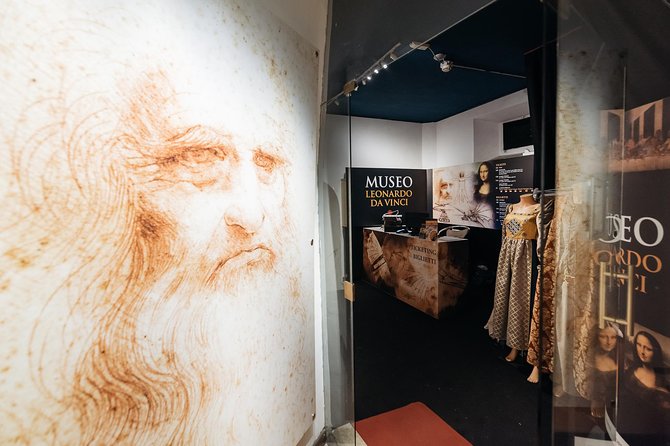
One of the smartest parts of this museum is what you can do right after. It’s positioned so you can turn it into a “loop” day.
You’re close to Piazza del Popolo, and reviews mention the area is great for shops and restaurants. If you’re hungry after your museum time, walking out and keeping your legs moving is easy here.
You’re also near the Spanish Steps and Villa Borghese. The walk time is described as short (about five minutes to those areas). That’s a big deal because it lets you combine viewpoints and museum time without spending your afternoon on buses or long taxi rides.
A simple plan:
- Do the museum (aim 1–2 hours).
- Walk straight to Piazza del Popolo for a snack or meal.
- Then branch out toward the Spanish Steps and continue onward toward Villa Borghese depending on your energy.
If your day gets rainy, this kind of indoor “focus visit” is exactly the right kind of cover.
Price, add-ons, and what to budget for extras
Your base ticket is $14.38, and that includes admission. After that, the main add-on is the audio guide (about €3). If you like context as you walk, it’s a reasonable extra cost.
Then there’s VR, which reviews call out as adding cost and potentially involving a wait. I’d treat VR as optional rather than essential.
There’s also a gift shop mentioned in reviews with fair prices, which is good to know if you’re trying to avoid last-minute souvenir scrambling.
The real value equation is this: if you want to connect Leonardo’s art and engineering in one place, this is a focused, affordable stop. If you want original paintings in large quantities, you may feel the museum is more about recreations than masterpieces.
Should you book this Museo Leonardo da Vinci ticket?
Book it if you like learning by seeing how ideas work—especially if you’re interested in Leonardo’s machines, his anatomy studies, and the way his art connects to engineering. It’s also a strong choice when you want a 1–2 hour museum that doesn’t swallow your entire day in Rome.
Skip it or reconsider if your top priority is original Renaissance artworks in large numbers. Also think twice if the lack of nearby restrooms is a deal-breaker for you or for your group.
If you’re on a tight Rome schedule, the museum’s location inside Santa Maria del Popolo makes it easy to justify. You get a meaningful Leonardo-style experience and still leave time for Piazza del Popolo and the Spanish Steps area.
FAQ
Where is the Museo Leonardo da Vinci located?
It’s located inside Basilica Santa Maria del Popolo in Rome, near Piazza del Popolo.
How long does the visit take?
Plan for about 1 to 2 hours.
What’s included in the ticket price?
Your ticket includes admission to the museum.
Is the audio guide included?
No. The audio guide is available to purchase for about €3 per person.
Is the museum offered in English?
Yes, the experience is offered in English.
Are restrooms available at the museum?
Reviews note there are no restroom facilities in or around the museum, so plan ahead.
Can I cancel for a full refund?
Yes. You can cancel up to 24 hours in advance for a full refund.
More Museums in Rome
- Vatican Museums, Sistine Chapel & St. Peter’s Basilica Tour
★ 4.3 · 73,970 reviews - Vatican Museums, Sistine Chapel & St Peter’s Basilica Guided Tour
★ 4.5 · 39,149 reviews - Rome: Vatican Museums, Sistine Chapel and Basilica Tour
★ 4.3 · 16,039 reviews - Vatican Museums & Sistine Chapel Skip-the-Line Entry Ticket
★ 4.4 · 13,838 reviews - Rome: Vatican Museums, Sistine Chapel & Basilica Tour
★ 4.7 · 13,217 reviews - Rome: Vatican Museums & Sistine Chapel Guided Tour
★ 4.3 · 12,117 reviews
More Tour Reviews in Rome
- Vatican Museums, Sistine Chapel & St. Peter’s Basilica Tour
★ 4.3 · 73,970 reviews - Vatican Museums, Sistine Chapel & St Peter’s Basilica Guided Tour
★ 4.5 · 39,149 reviews - Rome: Colosseum, Palatine Hill and Roman Forum Guided Tour
★ 4.8 · 32,814 reviews - Rome: Guided Tour of Colosseum, Roman Forum & Palatine Hill
★ 4.7 · 27,897 reviews - Rome: Colosseum & Forum with Audio Guide App -Optional Arena
★ 4.2 · 24,770 reviews - Rome: Colosseum, Roman Forum and Palatine Hill Guided Tour
★ 4.5 · 23,903 reviews
Just added to our Rome reviews





Museums, compared.
 ★ 4.5Vatican: Museums & Sistine Chapel Entrance TicketFrom $38144,003 reviews
 ★ 4.3Vatican Museums, Sistine Chapel & St. Peter’s Basilica TourFrom $7273,970 reviews
 ★ 4.5Vatican Museums, Sistine Chapel & St Peter’s Basilica Guided TourFrom $2239,149 reviews
 ★ 4.3Vatican Museums, Sistine Chapel and Basilica TourFrom $7316,039 reviews
 ★ 4.4Vatican Museums & Sistine Chapel Skip-the-Line Entry TicketFrom $4313,838 reviews
 ★ 4.7Vatican Museums, Sistine Chapel & Basilica TourFrom $7213,217 reviews
 ★ 4.3Vatican Museums & Sistine Chapel Guided TourFrom $11812,117 reviews
 ★ 4.2Vatican Museums & Sistine Chapel Skip-The-Line TicketFrom $4111,708 reviews