
Reviewed · TOURS
Criminal Tour of Rome
Rome has a darker side, and you’ll walk it. This evening tour packs four high-impact sites into about 2–3 hours, with a small group (up to 20) and in-depth commentary from guide Mike Henry. I like the way the timing at 6:00 pm helps you dodge the harsh daytime sun and heavy crowds. One consideration: the subject matter runs from executions to WWII deportations, so it can feel heavy if you prefer lighter sightseeing.
You’ll start at Piazza della Minerva and move through places tied to major crimes and political violence—then end right where you began. It’s priced at $69.50 per person, which can feel like a lot until you remember the tour includes site fees for the first stop and keeps the pace tight. You should also be ready for a walking tour, even if the route isn’t about big climbs.
In This Review
- Key Highlights You Should Know
- How the 6:00 pm Timing Changes the Whole Experience
- Where You Meet at Piazza della Minerva (And Why It’s a Good Starting Point)
- Piazza della Minerva Stop: Galileo’s Trial Through a Criminal Lens
- Largo Argentina: Julius Caesar’s Assassination Area Sacra
- Il Portico di Ottavia: WWII Deportations in Rome
- Campo de’ Fiori: From a Lively Square to Execution Ground
- The Guide Factor: Mike Henry’s Storytelling Style
- Group Size: Up to 20 People (And Why That Matters)
- Duration and Pace: What 2–3 Hours Feels Like
- Price ($69.50) and Value: What You’re Really Paying For
- Who This Tour Suits Best (And Who Might Want Something Else)
- Quick Practical Tips Before You Go
- Should You Book This Criminal Tour of Rome?
Key Highlights You Should Know
- Evening start (6:00 pm): better comfort than midday Rome, especially in warmer months.
- Mike Henry guides the story: lively delivery that connects famous crimes to street-level reality.
- Four targeted stops: Piazza della Minerva, Largo Argentina, Portico d’Ottavia, and Campo de’ Fiori.
- Up to 20 people: small enough for questions, big enough for a social group vibe.
- Site fees handled early: the first location includes an admission ticket, while the other main stops are free to enter.
How the 6:00 pm Timing Changes the Whole Experience
Rome after late-afternoon light hits differently. Starting at 6:00 pm means you’re usually walking when the city cools off, and the main streets feel less crowded than earlier in the day. That matters because this tour is about moving between specific corners and squares, not sitting in one place and listening.
I also like that the evening timing keeps the vibe more “street history” than museum-formality. You’re seeing recognizable Roman spaces—squares and under-structures—while the guide ties them to crimes and political upheaval. It’s a good rhythm: listen, look, walk, repeat.
Weighing this one up? Here is how a few Rome favourites compare:
- Vatican Museums, Sistine Chapel & St. Peter’s Basilica Tour
★ 4.3 · 73,970 reviews - Vatican Museums, Sistine Chapel & St Peter’s Basilica Guided Tour
★ 4.5 · 39,149 reviews - Rome: Colosseum, Palatine Hill and Roman Forum Guided Tour
★ 4.8 · 32,814 reviews - Rome: Guided Tour of Colosseum, Roman Forum & Palatine Hill
★ 4.7 · 27,897 reviews
Where You Meet at Piazza della Minerva (And Why It’s a Good Starting Point)
You meet at Piazza della Minerva, 38 (00186 Roma RM), and the tour ends back at the same meeting point. This is practical. You don’t have to re-plan your route or hunt for a pickup point somewhere else.
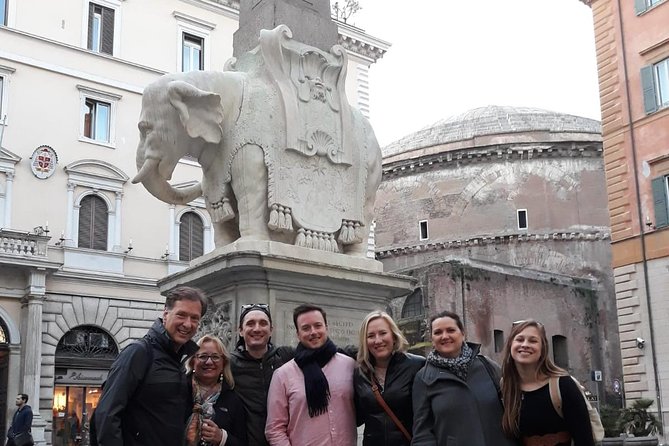
The first stop is built around a famous figure tied to Rome’s trial culture: Galileo Galilei. You’ll begin with a meet-and-greet and an introduction to the theme—Rome as a city where power, punishment, and public spectacle have long been intertwined. Even if you only know Galileo as a name, the tour framing helps you understand why Rome’s legal and political machinery mattered so much.
Expect about 20 minutes at the Piazza della Minerva stop, with a site ticket included. That’s a small cost absorbed by the tour, and it reduces the chance you’ll end up juggling money or tickets mid-walk.
Piazza della Minerva Stop: Galileo’s Trial Through a Criminal Lens
At Piazza della Minerva, you’ll visit the location tied to Galileo Galilei’s trial. The angle is important. This isn’t a science-history tour. It’s a “Rome and control” tour, where trials and accusations are treated like steps in a larger system—one that could shift public power overnight.
You’ll also get oriented early on: how the guide will move from “famous story” to “what happened here, to people like this, and why it stuck.” That matters for the rest of the evening. When the tour keeps asking you to picture the place in a different era, it helps to start with clear framing.
Largo Argentina: Julius Caesar’s Assassination Area Sacra
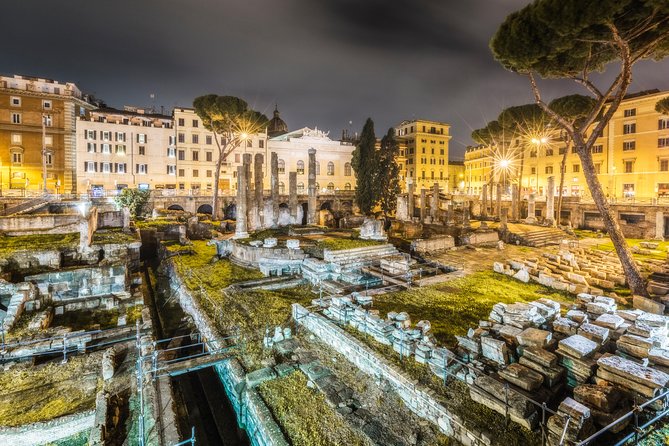
Next comes Area Sacra di Largo Argentina, one of those Rome settings where the stones feel too serious to be just a tourist stop. You’ll learn about the final days of Julius Caesar and see the exact location connected to his assassination.
This part runs about 20 minutes, and it’s described as a ticket-free stop. That’s good value and good logistics: you get time to listen and look without additional entry fuss.
What makes this stop work is the way it turns a headline event into a place-based story. Caesar’s assassination isn’t just “a famous crime.” The setting helps you understand why public life in Rome could tip so violently, and how quickly power could turn into threat.

Il Portico di Ottavia: WWII Deportations in Rome
After Caesar, the tour jumps forward into the 20th century—no gentle transition. You’ll head to Il Portico di Ottavia, where the focus becomes deportation during the Nazi occupation of WWII.
This stop is also about 20 minutes and ticket-free. But the impact can be bigger than the time suggests. The portico setting—part shelter, part passage—gives the conversation a physical weight. You’re not just hearing dates. You’re in the kind of Roman space where movement, crowding, and direction matter.
I’d call out one practical point: if you’re sensitive to emotional topics, decide ahead of time whether you’re okay with this section. Some people find it moving in a thoughtful way; others prefer to keep their Rome evening walks lighter.
Campo de’ Fiori: From a Lively Square to Execution Ground
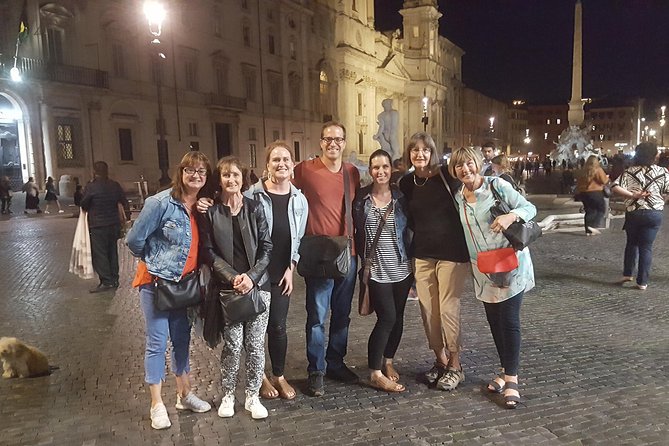
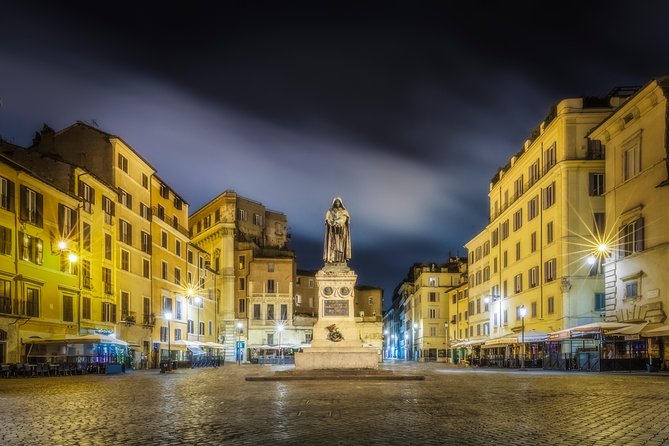
Then the tour reaches Campo de’ Fiori, a square that’s known today for everyday life. But the guide connects it to a much darker past: it was once a preferred place for papal executions.
You’ll spend about 30 minutes here, again with no additional admission ticket. This longer stop makes sense because Campo de’ Fiori is visually “busy” even at dusk. The guide can use that contrast—ordinary life in one era versus state punishment in another—to sharpen the story.
This stop also tends to be the one where you remember details the most. It’s not just a formal historical site. It’s a Roman square you can picture still working the same way now—only the meaning of the place has changed.
The Guide Factor: Mike Henry’s Storytelling Style
A tour like this lives or dies on the guide. This one is led by Mike Henry, and the big theme in the feedback around him is engagement: clear storytelling, strong pacing, and lots of room for questions.
I like that the tour isn’t just a list of events. Mike’s approach connects politics, power, and crime across eras—and he does it in a way that makes the sites feel “in motion.” You’re constantly switching from looking at buildings to hearing the human-scale drama behind them.
There’s also a practical side. People report that Mike goes out of his way with small help after the tour—like assisting with getting a taxi and even pointing you toward food. On a night when you’ve been walking and thinking hard, that kind of hands-on help is genuinely useful.
Group Size: Up to 20 People (And Why That Matters)
The tour caps at 20 people, which is a sweet spot for a walking story tour. Big groups can turn into a shuffle line. Small groups keep your questions relevant and your hearing easier when you’re moving around corners.
It also means the guide can adjust. If the group is smaller on your date, the experience can feel more personal—more conversation, more back-and-forth, and less waiting.
Duration and Pace: What 2–3 Hours Feels Like
The tour runs about 2 to 3 hours. The scheduled site times are roughly:
- ~20 minutes at Piazza della Minerva
- ~20 minutes at Largo Argentina
- ~20 minutes at Portico di Ottavia
- ~30 minutes at Campo de’ Fiori
That adds up to 1.5 hours of structured stops, with extra walking time filling the rest. Practically, plan for a solid evening walk with frequent listening moments. It’s not a slow “stroll and chat” tour, but it also doesn’t involve big climbs.
If you want to get the most out of it, wear shoes that handle cobblestones without drama. Your feet will thank you, and you’ll stay present for the stories instead of counting steps.
Price ($69.50) and Value: What You’re Really Paying For
At $69.50 per person, this isn’t the cheapest way to see Rome. But it’s also not trying to be a generic overview tour. You’re paying for:
- multiple stops tied to major crimes and political violence
- guided commentary through those exact locations
- a small built-in admission ticket at the first stop
- an evening schedule that reduces heat and crowds
In other words, the value is in the focus. You get a coherent theme, not random sightseeing. If you’ve already done a couple of classic highlights and you want something sharper—crime, punishment, power—this price can make sense fast.
It can feel less worth it if you’re hoping for light entertainment or prefer museums over walking. But if you like a guided story that connects place to history, you’re in the right category.
Who This Tour Suits Best (And Who Might Want Something Else)
This works best if you enjoy:
- political and criminal stories with strong place-based detail
- walking tours where the guide keeps the pace moving
- history you can see in streets and squares, not just read on a plaque
It may not fit as well if you want purely scenic stops, or if you’d rather avoid emotional WWII content. Also, if you hate being on your feet for a couple of hours, you might feel worn out before the end—though again, it’s not described as involving challenging climbs.
Language is English, and the tour uses a mobile ticket, which is convenient if you’re already traveling light.
Quick Practical Tips Before You Go
- Bring comfortable walking shoes for Roman pavement.
- If WWII topics are difficult for you, decide in advance how you want the evening to feel.
- Arrive a few minutes early at Piazza della Minerva so you can start smoothly.
- Keep a light curiosity mindset. Rome’s “criminal side” only clicks when you let the guide connect the dots.
Should You Book This Criminal Tour of Rome?
If you’re the kind of person who wants Rome to mean more than monuments, I’d strongly consider booking. The combination of an evening start, a tight 2–3 hour structure, and a guide like Mike Henry makes this a focused way to see the city through consequences—assassination, punishment, and deportation—without turning it into a grim lecture.
On the other hand, if you want a carefree sightseeing evening or you’d rather keep WWII and executions out of your trip story, you’ll probably be happier choosing a lighter theme.
If you’re looking for an evening walk that’s both practical and memorable, this one is a solid bet.
More Tours in Rome
- Vatican Museums, Sistine Chapel & St. Peter’s Basilica Tour
★ 4.3 · 73,970 reviews - Vatican Museums, Sistine Chapel & St Peter’s Basilica Guided Tour
★ 4.5 · 39,149 reviews - Rome: Colosseum, Palatine Hill and Roman Forum Guided Tour
★ 4.8 · 32,814 reviews - Rome: Guided Tour of Colosseum, Roman Forum & Palatine Hill
★ 4.7 · 27,897 reviews - Rome: Colosseum, Roman Forum and Palatine Hill Guided Tour
★ 4.5 · 23,903 reviews - Rome: Colosseum Arena Floor, Palatine & Forum Guided Tour
★ 4.5 · 20,180 reviews
More Tour Reviews in Rome
- Vatican Museums, Sistine Chapel & St. Peter’s Basilica Tour
★ 4.3 · 73,970 reviews - Vatican Museums, Sistine Chapel & St Peter’s Basilica Guided Tour
★ 4.5 · 39,149 reviews - Rome: Colosseum, Palatine Hill and Roman Forum Guided Tour
★ 4.8 · 32,814 reviews - Rome: Guided Tour of Colosseum, Roman Forum & Palatine Hill
★ 4.7 · 27,897 reviews - Rome: Colosseum & Forum with Audio Guide App -Optional Arena
★ 4.2 · 24,770 reviews - Rome: Colosseum, Roman Forum and Palatine Hill Guided Tour
★ 4.5 · 23,903 reviews
Just added to our Rome reviews





Tours, compared.
 ★ 4.3Vatican Museums, Sistine Chapel & St. Peter’s Basilica TourFrom $7273,970 reviews
 ★ 4.5Vatican Museums, Sistine Chapel & St Peter’s Basilica Guided TourFrom $2239,149 reviews
 ★ 4.8Colosseum, Palatine Hill and Roman Forum Guided TourFrom $5232,814 reviews
 ★ 4.7Guided Tour of Colosseum, Roman Forum & Palatine HillFrom $5527,897 reviews
 ★ 4.5Colosseum, Roman Forum and Palatine Hill Guided TourFrom $5923,903 reviews
 ★ 4.5Colosseum Arena Floor, Palatine & Forum Guided TourFrom $4120,180 reviews
 ★ 4.3Vatican Museums, Sistine Chapel and Basilica TourFrom $7316,039 reviews
 ★ 4.7Colosseum Arena, Palatine Hill & Forum Guided TourFrom $8414,510 reviews