
Reviewed · COLOSSEUM & ANCIENT ROME TOURS
Colosseum Underground, Roman Forum & Cesar Palace Special Access
The Colosseum has a back door. This special-access route gets you through the Gladiator’s Gate and down into the Colosseum Underground, then keeps going to the Roman Forum and Palatine Hill so you can knock out Rome’s big ancient highlights in one organized block.
I like the combination of rare access (arena + backstage spaces) and the way the guide connects what you see to how the city worked. One thing to consider: it’s a lot of walking on uneven ground and stairs, and it runs rain or shine.
In This Review
- Key things to know before you go
- Gladiator’s Gate and the Colosseum Underground: the main event
- From the Arch of Constantine to the arena: how the Colosseum portion works
- Roman Forum temples, tombs, and power: why stop #2 feels like Rome
- Palatine Hill and Caesar’s Palace: the layers of Rome
- Pace, crowd control, and what to wear (seriously)
- Guides, English narration, and why the small group matters
- Price check: is $144.82 good value here?
- Where you’ll end up: making the rest of the day easier
- Should you book this tour?
- FAQ
- What is the duration of the Colosseum Underground, Roman Forum & Caesar Palace special access tour?
- Is the tour offered in English?
- What is included in the ticket price?
- Where does the tour start and where does it end?
- How big is the group?
- What do I need for entry to the Colosseum and Roman Forum?
- What is the cancellation policy?
Key things to know before you go
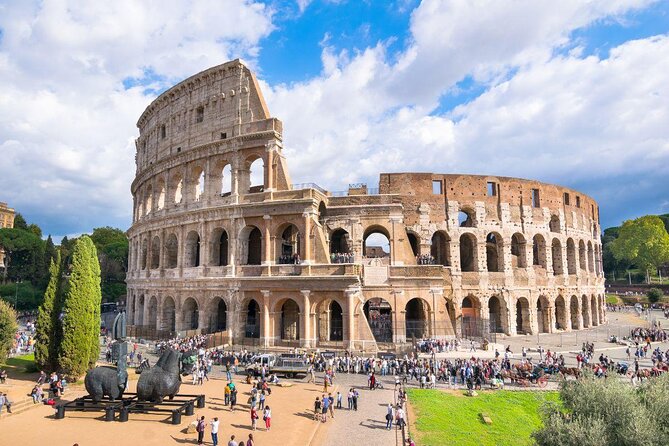
- Gladiator’s Gate entry: you avoid the usual main entrance crush and start with a serious wow.
- Underground backstage access: you step into the spaces tied to wild beasts and gladiator holding areas.
- A tight 3-hour loop: Colosseum, Roman Forum, and Palatine Hill without wasting half your day in transit.
- Small group size (max 24): easier pacing, more time for questions, and less herd-control.
- Plan for real outdoor conditions: bring water and sun protection, and dress for rain if needed.
- Your name must match your ID: you’ll need a valid passport or ID with the same spelling used at booking.
Gladiator’s Gate and the Colosseum Underground: the main event
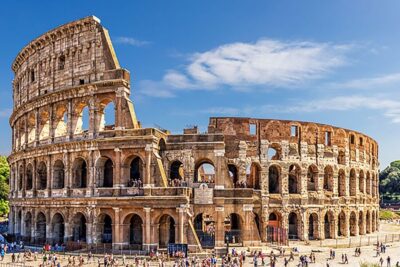
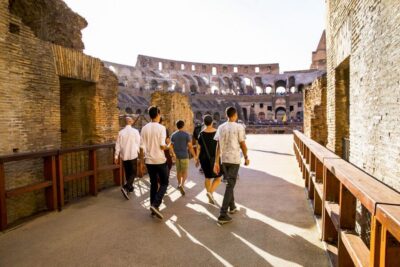
If you’ve only ever seen the Colosseum from the outside, this tour changes the angle. The standout moment is entering through the privileged Gladiator’s Gate, then moving onto the arena floor where gladiators would have been staged before fights. It’s a different kind of perspective: you’re not just looking at ancient seats, you’re standing in the performance space.
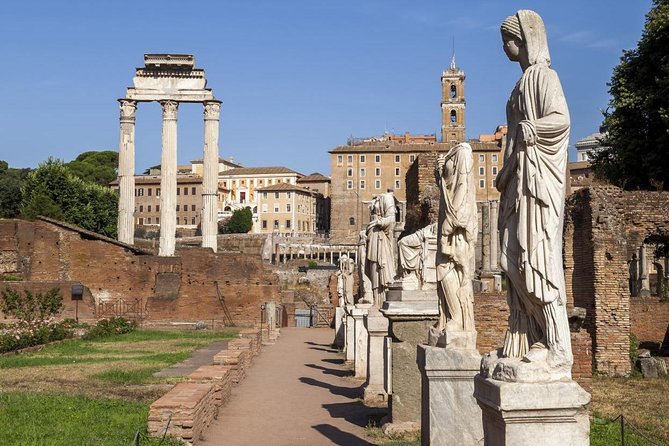
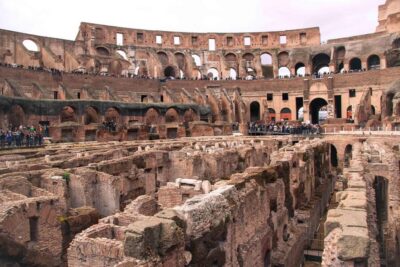
Then comes the part most people never see: the Underground. You’ll visit the stadium’s backstage areas—think holding spaces and the rough “behind the scenes” world that supported the spectacle above. The route typically includes a walk into the dungeons, so you can picture the logistics of how people moved between crowd-level drama and the darker preparation spaces below.
What makes this worth your time is the storytelling angle. Good guides don’t just list facts; they help you build a mental map. Some guides have been praised for archaeology-style explanations and for making the sites feel “operational,” not like a museum display. If you’re the type who asks questions—about construction, crowds, or daily life—this is the kind of tour where that curiosity gets rewarded.
Still on ancient Rome? A few more we rated
- Rome: Colosseum, Palatine Hill and Roman Forum Guided Tour
★ 4.8 · 32,814 reviews - Rome: Guided Tour of Colosseum, Roman Forum & Palatine Hill
★ 4.7 · 27,897 reviews - Rome: Colosseum & Forum with Audio Guide App -Optional Arena
★ 4.2 · 24,770 reviews - Rome: Colosseum, Roman Forum and Palatine Hill Guided Tour
★ 4.5 · 23,903 reviews
From the Arch of Constantine to the arena: how the Colosseum portion works
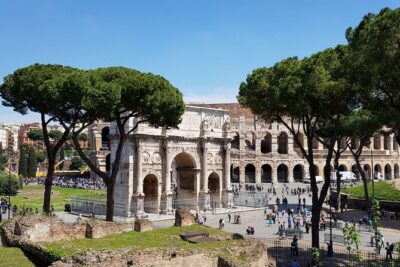
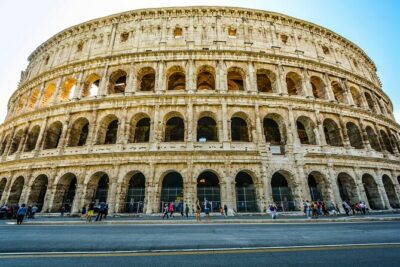
You start near the Arch of Constantine at Piazza del Colosseo. From there, the tour focuses on one goal: get you into the Colosseum efficiently, then guide you through the best high-impact areas in a controlled order.
The Colosseum portion is about 1 hour of guided time inside/around the special access areas. You’ll start with architecture and construction context—how ancient builders managed to create a huge stone amphitheater two millennia ago—then move through the experience sequence: privileged entry, arena access for exploration and photos, and finally the Underground spaces.
A practical tip: even when a tour is designed to reduce time in lines, you should still arrive with a buffer. Meeting spots can be easy to misread when you’re juggling crowds and changing entrances. You’ll have the smoothest start if you show up early, scan for your group, and follow your guide’s instructions for security and entry flow.
Also, this is not the kind of visit where you can “pause whenever.” The Underground route includes stairs and uneven surfaces. If your legs are sensitive on uneven stone, you’ll want to plan for slower moments and give yourself a recovery snack after.
Roman Forum temples, tombs, and power: why stop #2 feels like Rome
After the Colosseum, you shift from spectacle to governance and religion. The Roman Forum stop is about 1 hour, and the goal here is clarity: what the Forum was for, and how the major buildings fit together.
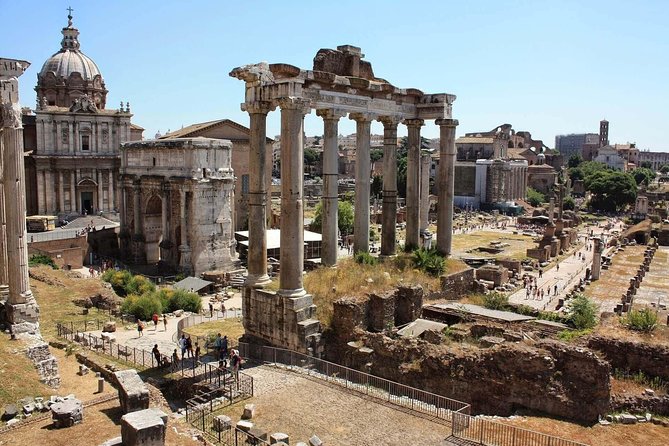
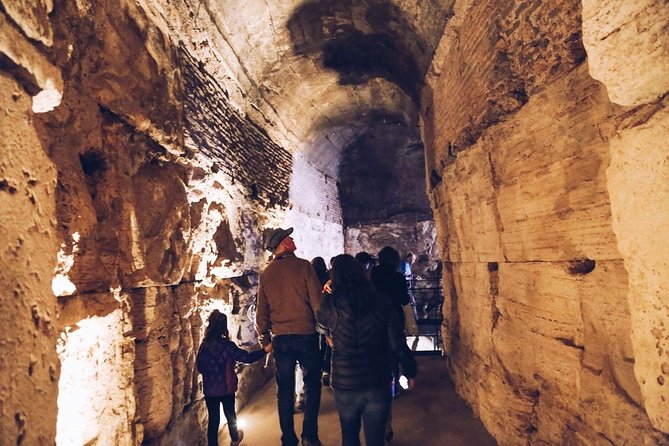
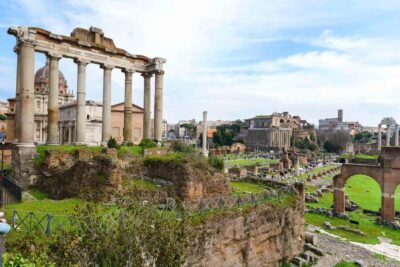
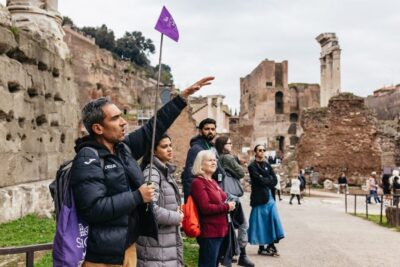
You’ll see a mix of religious and political landmarks, including pagan temples and tombs, the house of the Vestal Virgins, the Senate house, and Julius Cesare’s tomb (among other important ruins). It’s a compact cluster, but it’s dense with meaning. Standing in the Forum area helps you connect the dots between ceremony, authority, and who got to shape public life.
This stop is especially valuable if you want the “why” behind the ruins. The Colosseum is dramatic and physical; the Forum is political and symbolic. When the guide points out what you’re looking at—where ceremonies happened, where decisions were made, and how elites displayed power—the stones start to behave like a functioning city again.
One consideration: the Forum can feel like a lot of information in a short time. If you’re prone to “ruin overload,” slow yourself down during the photos, then come back to the guide’s next landmark. Taking one or two notes on what each area was for can keep the whole place from blending together.
Palatine Hill and Caesar’s Palace: the layers of Rome
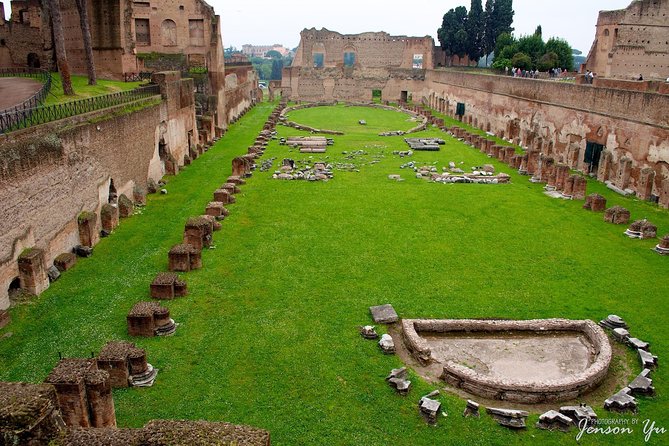
Next is Palatine Hill and the area tied to Caesar’s Palace (the famous Palatine grounds). This portion is also about 1 hour, but it’s different in vibe. You’re moving through the site where Rome’s story begins—nearly 3,000 years ago—and you’ll encounter structures spanning from B.C. times through the Renaissance, plus more recent building activity associated with Benito Mussolini.
That layering matters because it explains something people often miss: Rome didn’t stop at the empire. It kept being reused, rebuilt, and repurposed. So when you’re walking Palatine, you’re not only seeing “ancient Rome.” You’re seeing how later eras handled the ancient past—what they kept, what they rebuilt, and what they added on top.
If you like sites that show continuity and change, Palatine is a great ending chapter. It also gives you momentum for the rest of your day, because the tour concludes in the center of the Ancient City near the Roman Forum area—convenient for getting food, browsing, or connecting to public transit.
Pace, crowd control, and what to wear (seriously)
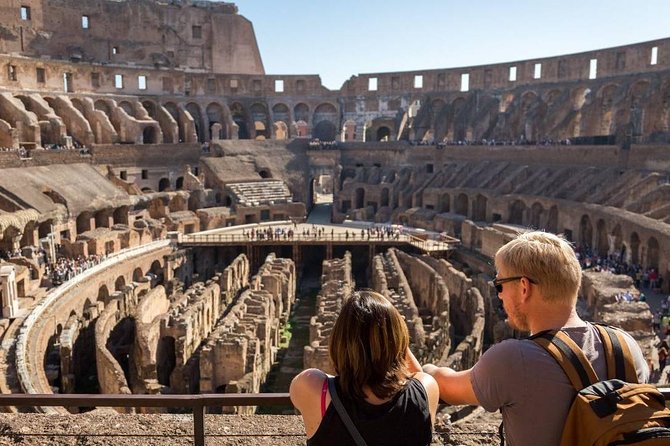
This tour is efficient, but it’s not a stroll. Expect lots of walking, and expect uneven surfaces and stairs. The good news: it’s built to keep things moving without rushing so hard that you miss the point.
Also, the tour runs rain or shine. If it looks iffy, bring a light rain jacket you can move in and keep your day bag simple. Wet stone is slick, and the Underground route in particular is where you’ll notice any slips or discomfort.
For comfort, I strongly suggest:
- Water (yes, even if you think you have enough)
- Sunscreen and a hat for direct sun stretches
- Closed-toe walking shoes with decent grip
If you’re traveling with anyone who has mobility limits, the tour may still work with breaks—but the “moderate physical fitness” requirement is real. You’ll get the best experience if you plan for short stops and don’t try to power through pain.
Guides, English narration, and why the small group matters
The tour is offered in English, and that matters because you’re getting a guided explanation at three separate sites in roughly three hours. Good narration turns the visual into a story you can actually remember later.
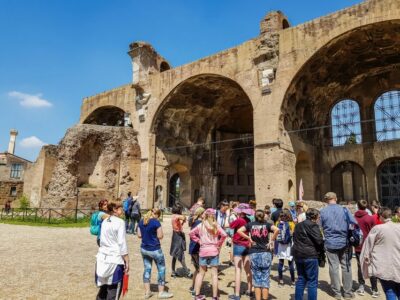
You’ll also benefit from the maximum group size of 24. In a city like Rome, big groups can turn into a shuffle. Here, a smaller limit usually means more chance to hear details, ask questions, and keep pace without constant regrouping.
From past guide styles on this route, I’d pay attention to the names you see when booking or meeting—people like David, Francesca, Polina, Andre, Selene, Paulina, Vlad, Enrico, and Willy have been called out for strong, engaging delivery. You can’t control who you’ll get, but you can choose this tour with the expectation that the guide matters.
If you’re the type who loves real-world context—how something was built, how people moved through space, and what the buildings meant—this route plays to that strength.
Price check: is $144.82 good value here?
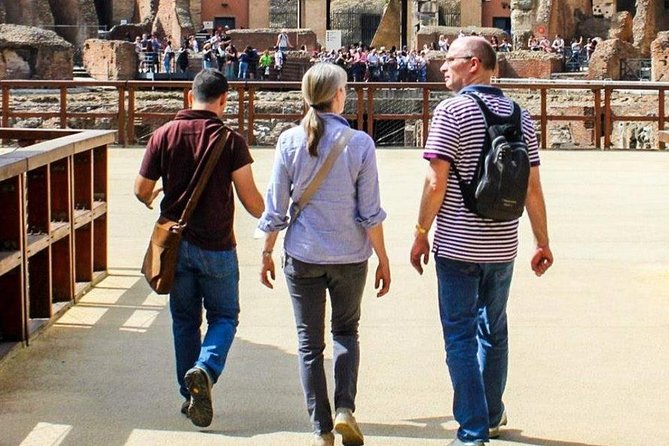
At $144.82 per person for about 3 hours, the value comes from three things you’re not likely to get as easily on your own:
- Special access to the Colosseum through the Gladiator’s Gate, not the standard route.
- Underground entry paired with arena-floor time.
- Admissions included for all three stops: Colosseum (including the Underground experience), the Roman Forum, and Palatine Hill.
On a practical level, it also saves you time. Rather than coordinating separate tickets, separate start times, and separate guide efforts, you get one focused plan with a single meeting point and a set end location in the Forum area.
One more value point: the booking pattern is busy. It’s often booked around 62 days in advance on average, so if your dates are firm, grab it sooner rather than later. That gives you the best chance of the time slot that fits your day.
Where you’ll end up: making the rest of the day easier
The tour ends in the center of the Ancient City at the Roman Forum area. That’s a smart finish, because it keeps you close to public transportation and leaves you with plenty of options for food and walking.
If your schedule is tight, plan to eat afterward instead of before. You’ll be outside, you’ll be moving, and you’ll likely want a simple meal once you’ve completed the Palatine Hill section and the guided wrap-up near the Forum.
Also, since the Colosseum and Forum area can involve security checks and shifting entry instructions depending on the day, keep your next plan flexible for at least a small window. Rome loves to throw a small curveball; good tours reduce it, but they can’t erase every variable.
Should you book this tour?
Book it if you want the full Colosseum story, not just the exterior view—especially if you care about the spaces tied to gladiators and the backstage machinery of the spectacle. The add-ons to the Roman Forum and Palatine Hill make it a strong value for an efficient day, and the small group limit helps keep the experience readable rather than chaotic.
Skip it (or think twice) if you hate walking on uneven stone or you’re hoping for a low-effort visit. The route involves stairs and outdoor exposure, and it’s rain or shine. If weather and mobility are major concerns, you’ll need to plan more carefully.
If you’re trying to choose one Colosseum-focused experience in Rome and you like context—how the city functioned above ground and below it—this special access package is a very solid pick.
FAQ
What is the duration of the Colosseum Underground, Roman Forum & Caesar Palace special access tour?
The tour runs about 3 hours.
Is the tour offered in English?
Yes. The tour is offered in English.
What is included in the ticket price?
The admission tickets are included for the Colosseum (including the Underground experience), the Roman Forum, and Palatine Hill.
Where does the tour start and where does it end?
It starts at the Arch of Constantine, Piazza del Colosseo, and ends in the center of the Roman Forum area.
How big is the group?
The tour has a maximum of 24 travelers.
What do I need for entry to the Colosseum and Roman Forum?
You’ll need a valid passport or ID document, and the document name must match the full names provided at booking.
What is the cancellation policy?
This experience is non-refundable and cannot be changed for any reason.
More Tour Reviews in Rome
- Vatican Museums, Sistine Chapel & St. Peter’s Basilica Tour
★ 4.3 · 73,970 reviews - Vatican Museums, Sistine Chapel & St Peter’s Basilica Guided Tour
★ 4.5 · 39,149 reviews - Rome: Colosseum, Palatine Hill and Roman Forum Guided Tour
★ 4.8 · 32,814 reviews - Rome: Guided Tour of Colosseum, Roman Forum & Palatine Hill
★ 4.7 · 27,897 reviews - Rome: Colosseum & Forum with Audio Guide App -Optional Arena
★ 4.2 · 24,770 reviews - Rome: Colosseum, Roman Forum and Palatine Hill Guided Tour
★ 4.5 · 23,903 reviews
Ancient Rome, Kept Going
- Rome: Colosseum, Palatine Hill and Roman Forum Guided Tour
★ 4.8 · 32,814 reviews - Rome: Guided Tour of Colosseum, Roman Forum & Palatine Hill
★ 4.7 · 27,897 reviews - Rome: Colosseum & Forum with Audio Guide App -Optional Arena
★ 4.2 · 24,770 reviews - Rome: Colosseum, Roman Forum and Palatine Hill Guided Tour
★ 4.5 · 23,903 reviews - Rome: Colosseum Arena Floor, Palatine & Forum Guided Tour
★ 4.5 · 20,180 reviews - Rome: Colosseum Arena, Palatine Hill & Forum Guided Tour
★ 4.7 · 14,510 reviews
Just added to our Rome reviews


Colosseum & Ancient Rome Tours, compared.
 ★ 4.8Colosseum, Palatine Hill and Roman Forum Guided TourFrom $5232,814 reviews
 ★ 4.7Guided Tour of Colosseum, Roman Forum & Palatine HillFrom $5527,897 reviews
 ★ 4.2Colosseum & Forum with Audio Guide App -Optional ArenaFrom $4124,770 reviews
 ★ 4.5Colosseum, Roman Forum and Palatine Hill Guided TourFrom $5923,903 reviews
 ★ 4.5Colosseum Arena Floor, Palatine & Forum Guided TourFrom $4120,180 reviews
 ★ 4.7Colosseum Arena, Palatine Hill & Forum Guided TourFrom $8414,510 reviews
 ★ 4.6Colosseum,Forum & Palatine Tour + Optional Arena FloorFrom $4513,169 reviews
 ★ 4.7Colosseum: Underground and Ancient Rome TourFrom $16012,691 reviews