
Rome rewards the curious—and this plan lets you explore calmly. It’s a self-guided pass that pairs Colosseum entry with Roman Forum and Palatine Hill, plus a phone audio guide app you can run at your speed. I really like the convenience of getting your ticket digitally (sent by email and WhatsApp when available), so you spend less time hunting for paperwork at the start.
The second big win is the format: you walk the route yourself and use headphones to hear what you’re looking at. That makes it easier to pause, backtrack a minute, or just linger where the view hits hardest—especially on Palatine Hill. One possible drawback: this is not a live guide. If you expect a person to herd you through, or if you’re bothered by learning an app on a busy day, it may feel like effort you didn’t plan for.
In This Review
- Key things to know before you go
- A self-guided Rome trio that lets you actually control the pace
- Entering the Colosseum: what you’ll see and how the audio helps
- Roman Forum: the city center you can move through logically
- Palatine Hill: the views make the whole day click
- Price and value: what you’re really paying for
- The audio guide app: easy if you prep, frustrating if you don’t
- Timing, crowds, and your best strategy for a calmer visit
- What’s included (and what isn’t) so you aren’t surprised
- Who this fits best (and who should think twice)
- Should you book this Colosseum, Forum & Palatine Hill pass?
- FAQ
- What does this ticket include?
- Do I get a headset for the audio guide?
- How will I receive my tickets?
- Where do I meet for the Colosseum entry?
- What ID do I need to bring?
- How long should I plan for this experience?
- Is arena access included?
- Are kids allowed, and do they need tickets?
- Can I cancel for a refund?
Key things to know before you go
- Phone audio guide instead of a live guide: you control the pace, but you’re responsible for headphones and app setup
- Two entrances, one combined experience: one entry for the Colosseum plus one entry covering the Forum and Palatine Hill
- Palatine Hill is your payoff: you get big imperial-era views after you’ve walked the archaeology
- Photo ID is not optional: your name on the booking must match the ID you show at entry
- Expect security lines anyway: even with reservations, you still go through security
A self-guided Rome trio that lets you actually control the pace
This is one of those Rome experiences that works well if you like choice. You don’t get locked into someone else’s talking schedule, and you’re free to move when you want—slow on the details, brisk when you just need the next stop.
The route is built around three “layers” of the ancient city. First you see the Colosseum as a monument. Then you step into the Roman Forum as a place where politics, law, and public life happened. Finally, Palatine Hill gives you that higher-angle perspective that makes the whole empire feel real.
And you’re not stuck with a printed booklet. The audio guide is delivered as a digital app (or MP3 in some cases), and you listen on your own phone with headphones. That’s simple, and it keeps the experience flexible.
Still on ancient Rome? A few more we rated
- Rome: Colosseum, Palatine Hill and Roman Forum Guided Tour
★ 4.8 · 32,814 reviews - Rome: Guided Tour of Colosseum, Roman Forum & Palatine Hill
★ 4.7 · 27,897 reviews - Rome: Colosseum & Forum with Audio Guide App -Optional Arena
★ 4.2 · 24,770 reviews - Rome: Colosseum, Roman Forum and Palatine Hill Guided Tour
★ 4.5 · 23,903 reviews
Entering the Colosseum: what you’ll see and how the audio helps
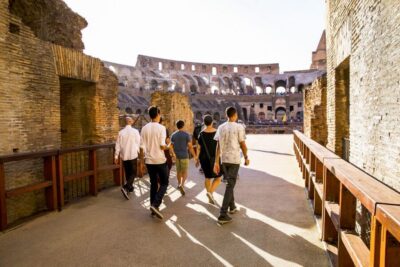
The Colosseum is the centerpiece: a huge elliptical amphitheater near the Roman Forum, known as the largest ancient amphitheater ever built and still the biggest standing amphitheater in the world. When you step in, it doesn’t feel like “a ruin.” It feels like a working stage that got frozen mid-drama.
From a value standpoint, the entry is the heart of the deal. Colosseum tickets are priced at €18 in the standard option, and there’s an additional option that can include arena access priced at €24. In other words, you’re paying for a real ticket plus the added service that manages your reservation and makes entry smoother.
How the audio guide fits in: it’s especially useful here because the Colosseum is big and visually confusing if you’re trying to “self-read” everything. With headphones, you can get context while you look at arches, levels, and the shape of the building—without slowing down your walking pace to ask questions.
Practical note: even though reservations can help, you’ll still need to go through the security check line. On busier days, plan for a little waiting even if the start of your day feels tightly timed.
Roman Forum: the city center you can move through logically
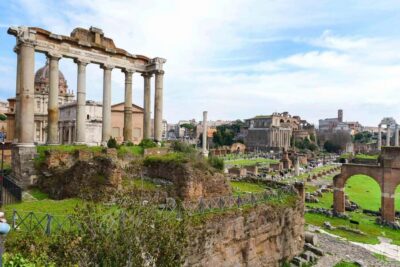
After the Colosseum, you step into the Roman Forum—the historic core of daily life in Rome. This wasn’t just a pretty archaeological zone. It was where triumphal processions happened, elections took place, speeches were given, trials played out, and commercial life ran.
What I like about this stop as part of a single “combo” ticket is that it connects the spectacle to the city. The Colosseum is about performance and power, but the Forum shows how that power worked day-to-day. Standing among the ruins, it’s easier to understand why Romans needed both a stage and an administrative center.
The audio guide is a strong companion here because the Forum is layered. You’re surrounded by fragments, and the app can help you sort what you’re looking at—so you’re not just wandering through a landscape of stone.
A small caution: the Forum area can be busy and the walking flow can feel tight. If you’re the kind of person who likes to spend 20 minutes staring at one spot, you’ll want to start early in your day or be ready to trade some lingering time for momentum.
Palatine Hill: the views make the whole day click
Palatine Hill is the most central of Rome’s seven hills, and it’s one of the most ancient parts of the city. The reason it’s so worth including is that it changes how the day feels. After walking the Forum’s ground-level remains, Palatine Hill gives you a wider sense of where everything sat.
This is where you typically get the “so I get it now” feeling. From the heights, the ancient city reads more like a system: hills, sightlines, and how elite spaces relate to the public world.
From an experience value angle, the Palatine Hill stop helps justify the duration. This pass is listed around 2 to 3 hours total, and that time makes sense if you want a tight-but-not-rushed arc: monument → civic center → viewpoint.
Worth a look next to this Rome booking:


Price and value: what you’re really paying for
At $21.71 per person, this can look low compared to how famous and in-demand these sites are. But the smarter way to think about value is to compare it to the ticket component and what’s added on top.
Here’s the key breakdown:
- Colosseum standard admission is €18.
- If you select arena access, it’s €24.
- The rest of what you pay covers services like reservation management, reservation fees, customer support, and operational assistance (the portion that helps you avoid the hassle of figuring out how to secure entry on your own).
That matters because the Colosseum and nearby areas sell out and move fast in peak periods. Buying the base ticket locally can be cheaper on paper, but it can also mean more stress—especially when you’re planning a short stay in Rome and want reliable entry.
Based on the pricing confusion you’ll sometimes see online, I’d recommend this rule: if you want the absolute lowest cost and don’t mind more effort, you can buy standard admission through official channels. If you value reduced hassle—ticket delivery, managed reservations, and a phone audio app—then this kind of packaged experience can feel worth it.
The audio guide app: easy if you prep, frustrating if you don’t
This is a self-guided experience, so the audio app experience becomes part of the “workload.” You’ll need:
- your phone
- working headphones (headset is not included)
- the ability to navigate the app while you’re near crowds and lines
What I’ve learned from common pain points: the app isn’t always intuitive at the exact moment you’re stepping into the Colosseum security area. If you arrive flustered, you’re more likely to miss the start of the narration. The best move is to treat setup like you would for any museum app: confirm you can play audio before you’re surrounded by people trying to move.
If you strongly prefer a human guide, you may feel like the audio is “less than” what you expected. In that case, it’s better to choose a tour with a live guide. But if you want control—stop, start, replay while you look—then a phone audio guide fits the way you’ll naturally visit Rome.
Timing, crowds, and your best strategy for a calmer visit
Even in winter or shoulder seasons, the Colosseum area can be extremely busy. That’s not a flaw in this product—it’s just the reality of Rome’s most iconic sites.
Here’s what helps most:
- Go into the day with the expectation that security will take time.
- Keep your plan simple: don’t add another “must-see” far away in the same time window.
- If you want the smoothest experience, aim for earlier hours rather than the busiest midday slot.
Also, plan to bring your own photo ID. Entry requires scanning your ID and ticket, and the name on your booking must match your ID exactly. If there’s a mismatch, entry may be refused—so it’s worth double-checking your spelling before you travel.
What’s included (and what isn’t) so you aren’t surprised
Included:
- All fees and taxes
- Digital mobile audio app
- Colosseum entrance options (standard or with arena access depending on what you choose)
- Colosseum reservation fee if the reservation option is selected
- One entry each: Colosseum, and Roman Forum & Palatine Hill
- Ticket delivery by email and WhatsApp (if available)
Not included:
- Private transportation
- Guided tour
- Headset (bring headphones)
That “no headset” detail matters. Earphones are cheap compared to how annoyed you’ll feel if you realize you can’t listen right when you’re ready to start.
Who this fits best (and who should think twice)
This is a great match if you:
- like self-paced sightseeing
- want to see three top sites in one trip without paying for a full guided tour
- enjoy learning through audio while you walk
It’s also a decent fit for first-timers, because the experience is structured around a route that makes sense: Colosseum → Forum → Palatine Hill.
You might want a different option if you:
- expect a live guide to manage directions and explanations
- dislike apps in general
- hate the idea of handling headphones and setup during a busy, crowded entry process
Should you book this Colosseum, Forum & Palatine Hill pass?
I’d book it if your main goal is a reliable, organized way to enter and explore the three big sites with phone audio and a route that flows. The price can be attractive when you factor in that you’re not only buying entry—you’re also buying reservation management and support, plus an audio experience that guides your attention.
I wouldn’t book it if you specifically want a guided talk on-site. This is built for independent exploring. Also, if you know you struggle with app setup under pressure, make a small plan to get your audio ready before you’re at the security point.
If you get the audio working and keep your expectations realistic about crowds and security lines, this is one of the most practical ways to see imperial Rome fast—without turning your day into a frantic sprint.
FAQ
What does this ticket include?
Your ticket covers one entry to the Colosseum and one entry to the Roman Forum and Palatine Hill.
Do I get a headset for the audio guide?
No. You’ll need headphones to listen to the digital audio guide on your phone.
How will I receive my tickets?
You’ll receive your ticket by email and WhatsApp (if available) before your visit. You should bring the ticket (printed or on your phone).
Where do I meet for the Colosseum entry?
The start point is Colosseum, Piazza del Colosseo, 1, 00184 Roma RM, Italy. The tour ends back at the meeting point.
What ID do I need to bring?
You must bring a photo ID (a photo of it on your phone is fine). Your ticket and ID will be scanned at the entrance.
How long should I plan for this experience?
Plan for about 2 to 3 hours.
Is arena access included?
There are Colosseum entrance options. One option includes arena access (priced higher than the standard ticket).
Are kids allowed, and do they need tickets?
Kids under 18 enter for free, but you still need to provide their names when booking. Free child tickets will be provided.
Can I cancel for a refund?
Yes. You can cancel up to 7 days in advance of the experience for a full refund. If you cancel less than 7 full days before the start time, the amount paid isn’t refunded.
More Guided in Rome
- Vatican Museums, Sistine Chapel & St Peter’s Basilica Guided Tour
★ 4.5 · 39,149 reviews - Rome: Colosseum, Palatine Hill and Roman Forum Guided Tour
★ 4.8 · 32,814 reviews - Rome: Guided Tour of Colosseum, Roman Forum & Palatine Hill
★ 4.7 · 27,897 reviews - Rome: Colosseum & Forum with Audio Guide App -Optional Arena
★ 4.2 · 24,770 reviews - Rome: Colosseum, Roman Forum and Palatine Hill Guided Tour
★ 4.5 · 23,903 reviews - Rome: Colosseum Arena Floor, Palatine & Forum Guided Tour
★ 4.5 · 20,180 reviews
More Tour Reviews in Rome
- Vatican Museums, Sistine Chapel & St. Peter’s Basilica Tour
★ 4.3 · 73,970 reviews - Vatican Museums, Sistine Chapel & St Peter’s Basilica Guided Tour
★ 4.5 · 39,149 reviews - Rome: Colosseum, Palatine Hill and Roman Forum Guided Tour
★ 4.8 · 32,814 reviews - Rome: Guided Tour of Colosseum, Roman Forum & Palatine Hill
★ 4.7 · 27,897 reviews - Rome: Colosseum & Forum with Audio Guide App -Optional Arena
★ 4.2 · 24,770 reviews - Rome: Colosseum, Roman Forum and Palatine Hill Guided Tour
★ 4.5 · 23,903 reviews
Ancient Rome, Kept Going
- Rome: Colosseum, Palatine Hill and Roman Forum Guided Tour
★ 4.8 · 32,814 reviews - Rome: Guided Tour of Colosseum, Roman Forum & Palatine Hill
★ 4.7 · 27,897 reviews - Rome: Colosseum & Forum with Audio Guide App -Optional Arena
★ 4.2 · 24,770 reviews - Rome: Colosseum, Roman Forum and Palatine Hill Guided Tour
★ 4.5 · 23,903 reviews - Rome: Colosseum Arena Floor, Palatine & Forum Guided Tour
★ 4.5 · 20,180 reviews - Rome: Colosseum Arena, Palatine Hill & Forum Guided Tour
★ 4.7 · 14,510 reviews
Just added to our Rome reviews





Colosseum & Ancient Rome Tours, compared.
 ★ 4.8Colosseum, Palatine Hill and Roman Forum Guided TourFrom $5232,814 reviews
 ★ 4.7Guided Tour of Colosseum, Roman Forum & Palatine HillFrom $5527,897 reviews
 ★ 4.2Colosseum & Forum with Audio Guide App -Optional ArenaFrom $4124,770 reviews
 ★ 4.5Colosseum, Roman Forum and Palatine Hill Guided TourFrom $5923,903 reviews
 ★ 4.5Colosseum Arena Floor, Palatine & Forum Guided TourFrom $4120,180 reviews
 ★ 4.7Colosseum Arena, Palatine Hill & Forum Guided TourFrom $8414,510 reviews
 ★ 4.6Colosseum,Forum & Palatine Tour + Optional Arena FloorFrom $4513,169 reviews
 ★ 4.7Colosseum: Underground and Ancient Rome TourFrom $16012,691 reviews
Browse the lists this tour appears in